Week 9 - Attachment Feature Creation (Ribs & Screw Boss) - Challenge 1
Objective:Creating the rib and screw boss for the Door Handle considering the design rules.
Class A surface of the Door handle is given for designing the plastic component
Class A surface
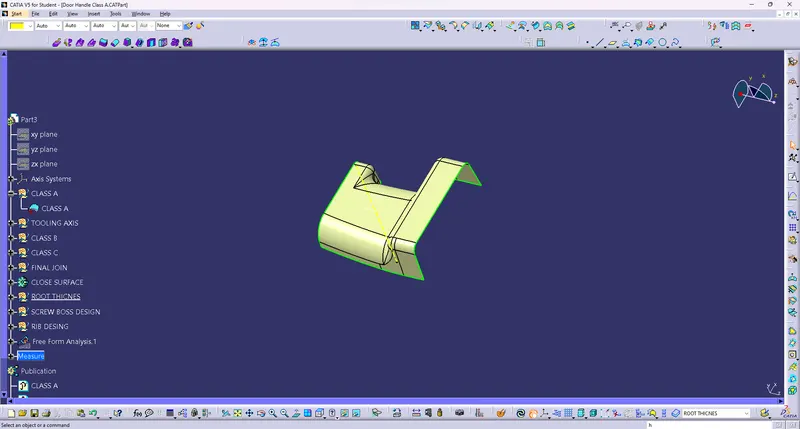
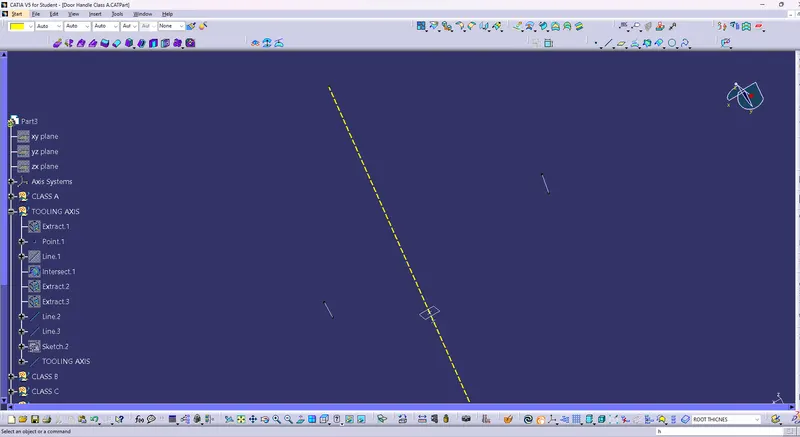
Tooling direction
From the class A surface the walls of the handle are perpendicular so we can take the tooling drection as normal to the base surface by bisecting the walls and we will get tooling axis
Draft analysis
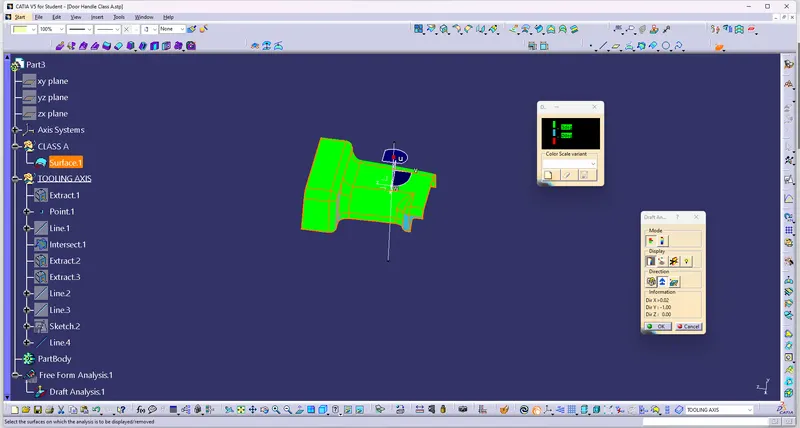
From the draft analysis we can check for the negative draft. the blue area on the class A surface have the negative draft. Which makes it difficult to manufature and we cannot modify the class A
GENERAL NOTE: Class A Having negative draft
Class B surface
Offset the class A surface by thickess which is 2.5 mm and correct the patches formed on the surface. Extropolating the class B surface
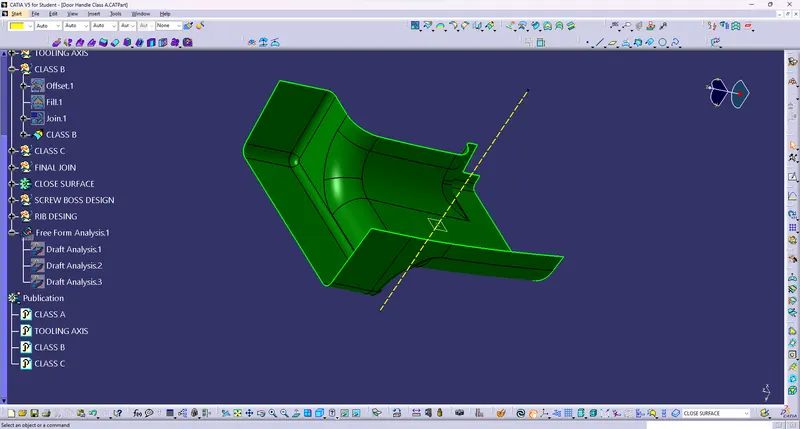
Class C surface
Extract the boundary of class A and sweep with referance to the surface at 90 deg with a length more than the thickness of the component. Join class A and sweep
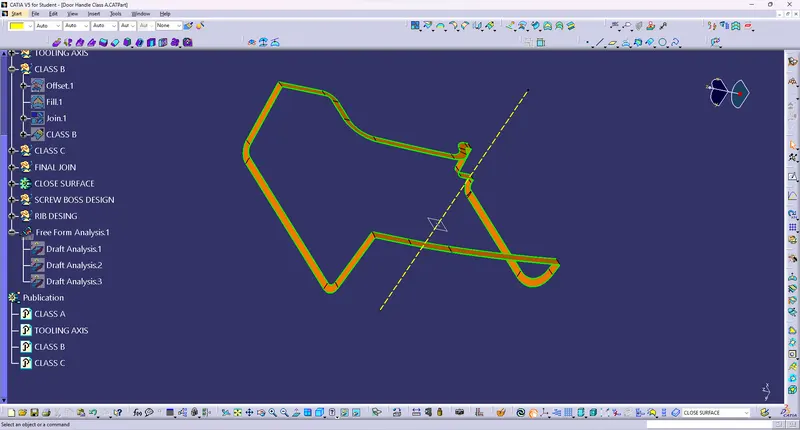
Rib design
The rib is designed with the below design considerations
Thickness - 0.4* t = 0.4 * 2.5 = 1mm
Height - H ≤ 5t = 2.5 * 5 = 12 mm
Draft angle - ≥ 0.5 deg
Fillet radius - 0.25 mm max
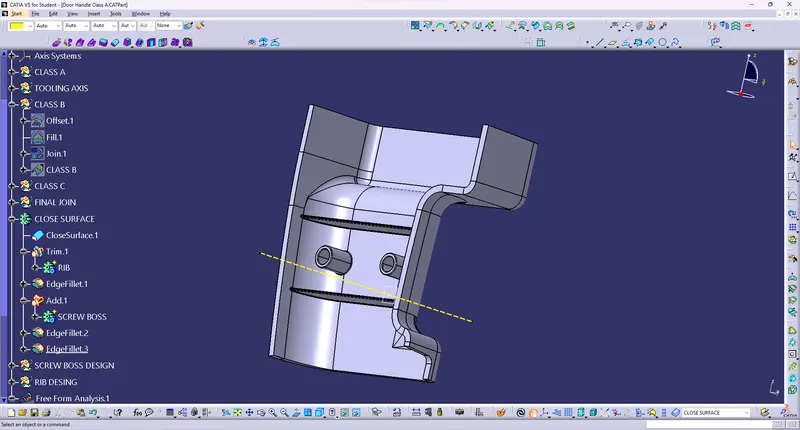
RIB ROOT THCKNESS
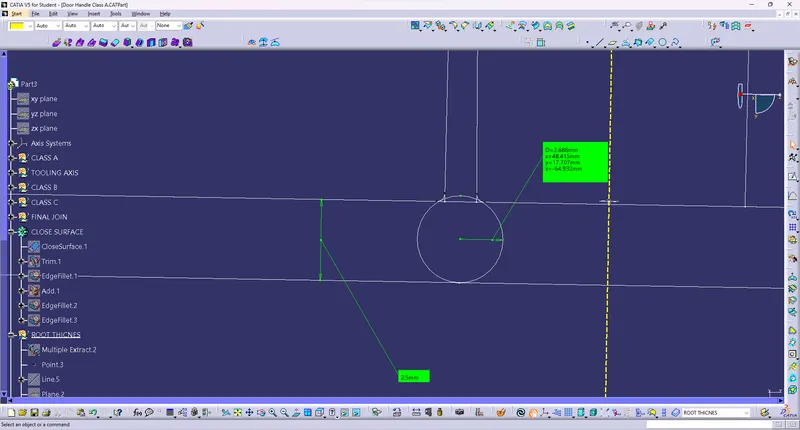
Screw boss
The screw boss is designed with the below design considerations
Ideal wall thickness of screw boss- 0.6 * T
FIllet radius - 0.25 mm max
Draft - 0.5 deg
Height to dia ratio - 3:1
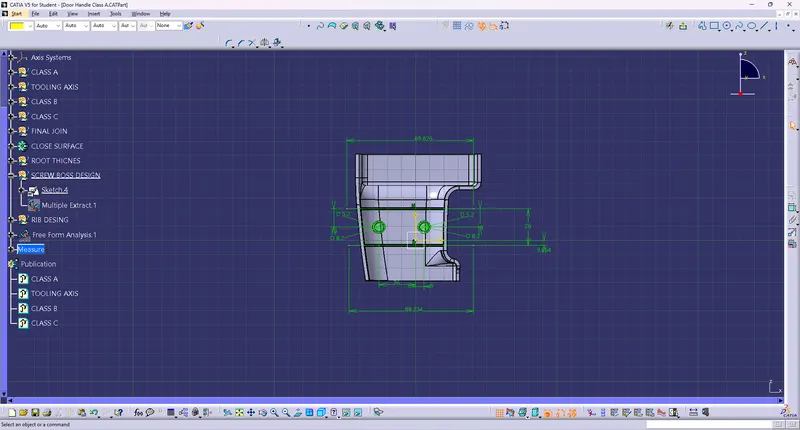
DRAFT ANALYSIS
Draft analysis is a method used in design to check whether the component created in CAD is manufacturable based on the draft condition applied. The main reason behind the draft analysis is the part manufactured should be easily removed from the mold. It also gives an idea of the draft angle from the tooling direction. Here we are giving a tooling direction in order to eject the component easily from the tool. The ideal draft angle given in automotive industries for plastic components is 3 degrees.
Some of the components where draft analysis is done are hood, fenders, roof, side doors, etc.
The draft analysis is an important tool as it helps the user to analyze the draft on various surfaces, the draft analysis in CATIA uses the color codes for the identification of the draft. Each color has its own meaning for the minimum draft negative draft and under draft.
The draft analysis toolbar provides two modes for analysis of the draft, first is the quick analysis which basically has three colors for analyzing GREEN, RED, AND BLUE on the other hand other option is the full analysis mode which enables a few more details into the draft and is used in the complex components like the instrument panel, etc. In the above challenge, we have used the quick analysis made for analyzing the draft here. Now, bring the compass and align it with the tooling axis and click the lock button in the dialog box.
Draft analysis for Rib and screw bosses
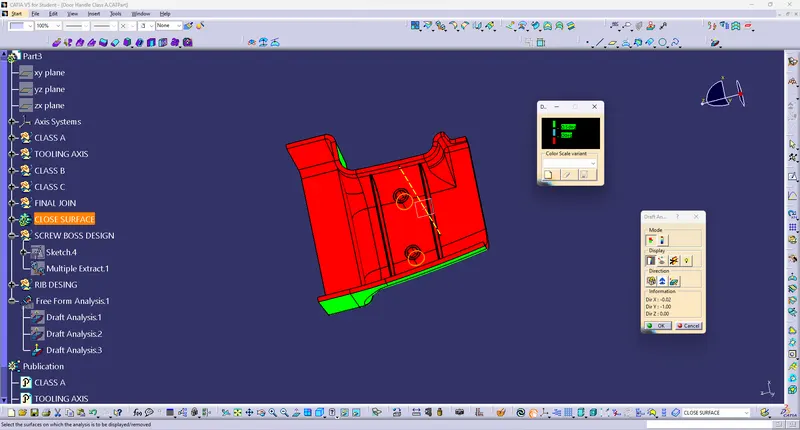
By using draft angle of 0.5 deg the draft analysis is done and from the image we can say that the ribs and screw bosses have positve draft
Part body in various orientations (Isometric, Front, Side, and Top View)
Isometric view
Front view
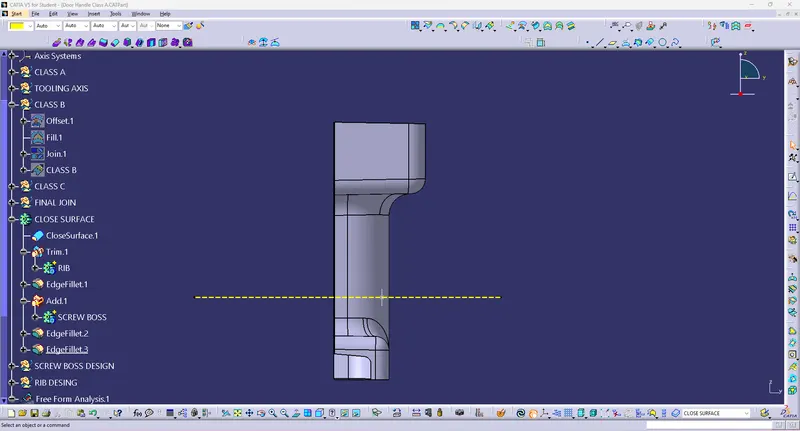
Side view
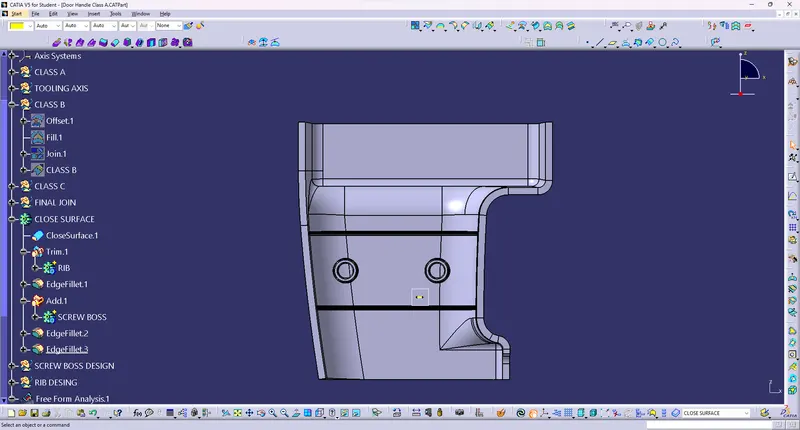
Top view
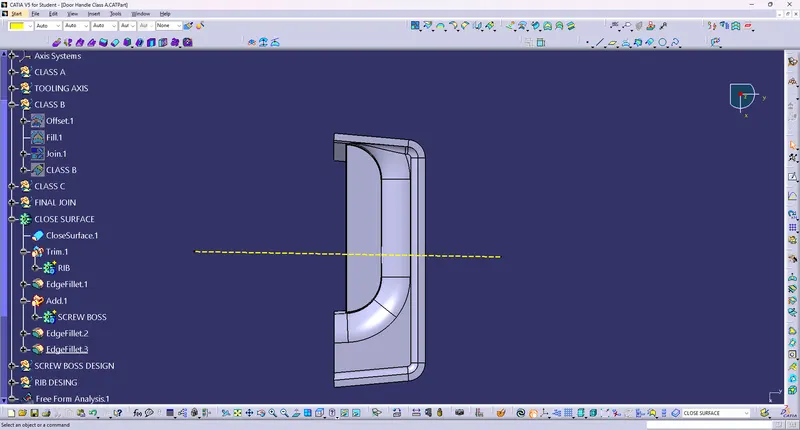
Conclusion: Rib and screw boss is created for the Door Handle considering the design rules.