Week 9 - Attachment Feature Creation (Ribs & Screw Boss) - Challenge 1
Attachment Feature Creation (Ribs & Screw Boss) on A Door Handle
Objective-
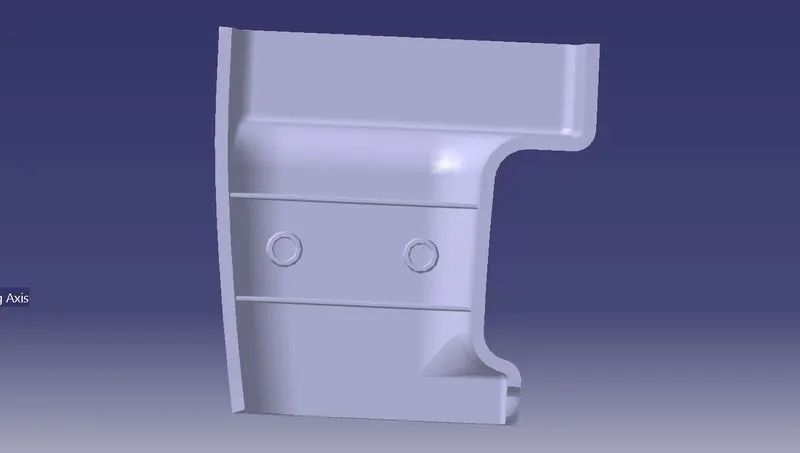
To Create the Attachment Features (Ribs & Screw Boss) on A Door Handle through the given Class-A surface by creating tooling direction, the tooling axis for the given Class-A Surface should meet the requirements of the draft angle i.e. minimum 3°and at the end to perform the Draft analysis on the model.
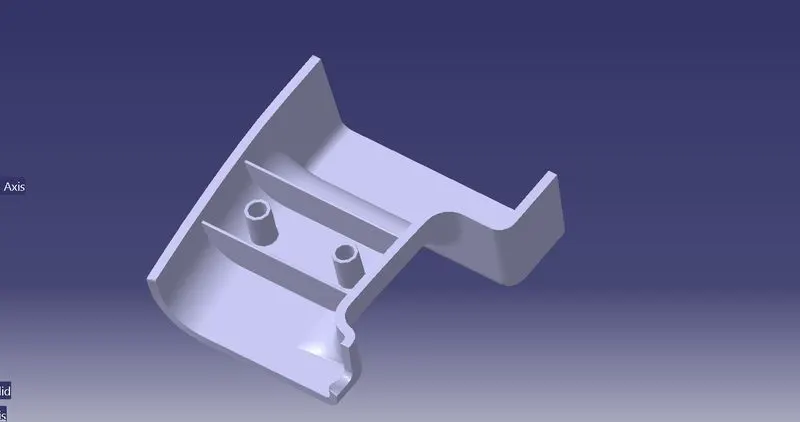
Ribs and Bosses Design Guidelines in Plastic Parts-
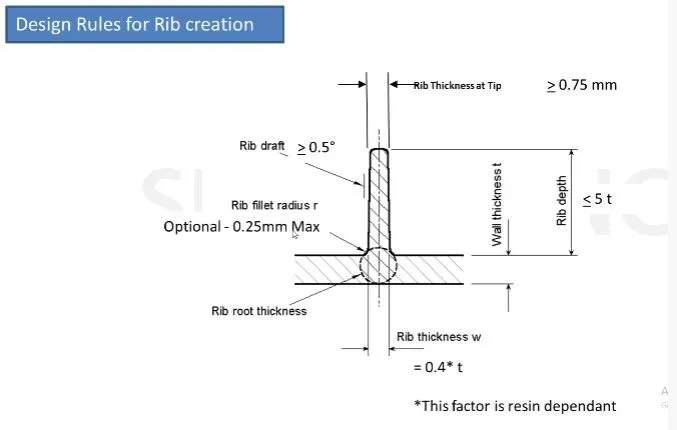
Ribs-
Ribs are indispensable functional structures on many plastic parts. It can effectively improve the rigidity and strength of plastic parts like the H beam.
Ribs are generally designed on the non-appearing surface of the plastic part, and its direction is as close as possible to the flow direction of plastic melt filling. Ribs should neither be too long nor too thick, otherwise, it will increase the difficulty of injection moulding, causing problems such as voids and sink marks on the back.
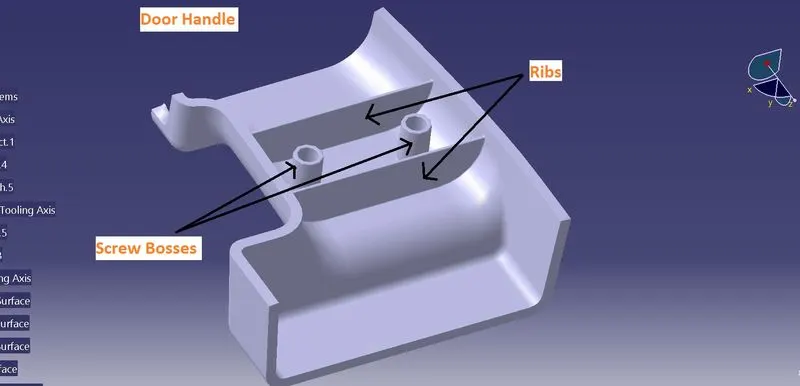
Bosses-
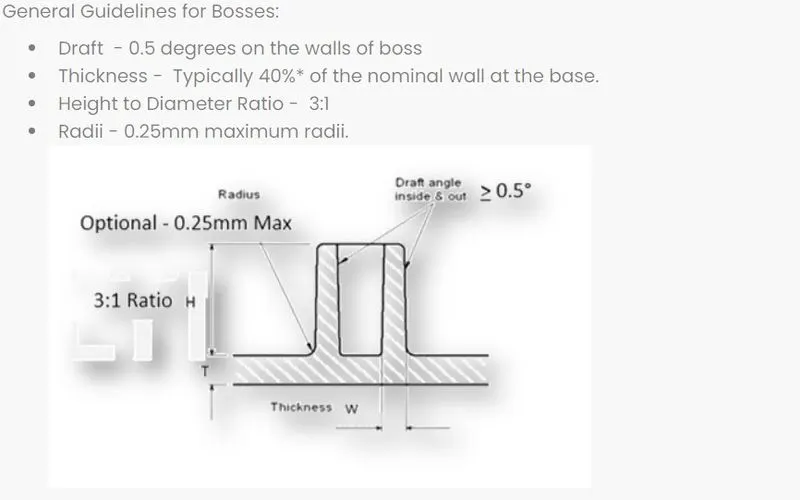
Bosses are common structures on plastic parts in home appliances and interior and exterior of auto-mobiles, mainly for positioning and fastening.
The base of bosses often cause sink marks on the back surface of a part, this is because of the large wall thickness. The solution is to core out some material at the base.
Rib Root Thickness Analysis-
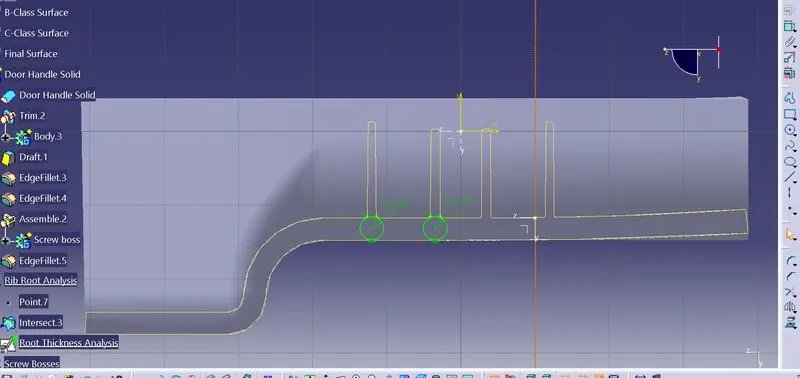
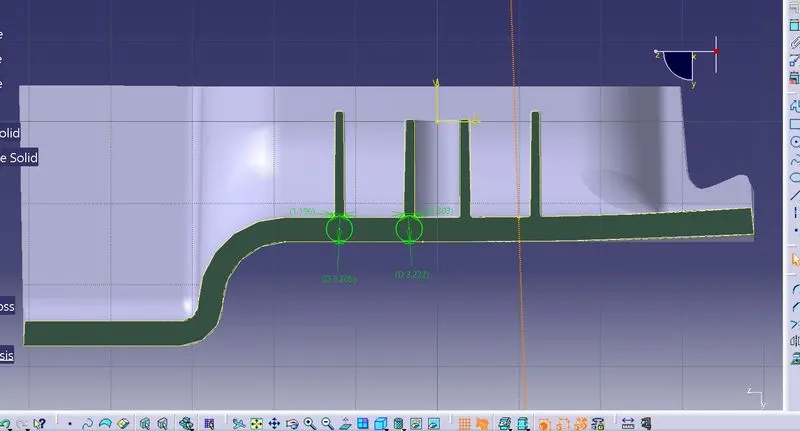
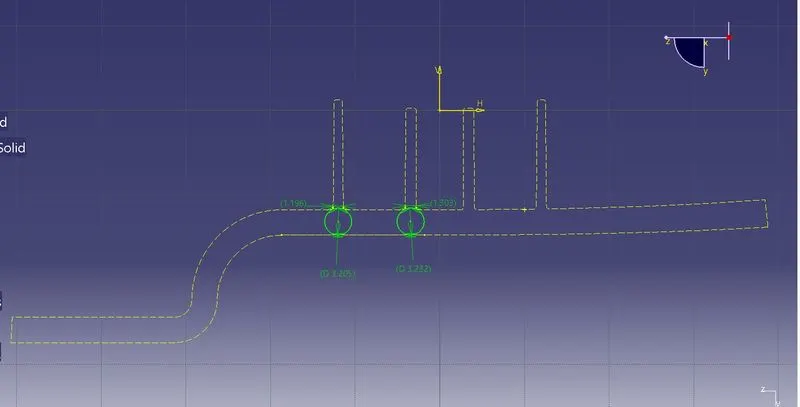
Following image is taken of the intersection between the ribs screw boss and the respective passed plane. Here we can see the clearly the rib root thickness diameter satisfying the required parameter.
Draft Analysis-
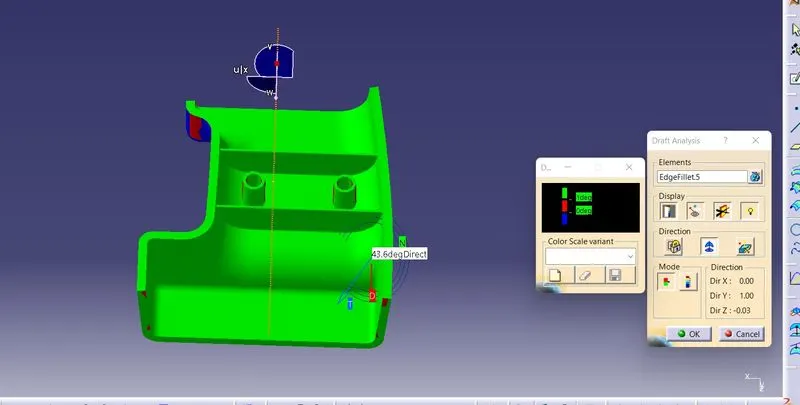
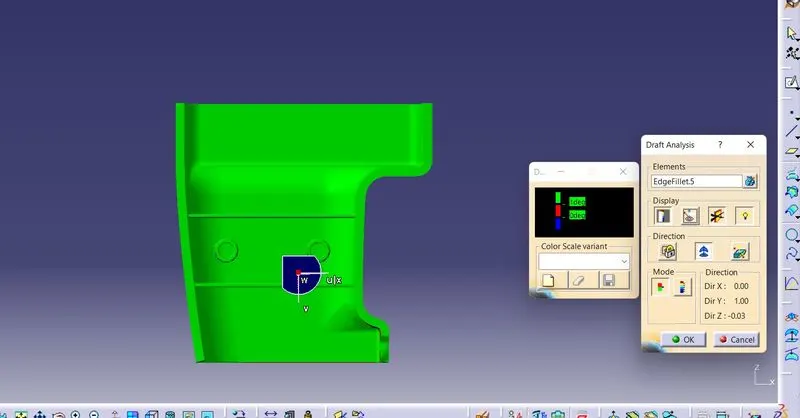
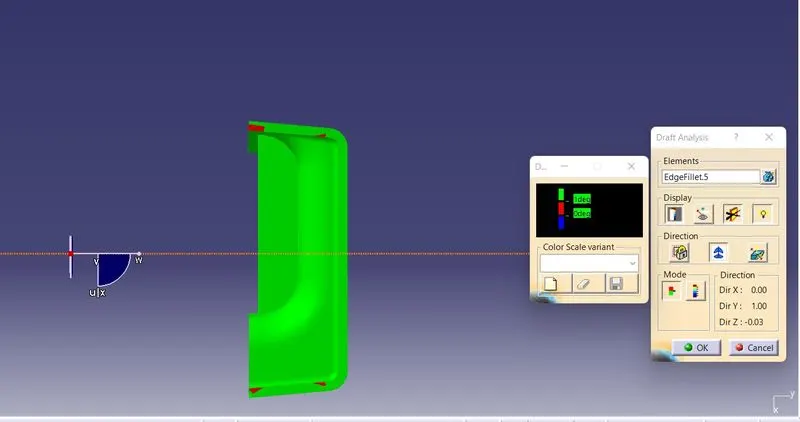
Designers of plastic parts and mould tooling manufacturers can use the Draft Analysis tool to check the correct application of draft to the faces of their part. With draft analysis, you can verify draft angles, examine angle changes within a face, as well as locate parting lines, injection, and ejection surfaces in parts.
A-Class Draft Analysis
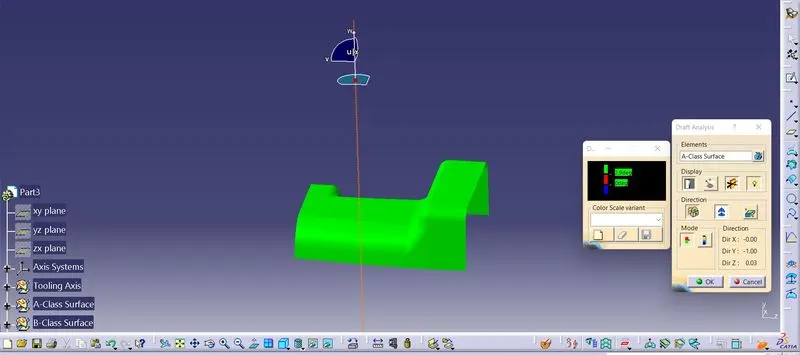
Solid Body Draft Analysis Draft Angle taken 1degree
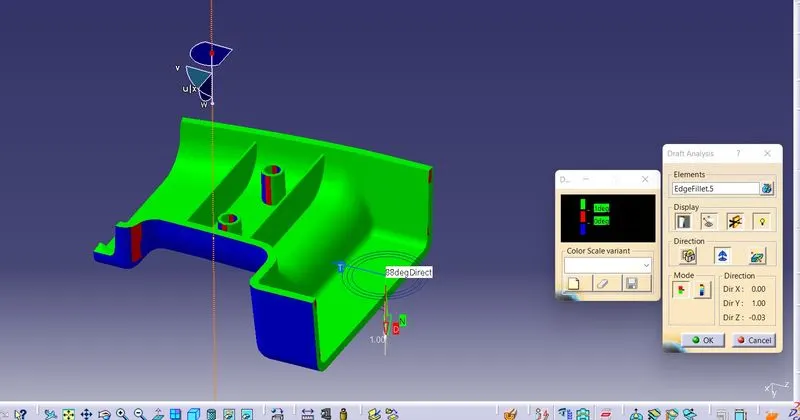
The Draft Analysis command enables you to detect if the part you drafted will be easily removed.
This type of analysis is performed based on colour ranges identifying zones on the analysed element where the deviation from the draft direction at any point, corresponds to specified values.
Creation of the Tooling Axis-
The Desired tooling Axis is created by the analysis of the direction of the tool in with the part production will be maximized and the cost should be minimum and the least amount of cores and side cores should be used to manufacture the designed part. Here the part which are manufacturing will be created with the help of injection moulding so all the parameters are applied to designed the part.
As Analysed the best tooling direction will be near the Z axis so a section intersection is created with the desired plane to obtain the part profile in 2d figure.
Then with the help of the below shown inclined lines two lines are created and then main line which is the bisecting line of the two lines is created as shown so.
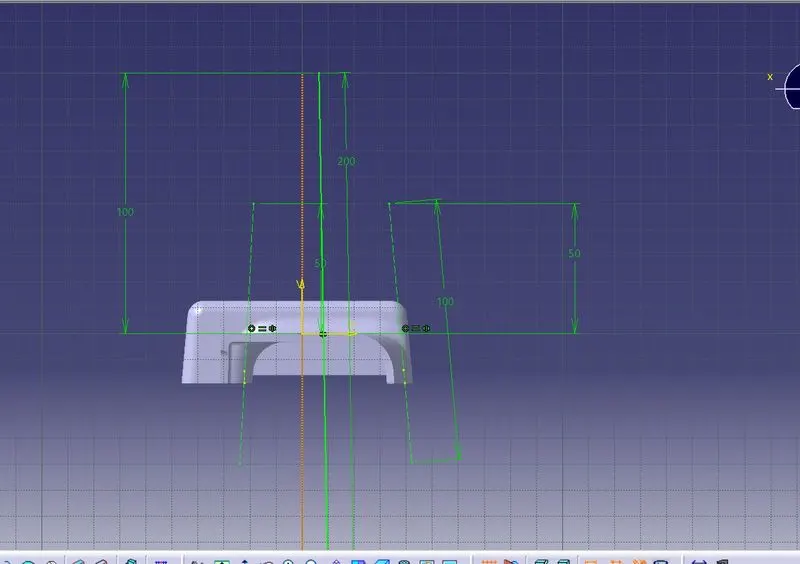
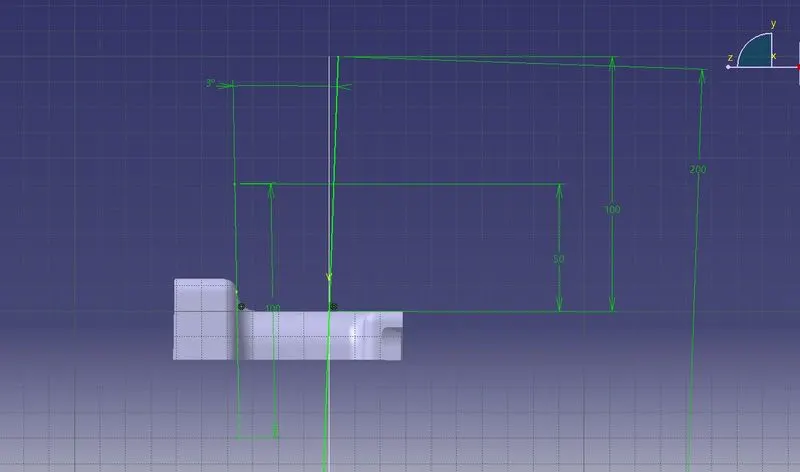
With the help of that line the draft analysis is then done on the provided A-class surface to check the outcome.
Creation of Class B, C surface-
B-Class Surface
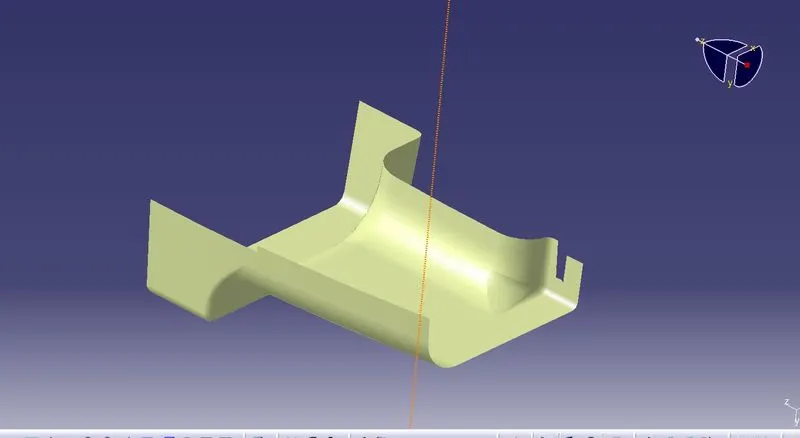
After the analysis is done then the provided surface faces are extracted and then they are off-setted to the thickness value which is 2.5mm below the A-class surface after that the extracted surfaces are untrimmed and extended with the help of untrim and extrapolated command in Catia v5 and are trimmed with the other extracted surfaces. Below are the images of the extracted surface.
C-Class Surface
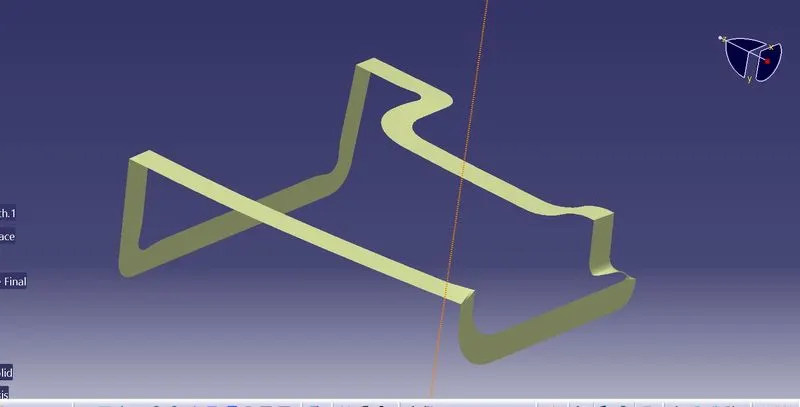
For creating the C- class surface once the B-class surface is created then form the A – Class surface the with the help of sweep command and with the tooling direction another surface is created intersecting the B Class surface created and then the surfaces are trimmed to get a single desired surface.
Final Surface After Trimming
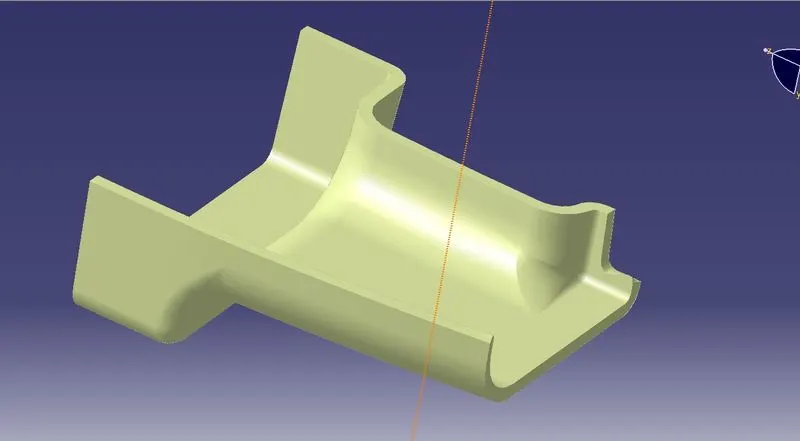
Draft Analysis Reports-
A-Class
Solid Body On 1degree Draft angle