Week 9 - Attachment Feature Creation - Challenge 2
- Title of the Project:
Design and model the Dog house for door trim Plastic component through the given Class-A surface data, using Catia V5.
- Objective:
To create the dog house feature for the given door trim part,by considering standard design rules for it.following that draft analysis is performed for the respective part.
- Methodology:
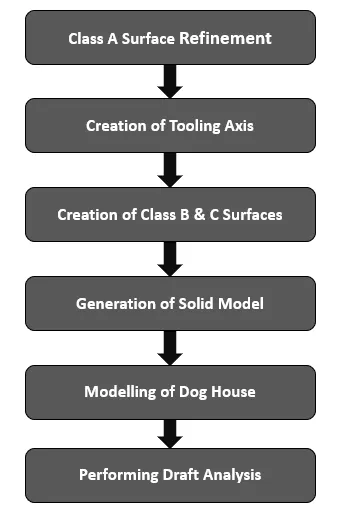
Class A Surface Refinement:
It is the initial stage, such that the class A surface input data is verified for its continuity, and ensures that there is no dis continuity in between two surfaces in the model.
Note: By analysing the class a surface,It is noticed that the surface has many dis-continuity and Tangency issues.So it is recommended that Class A surface designer has to refine the surfaces or need to redesign the surfaces.
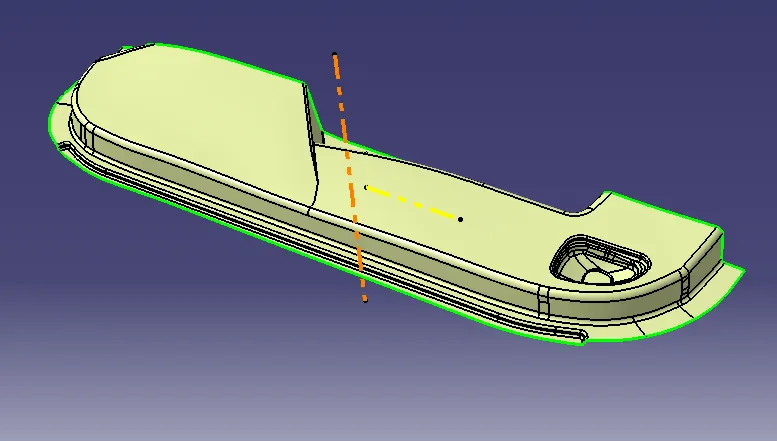
Creation of Tooling axis:
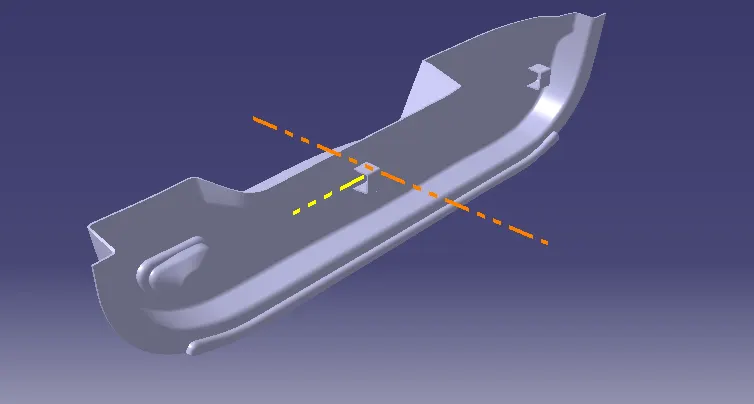
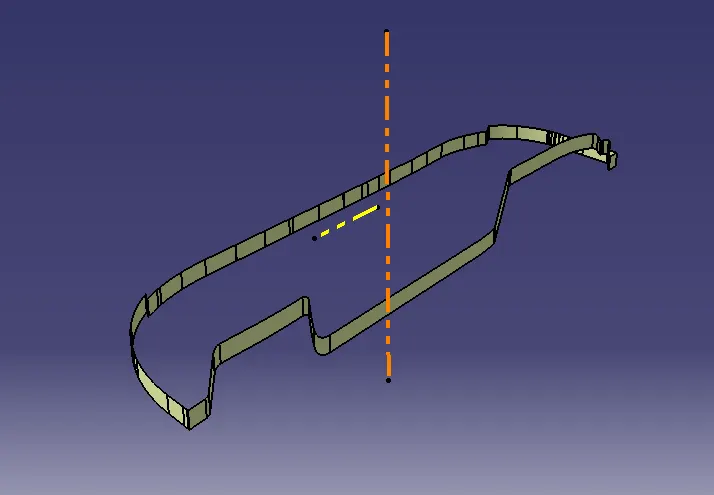
Initially analysing the model visually to check which direction would be most optimum for tooling axis, such that it would result in gaining better product with optimum cost, by selecting the X and Y axis planes an intersection is generated. Using the bisecting lines the intermediated tooling clearing along their direction is generated. Using this tool clearing direction lines, the actual tooling axis is created for the Door trim model.
Creation of Class B & C surfaces:
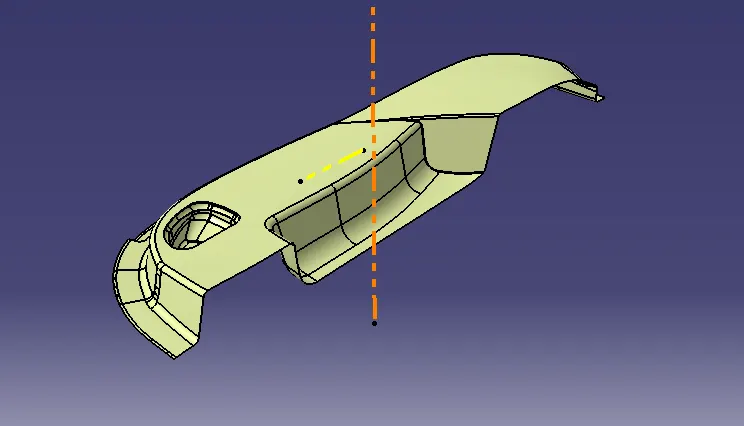
Class B surfaces are the surfaces which consists of engineering design for the class A component.it may consists of ribs, latches, fits, stiffener etc. initially the class A surfaces are extracted and individually and offsetted to distance of 2.5 mm.using surface features exact replica of class A surface is generated, which is later considered as Class B surface.
Class C Surfaces are the surfaces which connects class A and B surfaces together to form a single model. This surface is generated using sweep option by giving the desired draft angle for the model and it is blended with class A and class B to form a complete design of the component.
Generation solid model using these Surfaces:
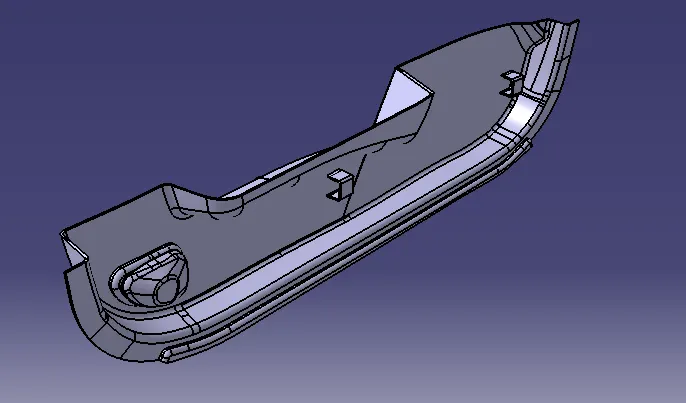
After complete designining of surfaces model,by swapping into part workbench, using the close surface option, the surface model is converted into solid model.further operations are performed.
Modelling of Dog house with Design standards:
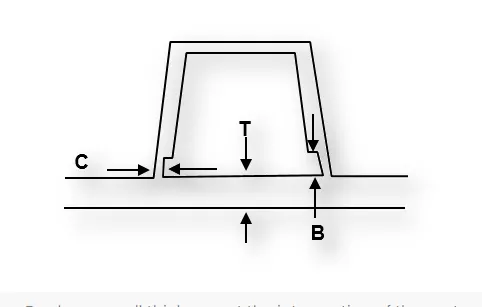
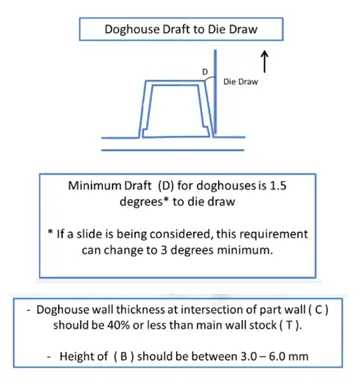
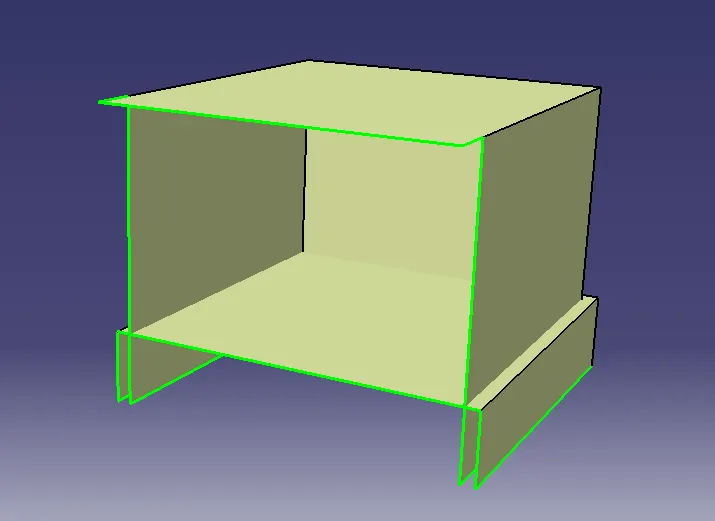
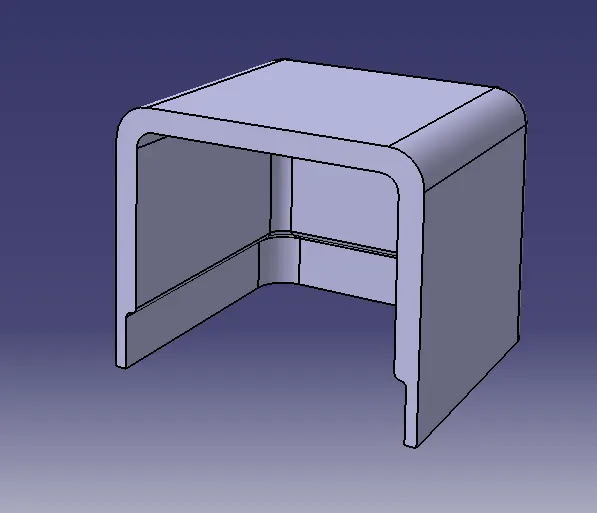
Dog houses are the engineering features which are spotted in plastics components, such that it helps to provide the structural support for the other fixation points.these features are commonly designed at the Class B surface.Fixations points which has over height are placed on to these dog houses,which inturn acts as a strong basement for the feature.Screw bosses,locator pins,snaps can be placed on the dog houses.
Performing draft analysis:
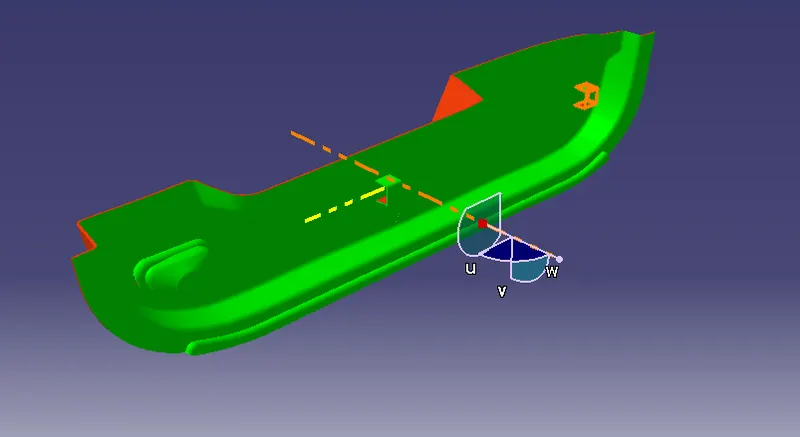
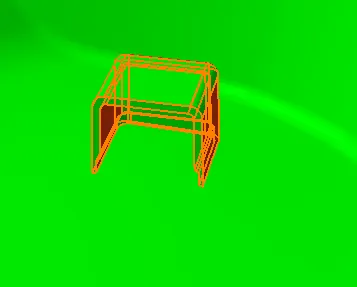
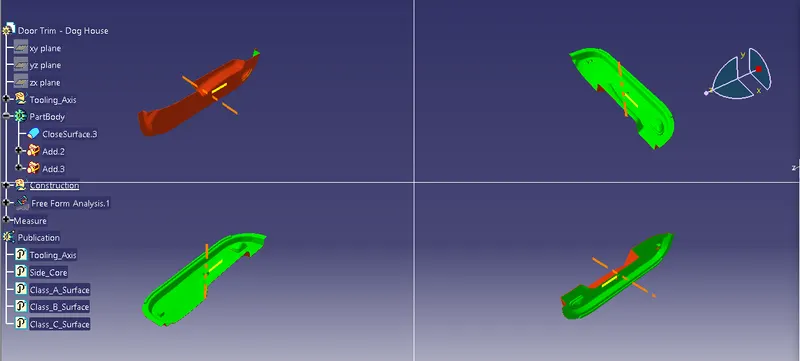
Draft analysis is performed on a component in order to identify whether there is any negative and positive angle is involved in the component.This draft angle allows the part to eject easily from the mold. The draft angle reduces the friction between mold and part.it also tends to avoid the damage occurring to the mold and part during its ejection process. frequently used draft angle is 3 deg and minimum draft angle is 0.5 deg.
By applying the material to solid model, draft analysis is done by aligning the compass to the tooling axis and minimum and maximum draft angle is entered to get the desired result on the model. After interpreting, if there are any negative draft angle is identified, then the tooling axis or the model needs to be isolated for further design correction.
- Modelled Components:
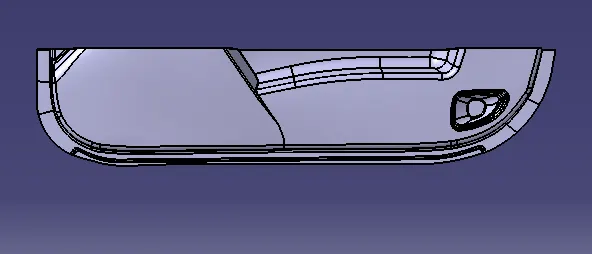
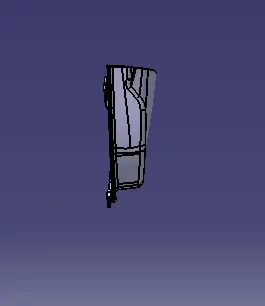
Front view Side view
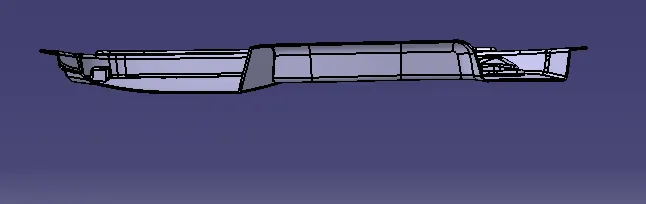
Top view
Isometric view
- Conclusion:
Based on the requirement,the design of dog house for the door trim plastic component has been generated, through given class A surface.the drafting analysis is also performed on the part in order to verify whether the part is feasible for manufacturing using injection molding process.The above draft analysis results ensures that minimum draft angle is invloved in the model and it can easily manufactured.