Week 9 - Attachment Feature Creation - Challenge 1
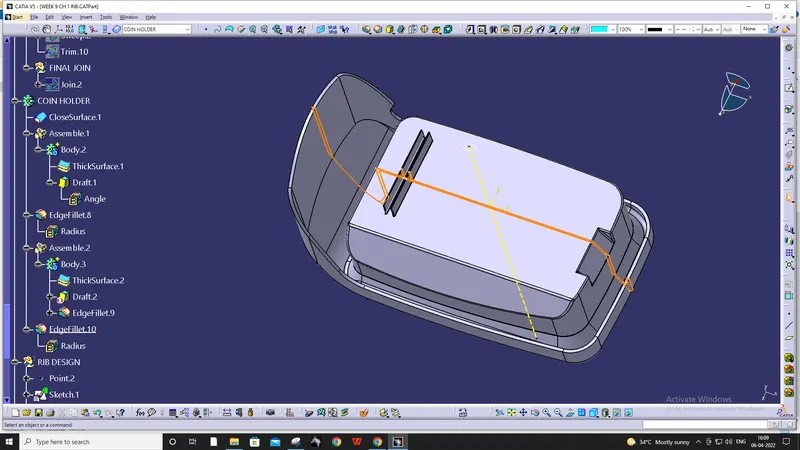
AIM: TO CREAT THE RIBS DESIGN BY CREATING CLASS A B C SURFACES
OBJECTIVE: To creat a design a perform a draft analysis
INTRODUCTION :
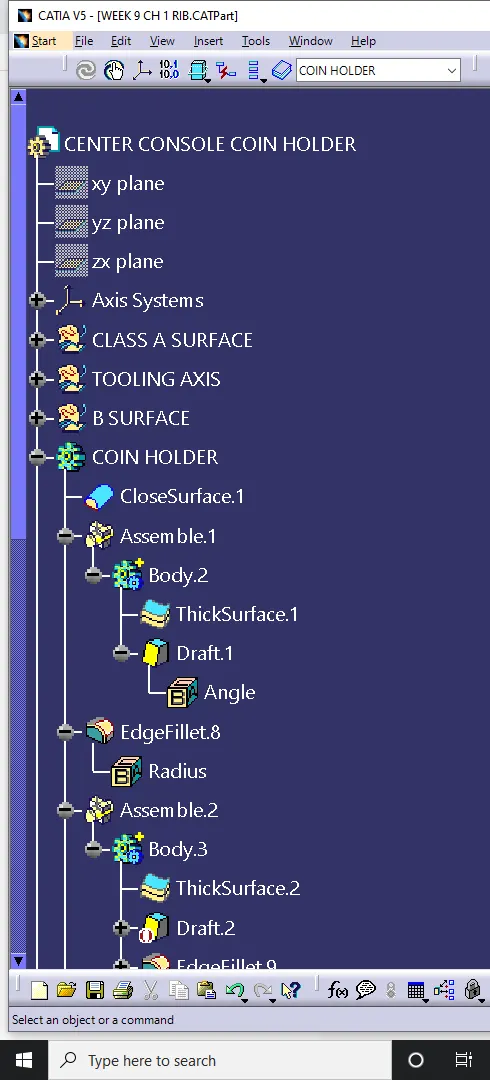
CLASS A SURFACES - The surface which is givem to the pkastic modeler which is of aesthetic and outer most surface and the surface made by the designer known as clasa a surfaces
CLASS B SURFACES - The surfaces which is under the class A surfaces and which contain some engineering aspects on it is known as class B surfaces
CLASS C SURFACES - AT THE END the all classes of A B are going to be join called class c surfaces
FLOWING THE PROCEDURE STEPS:
1) CREATING A TOOLING AXIS
2) PERFORMING DRAFT ANALYSIS
3) CREATING A CLASS A SURFACES
4) CREATING A CLASS B SURFACES
5) CREATING A SOLID MODEL
6) CREATING RIBS
HOW DO WE A CREAT A TOOLING AXIS ??
INITIALLY Obseve the class a surfaces before going to creat the tooling axis, and check wether it contain any discontinity and joined properly or not, have to check in all the x y z direction and we have to go with the top line and creat a axis called tooling axis
- Creat an intersection where we required, creat two lines at required intersectiojn and creat bijection line between them and also creat a dummy tooling axis
- extracting the suurfaces due to fillets and offset them upto 3mm\
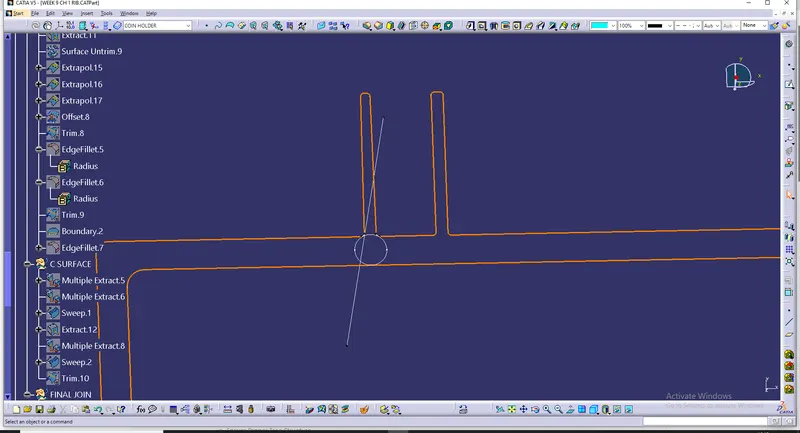
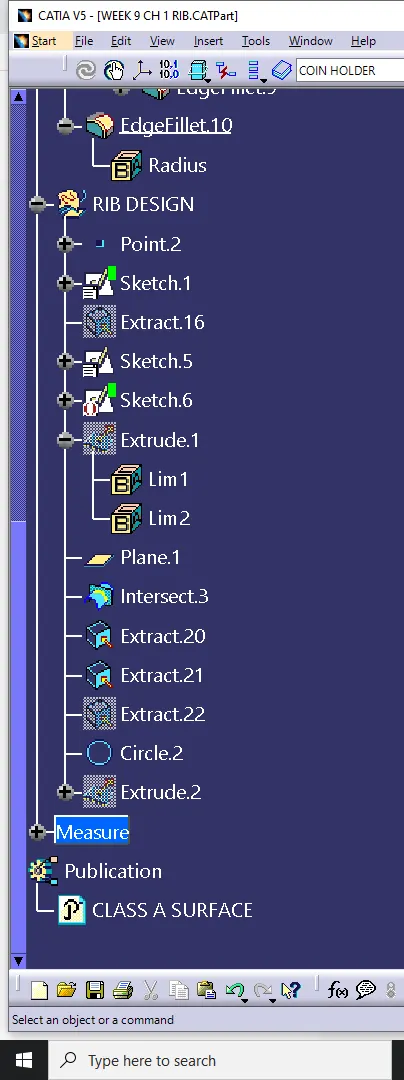
CREAT A GEOMETRICAL SET CALLED RIB
THE PRINCIPALS AND RULES SHOULD BE FOLLOWED IN THIS RIBS
The nominal wall thickness of a plastic component should be 3MM and the deviation of +or- 30% of the wall thickness.
the example of 3mm wall thickness are
- 2.1 mm is min
- 3.9 mm is max
And the ideal draft for a component is 3degree
min 0.5degree accepted in ribs
Ribs provide a means to econimical stiffness and strength in moulded parts without inc any wall thickness
and they also facilitate
- locating and arresting component of an assembley
- providing alliogments in a mating parts
- acting as guids in a mechanism
PROPER RIB DESIGN INVOLVES 5 MAIN ISSUES
- THICKNESS
- HEIGHT
- LOCATION
- QUANTITY
- MANUFACTURING, CONSIDERING THESE ISSUES WHILE DESIGNING
RIB THICKNESS
THICK rib often cause sink and turns cosmetic problems on the opposite surfaces of the wall which they are attached
we have to check rib draft angle and radius angle and rib root thicknes and rib depth
DRAFT
the draft should be 0.5degree per side min
rib fillet radius .25mm max