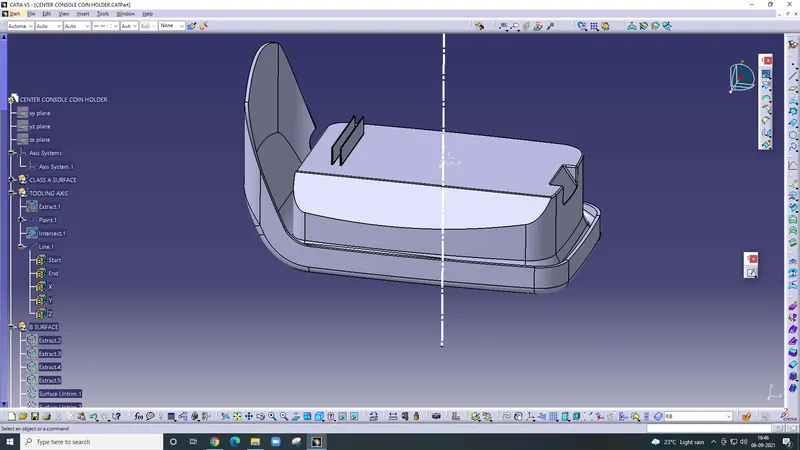
Week 9 - Attachment Feature Creation - Challenge 1
Aim - To Create the rib on the coin holder.
Introduction - Rib increase the moment of inertia, which increases the bending stiffness. Rib thickness should be less than the wall thickness to minimize the sinking effect. The Recommended rib thickness should not exceed 60 percent of the nominal thickness.
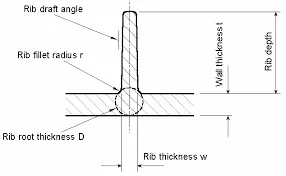
Wall thickness of plastic component : 3mm
A deviation of +- 30% from the wall thickness is accepted.
The ideal draft for the component is 3deg.
minimum 0.5 deg accepted in ribs.
Rib provides means to economical stiffness and strength in molded parts without increasing wall thickness.
The general guideline for ribs and part design.
proper rib design involves five main issues.
Thickness, Height, Location, Quality, Manufacturability.
Rib Thickness -
Thick ribs often sink marks and in turn cosmetic problems on the opposite surface of the wall to which they are attached. Rib thickness also directly affects mouldability very thin ribs can be difficult to fill, because of flow hesitation thin rib near the gate can sometimes be more difficult to fill than further away. Rib size generally provides greater support, to avoid mold filling, venting, and ejecting problems. Standard rules of thumb limit rib height to approximately 5* the rib base thickness because of the required draft for ejection, the tops rib may become too thin to fill easily. Designing two or more shorter thinner ribs to provide the same support with improved moldability. Maintain enough space between ribs for adequate mold cooling for short ribs allows at least two times the wall thickness.
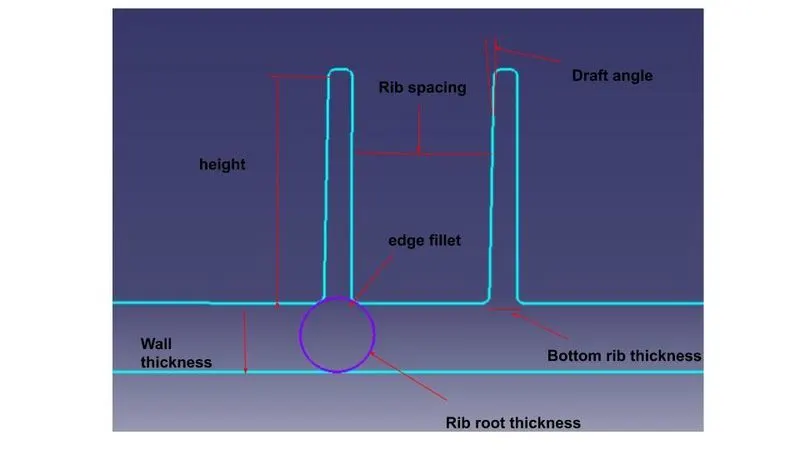
Rib Thickness -
Ribs should be designed to be 50-60 percent of the nominal wall thickness. Thinner does not provide much structure and may be hard to fill. Thicker ribs are tempting, but they can begin to introduce sinks on the cosmetic surface.
Rib Height -
For maximum effectiveness, rib height should be no more than three times the nominal wall thickness. Since the rib will be thinner than the wall, it may be hard to fill it if it is taller.
Rib spacing-
Increase the number of ribs rather than their height in order to increase stiffness. Ribs should be spaced a minimum of two times the nominal wall thickness apart from one another.
Rib draft-
A minimum 1-degree draft will ensure that they release from the tool during molding.
Rib radii -
Radii at feature intersections should be a minimum of 0.5 - 1.0x nominal wall thickness to increase rib strength.
Design rules for rids in class A surface.\
Draft - 0.5 degrees per side minimum.
Thickness - <_5* wall thickness.
Spacing - 3:1steel height/width ratio may.
Minimum thickness at the tip - 0.75mm.
Radii -0.25mm maximum.
Rib Design
Firstly extract base taking point on it and axis system.
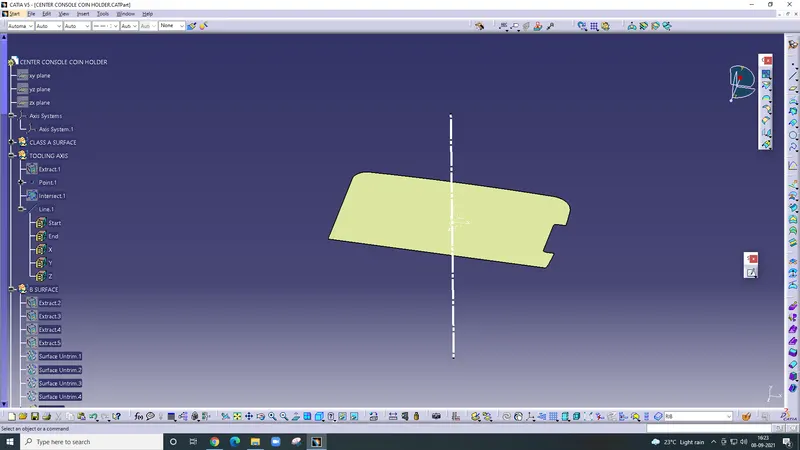
After that drawn line on it then extrude 12.5 height.
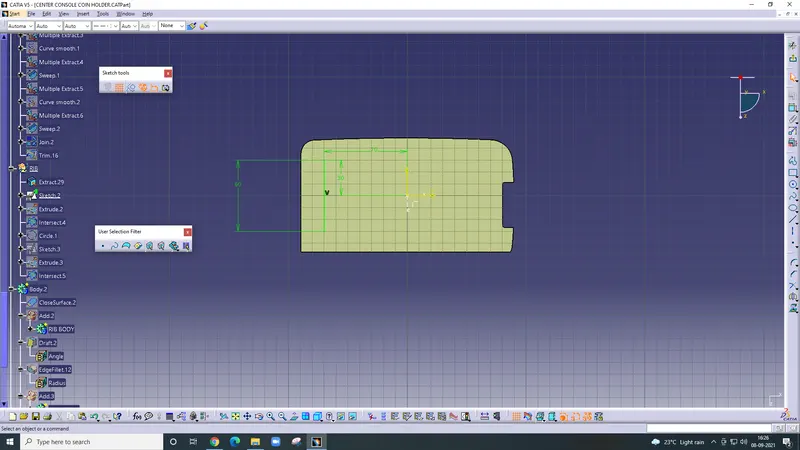
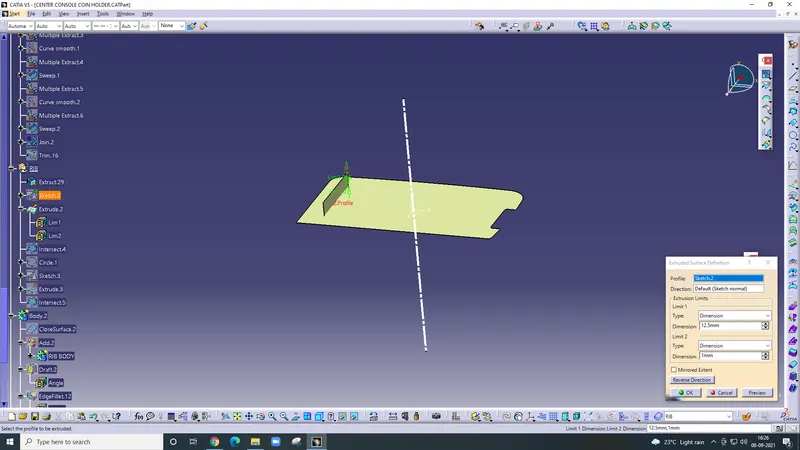
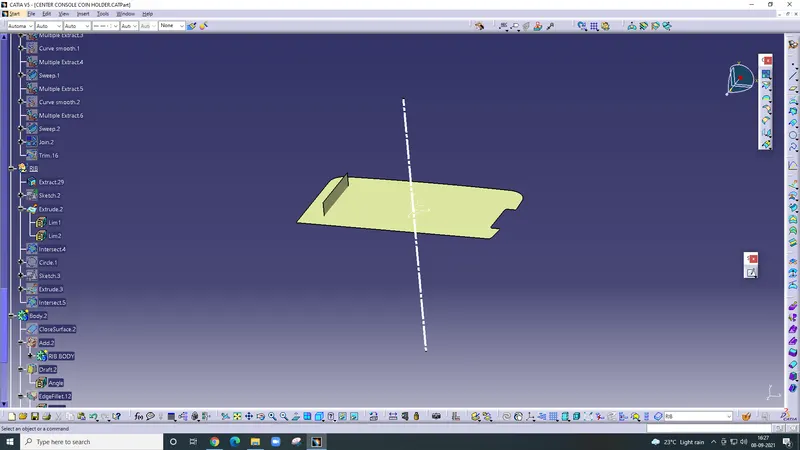
after that apply the Thicksurface command and intersect command.
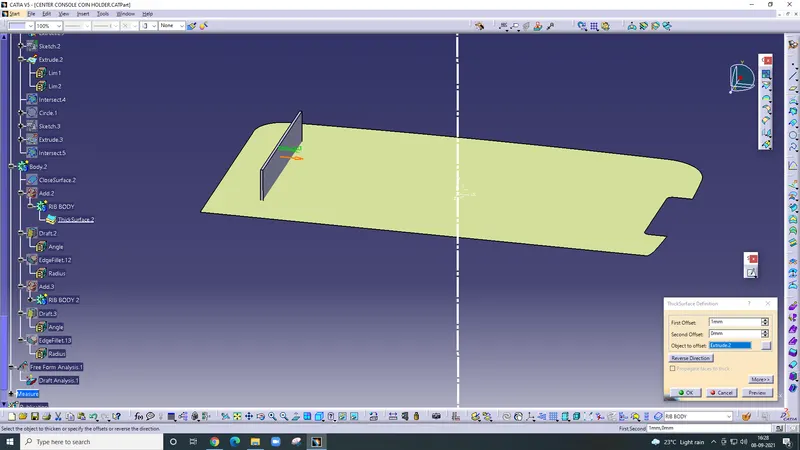
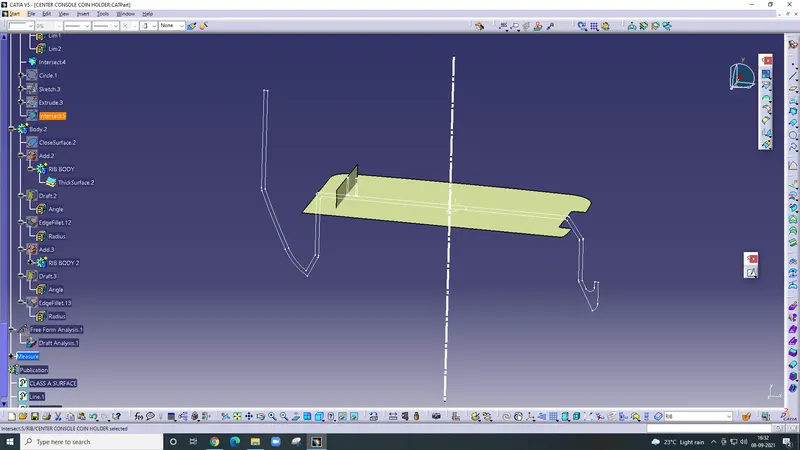
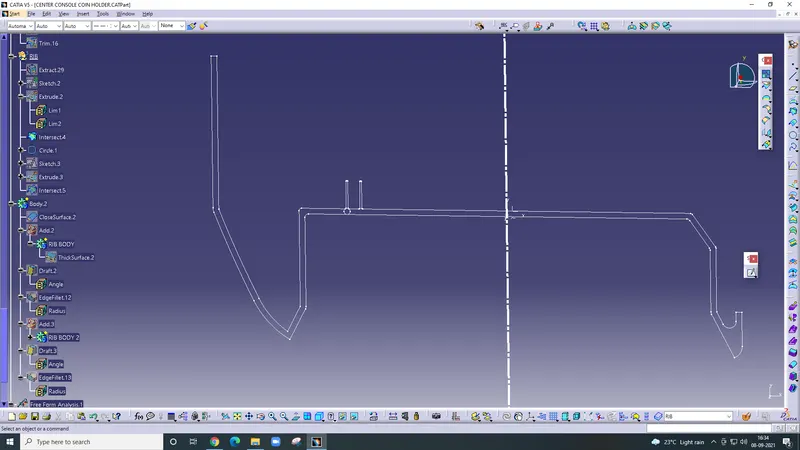
again draw the line then extrude and apply the thick surface command.
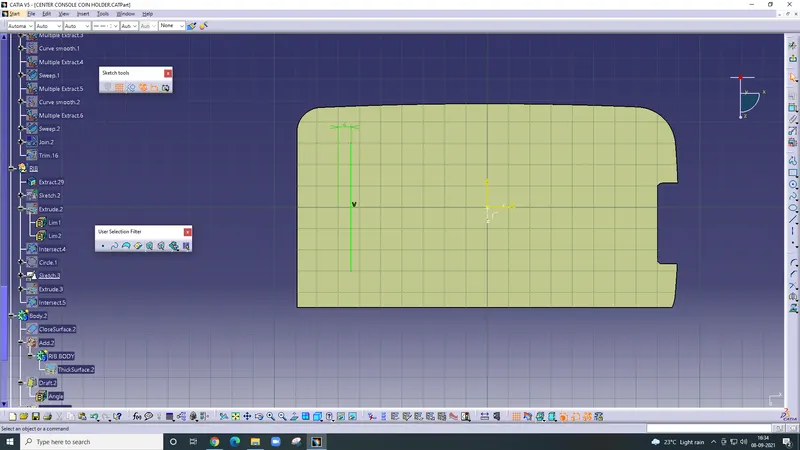
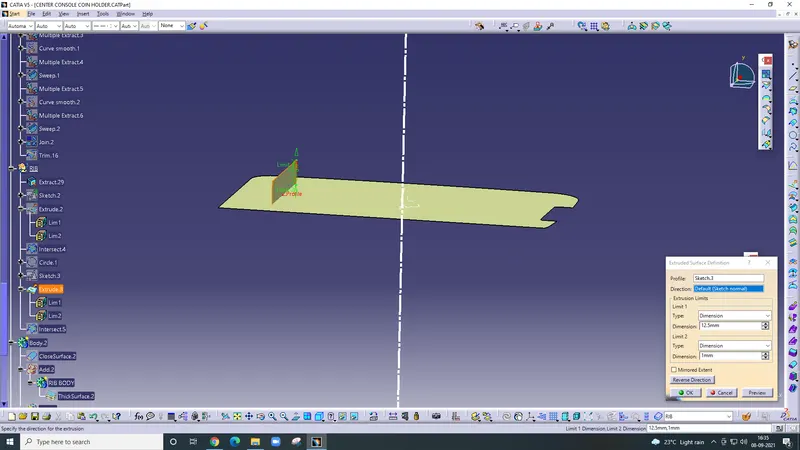
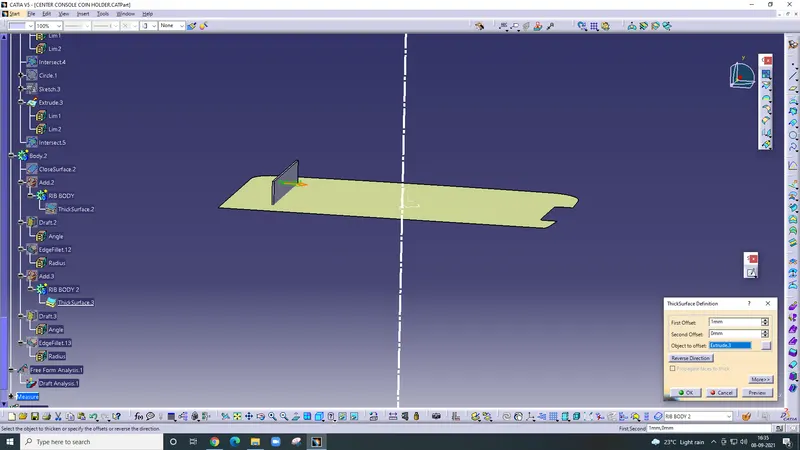
apply draft angle on both ribs is 0.5degree use fillet command fillet the edge is 0.25mm
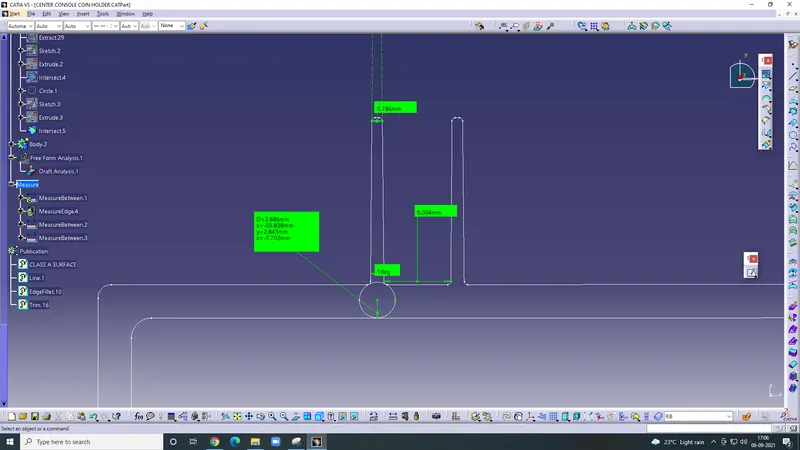
final rib on the coin holder.