Week 9 - Attachment Feature Creation - Challenge 1
AIM
To Create the rib for the Centre console coin holder considering the design rules.
INTRODUCTION
Ribs are indispensable functional structures on many plastic parts. It can effectively improve the rigidity and strength of plastic parts like the H beam. Ribs are generally designed on the non-appearing surface of the plastic part, and their direction is as close as possible to the flow direction of plastic melt filling. Ribs should neither be too long nor too thick, otherwise, it will increase the difficulty of injection molding, causing problems such as voids and sink marks on the back.
- The maximum rib thickness should be 0.4 times the nominal wall thickness to avoid creating areas of sink.
- The minimum tip radius must be 0.75mm.
- To avoid thin sections of steel in your mold, the distance between ribs should be at least two and a half times the nominal wall thickness.
- Ribs should have a draft angle of at least ½˚per side in order to accommodate easier ejection from the mold.
- Maximum rib height should be no greater than three times the nominal wall thickness in order
to avoid large variations in wall thickness. - Balance ribs on both sides of the nominal wall to avoid non-uniform shrink that can lead to warpage.
- The rib fillet should be 0.125*wall thickness.
- The height of the rib can 3 to 5 times the wall thickness.
- The rib root thickness can have a 30% to 50% deviation.
- The number of ribs is increased rather than the height of the rib which will provide more stiffness.
- Rib height/rib width=3:1 for steel.
- Rib height/rib width=2:1 for preferred.
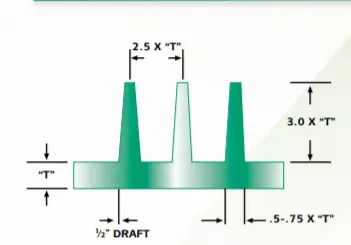
Rib design for the given Coin Holder
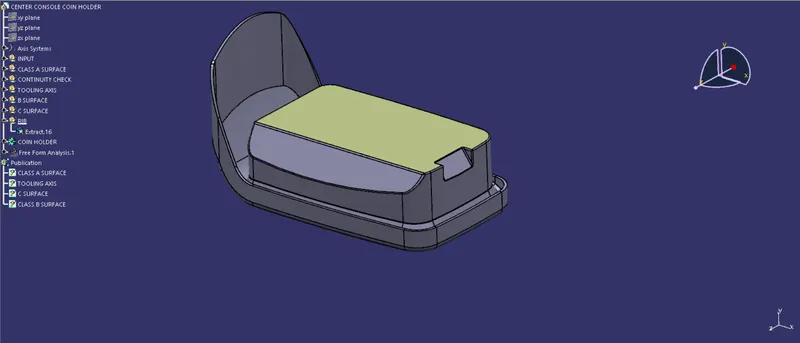
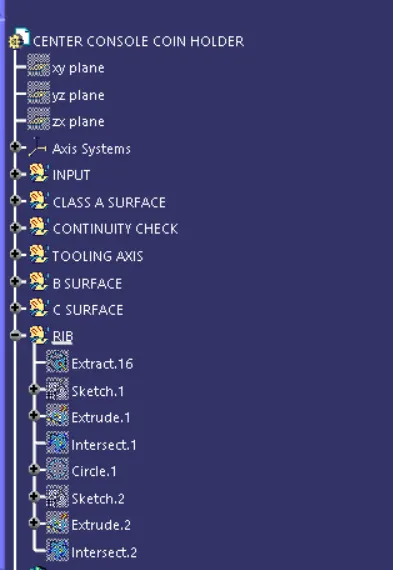
The base surface was extracted, where the rib is to be created.
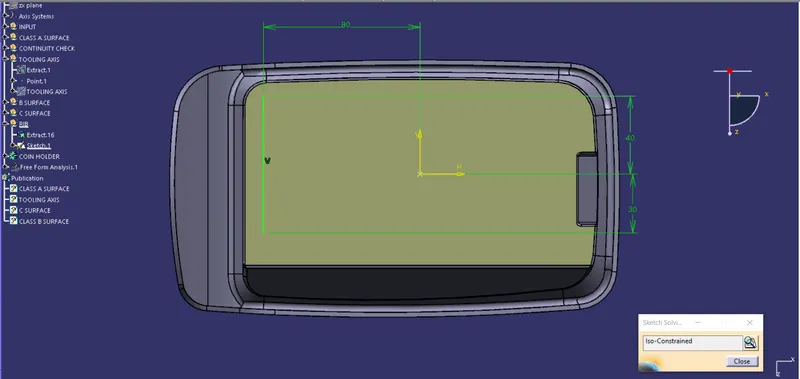
The profile for the rib is drawn.
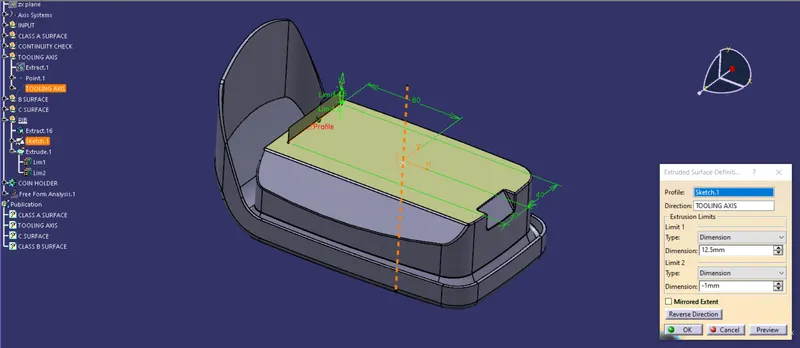
The profile is then extruded up to the nominal rib thickness along the tooling direction.
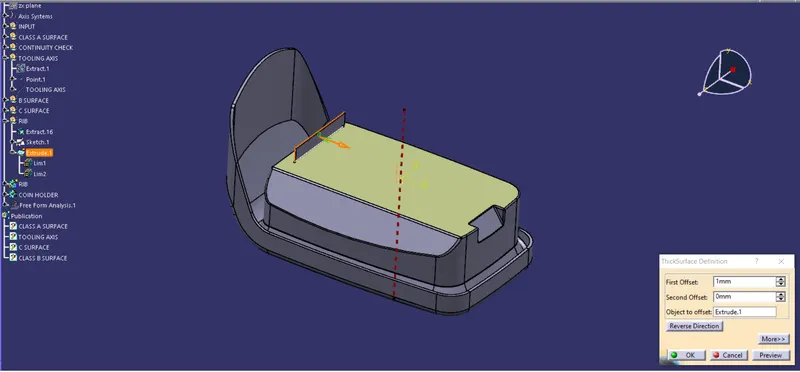
The rib surface profile is then thickened 0.4 times the thickness of the component.
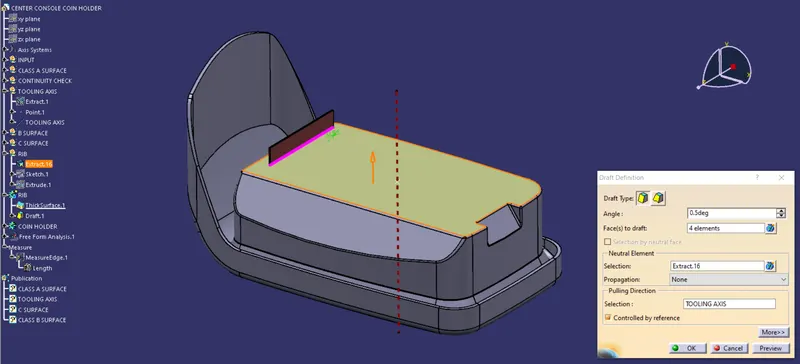
A draft angle of 0.5deg is added to both the sides of the rib with the tooling axis as the pulling direction.
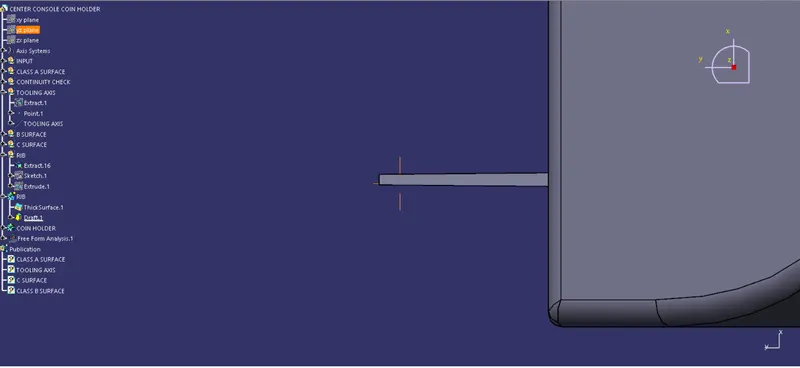
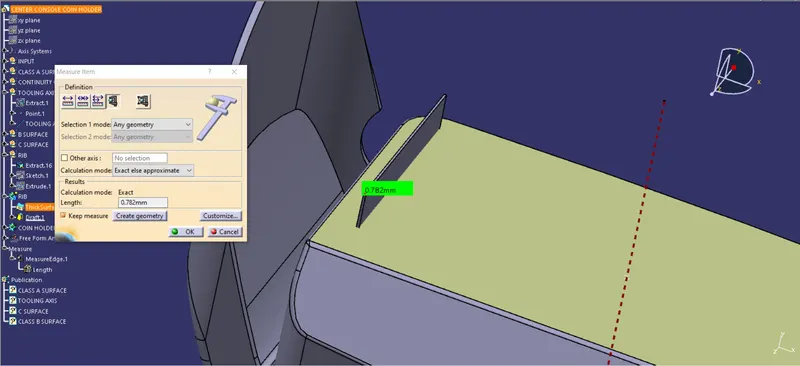
The top tip of the rib must have a minimum thickness of 0.75mm and the designed rib has satisfied the criteria.
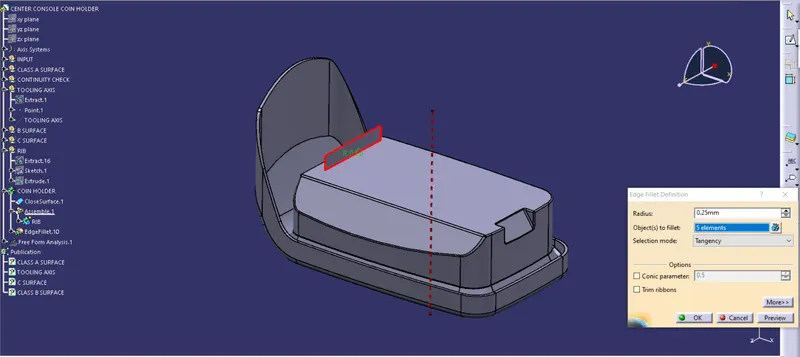
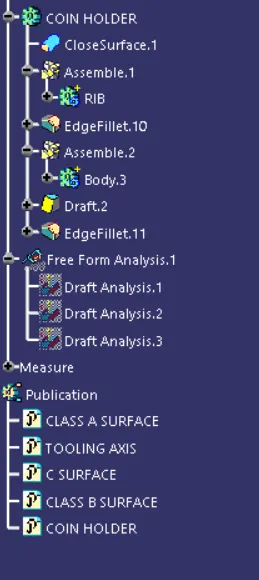
The Rib is then assembled with the main component and fillets are added.
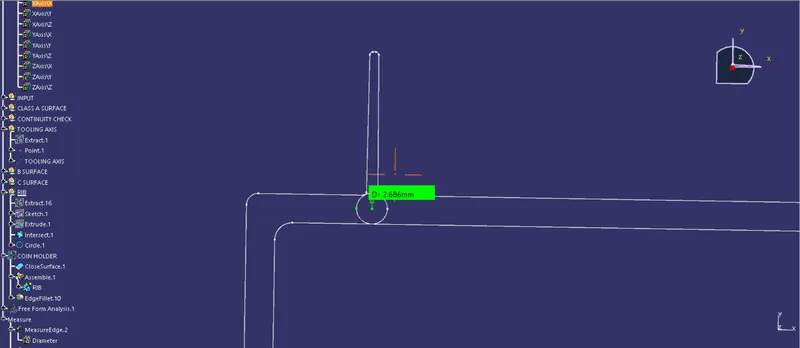
The rib root thickness requirement is satisfied.
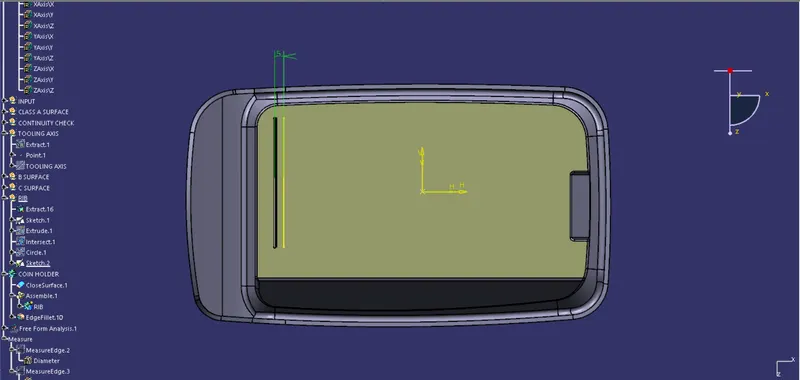
another sketch is created considering the minimum width between two ribs and all the operations are followed as in the first rib.
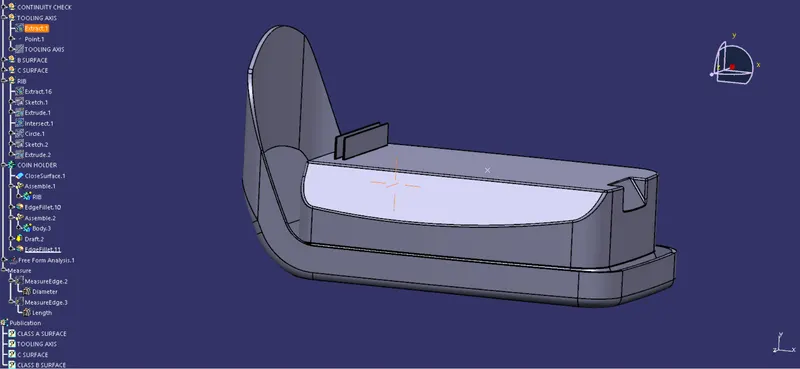
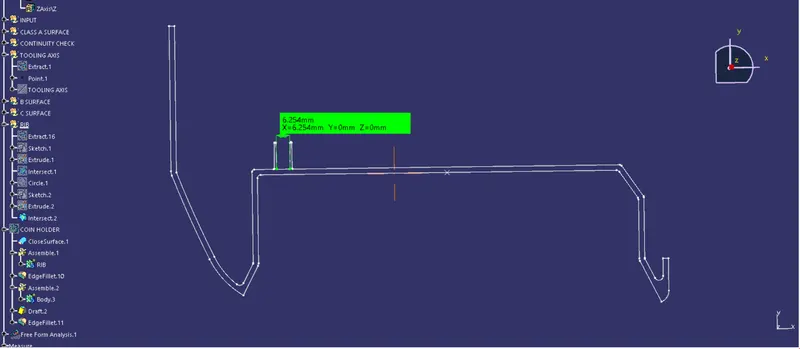
The ribs are placed apart to satisfy Rib height/rib width=2:1.
Creation of tooling axis for the given Class-A surface
- Tooling Axis direction is the direction in which the core and cavity open.
- The selection of tooling direction depends upon the product and the features of the product.
The tooling direction is selected by visually checking the part and in such a way that there are no additional side cores required for the molding process. This ensures proper clearance of the part after the process.
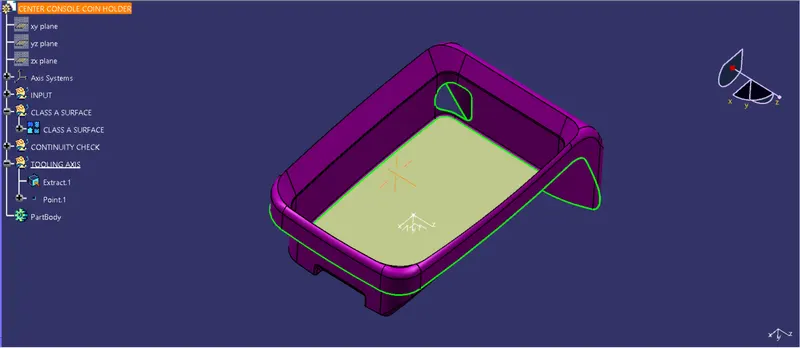
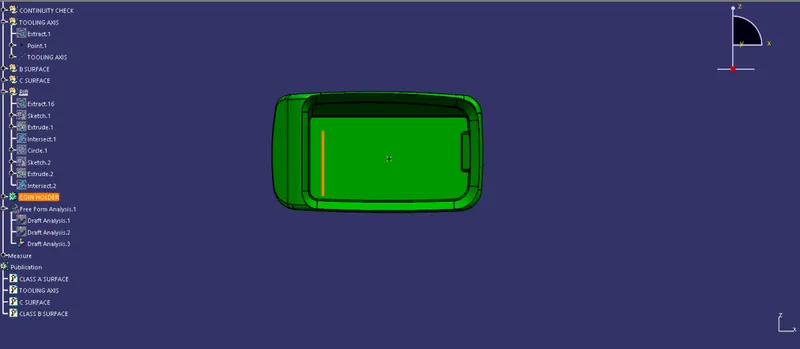
Extract the flat base surface and create a center point. Insert the axis system at that center point.
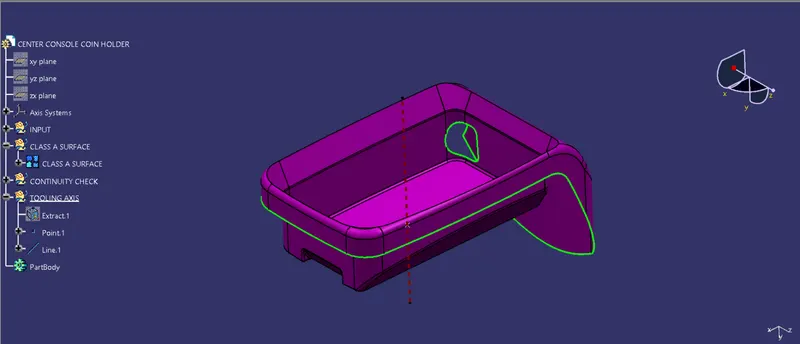
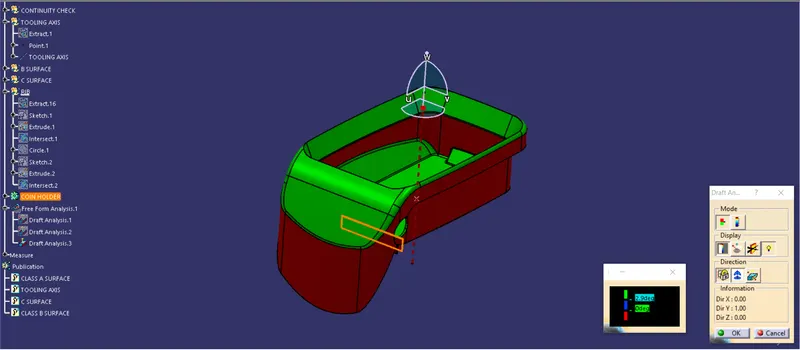
since the Class A surface walls are not having a proper draft angle we take the tooling axis normal to the base surface.
Draft Analysis
When developing parts for plastic injection molding, applying a draft (or a taper) to the faces of the part is critical to improving the moldability of your part. Without it, parts run the risk of poor cosmetic finishes and may bend, break, or warp due to molding stresses caused by the plastic cooling. Equally important, an absence of a draft may prevent parts from ejecting from the mold, damaging not only the parts but possibly the mold itself—a costly and time-consuming detour.
In CATIA the draft analysis can be found by Insert > Analysis> Feature Draft Analysis.
Generally, the nominal draft angle will be 3 degrees.