Week 8 Worm Gear Challenge
SIMULATION OF WORM GEAR ASSEMBLY
OBJECTIVE
To perform Transient Structural analysis on a Worm Gear Assembly in ANSYS Workbench.
Cut the gear by half and rotate the Worm so as to get to almost end of the half cut and obtain the results of Equivalent stress, Equivalent elastic strain and the Total Deformation of the model
MODEL SETUP
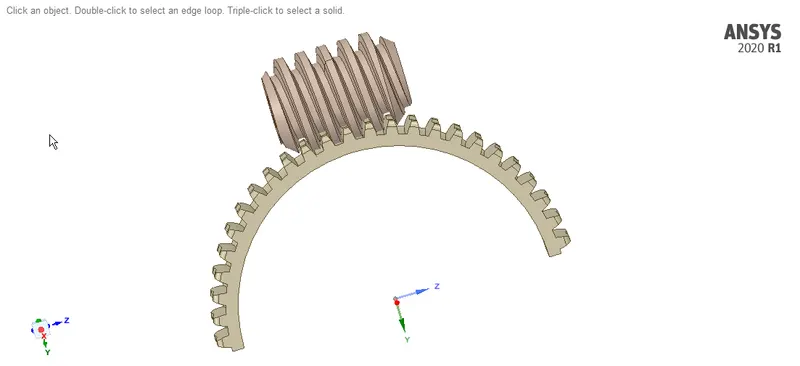
The 3D model of the setup is imported into ANSYS Space Claim and the gear is cut by half as shown. Check for any abnormalities in the Geometry.
MATERIAL ASSINGMENT:
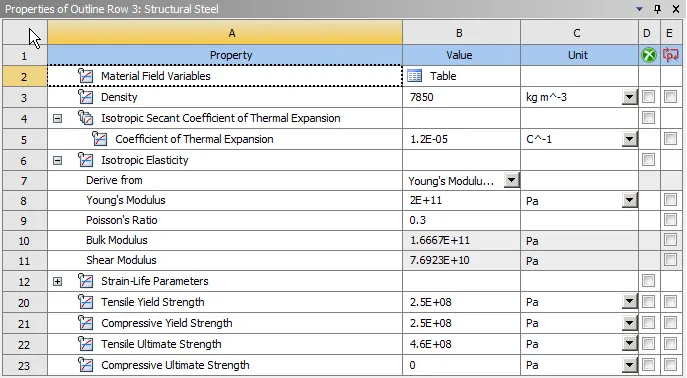
Structural Steel is assigned to both Worm and Worm Gear
The properties of materials used are shown below
- Structural Steel :
MODEL SETUP:
After importing the Geometry, rename the Parts and assign respective materials.
CONTACTS DEFINITION:
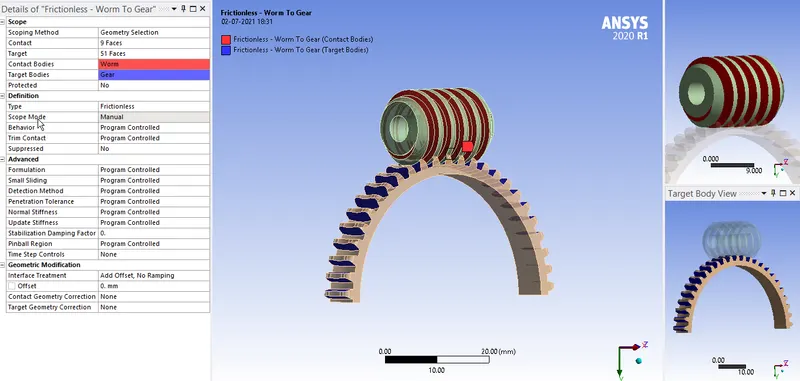
Frictionless Contact is assigned between the contact surfaces of Worm and Worm gear.
The setting are as shown below
JOINT DEFINITION:
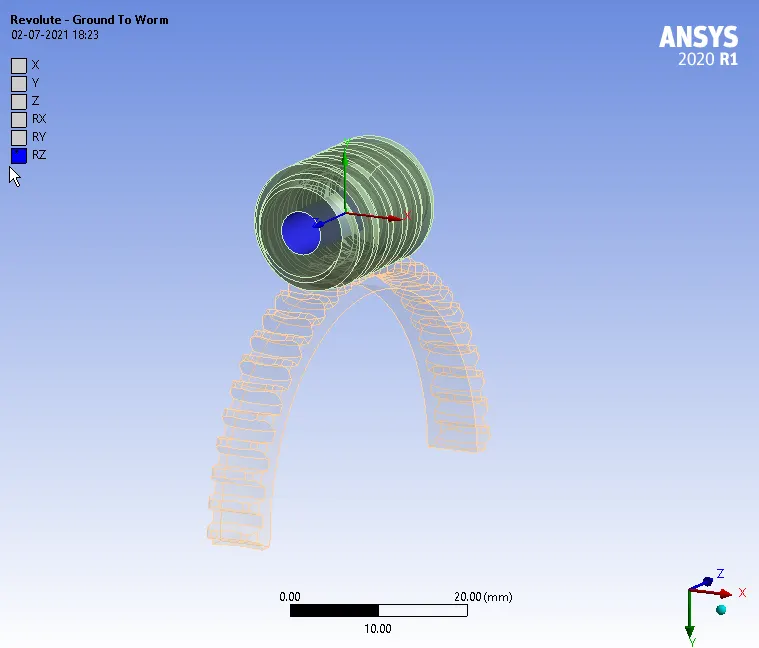
We need to define joints for the model, they are
- A Revolute joint is assigned to the Worm :
- A Revolute joint is assigned to the Worm Gear :
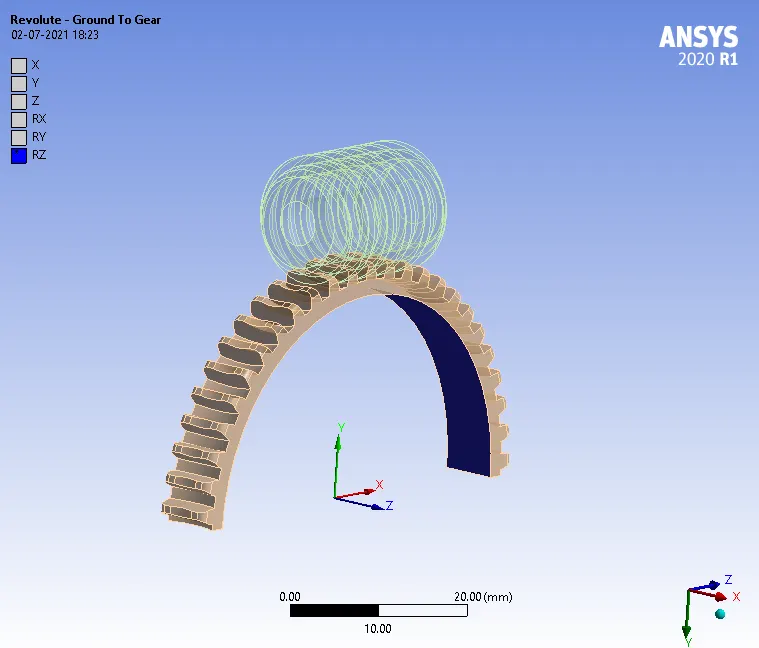
Also make sure the reference co-ordinate system assigned to the joint is as shown above.
MESHING:
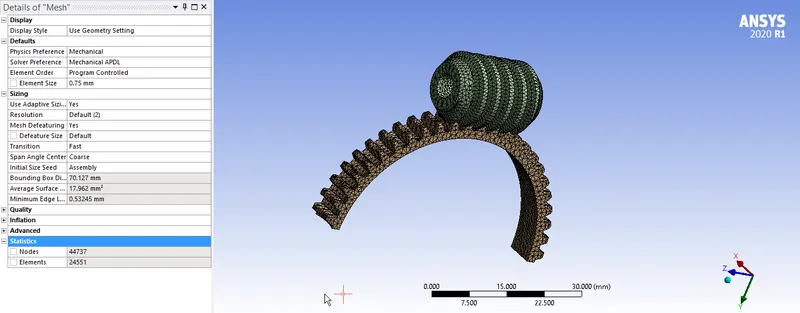
The meshing is done as follows,
- A element size of 0.75 with Patch conforming method is assigned to both Worm and Worm gear. The details and settings of the mesh are shown below.
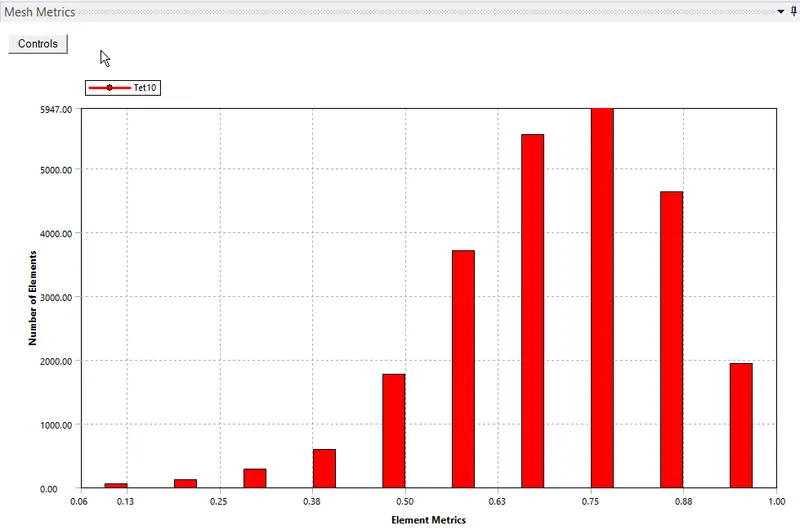
MESH QUALITY:
ANALYSIS SETTINGS:
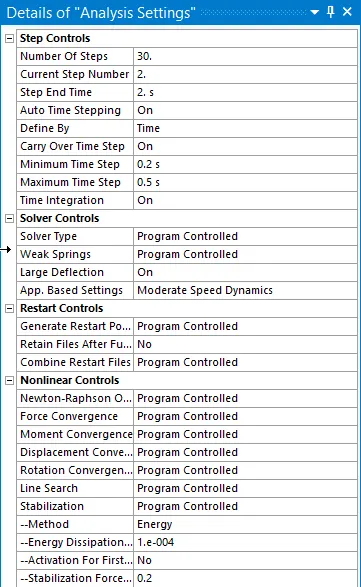
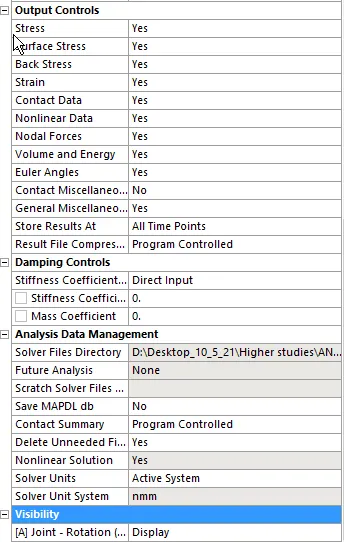
Now, the simulation is run for 30 steps. The following settings are modified
Auto Time stepping is set to ON and Time step values are assigned as shown below.
Solver Type is set to Program Controlled
Weak springs are set to Program Controlled
The Large deflection is set to ON.
Other settings are as shown below
BOUNDARY CONDITIONS:
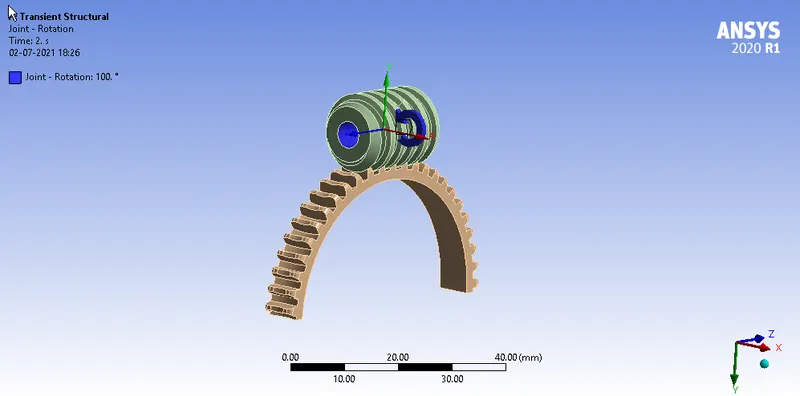
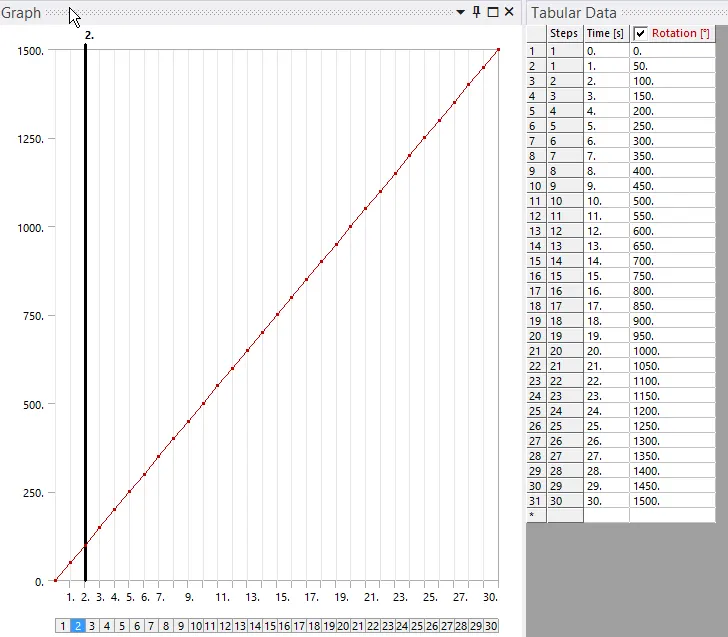
The boundary condition for this model are
- A Rotational Joint load is assigned to the Worm:
RESULTS:
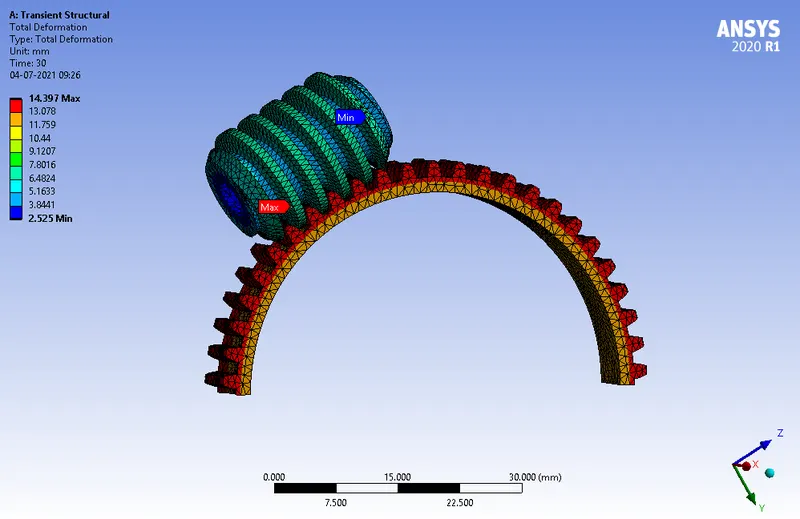
ANIMATION:
- Total deformation
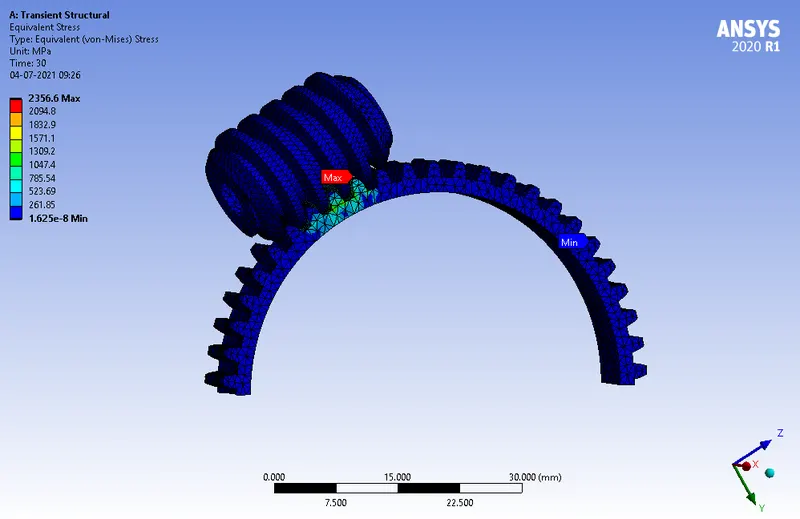
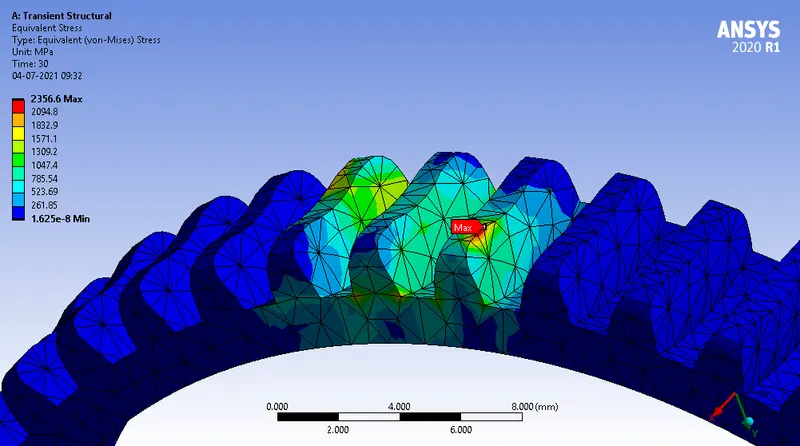
- Equivalent stress
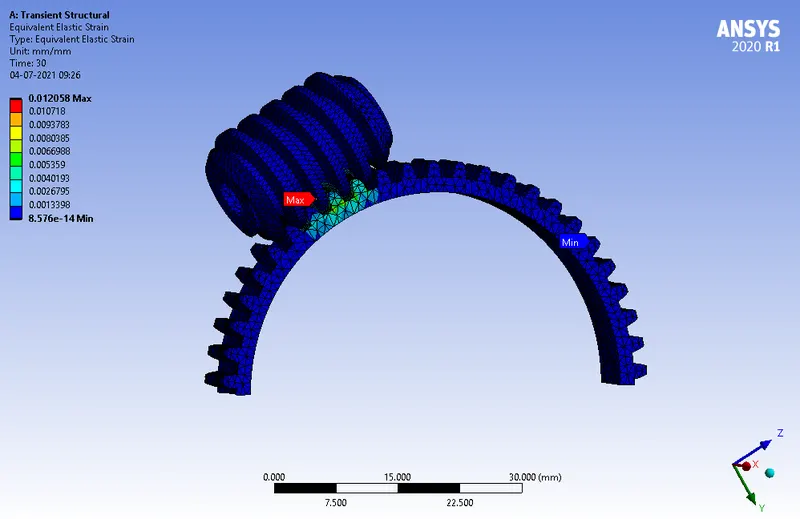
- Equivalent elastic strain
CONCLUSION:
The values of all the results are tabulated below,

Maximum Equivalent stress is generated the Gear tooth. Equivalent Stress generated is greater than the Tensile Yield Strength (250MPa) and Tensile Ultimate Strength of Structural Steel (460MPa), so there is more chance for the component getting fractured. Hence it is recommended to use other materials for the component.
The simulation files are attached below