Week 8 - Universal Joint
Objective:
The objective of this challenge is to perform the Transient Structural Analysis on a double universal joint with three different materials for the Spring_Joint, and analyze the stresses generated and total deformation in three cases CASE_1: Structural Steel, CASE_2: Stainless Steel, CASE_3: Titanium Alloy
Case setup
- After opening ANSYS Workbench, we are met with the Project Schematic window. Here, we can select the 'Transient Structural' analysis system on the left. Doing so creates a new project. Here, we can rename the project and also change the material if needed. We will need to right-click 'Geometry' and select 'import'. The file provided for this project should be selected.
- To create/edit new materias go to engineering data sources - general materials - select required materials.
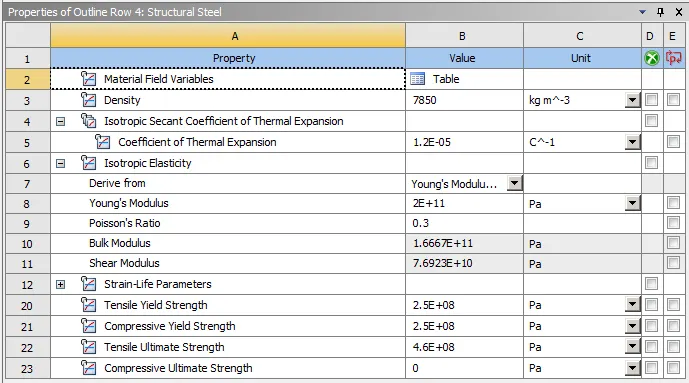
- For this project we use structural steel, stainless steel and titanium alloy material
Material properties of structural steel
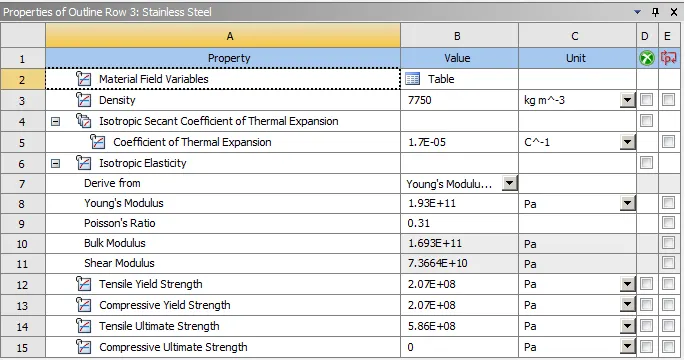
Material properties of stainless steel
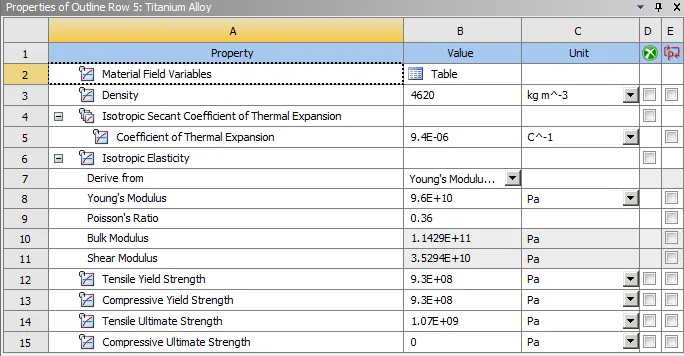
Material properties of titanium alloy
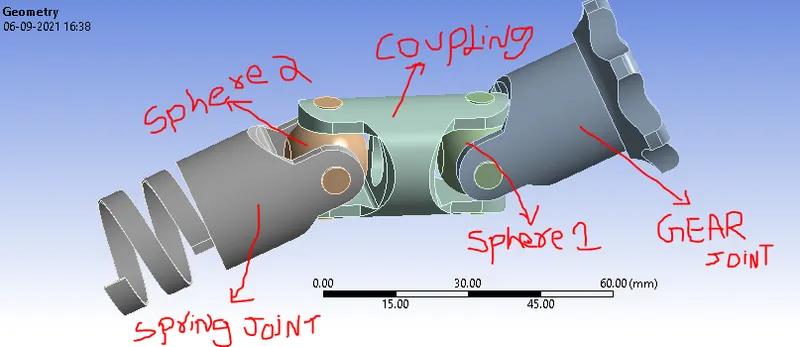
- The 3D model of the setup is imported into ANSYS Space Claim. Check for any abnormalities in the Geometry.
- After importing the Geometry, rename the components as Spring_joint , Gear_joint, Sphere 1, Sphere 2, and Coupling.
- Assign Structural steel material for all components except spring_joint for all 3 cases.
- material for spring_joint, CASE_1: Structural Steel, CASE_2: Stainless Steel, CASE_3: Titanium Alloy.
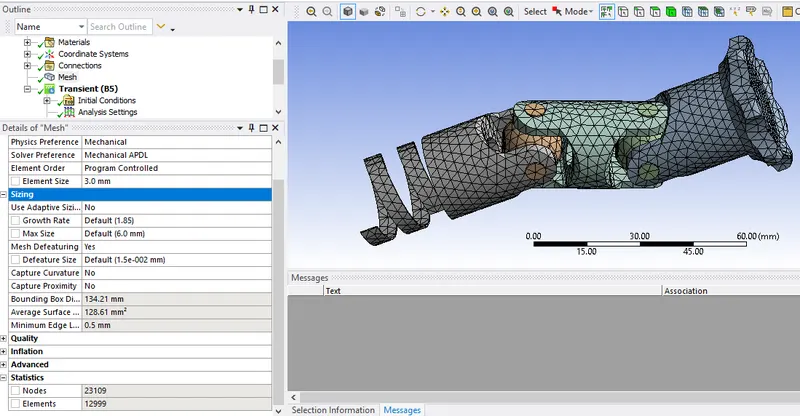
Mesh:
Global Element Size:3 mm
Use Adaptive Sizing: No
Quality: Smoothing= Medium
Statistics:
No.of Nodes: 23109
No.of Elements: 12999
Connections:
Joints (For CASE_1, 2 & 3):
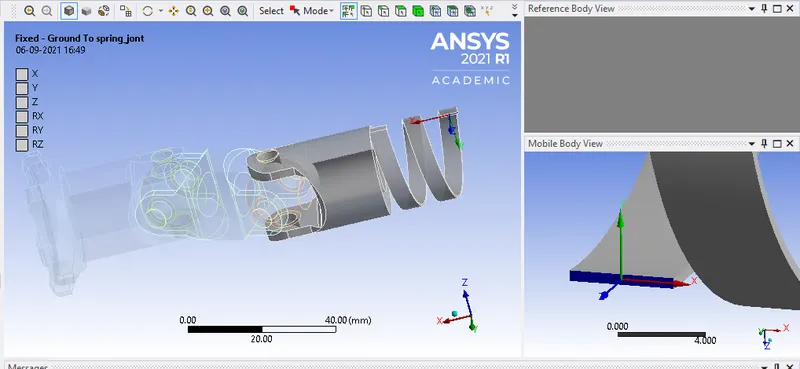
Joint_1:
Connection Type: Ground to Spring_Joint
Type: Fixed
Body: Spring_Joint
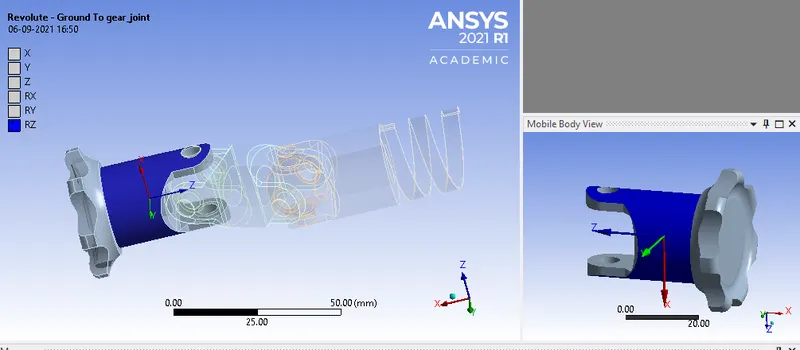
Joint_2:
Connection Type: Ground to Gear_Joint
Type: Revolute
Body: Gear_Joint
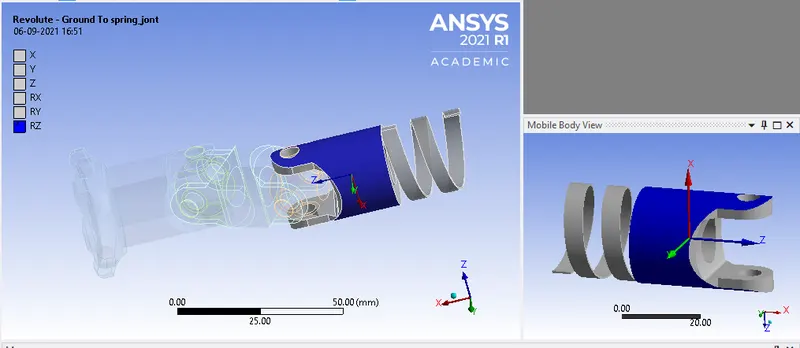
Joint_3:
Connection Type: Ground to Spring_Joint
Type: Revolute
Body: Spring_Joint
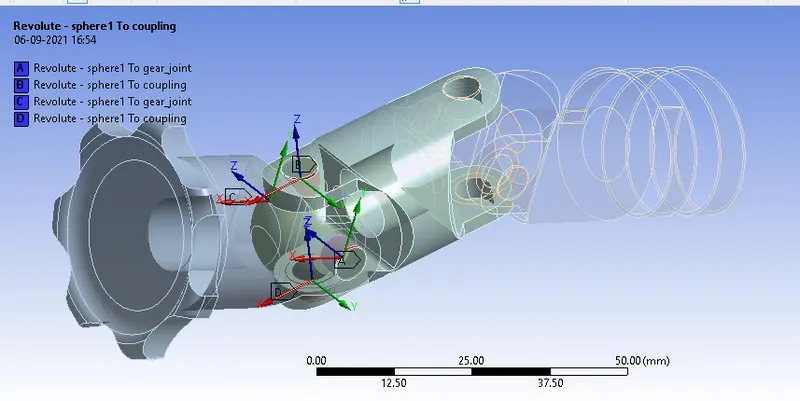
Joint_4, 5, 6, 7:
| Joint number | Connection type | joint type | Reference body | Mobile body |
| 4 | Sphere 1 to Gear_joint | Revolute | Sphere 1 | Gear_joint |
| 5 | Sphere 1 to Coupling | Revolute | Sphere 1 | Coupling |
| 6 | Sphere 1 to Gear_joint | Revolute | Sphere 1 | Gear_joint |
| 7 | Sphere 1 to Coupling | Revolute | Sphere 1 | Coupling |
Joint_8,9,10,11:
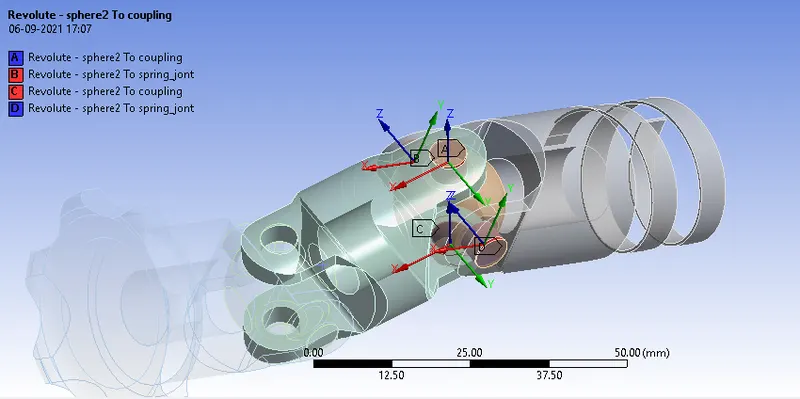
| Joint number | Connection type | joint type | Reference body | Mobile body |
| 8 | Sphere 2 to Spring_joint | Revolute | Sphere 2 | Spring_joint |
| 9 | Sphere 2 to Spring_joint | Revolute | Sphere 2 | Spring_joint |
| 10 | Sphere 2 to Coupling | Revolute | Sphere 2 | Coupling |
| 11 | Sphere 2 to Coupling | Revolute | Sphere 2 | Coupling |
Boundary Conditions:
Analysis Settings:
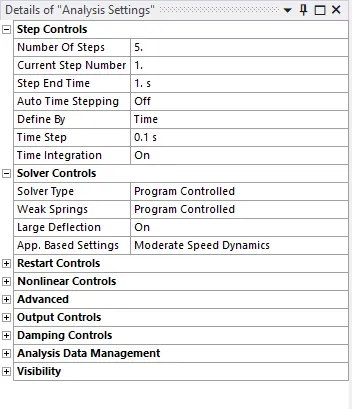
We are going to run this analysis in 5 steps with the following analysis settings.
No.of Steps: 5
Solver Type: Program Controlled
Weak Springs: Program Controlled
Large Deflection: ON
Auto Time Stepping: OFF
Defined By : Time
Time Step: 1 s
Time Integration: ON
Output Controls: Stress, Strain, Contact Data, Nodal Forces, Volume & Energy, Euler Angles, Contact Miscellaneous General Miscellaneous etc. to Yes
Joint Rotation:
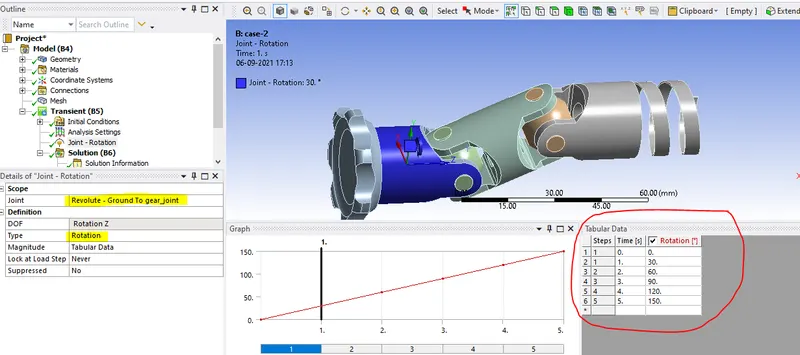
Apply Joint rotation to Gear_Joint at “Ground to Gear_Joint” joint in order to transform the rotary motion of the Gear_Joint shaft from one universal joint to another universal joint and from there to the Spring_Joint shaft and at last to the spring attached to the Spring_Joint.
- Run the simulation to generate eqivalent stress and total defromation as solution outputs
RESULTS
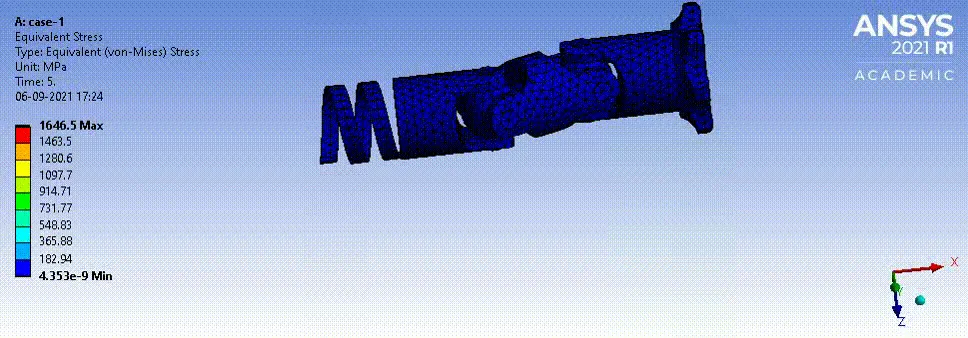
CASE_1: Structural Steel:
Eqivalent stress
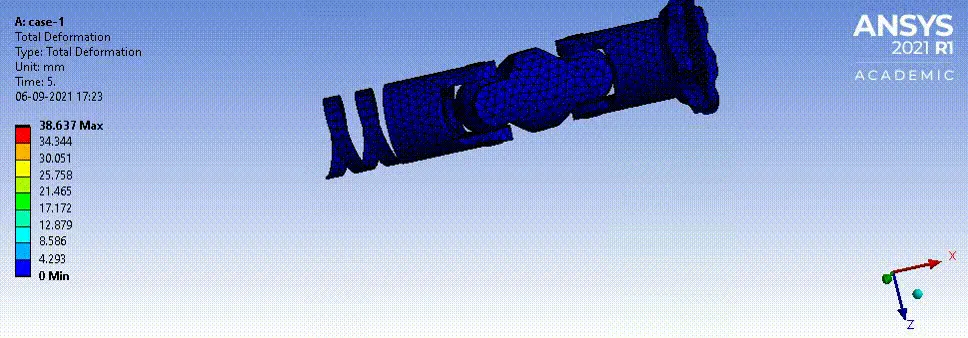
Total defromation
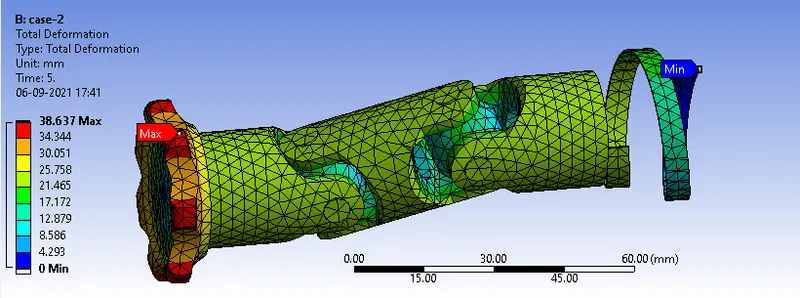
CASE_2: Stainless Steel:
Eqivalent stress
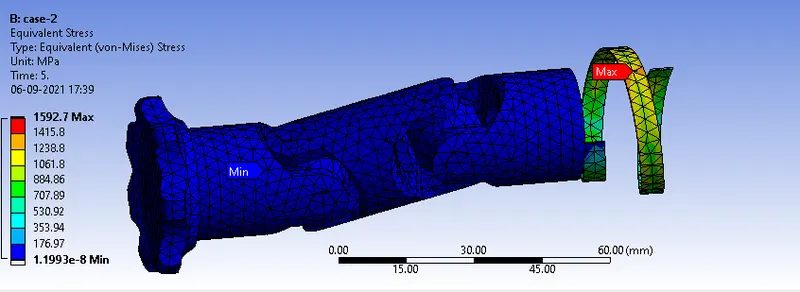
Total defromation
CASE_3: Titanium Alloy:
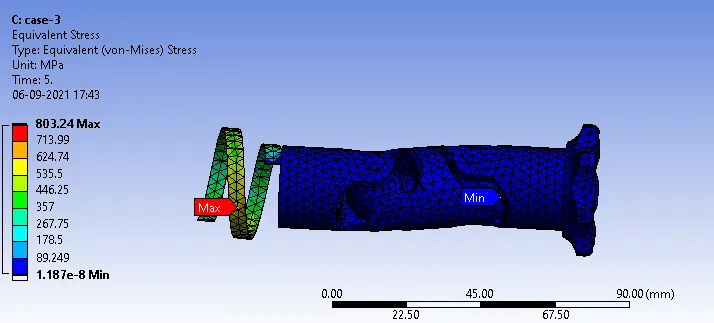
Eqivalent stress
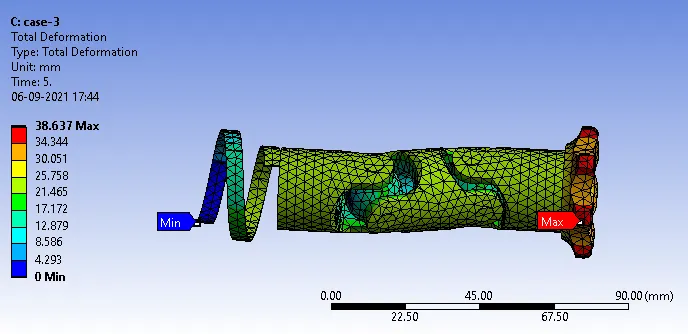
Total defromation
Comparision of Results
| Eqivalent stress | Total defromation | |
| Case - 1 ( Structural Steel) | 1646.5 mpa | 83.367mm |
| Case - 2 (Stainless Steel) | 1592.7 mpa | 83.367mm |
| Case - 3 (Titanium Alloy) | 803.24 mpa | 83.367mm |
Conclusion
- From the above results, we can observe that the Structural Steel gives higher stress than Stainless steel and Titanium Alloy.
- Deformation is constant for all 3 cases it is expected as total deformation is not dependent on the material.
- As we know that Titanium Alloy has the density nearly half of the Structural Steel, so it is light weight compared to Structural Steel and Stainless Steel, and so it is more flexible
- CASE_1 and CASE_2, maximum stress is exceeding the value of the yield Strength, so there is plastic deformation, but in CASE_3, maximum stress is well below the yield strength.
- So from the results and observation, we can conclude that the Titanium Alloy is very safe and effective material, which can give high performance and the mechanism of the Double Universal Joint, will be safe and can work longer.
Google link
https://drive.google.com/file/d/1KVt8zw8U765KUCYcMTfb95uIg8PTp3gi/view?usp=sharing