Week 8 - Universal Joint
Objective:
To perform a transient structural analysis on a double universal joint with a spring using three different materials: Structural Steel, Stainless Steel and Titanium alloy and to obtain the Equivalent stress and total deformation for all the three cases and compare them.
Case setup & Procedure:
- From the engineering data source we have selected structural steel, stainless steel and titanium alloy.
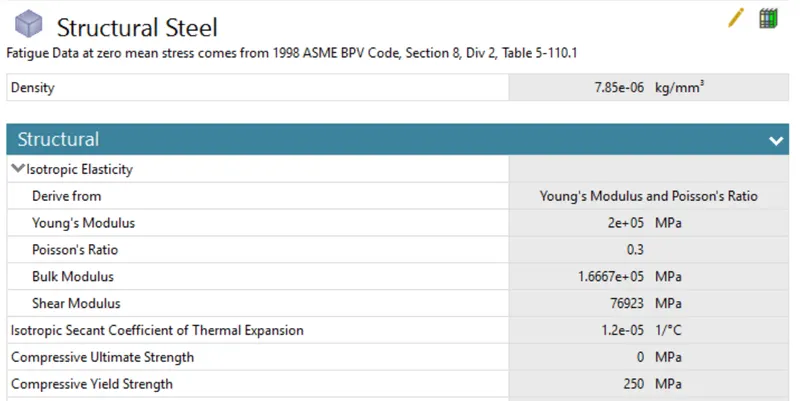
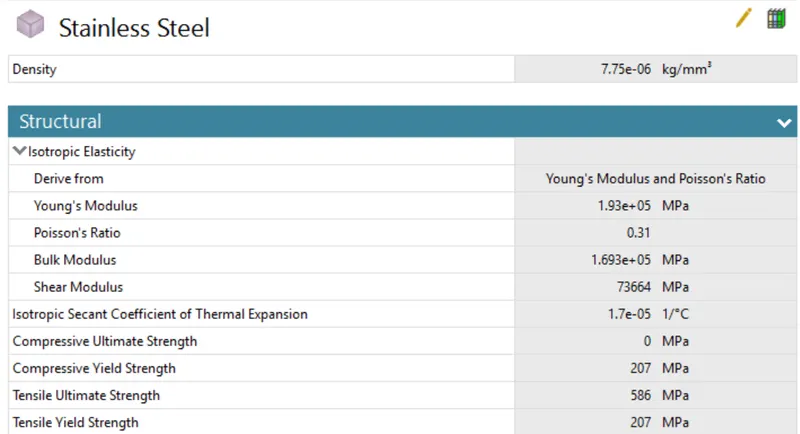
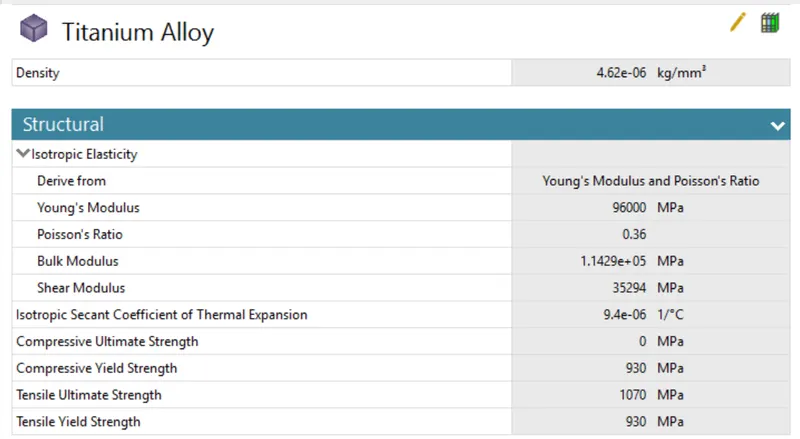
- The geometry of the universal joint has been imported and the material has been assigned to it as shown below.
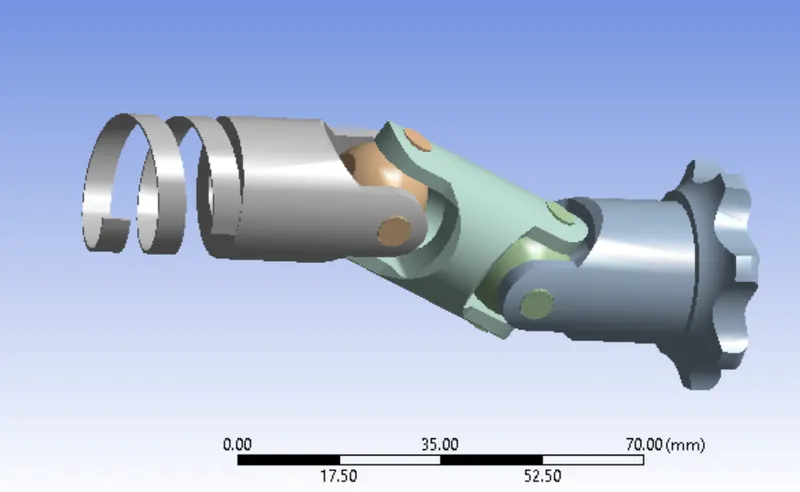
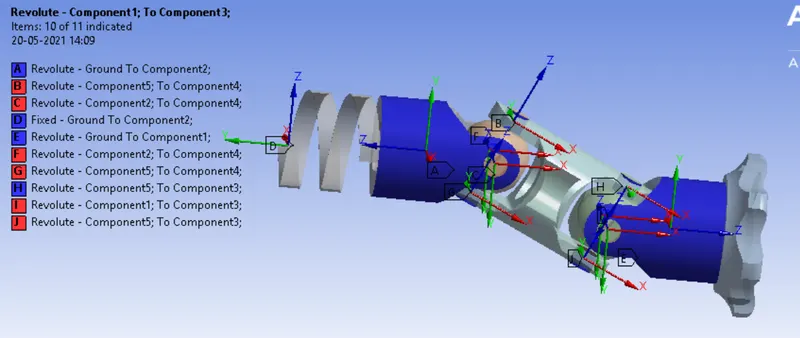
- In the connection section we have used joints as described below.
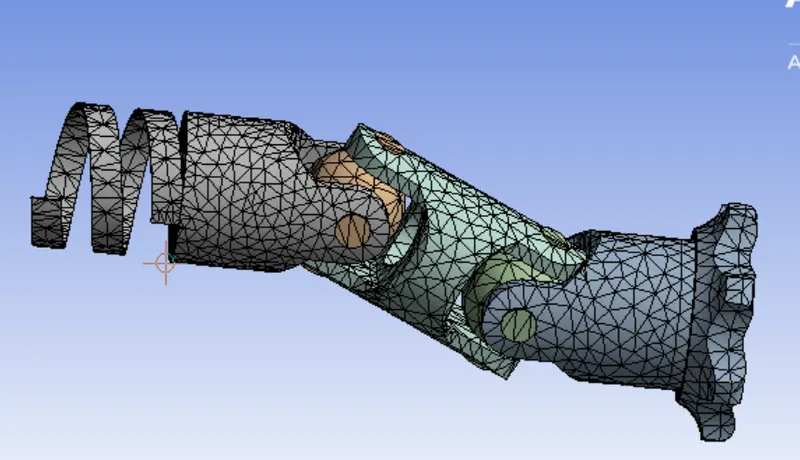
- We have mesh the component and the mesh component is just shown below.
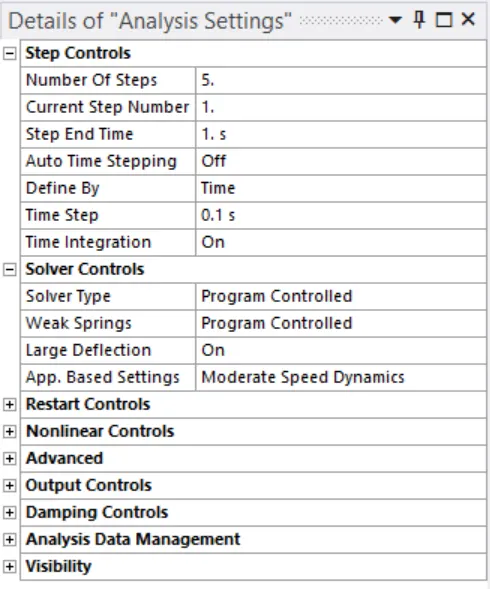
- In the analysis setting we have assigned 5 steps and the other changes are shown below.
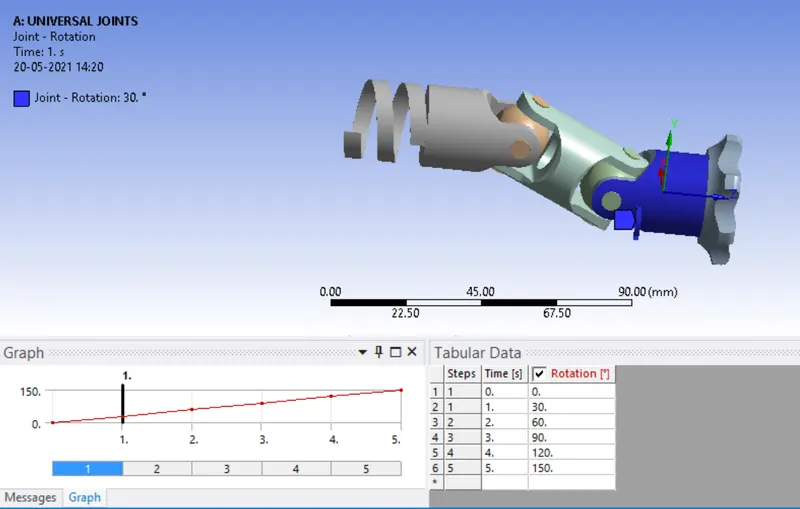
- The joint load is applied to the component which is attach to the gear as shown below.
- Finally all the solution required has been imported i.e Equivalent stress and total deformation.
Results:
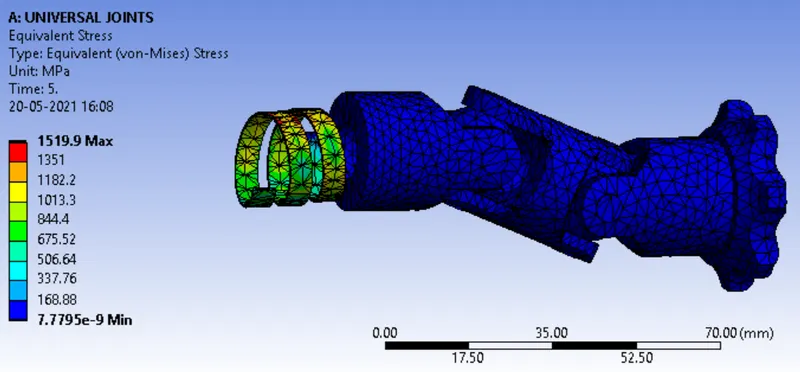
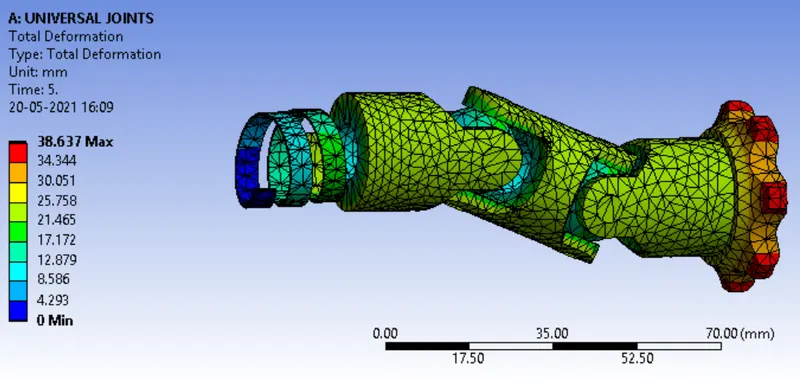
case 1 ( structural steel)
Equivalent stress
Total deformation
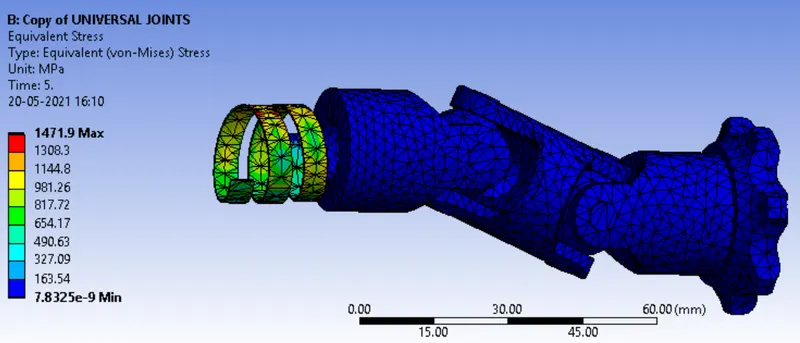
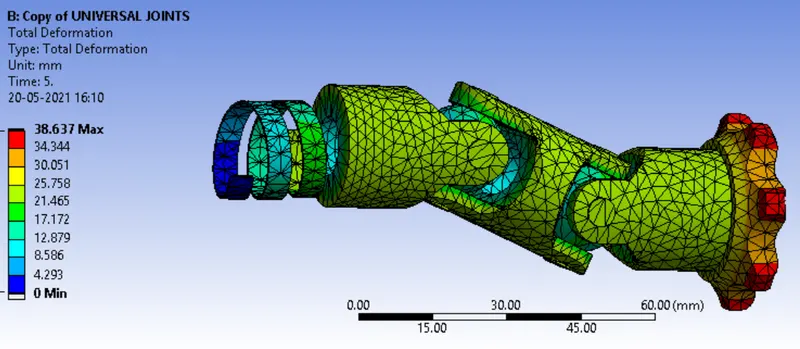
case 2 ( stainless steel)
Equivalent stress
Total deformation
case 3 ( Titanium alloy)
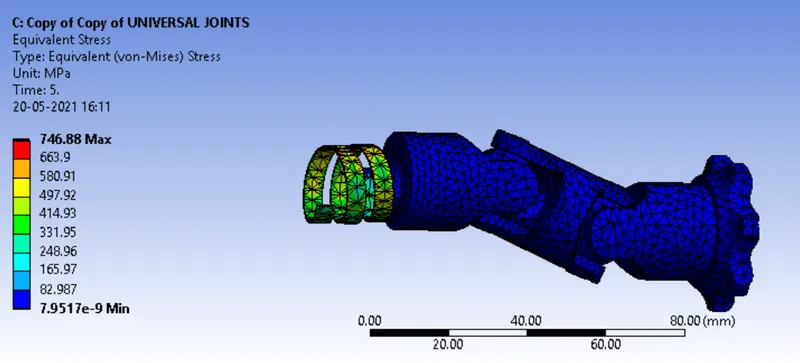
Equivalent stress
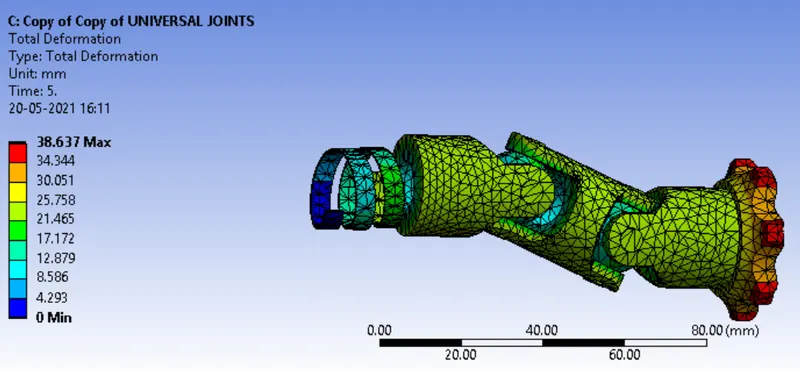
Total deformation
Discussion & Conclusion:
| Equivalent stress | Total deformation | |
| case 1 | 1519.9 MPa | 38.637 mm |
| case 2 | 1471.9 MPa | 38.637 mm |
| case 3 | 746.88 MPa | 38.637 mm |
- From the above table it can be observed that the equivalent stress is maximum in case of structural steel followed by stainless steel. The least stress is seen in Titanium alloy.
- The deformation is same in all the cases.
- So we can conclude that the Titanium alloy alloy is the better option to be used as a material for the section contaning the spring.
https://drive.google.com/file/d/1bgFA8WkQ_o97bIQC_bXnZ8dRrgG1AE38/view?usp=sharing