Week 8 - Universal Joint
Aim: The main objective of this challenge is to perform a Transient structural Analysis on a double universal joint with a spring using three different materials such as Structural Steel, Stainless Steel and Titanium alloy. And to obtain the Equivalent stress and total deformation for all the three cases and compare them
Procedure:4
Open transient structural module in ANSYS workbench. and open engineering data tab
select structural steel, stainless steel, Titanium alloy and close the tab
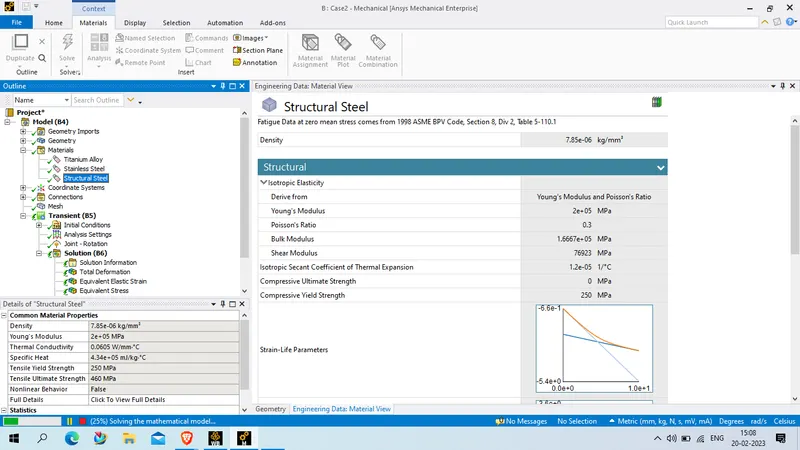
the mechanical property of structural steel as given below'
Density : 7.85e-06 kg/mm³
Isotropic Secant Coefficient of Thermal Expansion : 1.2e-05 1/°C
Young's Modulus: 2e+05 MPa
Poisson's Ratio: 0.3
Bulk Modulus: 1.6667e+05 MPa
Shear Modulus: 76923 MPa
Tensile Yield strength : 250 MPa
Compressive Yield strength : 250 MPa
Tensile Ultimate strength : 460 MPa
Isotropic Thermal Conductivity : 0.0605 W/mm·°C
Specific Heat Constant Pressure: 4.34e+05 mJ/kg·°C
Isotropic Resistivity: 0.00017 ohm-mm
Isotropic Relative Permeability: 10000
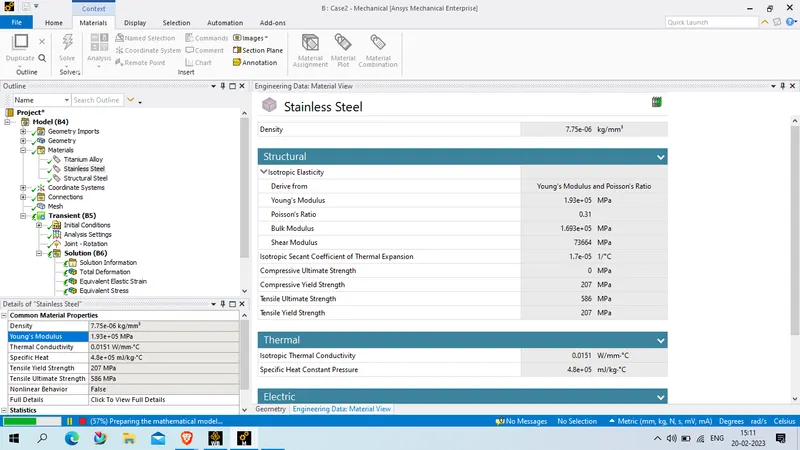
The mechanical property of stainless steel is as given below
Density : 7.75e-06 kg/mm³
Isotropic Secant Coefficient of Thermal Expansion : 1.7e-05 1/°C
Young's Modulus: 1.93e+05 MPa
Poisson's Ratio: 0.31
Bulk Modulus: 1.693e+05 MPa
Shear Modulus: 73664 MPa
Tensile Yield strength : 207 MPa
Compressive Yield strength : 207 MPa
Tensile Ultimate strength : 586 MPa
Isotropic Thermal Conductivity : 0.0151 W/mm·°C
Specific Heat Constant Pressure: 4.8e+05 mJ/kg·°C
Isotropic Resistivity: 0.00077 ohm-mm
Isotropic Relative Permeability: 1
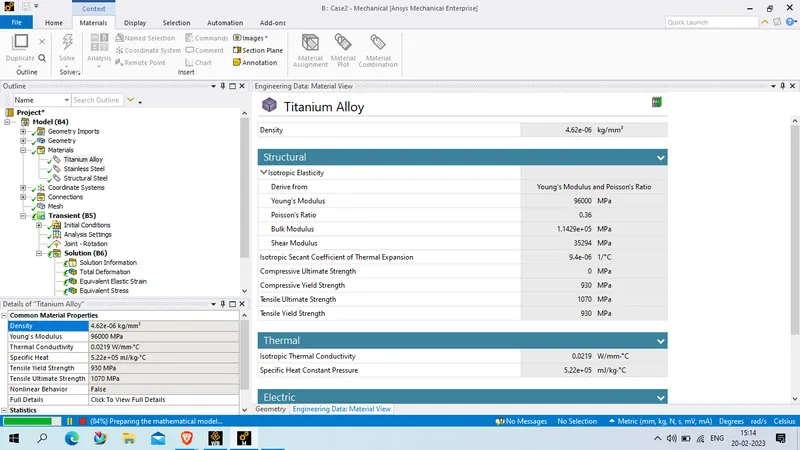
The mechanical property of titanium alloy is given as below
Density : 4.62e-06 kg/mm³
Isotropic Secant Coefficient of Thermal Expansion : 9.4e-06 1/°C
Young's Modulus: 96000 MPa
Poisson's Ratio: 0.36
Bulk Modulus: 1.1429e+05 MPa
Shear Modulus: 35294 MPa
Tensile Yield strength : 930 MPa
Compressive Yield strength : 930 MPa
Tensile Ultimate strength : 1070 MPa
Isotropic Thermal Conductivity : 0.0219 W/mm·°C
Specific Heat Constant Pressure: 5.22e+05 mJ/kg·°C
Isotropic Resistivity: 0.0017 ohm-mm
Isotropic Relative Permeability: 1
AFter material seletion we upload geometry in view the geometry in spacecliam using edit option as we found geometry good to go we close spaceclaim and open mechanical module using edit option
expand geometry and assign material to every component ,
in case 1 :
all component will be assign with structural steel only
{image }
for connection we delete all defualt generated contact and delpoy a below joint
(i) fixed joint to tip of the spirng , connection type - ground to body
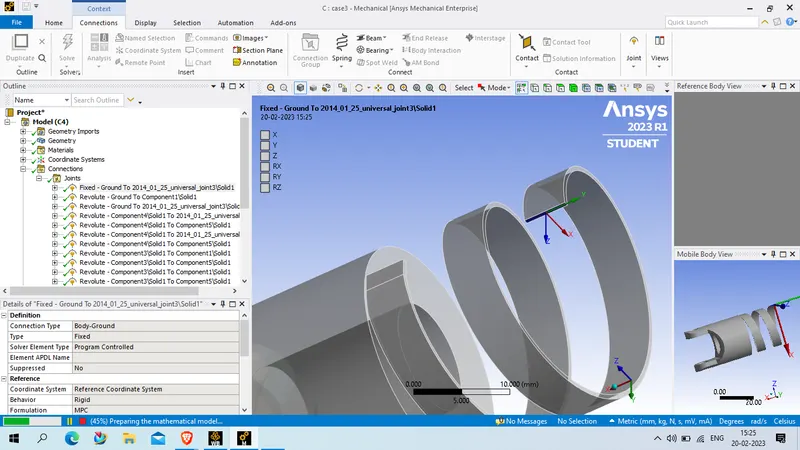
(ii) revolute joint to the gear part ( select shaft) as shown in below and axis of revolution must be z as shown in fig
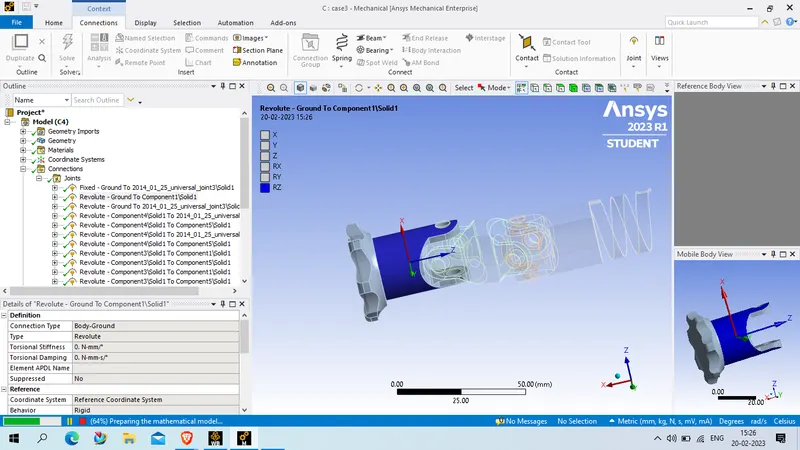
(iii) Revolute joint to the spring part as shown in fig.
(iv) revolute joint to the pin of gear part(Driver Yoke) and select the face as shown below. Connection type as body to body. Make sure that the rotation axis must be oriented correctly.
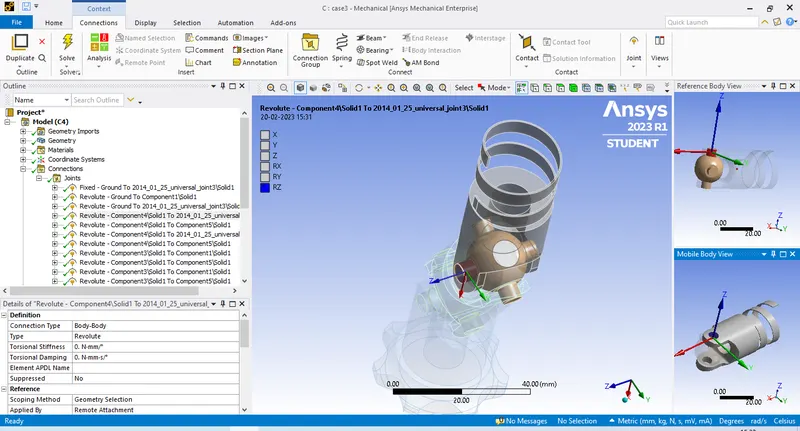
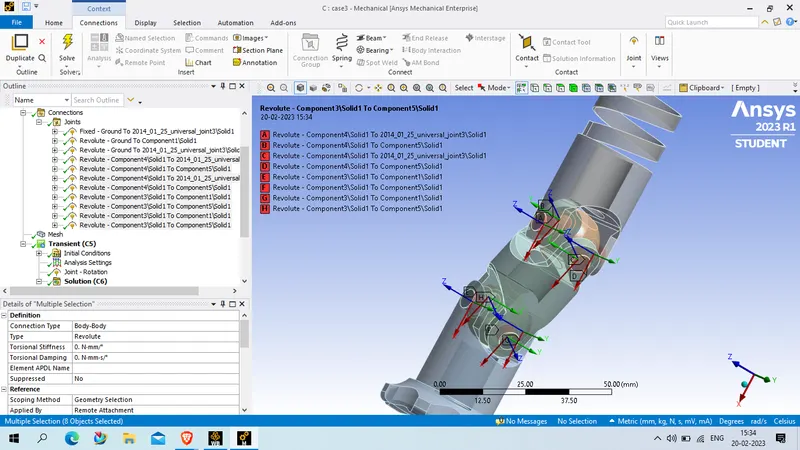
As this have 8 pin joint we will repeat same for all joint
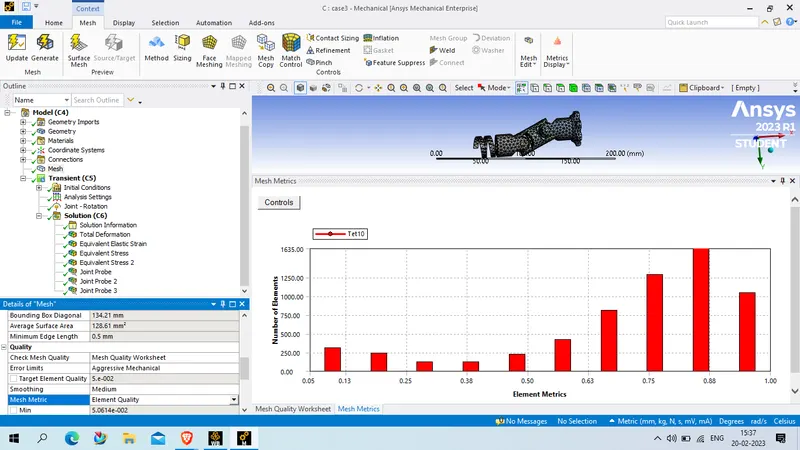
Now we will mesh the geometry usning element size of 4 mm, use adaptive size as no,
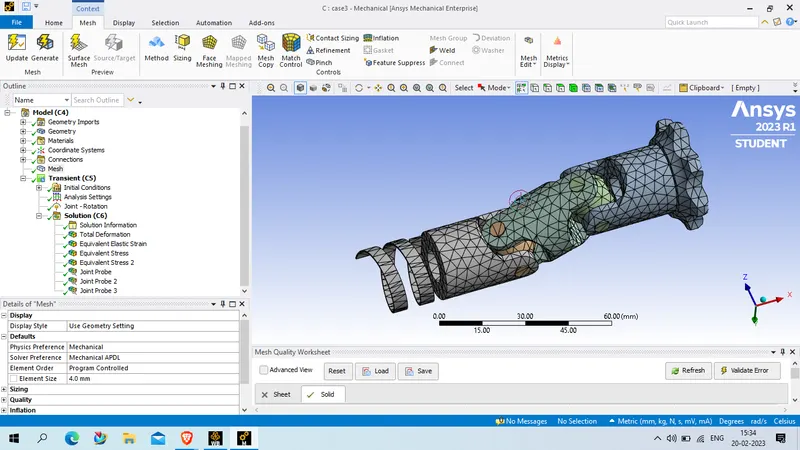
The statics of the elements are given below
number of node : 11894
No of element : 6169
thus our elements are under acedemic version of uses so we will proceed , our mesh quality shown in below gig. which is good for proceed.
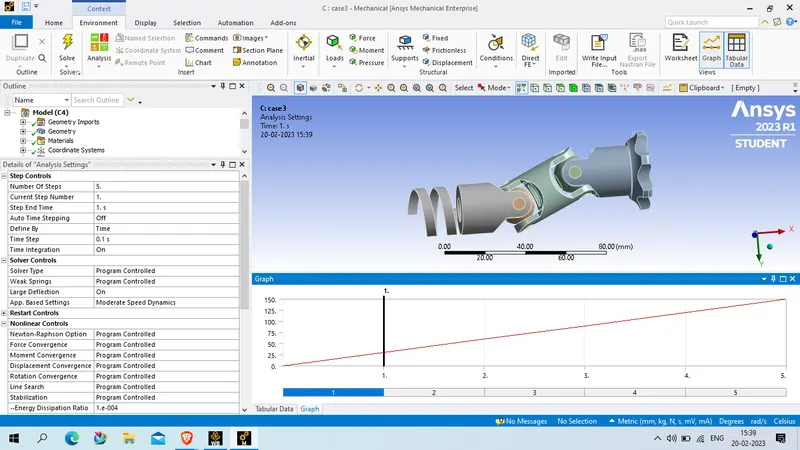
for analysis setting we will use 5 step, for 1st step
Auto time stepping: off
time step: 0.1 s
solver type: program controll
weak spring : program controll
large deflection: on
for output controll set all parameter to yes
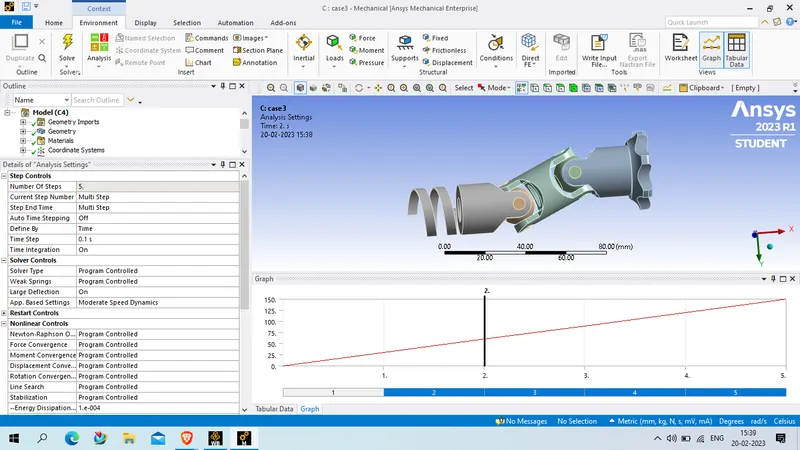
for 2nd to 5th step
Auto time stepping: off
time step: 0.1 s
solver type: program controll
weak spring : program controll
large deflection: on
for output controll set all parameter to yes
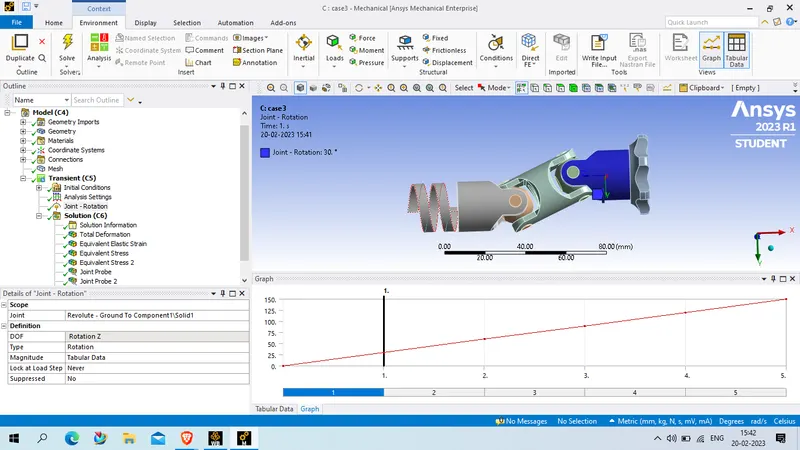
after analysis steup we will define
Joint Load for the gear part is defined by inserting a joint load and change the type as rotation, (Z) select the face as shown below for scope and magnitude of 0,30,60,90,120,150.
now list down the outpur required from simulation and run
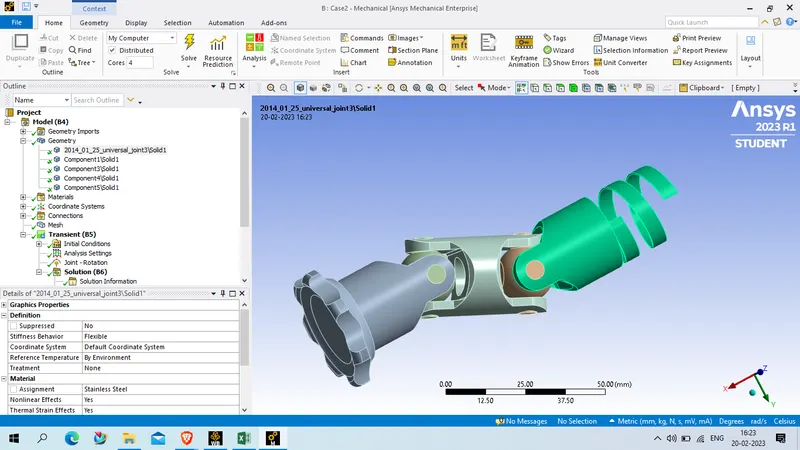
Case 2:
for case 2 we will change the spring part material to stainless stell and rest all the setting will be same as in case 1 , after changing the material we will run the simulation
Case 3:
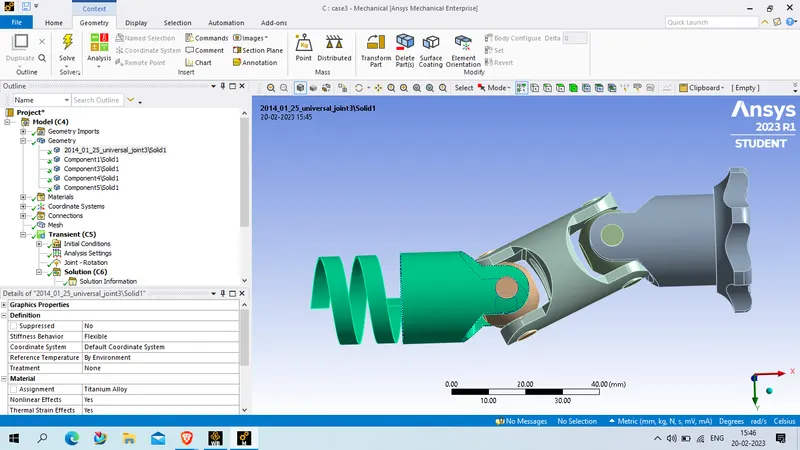
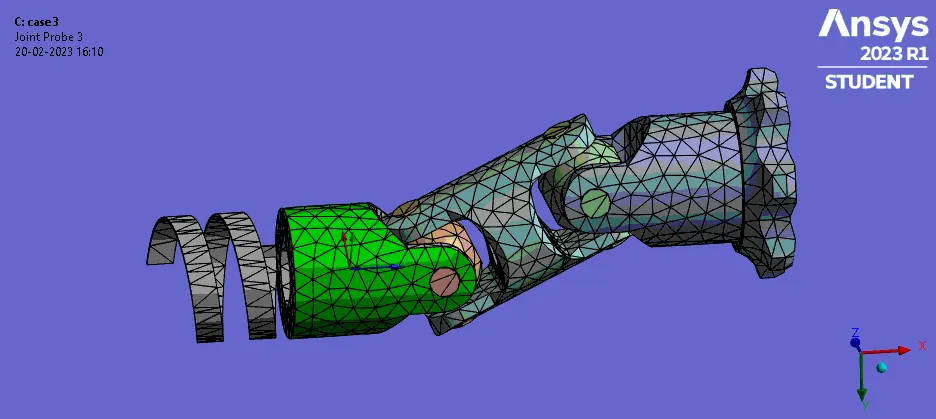
for case 23 we will change the spring part material to Titanium alloy and rest all the setting will be same as in case 1 , after changing the material we will run the simulation
Picture :
Case 1:
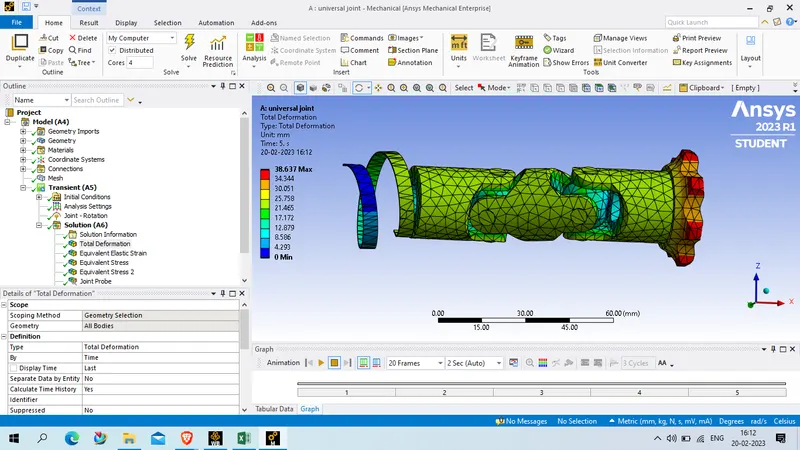
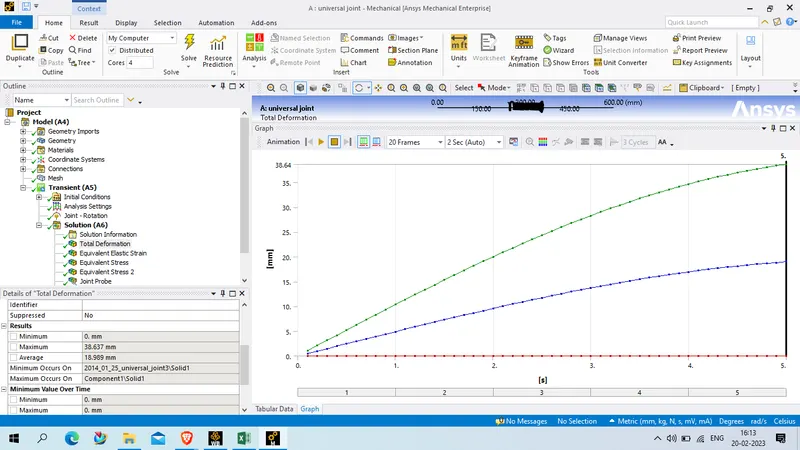
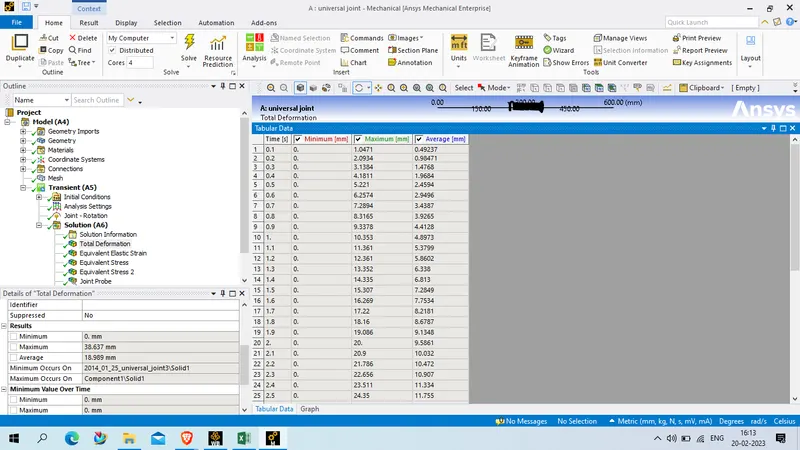
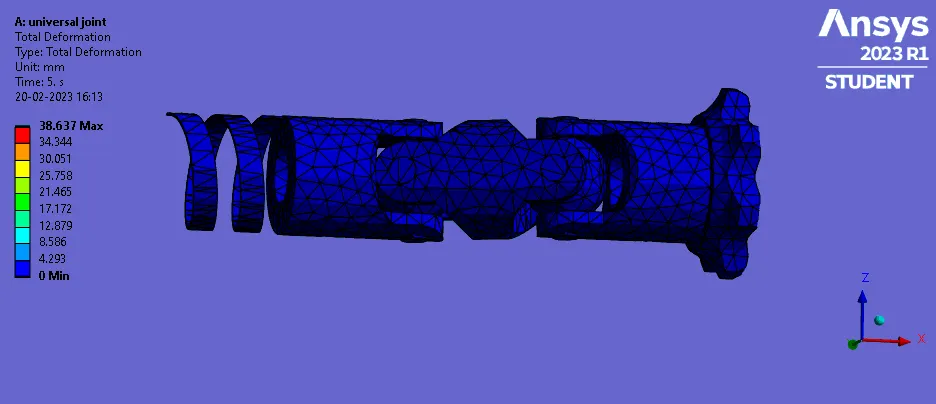
Total deformation
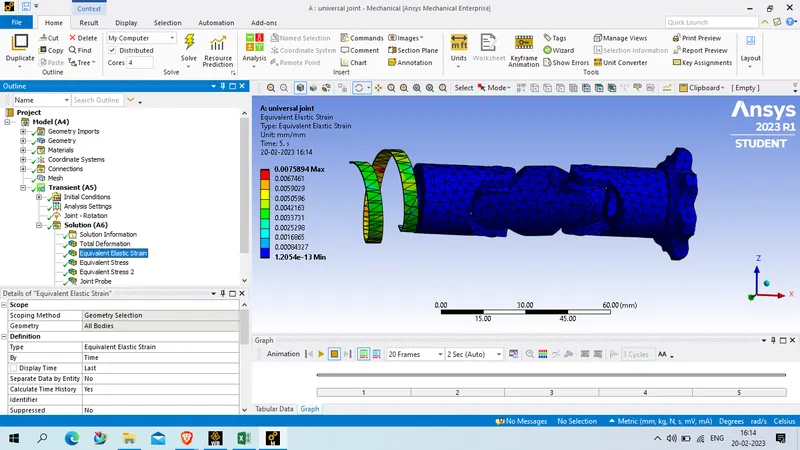
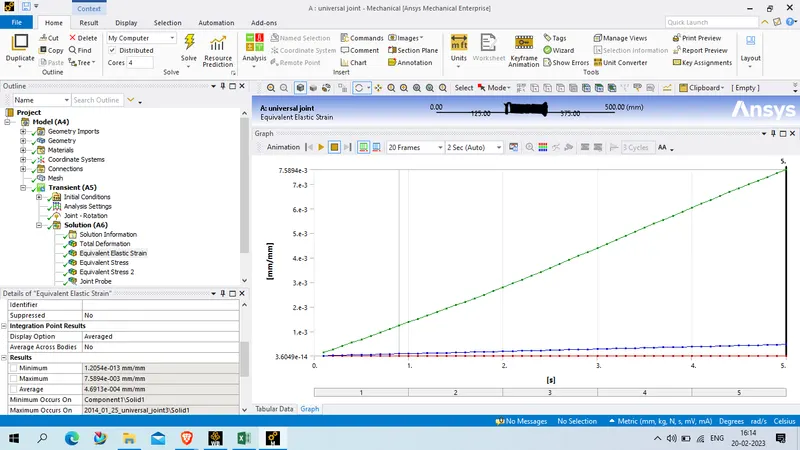
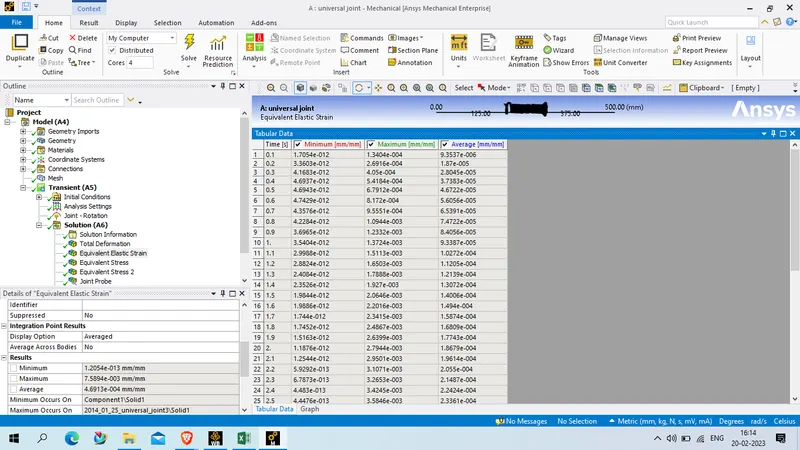
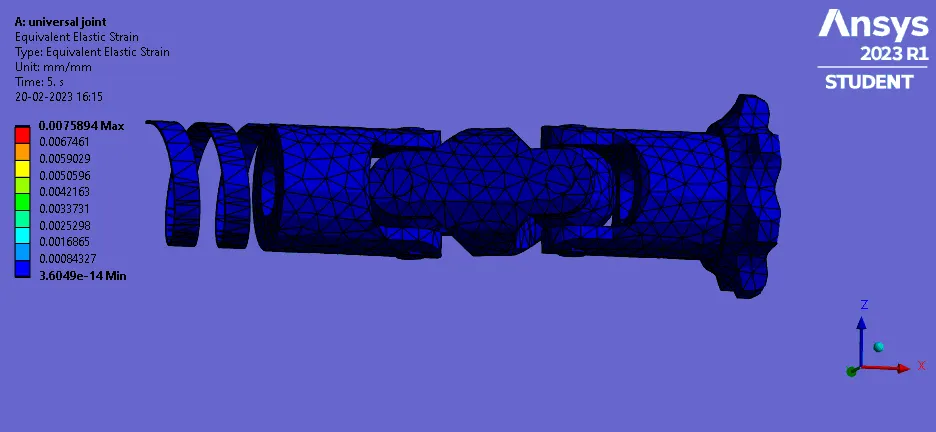
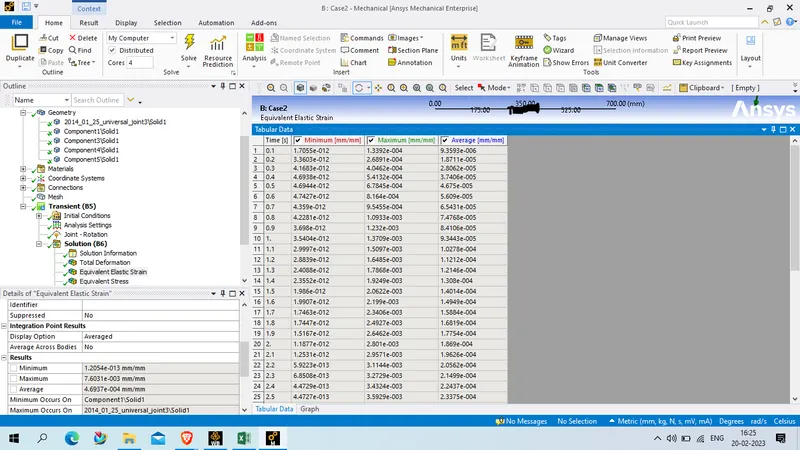
Equivalent Elastic strain
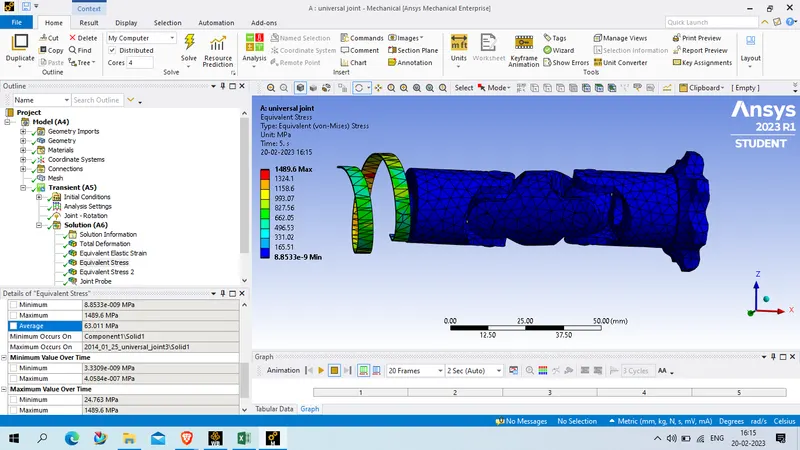
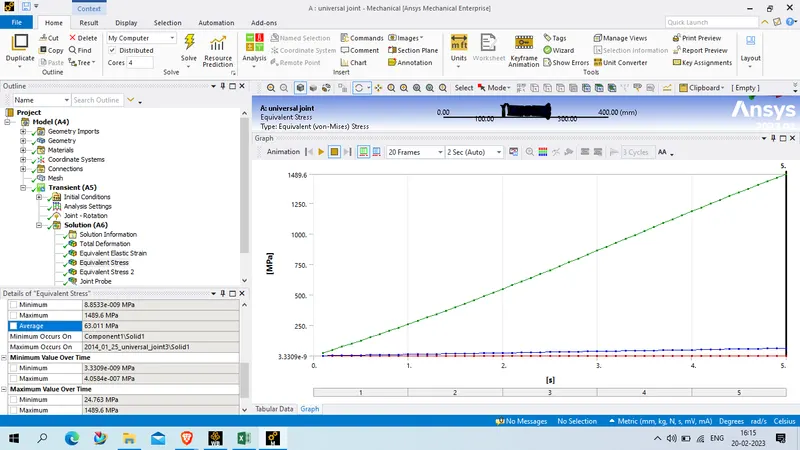
Equivalent stress
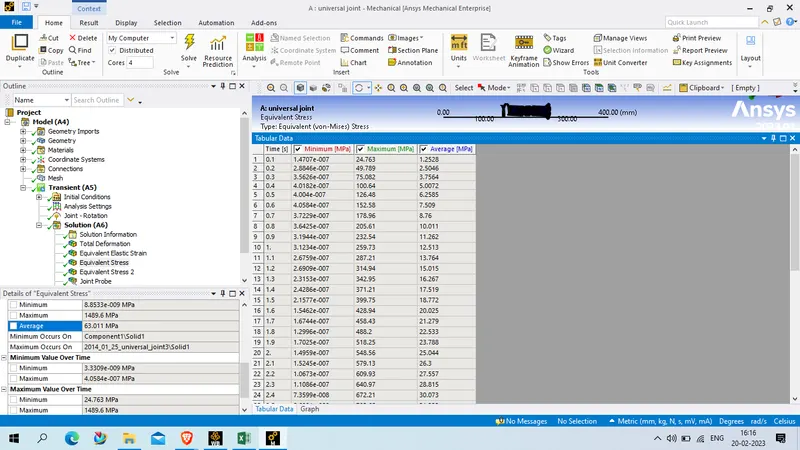
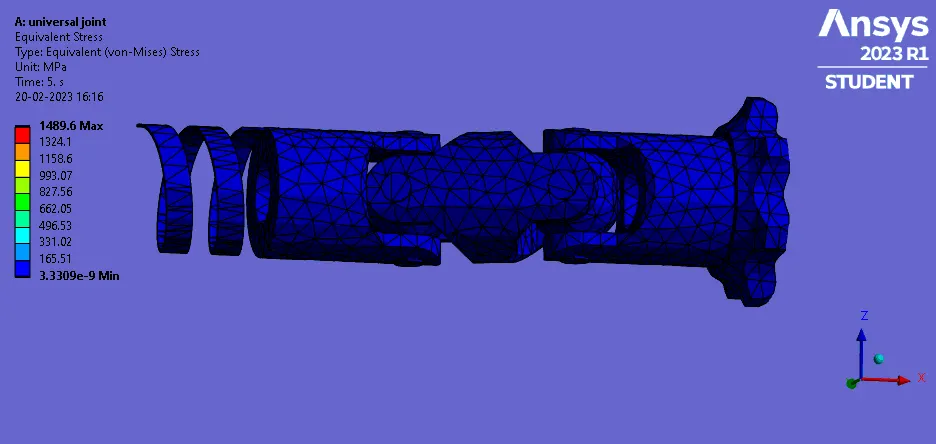
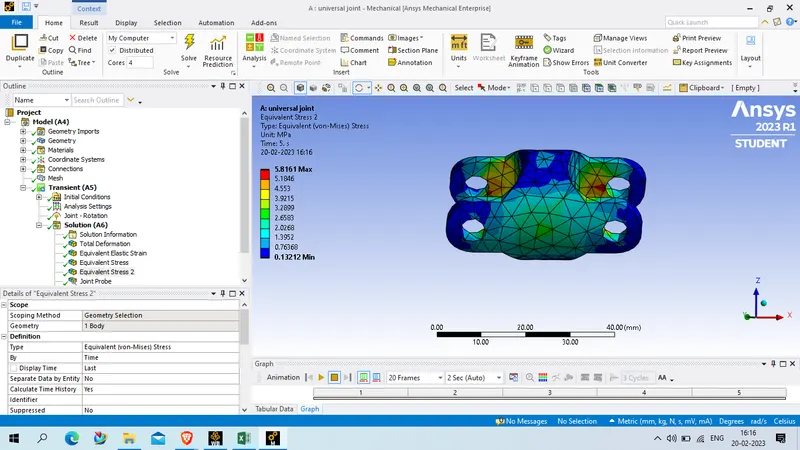
equivalent stress on middle shaft
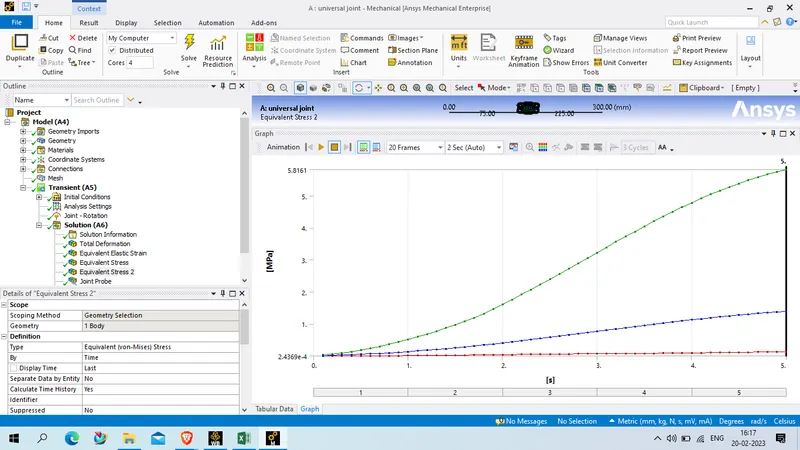
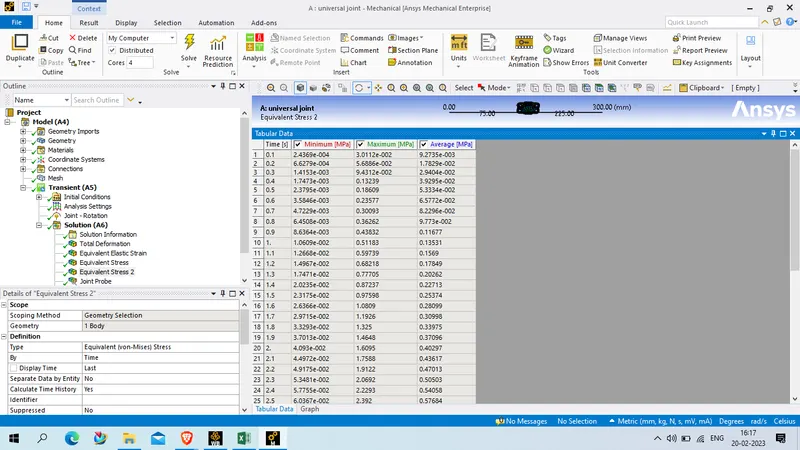
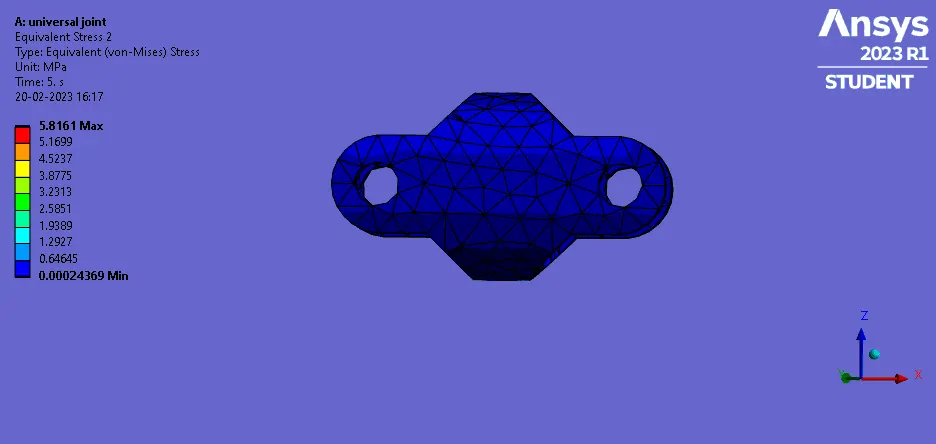
total force act on gear shaft
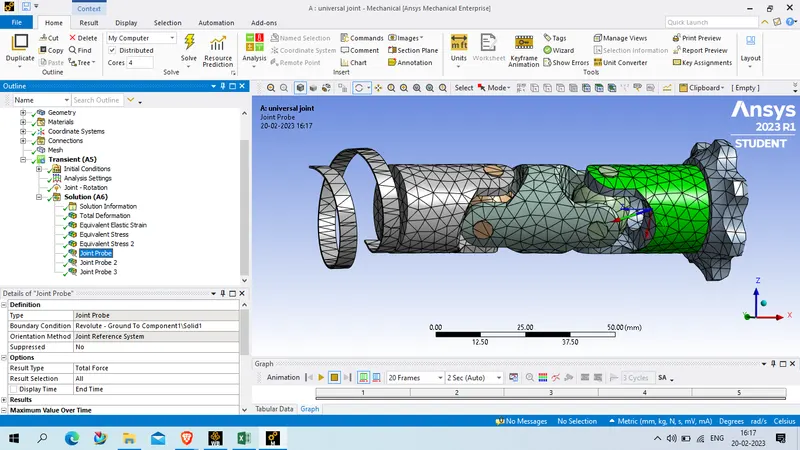
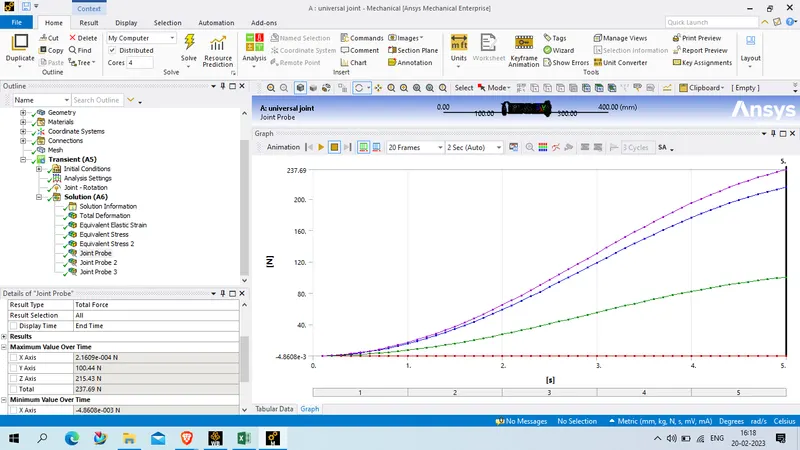
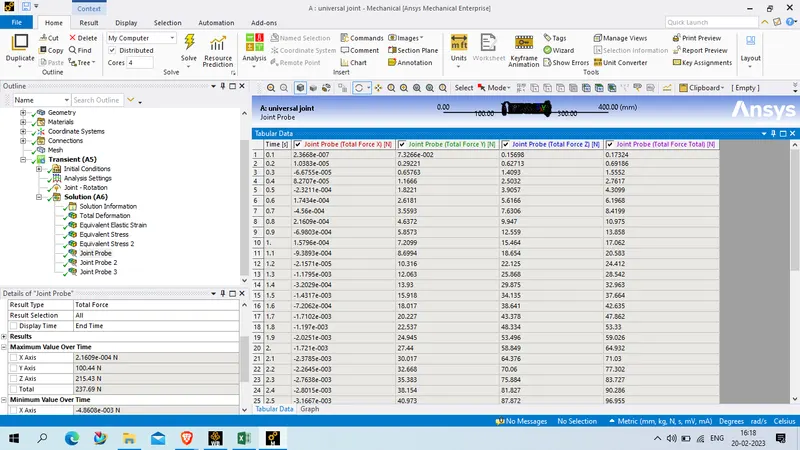
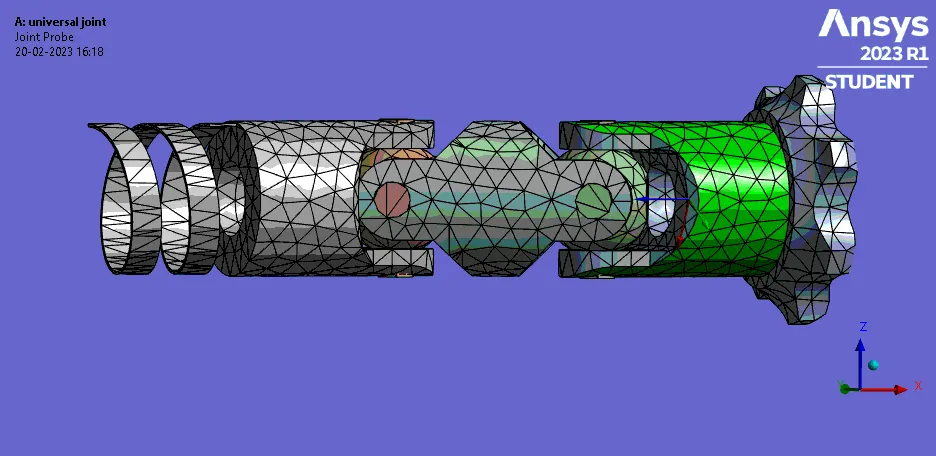
moment act on spring shaft
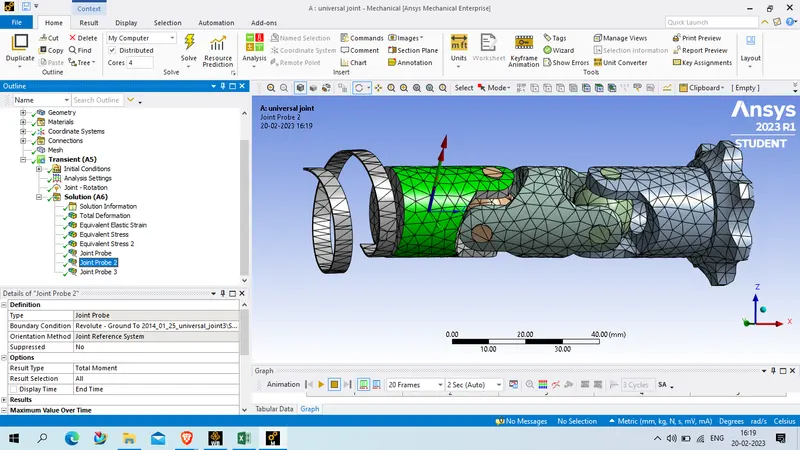
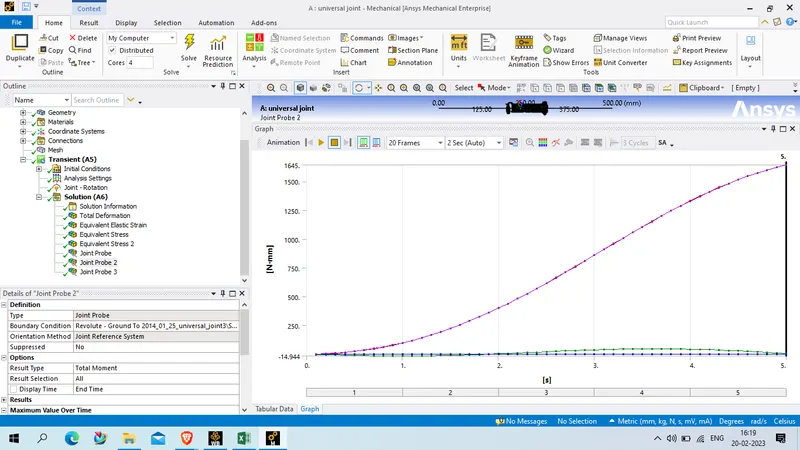
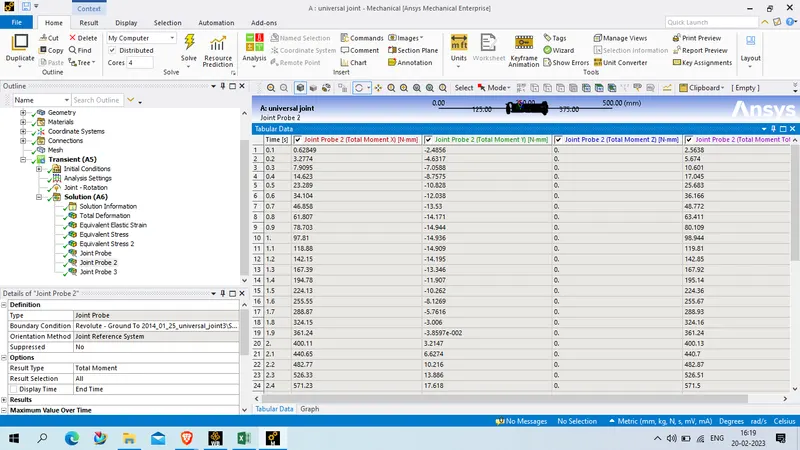
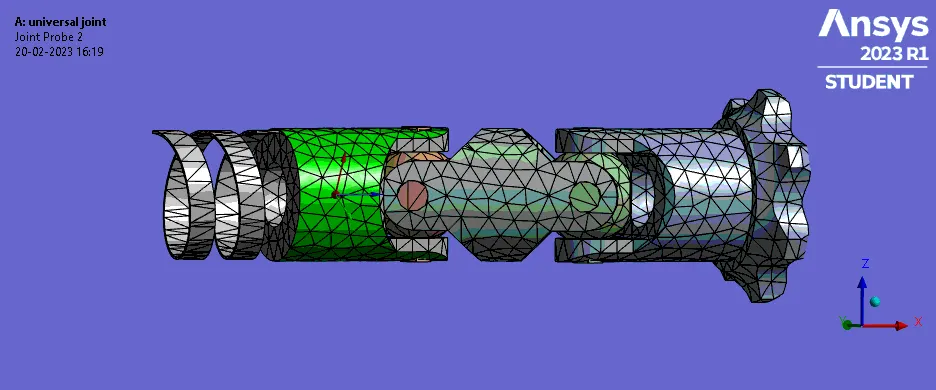
relative angular velocity at spring shaft
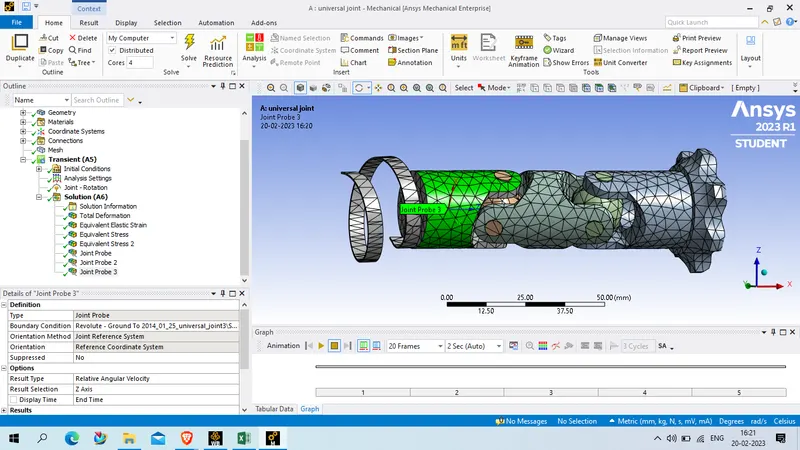
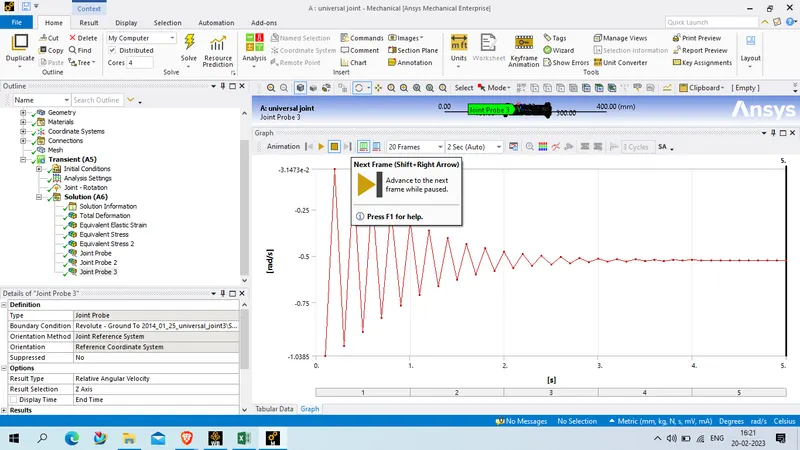
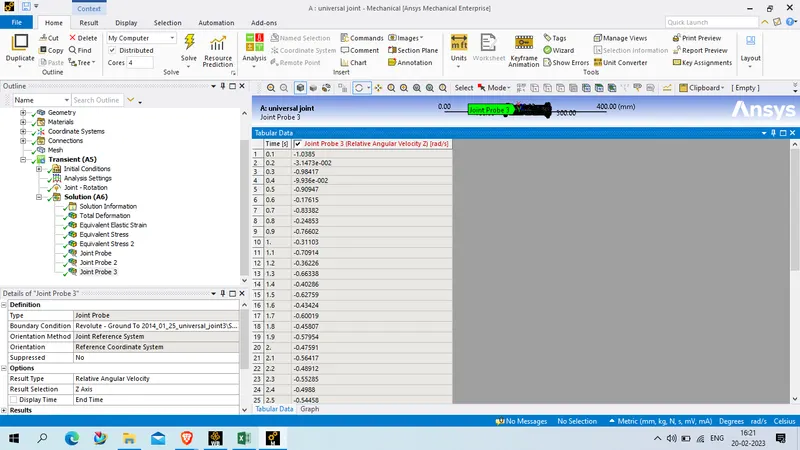
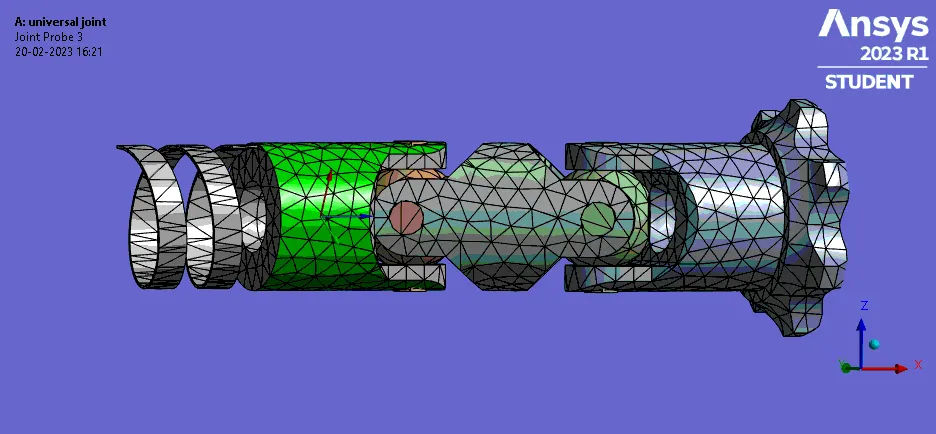
Case 2 : Spring component material change to stainless steel
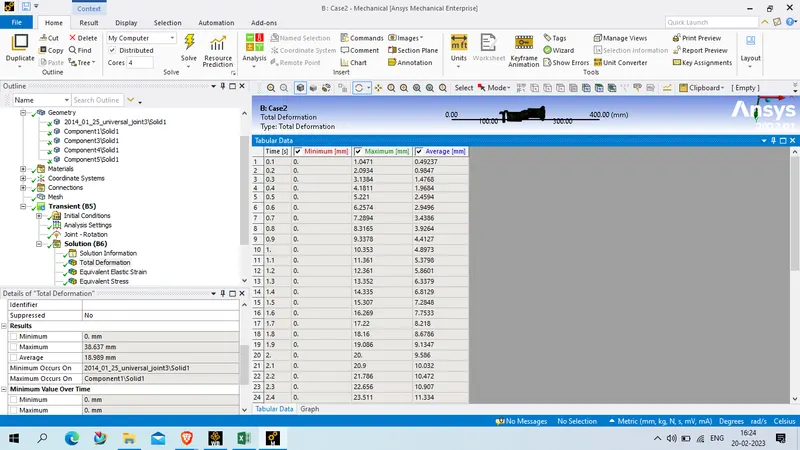
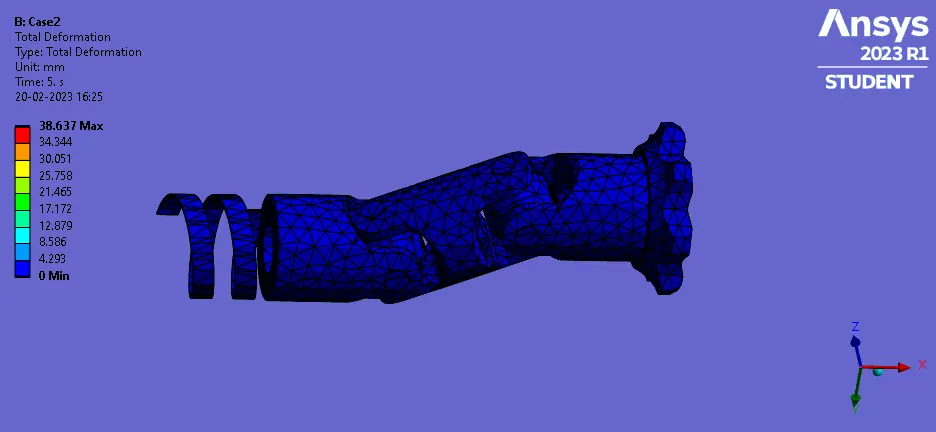
Total deformation
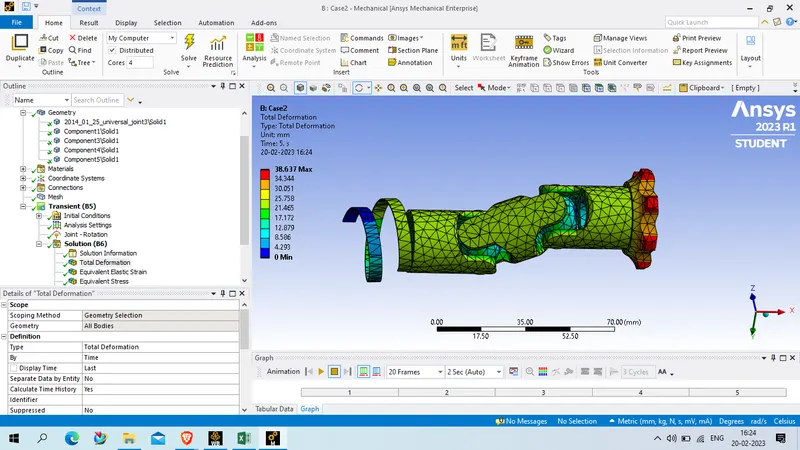
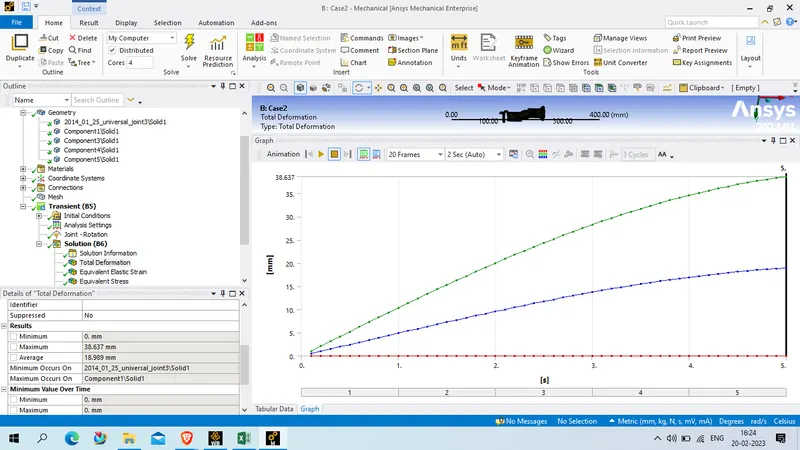
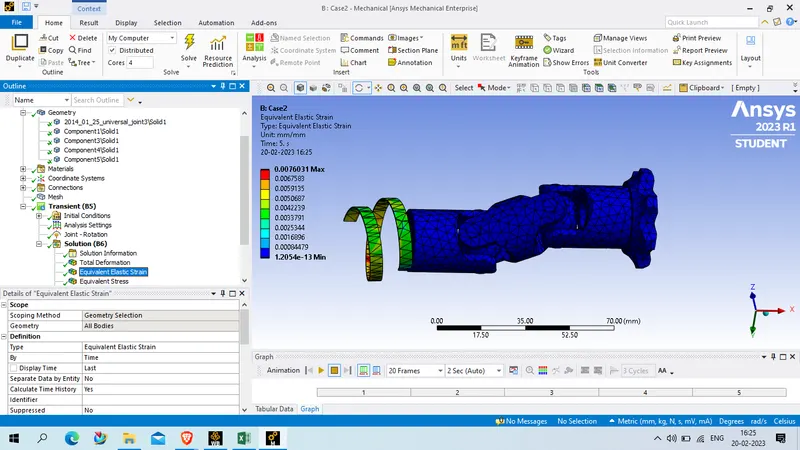
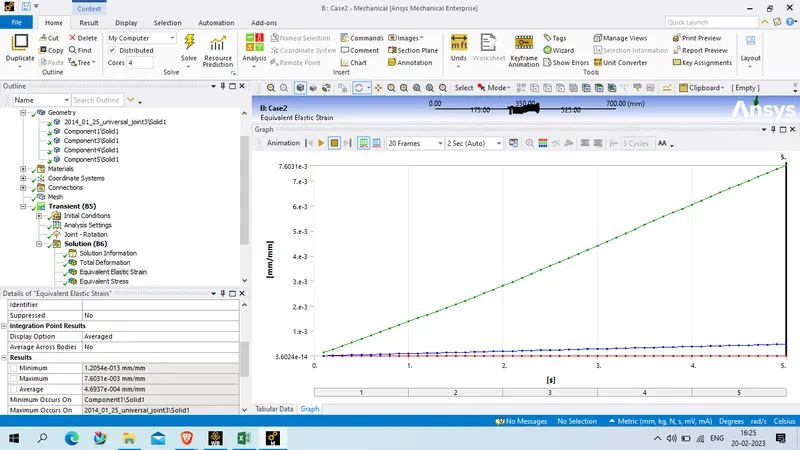
Equivalent elastic strain
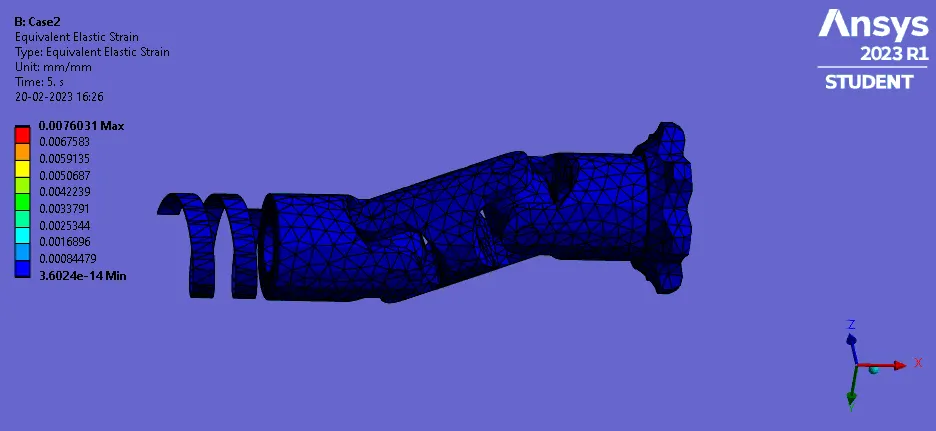
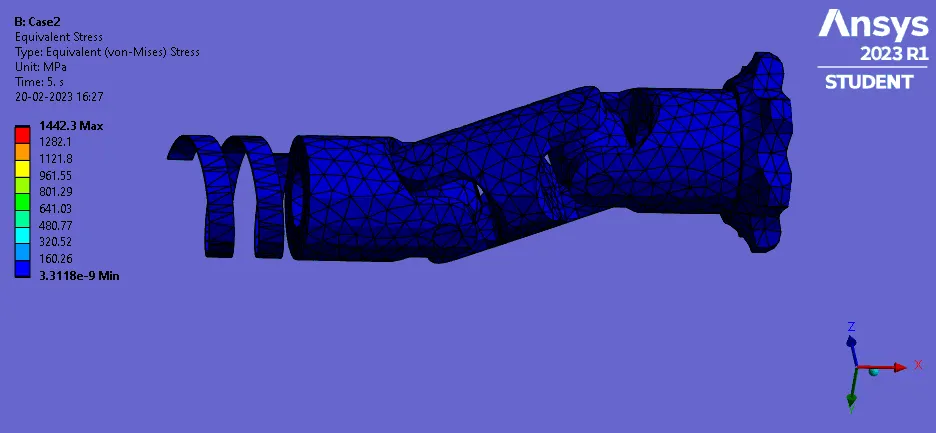
Equivalent stress
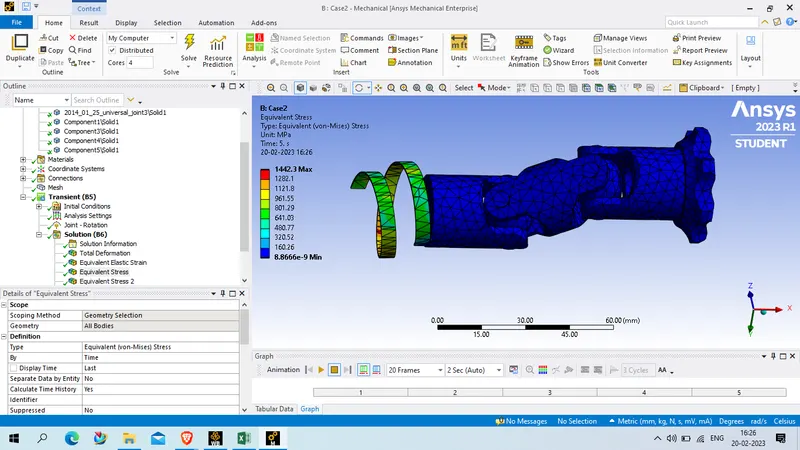
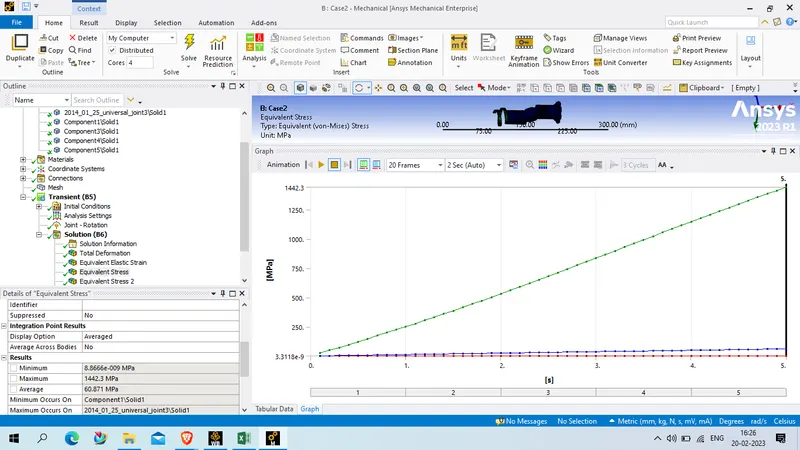
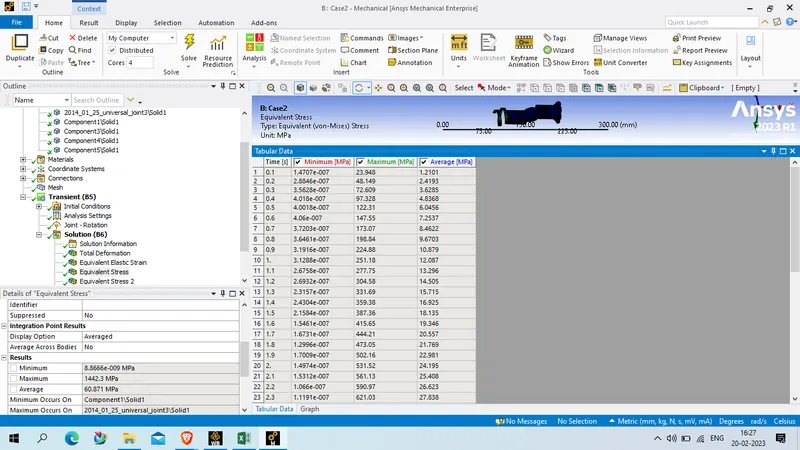
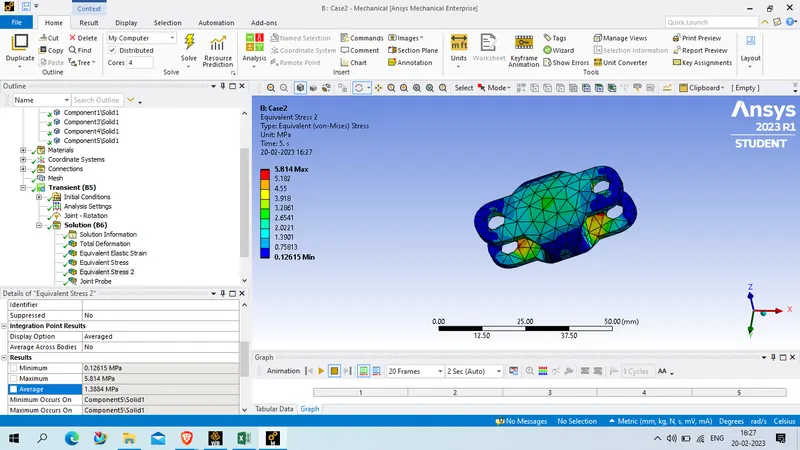
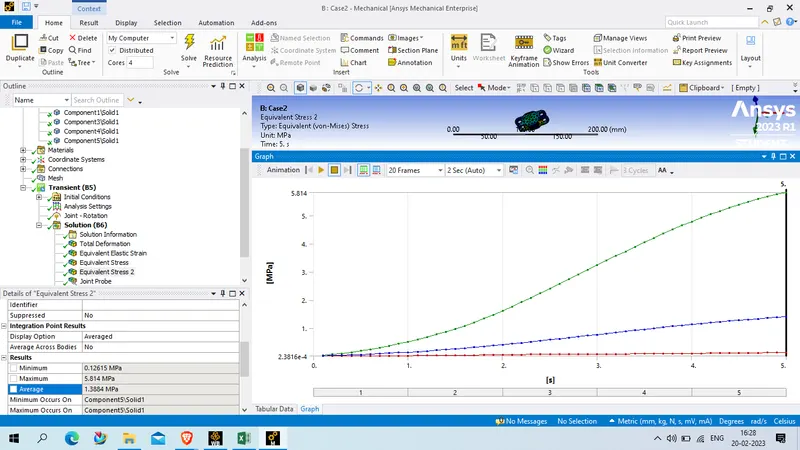
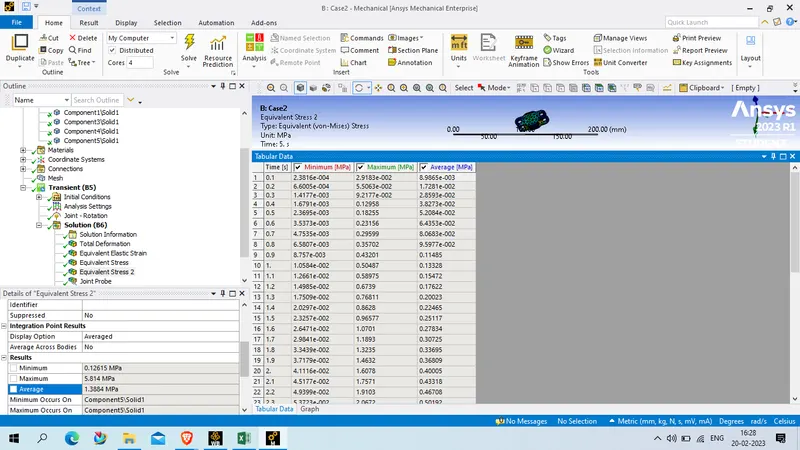
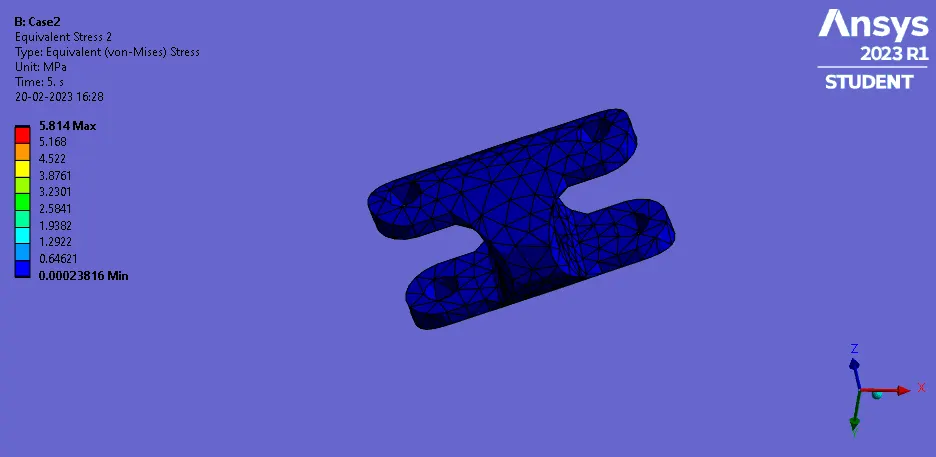
Equivalenty stress on middle shaft
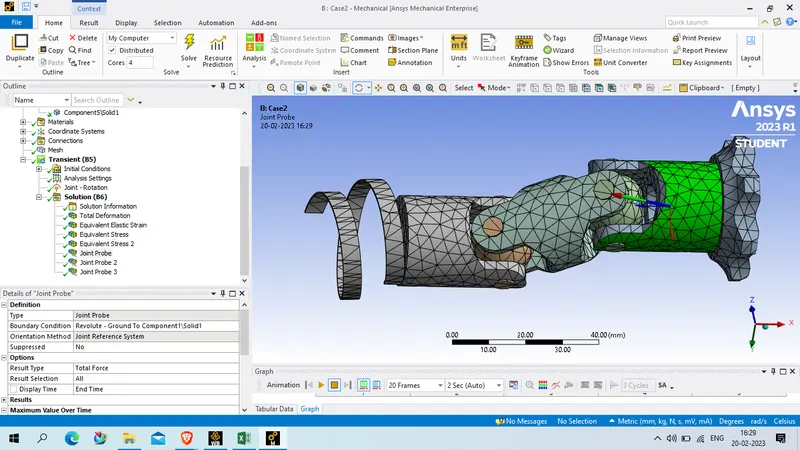
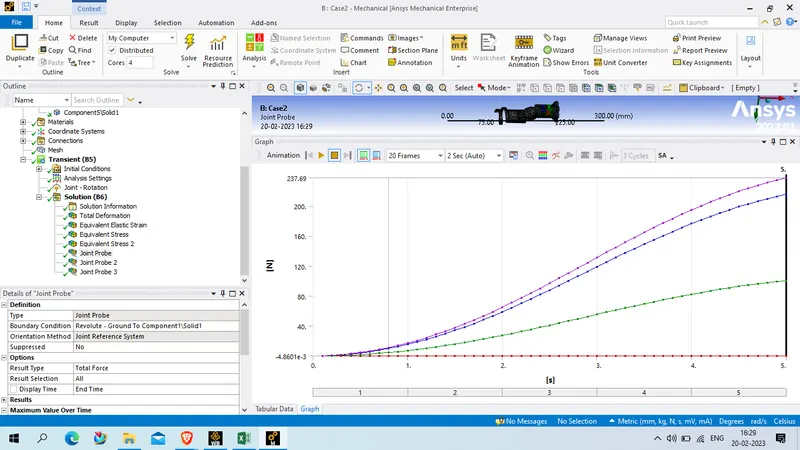
Total force act on gear shaft
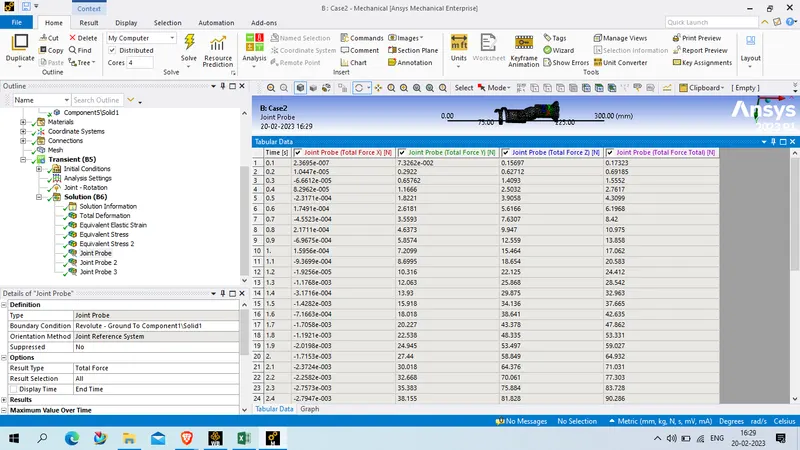
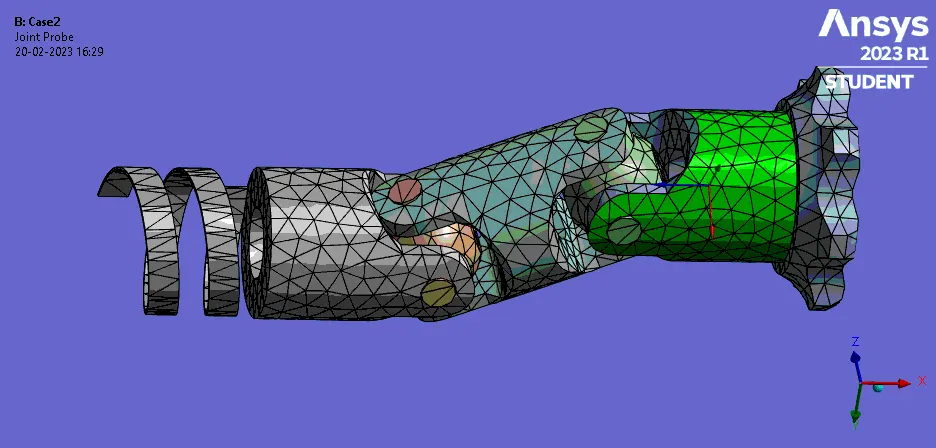
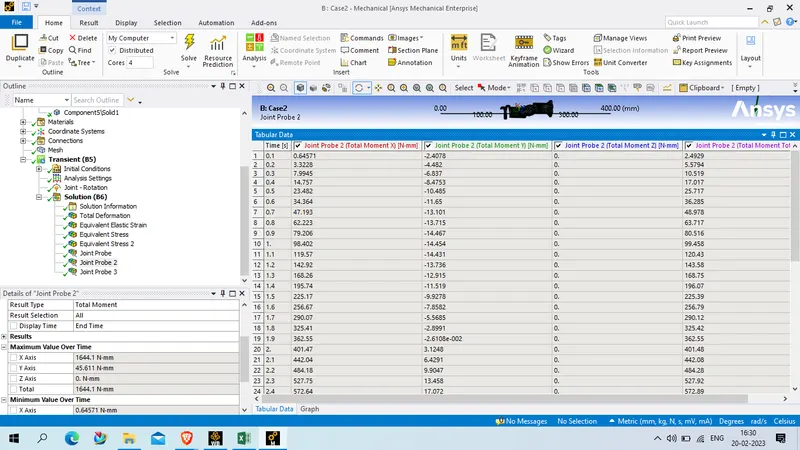
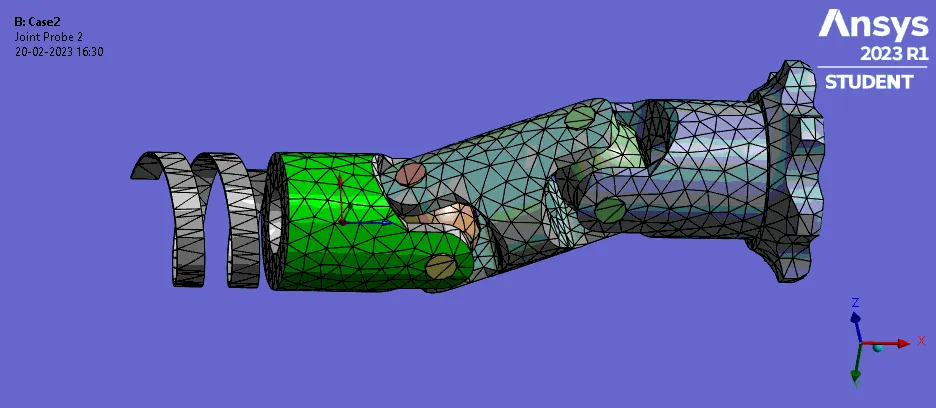
Total moment act on spring shaft
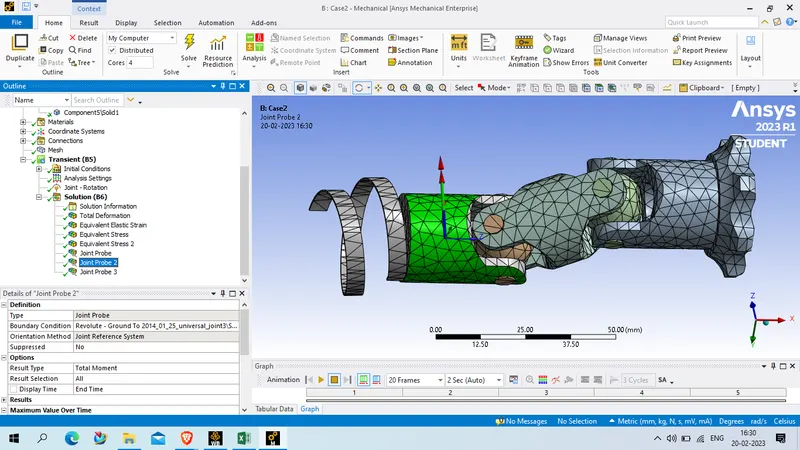
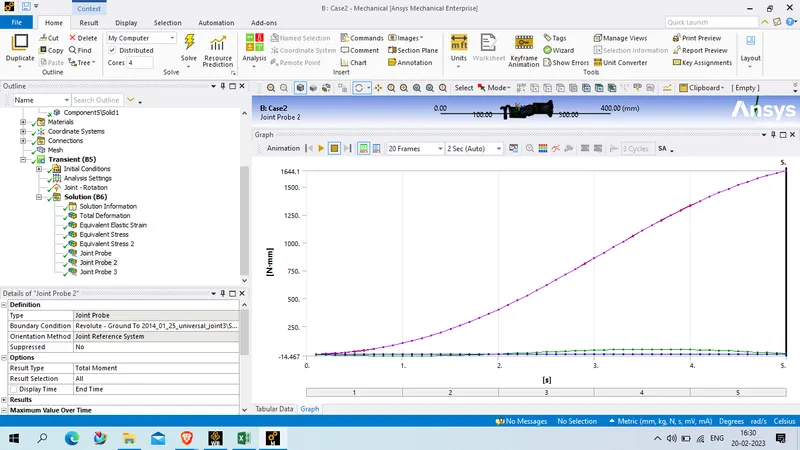
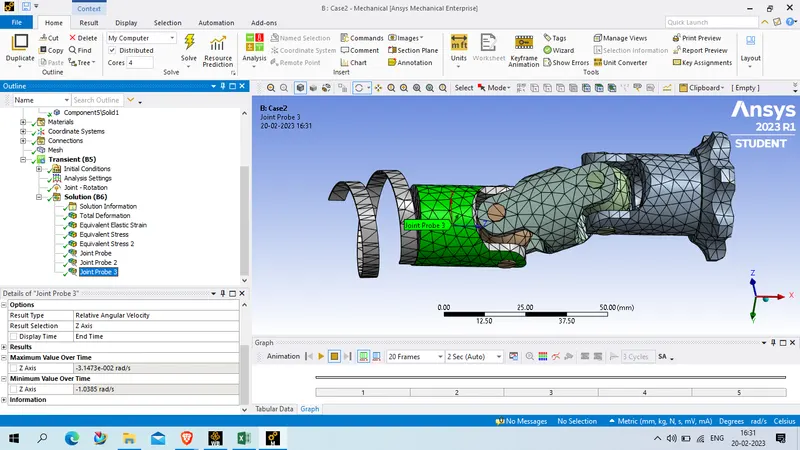
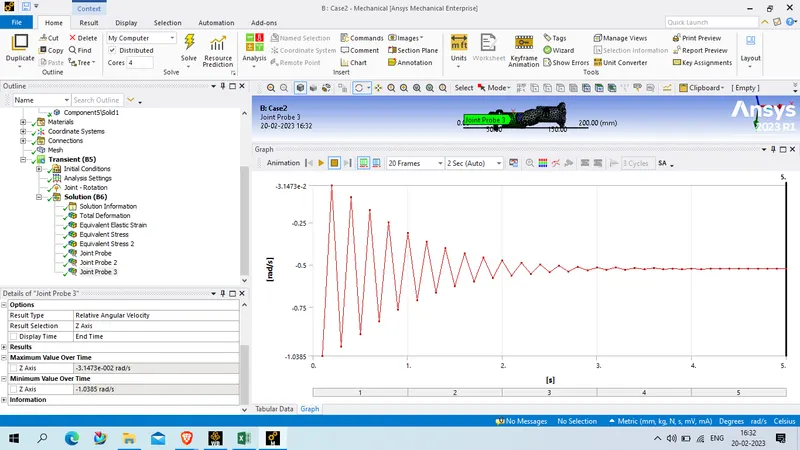
Total angular velocity act on spriing shaft
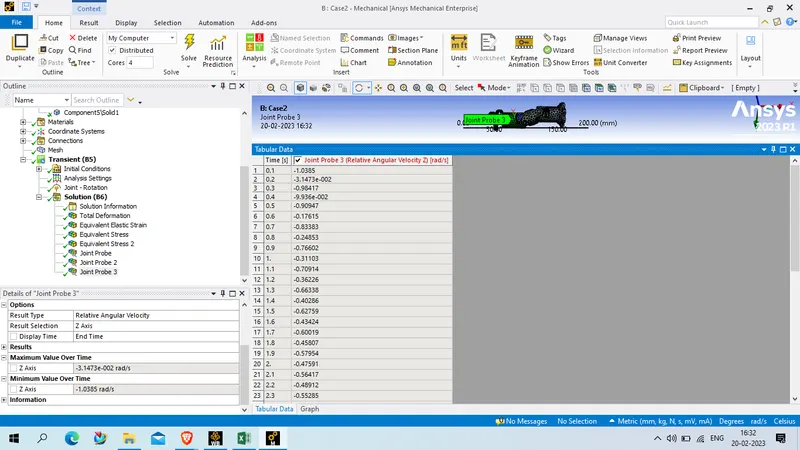
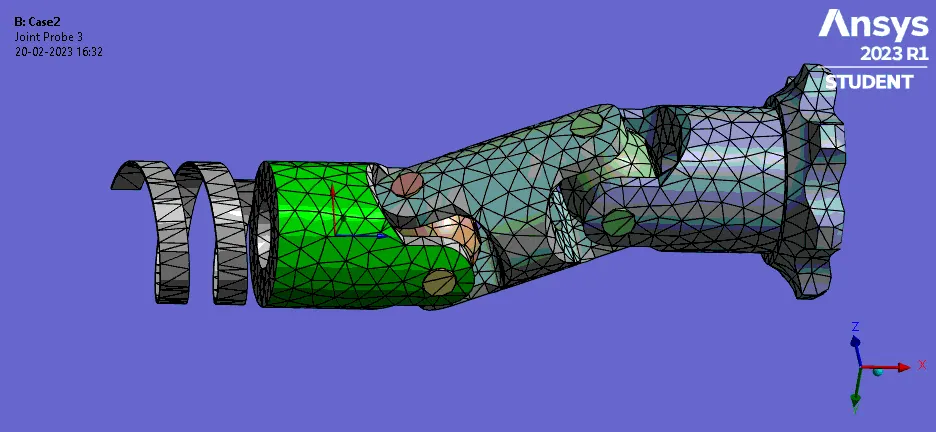
Case 3: We use titanium alloy for spring component
total deformation
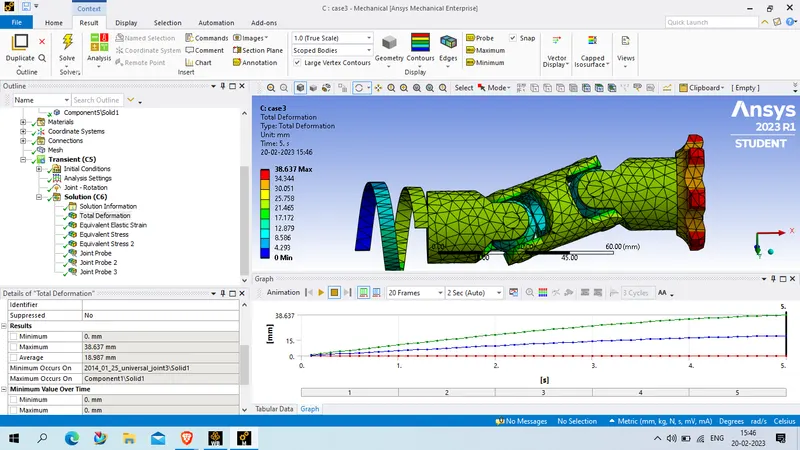
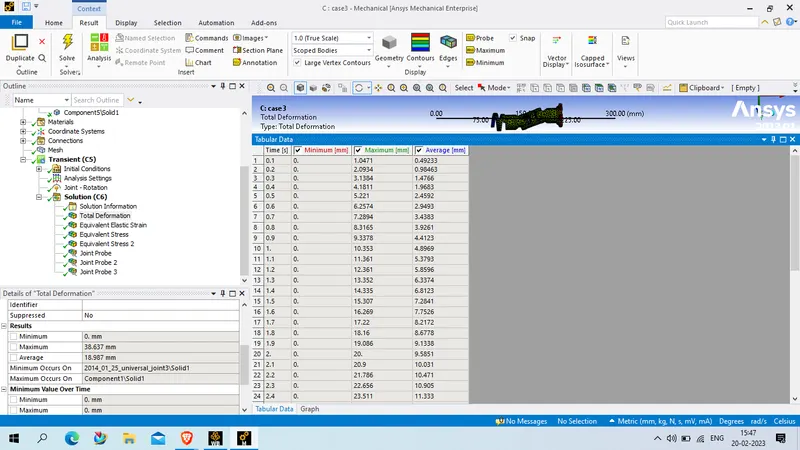
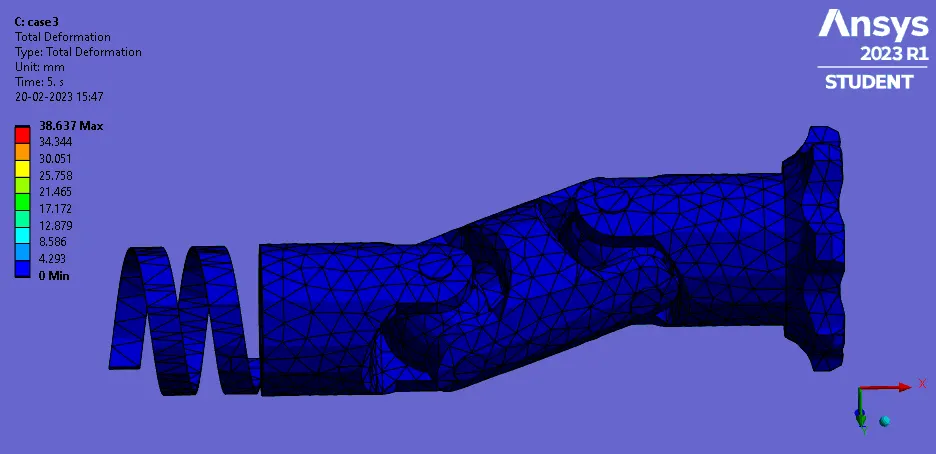
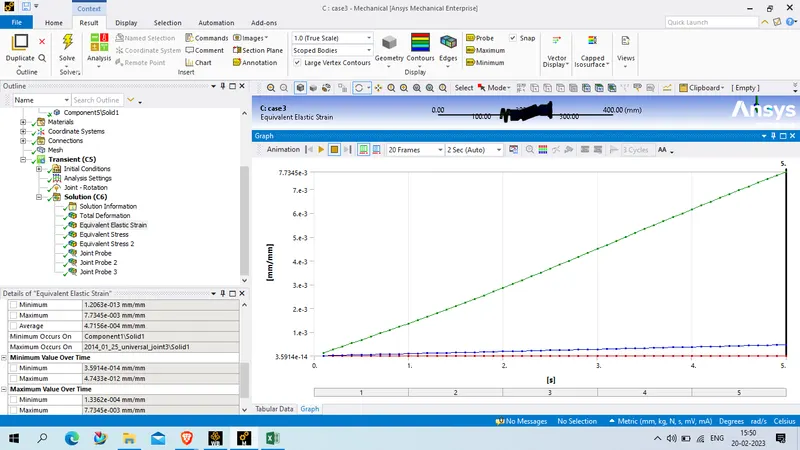
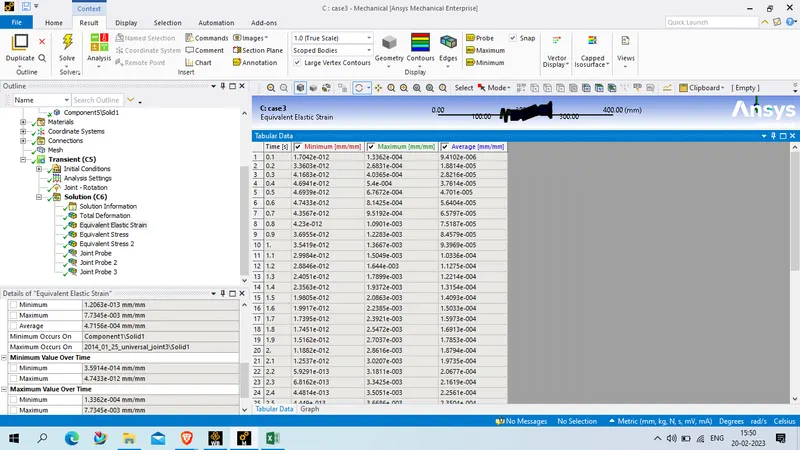
Equivalent elastic strain
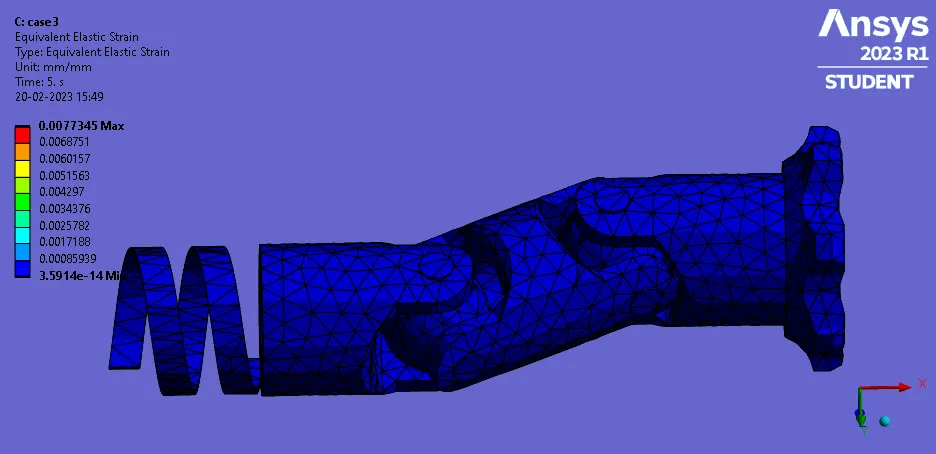
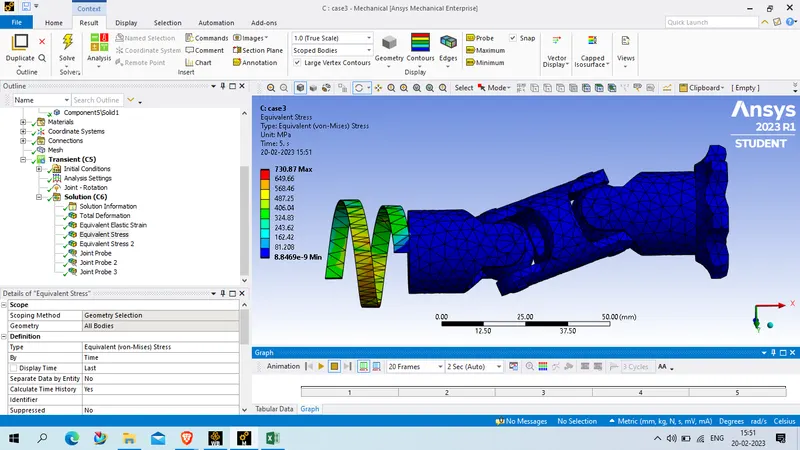
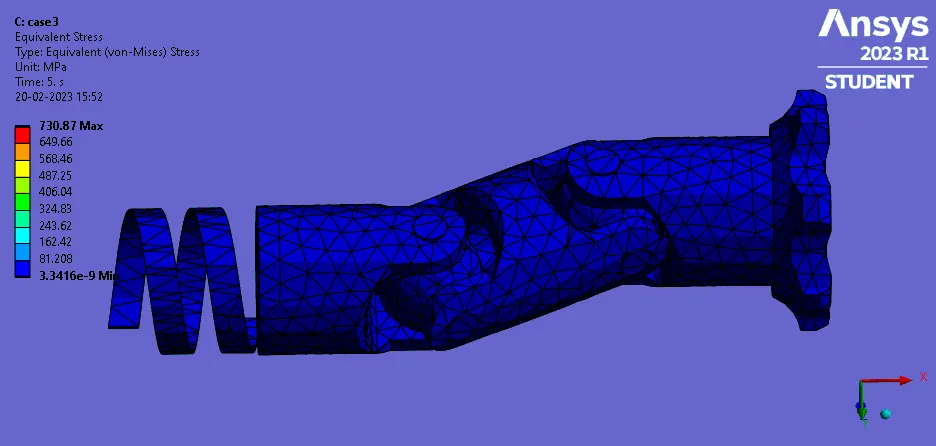
Equivalent stress
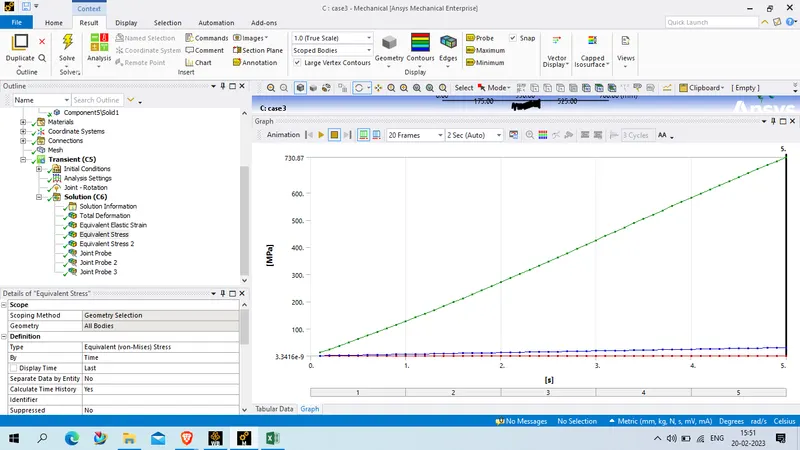
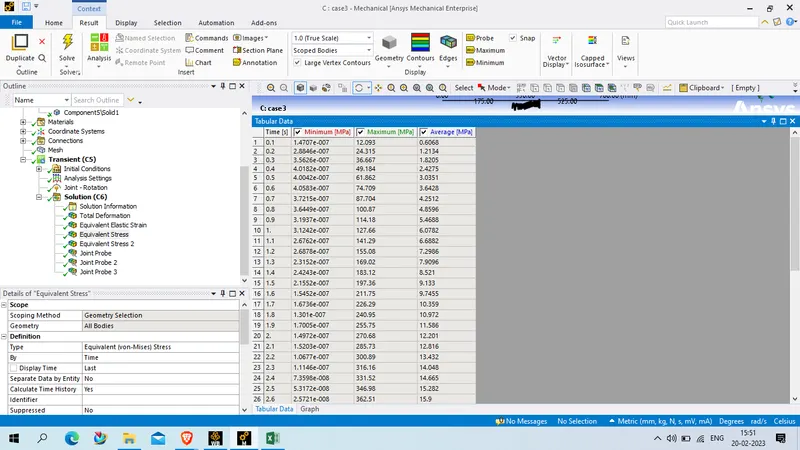
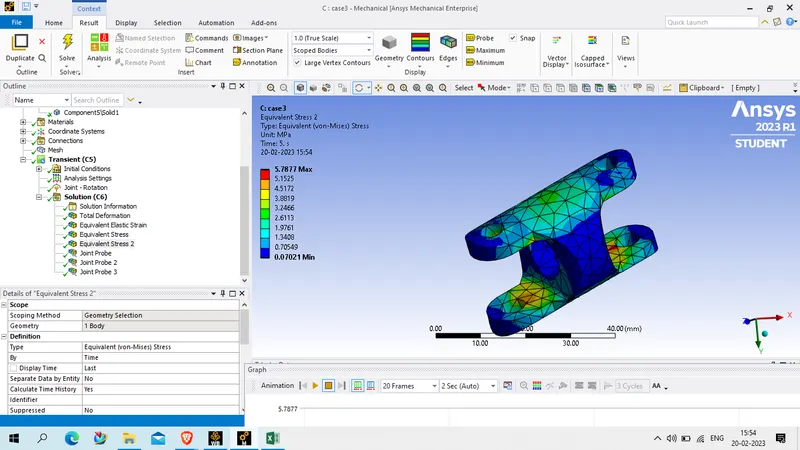
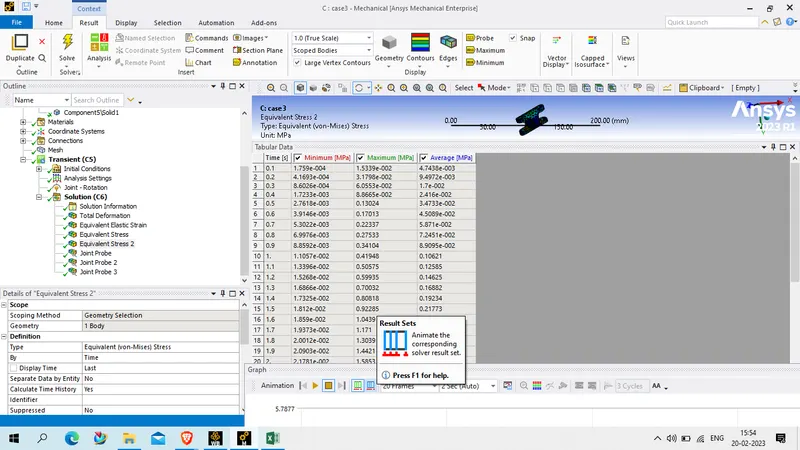
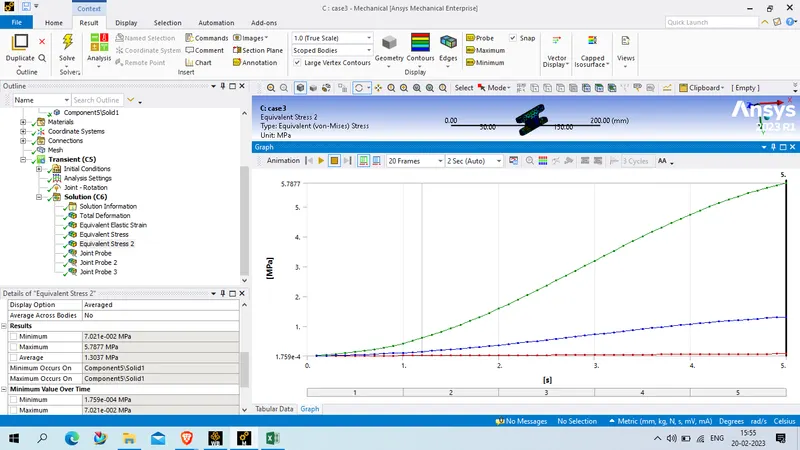
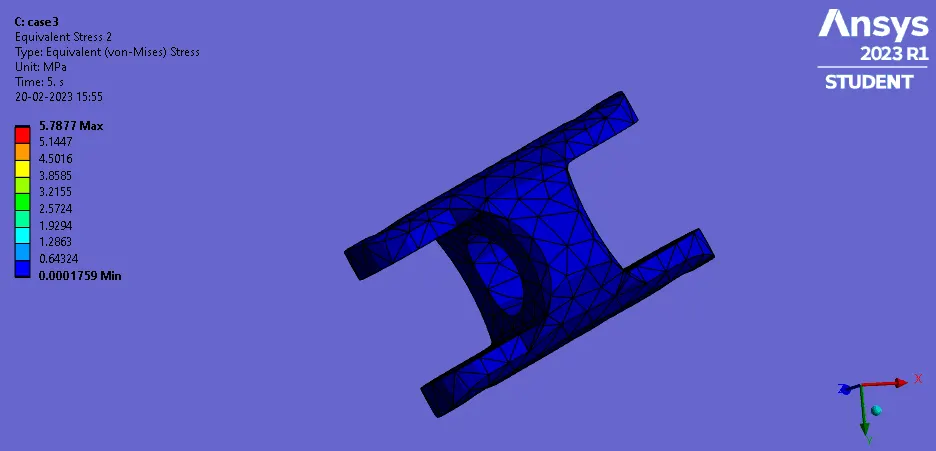
Equivalent stress on middle shaft
Toatl force act on gear shaft
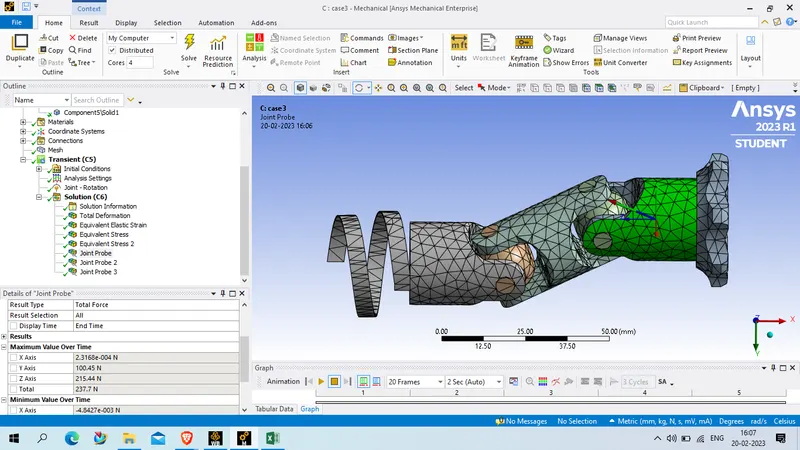
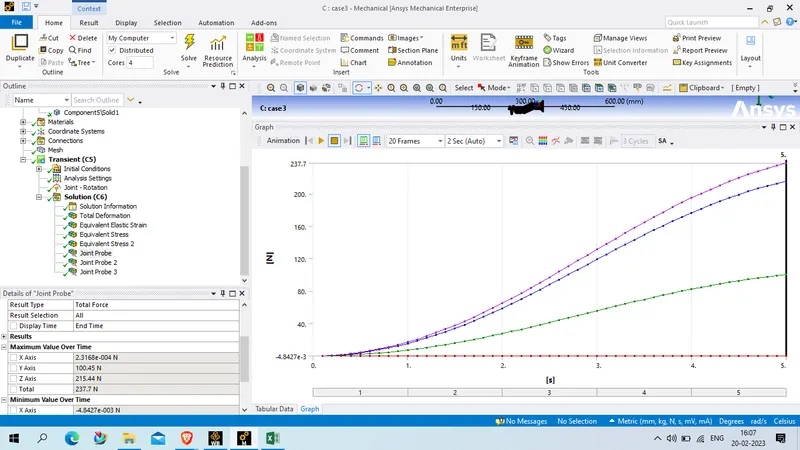
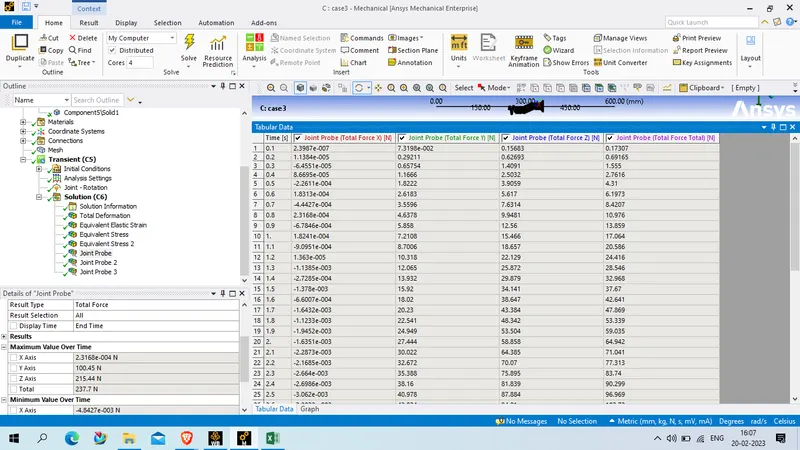
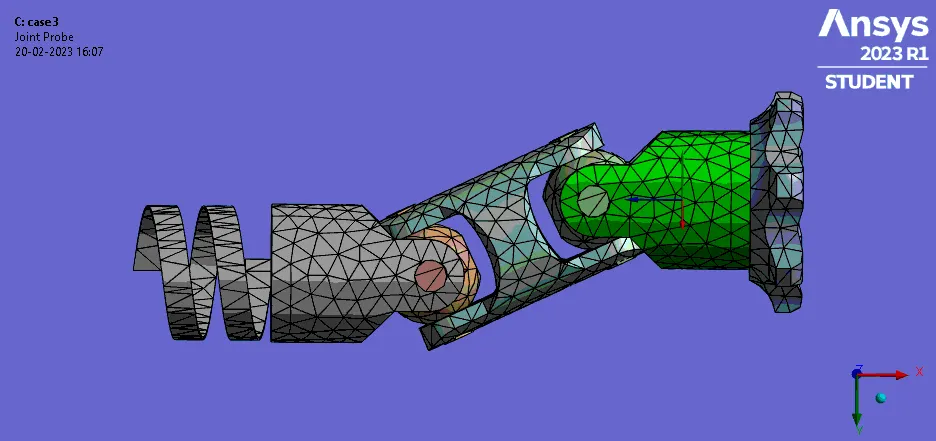
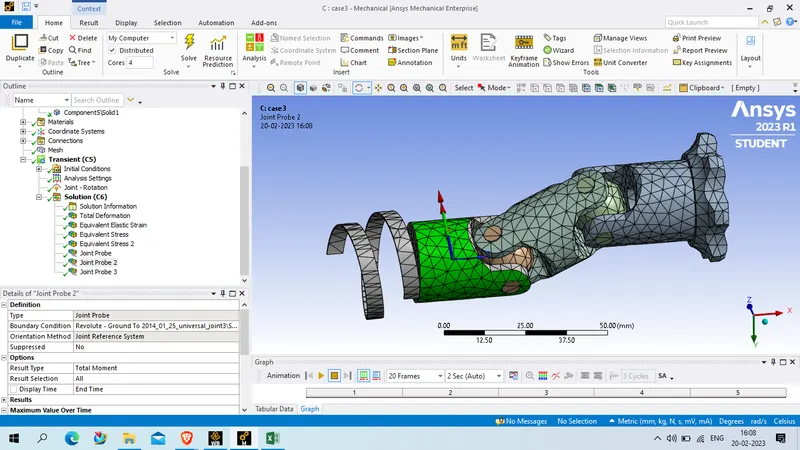
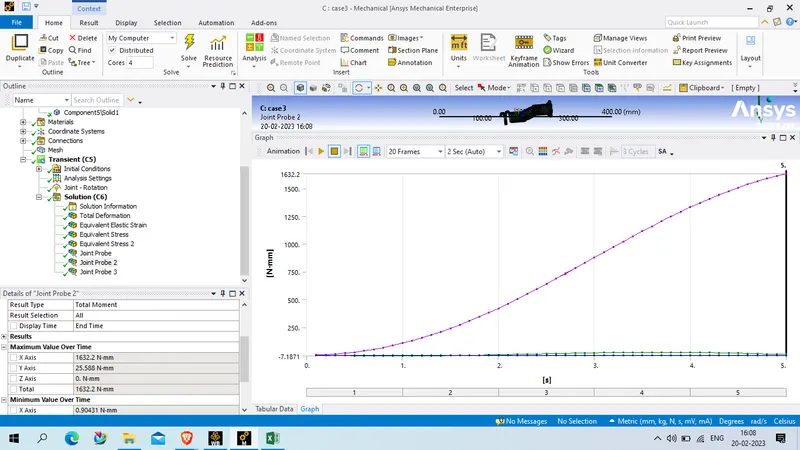
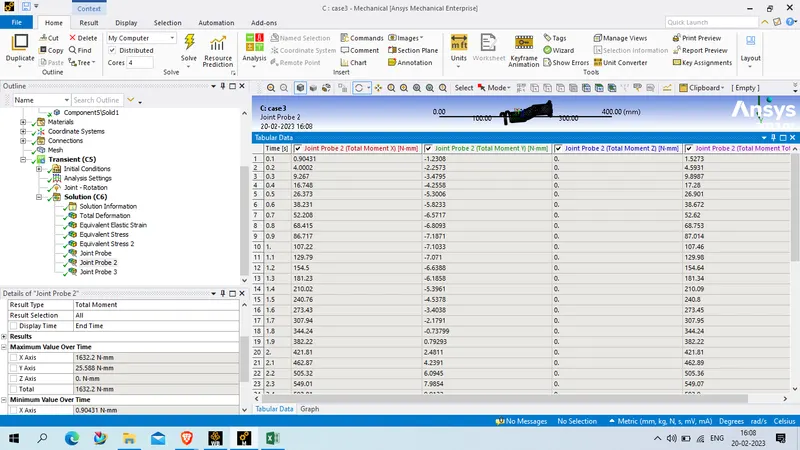
total moment acting on spring part
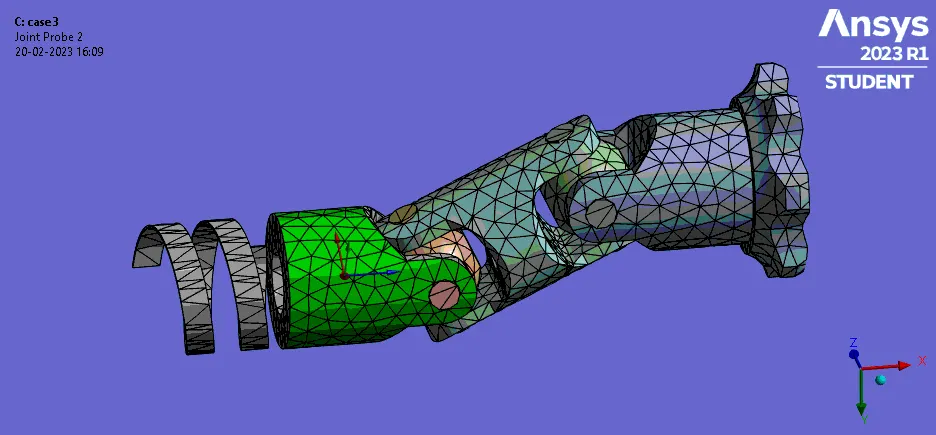
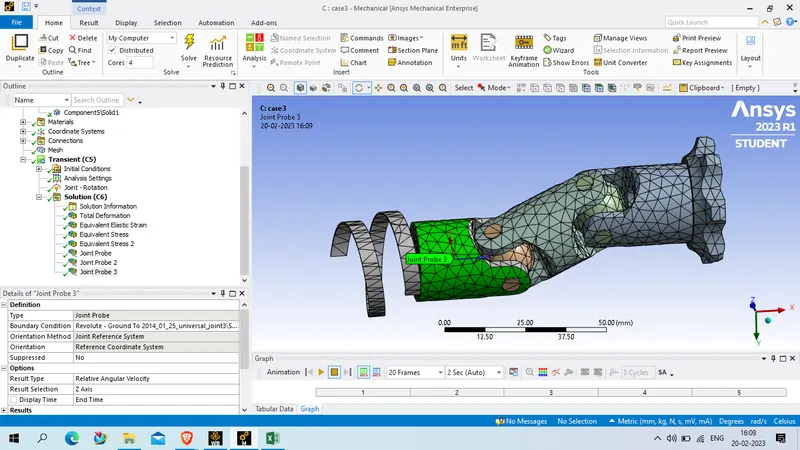
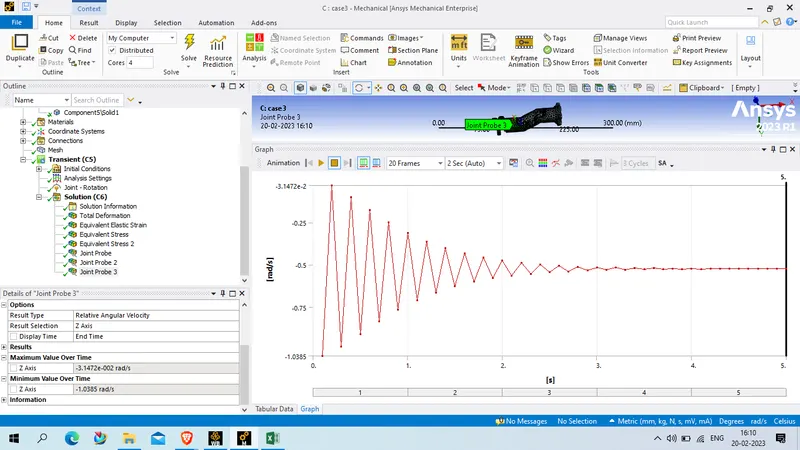
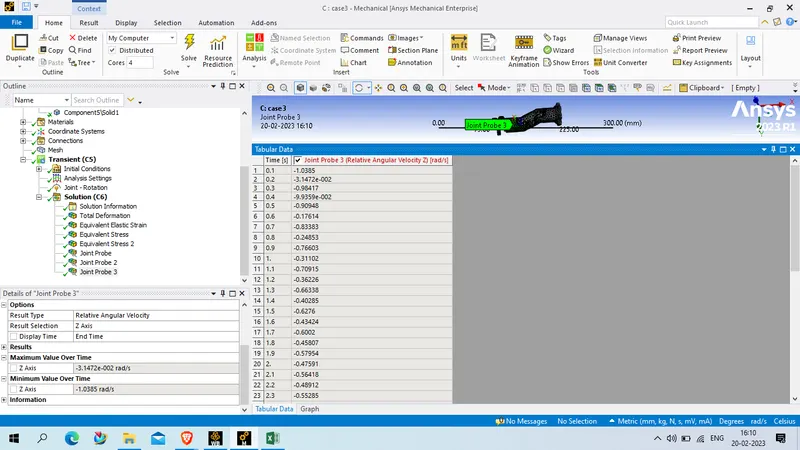
Relative angular velocity at spring parts
Result
the comparison of all thress case are given below
| Sr No | Particular | Case 1 | Case 2 | Case 3 | |
| total deformation | Minimum (mm) | 0 | 0 | 0 | |
| Maximum(mm) | 38.637 | 38.637 | 38.637 | ||
| Equivalent elastic strain | Minimum | 1.21E-13 | 1.21E-13 | 1.21E-13 | |
| Maximum | 7.59E-03 | 7.60E-03 | 7.73E-03 | ||
| Equivalent stress on whole body | Minimum (Mpa) | 8.85E-09 | 8.87E-09 | 8.85E-09 | |
| Maximum(Mpa) | 1489.6 | 1442.3 | 730.87 | ||
| Equivalent stress on middle shaft | Minimum (Mpa) | 0.13212 | 0.12615 | 7.02E-02 | |
| Maximum(Mpa) | 5.8161 | 5.814 | 5.7877 | ||
| Total Force act on Gear shaft | X- Axis (N) | 2.16E-04 | 2.17E-04 | 2.32E-04 | |
| Y Axis (N) | 100.44 | 100.44 | 100.45 | ||
| Z-Axis (N) | 215.43 | 215.43 | 215.44 | ||
| Total (N) | 237.69 | 237.69 | 237.7 | ||
| Total Moment act on spring shaft | X- Axis (N-mm) | 1645 | 1644.1 | 1632.2 | |
| Y Axis (N-mm) | 47.078 | 45.611 | 25.588 | ||
| Z-Axis (N-mm) | 0 | 0 | 0 | ||
| Total (N-mm) | 1645 | 1644.1 | 1632.2 | ||
| Total angular Velocity act on spring shaft | Maximum ( Rad/s) | -3.15E-02 | -3.15E-02 | -3.15E-02 |
Conclusion :
1. From the above result we can conclude that the Maximum equivalent stress of 1489.6 MPa is experienced at Structural steel
2. minimum equivalent stress of 730.87 MPa is experienced at Titanium alloy.
3.Moderate equivalent stress of 1442.3 MPa is experienced at Stainless steel
4. The Maximum equivalent elastic strain of 7.73E-03 is experienced at Titanium alloy, the Minimum equivalent elastic strain of 7.59E-03 is experienced at Structural steel
5. The total deformation of 38.637 mm in all the cases remains same. So we conclude that the changing of different material to a model will not effect the total deformation and it remains same for all the cases.