Week 8 - Universal Joint
Aim: To perform a transient structural analysis on a double universal joint with a spring using three different materials: Structural Steel, Stainless Steel and Titanium alloy.
Objective: To obtain the Equivalent stress and total deformation for all three cases and compare them.
Introduction:
A universal joint (universal coupling, U-joint, Cardan joint, Spicer or Hardy Spicer joint, or Hooke's joint) is a joint or coupling connecting rigid rods whose axes are inclined to each other and is commonly used in shafts that transmit rotary motion. It consists of a pair of hinges located close together, oriented at 90° to each other, and connected by a cross shaft. The universal joint is not a constant-velocity joint.
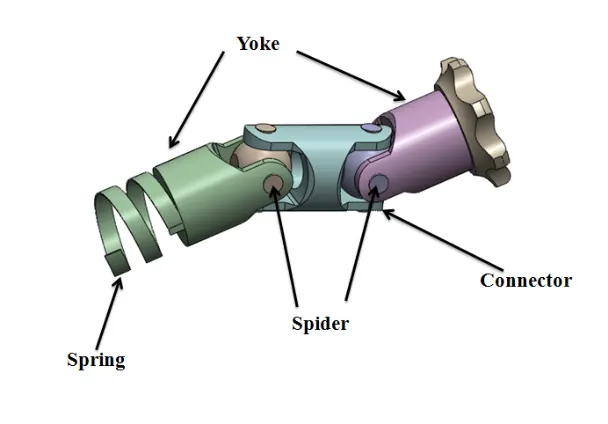
Procedure:
1) To verify welds in the setup, we use the Transient Structural tool in the analysis system toolbox to define the geometry and other input parameters for the same.
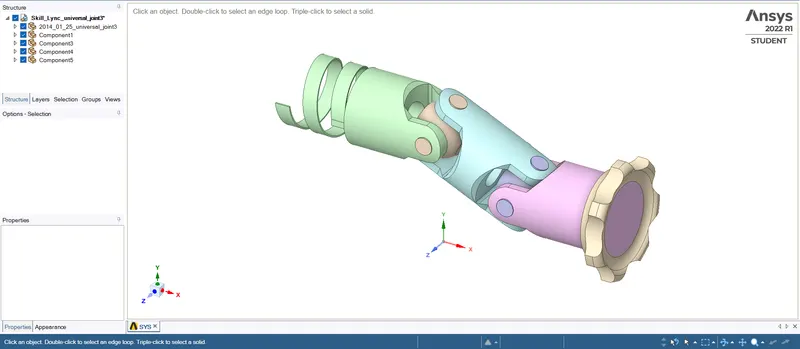
First, we open SpaceClaim to identify and rectify the errors in the geometry. In the below geometry we can see the copper rolling
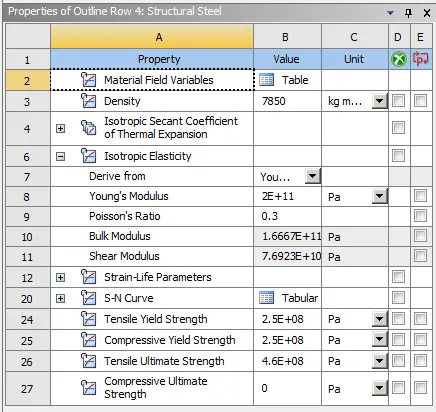
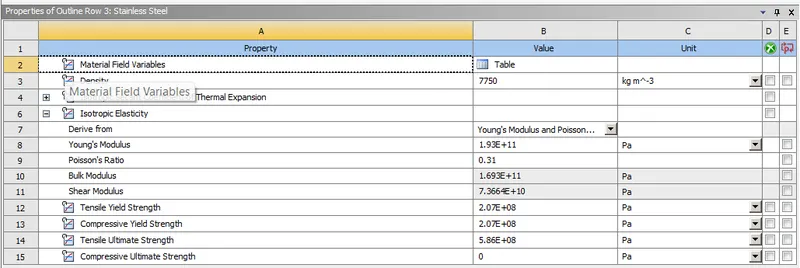
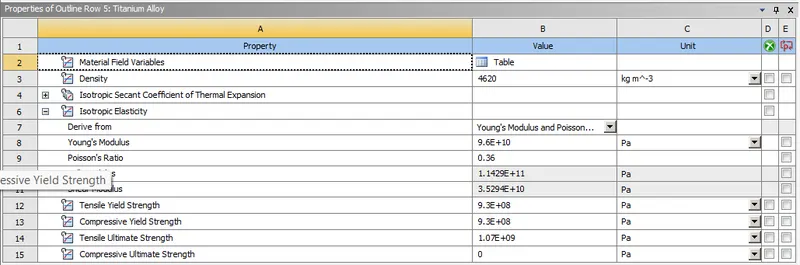
2) In the engineering data we input the material and its properties. In this case, we are using three different types of materials i.e., Structural Steel, Stainless Steel and Titanium Alloy and their properties are shown below.
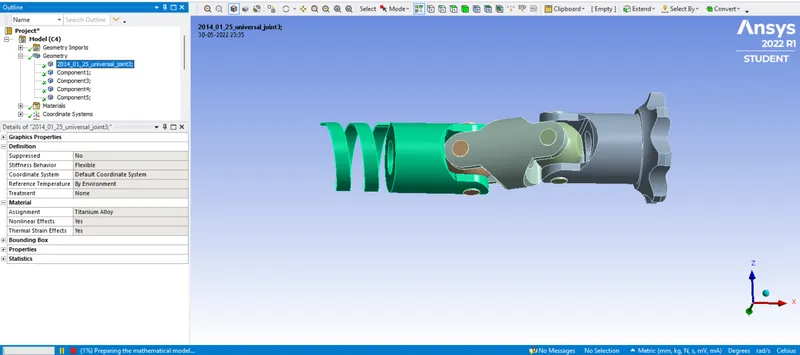
3) In the geometry of the model,
Case 1: All components are made up of Structural Steel.
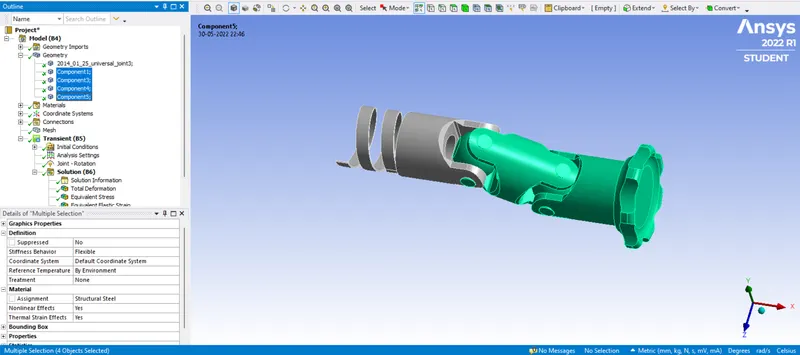
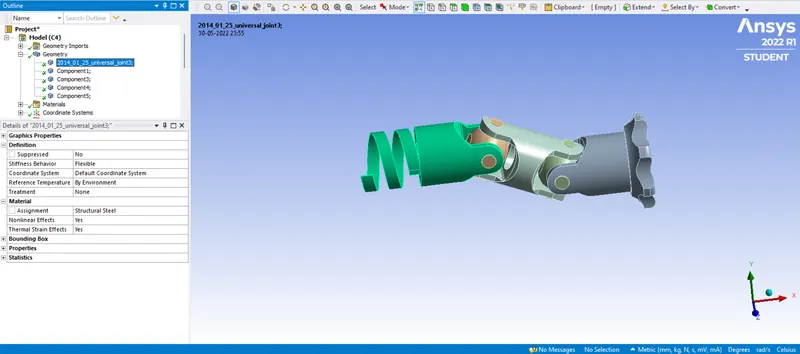
Case 2: All components are made up of Structural Steel except the joint with the spring which is made up of Stainless Steel.
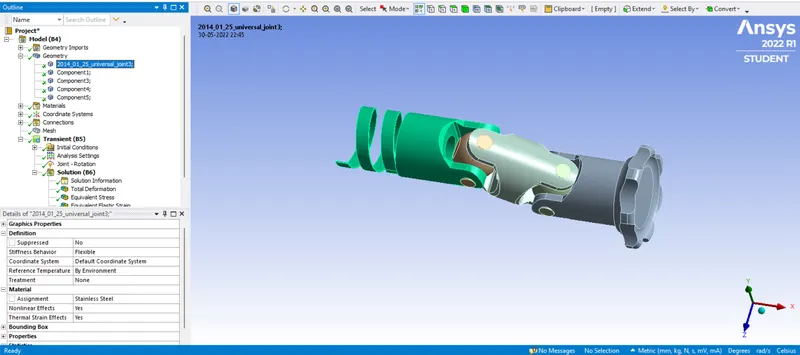
Case 3: All components are made up of Structural Steel except the joint with the spring which is made up of Titanium Alloy.
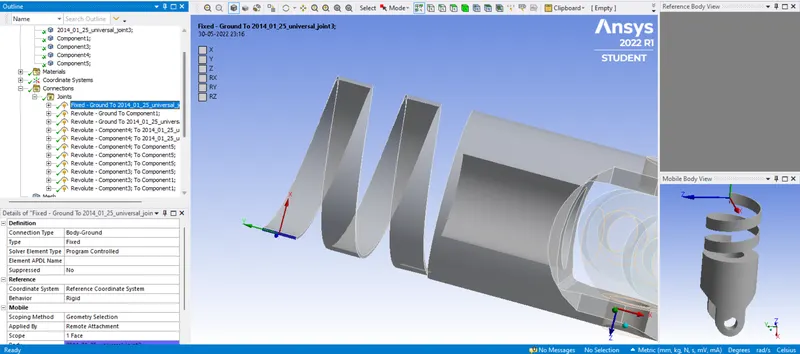
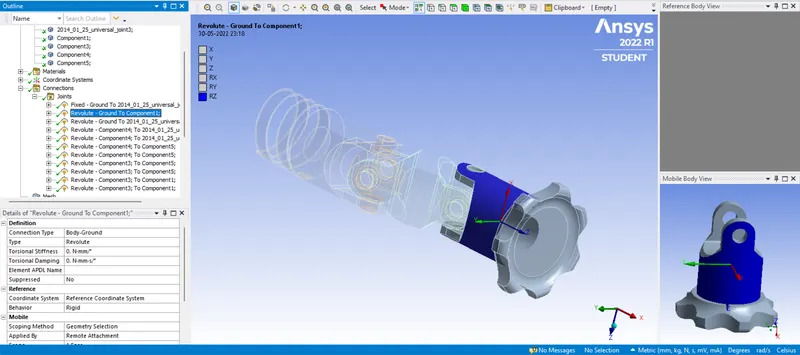
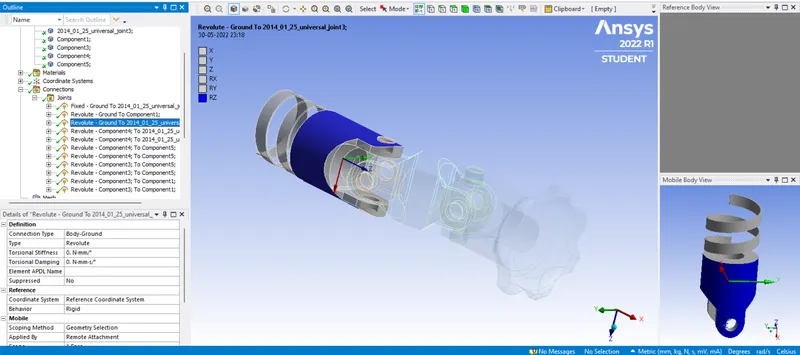
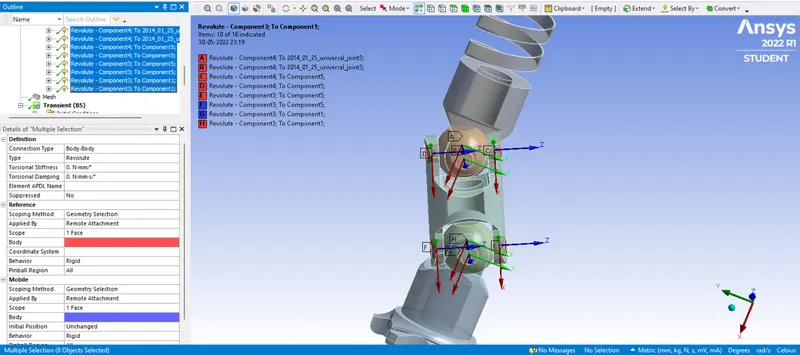
4) In Connections, defining Joints of the geometry for Fixed and Revolute of the body in the desired direction.
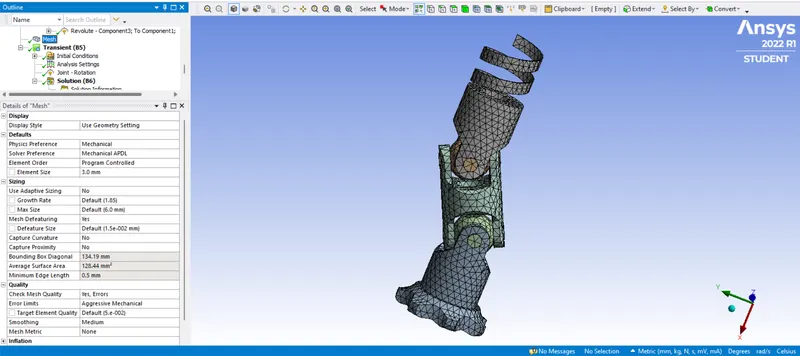
5) By opening the modelling tab, we mesh the geometry with element size as default and finer mesh size where contacts are present. Generating the mesh thereafter by right-clicking on the Mesh icon.
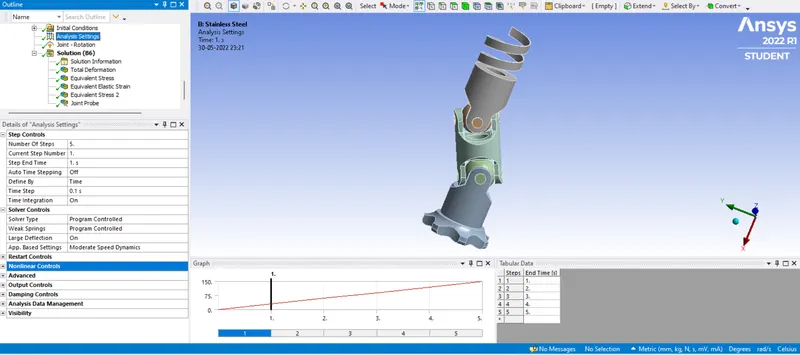
6) We open the analysis setting where stimulation is run for 5 steps for Joint-Rotation
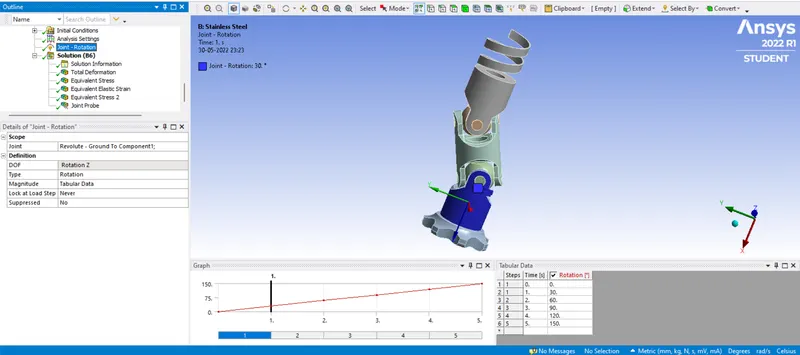
Joint-Rotation is given as shown below
7) Setting up the solution:
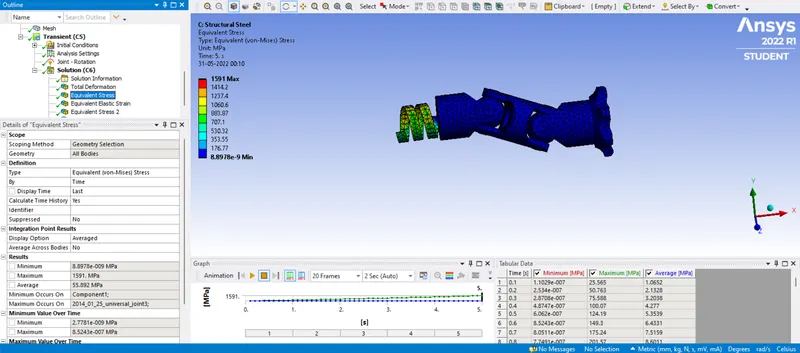
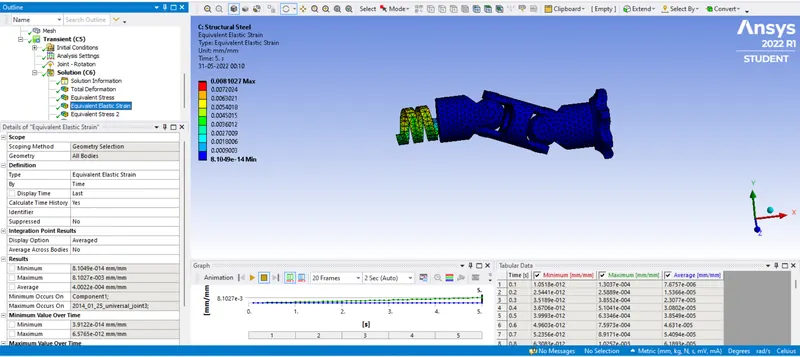
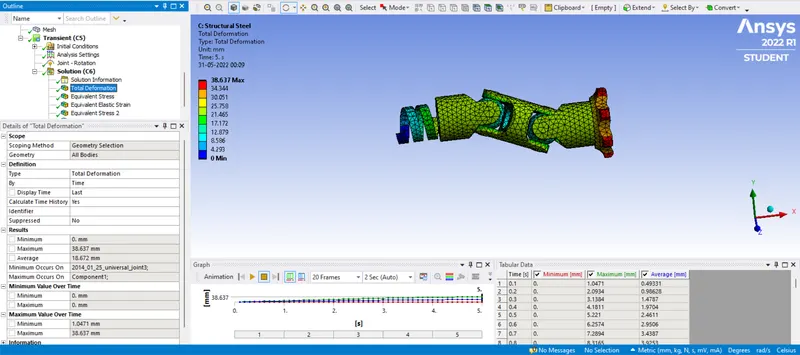
Case 1: Structural Steel
a) Equivalent Stress for Whole Setup:
b) Equivalent Elastic Strain for Whole Setup:
c) Total Deformation for Whole Setup:
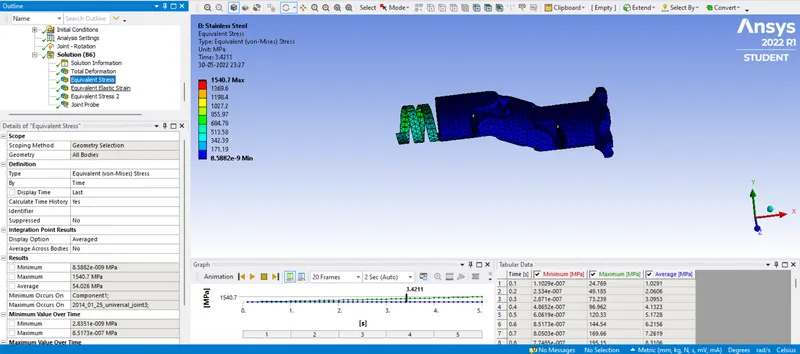
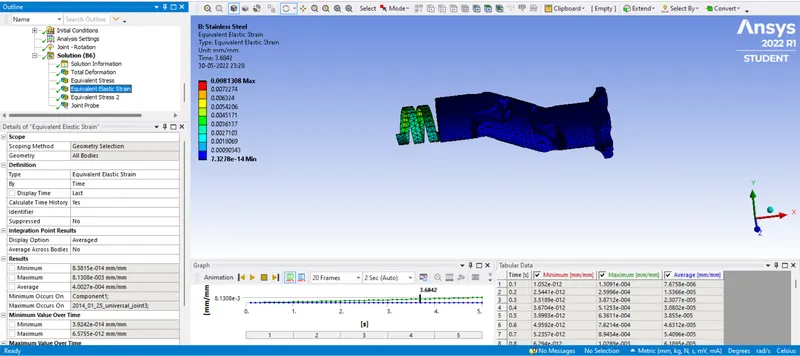
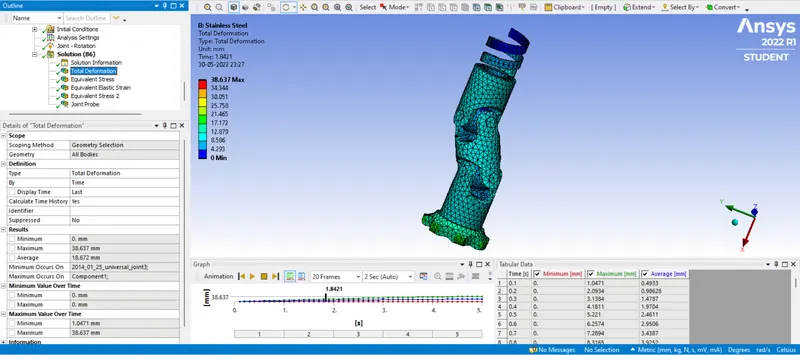
Case 2: Stainless Steel
a) Equivalent Stress for Whole Setup:
b) Equivalent Elastic Strain for Whole Setup:
c) Total Deformation for Whole Setup:
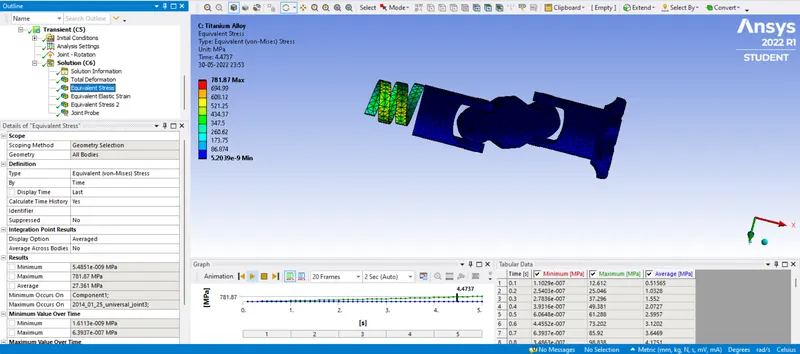
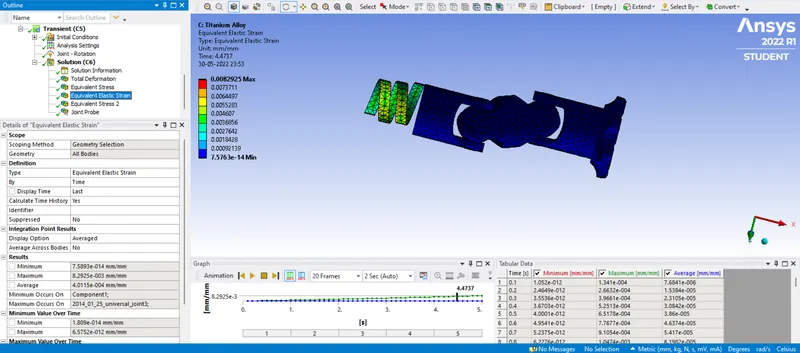
Case 3: Titanium Alloy
a) Equivalent Stress for Whole Setup:
b) Equivalent Elastic Strain for Whole Setup:
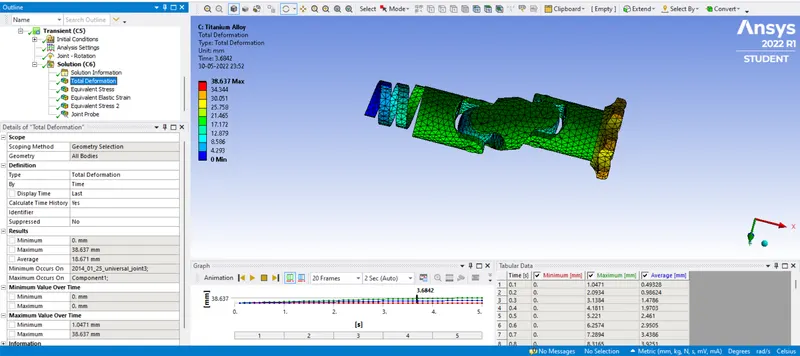
c) Total Deformation for Whole Setup:
Result:
| Material | Case 1 | Case 2 | Case 3 |
| Equivalent Stress in MPa (Maximum) | 1591 | 1540.7 | 781.87 |
| Equivalent Stress in MPa (Minimum) | 8.8937e-09 | 8.5882e-09 | 5.2039e-09 |
| Equivalent Plastic Strain (Maximum) | 8.1027e-03 | 8.1308e-03 | 8.2925e-03 |
| Equivalent Plastic Strain (Minimum) | 8.1049e-14 | 7.3278e-14 | 7.5763e-14 |
| Total Deformation in mm (Maximum) | 38.637 | 38.637 | 38.637 |
| Total Deformation in mm (Minimum) | 0 | 0 | 0 |
Conclusion:
From the above result, we can conclude that the equivalent stress is maximum in Case 1 i.e., structural steel because of the rigidness of the material it is having and in Case 3 i.e., Titanium Alloy is having minimum stress in all 3 cases.
Total deformation in all three cases is the same as we can observe from the above result.
Note: google drive link is provided below in a text file. Please check the link for the model.
Thank You...