Week 8 - Simulating Cyclone separator with Discrete Phase Modelling
Aim:- To perform analysis on the cyclone separator and calculate the separation efficiency and pressure drop.
Objective:-
- Write a few words about any four empirical models used to calculate the cyclone separator efficiency.
- To perform an analysis on a given cyclone separator model by varying the particle diameter from 1 μm to 5 μm and calculate the separation efficiency in each case. Discuss the results. [Use both the velocities as 3m/sec.]
- To perform an analysis on a given cyclone separator model by varying the particle velocity from 1 m/sec to 5 m/sec and calculating the separation efficiency and pressure drop in each case. Discuss the results. [Use particle diameter size as 5 μm for all cases & keep flow velocity same as particle velocity]
Theory:-
Cyclone Separator:-
A cyclone is a centrifugal separator in which particles, due to their mass, are pushed to the outer edges as a result of centrifugal force. Incoming air is automatically forced to adopt a fast-revolving spiral movement - the so-called double vortex. This double spiral movement consists of an outer stream, which flows downwards in a spiral, and an inner stream, which flows upwards in a spiral. At the interchange between both streams, air passes from one stream to the other. The particles which are present in the air are forced to the outer edges and leave the separator via a collection device fitted to the bottom of the separator.
The air speed of a cyclone lies between 10 and 20 m/s, and the most common speed is ca. 16 m/s. If there are fluctuations in speed (with lower speeds), separation yield falls quite drastically.
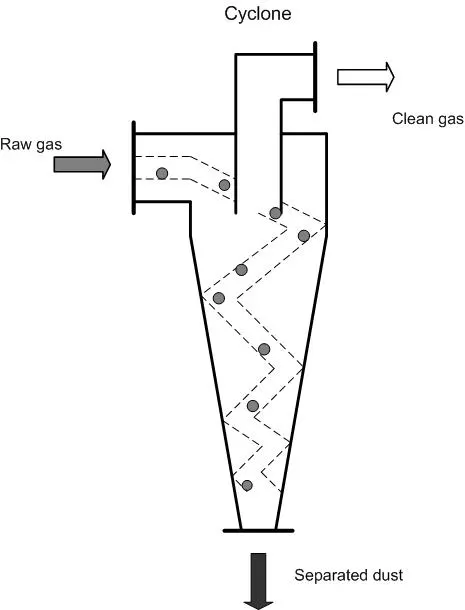
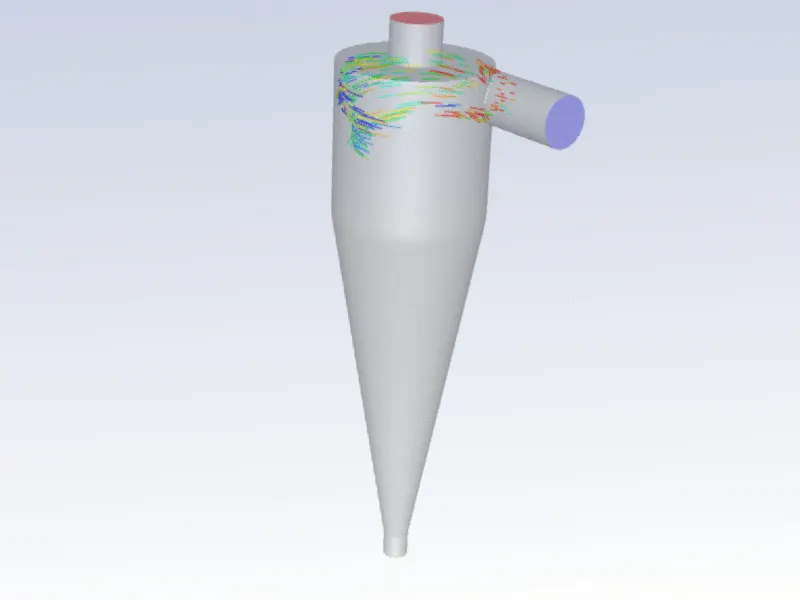
Dust, particles removed: abrasive, corrosive, adhesive, explosive
Advantages and disadvantages
Advantages
- Simple construction
- No moving parts
- Little maintenance
- Low investment and operation costs
- Constant pressure loss
- Space efficient
- Dry collection, except for wet cyclones
Disadvantages
- High-pressure loss (0.5 – 2.5 kPa), depending on set-up
- Low yield for low-diameter particles
- Poor performance for partial load
- Emission of wastewater for wet cyclones
- Erosion-sensitive and risk of blockage at the inlet
- Possible noise problems
Applications
Due to its relatively low yield and relatively high residual emissions, a cyclone is most commonly used as a pre-separator to remove larger particles before another dust abatement installation, such as a scrubber or baghouse filter, is implemented.
Pre-separation normally takes place on particles > 5µm and is mostly used in:
- Wood and furniture industry;
- The building sector;
- Glass industry;
- The transport sector for storage and transfer;
- The foodstuffs industry;
- Waste combustion installations;
- The chemicals industry;
- Melting processes in metallurgy;
- Sintering processes;
- Coffee roasting industry.
CYCLONE EFFICIENCY EMPIRICAL MODELS
1. Iozia and Leith Model
Iozia and Leith logistic model is a modified version of the Barth Model, which is developed based on force balance.
The model assumes that a particle carried by the vortex endures the influence of two forces: a centrifugal force, Z and a flow resistance, W. The collection efficiency ηi of particle diameter dpi can be calculated from
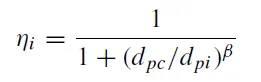
β is an expression for slope parameter derived based on the statistical analysis of experimental data of a cyclone with D = 170
0.25 m given as

and dpc is the 50% cut size given by Barth
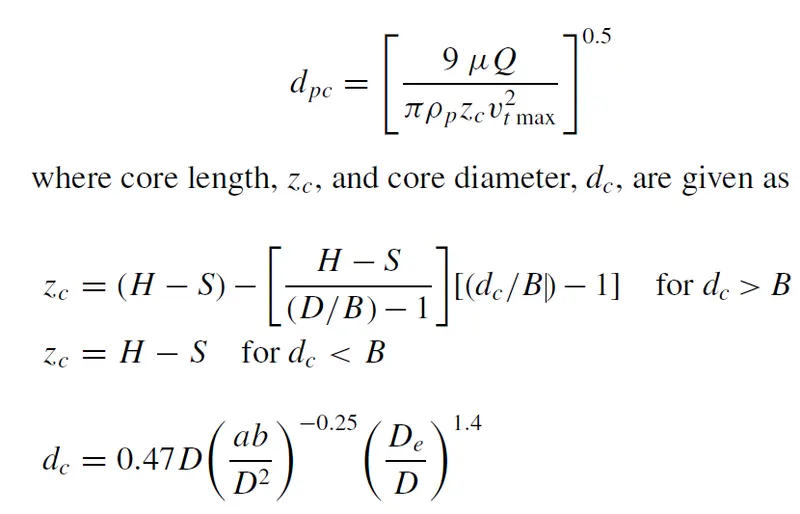
2. Li and Wang Model
The Li and Wang model includes particle bounce or re-entrainment and turbulent diffusion at the cyclone wall. A two-
dimensional analytical expression of particle distribution in the cyclone is obtained. Li and Wang's model was developed based
on the following assumptions:
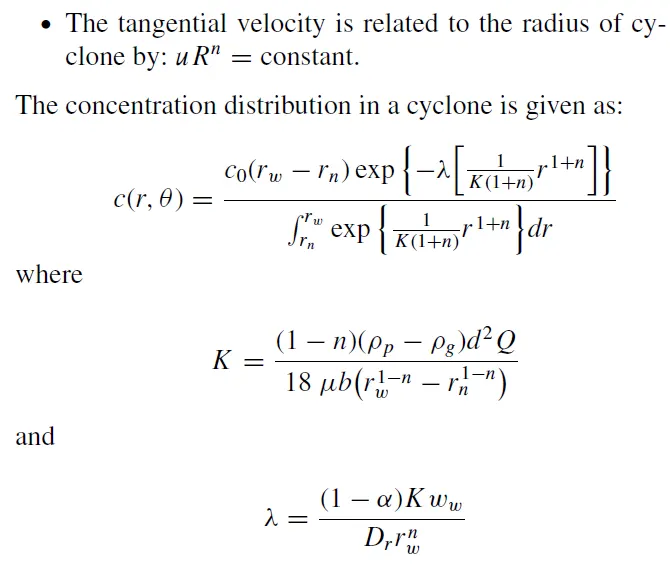
• The radial particle velocity and the radial concentration profile are not constant for uncollected particles within
the cyclone.
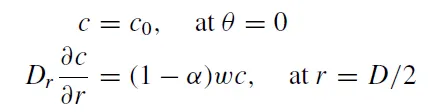
• Boundary conditions with the consideration of turbulent diffusion coefficient and particle bounce re-entrainment on the cyclone wall are:
The resultant expression of the collection efficiency for particles of any size is given as
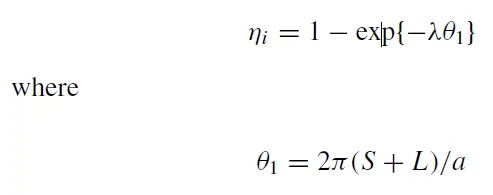
3. Koch and Licht Model
Koch and Licht [2] collection theory recognized the inherently turbulent nature of cyclones and the distribution of gas residence times within the cyclone. Koch and Licht described particle motion in the entry and collection regions with the additional following assumptions:
• The tangential velocity of a particle is equal to the tangential velocity of the gas flow, i.e. there is no slip in the tangential direction between the particle and the gas.
• The tangential velocity is related to the radius of the cyclone by uRn = constant
A force balance and an equation on the particles collection yields the grade efficiency ηi
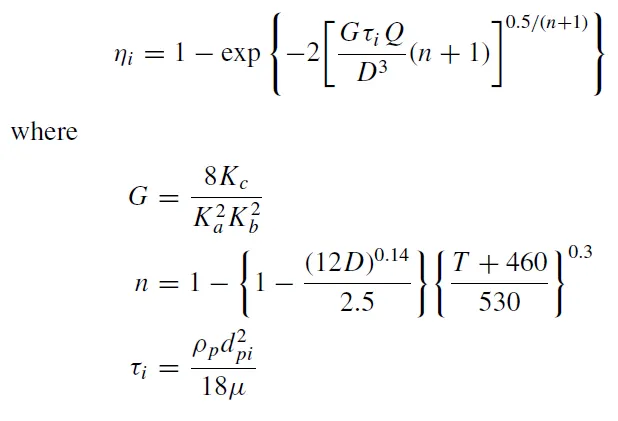
G is a factor related to the configuration of the cyclone, n is related to the vortex and τ is the relaxation term.
4. Lapple Model
Lapple modelwas developed based on force balance without considering the flow resistance. Lapple assumed that a particle entering the cyclone is evenly distributed across the inlet opening. The particle that travels from the inlet half-width to the wall in the cyclone is collected with 50% efficiency. The semi-empirical relationship developed by Lapple [1] to calculate a
50% cut diameter, dpc, is
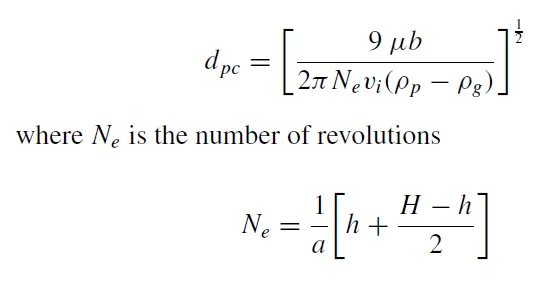
The efficiency of collection of any size of the particle is given by
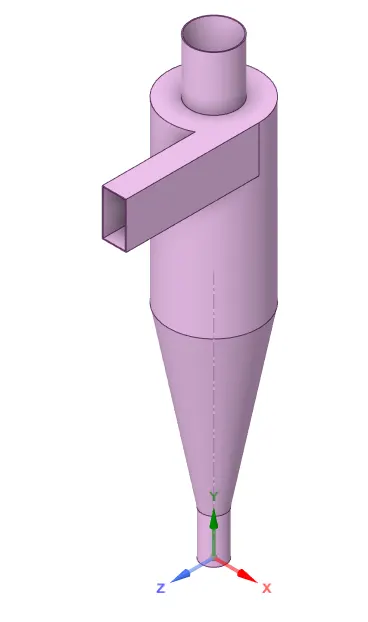
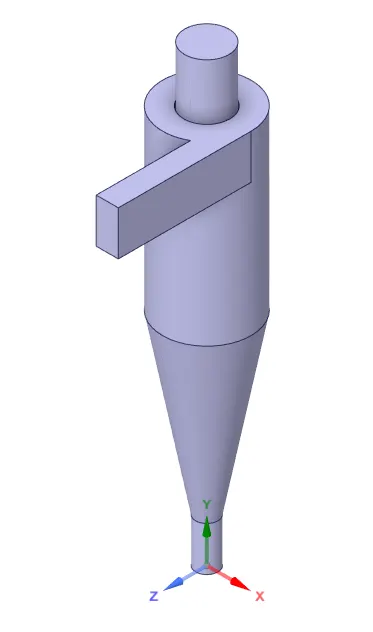
Geometry:-
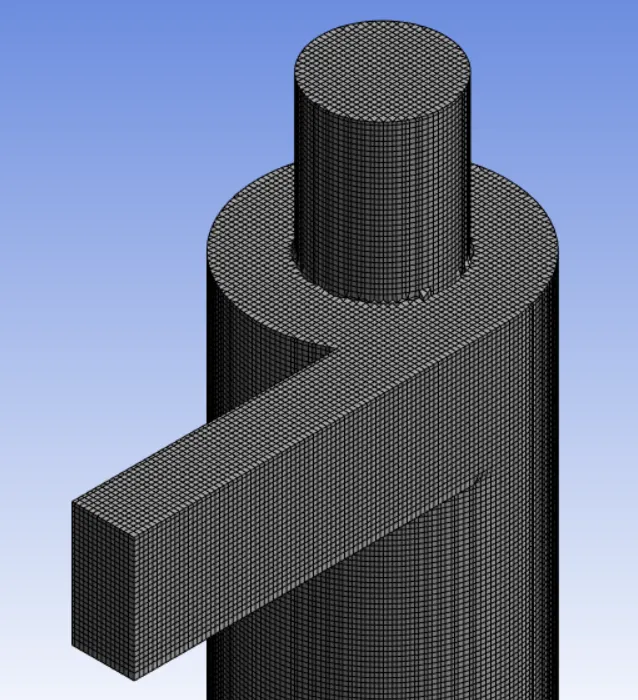
Cyclone Separator Model Fluid volume generated
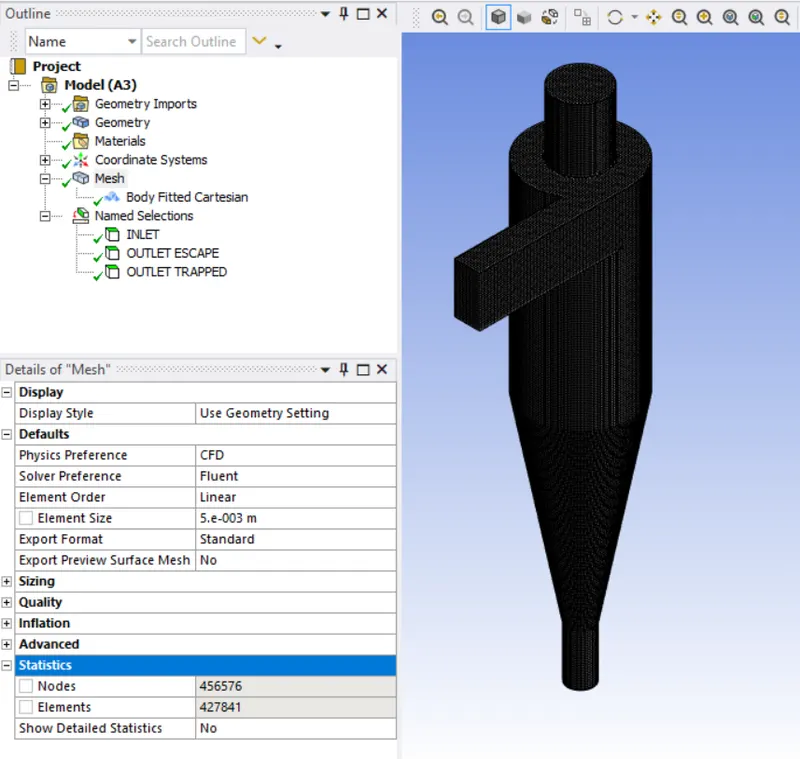
Meshing:-
Structured mesh
Setup & Simulation:-
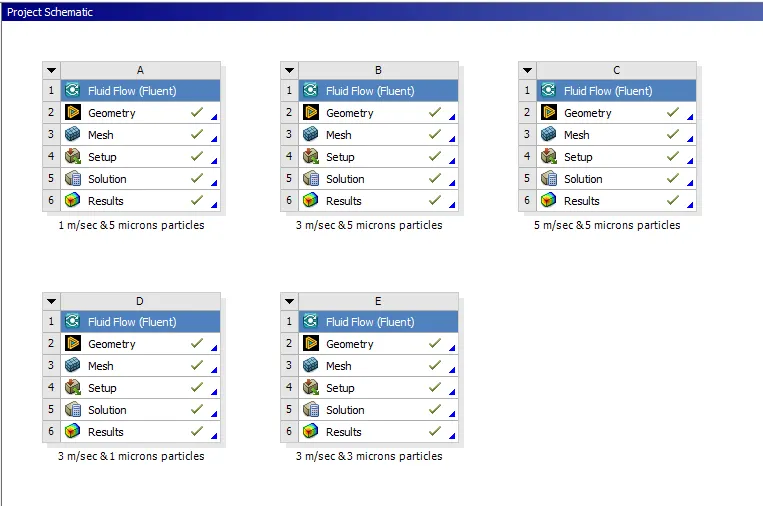
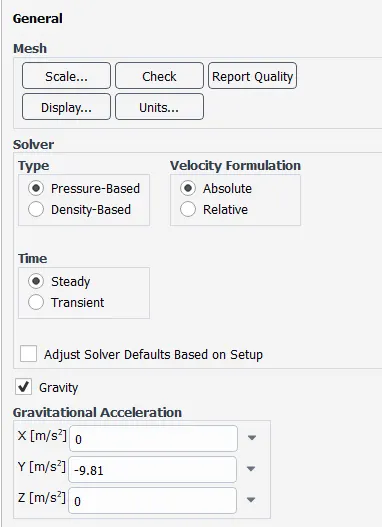
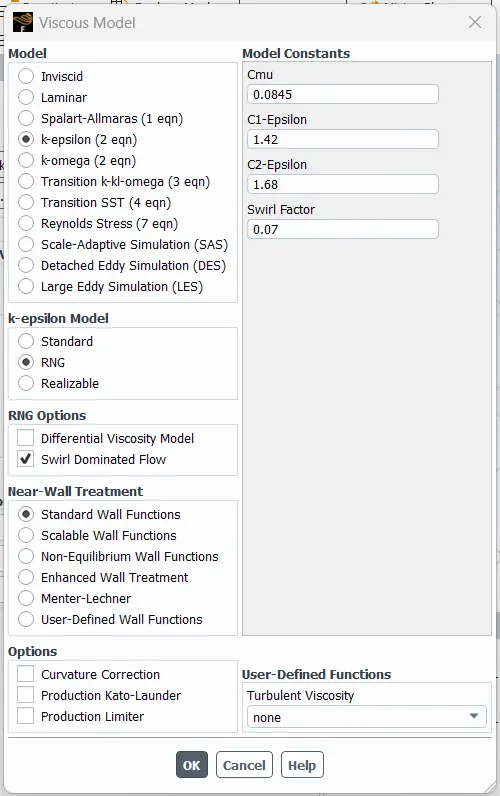
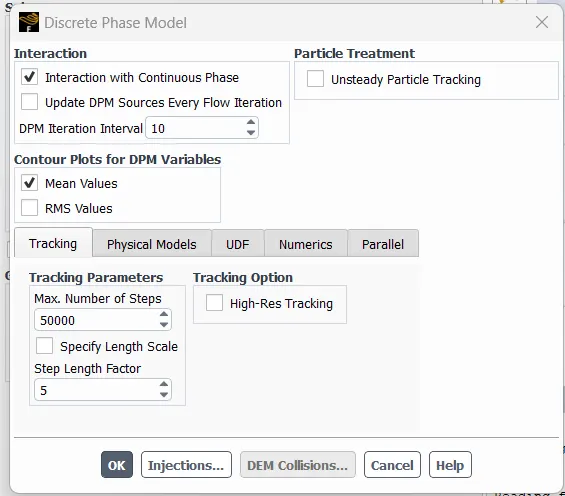
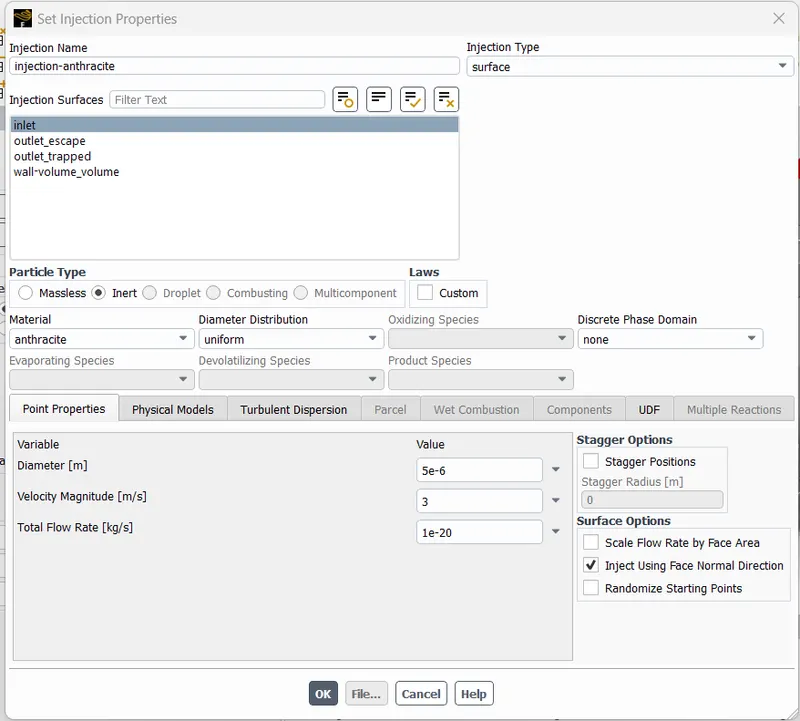
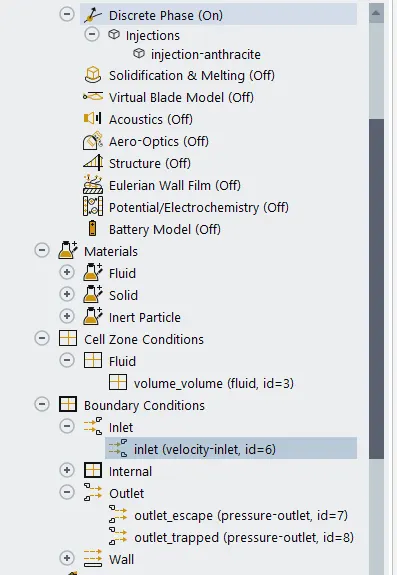
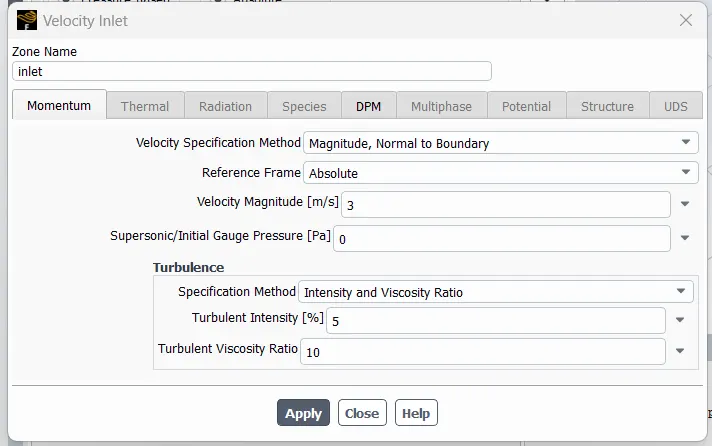
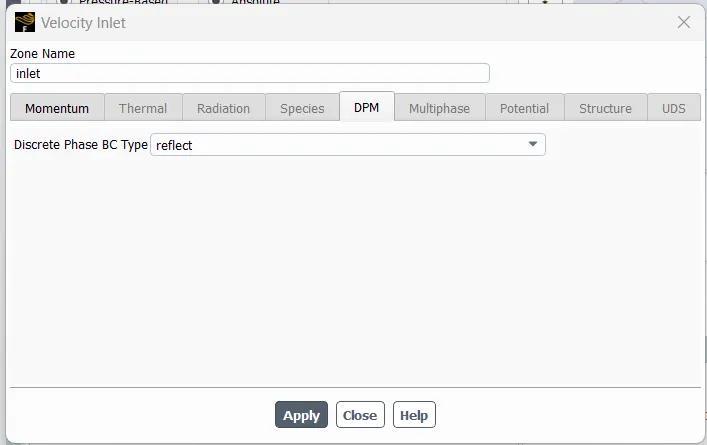
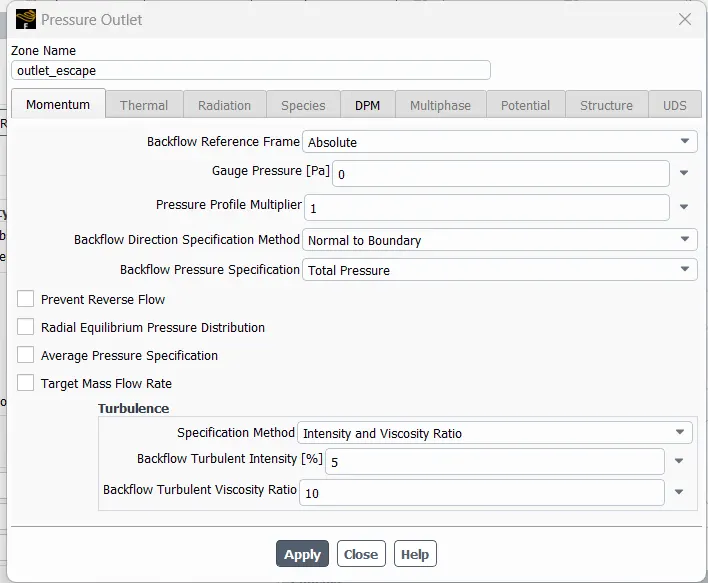
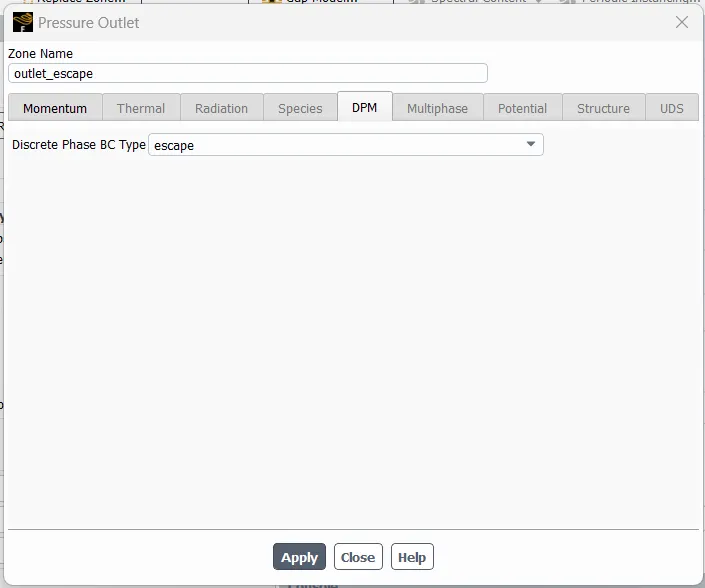
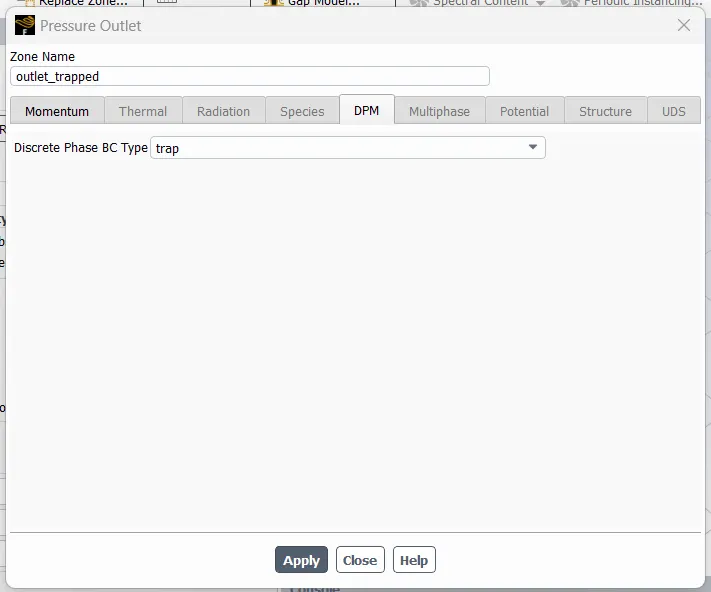
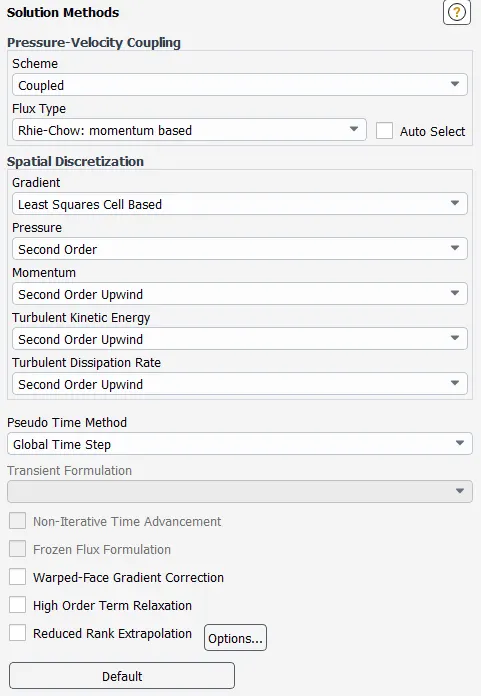
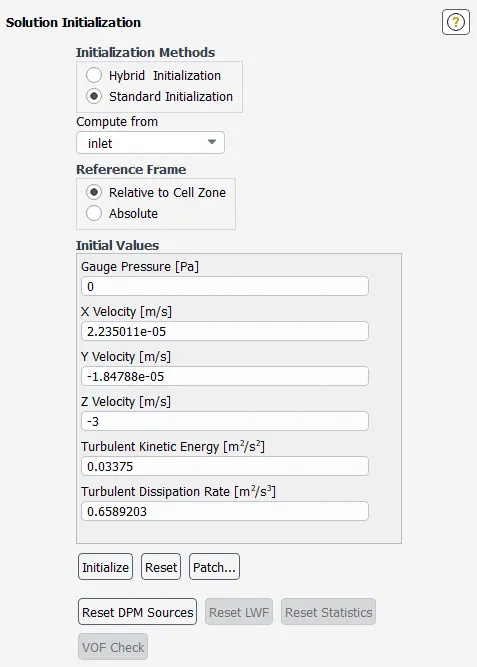
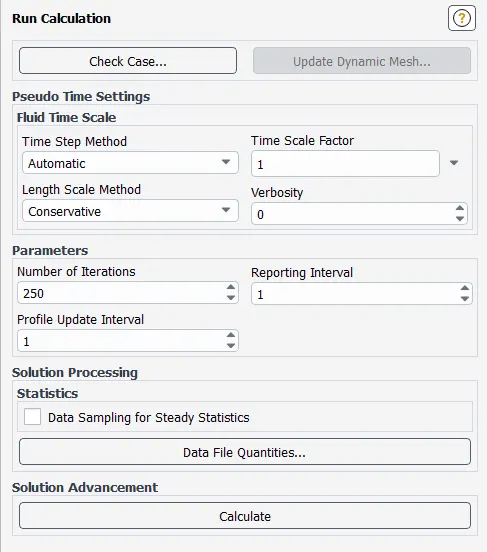
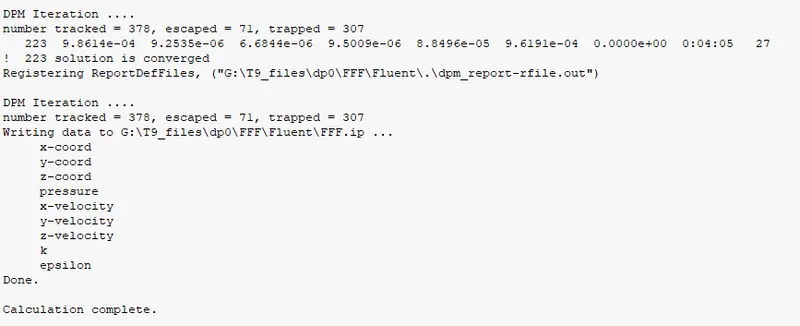
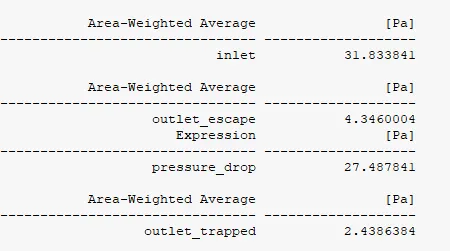
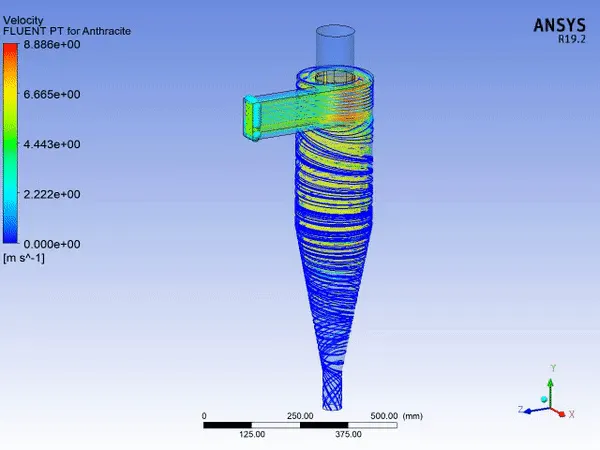
Results:-
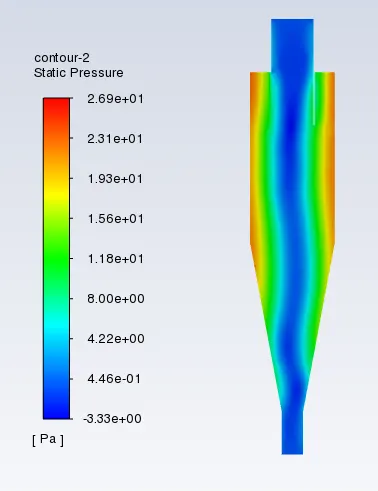
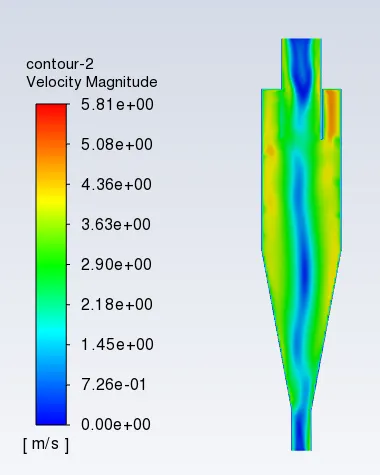
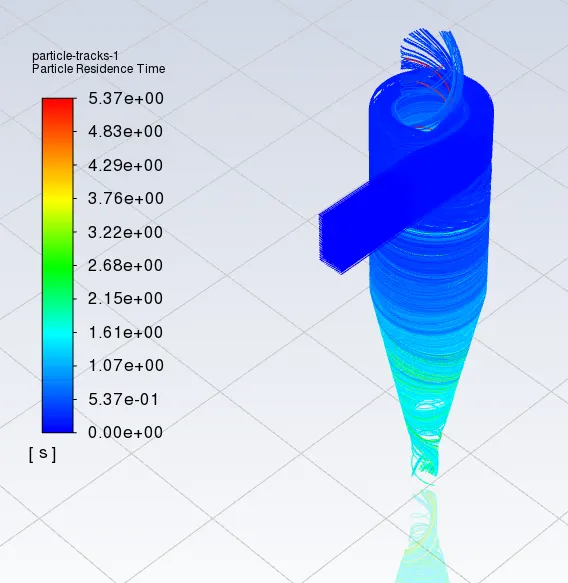
Case-1:- 1 m/s velocity & 5 microns particle size
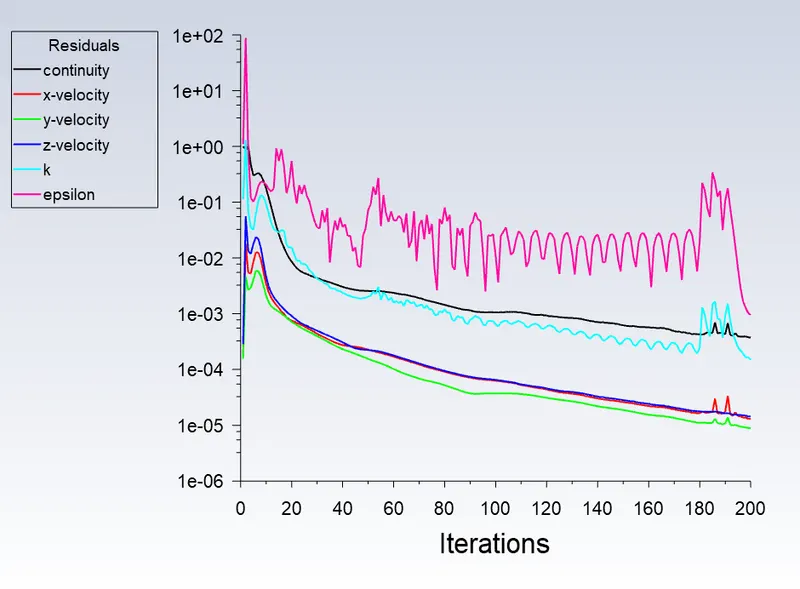
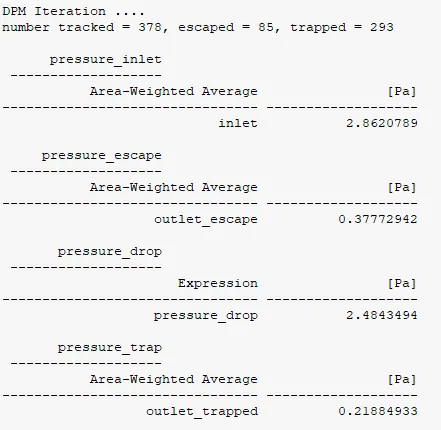
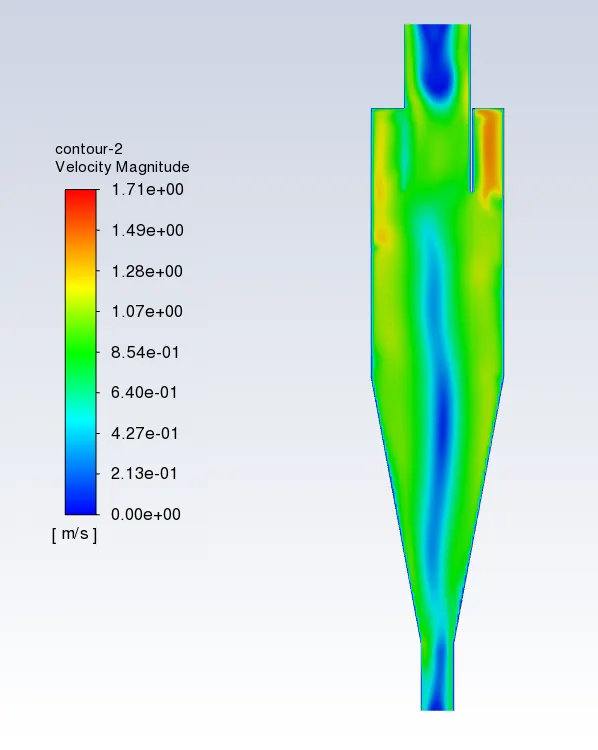
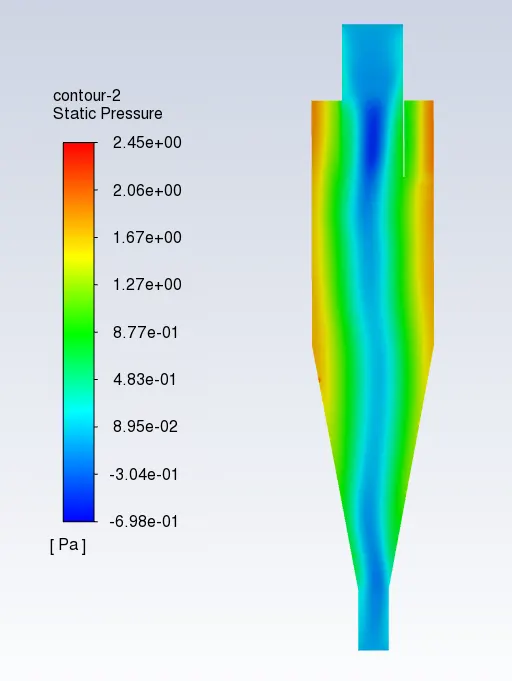
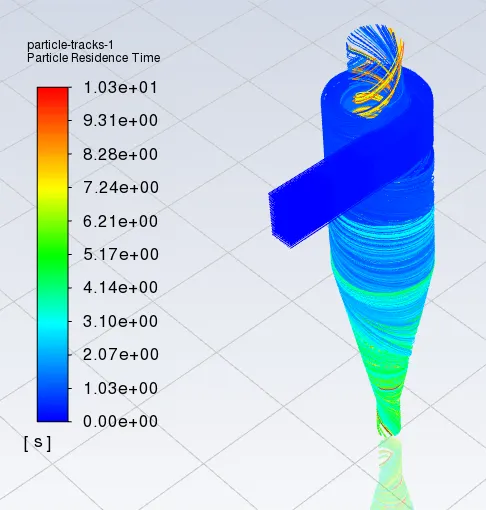
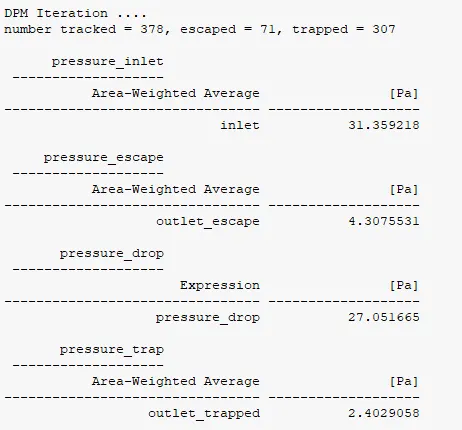
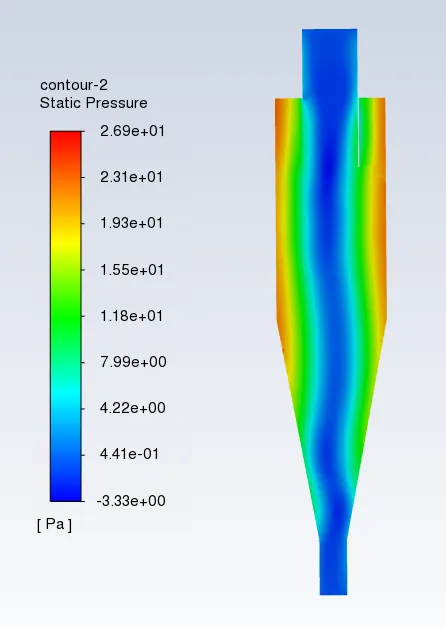
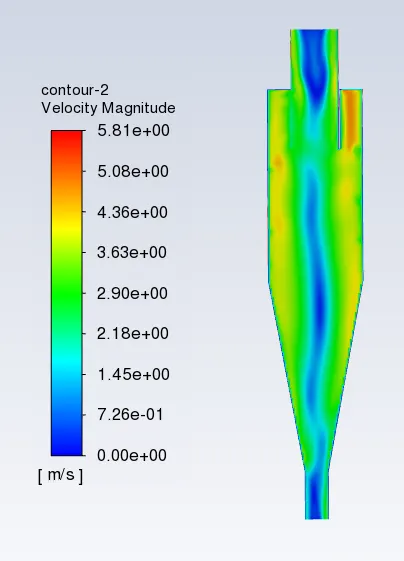
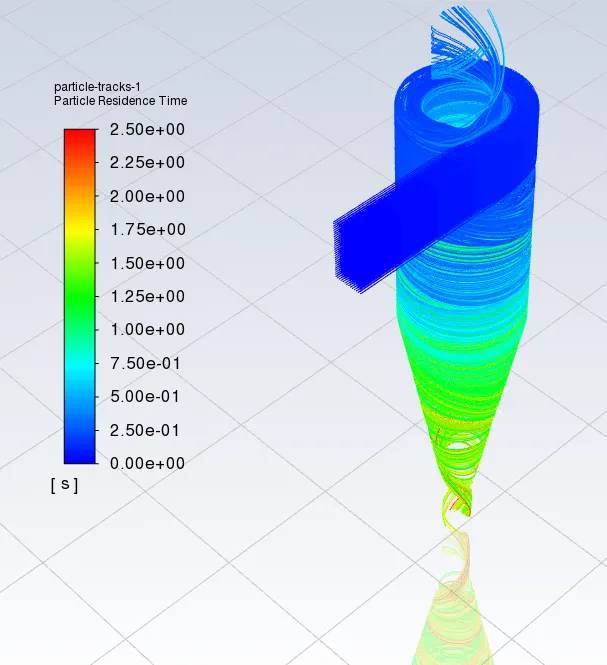
Case-2:- 3 m/s velocity & 5 microns particle size
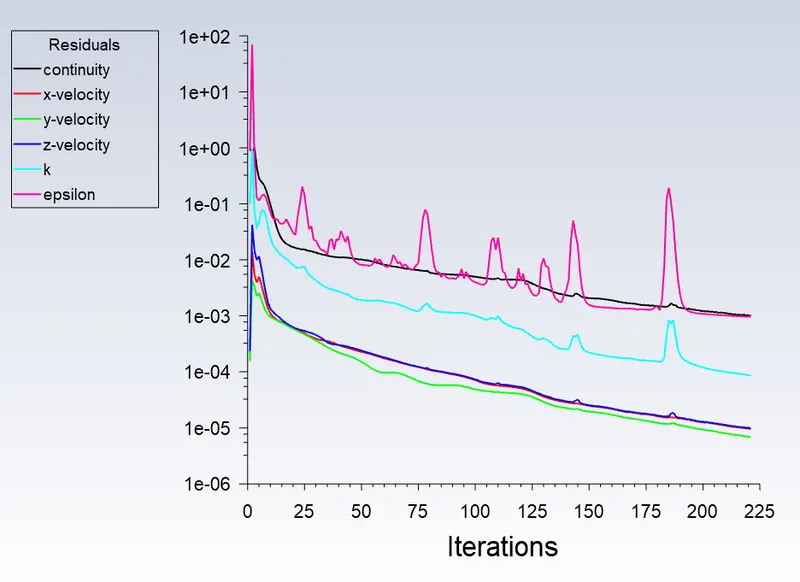
Case-3:- 5 m/s velocity & 5 microns particle size
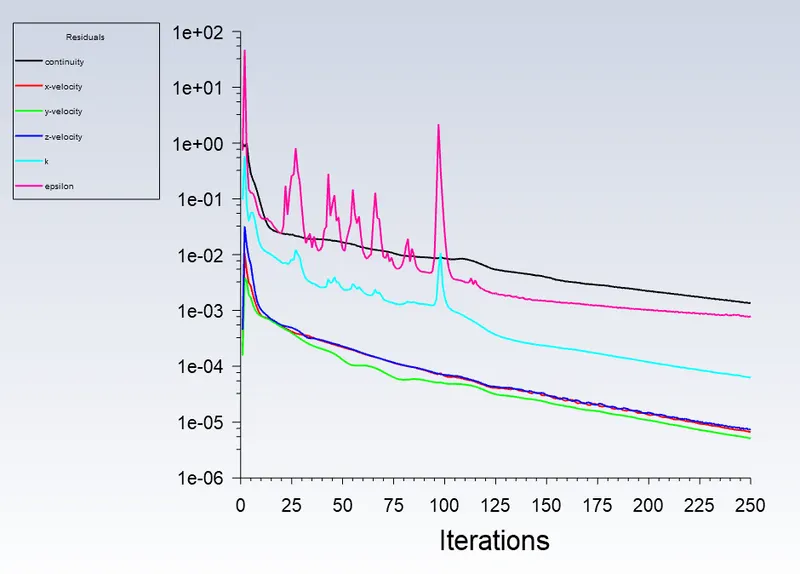
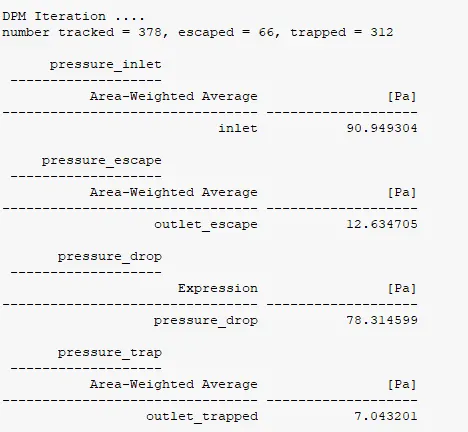
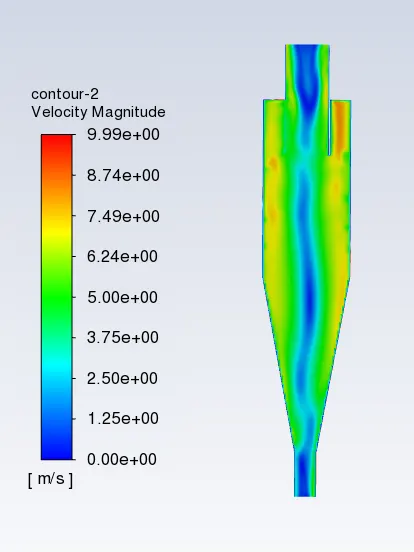
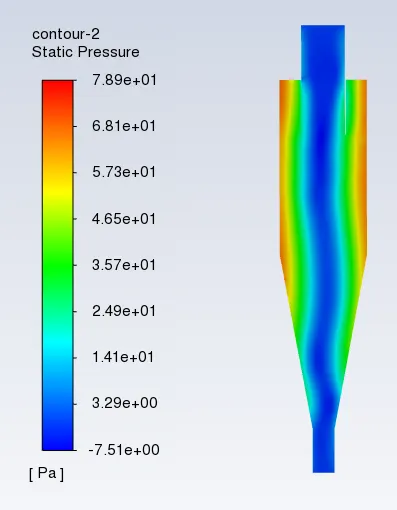
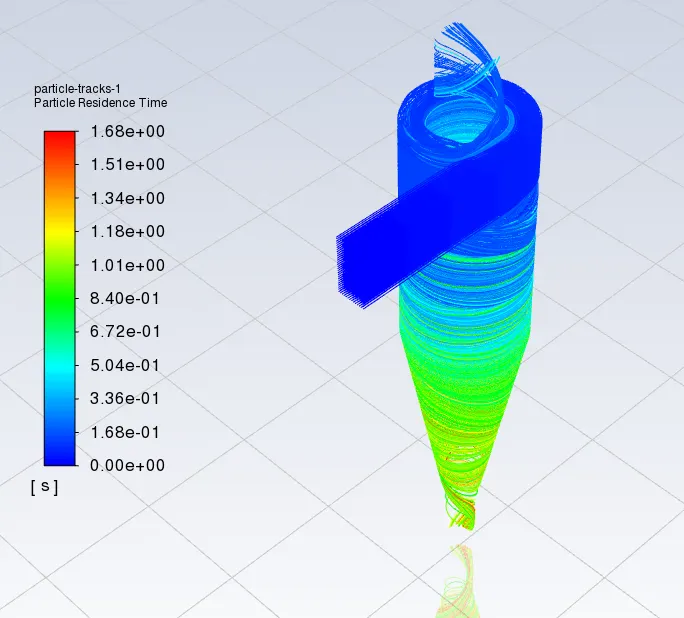
Case-4:- 3 m/s velocity & 1 microns particle size
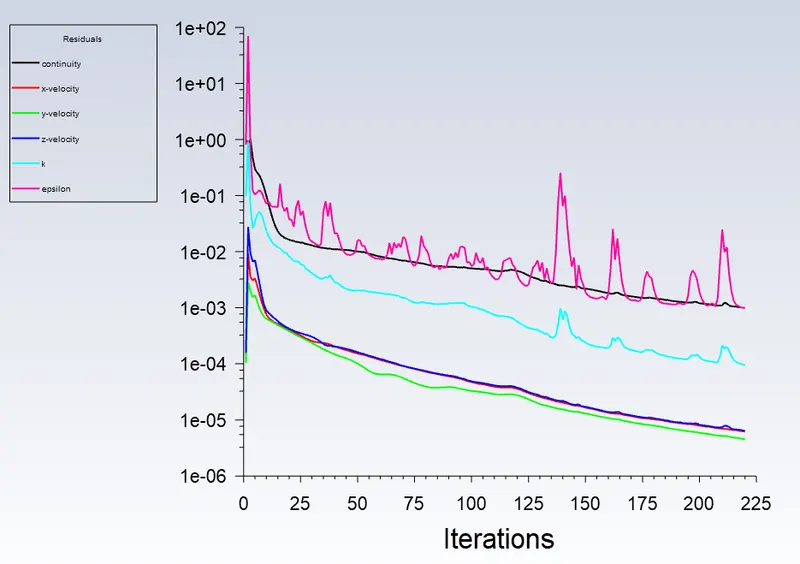
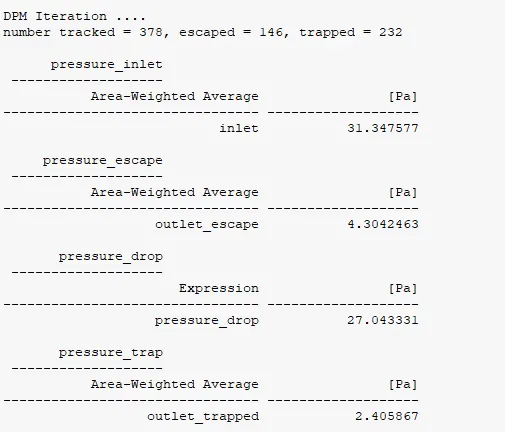
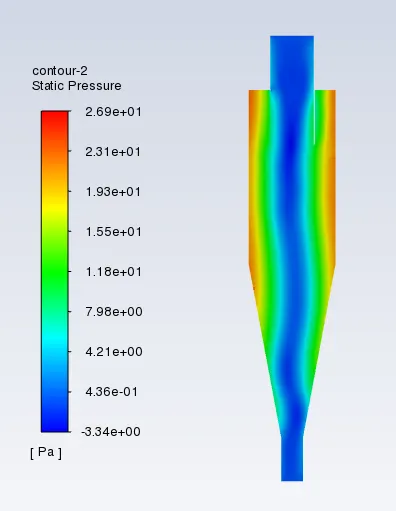
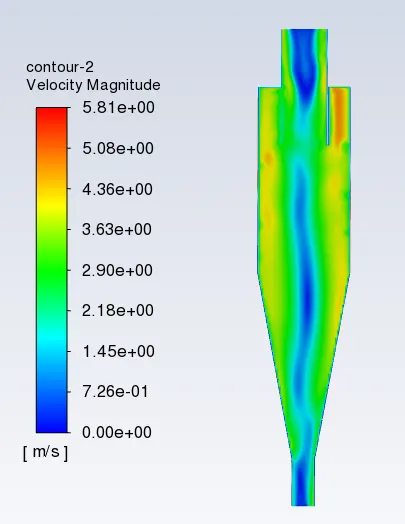
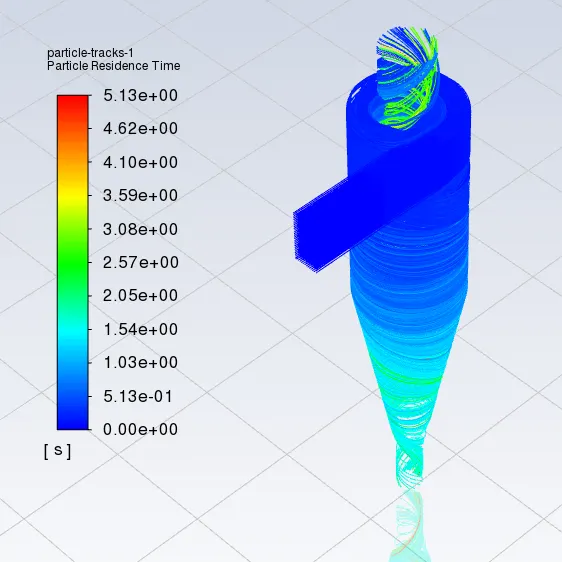
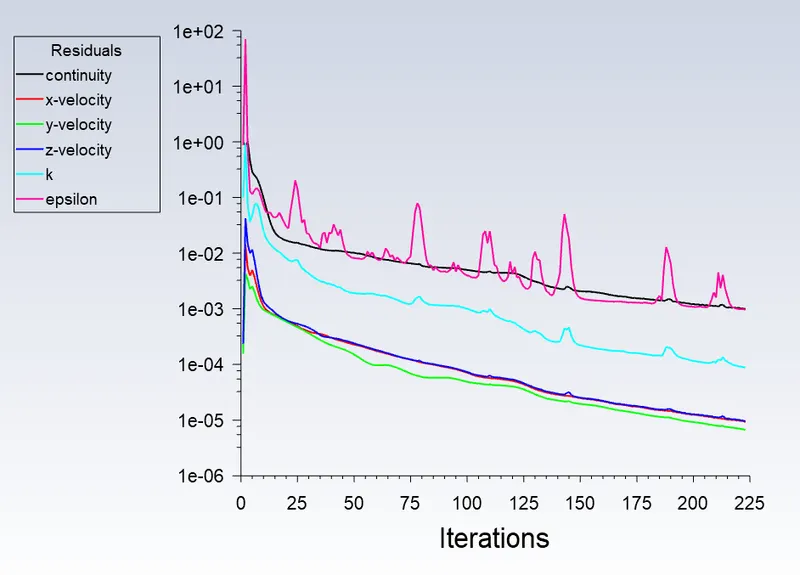
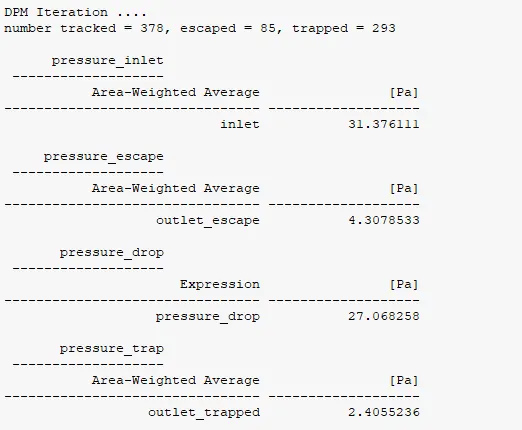
Case-5:- 3 m/s velocity & 3 microns particle size
Conclusion:-
1. Discrete Phase Modelling is performed on a cyclone separator and separation efficiency & Pressure drop are captured for all cases.
2. From the table, it is clear that with increasing the velocity of the mixture, Cyclone separation efficiency increases, and on the other hand, the pressure drop.
3. From the table, keeping velocity constant and varying the particle size, efficiency increase but pressure almost remain the same.
4. From this, we can say, particle size does not vary with pressure, it is independent of pressure and dependent on the velocity with which it is pumped in the separator.
References:-
2. https://ijisrt.com/assets/upload/files/IJISRT22MAR1189_(1).pdf