Week 8 - Simulating Cyclone separator with Discrete Phase Modelling
AIM:
To perform analysis on cyclone separator and calculate the separation efficiency and pressure drop using the discrete phase modeling using ANSYS fluent software.
OBJECTIVES:
- Write a few words about any four empirical models used to calculate the cyclone separator efficiency.
- To perform an analysis on a given cyclone separator model by varying the particle diameter from 1 μm to and calculate the separation efficiency in each case. Discuss the results. [Use both the velocity's as 3m/sec.]
- To perform an analysis on a given cyclone separator model by varying the particle velocity from 1 m/sec to 5 m/sec and calculating the separation efficiency and pressure drop in each case. Discuss the results. [Use particle diameter size as 5 μm for all cases & keep flow velocity same as particle velocity]
THEORY OF CYCLONE SEPARATOR WITH DISCRETE PHASE MODELLING
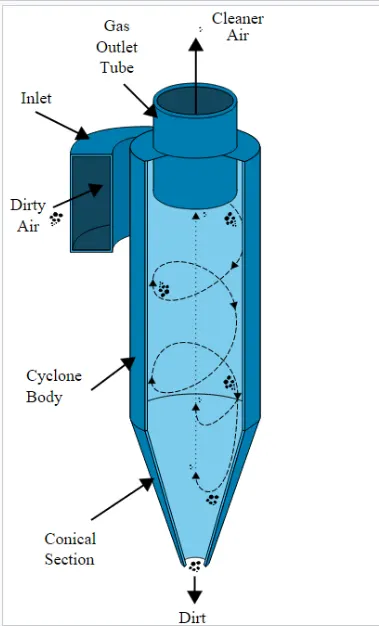
CYCLONE SEPARATOR is a method of removing particulates from an air, gas, or liquid stream, without the use of filters, through vortex separation. Rotational effects and gravity are used to separate mixtures of solids and fluids. The method can also be used to separate fine droplets of liquid from a gaseous stream. It is important to note that cyclones can vary drastically in their size. The size of the cyclone depends largely on how much flue gas must be filtered, thus larger operations tend to need larger cyclones. For example, several different models of one cyclone type can exist, and the sizes can range from a relatively small 1.2-1.5 meters tall.
WORKING
Cyclone separators work much like a centrifuge, but with a continuous feed of dirty air. In a cyclone separator, dirty flue gas is fed into a chamber. The inside of the chamber creates a spiral vortex, similar to a tornado. This spiral formation and the separation are shown in the above Figure. The lighter components of this gas have less inertia, so it is easier for them to be influenced by the vortex and travel up it. Since these larger particles have difficulty following the high-speed spiral motion of the gas and the vortex, the particles hit the inside walls of the container and drop down into a collection hopper. These chambers are shaped like an upside-down cone to promote the collection of these particles at the bottom of the container. The cleaned flue gas escapes out the top of the chamber. Most cyclones are built to control and remove particulate matter that is larger than 10 micrometers in diameter. However, there do exist high-efficiency cyclones that are designed to be effective on particles as small as 2.5 micrometers. As well, these separators are not effective on extremely large particulate matter. For particulates around 200 micrometers in size, momentum separators are a better option.
Cyclone separators are utilized in many applications due to their low cost, simple design, and high efficiency. Cyclone separators are generally able to remove somewhere between 50-99% of all particulate matter in the flue gas. How well the cyclone separators are actually able to remove this matter depends largely on particle size. If there is a large amount of lighter particulate matter, fewer of these particles are able to be separated out. Because of this, cyclone separators work best on flue gases that contain large amounts of big particulate matter.
DISCRETE PHASE MODEL
The discrete Phase Model is a subsection of Multiphase flows. A discrete phase model (DPM) is used when the aim is to investigate the behavior of the particles from a Lagrangian view and a discrete perspective. When attempting to analyze the behavior of the particles from both a Lagrangian and discrete perspective, a discrete phase model (DPM) is often employed via Ansys Software. The difference between the Lagrangian and Eulerian views is that the Eulerian perspective assumes a finite volume element in the fluid flow route while the Lagrangian view bases its analysis of fluid behavior on particle tracking of a particulate flow.
Navier-Stokes equations are used in the discrete phase model to solve the continuous phase. Countless particles, bubbles, or droplets are tracked at once to approximate the discrete phase. Specifically, those that cross the predicted continuous flow field.
Empirical models used for cyclone separator efficiency:
IOZIA AND LEITH MODEL:
Iozia and Leith's (1990) logistic model is a modified version of Barth's (1956) model which is developed based on force balance. The model assumes that a particle carried by the vortex endures the influence of two forces: a centrifugal force Z, and flow resistance, W. Core length, zc, and core diameter dc, are given as
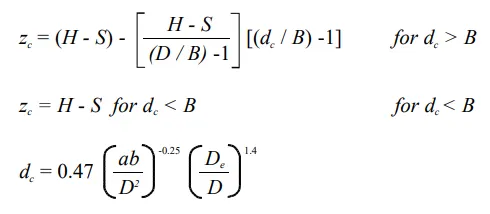
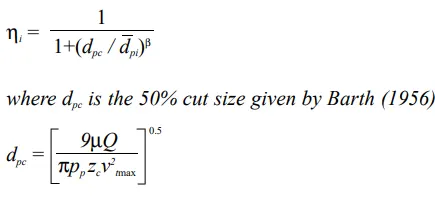
The addition made by Iozia and Leith on the original Barth (1956) model is the core length zc and slope parameter β expression which is derived based on the statistical analysis of experimental data of cyclone with D = 0.25 m. The collection efficiency ηi of particle diameter dpi can be calculated from
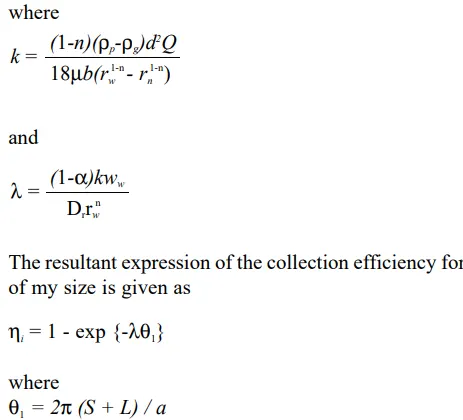
LI AND WANG MODEL:
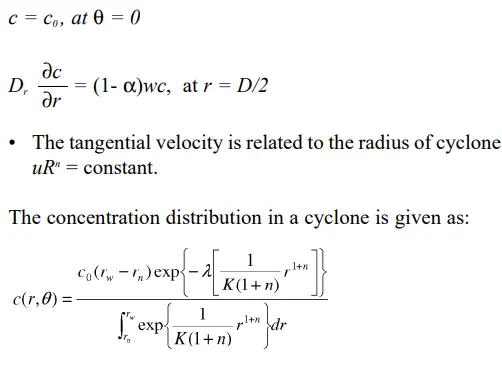
The Li and Wang (1989) model includes particle bounce or re-entrainment and turbulent diffusion at the cyclone wall. A two-dimensional analytical expression of particle distribution in the cyclone is obtained. Li and Wang's model was developed based on the following assumptions:
- The radial particle velocity and the radial concentration profile are not constant, for uncollected particles within the cyclones.
- Boundary conditions with the consideration of turbulent diffusion coefficient and particle bounce re-entrainment on the cyclone wall are:
KOCH AND LICHT MODEL:
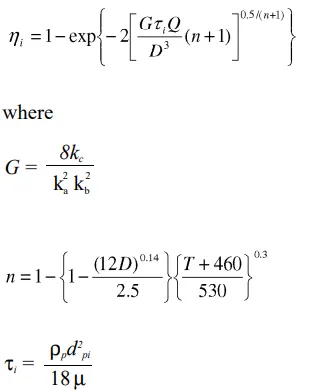
Koch and Licht's (1977) collection theory recognized the inherently turbulent nature of cyclones and the distribution of gas residence times within the cyclone. Koch and Licht
describe particle motion in the entry and collection regions with the additional following assumptions:
- The tangential velocity of a particle is equal to the tangential velocity of the gas flow, i.e. there is no slip in the tangential direction between the particle and the gas.
- The tangential velocity is related to the radius of the cyclone by `uR^n=constant`
A force balance and an equation on the particle collection yield the grade efficiency ηi
LAPPLE MODEL:
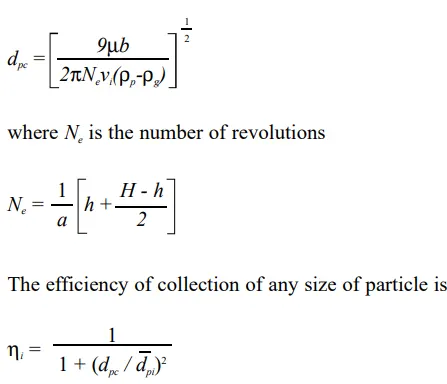
Lapple's (1951) model was developed based on force balance without considering the flow resistance. Lapple assumed that a particle entering the cyclone is evenly distributed across the inlet opening. The particle that travels from the inlet half-width to the wall in the cyclone is collected with 50% efficiency. The semi-empirical relationship developed by Lapple (1951) to
calculate a 50% cut diameter, dpc is
DETAILED PROCEDURE FOR CYCLONE SEPARATOR WITH DISCRETE PHASE MODELLING USING ANSYS FLUENT
GEOMETRY USING SpaceClaim
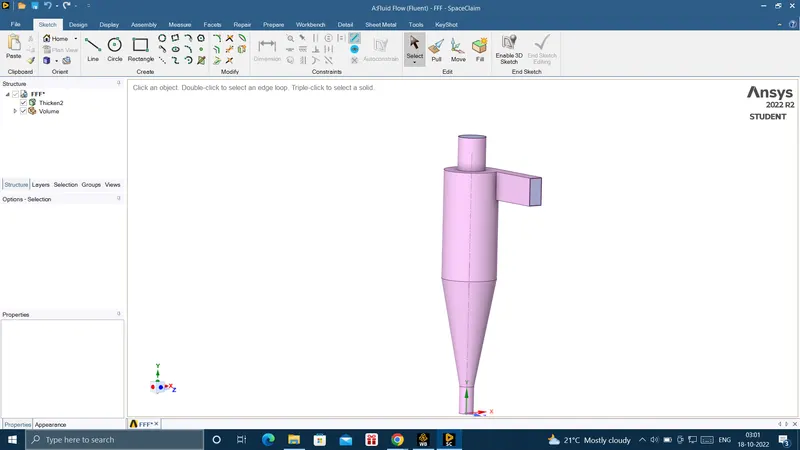
- Initially, I am importing the cyclone (.STEP) file into the space claim.
- Volume extracts the model so that we can analyze the fluid flow of the cyclone separator.
- Hide the previous geometry and suppress physics since we are only interested in the fluid flow and not the external surface.
MESH
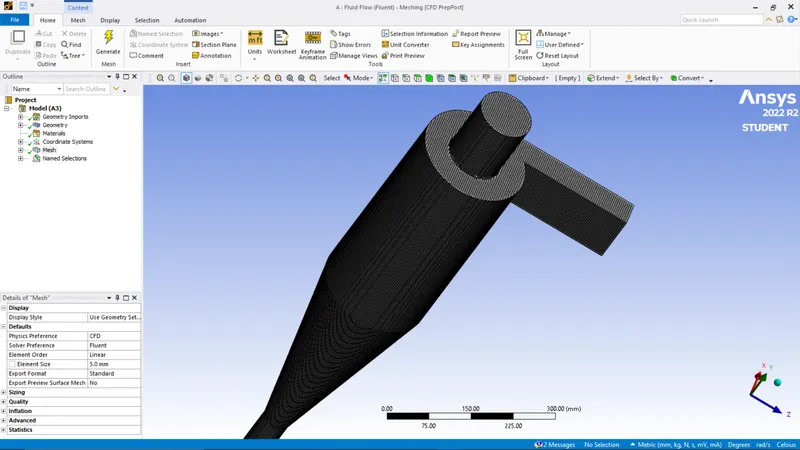
- For meshing, I am inserting the methods option with the Cartesian coordinate with an element size of 5mm.
- choose generate mesh to generate the base mesh but since the number of particles entering the inlet depends on the refinement of the mesh, it's better to refine the mesh appropriately.
- Assign the names by applying name selection for inlets and outlets accordingly.
SETUP AND SOLUTION
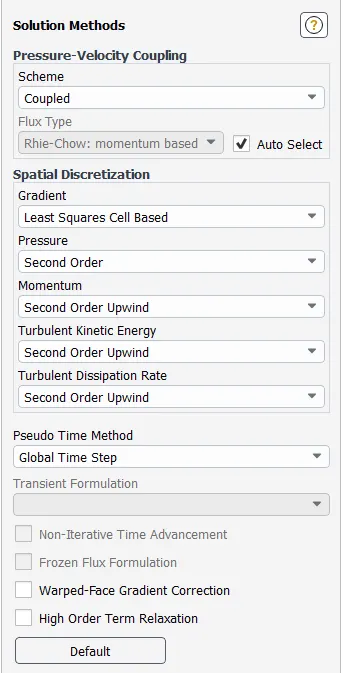
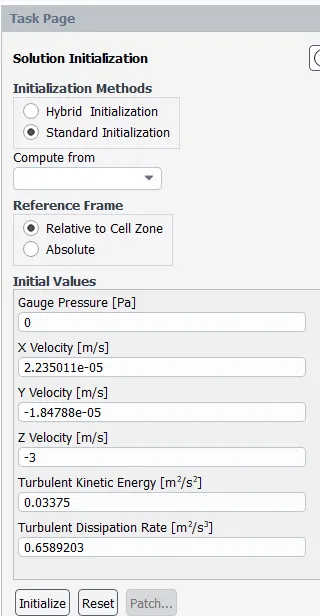
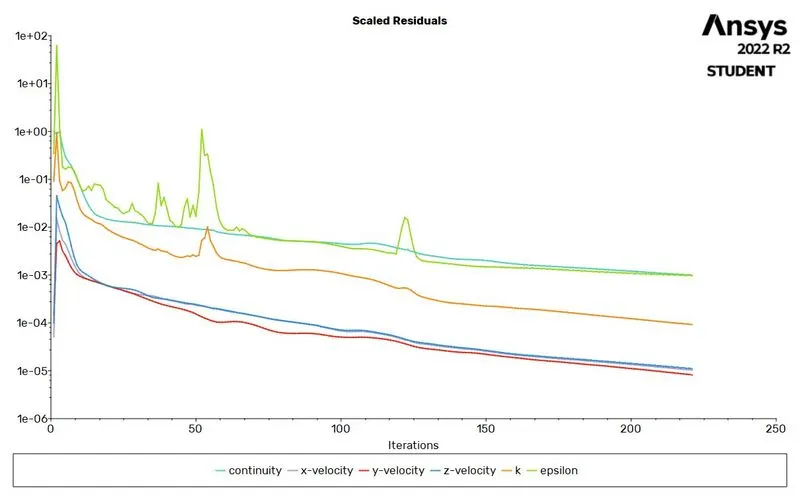
- Initially, we go for the SOLVER option here we are the type of solver used is PRESSURE BASED SOLVER (M<0.3), enable GRAVITY with y=-9.81, and since the variable is not varying with respect to time select the STEADY STATE option.
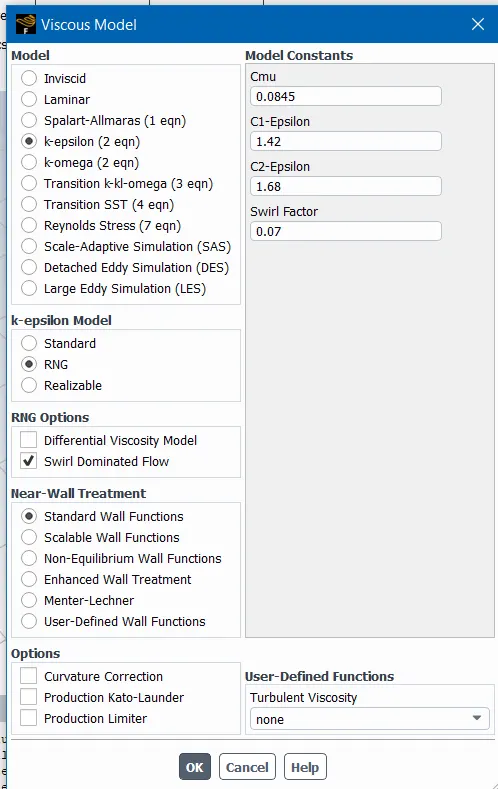
- The RNG(swirl-dominated flow) K-epsilon model with a standard wall treatment turbulence model is selected.
- Enabled interaction with continuous phase - to enable coupled flow
- Enabled update DPM sources every flow iteration - Enabling this option gives chances to calculate particle source terms at every iteration.
- Contour plots for DPM variables - unenabled - Allows cell averaged variable value.
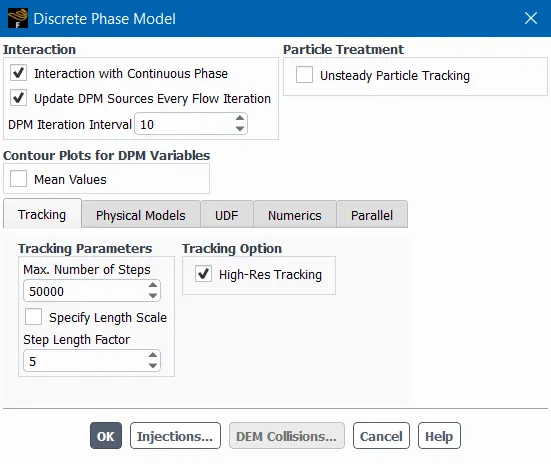
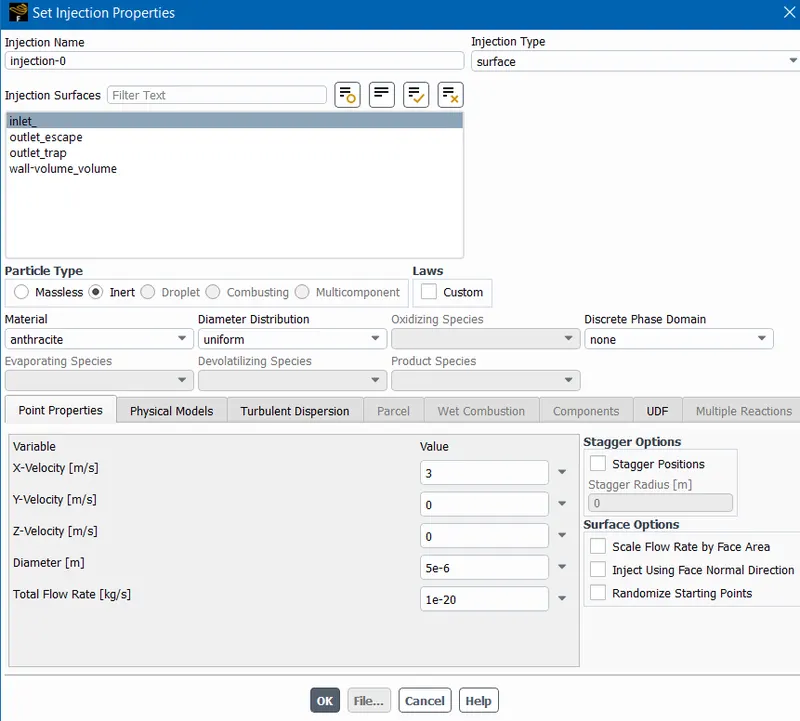
- Tracking parameters - Max. No. of steps - 50000 - It is the no. of timesteps that are used to compute a single particle trajectory.
Boundary conditions
- Inlet: - Velocity-Inlet
DPM - Reflect
Reflect - The particle rebounds off the boundary in question with a change in its momentum as defined by the coefficient of restitution.
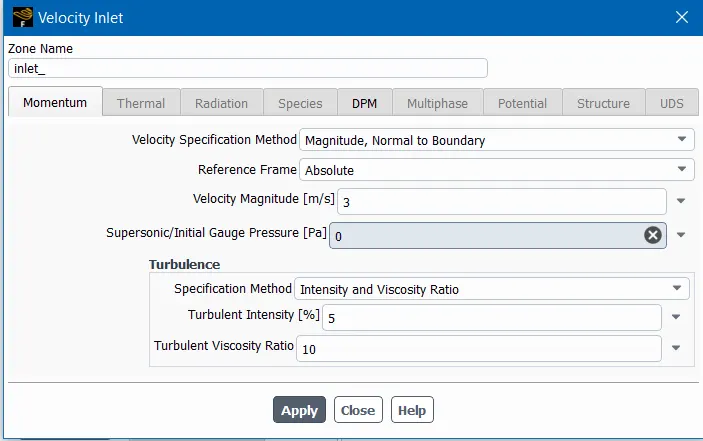
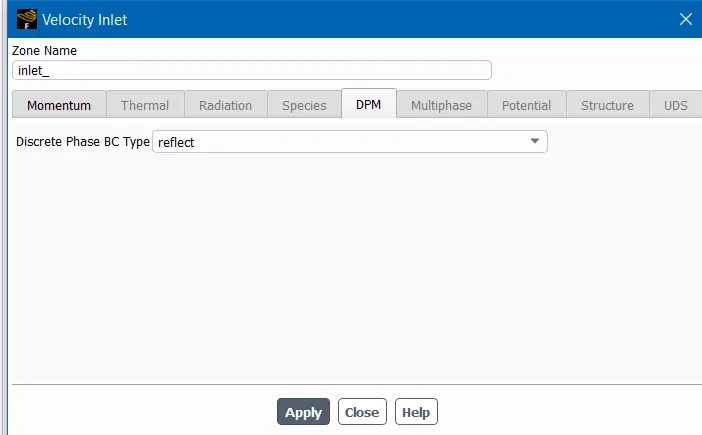
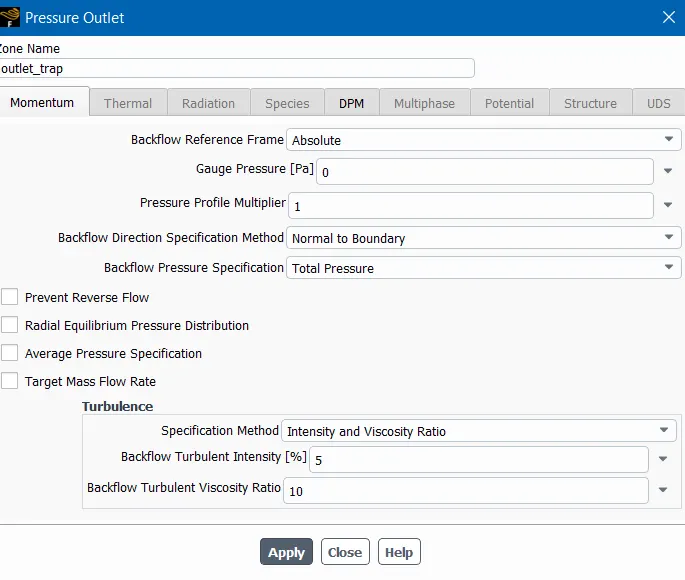
- Outlet escape- Pressure-Outlet
DPM - Escape
Escape - The particle is reported as having "escaped" when it encounters the boundary in question. Trajectory calculated are terminated.
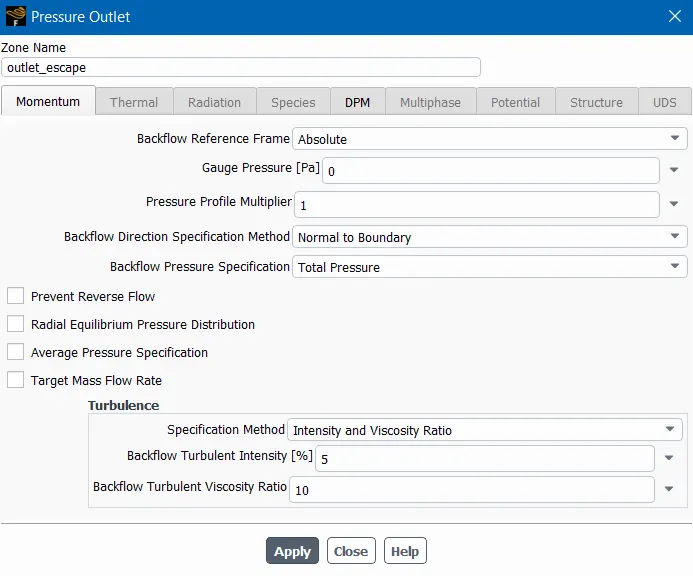
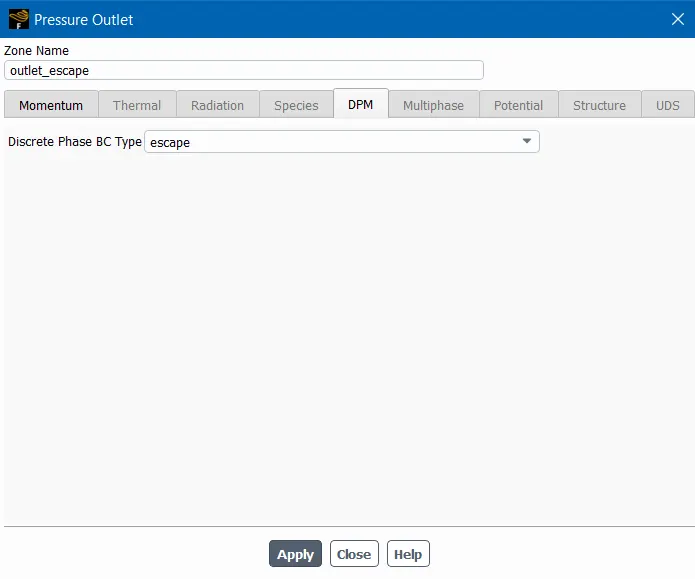
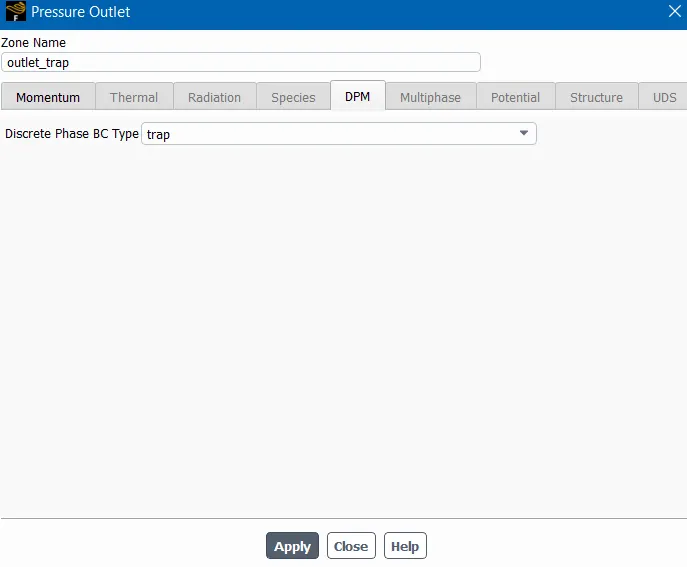
- Outlet trap - Pressure-Outlet
DPM - Trap
Trap - The trajectory calculation is terminated and the fate of the particle is recorded as " trapped ". In the case of the evaporating droplet, its entire mass instantaneously passes into the vapor phase and enters the cell adjacent to the boundary. In the case of a combusting particle, the remaining volatile mass is passed into the vapor phase.
RESULTS
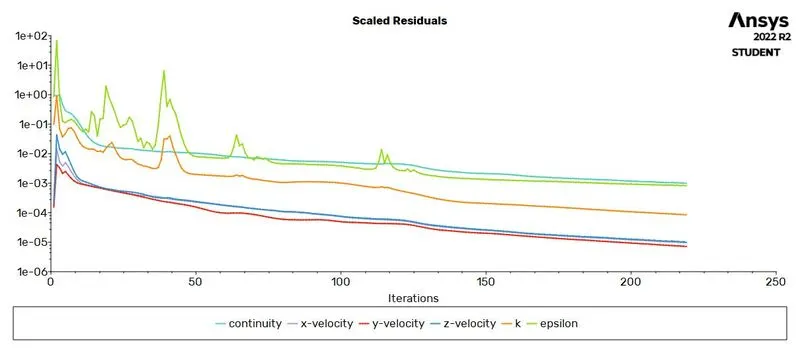
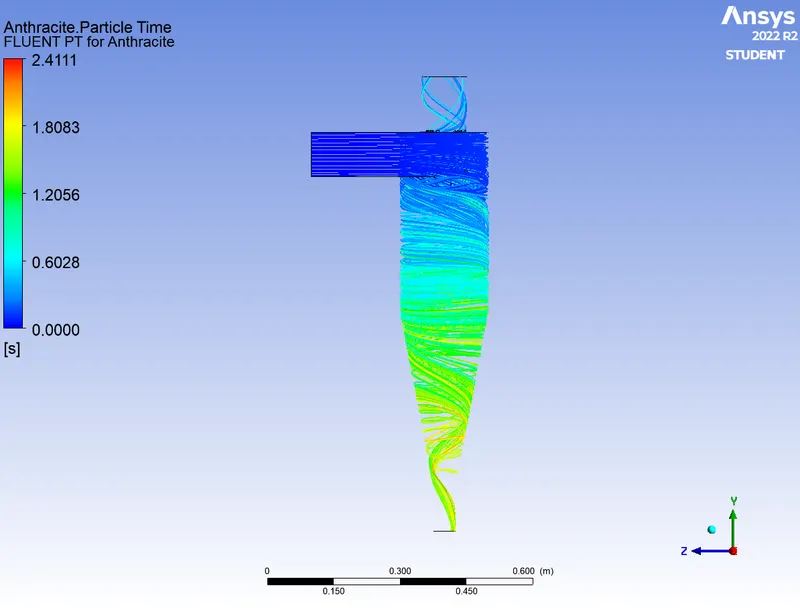
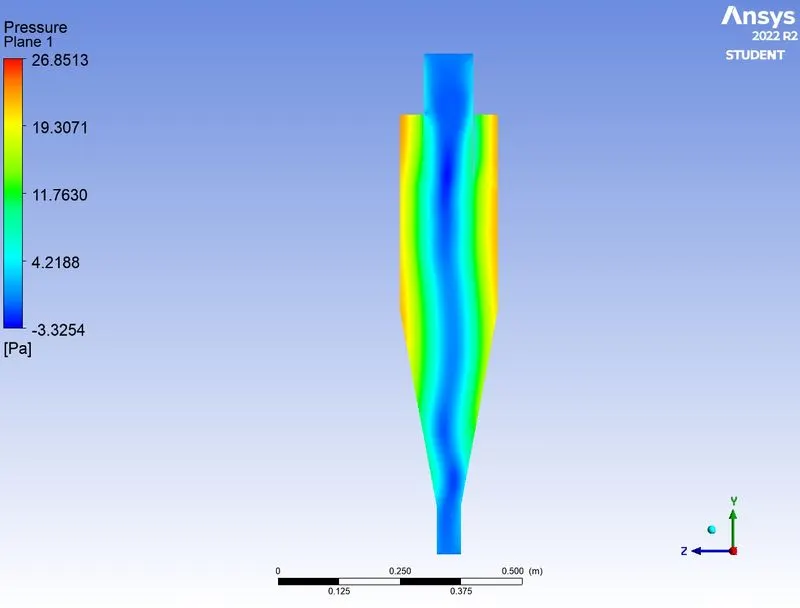
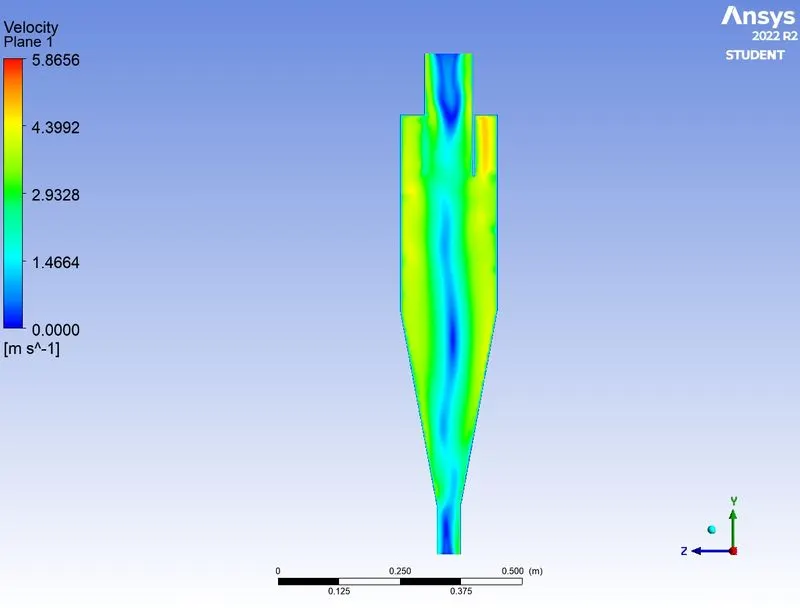
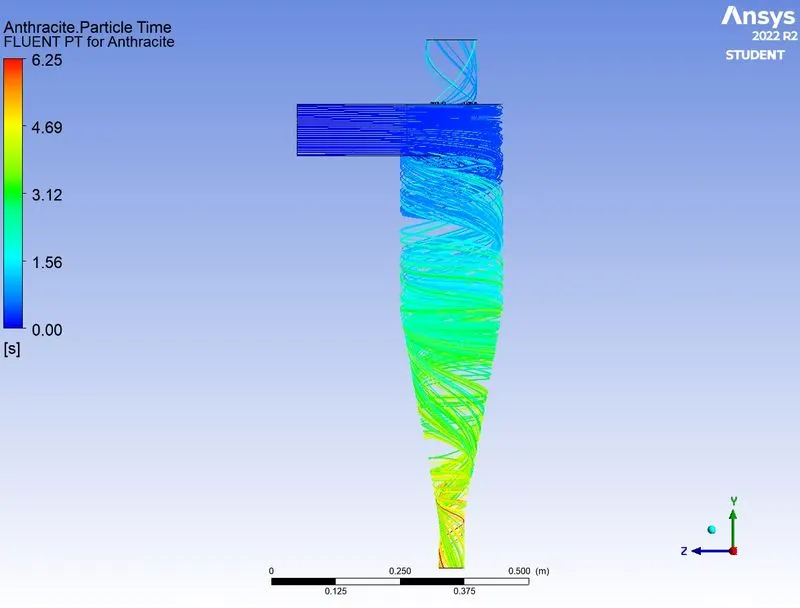
CASE 1: Analysis of a given cyclone separator model by varying the particle diameter from 1 μm, 3 μm, and 5 μm and calculating the separation efficiency in each case using velocity as 3m/s for all cases.
a. For 1 μm with velocity as 3m/s

b. For 3 μm with velocity as 3m/s
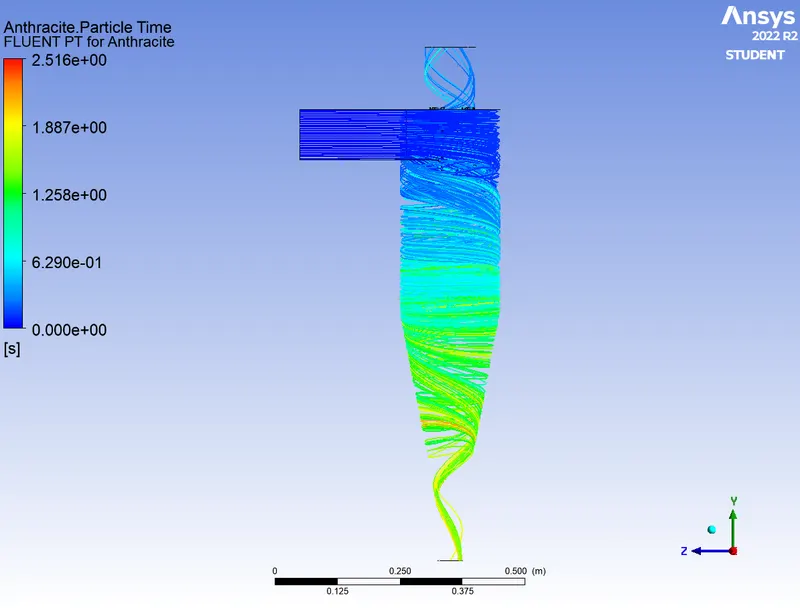
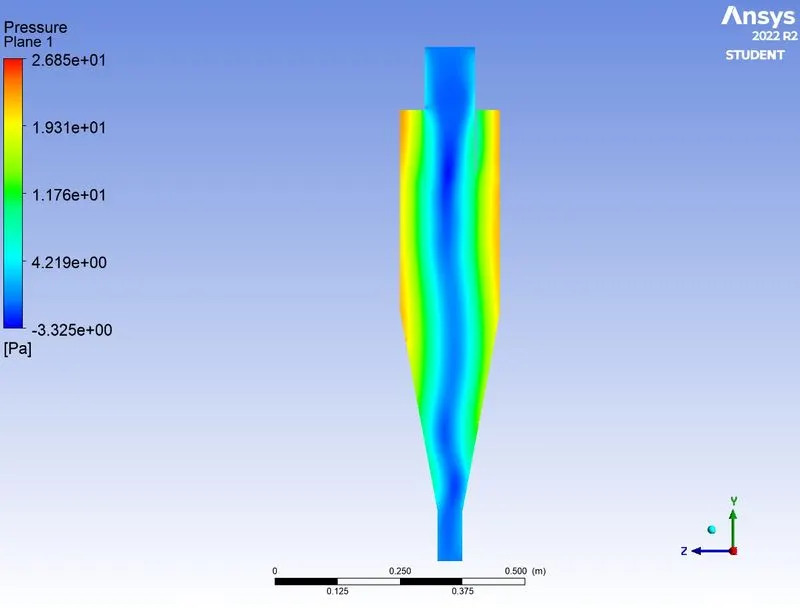
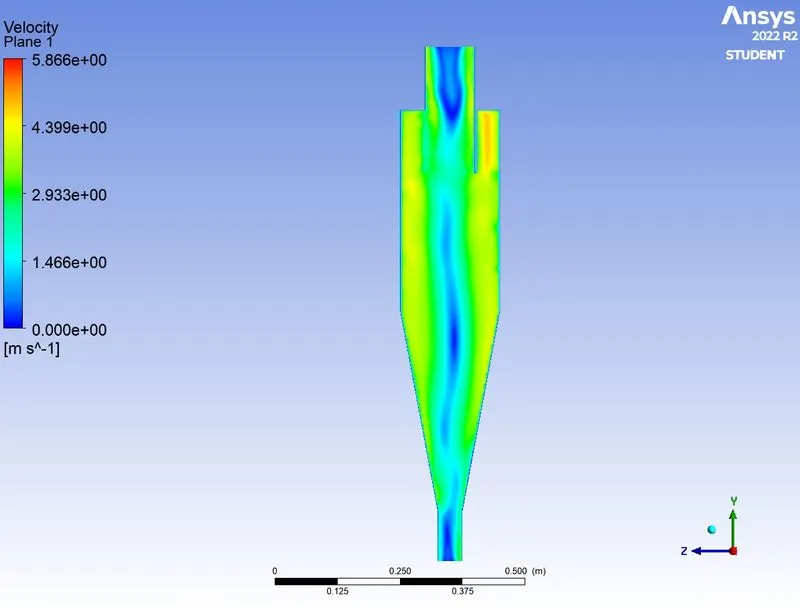

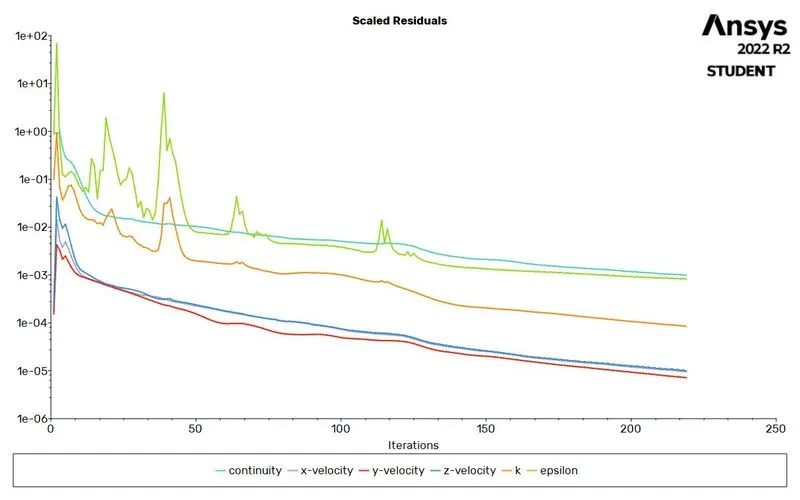
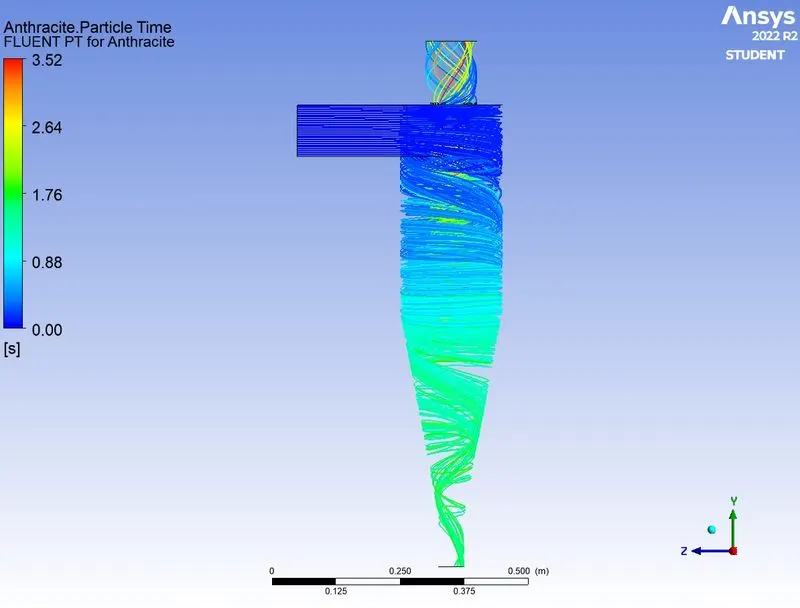
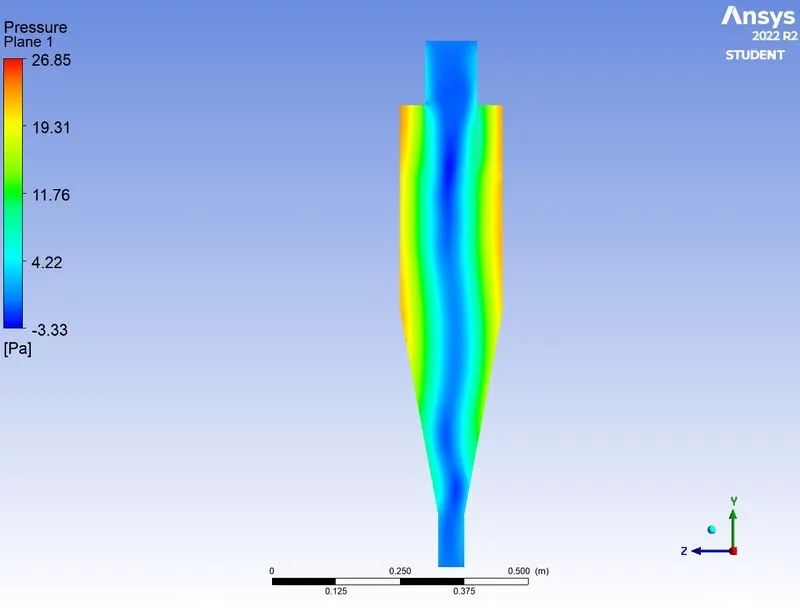
b. For 5 μm with velocity as 3m/s
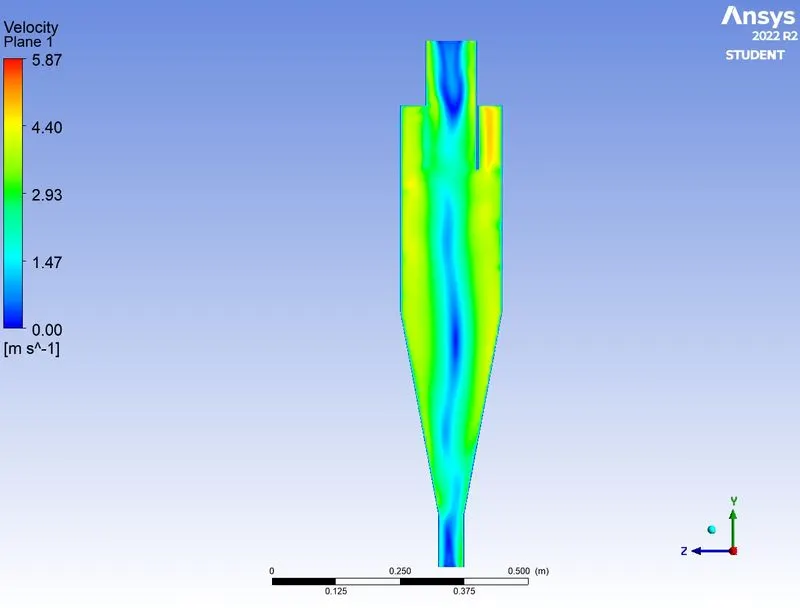
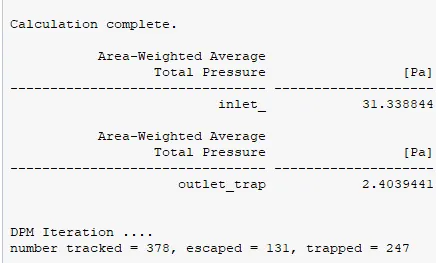
CASE 2: Analysis on a given cyclone separator model by varying the particle velocity from 1 m/sec and 5 m/sec and calculate the separation efficiency and pressure drop in each case for particle diameter size as 5 μm
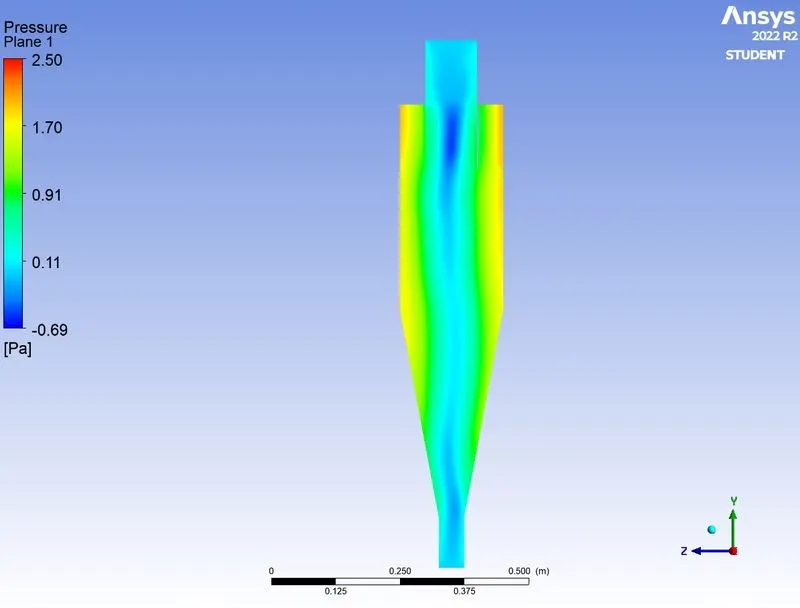
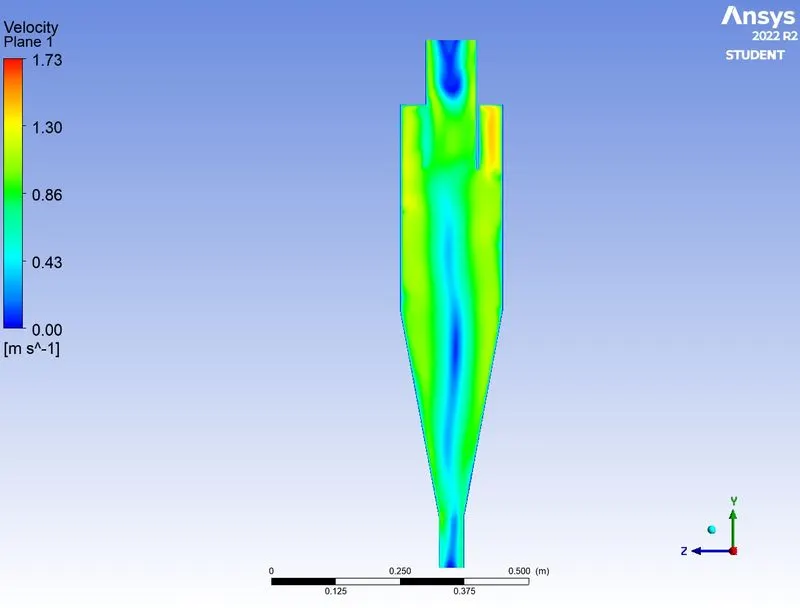
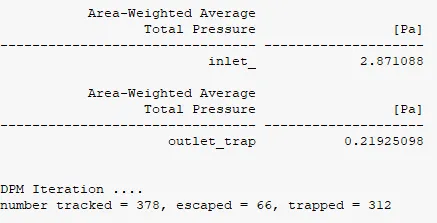
a. For 5 μm with velocity as 1m/s
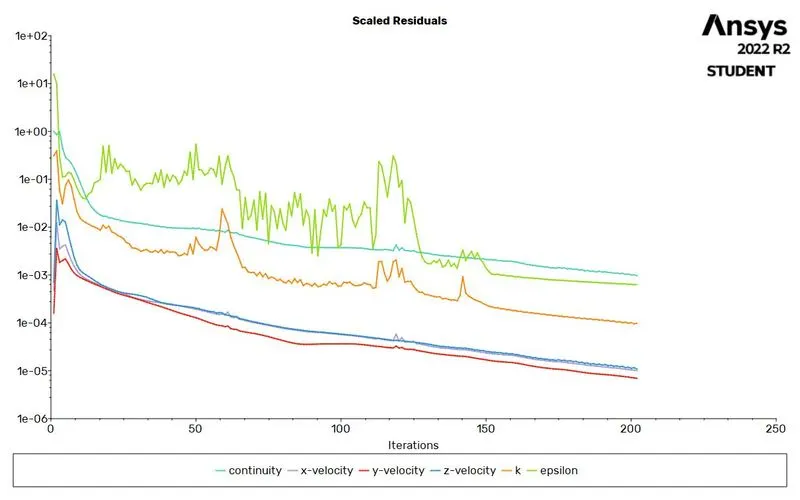
b. For 5 μm with velocity as 5m/s
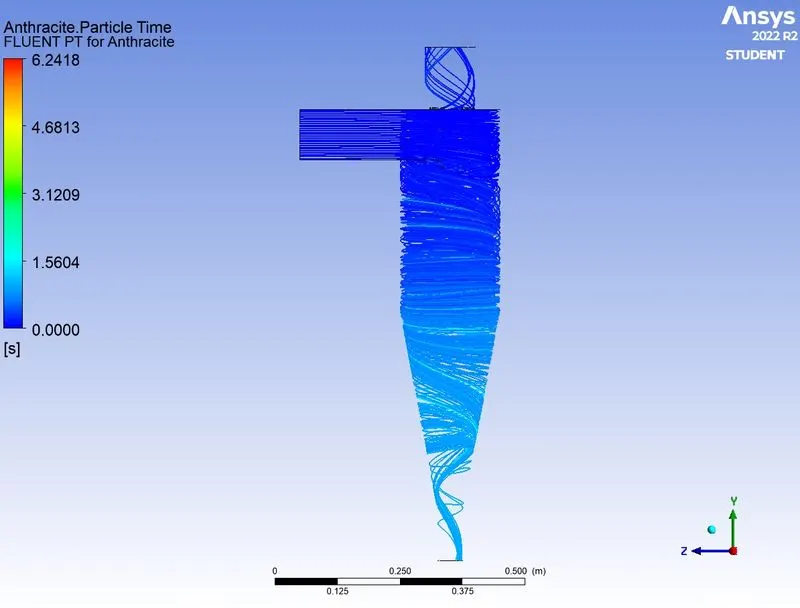
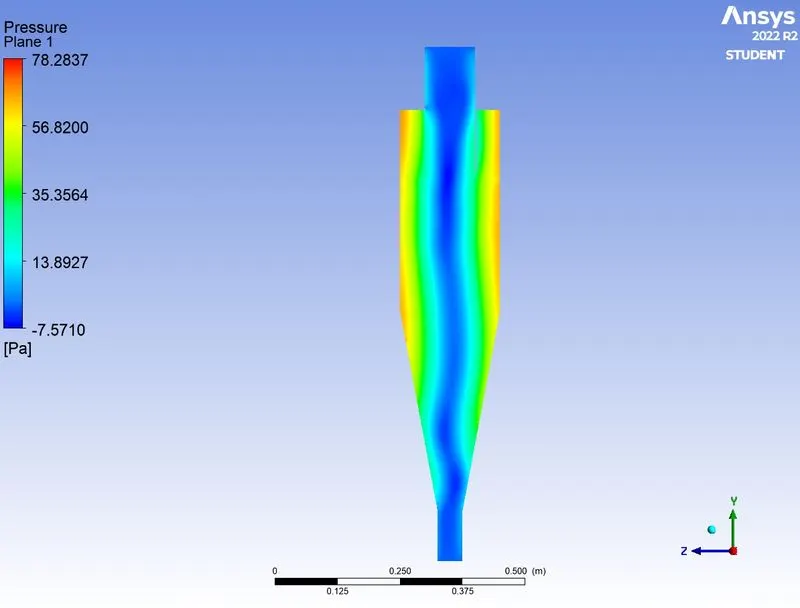
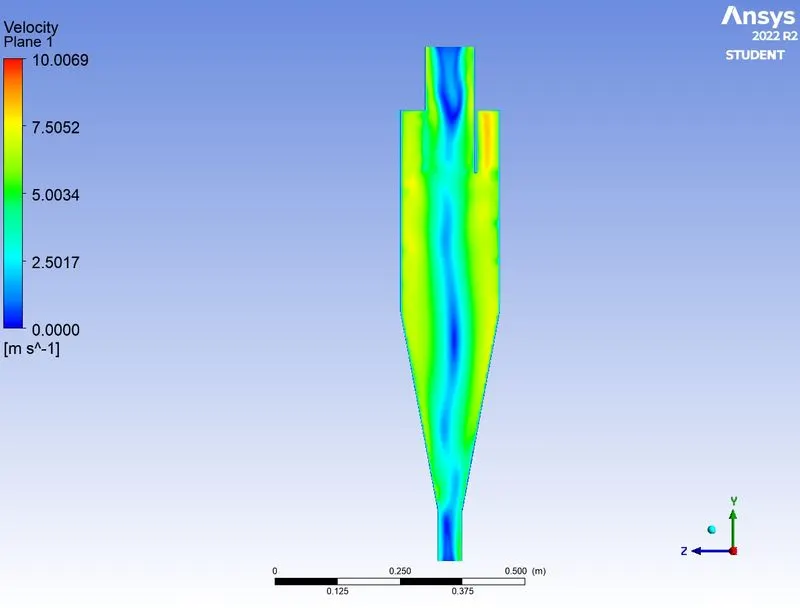

Separation efficiency:
It is defined as the fraction of particles of a given size collected in the cyclone, compared to those of that size going into the cyclone. Experience shows that the separation efficiency of the cyclone separator increases with increasing particle mean diameter and density; increasing gas tangential velocity; decreasing cyclone diameter; increasing cyclone length; extraction of gas along with solids through the cyclone legs. In this case, depending on the particle history data - Separation Efficiency is defined as the ratio of concentration that has been removed from the feed stream to the initial concentration in the feed stream. For this case ratio of the number of trapped particles to the total number of particles tracked.
Separation efficiency = no. of particles trapped / no. of particles tracked
Pressure Drop:
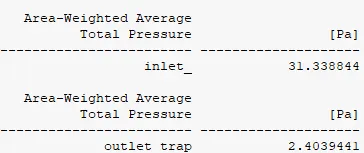
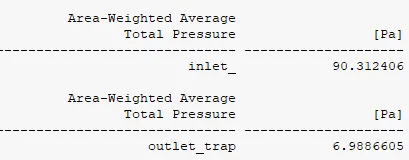
Pressure drop across the cyclone is of much importance in a cyclone separator. The pressure drop significantly affects the performance parameters of a cyclone. The total pressure drop in a cyclone will be due to the entry and exit losses, and friction and kinetic energy losses in the cyclone. Normally the most significant pressure drop occurs in the body due to swirl and energy dissipation. As the escape DPM condition is given to the outlet-top in this case, so outlet-top is considered in the pressure drop calculation. Pressure drop is defined as the difference in total pressure between two points of a fluid-carrying network.
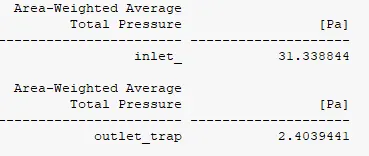
Pressure drop, `delta p` = Total inlet pressure - Total Outlet Pressure (escape)
CASE 1: constant velocity of 3m/s
| cases | particle size | particle tracked | particle escaped | particle trapped | pressure inlet | pressure outlet | separation efficiency |
| 1 | 1 | 378 | 75 | 303 | 33.338 | 2.403 | 80.1% |
| 2 | 3 | 378 | 71 | 307 | 33.338 | 2.403 | 80.1% |
| 3 | 5 | 378 | 131 | 247 | 33.338 | 2.403 | 65.34% |
CASE 2: constant particle diameter of `5mu m`
| cases | particle size | particle tracked | particle escaped | particle trapped | pressure inlet | pressure outlet | pressure drop | separation efficiency |
| 1 | 1 | 378 | 66 | 312 | 2.871 | 0.2192 | 2.651 | 82.5% |
| 2 | 5 | 378 | 72 | 280 | 90.312 | 6.988 | 83.324 | 74.07% |
CONCLUSIONS:
- Velocity has a greater impact as compared to the diameter of the particle.
- Pressure drop is dependent on velocity. For constant velocity with varying diameter sizes, the pressure drop remains almost constant.
- Increased velocity causes a higher pressure drop.
- Both the parts simulated above show that Separation efficiency depends on both the diameter and velocity of the particles. As increased diameter and velocity give increased separation efficiency.