Week 8 - Simulating Cyclone separator with Discrete Phase Modelling
AIM
- To write a few words about any four empirical models used to calculate the cyclone separator efficiency.
- To perform an analysis on a given cyclone separator model by varying the particle diameter from 1 μm to and calculate the separation efficiency in each case. Discuss the results. [Use both the velocities as 3m/sec.]
- To perform an analysis on a given cyclone separator model by varying the particle velocity from 1 m/sec to 5 m/sec and calculating the separation efficiency and pressure drop in each case. Discuss the results. [Use particle diameter size as 5 μm for all cases & keep flow velocity same as particle velocity]
Boundary Conditions:-
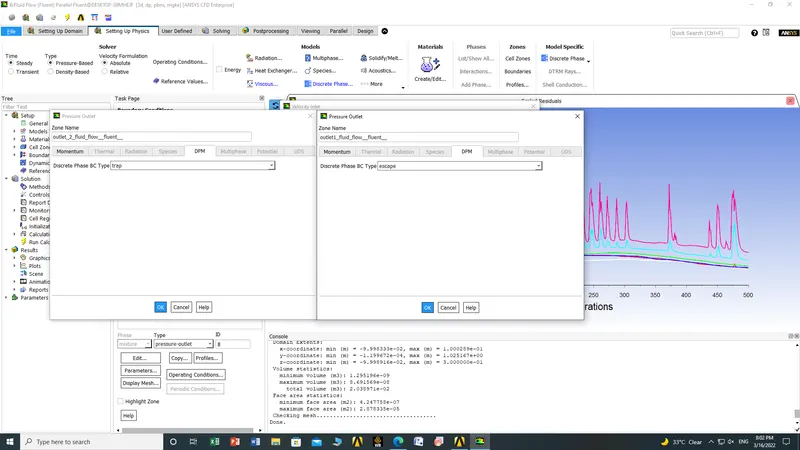
Inlet and wall:- Reflect
Outlet(Top):- Escape
Outlet(Bottom/dustbin) - Trap
cyclone separators use the principle of inertia for the separation of particles, it is used in the separation of particulate matter from the flue gases,
1 empirical model used to calculate the cyclone separator efficiency
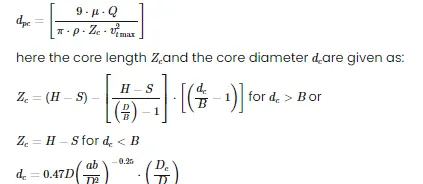
a)Lozia and Leith model developed based on force balancing model. it id preassumes there are two forces behind the particle separation one is centrifugal force and the other is flow resistance.
the collection efficiency of particle diameter dpi can be calculated from 1/(1+(dpc/dpi)^B)
B= slope parameter derived from statistical analysis of experimental data of a cyclone with D = 170
0.25 m given as B=0.87 ln(dpc/100)+5.21ln(ab/D^2) +1.05ln(ab/D^2)
dpc =50% cut size given by barth
b) Li and Wang model
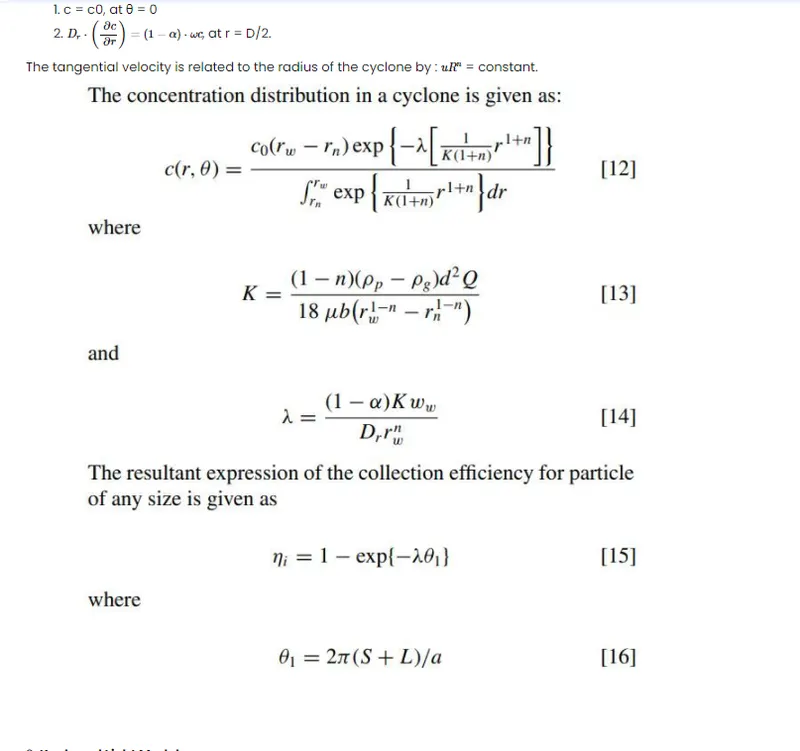
this model developed on the following assumptions
within the cyclone for unallocated particle radial concentration profile and radial particle velocity are not constant
this model considers re-entrainment and turbulence at the cyclone. they obtained a two-dimensional analytical expression
Koch and Licht model
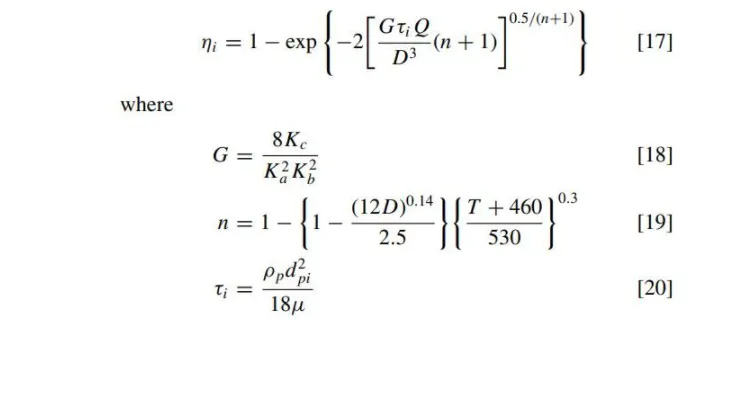
this model is based on the following ASSUMPTIONS AT THE ENTRY AND COLLECTION REGIONS
particles and gas tangential velocities are equal and no-slip in the tangential direction between the particle and fluid
tangential velocity related to the radius of cyclone by uRn=constant
Lapple model
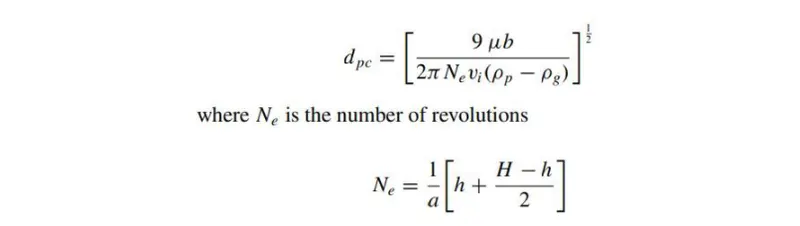
it is based on the force balance without the separation of flow resistance and evenly distribution of particles at the inlet of the cyclone.
the particle which travels half-width in the cyclone is collected with 50% efficiency.
2. SOLVING AND MODELLING APPROACH
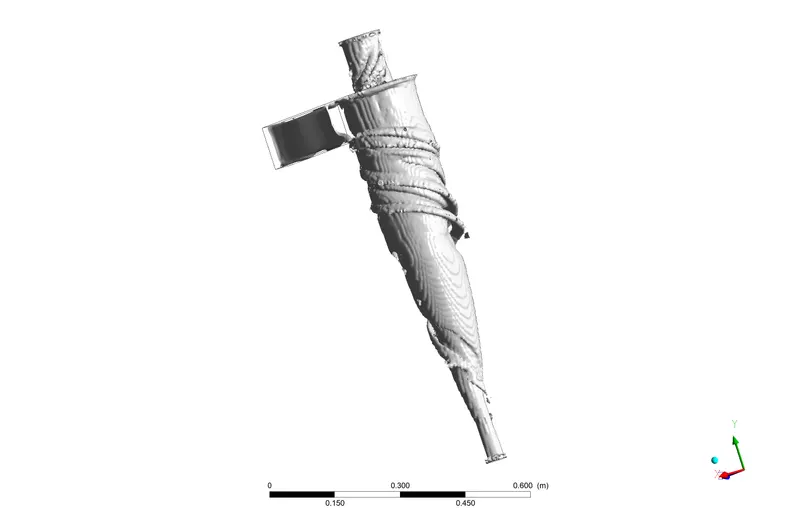
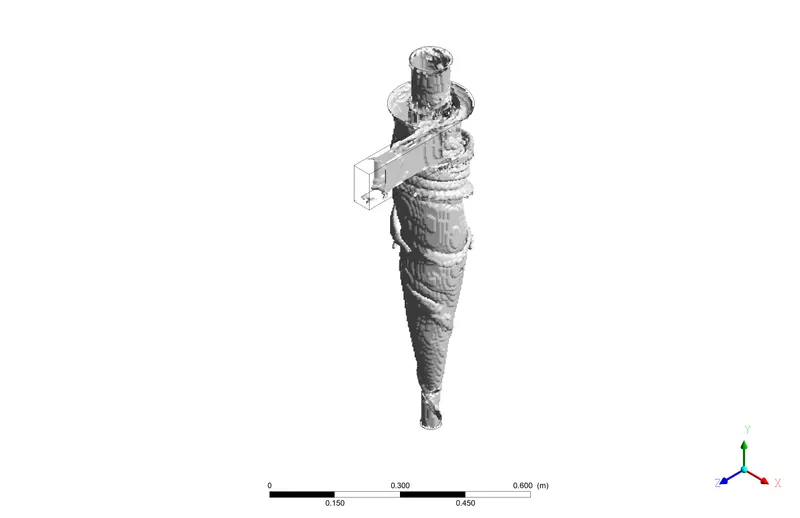
1 LOADING GEOMETRY IN SPACE CLAIM AND EXTRACTING THE FLUID VOLUME
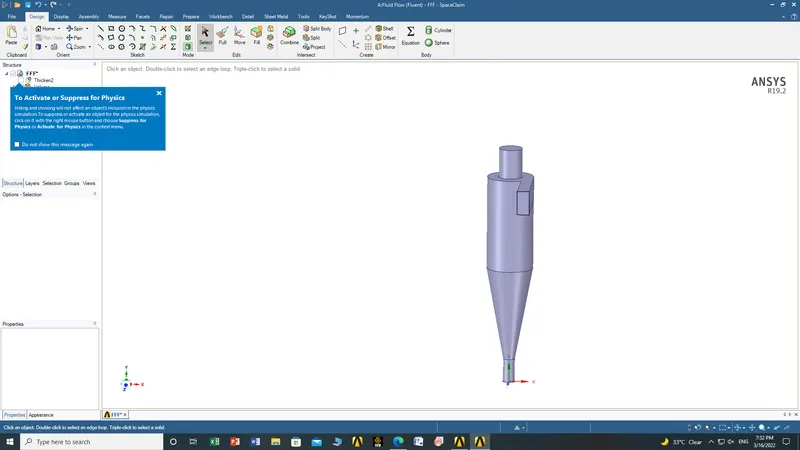
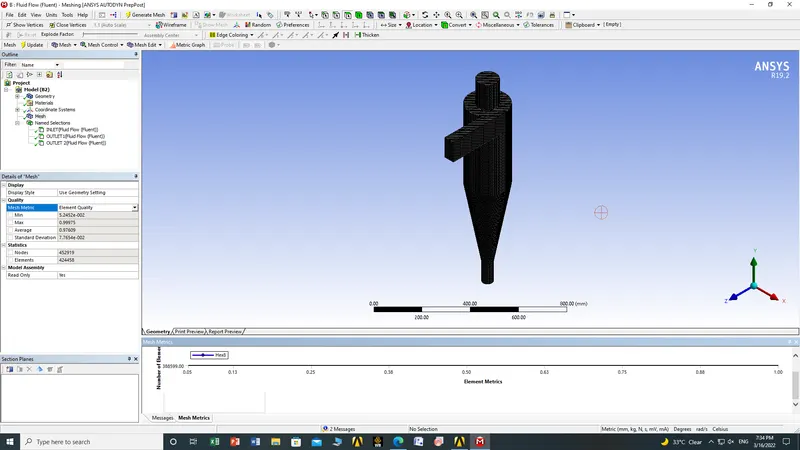
OPEN MESH FOR MESH AND NAMED SELECTIONS
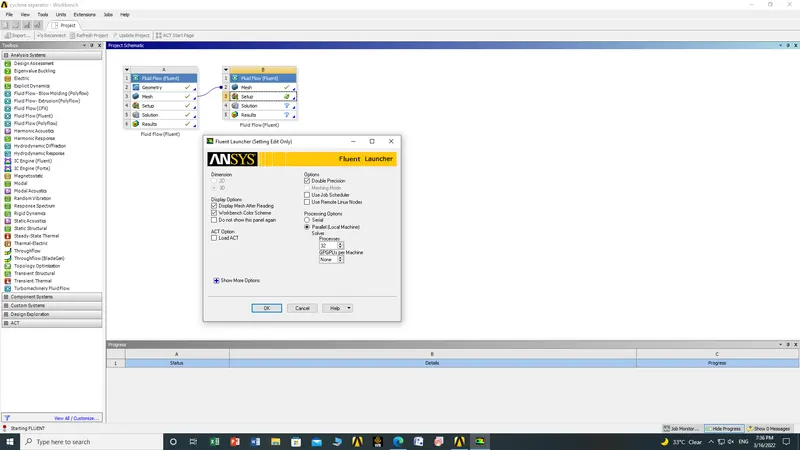
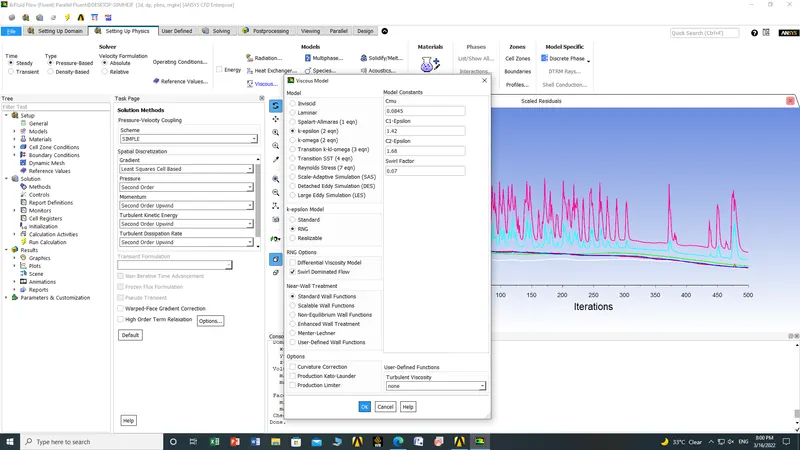
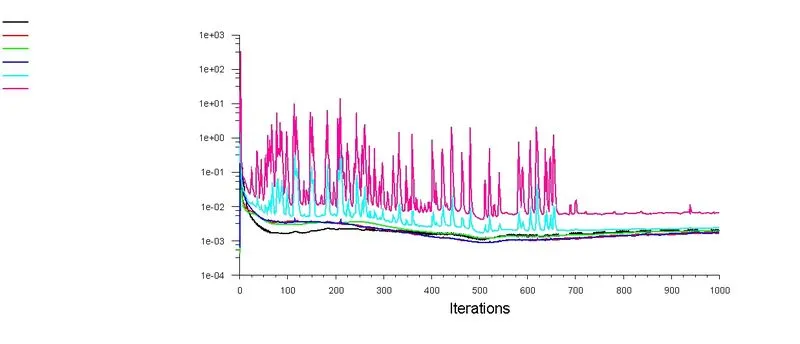
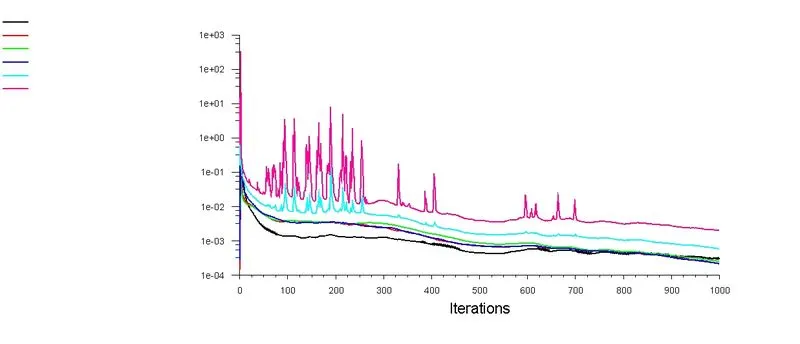
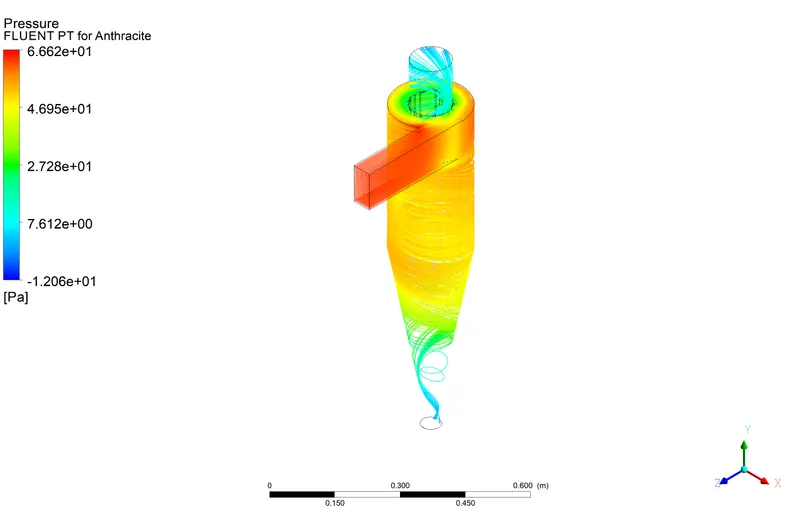
SETTING UP THE PHYSICS FOR THE SOLUTION AND SIMULATING THE PROBLEM
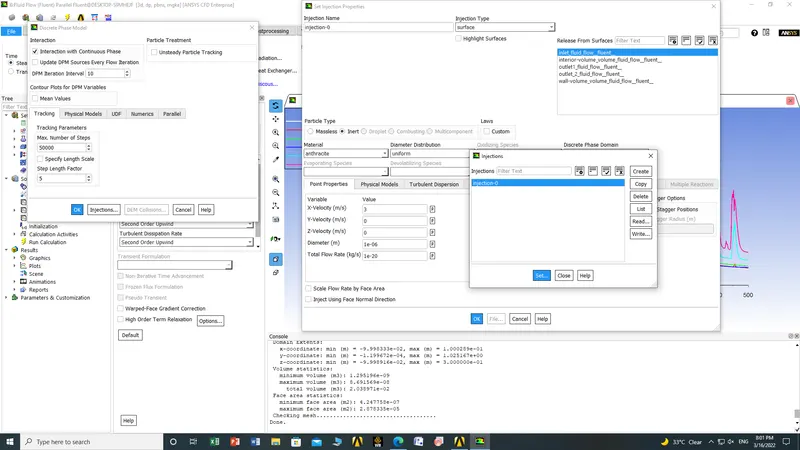
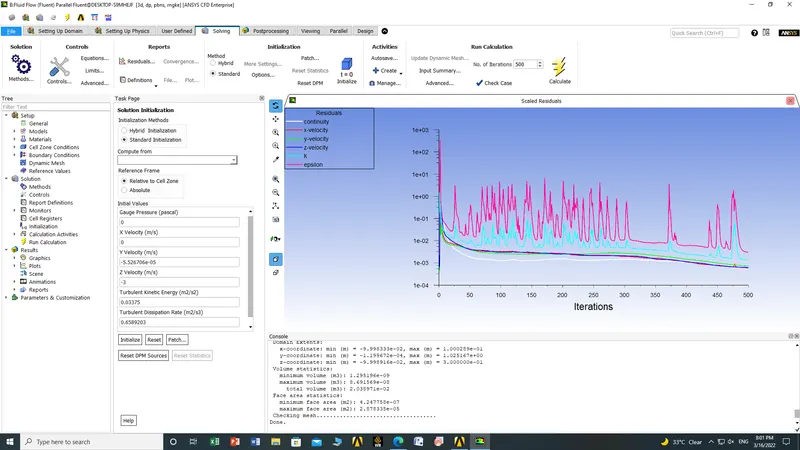
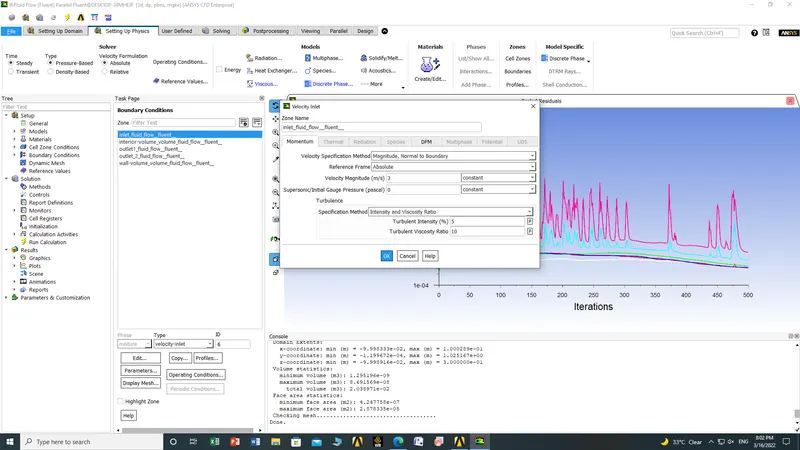
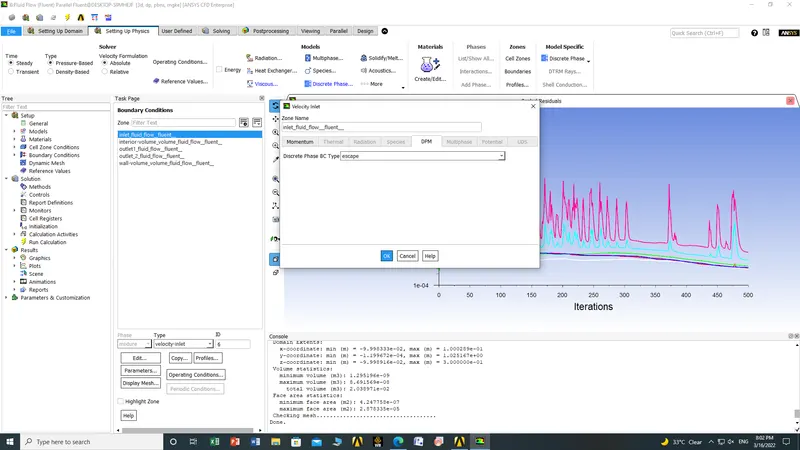
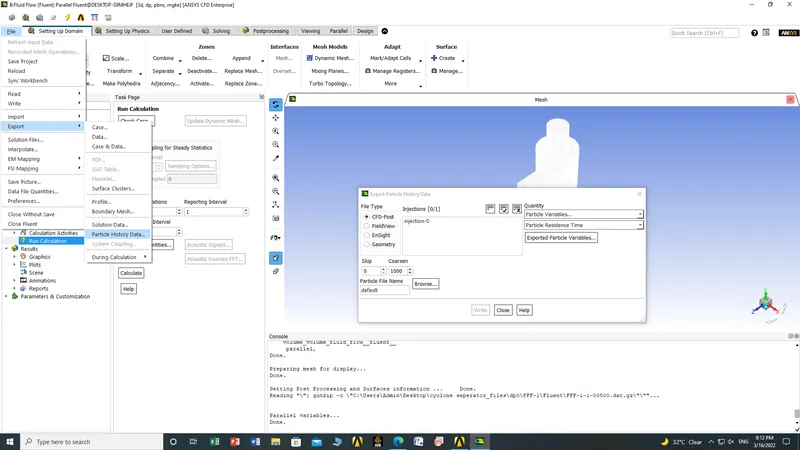
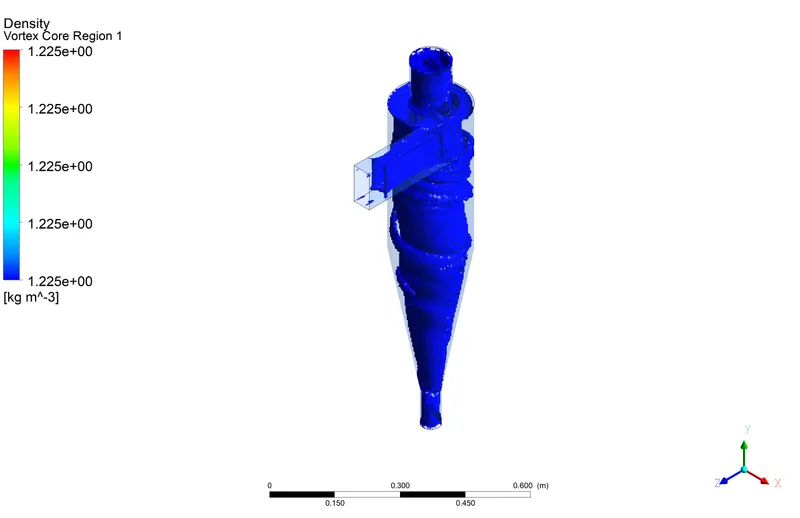
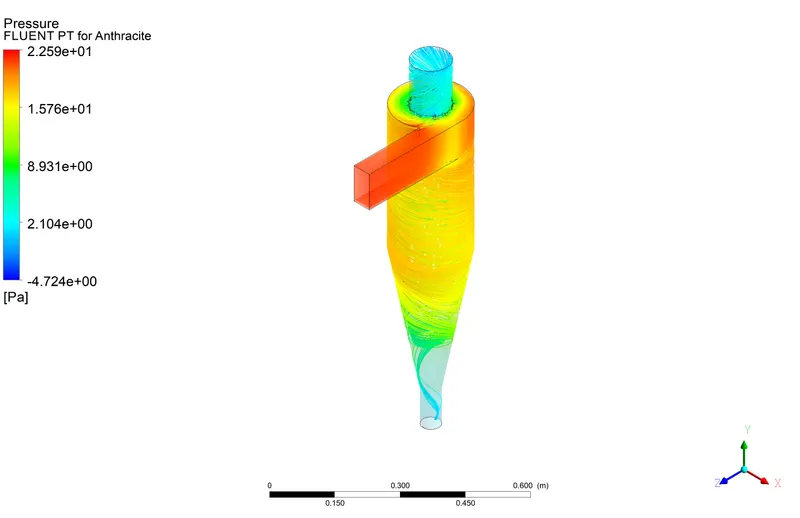
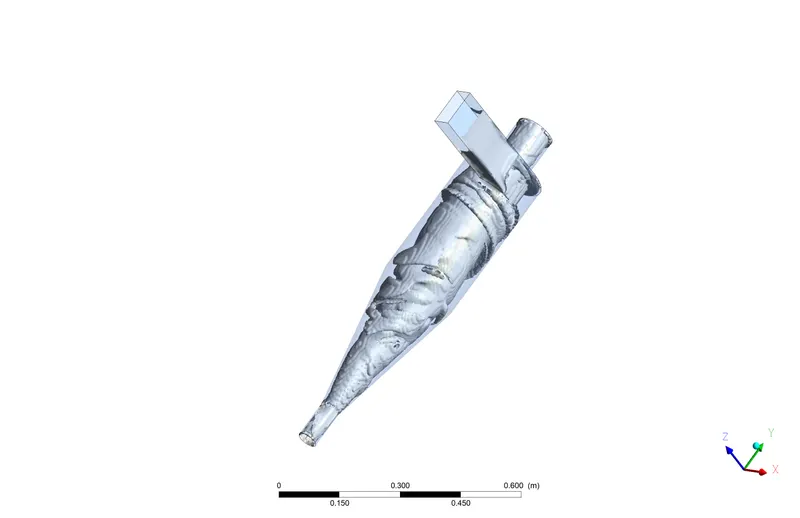
RESULTS FOR DIA=1 micrometre
DPM Iteration ....
number tracked = 378, escaped = 199, aborted = 0, trapped = 105, evaporated = 0, incomplete = 74, incomplete_parallel = 0
SEPARATION EFFICIENCY= number trapped /number tracked =105/378 = 27.24 %
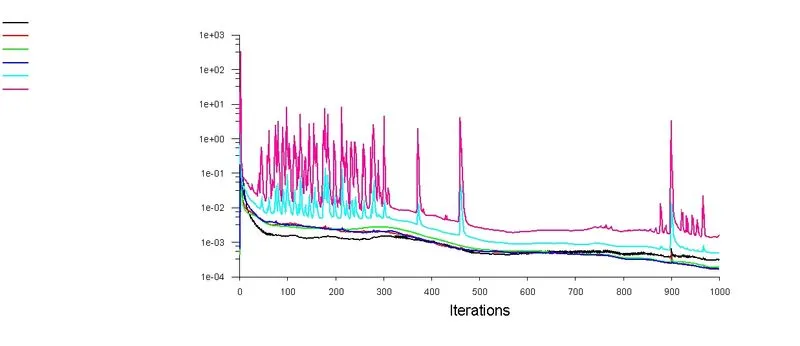
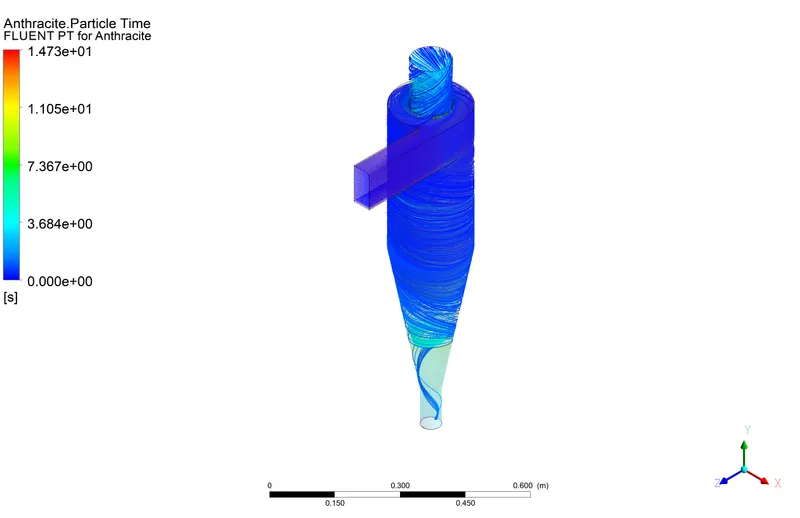
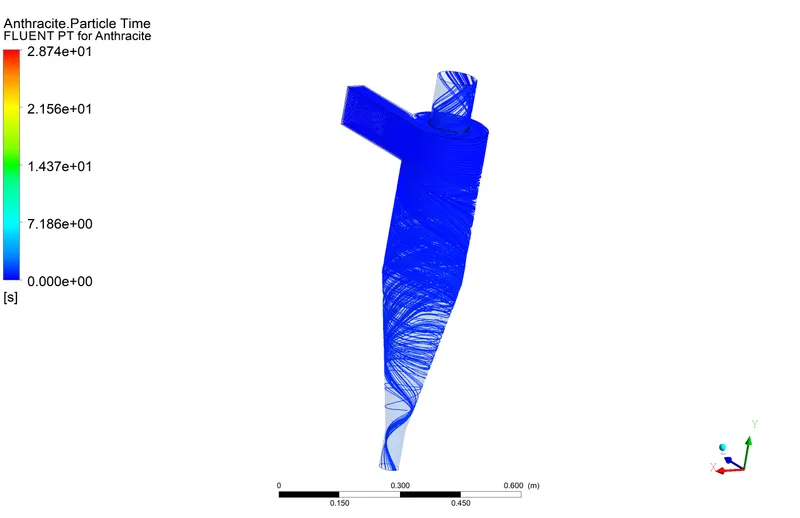
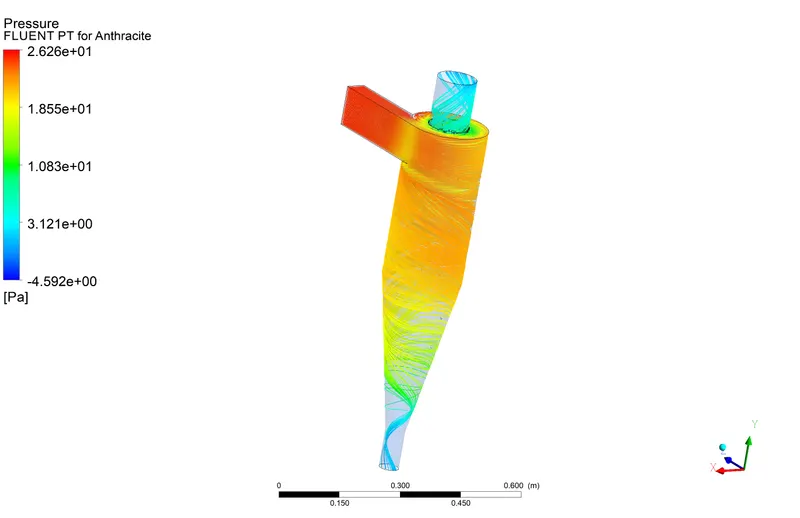
RESULTS FOR PARTICLE SIZE 5 micrometer
DPM Iteration ....
number tracked = 378, escaped = 103, aborted = 0, trapped = 149, evaporated = 0, incomplete = 126, incomplete_parallel = 0
SEPARATION EFFICIENCY= number trapped /number tracked =149/378 = 39.41 %
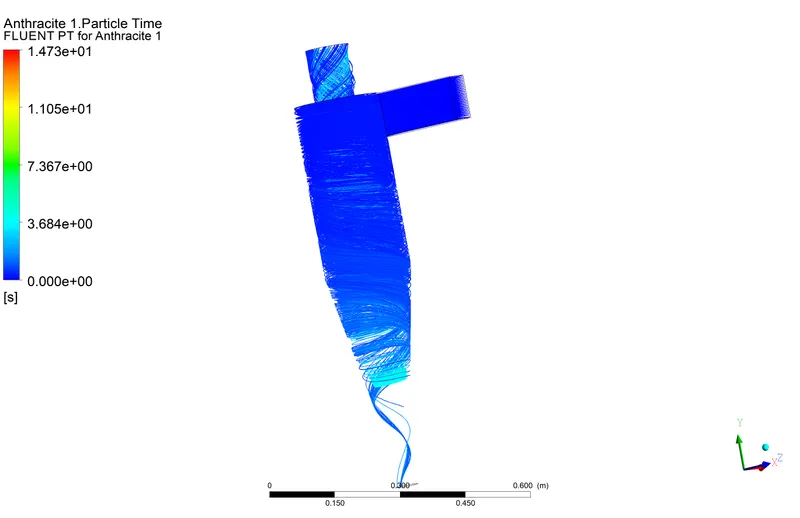
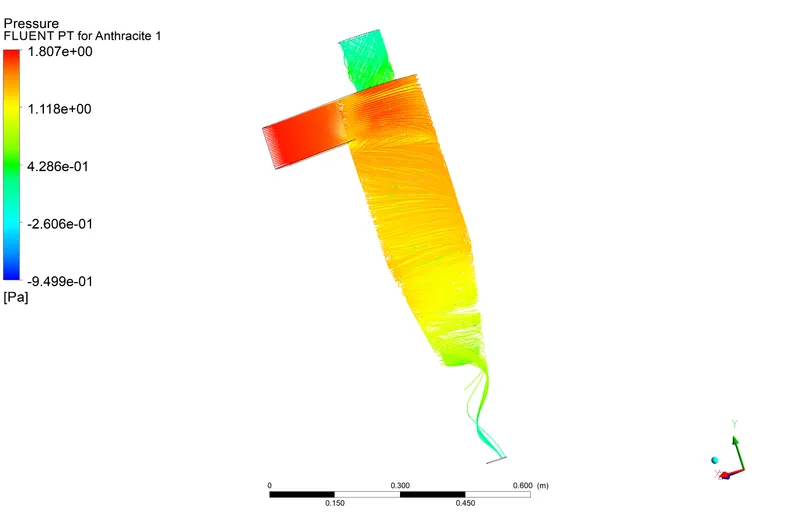
CASE 2 (A) PARTICLE SIZE 5 micrometer AND VELOCITY 1 m/s
DPM Iteration ....
number tracked = 378, escaped = 113, aborted = 0, trapped = 8, evaporated = 0, incomplete = 257, incomplete_parallel = 0
SEPARATION EFFICIENCY= number trapped /number tracked =8/378 = 2.11 %
Average of Pressure on outlet1_fluid_flow__fluent__
-0.000957206 [Pa]
Average of Pressure on inlet_fluid_flow__fluent__
1.77372 [Pa]
pressure drop =Average of Pressure on inlet_fluid_flow__fluent - Average of Pressure on outlet1_fluid_flow__fluent =1.77276279 Pa
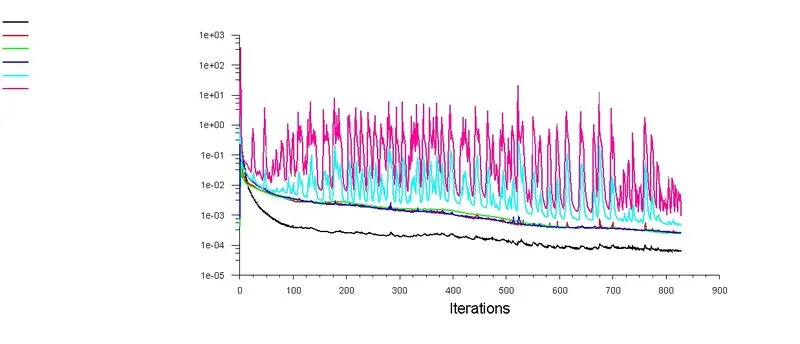
CASE 2 (B) PARTICLE SIZE 5 micrometer AND VELOCITY 5 m/s
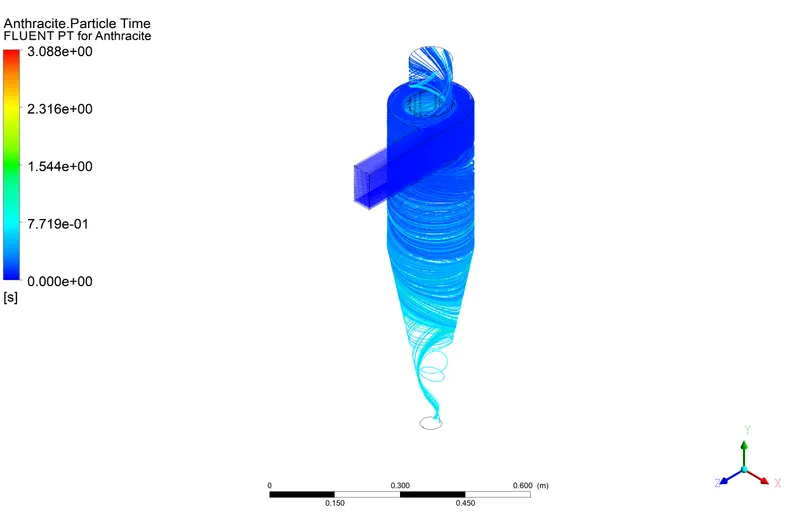
PM Iteration ....
number tracked = 378, escaped = 90, aborted = 0, trapped = 281, evaporated = 0, incomplete = 7, incomplete_parallel = 0
SEPARATION EFFICIENCY= number trapped /number tracked =281/378 = 74.33 %
Average of Pressure on outlet1_fluid_flow__fluent__
63.0972 [Pa]
Average of Pressure on inlet_fluid_flow__fluent__
-0.0353374 [Pa]
pressure drop =Average of Pressure on inlet_fluid_flow__fluent - Average of Pressure on outlet1_fluid_flow__fluent =63.1325374 Pa
CONCLUSIONS
1 From the series of simulations it has been concluded that cyclone separator is not efficient for particles less than 5micrometers.
2. for the increase in velocity from 1 m/s to 5 m/s the pressure drop value increases to a greater extent.
3. greater separation efficiency observed at higher velocities.
4. for small particle size separation it is suggestable to use momentum or gravity separator