Week 8 - Simulating Cyclone separator with Discrete Phase Modelling
Aim: The main aim of this project is to find the optimum performance of the cyclone separator by using two methods , firstly by changing the size of the anthrasite particles by fixing the velocity ,secondly by varying the velocity of the particle, inlet of the separator by fixing the particle size.The particle entry and exit for both cases are visualized by the simulation and focus is spent on the bottom outlet where a trap is placed and used for evaluating the efficiency.
Introduction:The cyclone separator is the most simplest and most efficient device for seprating the particles by using the velocity of the continous media like air or any gas. The simulation of these devices are undertaken by using an Discrete Phase Modelling which deals with a continous media and a discontinous media or discrete media (in this case Anthracite particles) .The Momentum equation and continuity equation are solved for the continous medium (air) for the discrete media the trajectory of the particles are calculated and through out the domain . The number of the particles taken into the consideration is dependent on the mesh size , in our case we have choosen a cartsian mesh that has provided us with 91 particles . The trajectory of these 91 particles are tracked fromm entry to exit is tracked.
The cyclone seperator geometry has one inlet through which the anthracite particles are introduced and two outlets are placed one above and one below the top outlet is for escaping of the particles and bottom outlet has a trap.
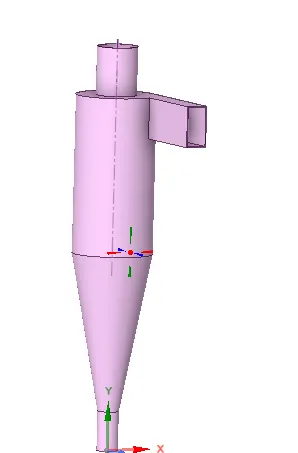
The whole simulation was carried out in ANSYS FLuent , and Steps for the simulation is shown below
Geometry
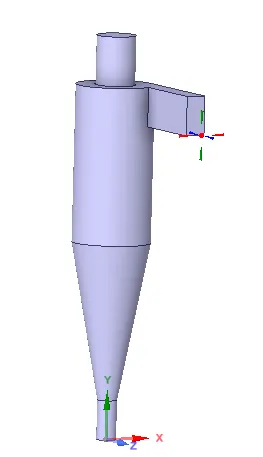
Geometry editing using space claim , in space claim firstly we upload our model and generate the fluid volume, by using the prepare option from the toolbar.Keeping the generated fluid volume and outer volume is suppressed for physics, that means this is not used for the simulation part.
Meshing:
In the Meshing part the uploaded fluid volume is given names by using the named selection options, The faces are given
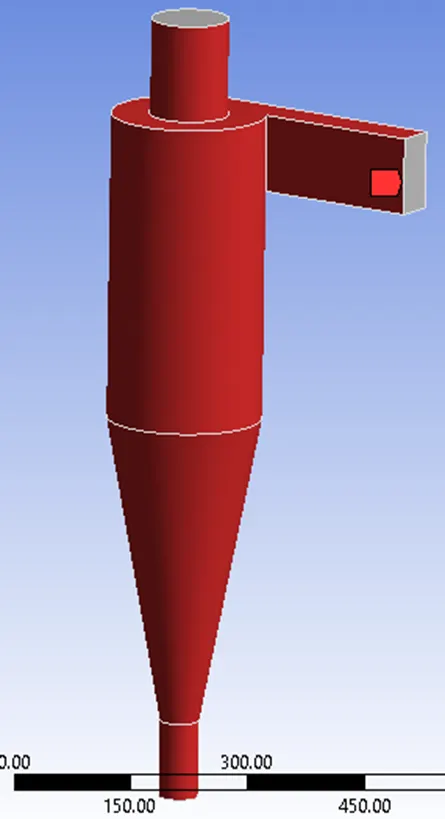
the outer part of the volume is named as wall
The inlet outlet_1
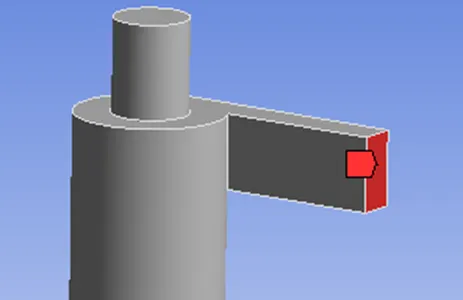
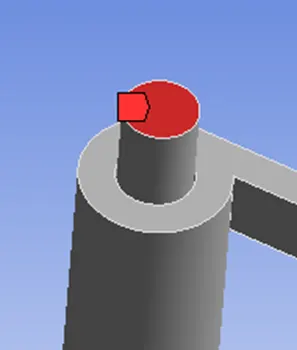
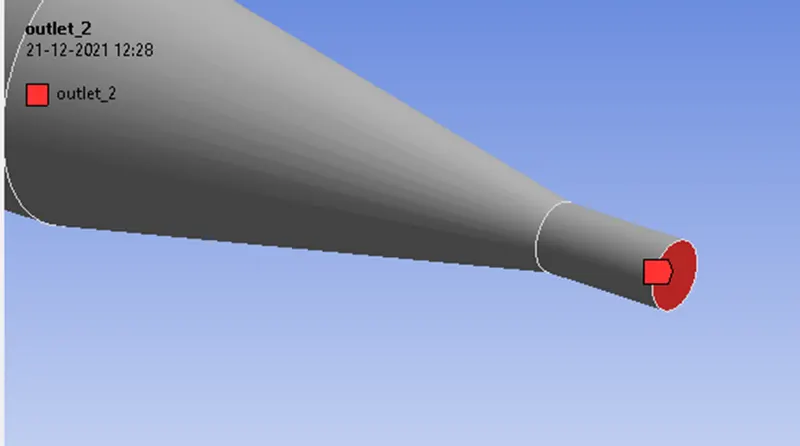
outlet_2
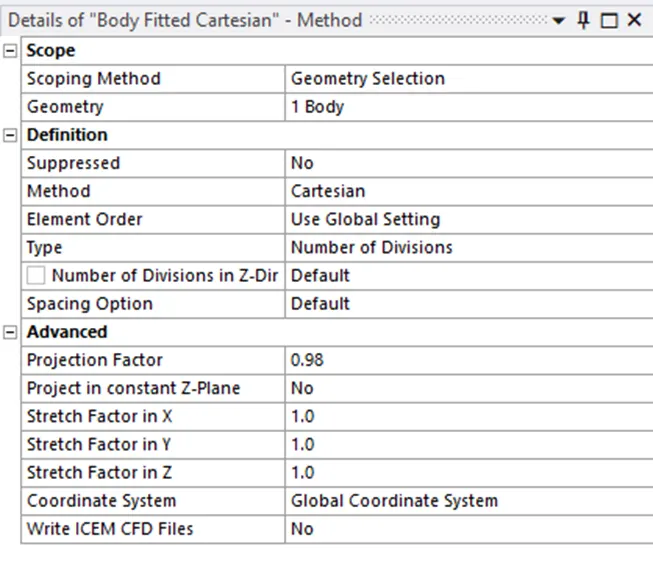
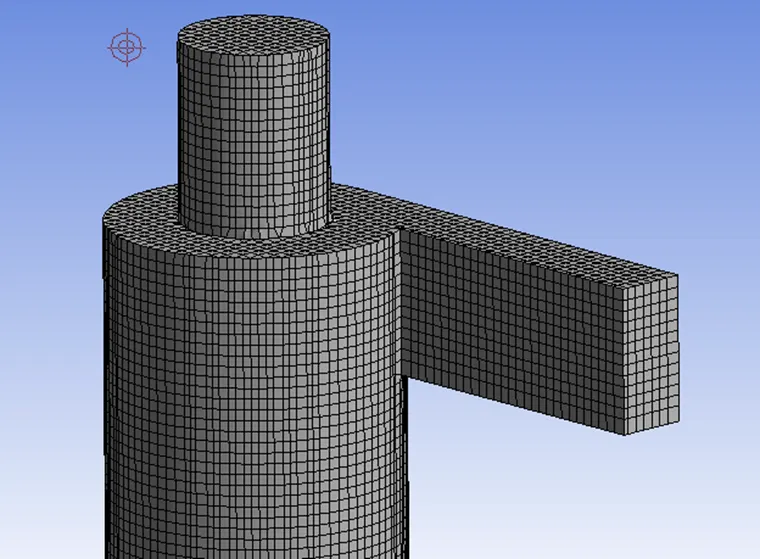
from the Methods we have selected A Cartesian mesh which generates an Hexa hedron Mesh , which is best suited for the present simulation
The Mesh generated by using the above criteria
The number of nodes and elements generated

Setup
In this simulation we use a steady , pressure based model and gravitational forces are taken into consideration.
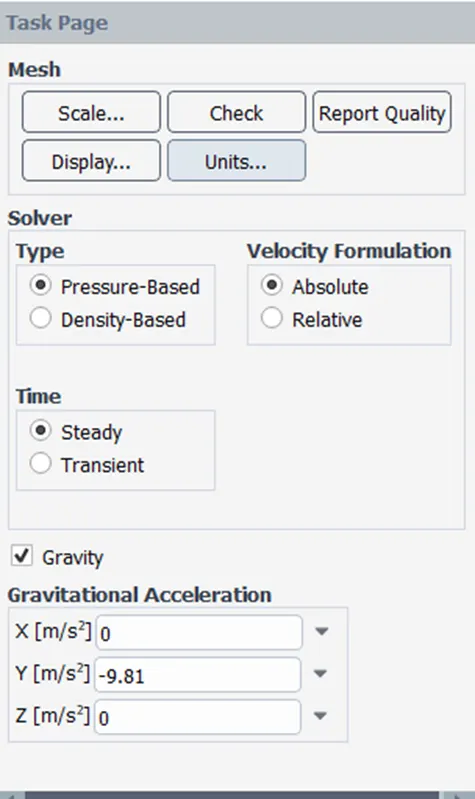
Further more to take turbulence into consideration we us k epsilon turbulence model with RNG .
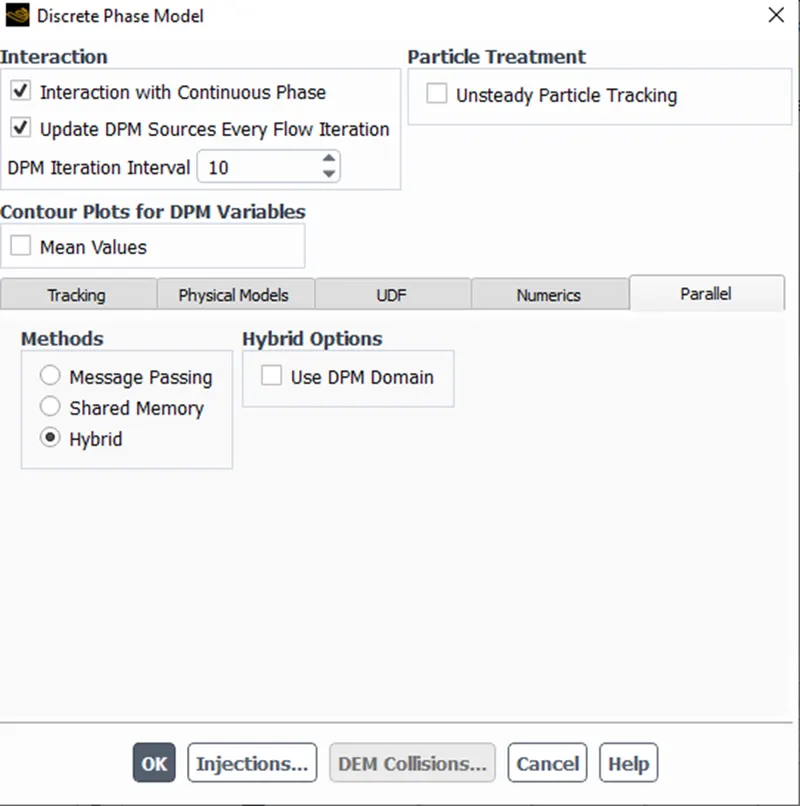
The Discrete Phase Modelling is done by using the DPM model on , under the DPM we used a coupled model
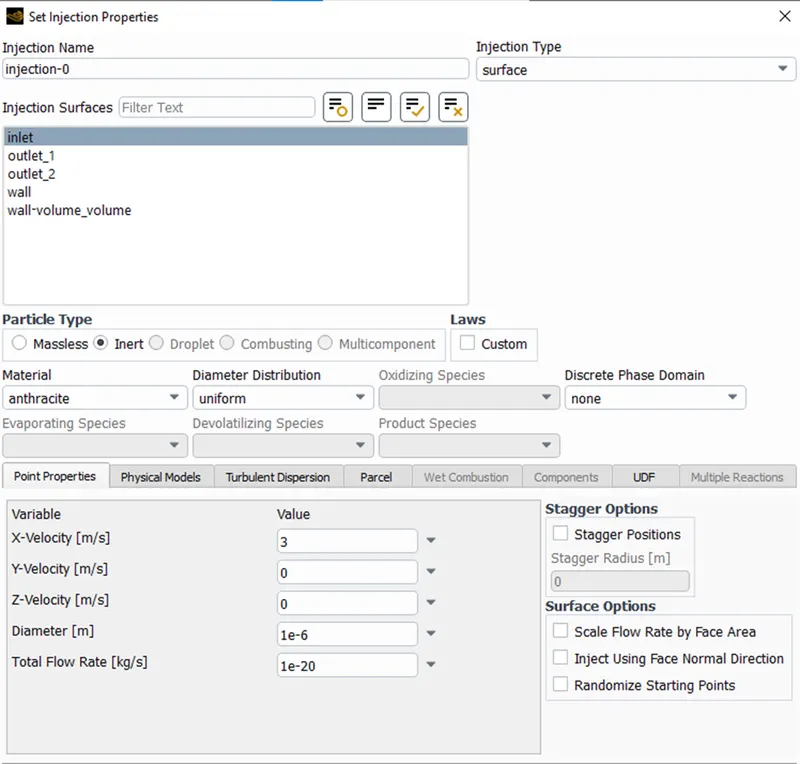
For injections where the athracite is induced into the cyclone seperator through the inlet, the inlet boundary injection type is selected as surface.
And the velocity for the first case is mentioned as 3 m/s and the particle size here is mentioned as 1 e-6 (that is one micro meter)
In the next step we under take a standard initialization and by computing from inlet
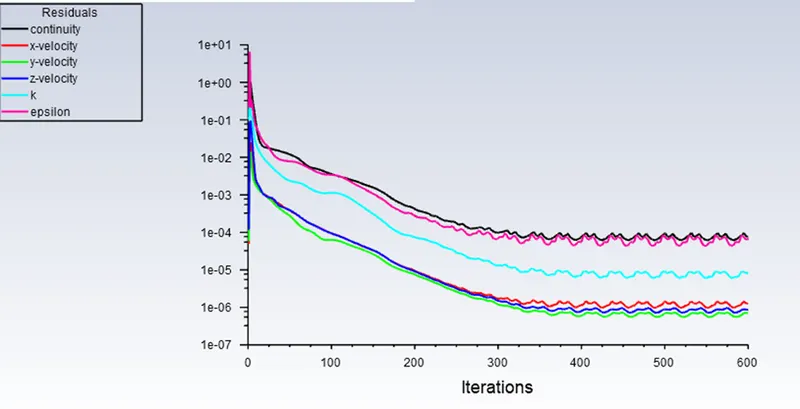
Residuals of Simulations for Varying the Particle sizes by keeping the velocities at 3m/s
for particle size
1 e-6 3 e-6
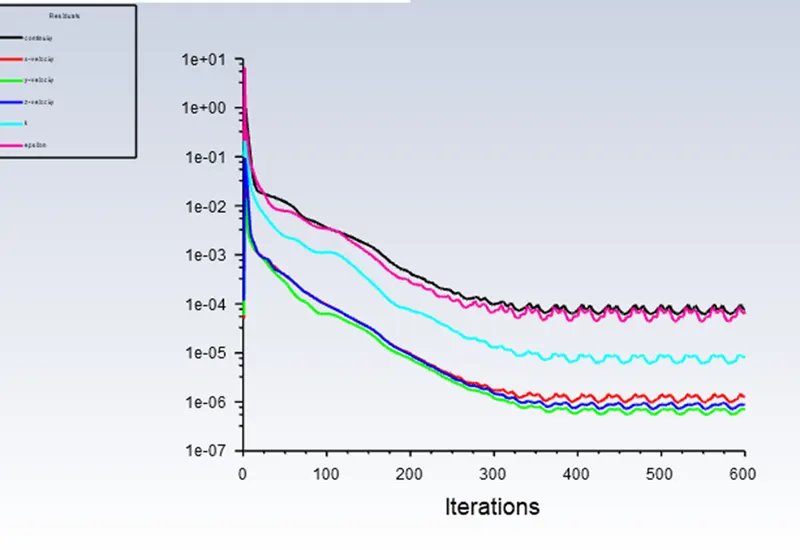
5 e-6
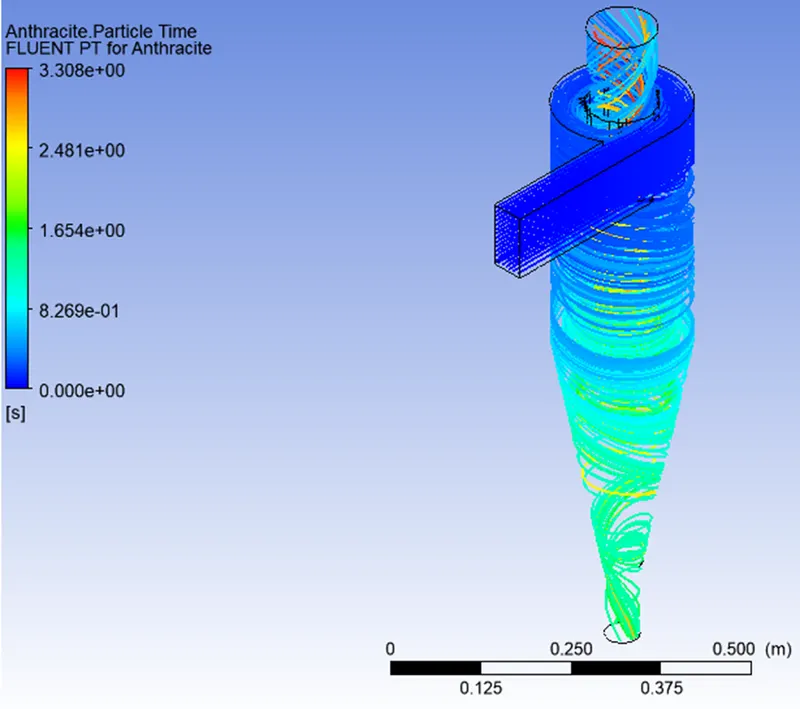
Contours of the Particle Time through the Cyclone Seperator along with efficiencies
Particle size 1 e-6 Particle size 3 e-6
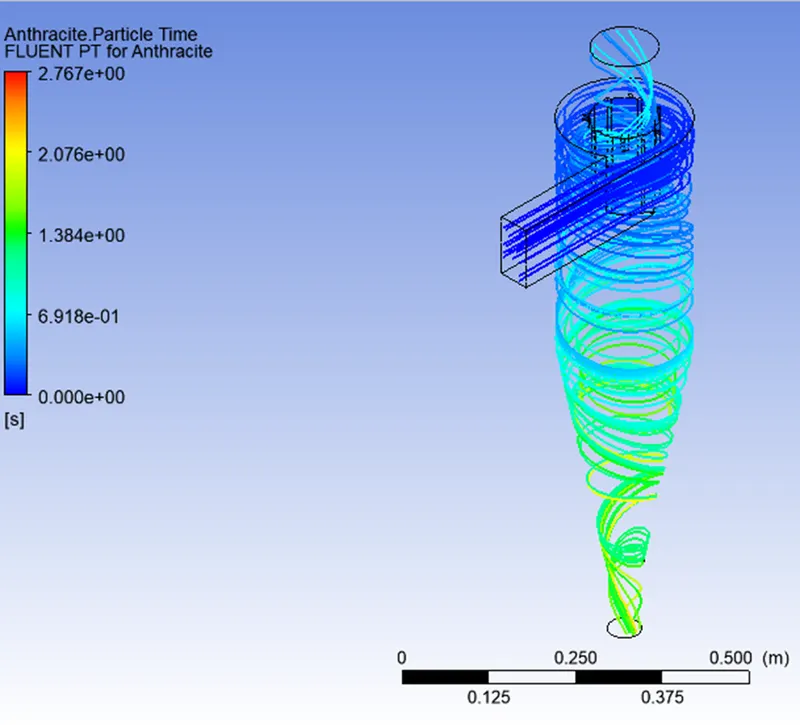
Particle size 5 e-6
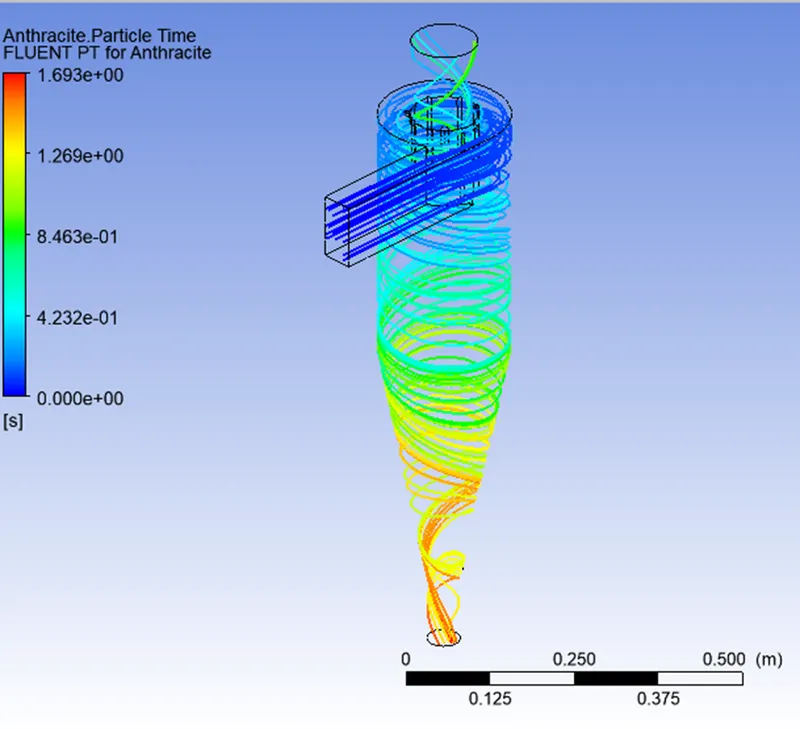
|
Particle and inlet velocity in m/s |
Particle size in micro meter |
Particles Tracked through inlet | Particles escaped through Top outlet |
Particles trapped through bottom outlet |
Efficiency | Link |
| 3 | 1 | 91 | 46 | 45 | 49.45% | https://drive.google.com/file/d/1PiVXCdBUti8zi9oAvgJ4_QH2D2FWo-QQ/view?usp=sharing |
| 3 | 3 | 91 | 36 | 55 | 60.43% | https://drive.google.com/file/d/1x6Q8hHHvxrc2eb8Eqiqv3DGG6qQVTTPR/view?usp=sharing |
| 3 | 5 | 91 | 33 | 58 | 63.73% | https://drive.google.com/file/d/1-kxHmwNA8CvYTr3d-4hIX22fckZtvqdN/view?usp=sharing |
Note: The efficiencies are calculated by no of particles trapped to total no of particles
Residuals of Simulations for Varying the velocities by keeping the particle size in 5 micro m
velocities at 1 m/s velocities at 3 m/s
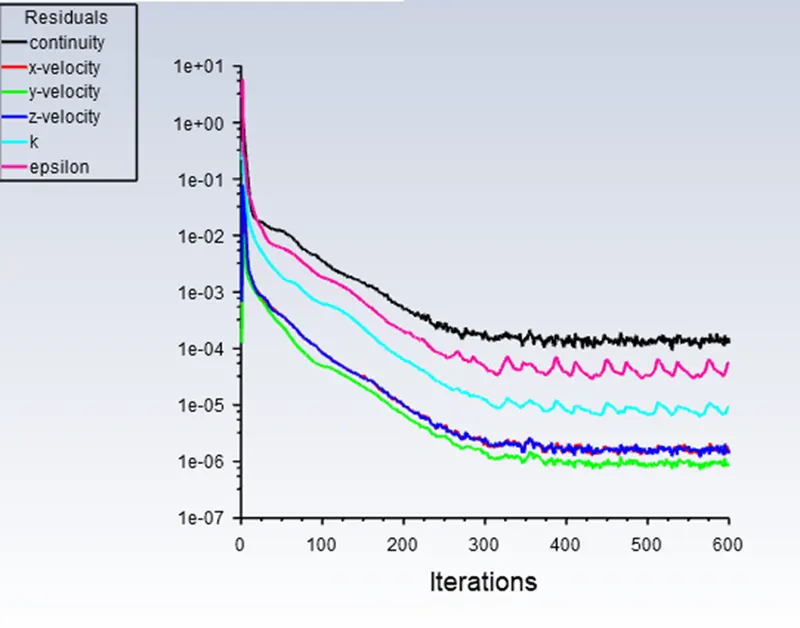
velocities at 5 m/s
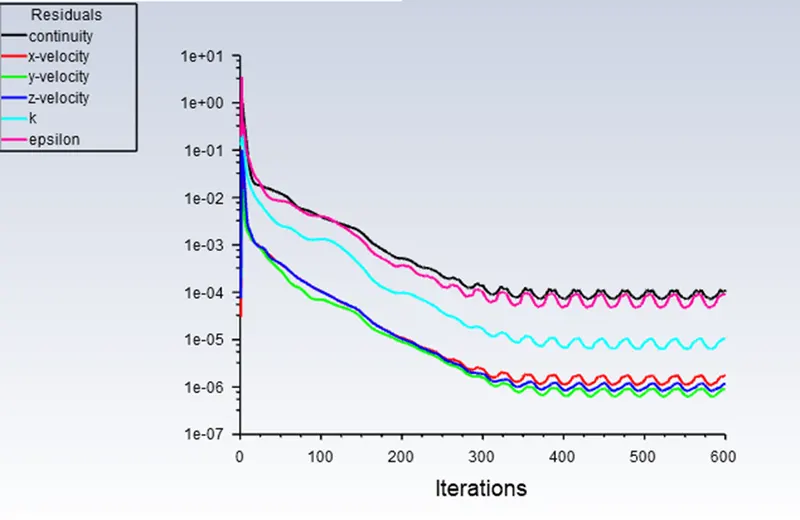
Contours of the Particle Time through the Cyclone Seperator along with efficiencies
velocities at 1 m/s velocities at 3 m/s
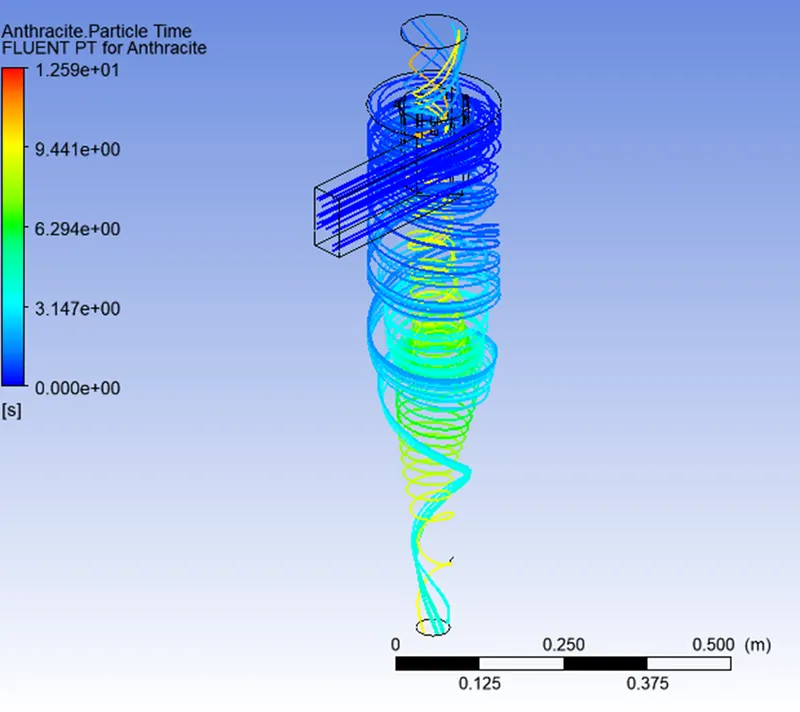
velocities at 5 m/s
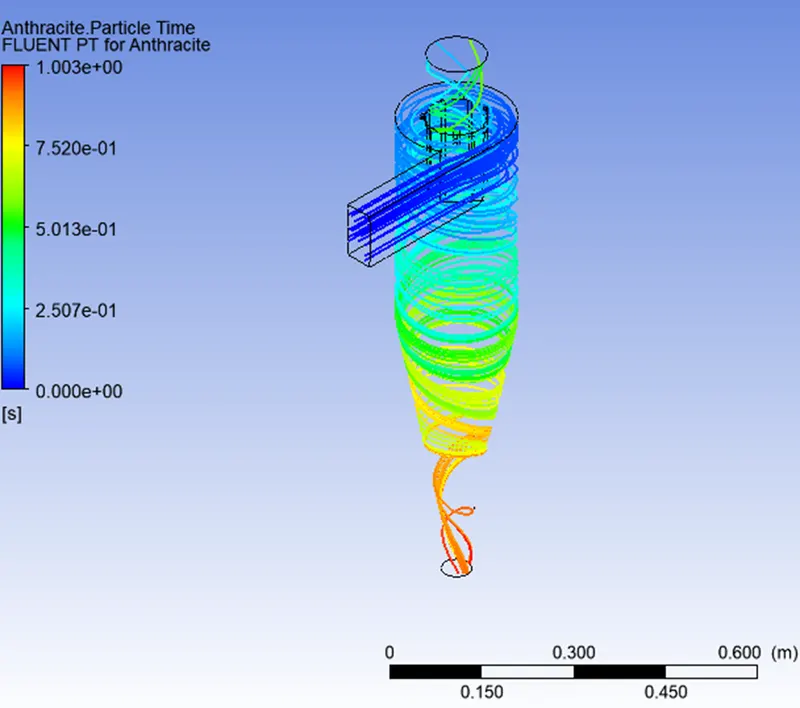
|
Particle and inlet velocity in m/s |
Particle size in micro meter |
Particles Tracked through inlet | Particles escaped through Top outlet |
Particles trapped through bottom outlet |
Efficiency | Link |
| 1 | 5 | 91 | 37 | 54 |
59.34% |
https://drive.google.com/file/d/1klhPiHJrisUzRM5HN5puZ3V-yfbcNoSS/view?usp=sharing |
| 3 | 5 | 91 | 33 | 58 |
63.73% |
https://drive.google.com/file/d/1-kxHmwNA8CvYTr3d-4hIX22fckZtvqdN/view?usp=sharing |
| 5 | 5 | 91 | 30 | 60 |
65.93% |
https://drive.google.com/file/d/1lFMPzOF1o0Nymwcn2gv31fSCfnpQu4h0/view?usp=sharing |
Empirical Models for the efficiency
- IOZIA AND LEITH MODEL: This model is based on the force balance centrigual force and flow resistance
- Koch AND Wicht MODEL: The model takes into consideration the Tangential velocity of the particle and tangential velocity of gas.
- Li and Wang: The model based on radial velocity of particle and radial concentration of the profile
- Lapple: The model deals with the assumption that at the inlet the particles are evenly distributed through the profile.
Conclusions
- Its observed that as the variation in the particle size by keeping the velocity constant , the efficieny is highest at 5 microns.
- In next test it reveals that the efficiency by keeping the particle size constant and varying the velocity the highest efficiency is obtained at 5 m/s.
- Its seen that turbulence and momentum effects of the continous medium improve the efficiency of the of the cyclone seperator.
- Since the highest efficiency is obtained by increasing the particle size as well as the velocity of the particle.
- Both the inlet velocity and particle size influence the efficiency.
- Its seen that the lowest efficiency was seen with the particle size at 1e-6 m, since the mass is lighter and forces were not enough to pull the particles to the trap at the bottom.