Week 8 - Natural Convection-II
Natural Convection 2
Aim
To conduct thermal simulation of low voltage panel natural convection using icepak
Objective
- Construct the model based on the provided information.
- Develop an optimal meshing strategy for the model to ensure accuracy and efficiency.
- Configure the model for analysis by setting up necessary parameters and boundary conditions.
- Execute the simulation to obtain results.
- Post-process the simulation results to extract relevant information and insights.
Model
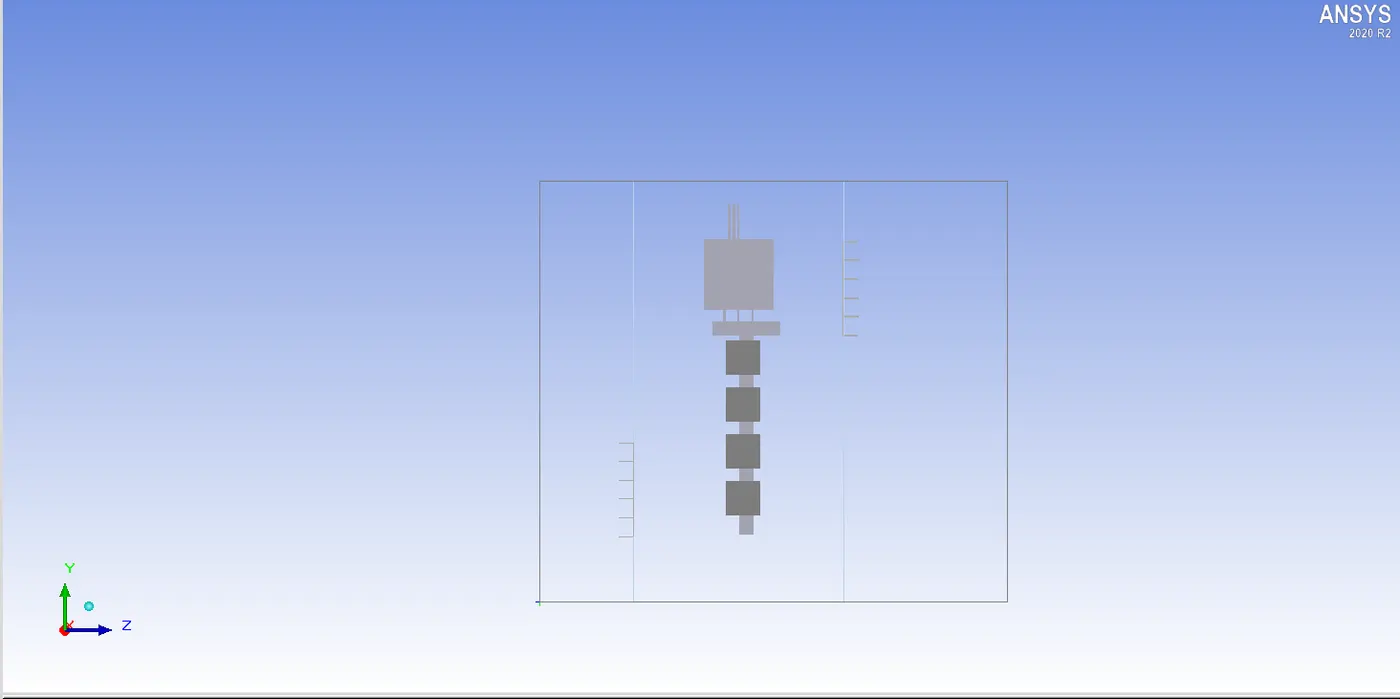
Generate the model according to system requirements, ensuring the geometry aligns with specified criteria.
Cabinet:
Fluid region surrounding the model.
Governing equations solved within this region.
IG Block (Multiple Instances):
Block type: Solid
Surface material: Paint non-metallic
Solid material: Fe
Total power: Varies for each block (e.g., 168.92 W for one block)
Bus Bar (Multiple Instances, e.g., Bus Bar A):
Shape: Prismatic
Surface material: Cu polished surface
Solid material: Cu pure
Total power: Joule heating
Joule heating power:
Type: Constant
Current: 800 amp
Resistivity: 1.72e-8 ohm
Coefficient (C): 0.0039
Reference temperature (Tref): 25 degrees C
IG Cable:
Block type: Solid
Surface material: Cu polished surface
Solid material: Cu pure
Total power: Joule heating
Power distribution dependent on cable length.
Enclosure:
Block type: Solid
Surface material: Paint white acrylic
Solid material: Steel carbon 1020
Thermal specification: Thin-walled boundaries (3mm thickness)
Radiation activated for all walls.
Meshing
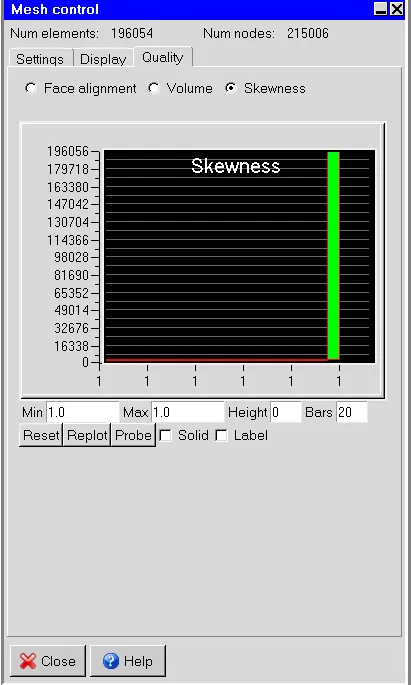
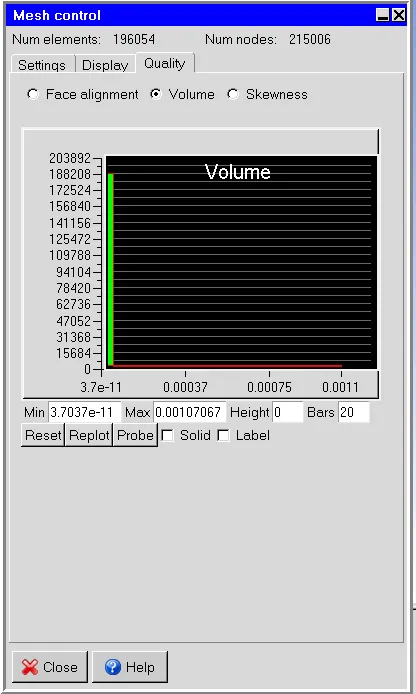
The proper meshing was done and it showed good quality.The total meshes generated are 196054 and nodes 215006.
Result
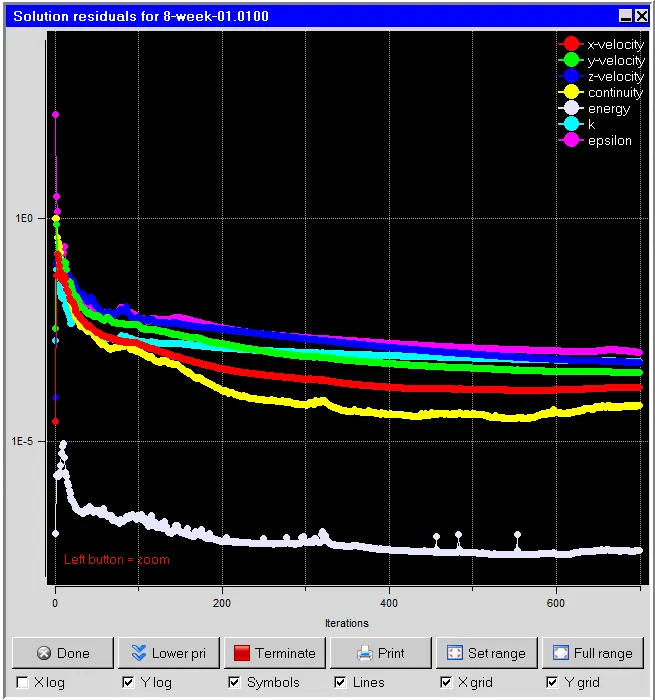
Iterations
Temperature
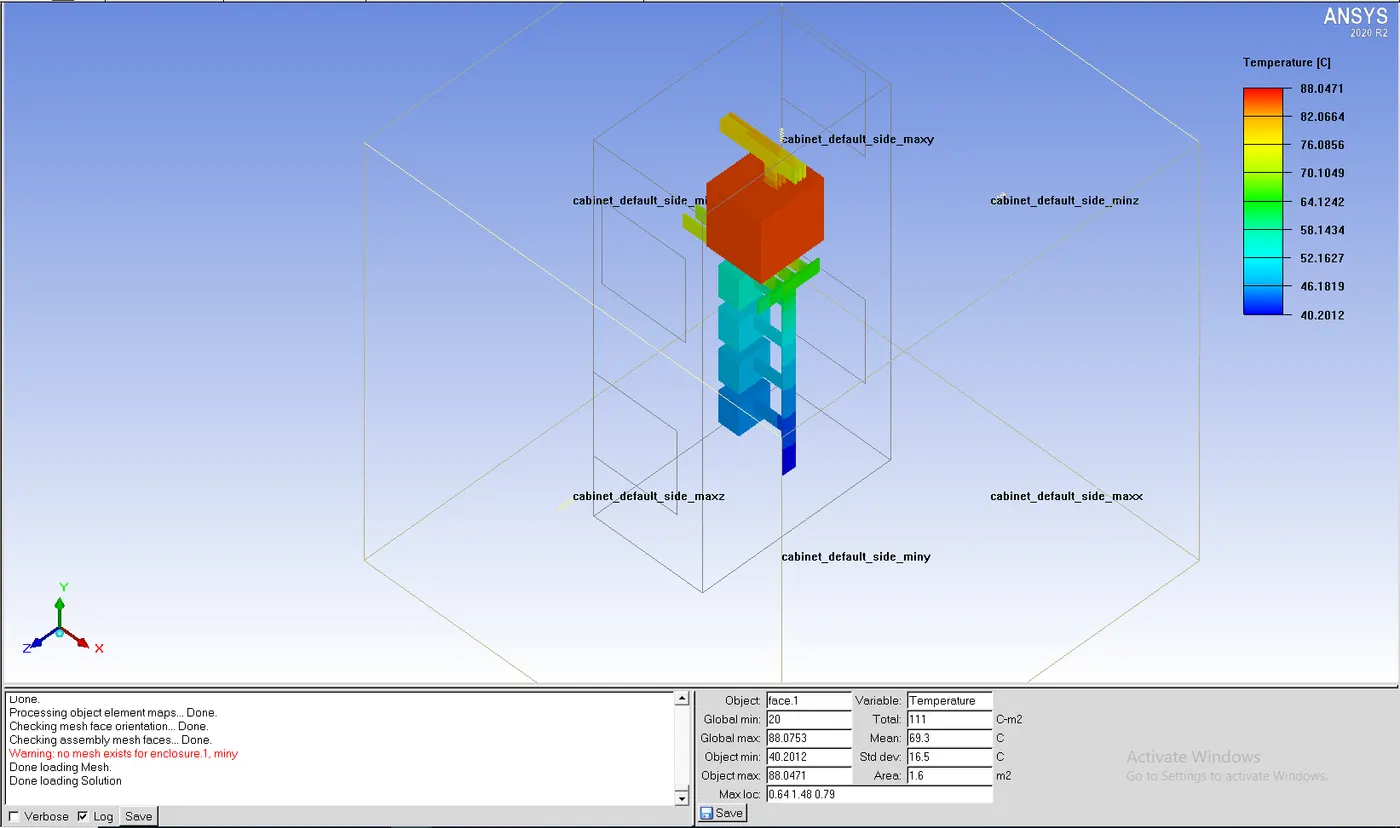
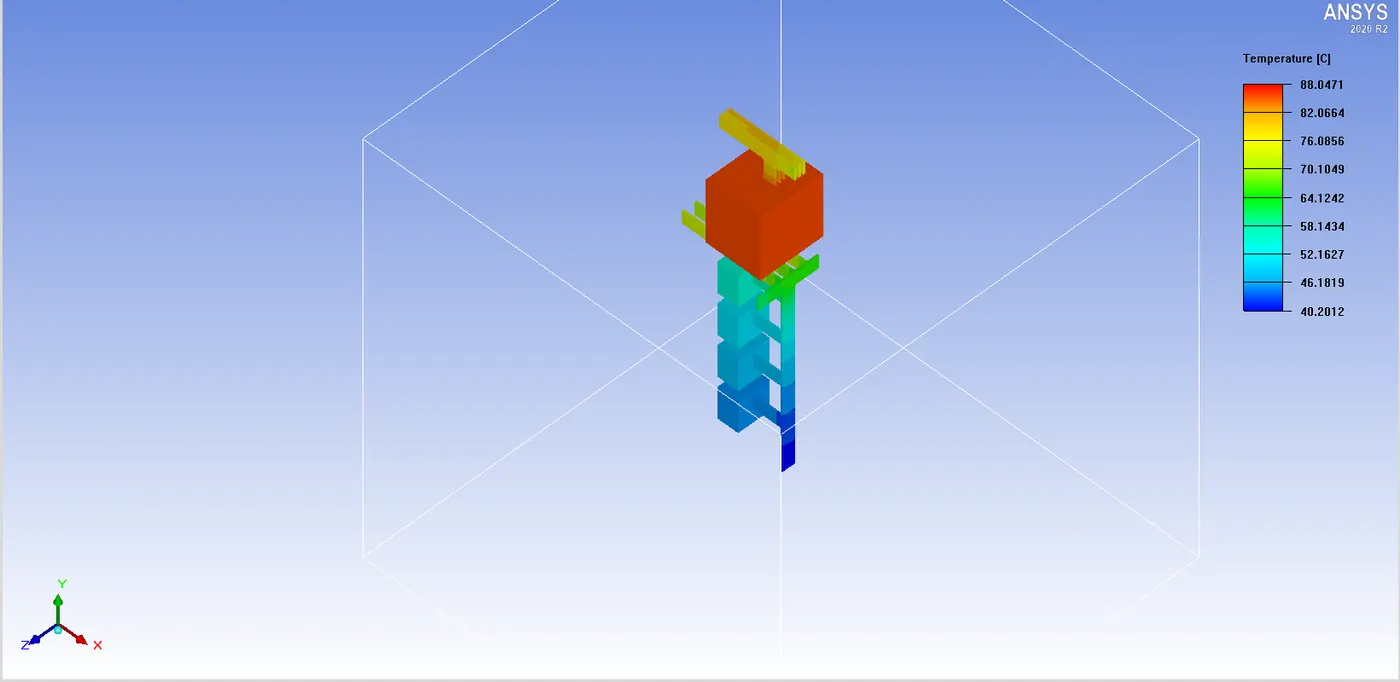
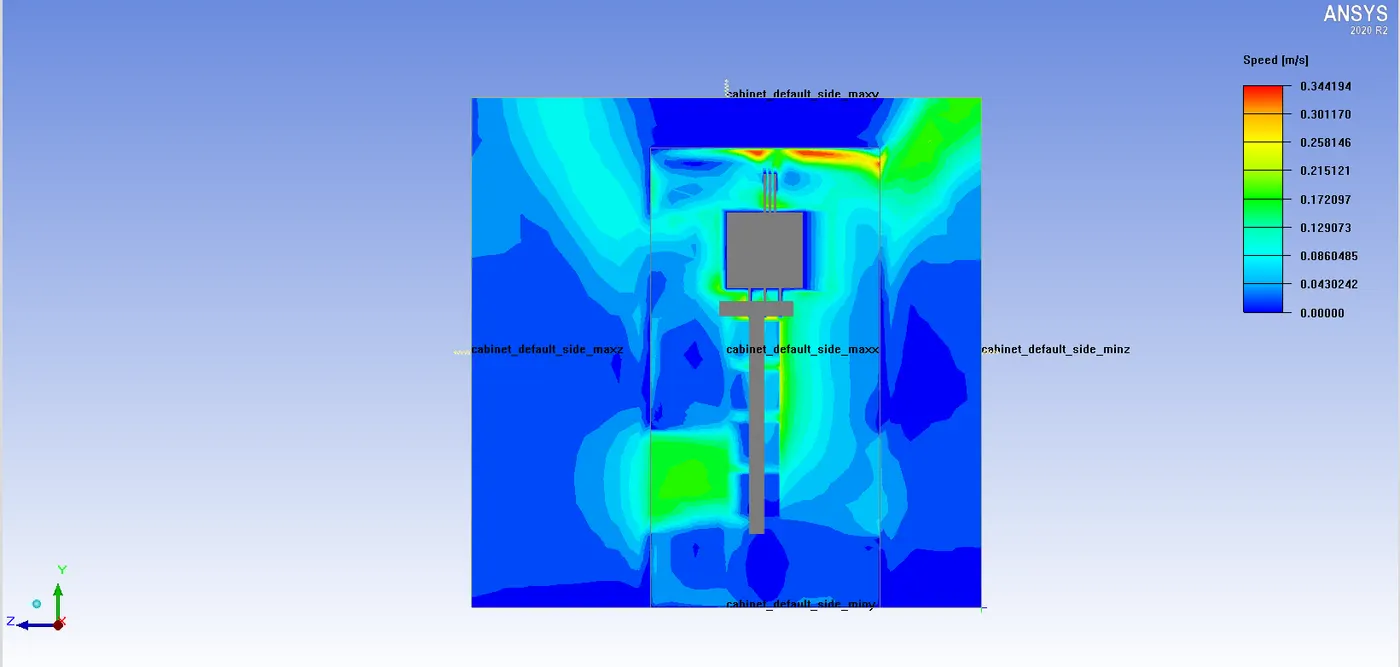
Cut plane temperature conture
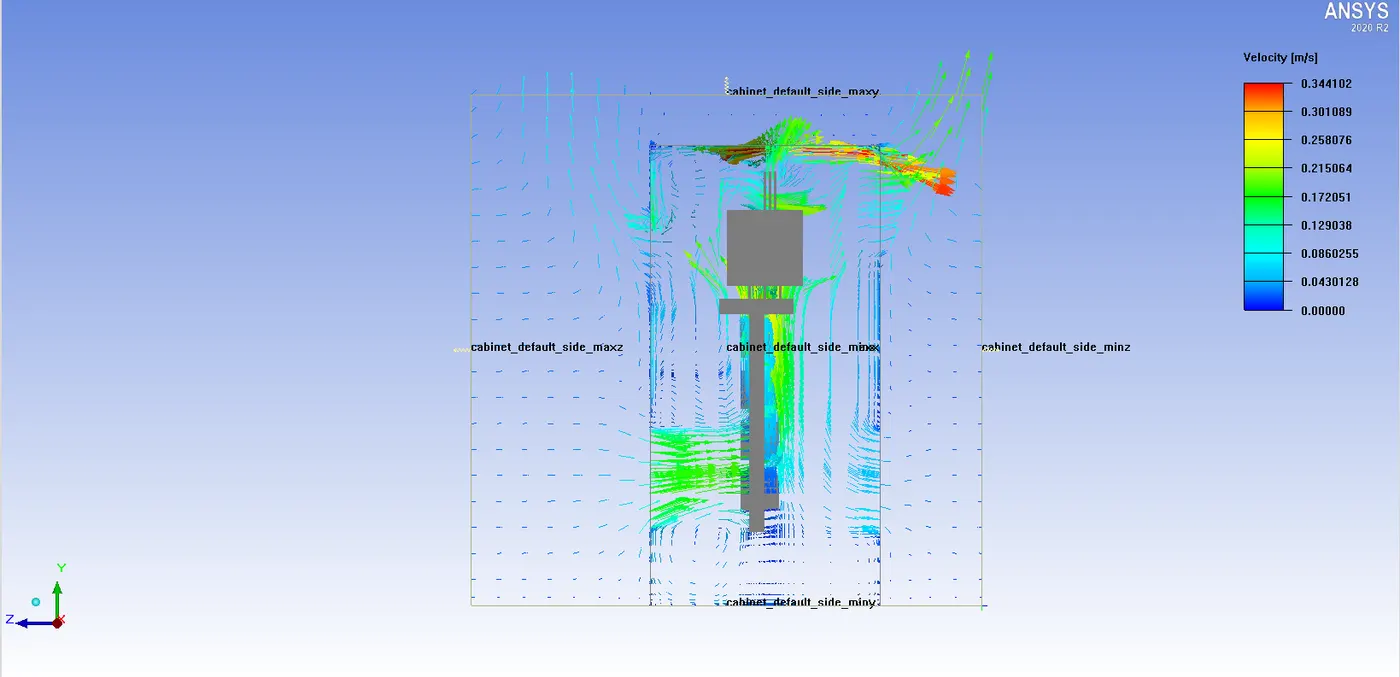
Vector plot
Conclusion
In the presence of natural convection, air circulates from the inlet grille to the outlet grille. The top region of the enclosure experiences a temperature of 83 degrees Celsius, whereas the temperature at the bottom phase is 21.35 degrees Celsius.
The lower section of the voltage panel exhibits lower temperatures and minimal airflow velocity, indicating relatively cooler conditions. In contrast, the upper block, housing the heat source, experiences higher airflow velocity to effectively dissipate heat from its surface.