Week 6.1 - Setting up a model (Electronic enclosure)
Thermal simulation of electonic enclosure
Aim
To conduct thermal simulation of of the Electronic enclosure for an giving heat dissipation
Objective
- To convert the geometry to be compatible to ICEPAK by goemetry cleaning
- To mesh it separately
- To run the simulation and get the result
Gemoetry Cleaining
The provided geometry, any undesired components have been removed using SpaceClaim, and the modified geometry has been successfully converted into ICEPAK-compatible components. This process ensures that the simulation setup in ICEPAK will accurately represent the desired configuration, eliminating any irrelevant or extraneous components from the model. This streamlined and refined geometry is now ready for thermal simulation using ICEPAK.
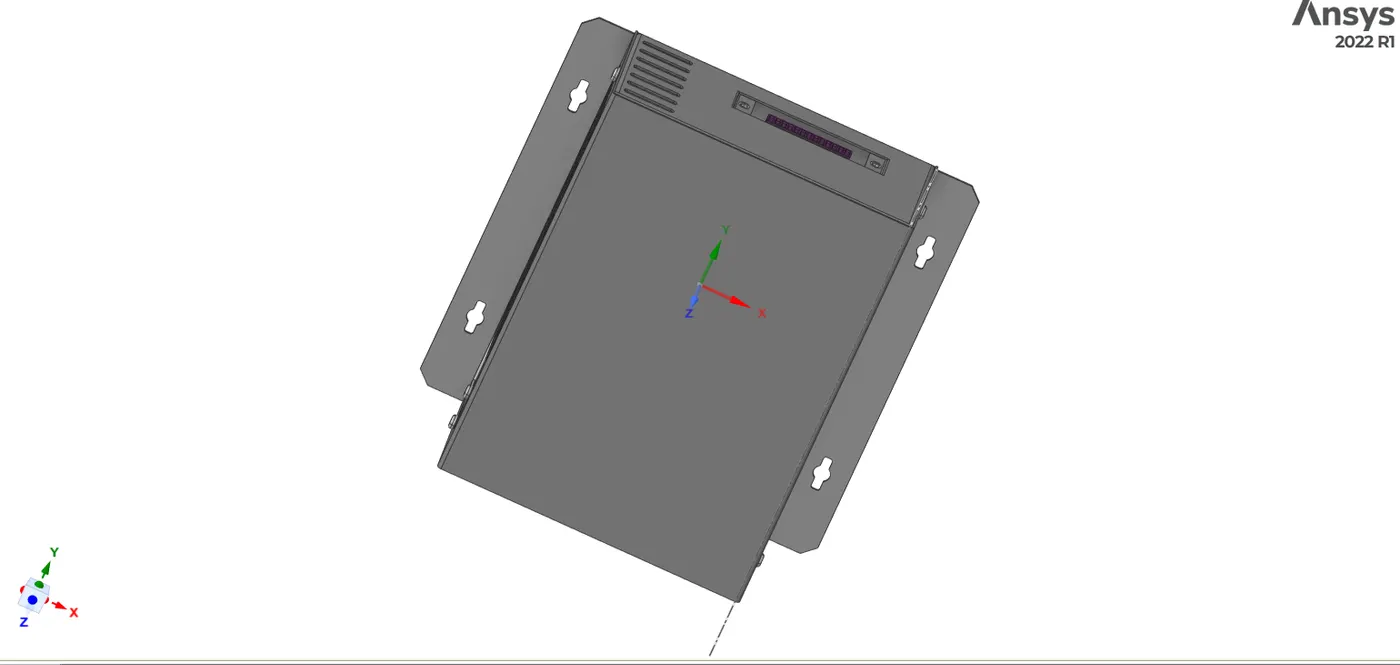
The above geometry has been transformed into ICEPAK objects
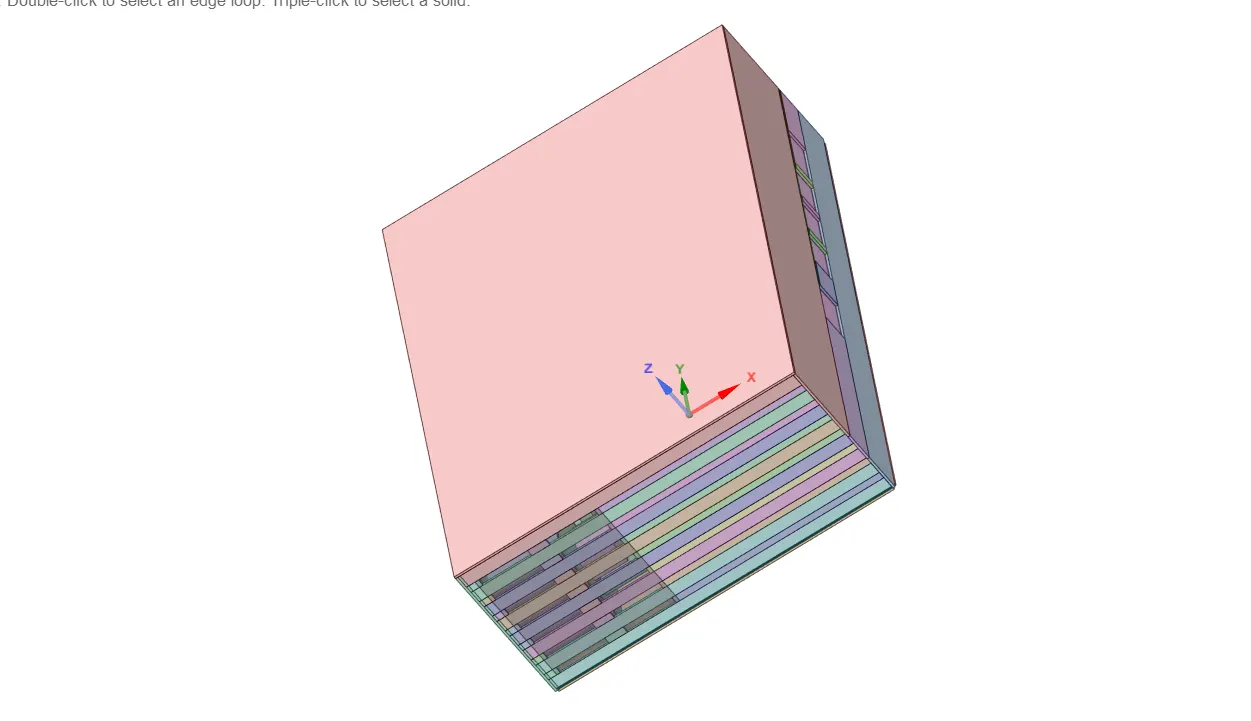
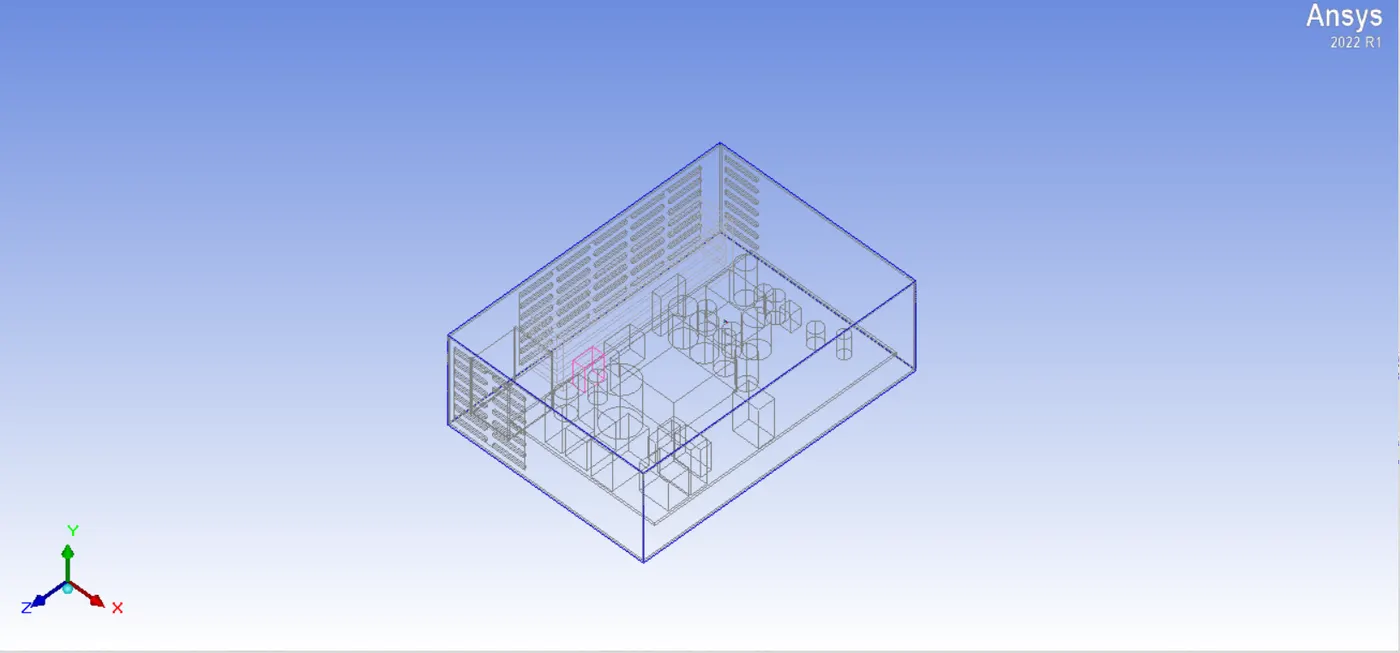
Meshing
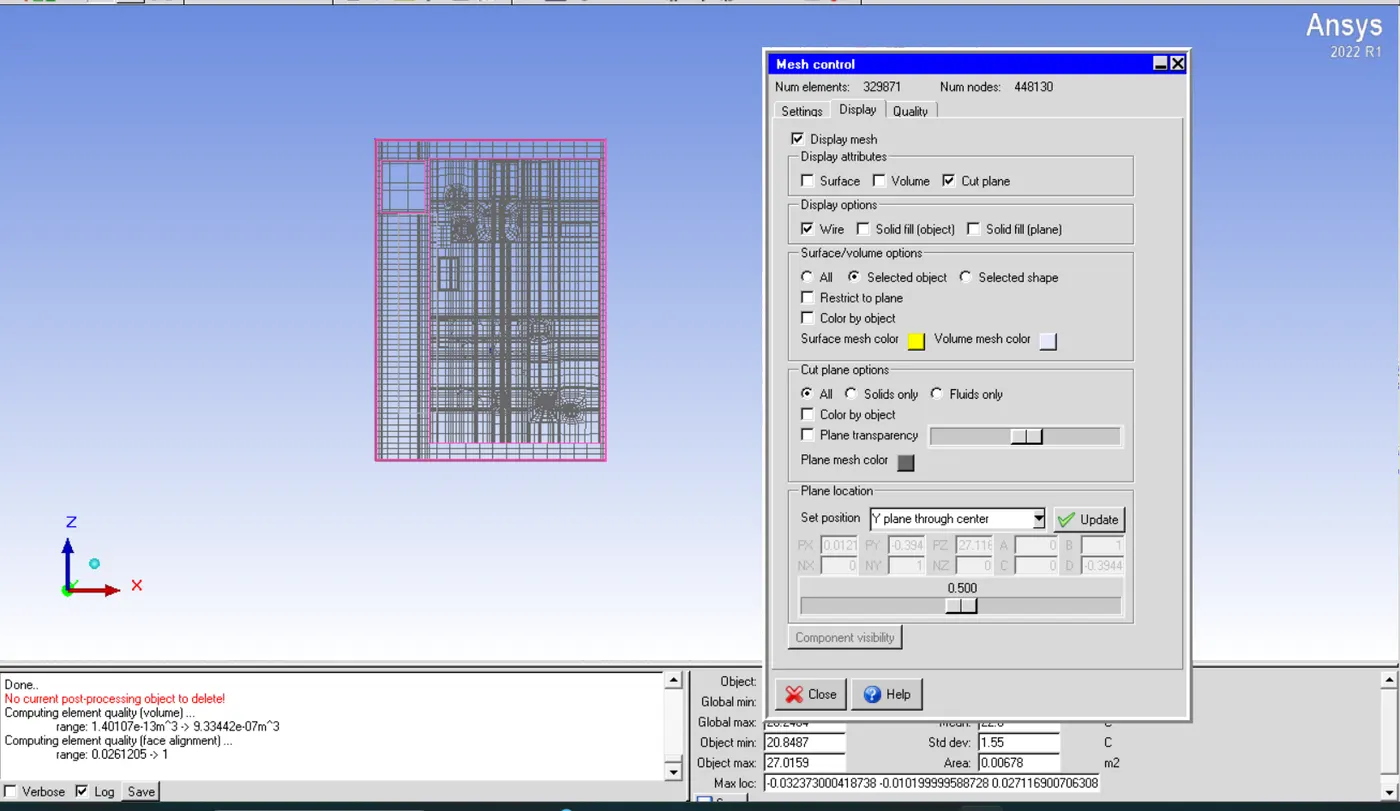
- The high-definition mesh has been produced with exceptional quality, prioritizing convergence.
- To address mesh bleeding and control quality parameters around cylindrical bodies, a non-conformal mesh has been meticulously generated.
- Efficient capturing of CAD objects in the geometry has been ensured through the incorporation of CAD objects, employing Multi-Level meshing with a buffer layer.
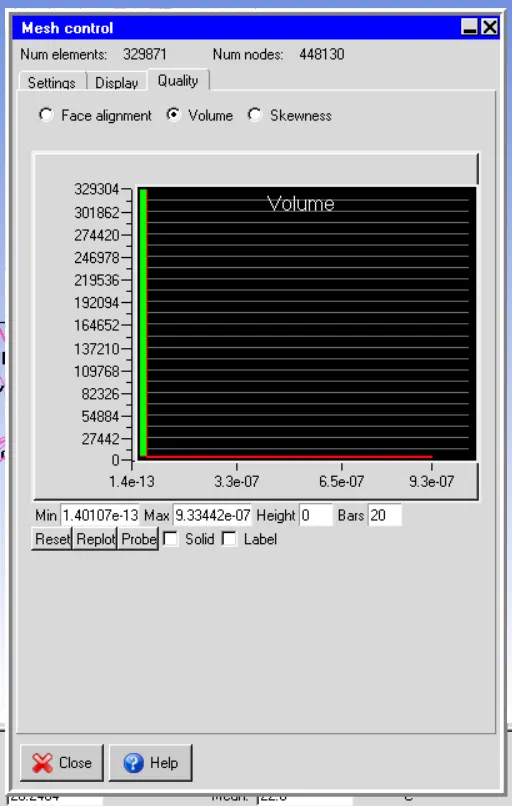
- The number of mesh counts are 329871 and nodes 448130
- The mesh quality stands at 0.0261 for face alignment and 0.05 for skewness, surpassing the recommended values for convergence outlined in the ICEPAK guide.
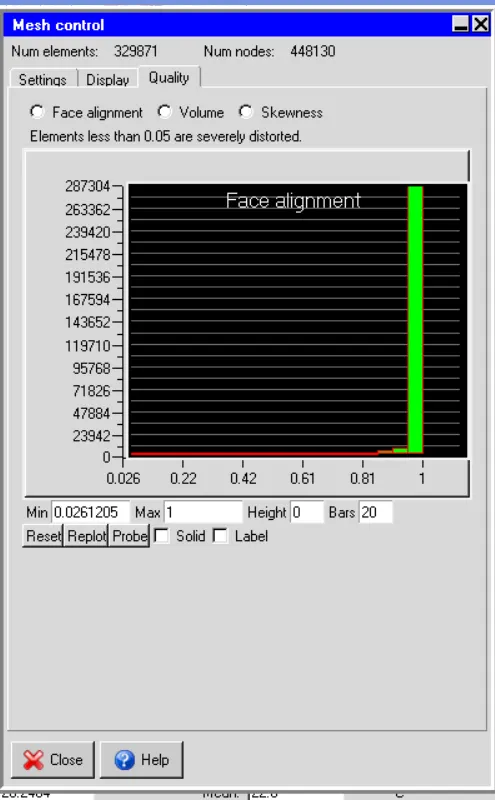
Y plane mesh
Setup
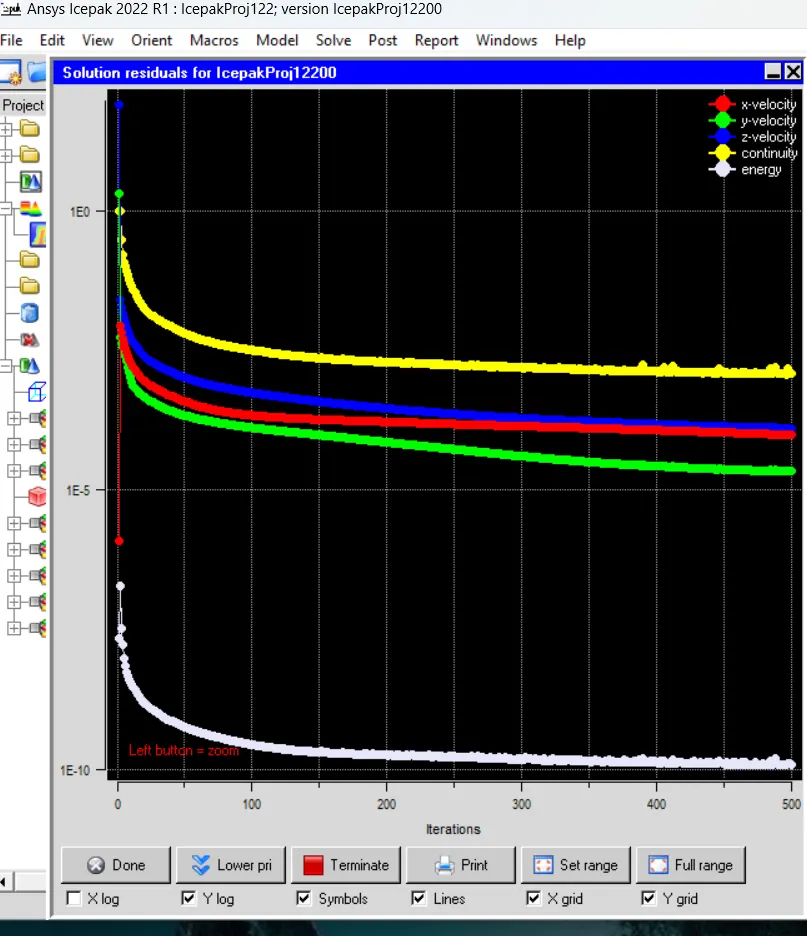
The simulation has been configured with a specified number of iterations, set at 500. Additionally, a Zero Turbulent Model has been employed. This modeling choice suggests a simplification in turbulence modeling, possibly suitable for scenarios where turbulence effects are negligible or can be adequately approximated with a simpler approach. The chosen parameters reflect a balance between computational efficiency and achieving accurate results for the thermal simulation.
Results
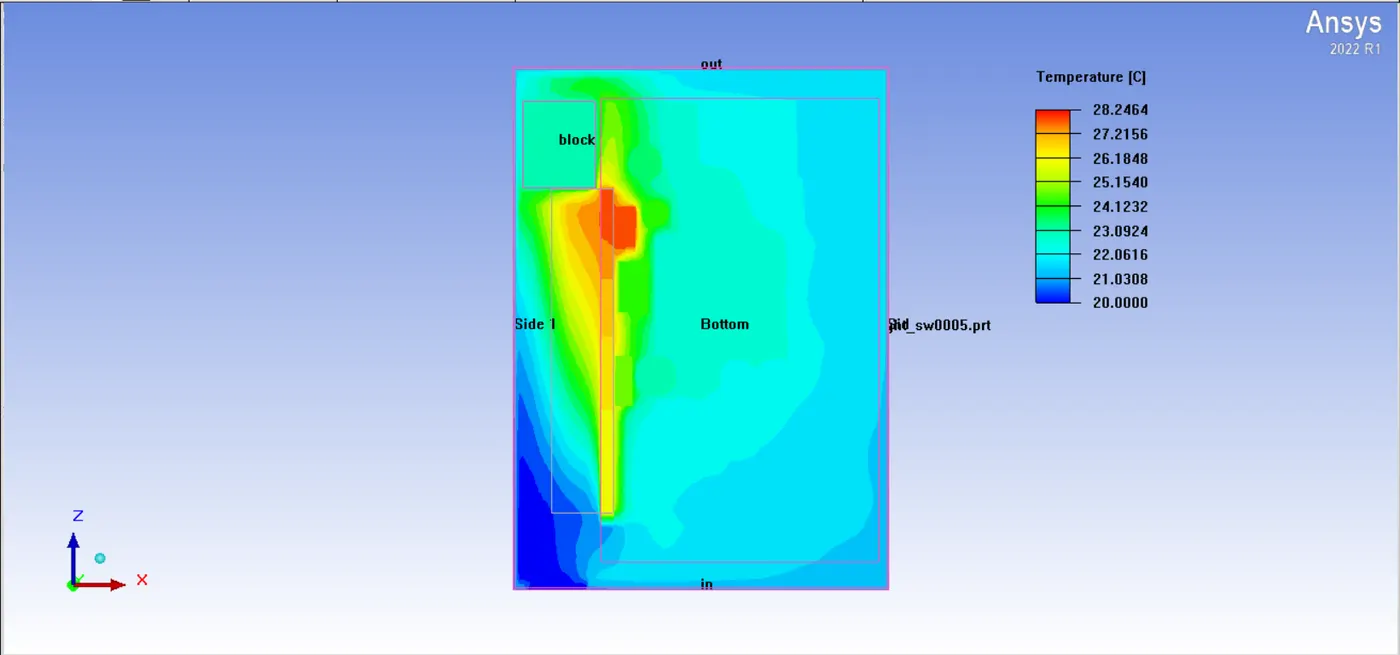
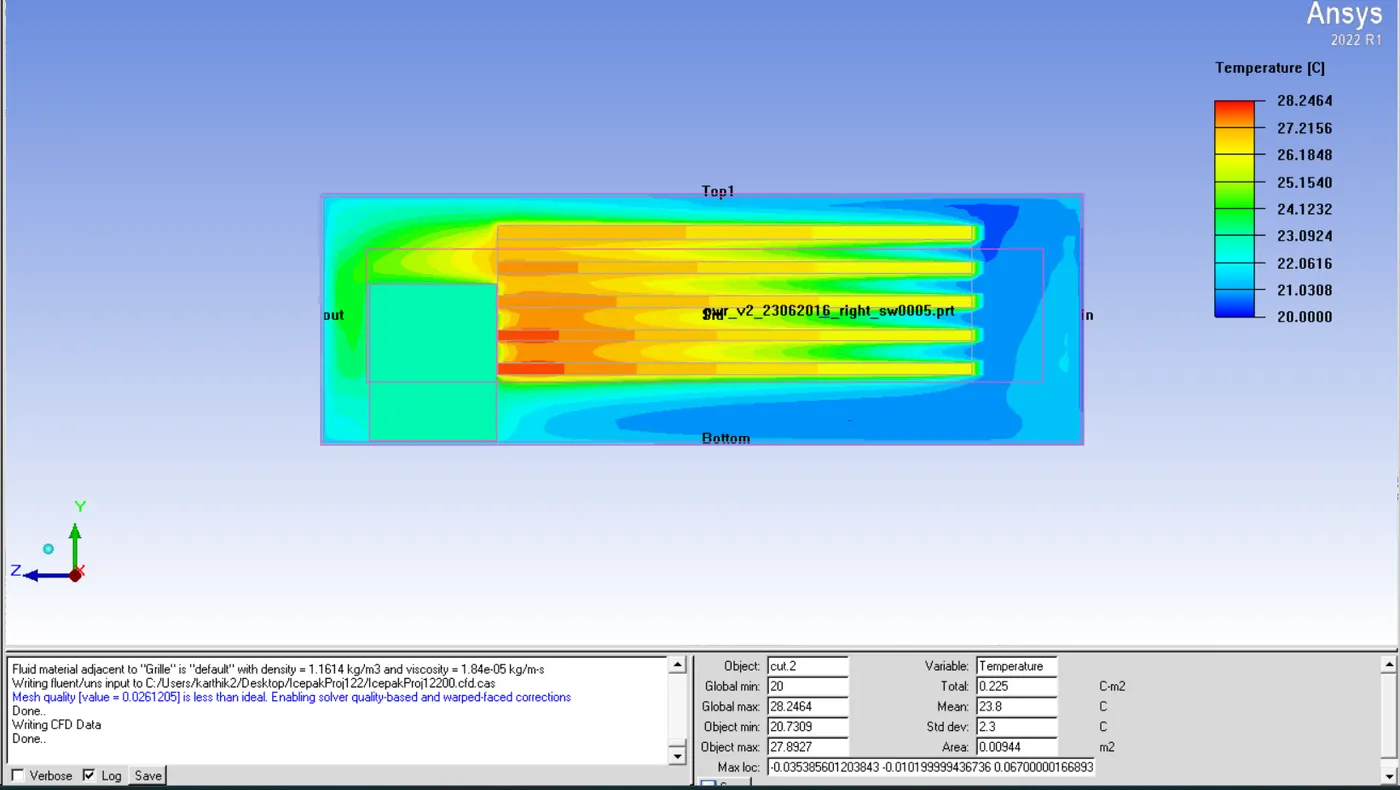
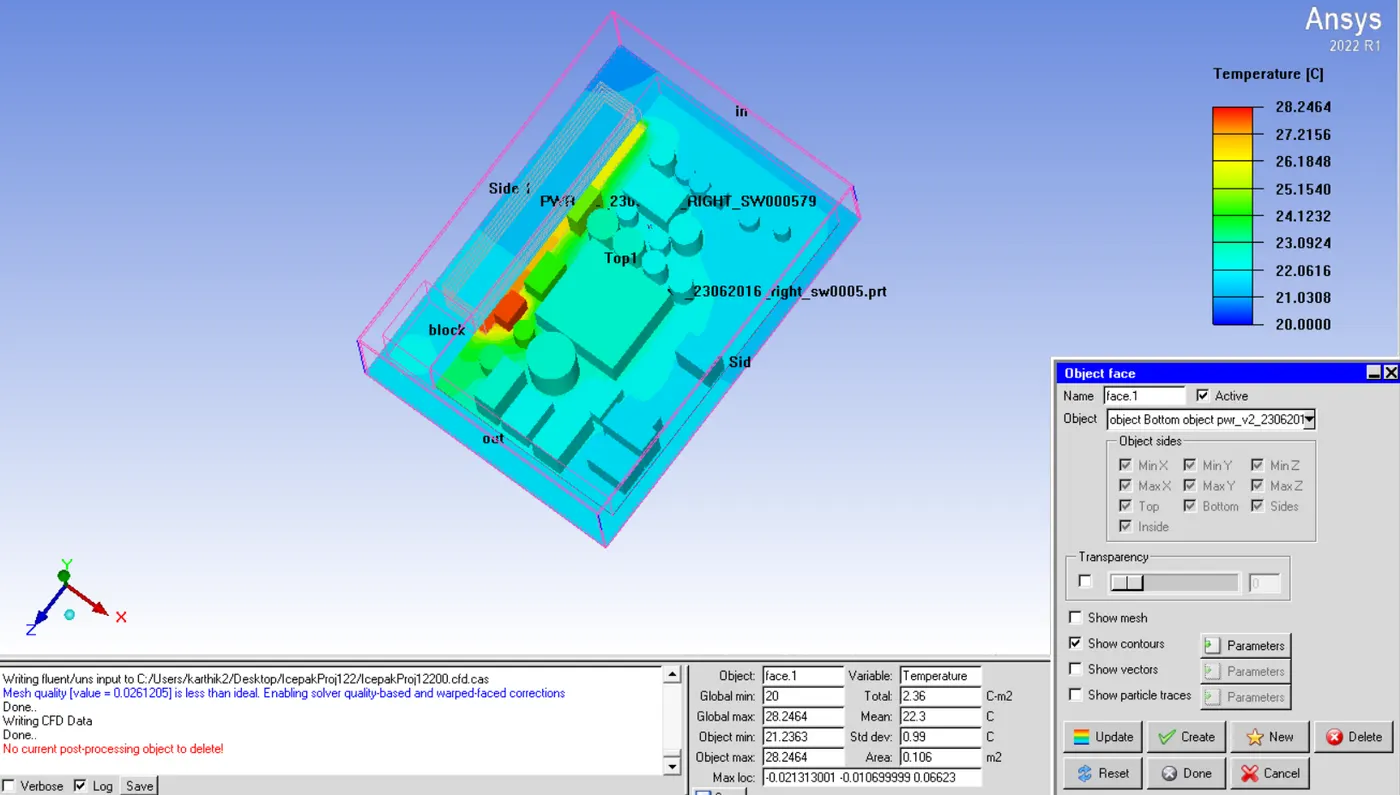
Temperature Contour
Conclusions
The component has been successfully converted into an ICEPAK object, and the thermal simulation setup has been completed.
During the simulation, the heat sink has demonstrated efficient thermal performance, with the maximum temperature reaching only 28 degrees Celsius for a 2-watt object. This indicates effective heat dissipation and suggests a well-designed thermal solution.