Week - 8 Mass Scaling
Objective: The main objective of this project is to reduce the simulation run time. Also compare implicit and explicit simulation time.
Procedure: Adding a non-physical mass to increase the time step in a dynamic analysis. The effect is insignificant and, in some cases, adding nonphysical masses to reduce the simulation time is justifiable. In the explicit method the time step is too small to maintain the numerical stability. A small step size prevents this method for routine analysis work. This method is used to reduce the computational cost and time.
In LS-DYNA mass scaling is done using Control Time step card (DT2MS – Time step is controlled using this parameter) when DT2MS is set to negative, mass is added to those elements whose time step is less than given DT2MS.
The following different simulation were varied with different D2TMS and TSSFAC values to reduce the computation time.
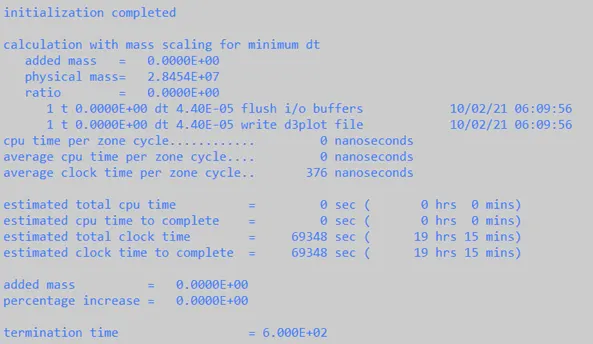
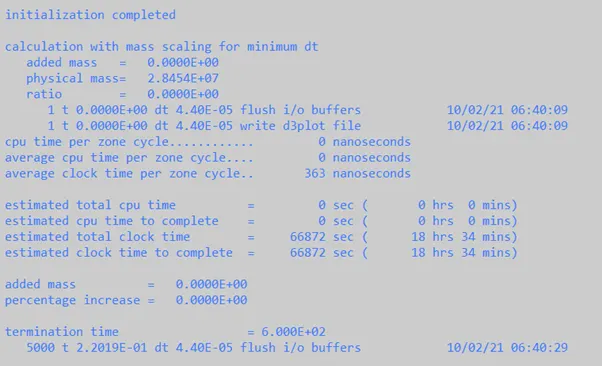
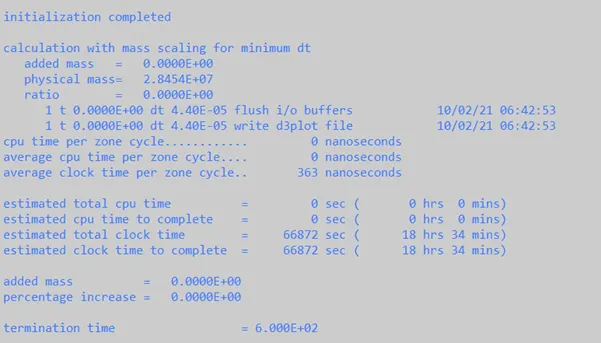
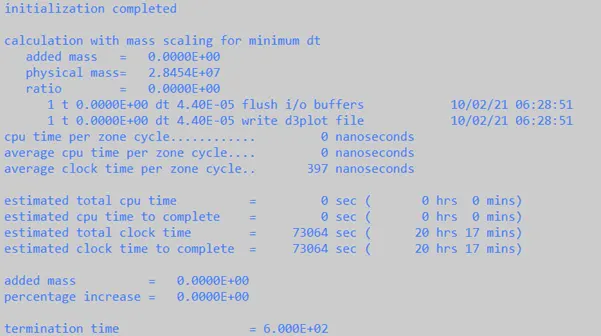
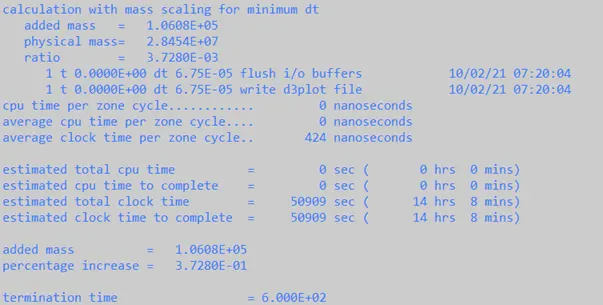
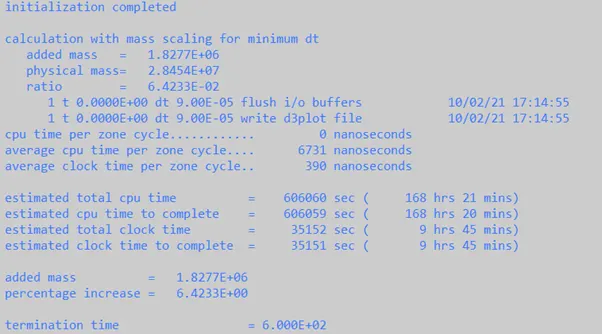
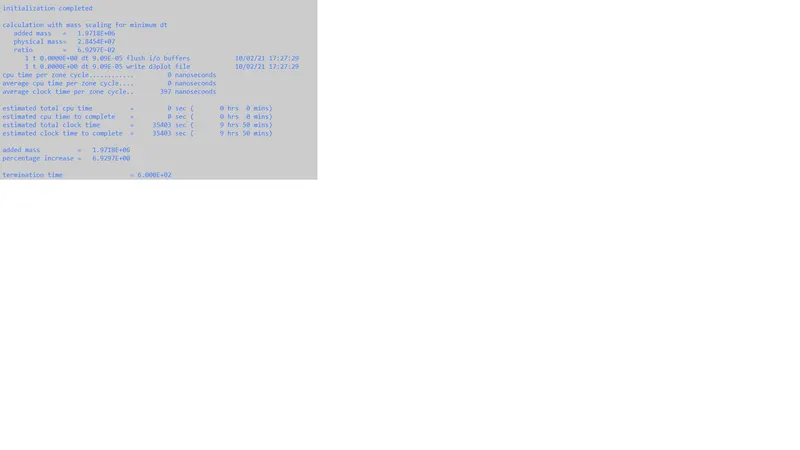
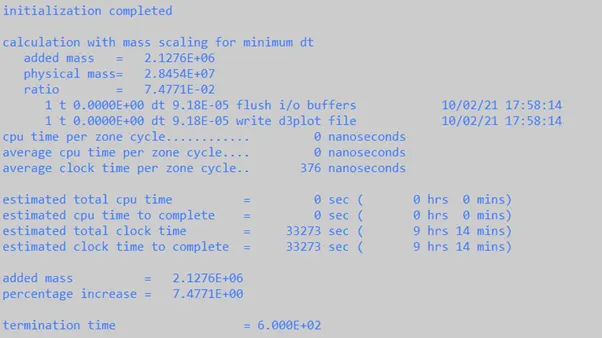
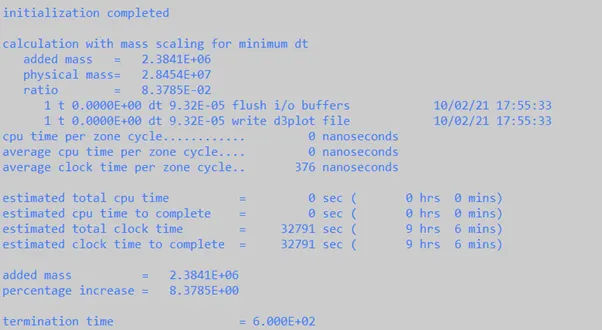
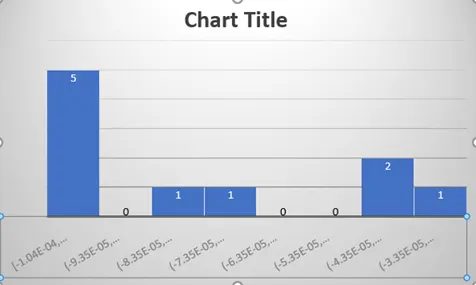
Hence their time step will become equal to the given DT2MS and there by reducing the computation time.
TSSFAC – scale factor for computed time step is a parameter used to be more precautious.
For implicit analysis there is no effect of mass scaling as the time step are larger than explicit analysis. For simulations which happens at slower rate implicit method is the better option that can be considered as the run time is drastically reduced.
Conclusion: The given model simulated for several times in trial and error method.