Week 8: Literature review - RANS derivation and analysis
RANS DERIVATIVE AND ANALYSIS`
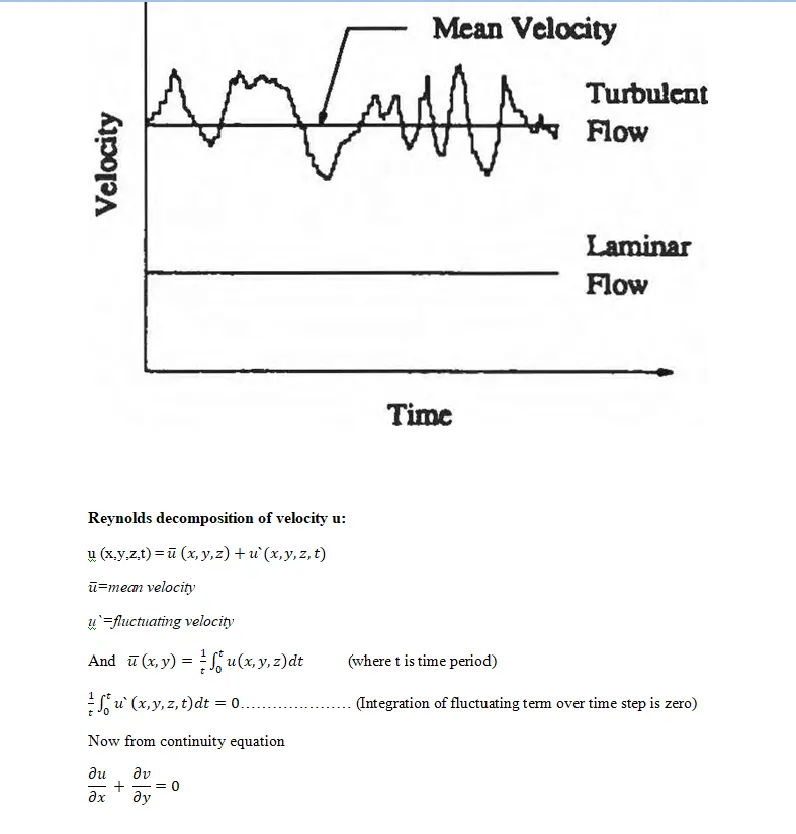
The Reynolds-averaged Navier–Stokes equations (or RANS equations) are time-averaged equations of motion for fluid flow. The idea behind the equations is Reynolds decomposition, whereby an instantaneous quantity is decomposed into its time-averaged and fluctuating quantities, an idea first proposed by Osborne Reynolds. The RANS equations are primarily used to describe turbulent flows. These equations can be used with approximations based on knowledge of the properties of flow turbulence to give approximate time-averaged solutions to the Navier–Stokes equations.
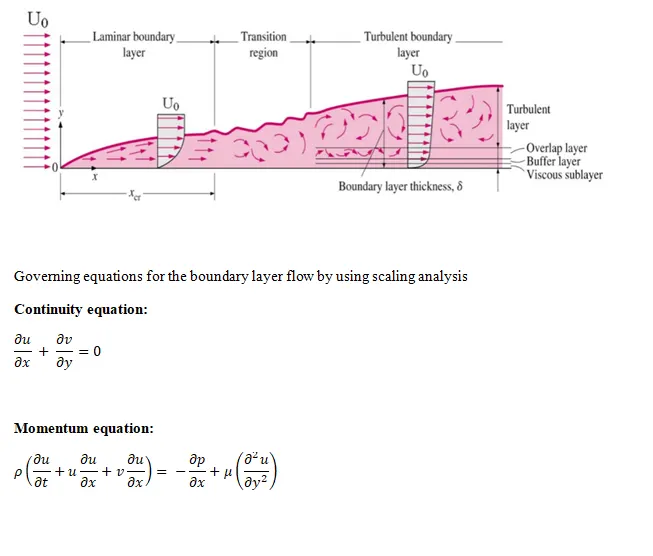
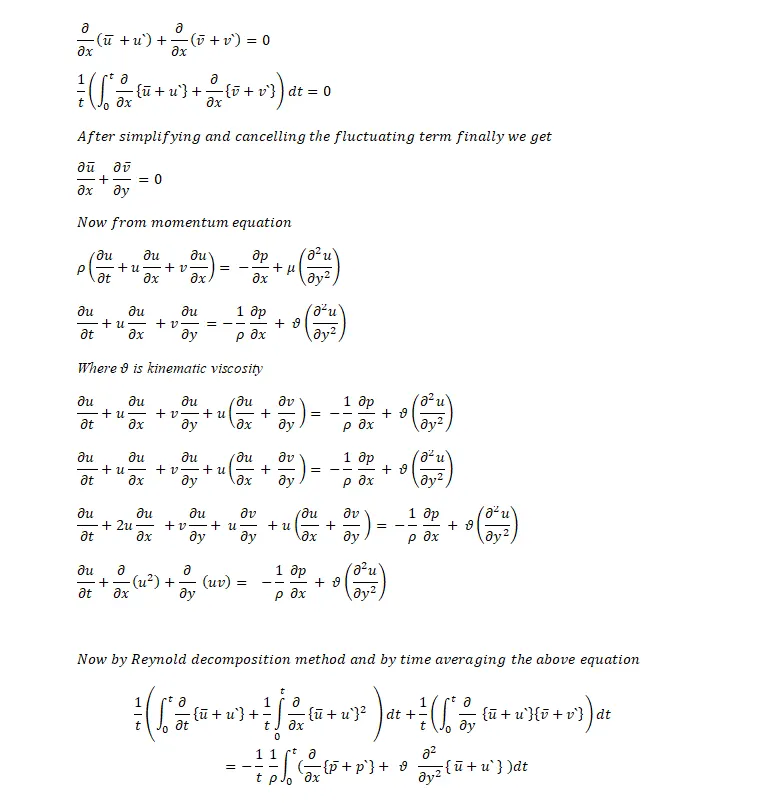
RANS derivation is given below
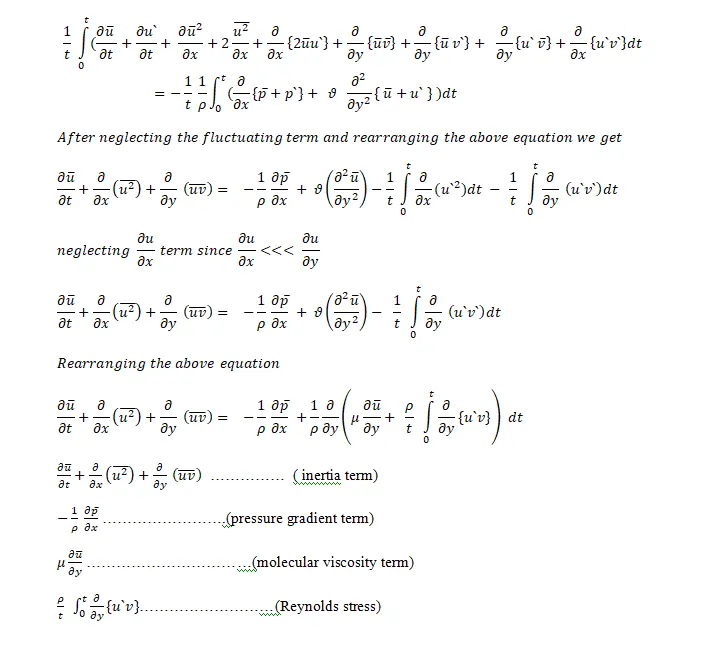
Reynolds stress:In fluid dynamics, the Reynolds stress is the component of the total stress tensor in a fluid obtained from the averaging operation over the Navier–Stokes equations to account for turbulent fluctuations in fluid momentum.Turbulence will give rise to velocity fluctuations in both the horizontal (velocity u) and vertical (velocity w) directions characterized by u' and w'. The associated momentum fluctuation is called the turbulent stress or Reynolds stress.
Turbulent viscosity:The coefficient that relates the average shear stress and rate of velocity gradient in the turbulent flow is called turbulent viscosity. The viscosity in the turbulent flow is non- homogeneous, and it varies in space.It can also be defined as the turbulent transfer of momentum by eddies giving rise to an internal fluid friction, in a manner analogous to the action of molecular viscosity in laminar, but taking place on a much larger scale.The molecular viscosity is a macroscopic fluid property where as turbulent viscosity is a flow property emerging from the increased momentum transport through the flow field due to turbulent velocity fluctuations.