Week 5: Prandtl Meyer Shock problem
Prandtl Meyer shock problem
Boundary condition in shock wave problem: In this case we are using Neumann boundary condition.when imposed on any partial or ordindary differential equation it uses derivative of a solution within the boundary of the domain.To clearly understand this type of boundary conditin,take the case of heat conduction problem of fin where the fin is insulated at the tip,in such cases we are using neumann boundary condition (which is dt/dx =0 at the tip of the fin) to get the solution of the problem.For shock wave or supersonic flow we are not having any specified value of pressure and velocity at the outlet boundary because shock wave flow or supersonic flow is very unpredictable which mean it is very difficult to determine its value at the boundary so we are using neumann boundary condition which will use the intial flow conditions to get the solution.
Physics of shock wave: Mach no which is defined speed of object divided by the speed of sound is the criteria to determine whether the flow is sonic or supersonic.If the mach no is greater than 1 then the flow is known as supersonic flow.For mach no 1 flow is sonic.When the speed of a source exceeds the speed of sound (v > c) the wave fronts lag behind the source in a cone-shaped region with the source at the vertex. The edge of the cone forms a supersonic wave front with an unusually large amplitude called a "shock wave". When a shock wave reaches an observer a "sonic boom" is heard.
Unlike ordinary sound waves, the speed of a shock wave varies with its amplitude. The speed of a shock wave is always greater than the speed of sound in the fluid and decreases as the amplitude of the wave decreases. When the shock wave speed equals the normal speed, the shock wave dies and is reduced to an ordinary sound wave.
Case set up:
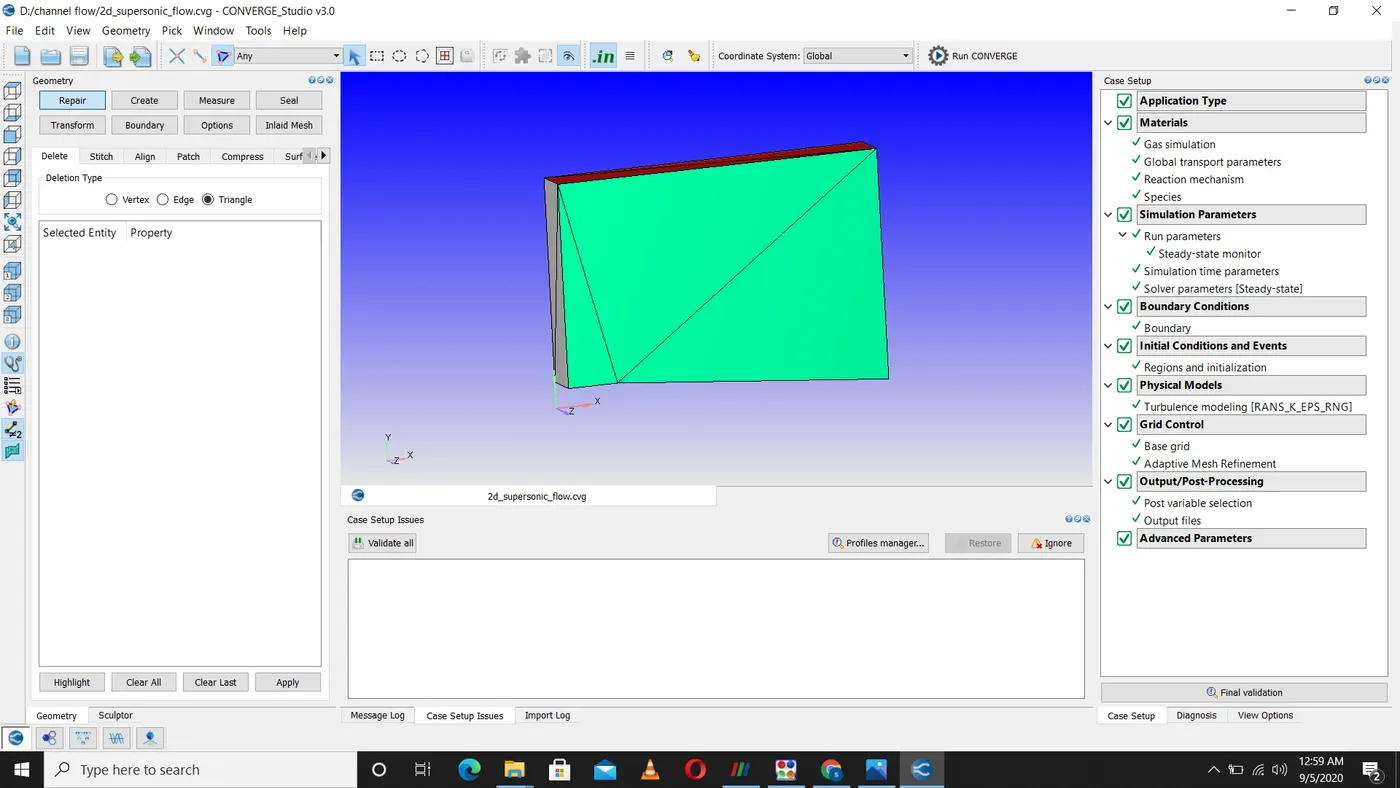
Density based steady state solver is used. In this case air is used which is compressible. There are five boundary condition in this case. Inlet wall is set as inflow boundary, outlet wall is set as outflow boundary, top and bottom wall is set as wall boundary(no slip boundary is used),front and back wall is set as 2d boundary type. Other specification are given below
1).Pressure at inlet is set to 300000pa
2).Pressure at outlet is specified by neumann boundary condition
3)Velocity is initialized as 648m/s and velocity at outlet is specified by neumann boundary condition
4).Temperature is specified as 300k
5).Species concentration(oxygen 23%,nitrogen77%)
6).Start time is set to 0 cycle
7).End time is set to 15000cycle
8).initial time step is 0
9).minimum time step is 1e-9
10).maximum time step is 1
11).maximum CFL criteria is set to 0.5
12).SOR solver type is used and preconditioner is set to none
13).Temperature Adaptive mesh refinement is used
14)Sub grid scale(sgs) of both 0.01 and 0.05 is used
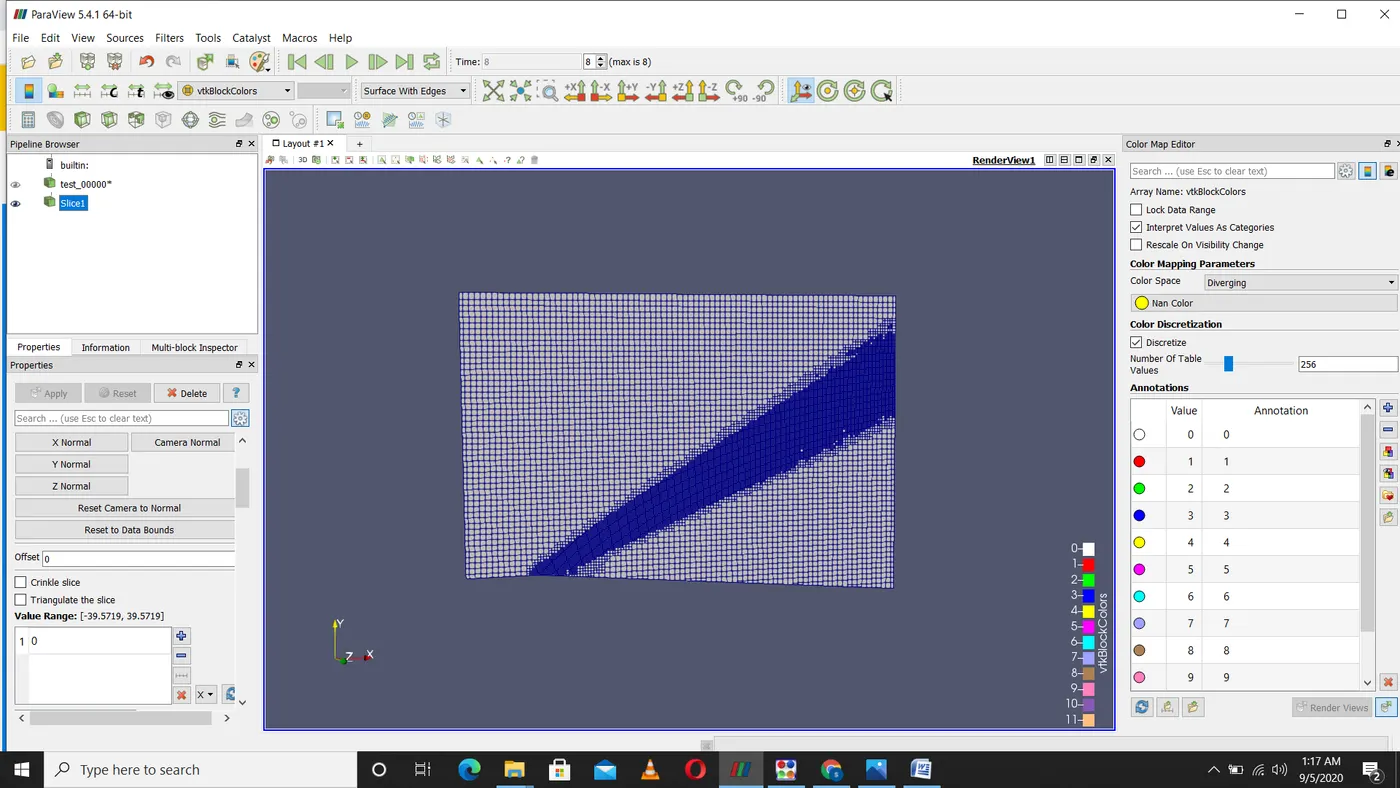
Mesh generation of SGS criteria of 0.01:
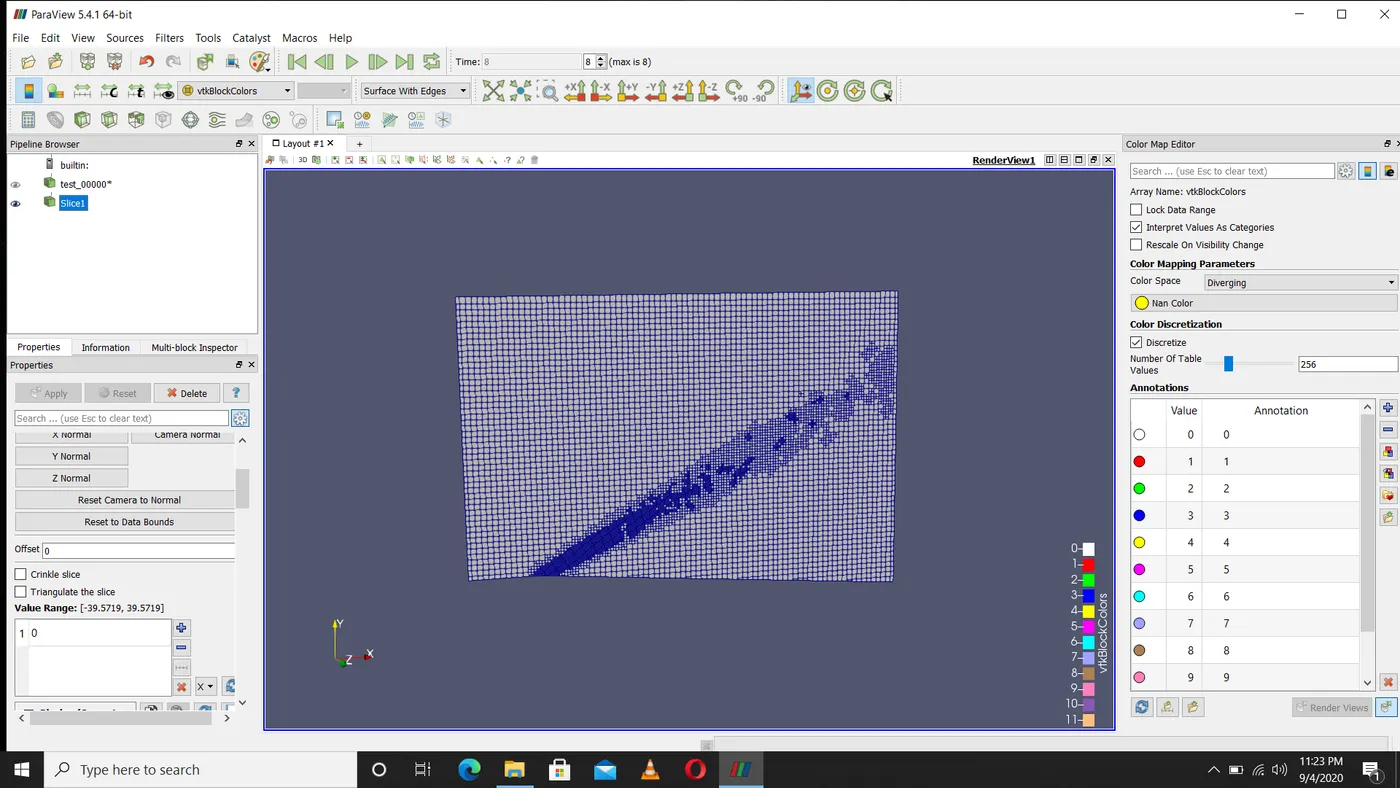
Mesh generation of SGS criteria of 0.05:
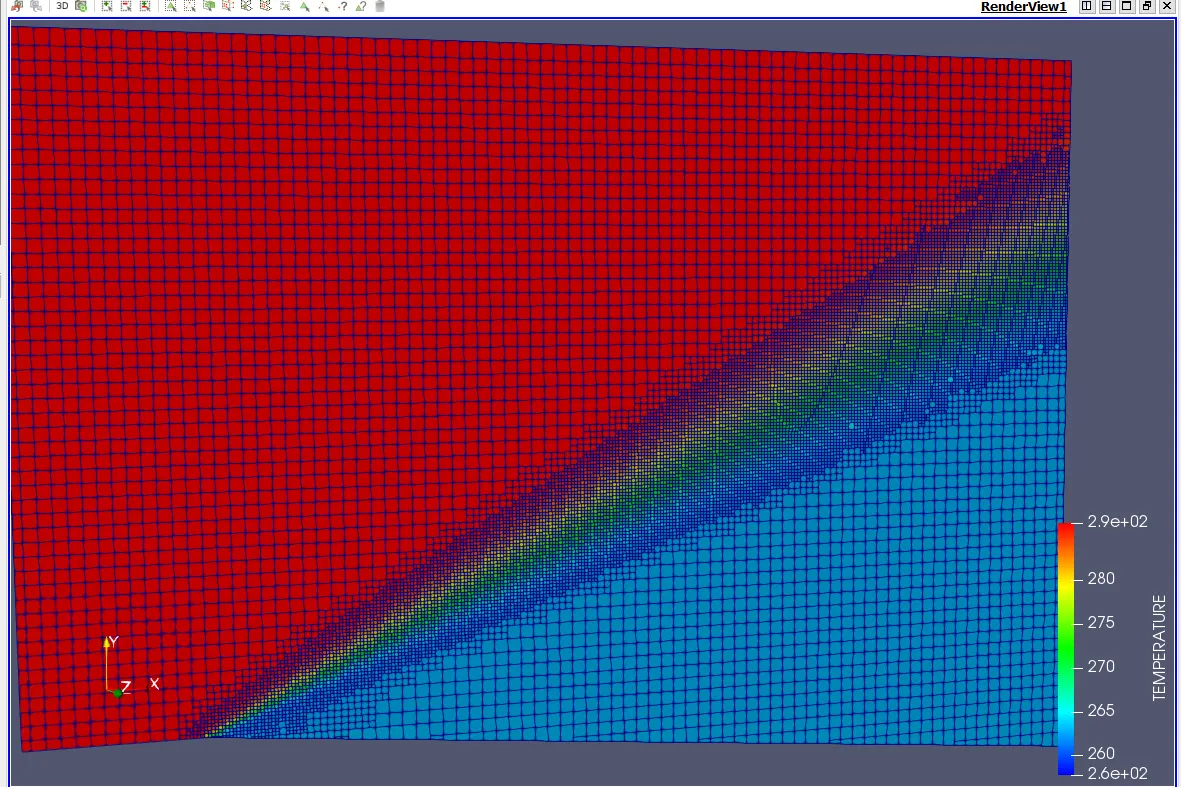
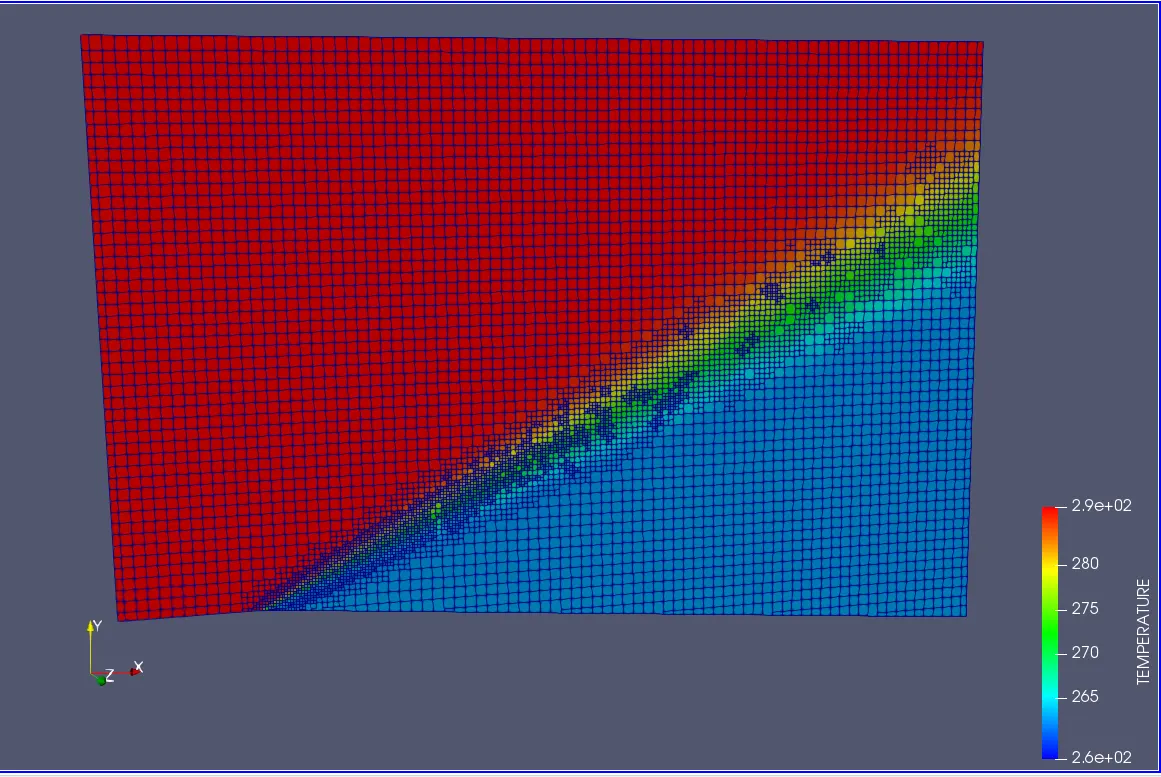
SGS 0.01
SGS 0.05
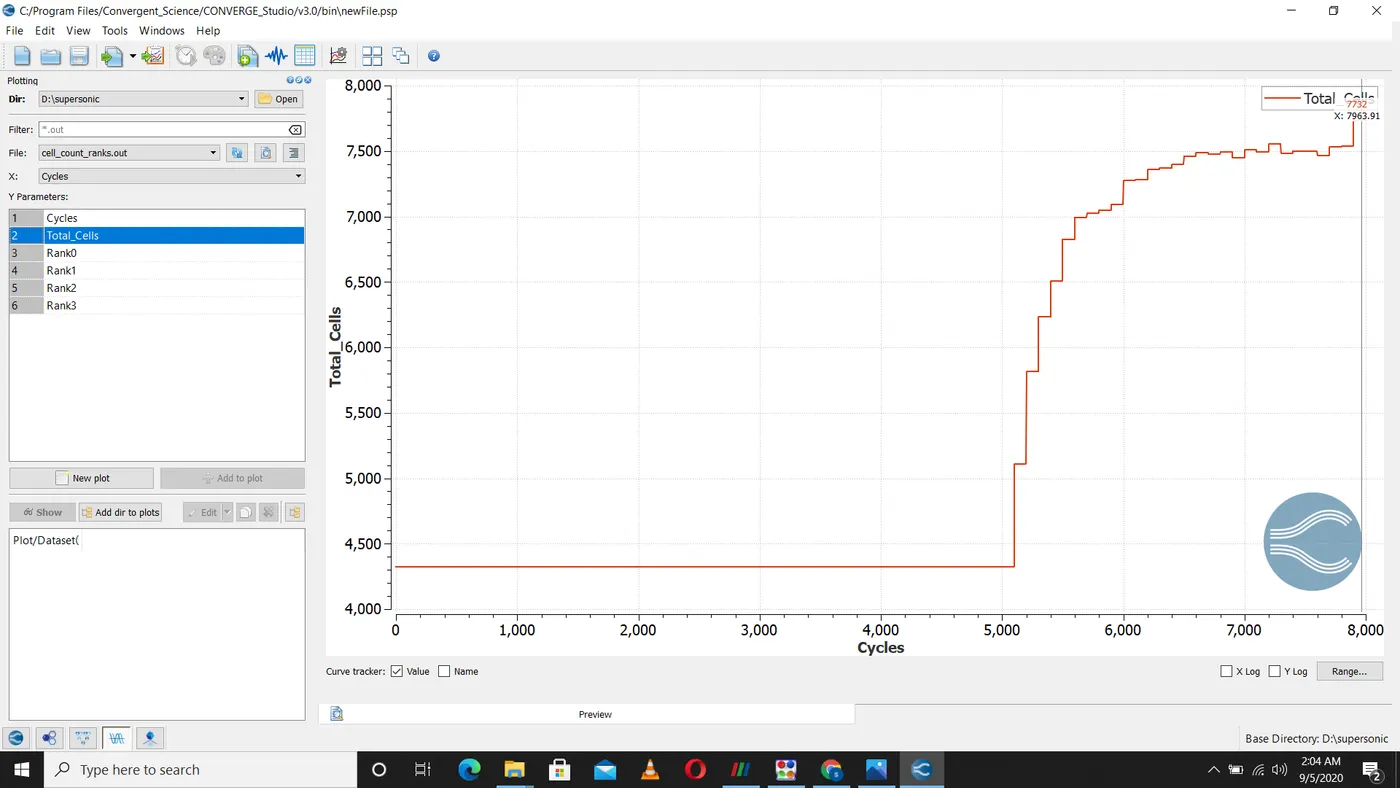
cell count of SGS 0.05
Cell count SGS 0.01
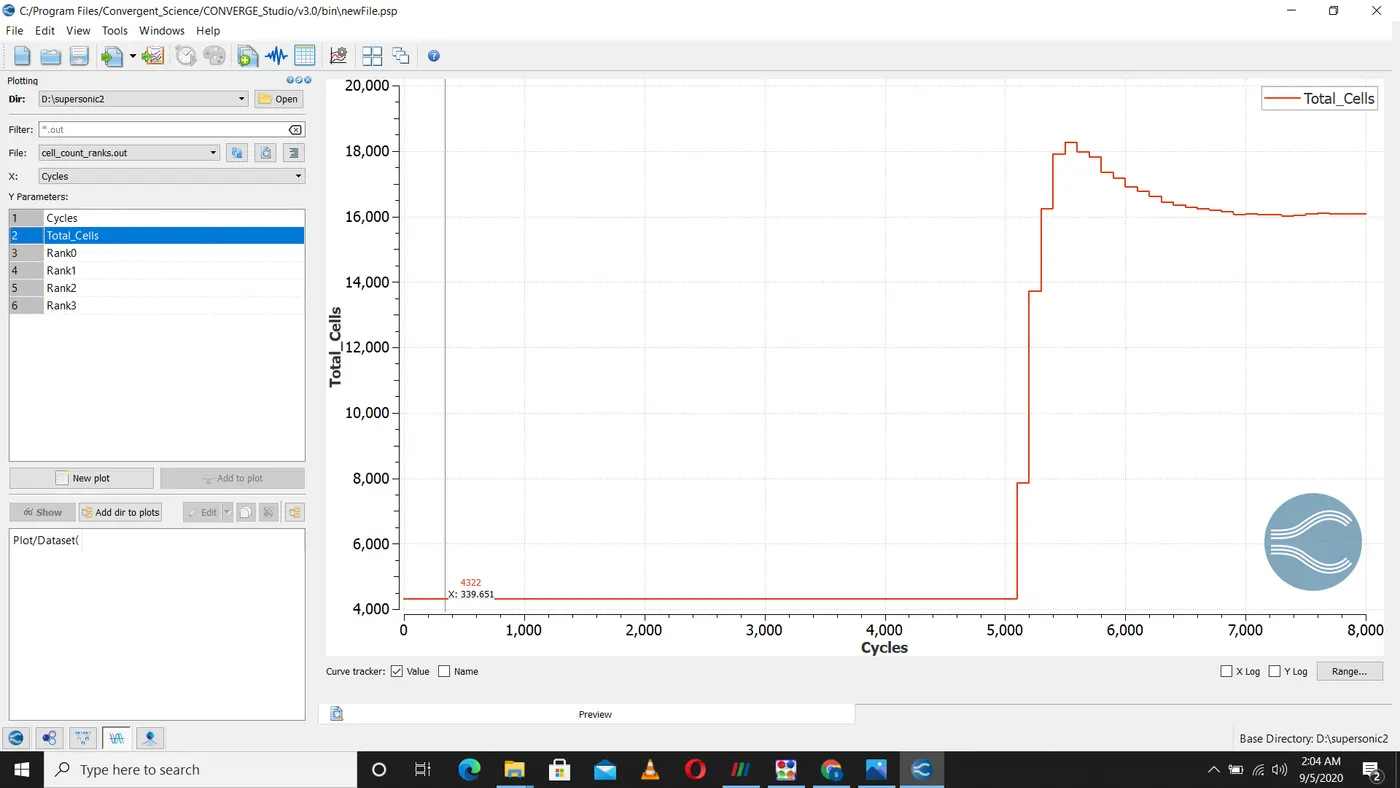
Adaptive Mesh refinement technique is used in shock region where the mesh need to refined locally.The mesh in other region is same as base grid size but in the region where shock occurs most finer mesh size is used, which is used to monitor the curvature in temperature. In this problem temperature based adaptive mesh refinement is used wich means that if the temperature curvature is greater than the sub grid scale of 0.01 or 0.05 than new mesh refinement region will generate .So from the above picture we can say that mesh refinement region is more when in the case of SGS value of 0.01 and also the total cell count is also increased when SGS value is 0.01.