Week 6: Conjugate Heat Transfer Simulation
CONJUGATE HEAT TRANSFER SIMULATION
Introduction : It involves heat transfer both by convection and conduction.This type of heat transfer problem uses interface boundary which involve both fluid and solid region.In this case the solver solves 3D heat transfer conduction equation for solid region and momentum and energy equation for fluid region in order to perform thermal analysis of both solid and fluid region.Most common practical application for conjugate heat transfer are heat transfer from the engine block to the coolant, heat transfer of engine block due to combustion etc.
Case setup:
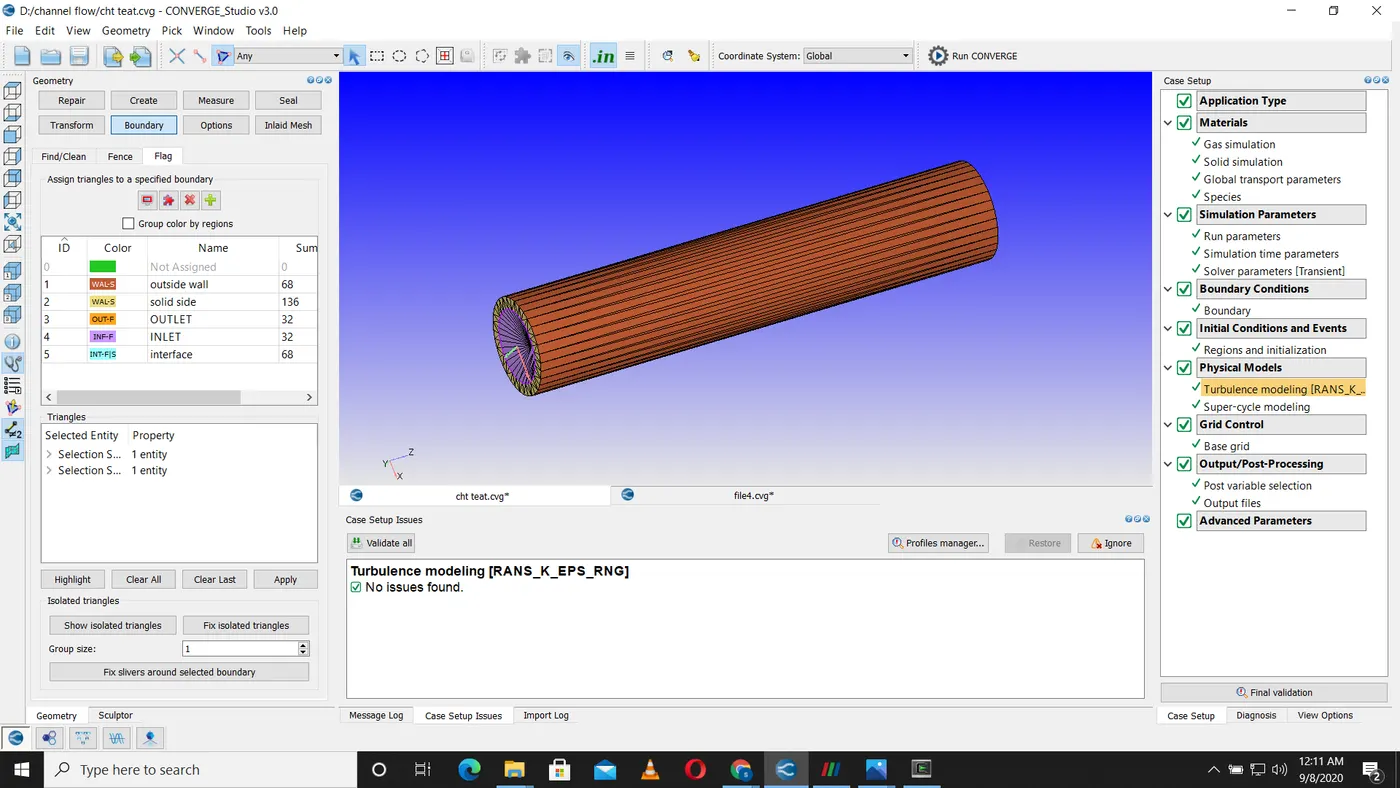
Re = ρvd/μ
2000 = (1.181*v*0.06)/(1.81*〖10〗^(-5) )`
v = 3.56m/s
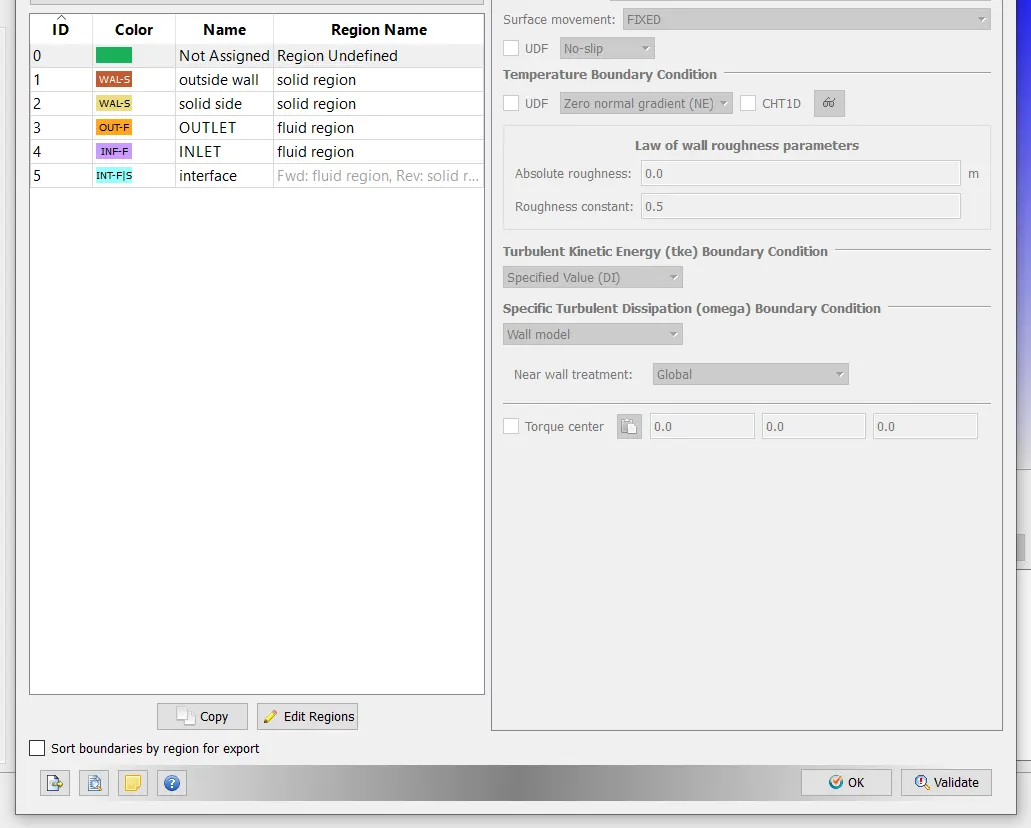
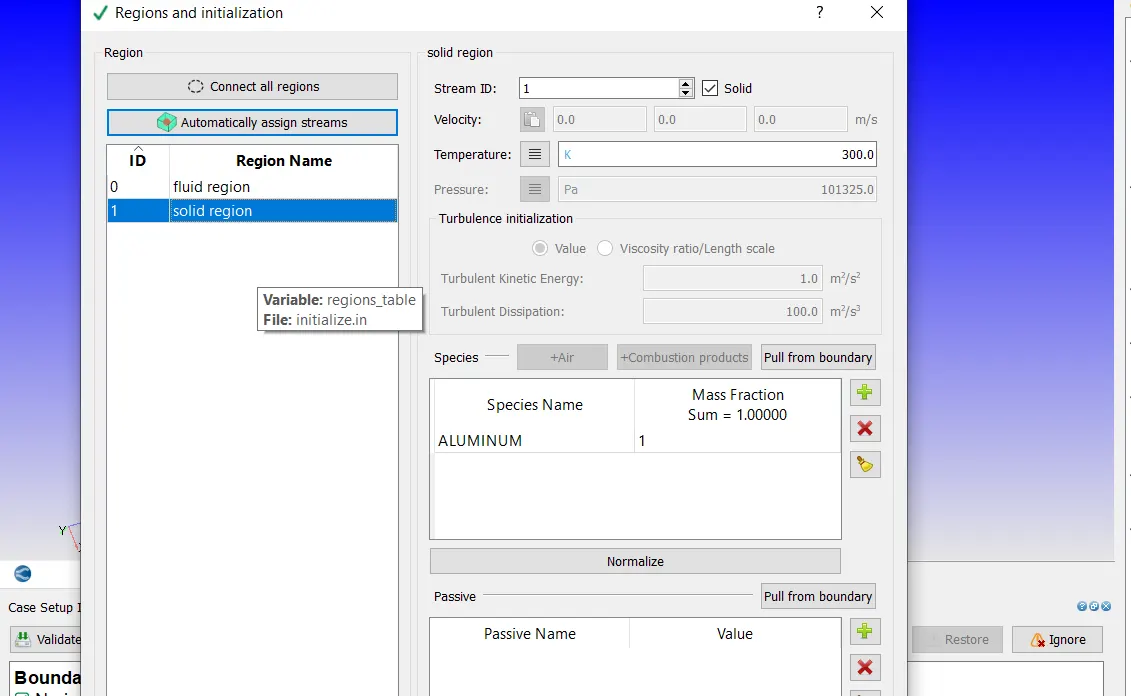
The following grid sizes used in this simulation is given below
1. Base grid = dx = dy =dz = 0.004
2. dx=dy=dz=0.003(case 2)
3.dx=dy=dz=0.002(case 3)
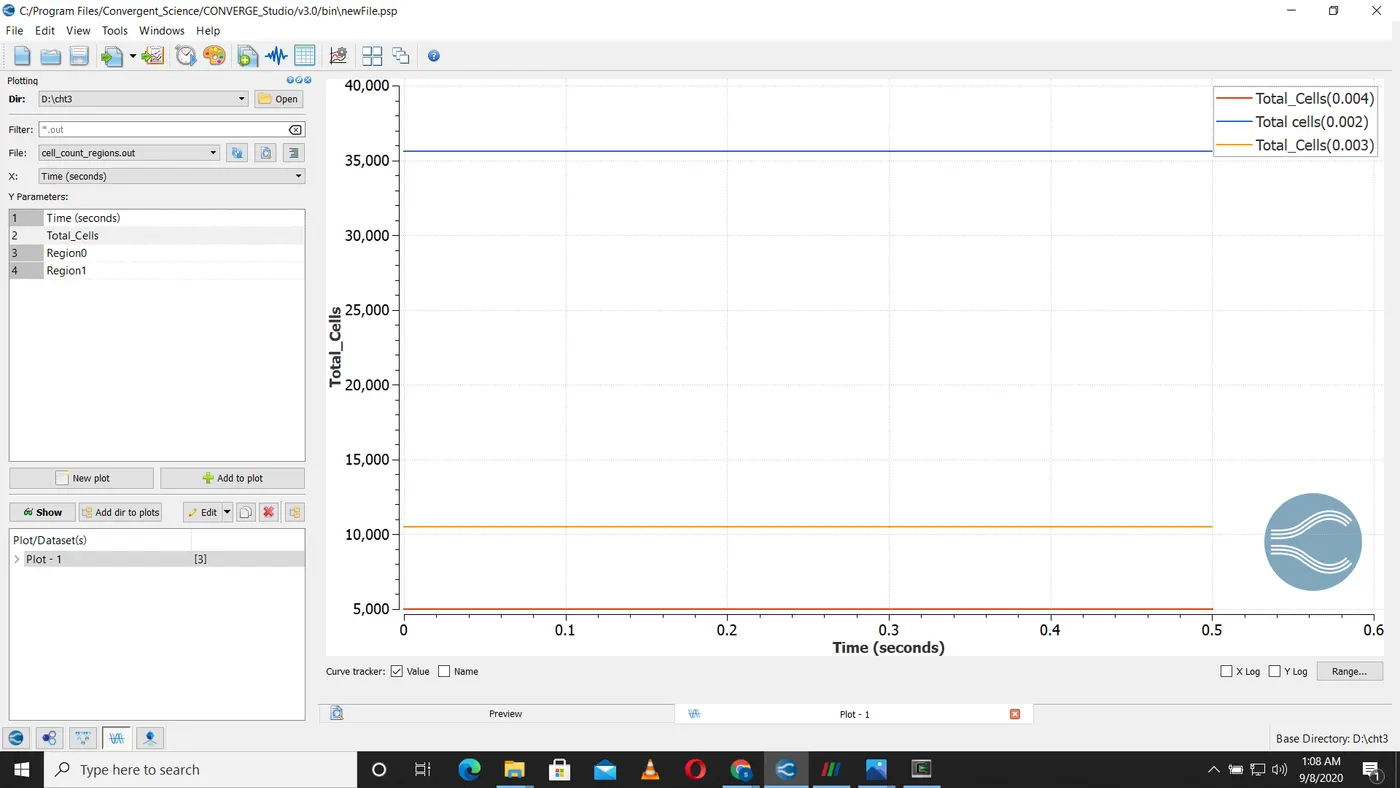
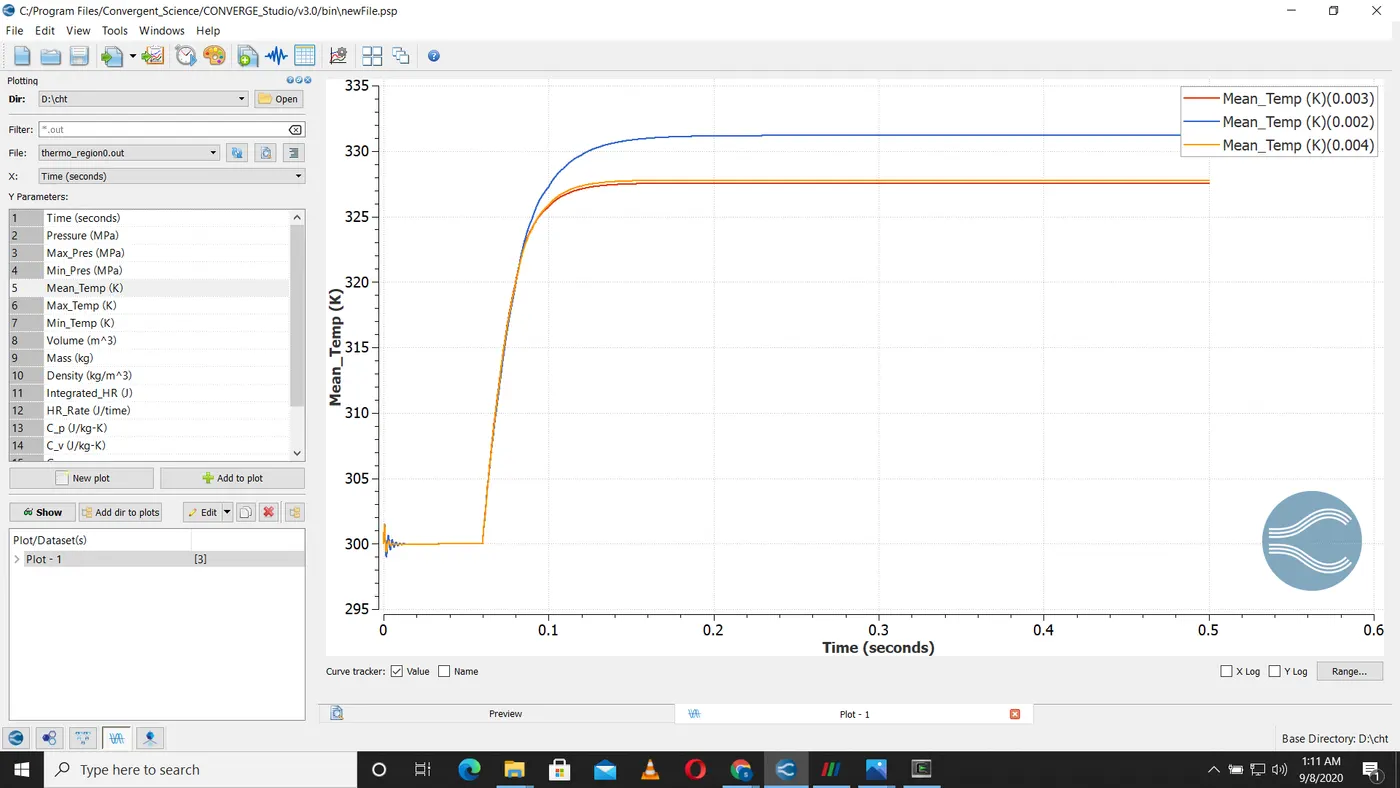
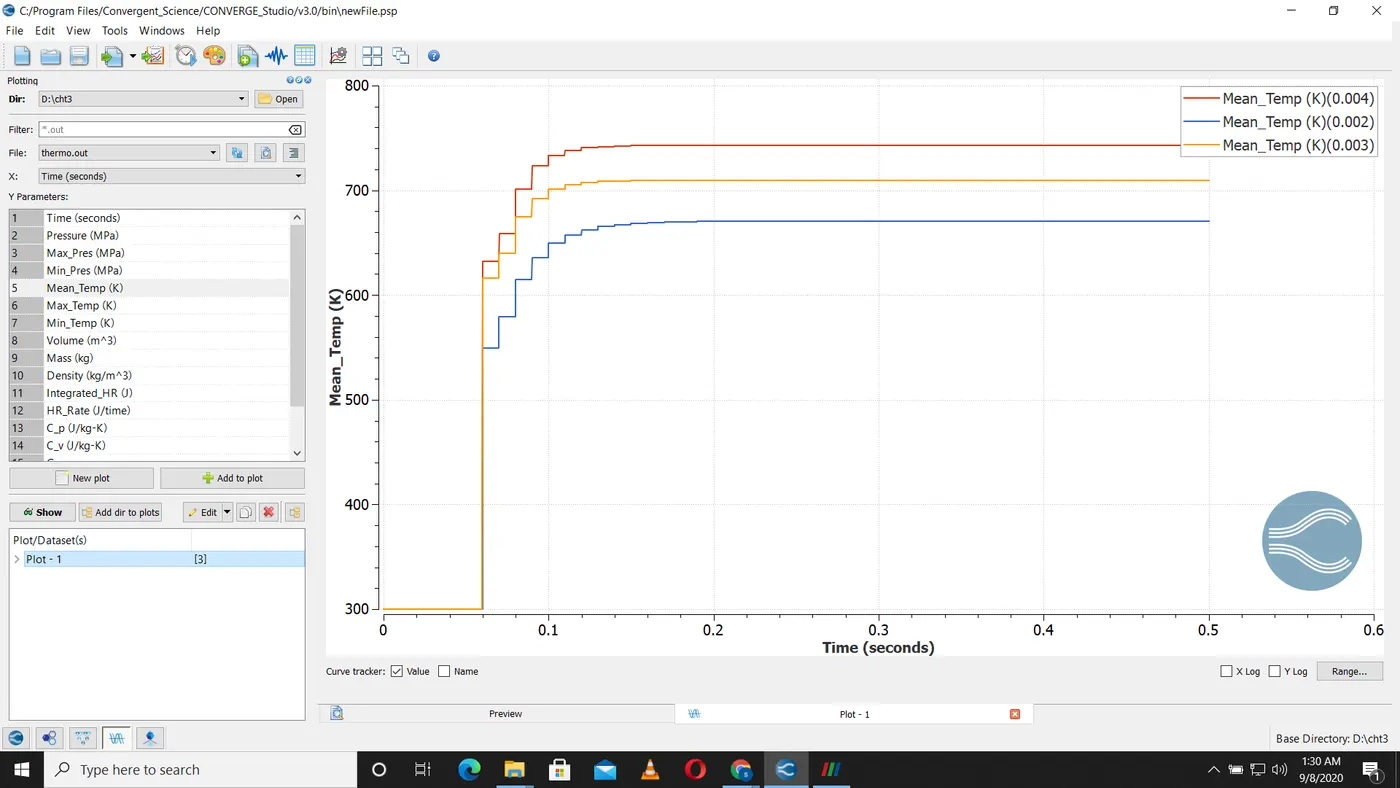
Following contour and plots for different grid sizes are given below
Mean temperature of fluid region:
Mean temperature of solid region:
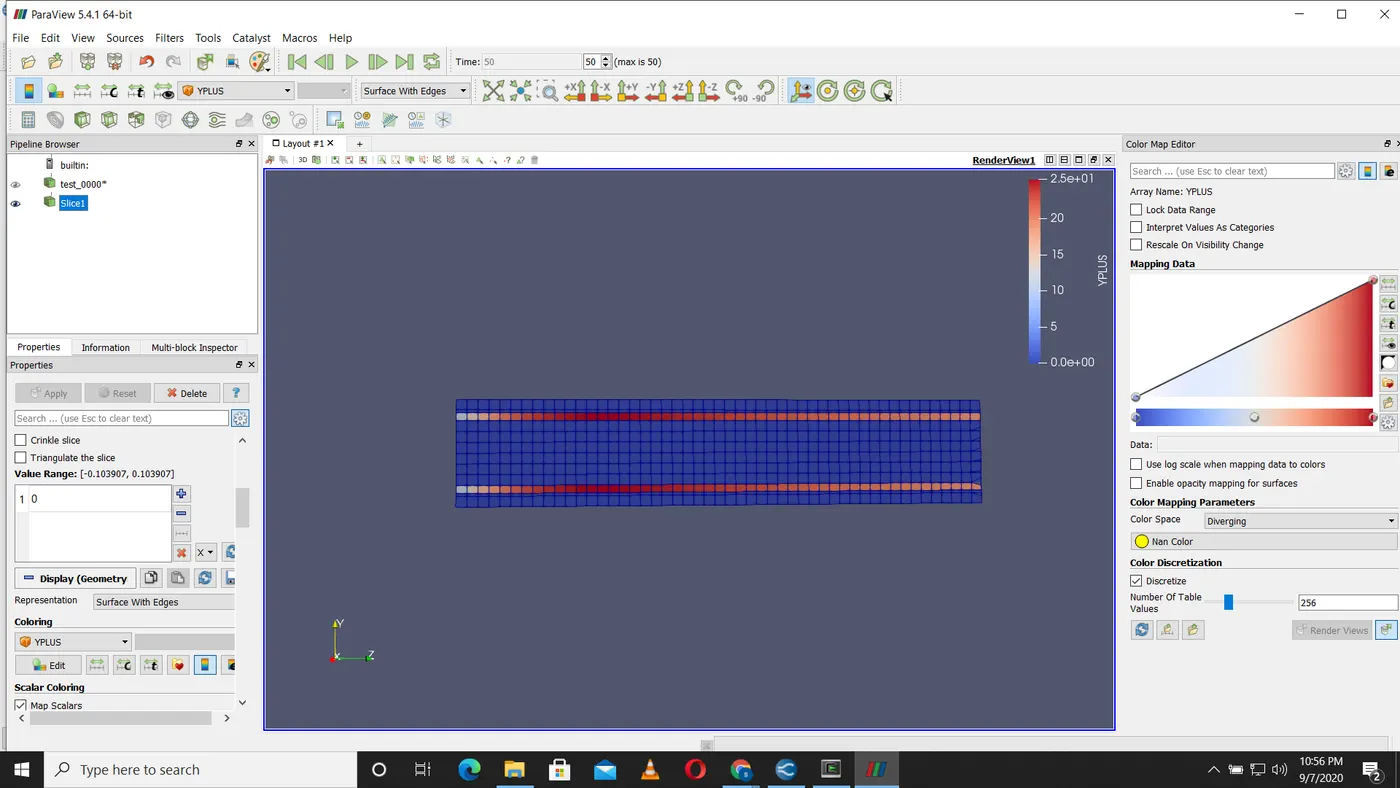
Contour, y+, mesh generation for base grid
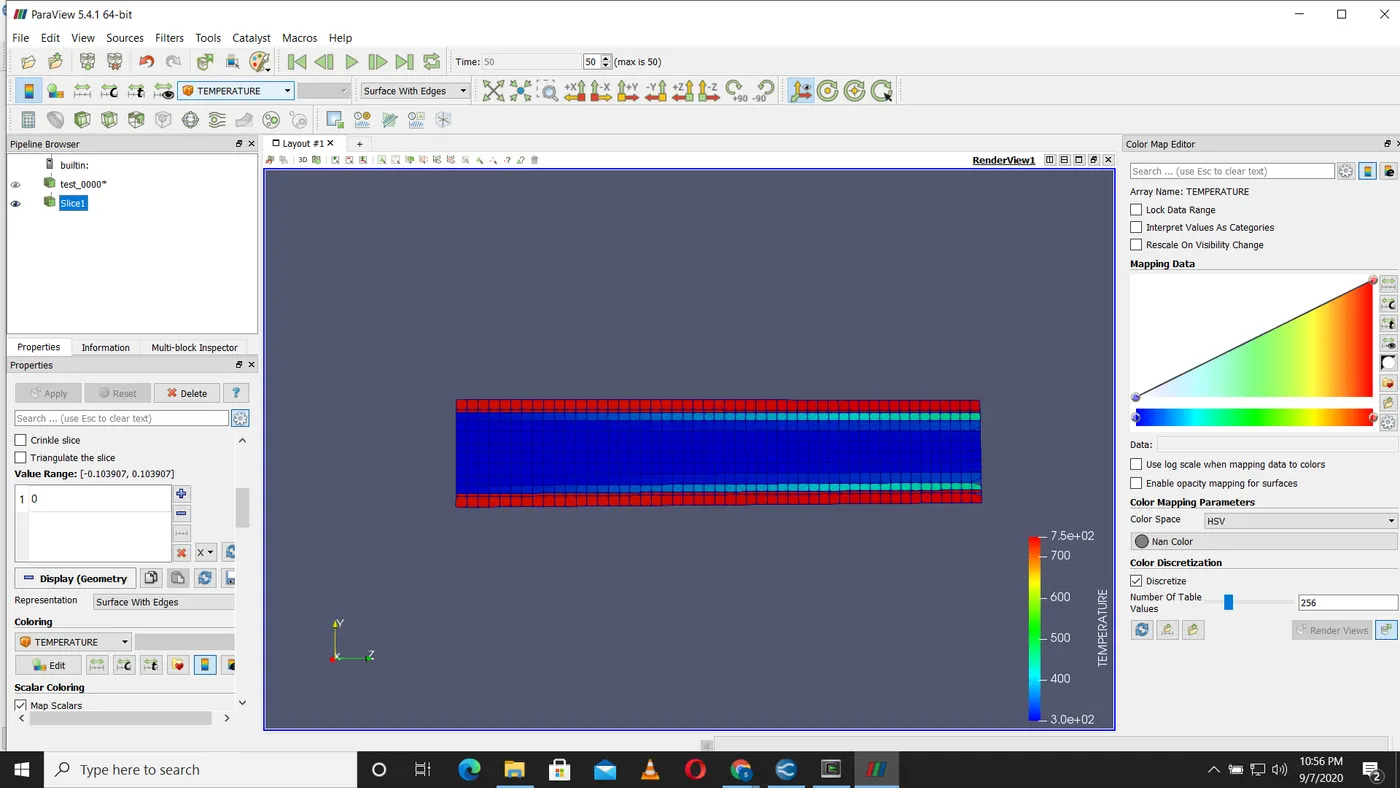
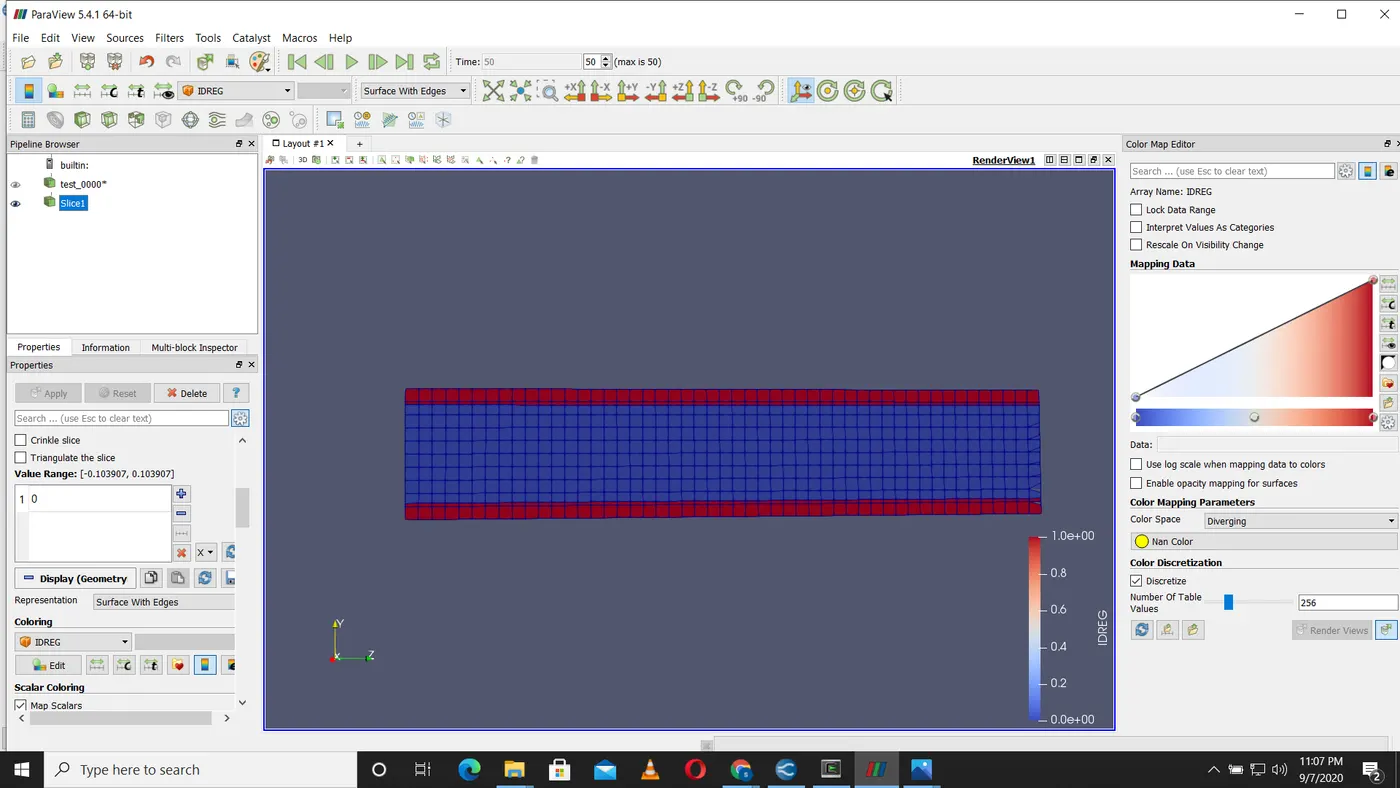
Case 2
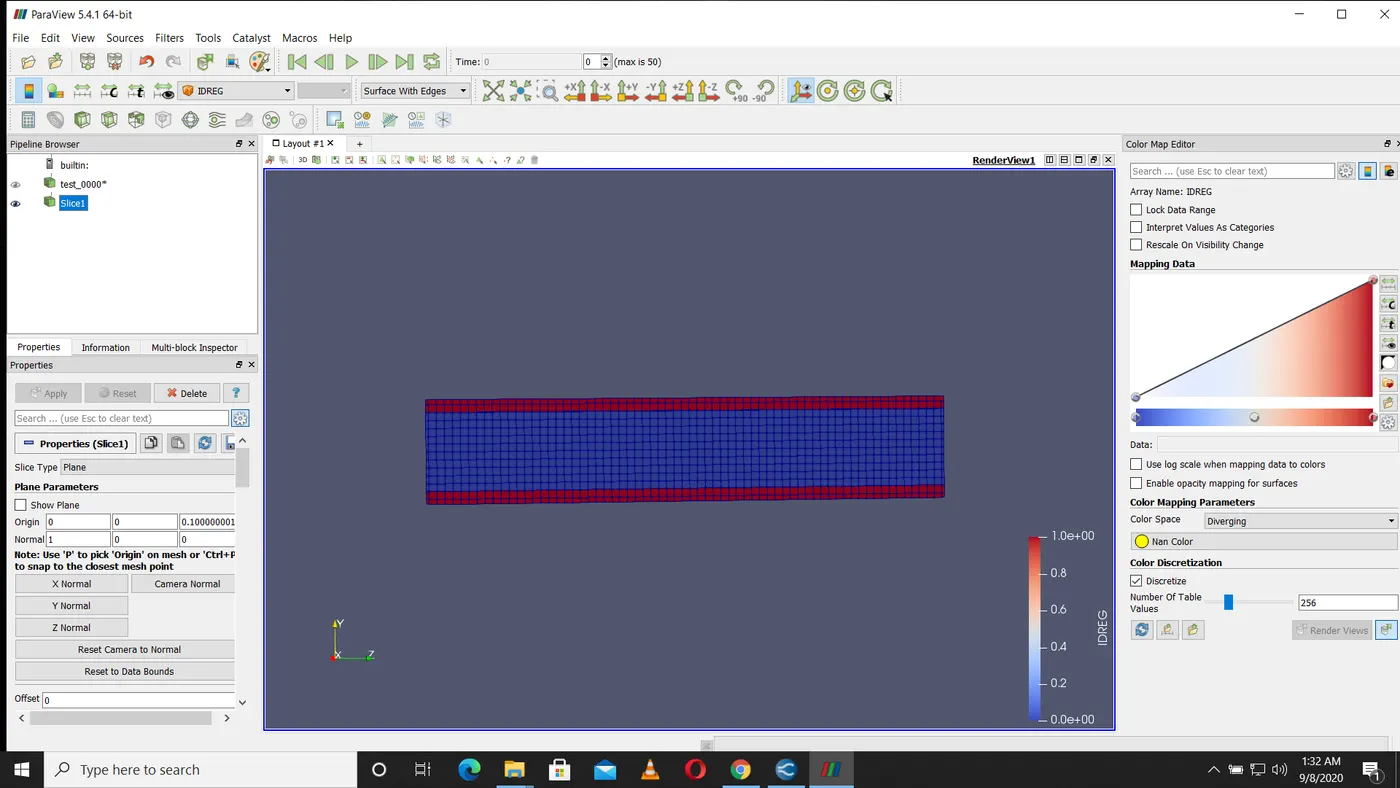
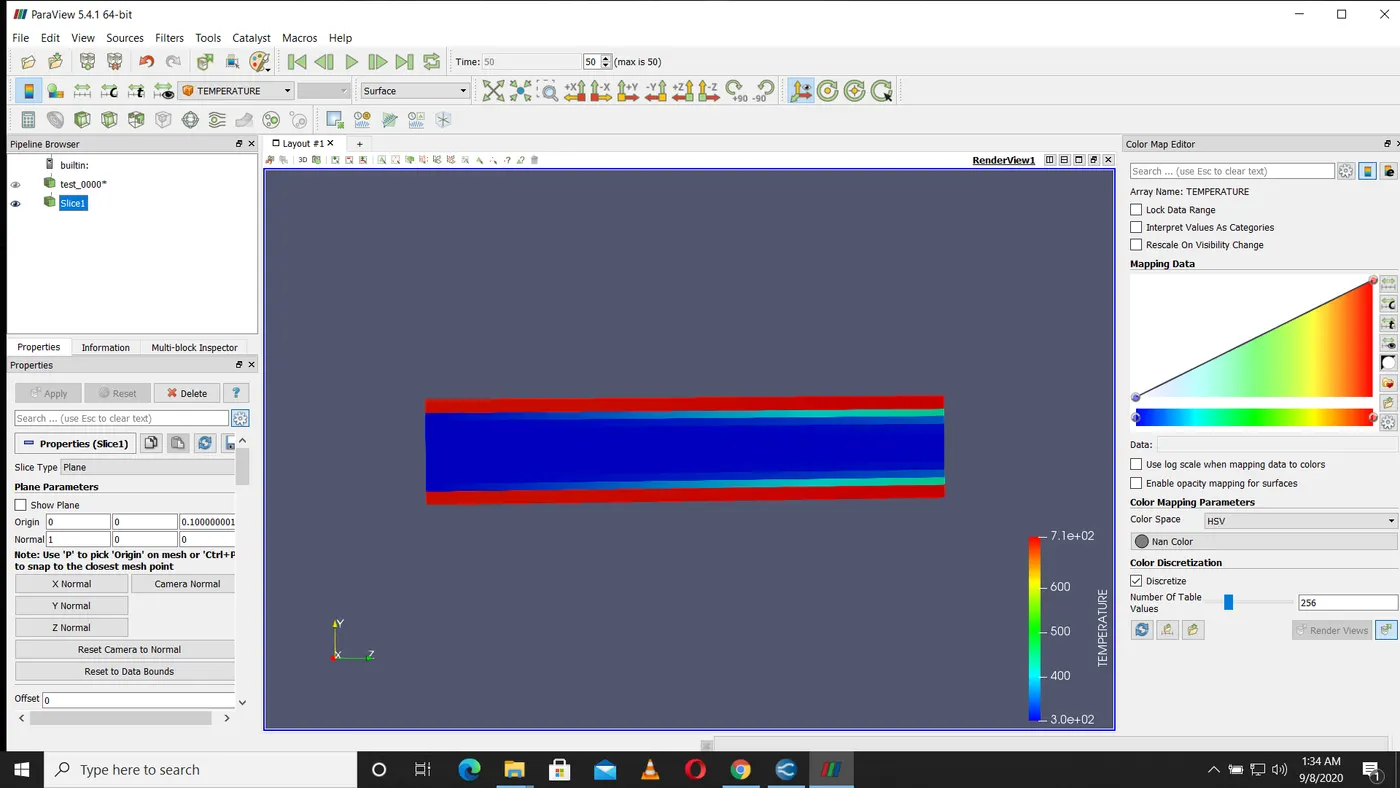
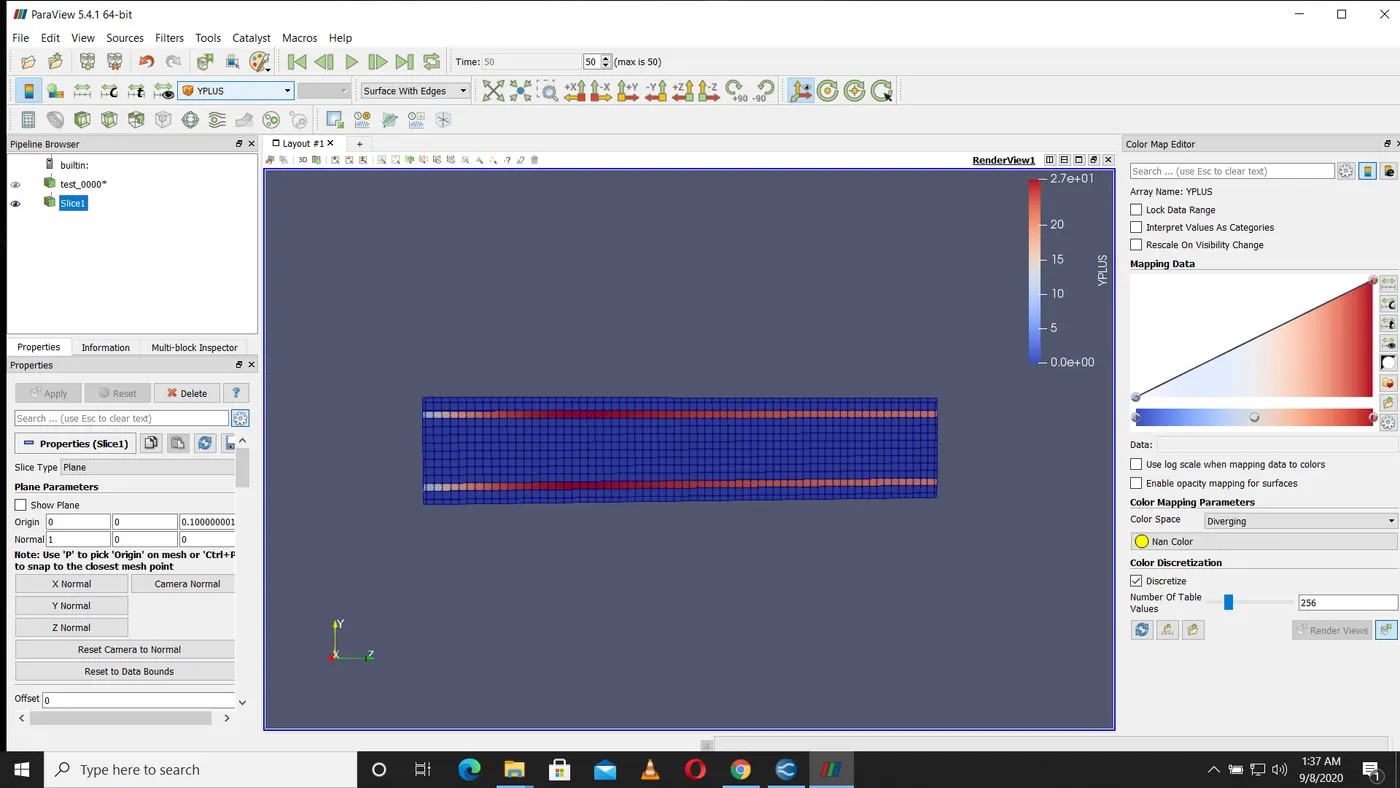
Case 3:
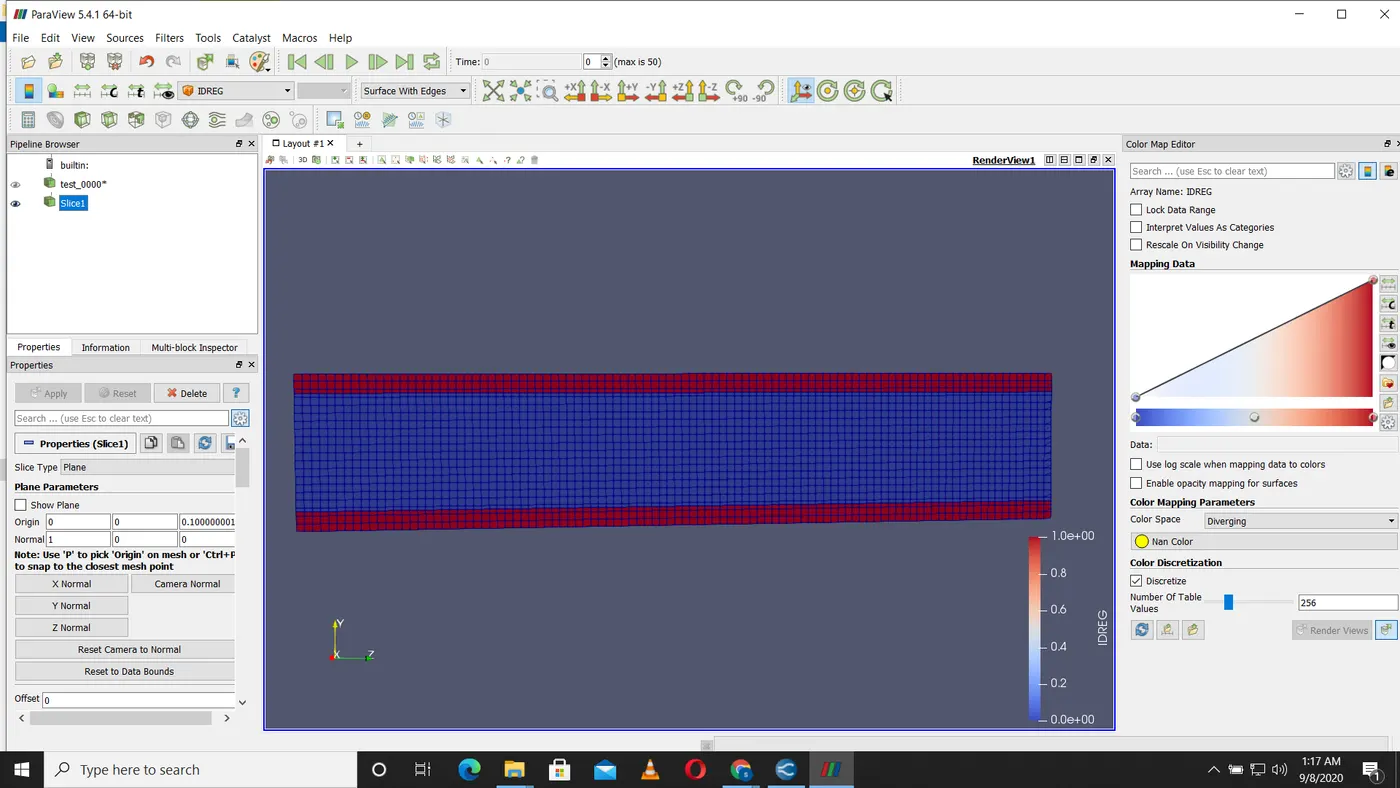
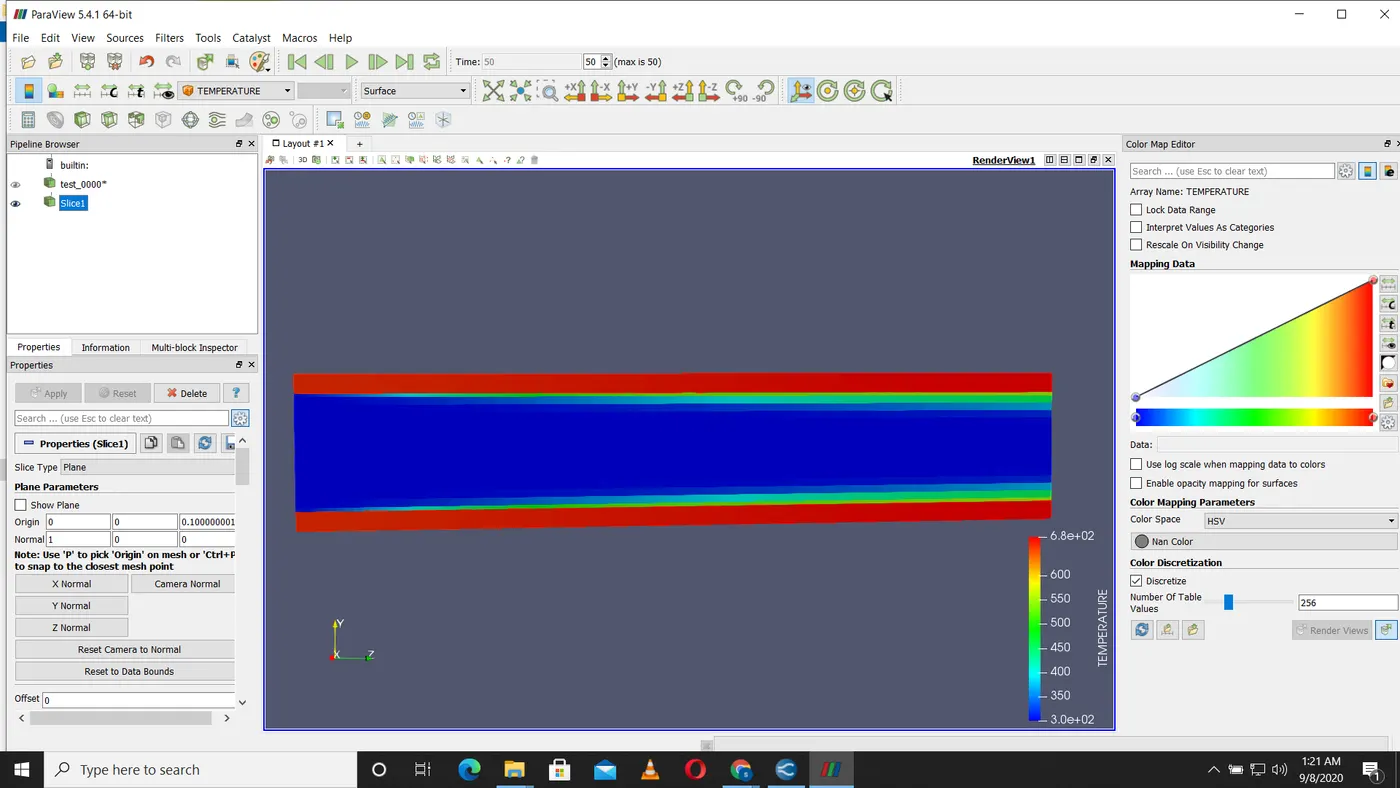
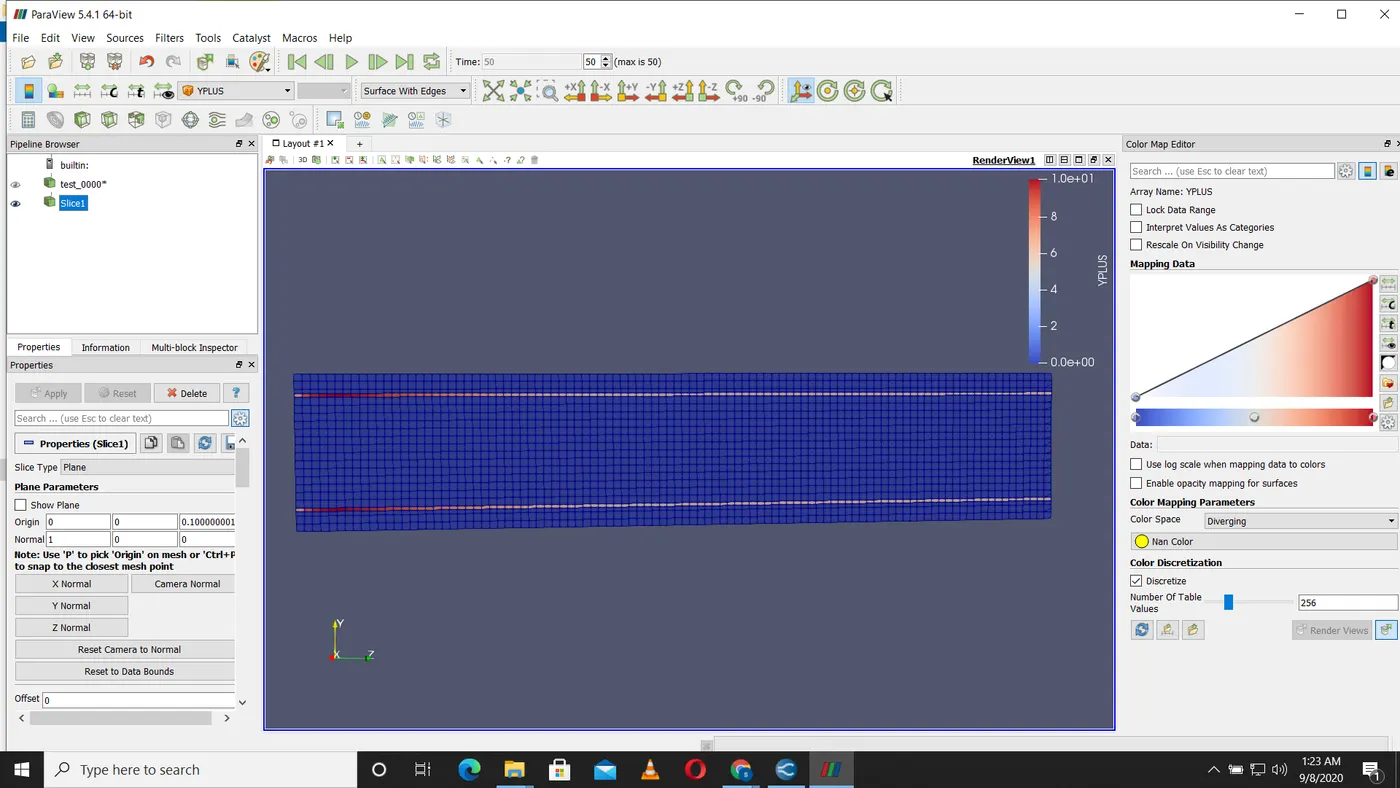
After running the grid depedency test we can finally conclude that the grid which are more finer will give more accurate result than coarse grid.
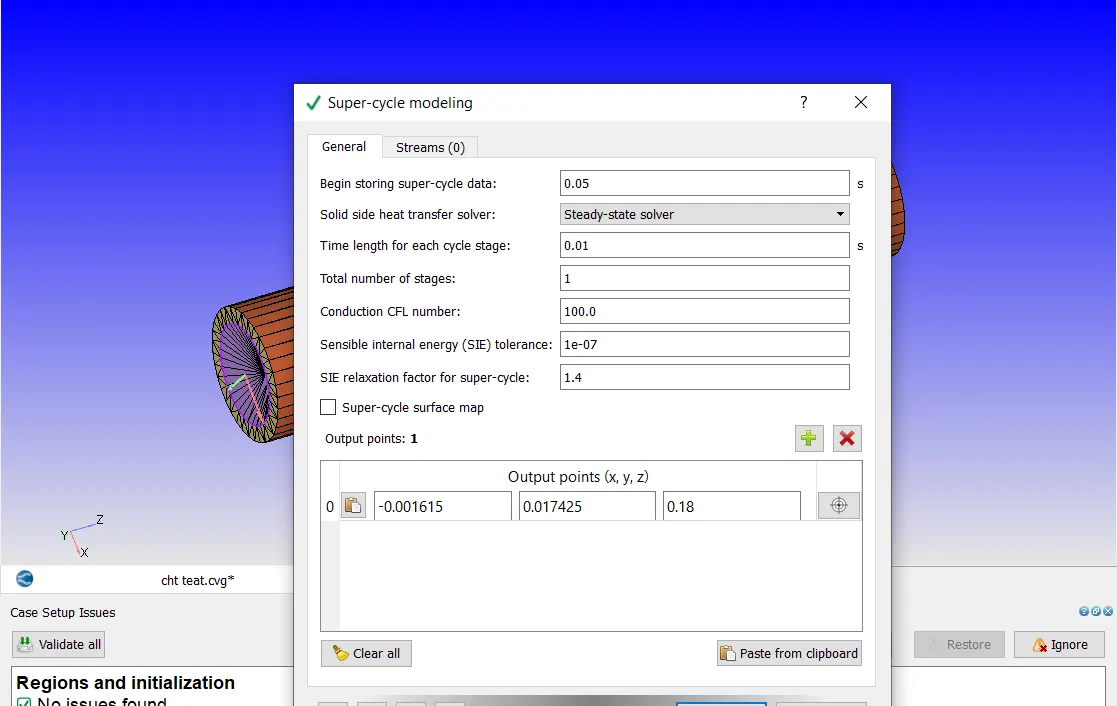
Supercycle - interval(sec) time(sec) cell-count
0.01 940.44 13500
0.03 964.33 13500
0.05 932.33 6200
Supercycling: It is one of the technique used in CHT problem which main purpose is to reduce the computational time.Generally in this case the solver solves transient method to solve both solid and fluid region and then steady state solver is used in solid region to get the convergence at faster rate.
Y+ wall function: These function gives accurate result near the wall even if the grid is coarse.These Y+ function is generally used in turbulent region to get the best result near the wall and in laminar region due to no slip boundary conditions the flow is easily resolved without caring whether the grid is coarse or fine.The y+ value can be used as a marker based on which we can decide on the base grid size and make a decision based on the computing power as to whether the grid needs to be refined further or coarsened.