Week 8 Challenge
AIM:
- Build the ULTRACAPACITOR model in MATLAB Simulink.
- Load the UC parameter file. The model output should give, current, SOC and Voltage as output
About ULTRACAPACITOR:
An ultracapacitor, also known as a supercapacitor, or electrochemical capacitor, is a device for storing electrical energy which is growing rapidly in popularity. The design and mechanism of operation is somewhere between an ordinary capacitor and a battery, which opens up some interesting and valuable applications.
Like a battery, a single ultracapacitor cell consists of a positive and negative electrode, separated by an electrolyte. However, ultracapacitors store energy electrostatically, like a regular capacitor, not chemically like a battery - there is a dielectric separator dividing the electrolyte, also like a capacitor.
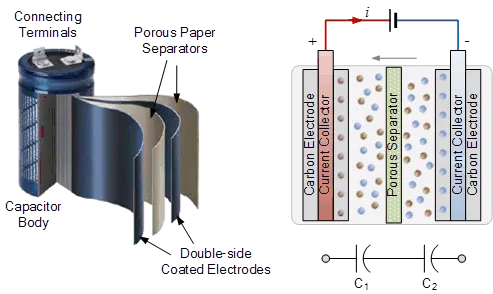
The small separation between electrodes permitted by this structure lead to much higher energy storage density than a normal capacitor. Whilst an ultracapacitor stores less energy than an equivalently sized battery, it can release it much quicker, as the discharge is not dependent on a chemical reaction taking place.
Because no physical or chemical changes occur when charge is stored, ultracapacitors can also be used many times over without degradation.
STEPS TO CONSTRUCT UC MODEL:
Three equations in UC model are defined first which gives us SoC, current and OCV.
This are the three parameters which influences UC.
- OCV defines the SoC of Ultracapacitor.
- Max Voltage or Voltage is directly proportional to the charge stored in the battery.
- Amount of charge is directly proportional to the current that can flow in the circuit.

Where
- eta is the Coulomb efficiency.
- Q is the electric quantity or charge on UC.
- I is the current.
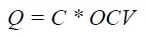
- Q depends on capacitance which is the charge storage capacity measured in measured in Farads.
The OCV is a measure of the electric field between plates.
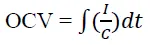
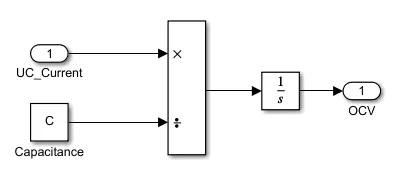
- Capacitance and OCV gives 'Q'
- The integration of current over 'C' gives 'OCV'.
- In UC model calculation for current and SoC are done as said below:
- Firstly the current consumed is calculated which is fed into a SoC calcultaion block.
- The SoC is then calculated based on the amount of current drawn and pushed back into the UC.
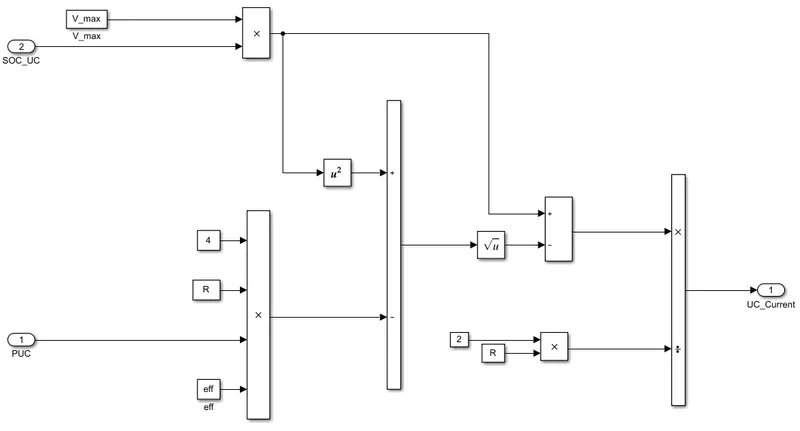
Hence fomula for current is given as:

Where
- R is the lumped resistance
- Vmax is the max. voltage
- eta is the efficiency during the charge-discharge cycle.
- PUC is the power demand which is to supplied by UC and it is the first input in this model which basically comes from Energy management systems.
As per the equation discussed above the model is constructed and its shown below
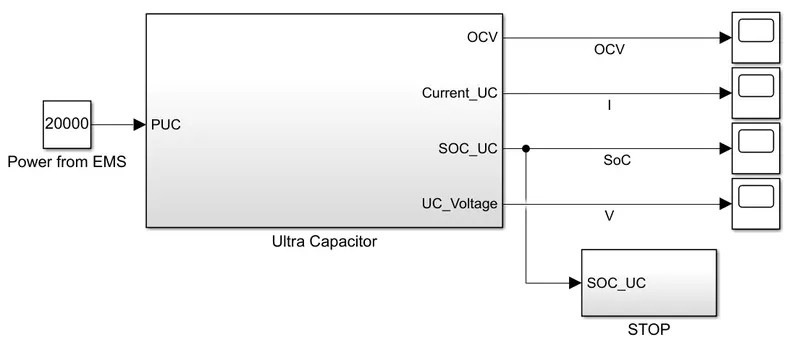
Opening it we get to see the folowing blocks:
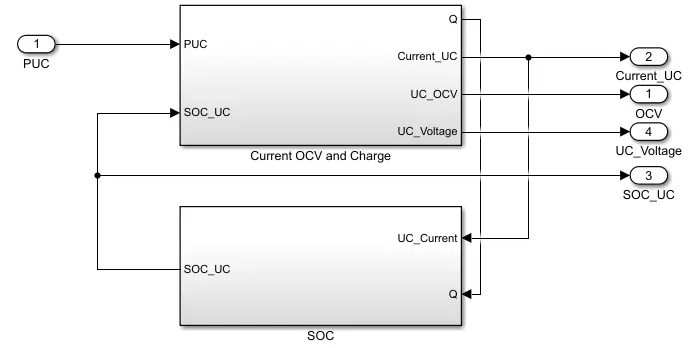
We will see the inside of SoC and Current, OCV and charge block in the WORKING OF MODEL section.
WORKING OF MODEL
1. PUC is our input here which is nothing but the Power demand for the UC. 20K watts is the value. In a complete Fuel cell or lectric vehicle model it comes from the EMS (Energy management system) block. This input goes inside the Current calculation block. With that inside of Current calculation block is shown.
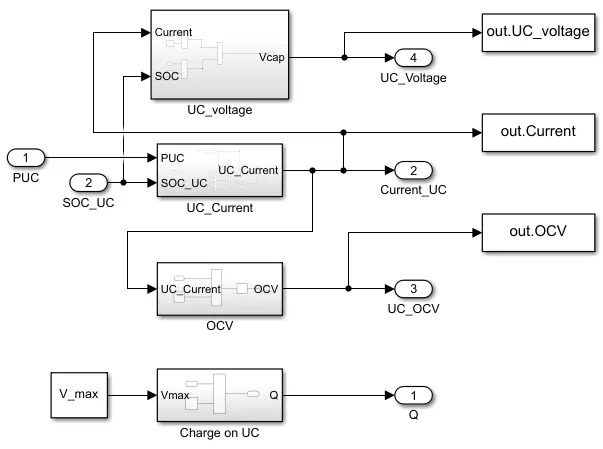
Implementation of Current formula stated above.
2. As you can we need SoC in current calculation, so SoC block does that and its implementation is shown below:

If you see current and SoC ccalculation blocks are interconnected then both take each others quantity in there value calculation. The more the current is drawn the lower the SoC is going to get. Initial SoC has been set to 1 which basically means that we are going to draining the Ultracapacitor.
3. Apart from current the second input to the SoC block is charge Q. We know the formula to calculate Q hence we only need to implement that here:
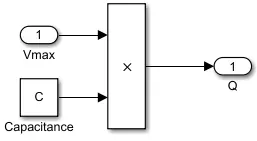
4. With the help of calculated current we can calculate the OCV. The formula was stated above and its implementaton is shown below:
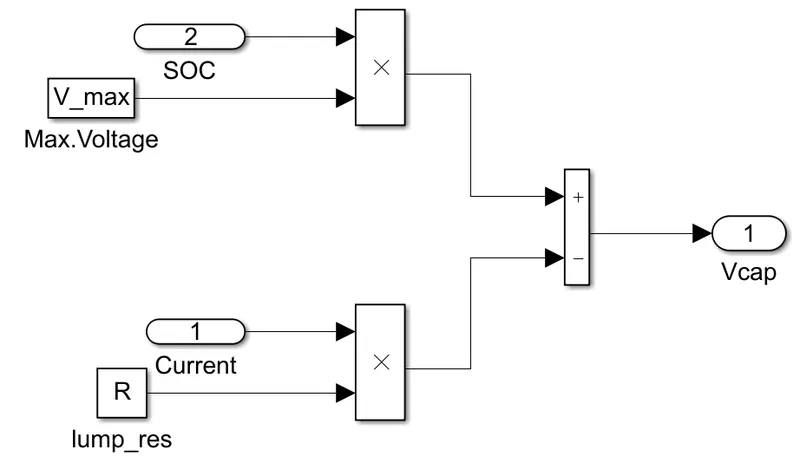
5. To find the voltage of the UC we need current and SoC as our input which helps us to find UC voltage. The formula for it is shown in Simulink representation:
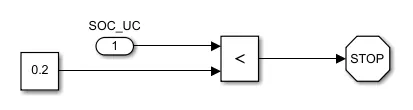
6. As SoC gets calculated we are making simulation end if SoC gets down to 0.2 or 20%. The stop and less than block helps us to achieve that.
Parameters value:
- C=100
- R=0.064
- eff=0.9
- SoC initial=1
- V_max=300
RESULTS
Current:
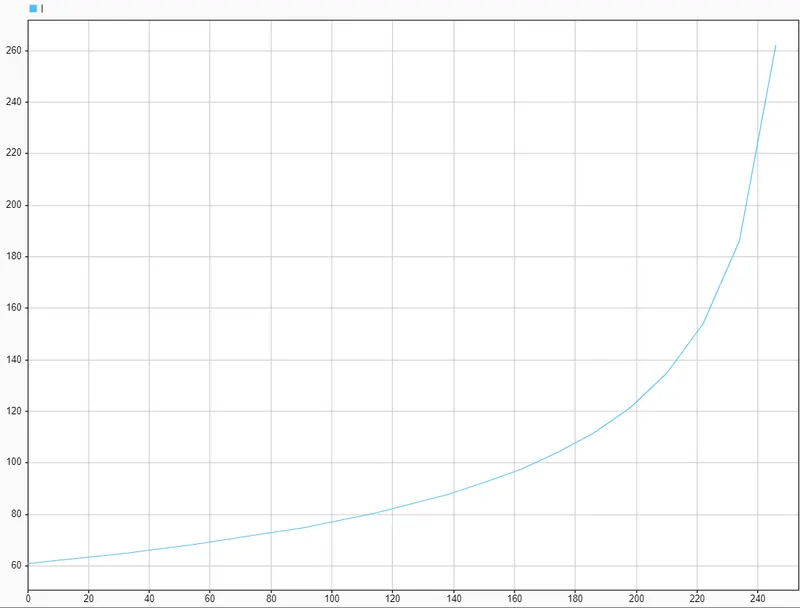
The current depends upon the various parameter. Its seems to rise exponentially once its reaches 50 A of values. 260 A is the highest value that capacitor supplied.
Voltage
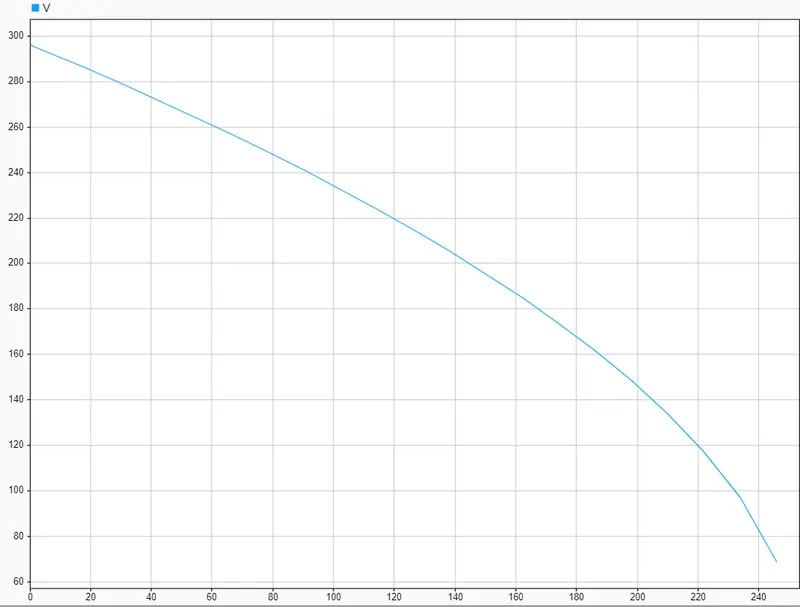
As we know our max voltage was 300 V. It seems to be decreasing as more current is demanded from UC. At the end of SoC limit that meand @20% the voltage value is around 70 V.
SoC
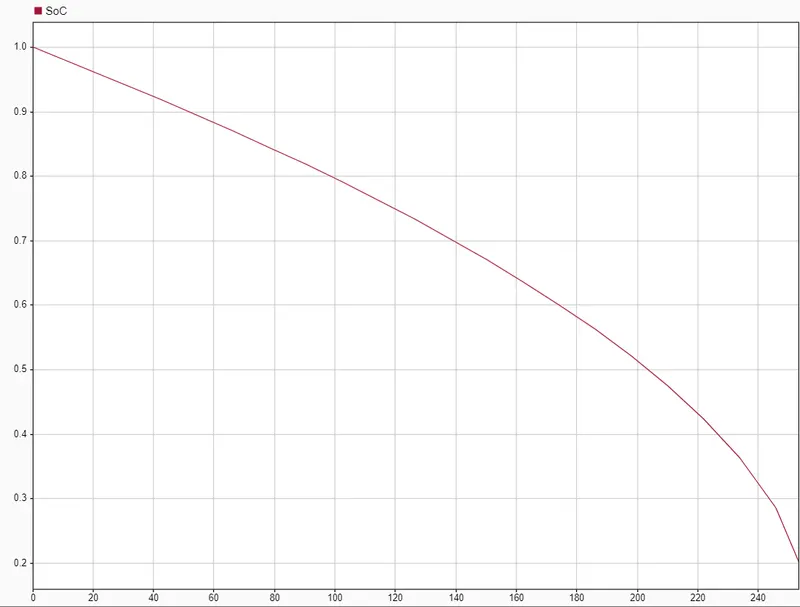
The SoC looks to follow similar pattern as that of Voltage. It is because voltage deifnes the SoC of Ultracapacitor. The reason why the model ran for almost 260 seconds is because we have choosen high value of Capacitance 'C'. Like capacitance we have loaded the parameters using .mat file.