Week 8 - Challenge 6 - Core & Cavity Design
Drawing type :3D
Core and cavity design for switch bezel with Draft analysis
Objective :
The main objective of this challenge is to create a core and cavity for switch bezel with given Class A surface by the tooling axis and Draft Analysis to the class A and final Class C of the switch bezel.
Tooling axis:
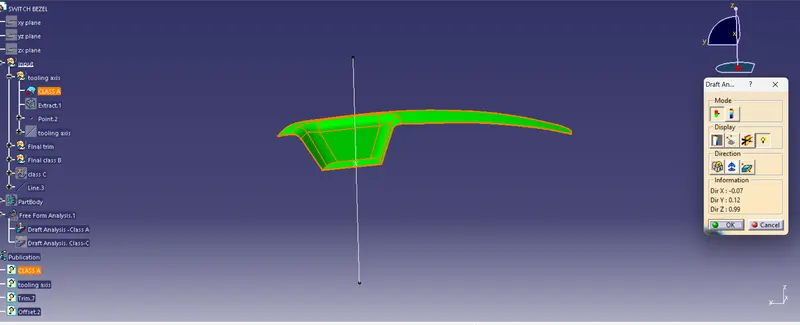
We should keenly observe and study the Class A surface to create the tooling axis for the component,for the above given switch bezel Z axis is the best suitable tooling axis so i tried to create with x,y,z method i found that the Draft analysis is not clear so i did normal to surface method and it clear the Draft analysis.
Class A surface:
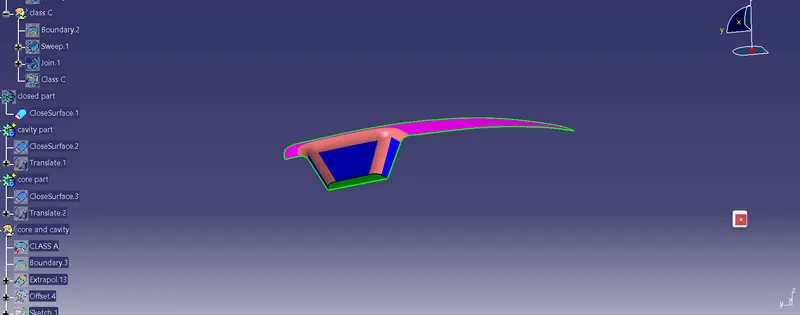
Class A Draft analysis:
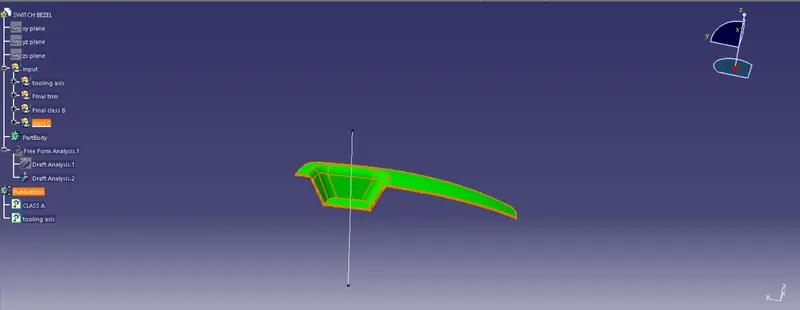
Class C Draft analysis:
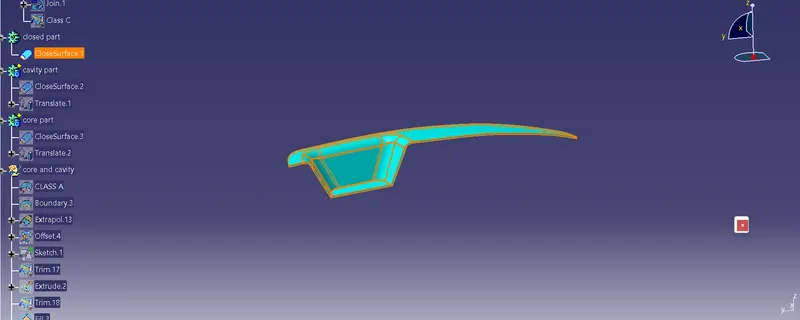
Closed partbody:
Closed cavity part:
- A mold is a hollow form typically made from stainless steel that has plastic injected into it to manufacture a plastic part.
- The plastic is inserted into the mold cavity,which is a hole in the mold shaped like the desired part.
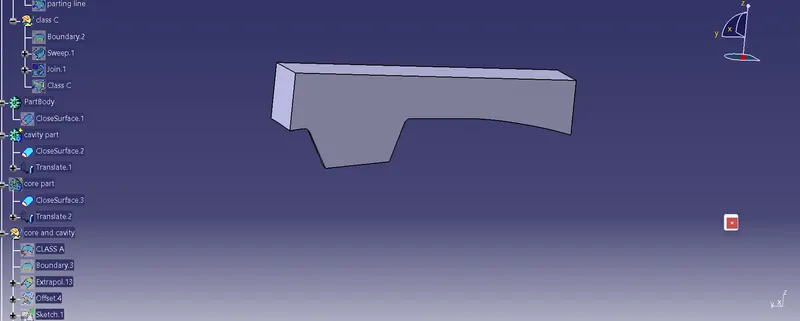
Closed core part:
- Core- A portion of the mold that goes inside a cavity to form the interior of a hollow part.
- Core&cavity-A term used to describe a mold created by mating A side and B side mold halfes.
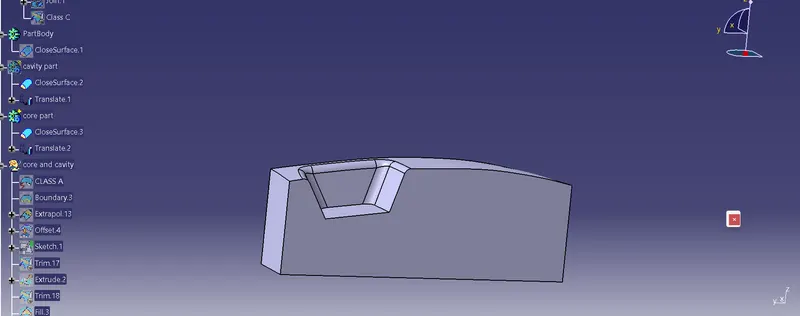
Translate mode:
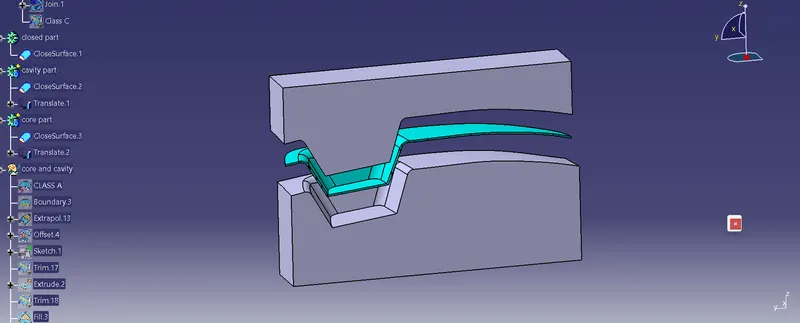
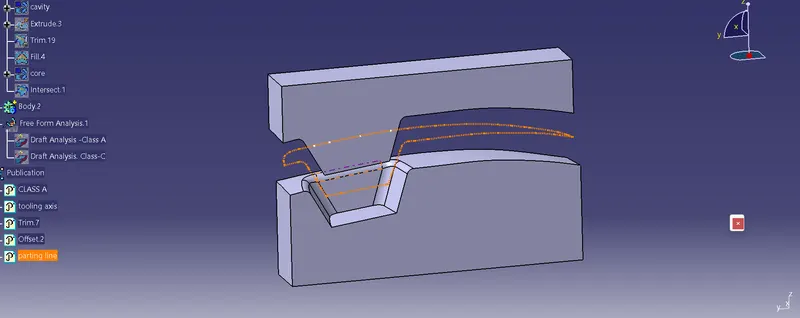
Parting surface:
Generally injection mold has two major components: the movable half and the fixed half,during the injection molding process,thses two halfes are pressed tightly from a sealed hollow to avoide the melt flow leakage and maintain certain holding pressure,the pressed surafce are called parting surafce,usually parting surface are the biggest projection outline of the part.
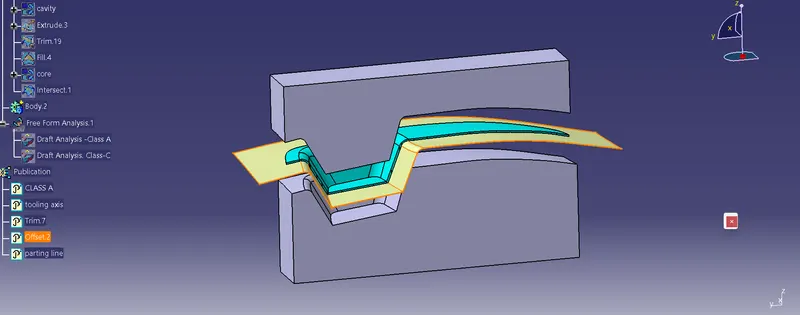
Parting line:
- Parting line is an inevitable part of injection molded products.
- It is the line of separation between where two half of a mold meet.
- It mainifests it self on injection molded parts as a line that runs the entire perimeter of the part.
- In most parts,it is just a line that runs straight down the middle.
Learning outcome:
1.How to form the tooling axis for the switch bezel.
2.To capture Class B and Class C properly.
3.To check the feasibility of the component.