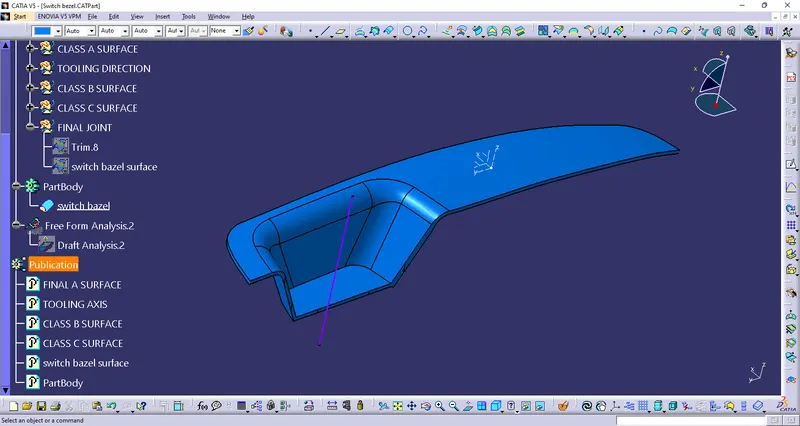
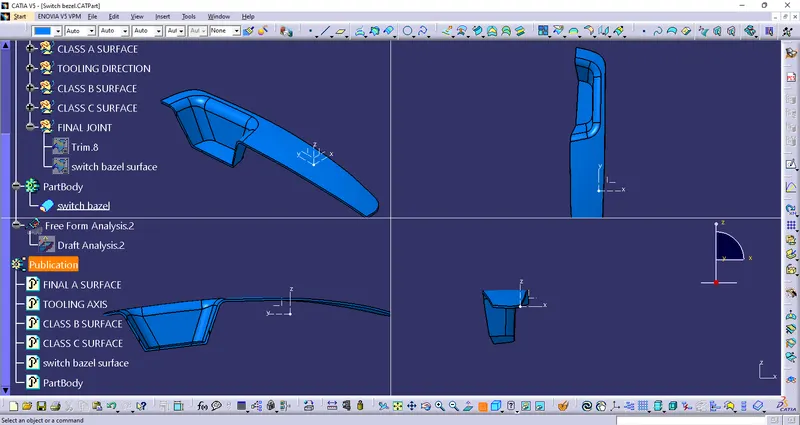
Week 8 - Challenge 2 - Switch Bezel Design
Week 8 - Challenge 2 - Switch Bezel Design
OBJECTIVE-
Create the Switch Bezel Plastic component through the given Class-A surface. To begin with, the tooling axis for the given Class-A Surface should be created meeting the requirements of the draft angle and at the end perform the Draft analysis on the model.
CLASS A SURFACE:-
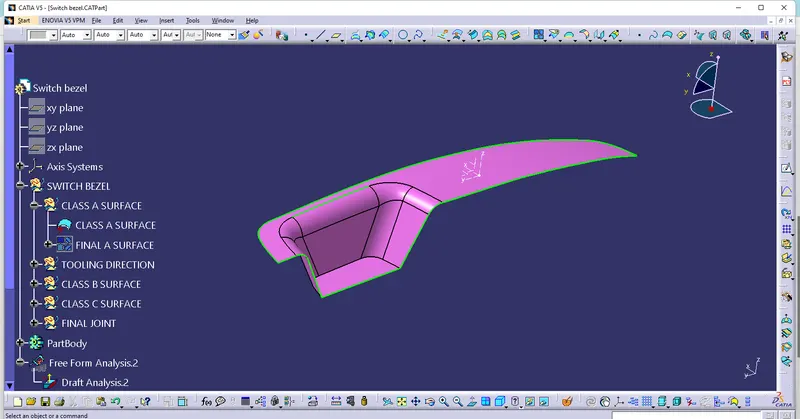
Now we will check the connectivity of the Class A Surface Ensure that there is no gap between the component, using join command.We can visually check it or by clicking boundary command.
FINAL CLASS A SURFACE-
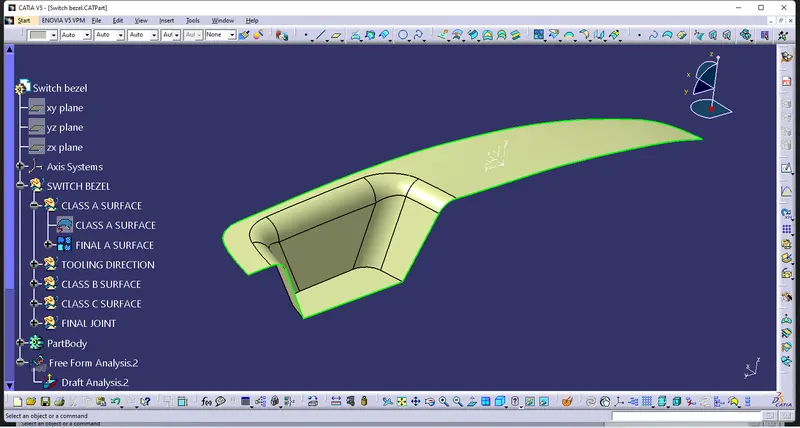
TOOLING AXIS-
Now find the tooling axis of the component. The tooling axis is nothing but the mould opens or cavity opens. Check visaully which is the best possible tooling axis.
The Tooling Direction is basically the direction that the mold pulls apart. The mold is built in two separate pieces, basically. You have a Cavity side and you have the Core side. The Core pulls apart from the Cavity and that's the Dyeline or the Tooling Direction.
BISECTING METHOD:-
This method is used for the generation of the tooling axis for that purpose first we need to decide the direction of molding and then we create one dummy tooling axis for the reference to the purpose.
In this method, we select the surfaces which can create problems and take intersections in the x and y-direction. By using these curves we draw two lines and then draw a bisecting line from these two lines in the x-direction and y-direction.
If it is done in x-direction then it is called a tooling axis clearing x-direction and if in y then tooling axis clearing y-direction.
After completing this we need to draw a final line bisecting this two tooling axis in the X and Y directions to get our final output.
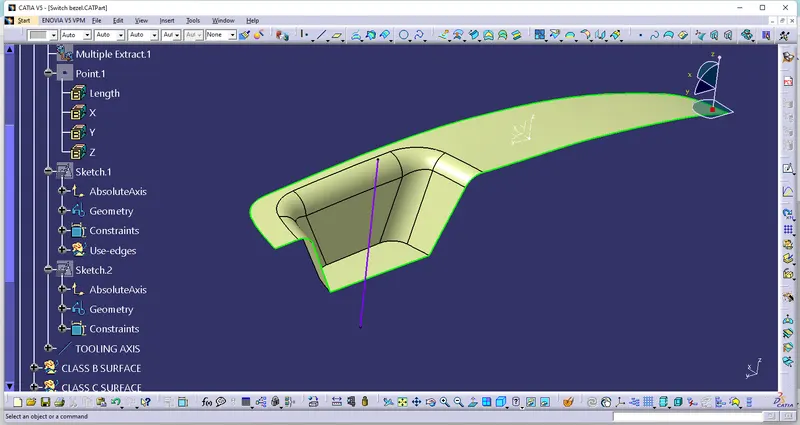
DRAFT ANALYSIS OF CLASS A-
Draft analysis-
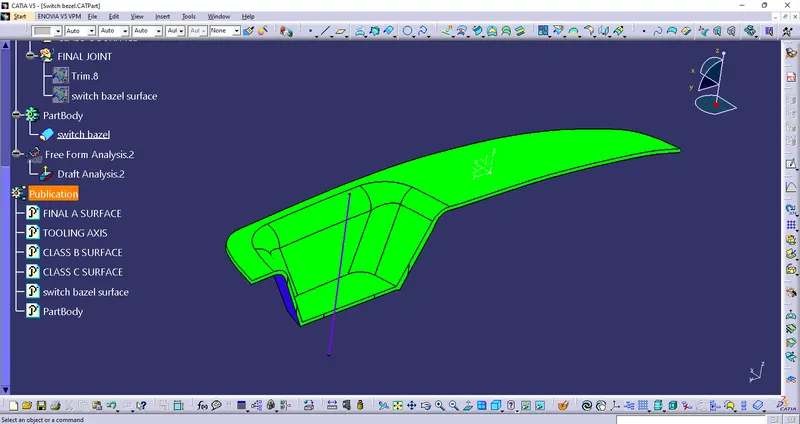
The Draft Analysis command enables you to detect if the part you drafted will be easily removed. This type of analysis is performed based on color ranges identifying zones on the analyzed element where the deviation from the draft direction at any point, corresponds to specified values.
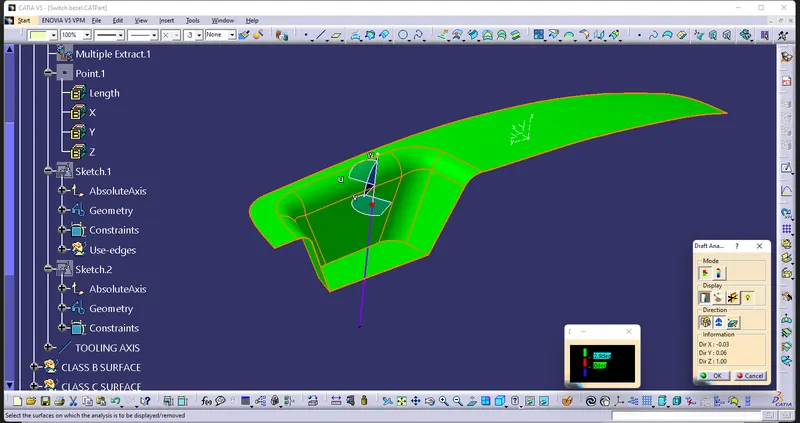
CLASS B SURFACE-
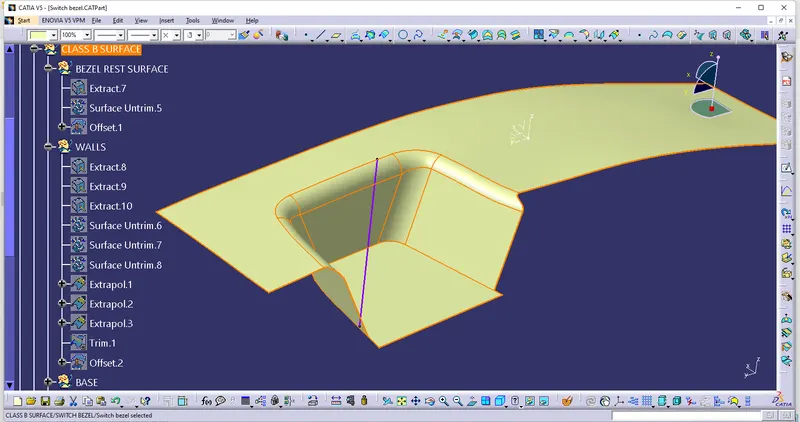
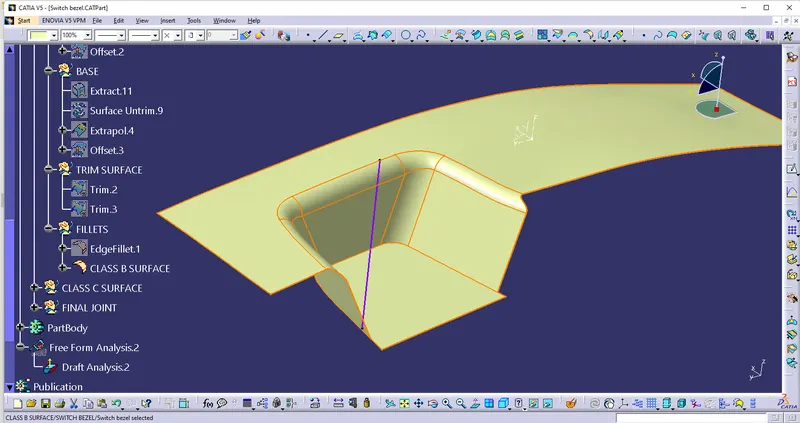
CLASS C SURFACE-
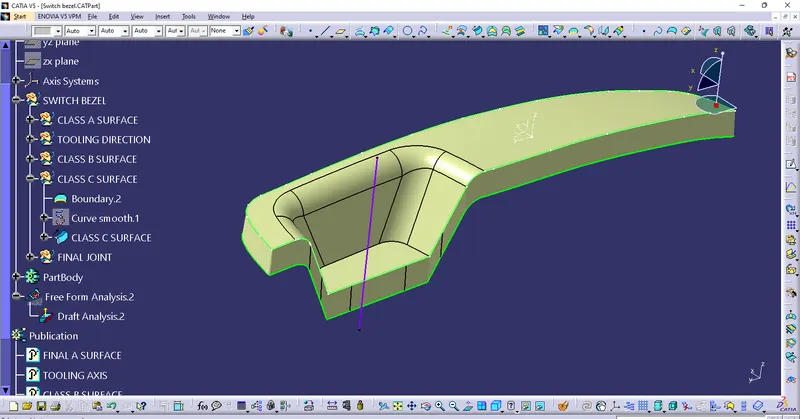
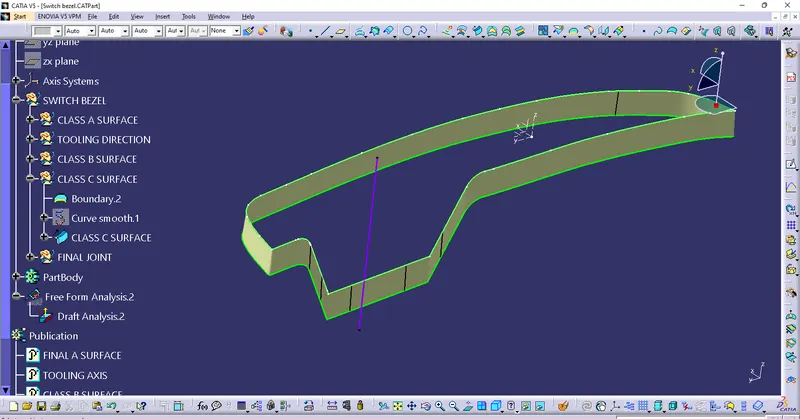
FINAL JOINING-
CLASS A WITH CLASS C-
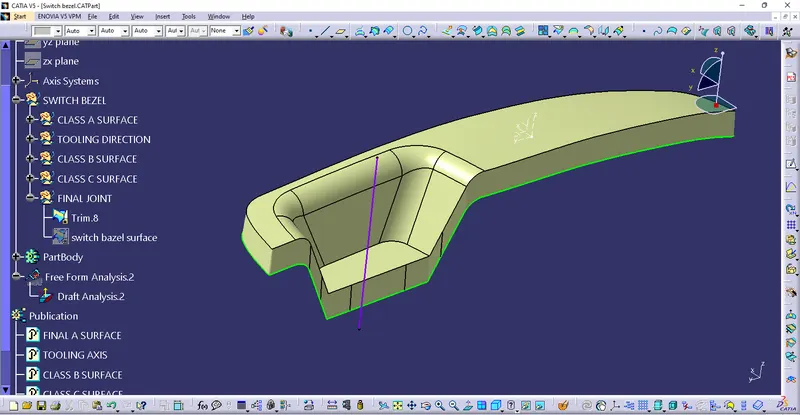
CLASS A AND CLASS C WITH CLASS B-
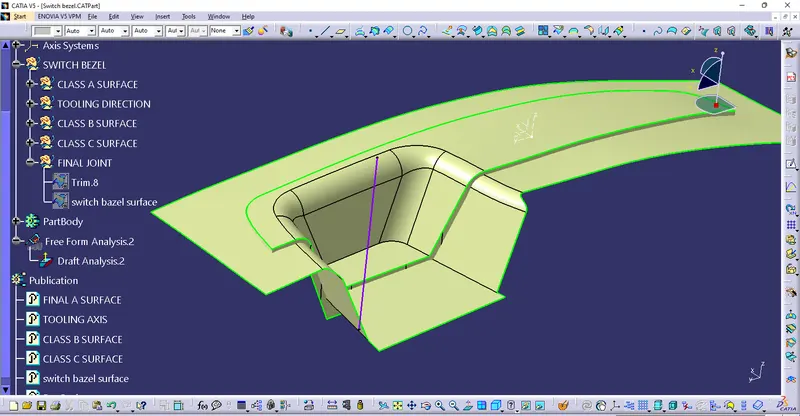
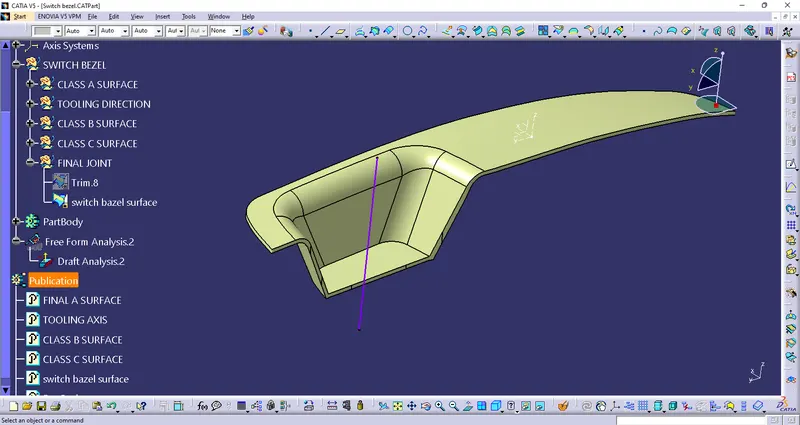
CLOSE SURFACE-
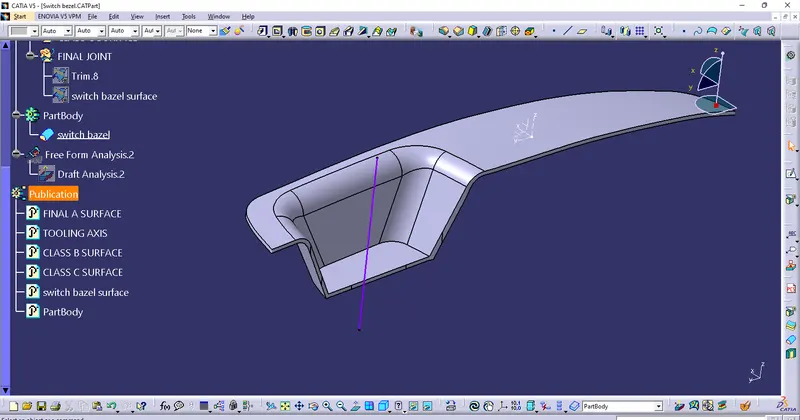
DRAFT ANALYSIS ON FINAL PRODUCT-
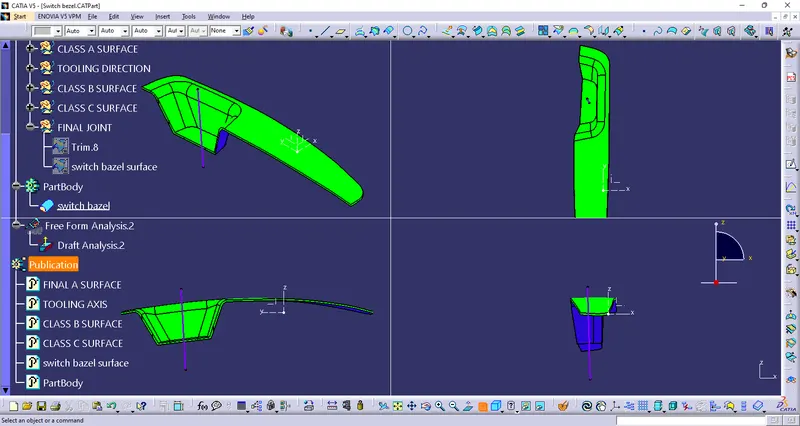
FINAL PRODUCT-