Hood design-Week 2
REPORT ON HOOD DESIGN-
CHALLENG- Design Hood Outer Panel, Inner Panel and the necessary reinforcements by following the Master Section mentioned with the Design parameters.
AIM- The aim is to design parts of the hood of a car and assemble them together.
WHAT IS HOOD-
A car hood, also referred to as a bonnet in some other countries, is the hinged cover that rests over the engine of a front-engine vehicle. Its purpose is to provide access to the engine for repair and maintenance. A concealed latch is typically used to hold down the hood. On vehicles with an aftermarket hood and on racecars, hood pins may be used to hold down the car hood. Hoods sometimes also contain a hood scoop, wiper jets, power bulge, and/or hood ornament.
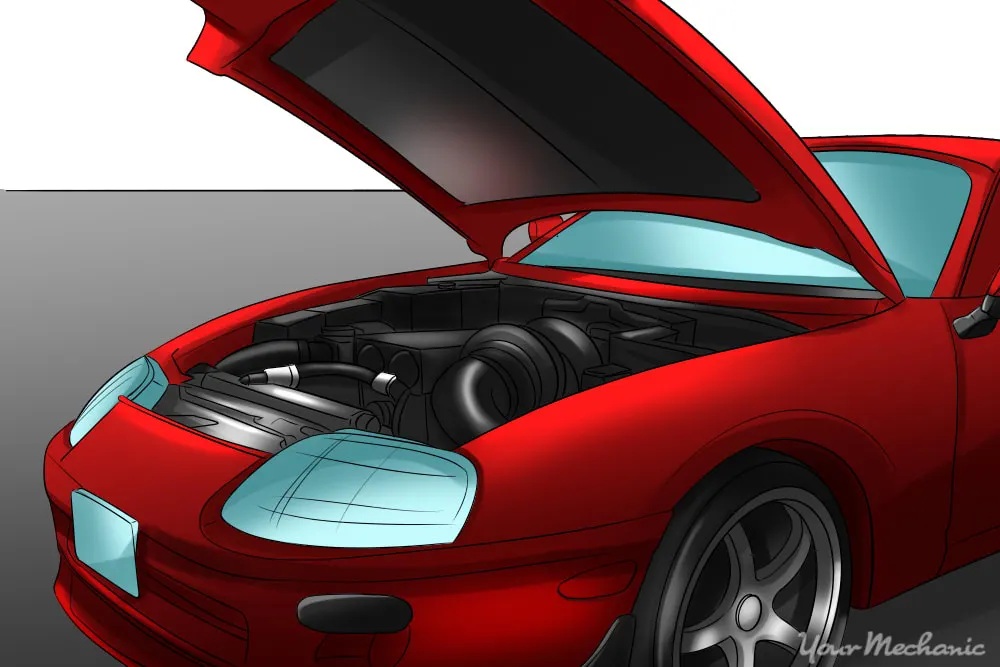
COMPONENTS OF HOOD-
There are the followings components in HOOD.
1) Hood Outer Panel
2) Hood Inner Panel
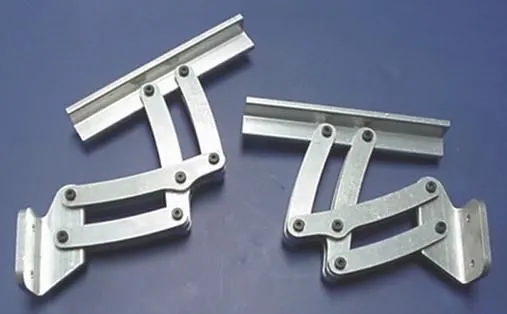
3) Hinge Assembly-
I) Hinge Hood Part
II) Hinge Engine Comartment
4) Latch Striker
5) Support Rod or gas stay
1) Hood Outer Panel -
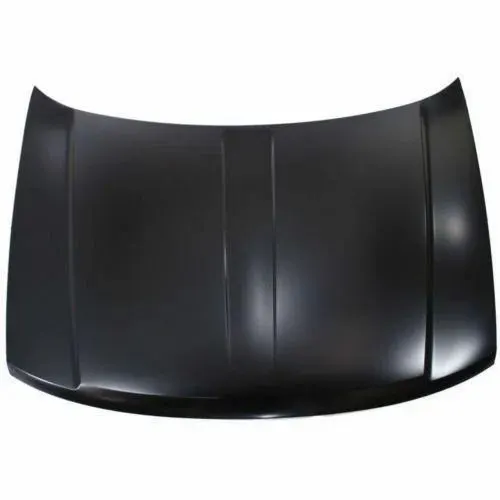
The outer panel is actually called the skin of the vehicle which is designed by the styling team to get a good look for a vehicle by covering the inner panel and engine parts of the car. This part should not be welded to the inner panel but using the sealant and mastic points makes contact between the inner and outer panel which acts as a bond between both and makes the hood stiff.
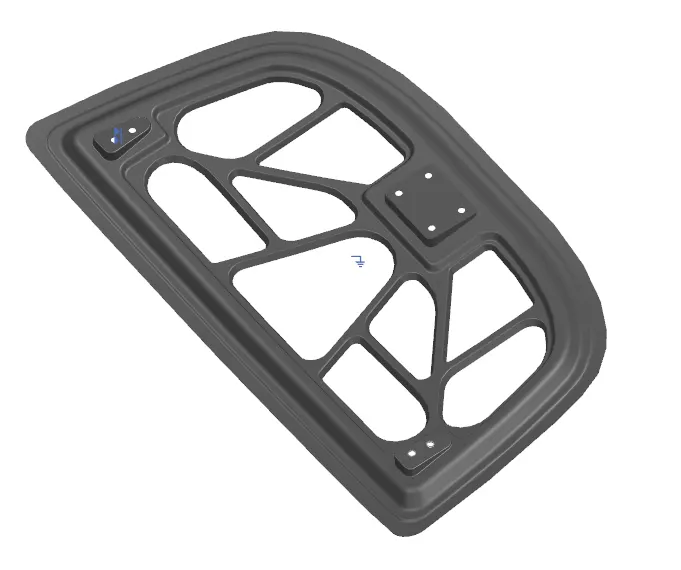
2) Hood Inner Panel -
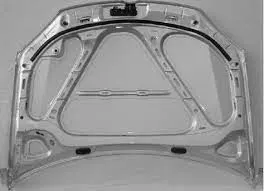
The main part of the hood which gives support to the outer panel of the car and with its embossing shapes dissipates the force in different directions when the vehicle takes crashes to not to injure the men in the car.
3) Hinge Assembly-
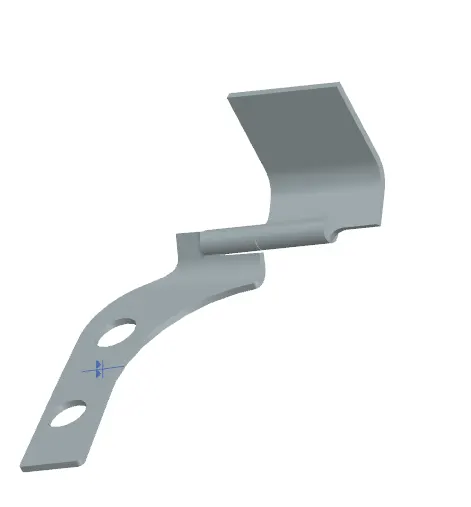
The hinge consists of two parts- hinge at the inner panel and hinge at the engine compartment. This coupling allows the hood to open and close, as well as makes contact between the engine block to the hood. It also controls the lifting of the bonnet mitigates the consequences of a collision between a pedestrian and a vehicle.
4) Latch Striker-
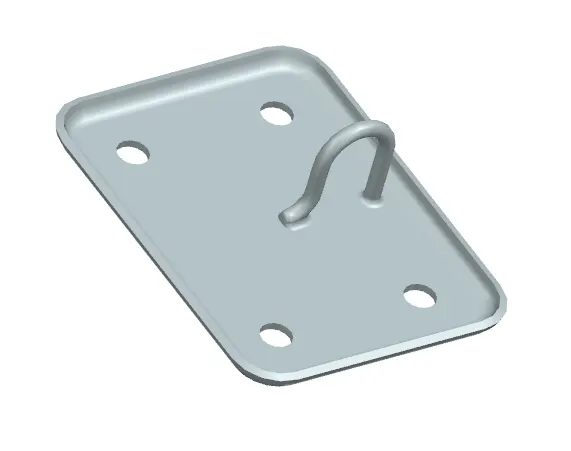
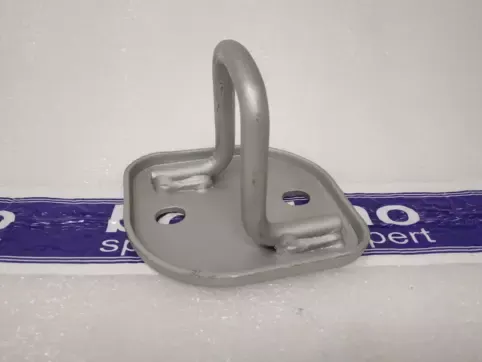
It is a part that helps in locking the hood with the striker which is mounted on the engine block when it is not in use. It plays a major role in opening and closing hood for maintenance of car engine and gives a tight locking position not to create undisturbed noises when the vehicle is running.
`5) Support Rod or gas stay -
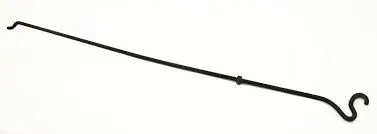
Support rod
This is widely used in many cars as the rate is cheap. In this type we have to lift the hood by ourselves and place the support rod in the space provided either in the hood or engine component. This is mostly used for where the car bonnet weight is small. Support Rod can be mounted with grommet side on the engine compartment of body and rod locking hole on hood or vice versa.
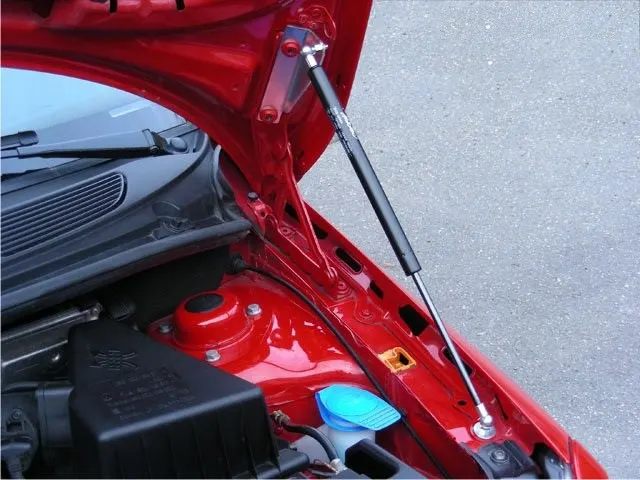
Gas Stay
These are used to lift the car hood. Its purpose to just give the lifting force to the hood, then it automatically opens the car hood by means of gas pressure. This is used where the car bonnet size is heavy to lift.
HOOD DESIGNING - For Hood design we need following data.
Hood Thickness Information
- Outer Panel Thickness = 0.75mm
- Inner Panel Thickness = 0.75mm
- Reinforcement Thickness = 1.5mm
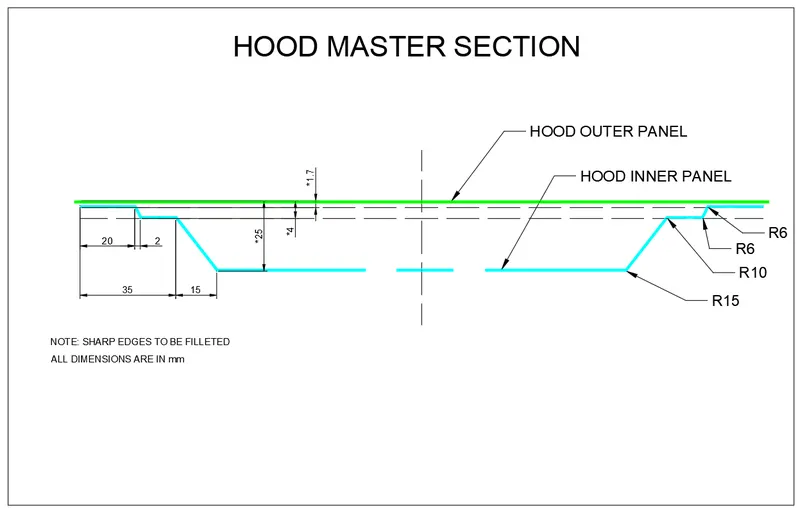
Master Section:
Master sections are the guides for design requirements which decide the component packaging after technical surfaces.
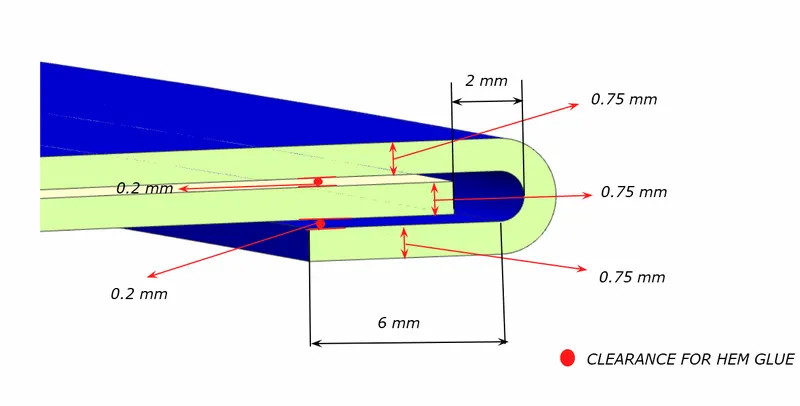
Hemming Data:
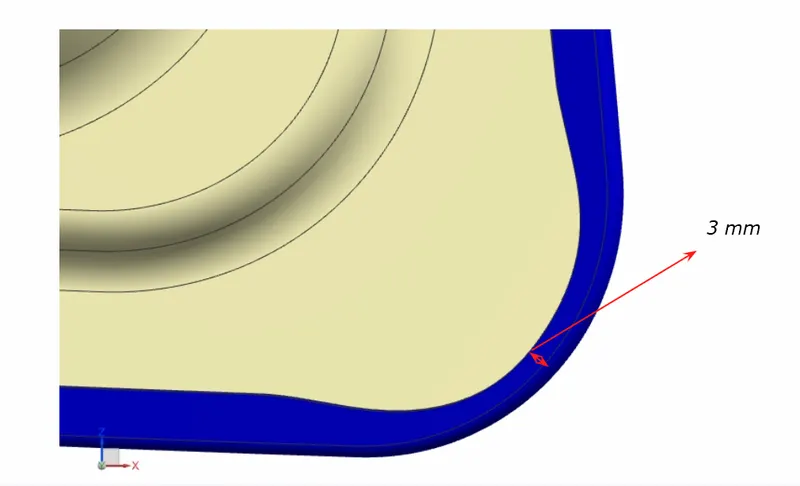
Relief rear section:
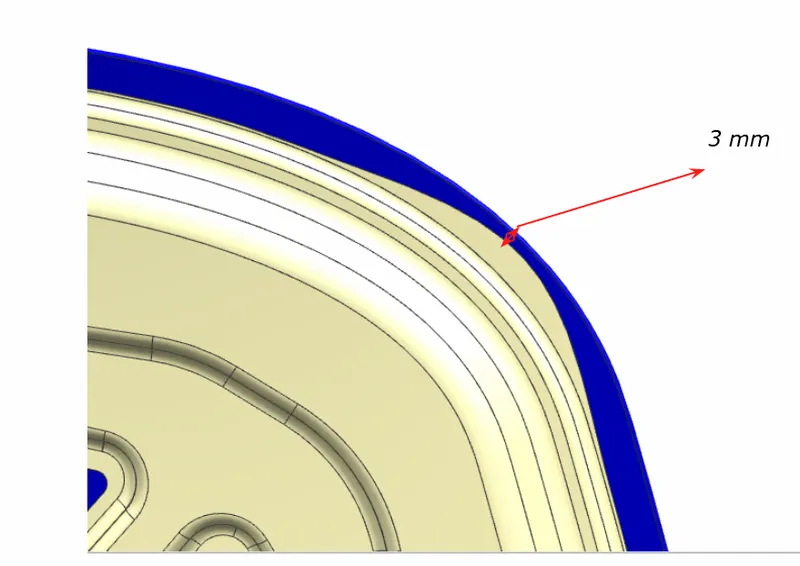
Front relief:
STEPS OF HOOD DESIGN-
Hood Outer Panel Design: Hood outer panel already given.
Hood Inner panel Design:
The initial design was created from the master section that was already provided. Embossing is a metal forming process for producing raised or sunken designs or relief in sheet material by means of matched male and female roller dies, theoretically with no change in metal thickness. Embosses are created to provide additional strength and to direct the forces from the front collision towards the hinge and body of the car.
commands use for design -
Sketch.
Extrude.
Offset.
Law of Extension.
Time Sheet.
Face Blend.
Edge Blend.
Mirror geometry.
Extract Body
Extended Sheet.
Sweep.
Latch And Hinge Reinforcement:
To furthermore reduce the impact to the occupants inside the car, additional latch and hinge reinforcement to the hood. When latch and striker are placed, there is a drop in strength at that position thus reinforcement is required. Also, stiffness pads are placed to reduce NVH. Hinge and latch reinforcement thickness is kept at 1.2 mm but it may vary.
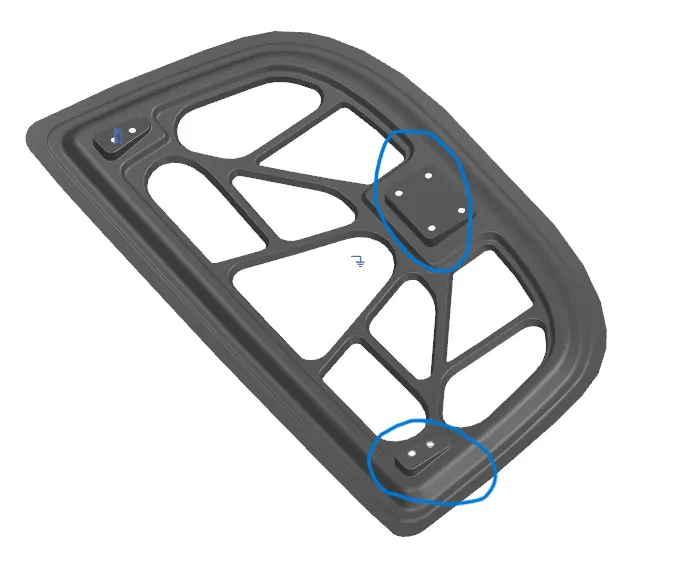
Hinge and striker:
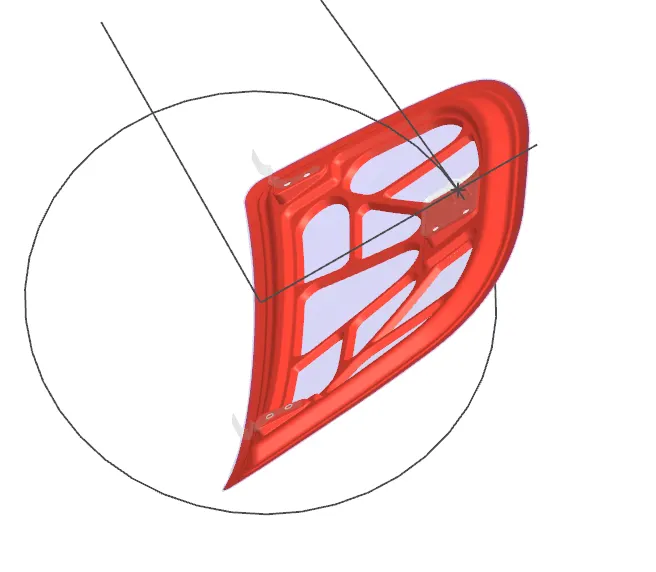
For the proper opening and closing of the hood, the striker should be perpendicular to the trajectory of the hood. For this, the hinge is assembled at its position. Once it is placed, the hinge axis is drawn. Using the hinge axis as the center we draw a big circle to the position the latch in such a way that it is perpendicular to the hood trajectory.
Hemming In Sheet Metals
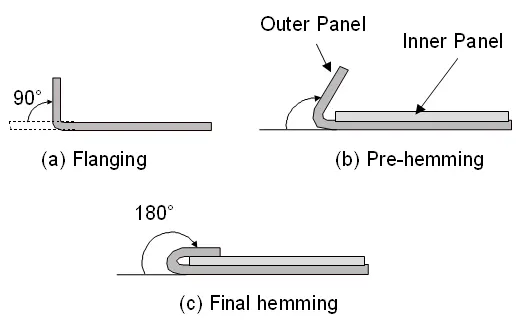
Sheet metal is metal, in sheets. It’s thinner than plate metal (.25 in and thicker) but thicker than foil (.006 in and thinner). It’s most commonly available in steel and aluminium, in various gauges (thicknesses). It’s available with various coatings for corrosion resistance or surface finish. Sheet metal is made by taking a large cast ingot and rolling it into a long ribbon of the desired thickness. This long, flat piece of metal is then rolled into a coil and sent directly or cut into sheets before being sent to a machine shop.
Mastic Points :
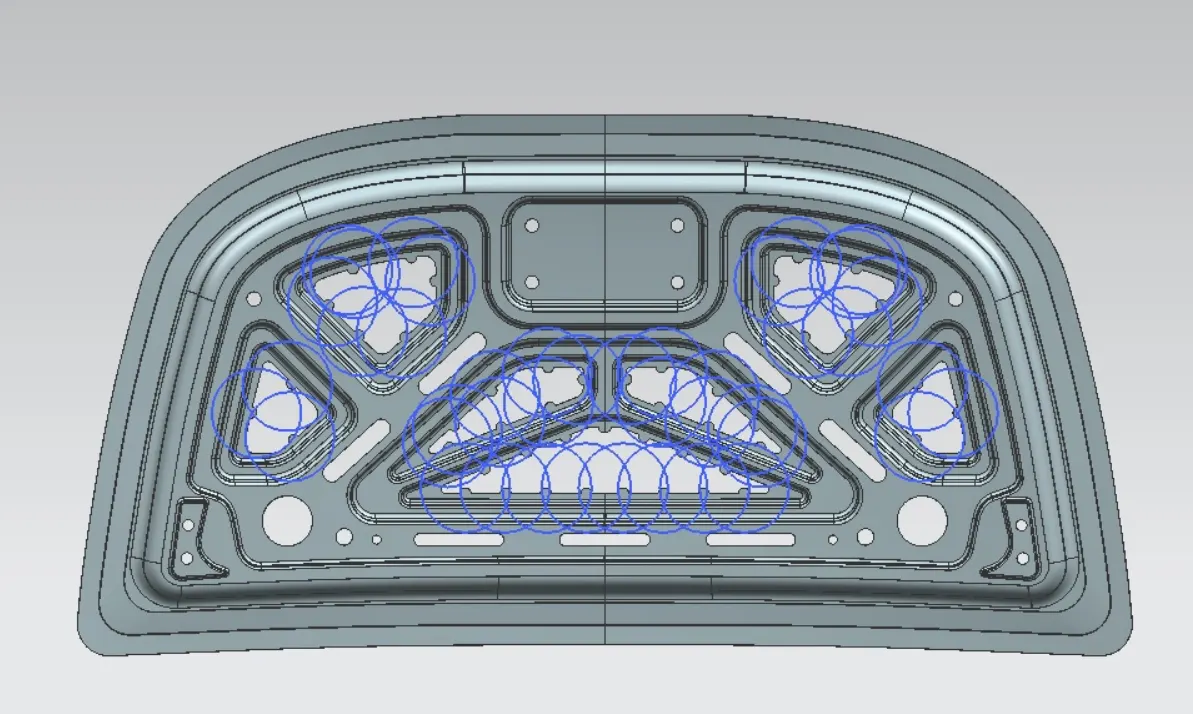
These are the spots where the inner panel and the outer panel of hood are joined or can say sealed together using a mastic glue. To fix the outer panel, if process like bolting, riveting or welding is used, it will lose all its aesthetics. So, mastic sealant is used which is elastic compound and acts like rubber. It is placed between both the panels. Initially it is in paste form and after hot furnace bath it gets solidify and gives strength to the panels together. One spot normally has influence over diameter of 80 mm.
Observation of Adults, Childs, and lower Impact on Car Hood Body:
- The 1st and most important safety requirement to be considered while designing the Bonnet is the Pedestrian Safety from a frontal collision.
- The European New Car Assessment Program (Euro NCAP) is a European car safety performance assessment program which has developed test specifications and rating systems for assessing pedestrian injuries during impacts with the front of vehicles Such tests include a series of tests using impactors designed to mimic a collision at a speed of 40 km/h. They describe a situation in which a pedestrian is situated laterally and a car first hits one of his legs. Tests are conducted on the leg, upper leg, and most importantly, the head, as head trauma is most commonly responsible for casualties.
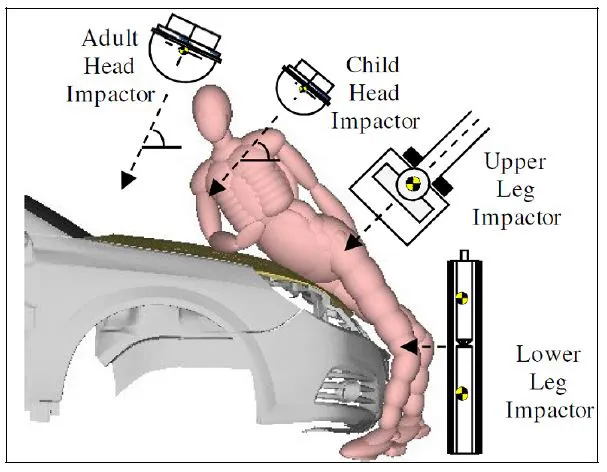
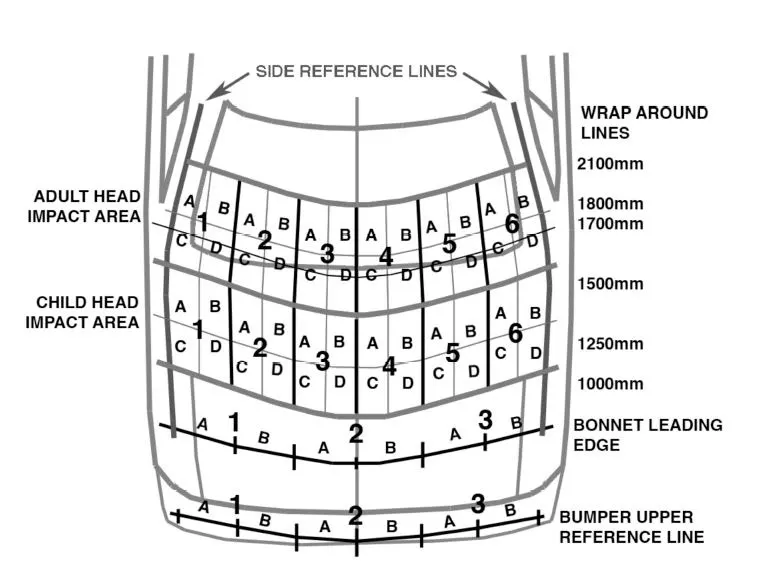
- Thus to avoid severe injuries to the head, the high impact area for adults and children is subjected to less thickness. Also, no reinforcement should be provided in that area as, during the head collision, the hood will absorb the head impact energy leading to the collapse of the hood and thus protecting the severe head injury.
- Another important criterion for the hood design is the protection of the occupants inside the car during the front collision. The design of the hood should be in such a way that during the collision, the force should travel in the upward direction through the embosses and directed towards the body of the car. Thus protecting the occupants inside.