Week 8 - Challenge 2 - Base Bracket Design
Q) Create the Base Bracket Plastic component through the given Class-A surface. To begin with, the tooling axis for the given Class-A Surface should be created meeting the requirements of the draft angle and at the end perform the Draft analysis on the model.
Ans:
Draft: Draft is required on all the parts in the direction of mold movement in order to allow parts to release or eject from the mold properly.
Draft is the angle in which part is tapered to allow to release. As the parts cools it tends to want to shrink to the core side of the mold.
Adding draft help the part to release. Most parts or application required a minimum of 1/2 to 1 degree; however, 3 degree is widely accepted as the norm.
Pulling Direction: The direction part is ejected from the mold is called the pull direction. This direction is used to determine the draft angle, undercut and mold cost. If no pull direction is defined, a three-tiered approach is adopted. The principle axes are examined. The axis with the least amount of undercuts will be used.
Tooling Axis: The direction in which the mold or core and cavity open is the tooling axis.
Draft analysis:
Drafts are defined on molded parts to make them easier to remove from molds. There are two ways of determining the objects to draft: either by explicitly selecting the object or by selecting the neutral element, which makes the application detect the appropriate faces to use.
This type of analysis is performed based on colour ranges identifying zones on the analysed element where the deviation from the draft at any point corresponds to specified values.
Draft angles are generally a requirement of injection molding design ( though there are a select few soft materials like nylon, that can get away with draft angle or zero)
Draft should be a part of design for manufacture and plastic product designer should be aware of its need at the outset of the design process. This allow considerations for design requirement to be taken into account.
Nominal Values for draft angle:
- 3 Degree is nominal draft
- 5 Degree can also be manufacture but it will increase the manufacturing cost
- 7 Degree for textured surface
Importance of Draft in injection Moulding:
- Reduces the chance of damage to the part due to friction during release
- Reduces wear and tear and chances of damage to the mold
- Ensures a uniform, smooth, unscratched finish when required
- Ensures the integrity and uniformity of other surface finished and texture
- Reduces overall cooling time by lessening or eliminating the need for unconventional ejection setups
- Most it not all of these benefits offers either direct or indirect overall production cost reduction.
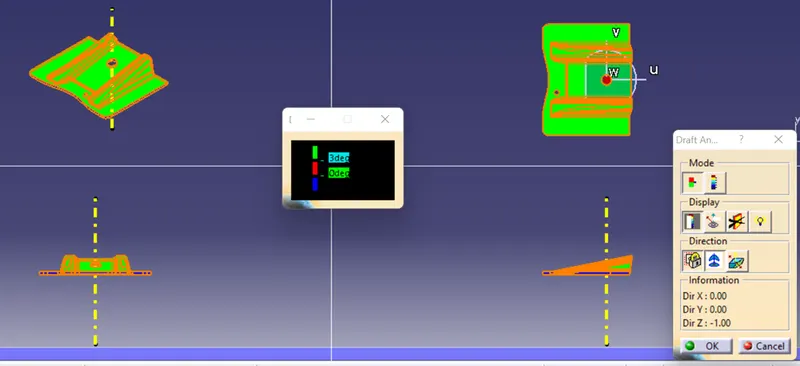
Draft Analysis – Class A surface.
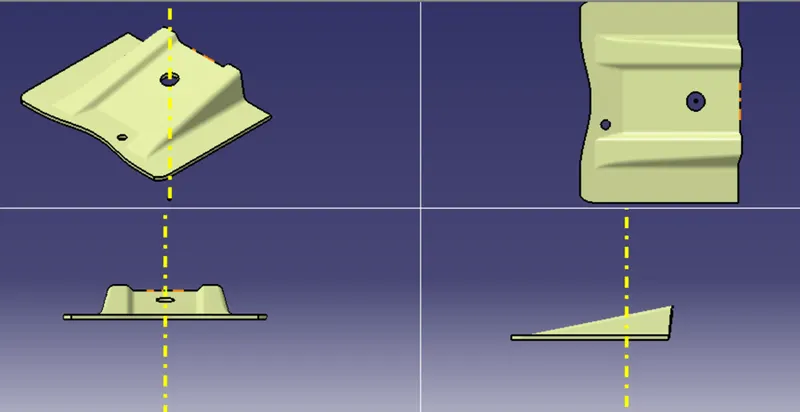
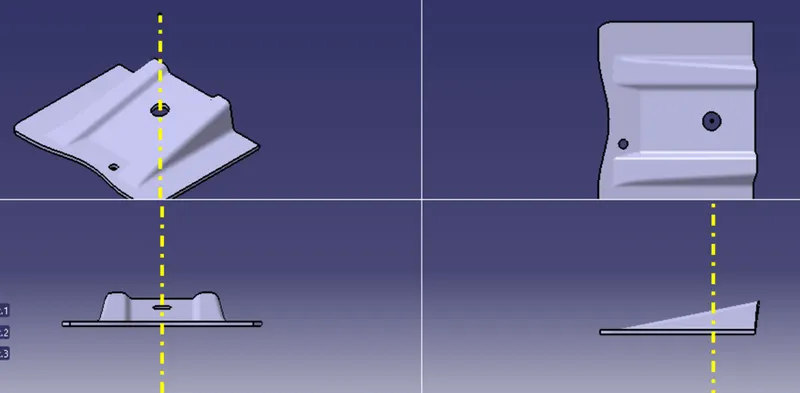
Creating dummy Tooling axis based on visual understanding. Hole centre point taken as references, draw one dummy line along to Z axis.
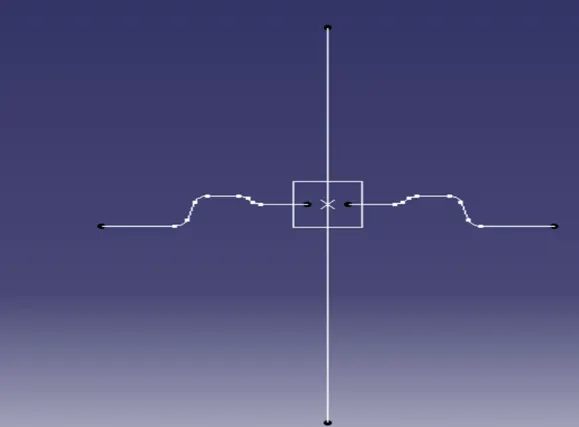
Taking Point creating two lines both side parallel to the wall. As per below figure.
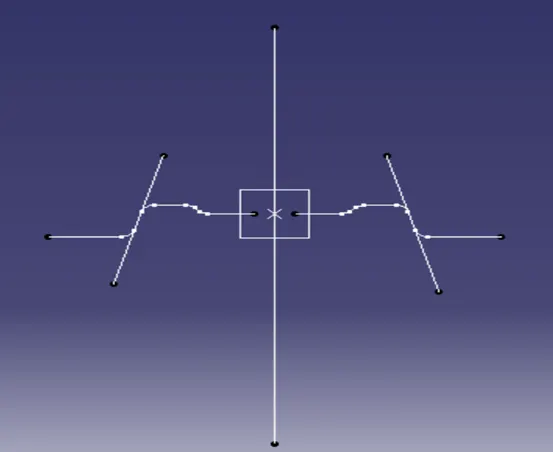
Now Creating x direction tooling line which will clear x tooling direction. Create a line that bisect these two lines from the reference point in the Z-direction.
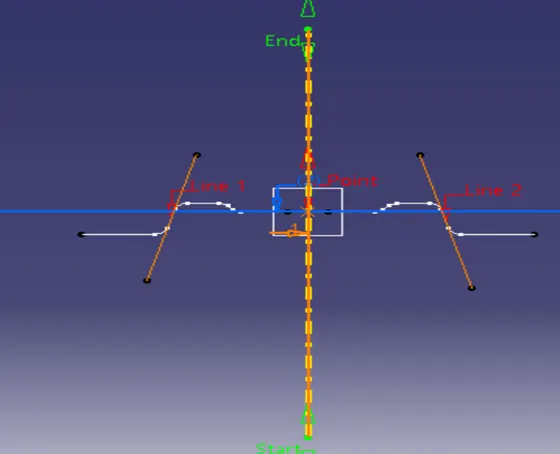
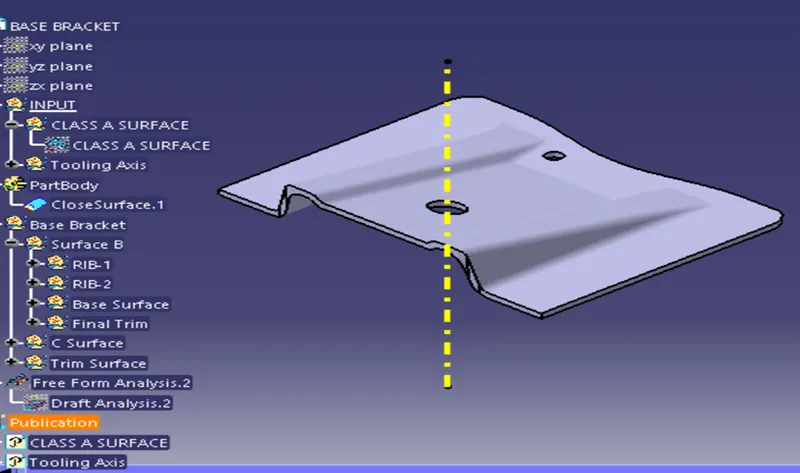
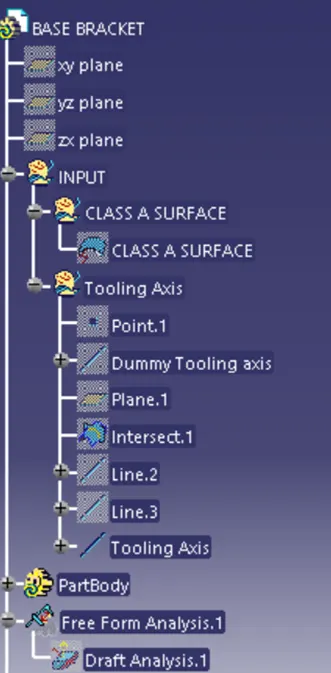
To Publish the Tooling Axis and the class A surface first select it and go to menu bar – Tools-Publication. This will Publish the line which will be visible in the tree structure
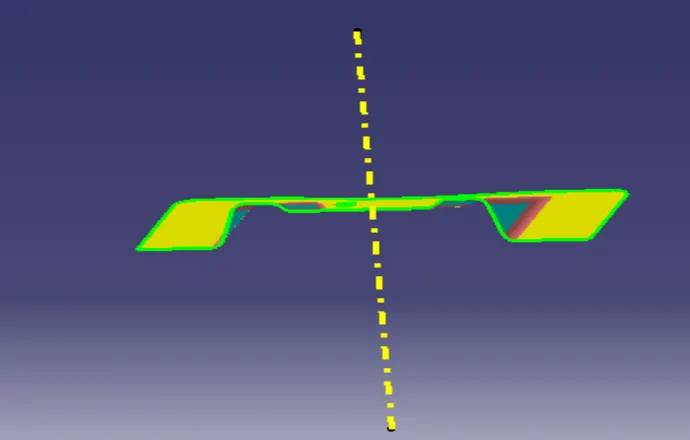
Draft Analysis Report:
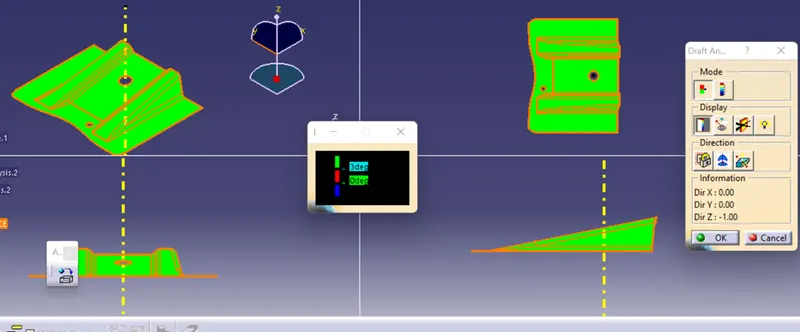
Creating Class B and C surface:
Class B surface:
With the reference of class, A, class B surface created.
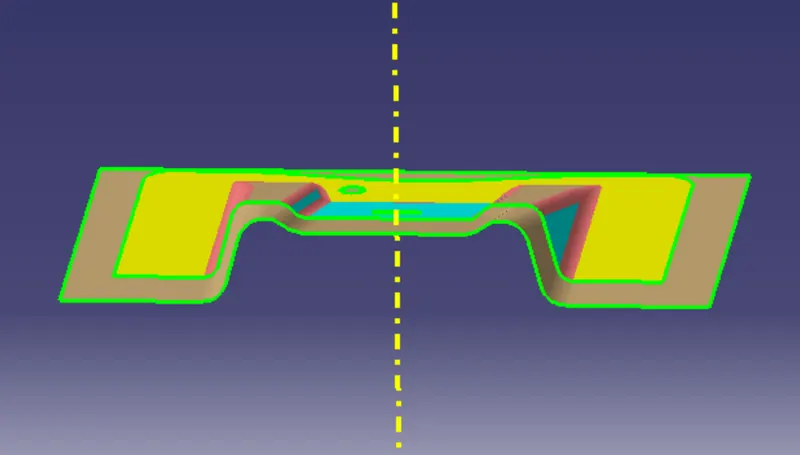
With the reference of A and B surface, C surface created.
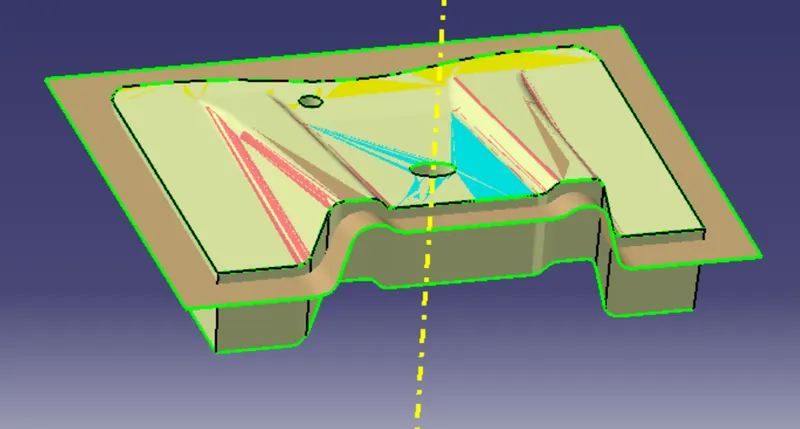
Final Shape:
Close Surface:
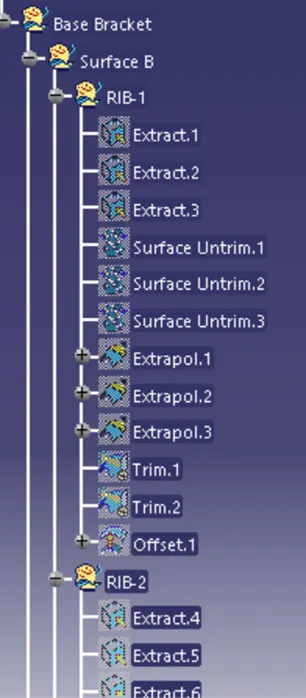
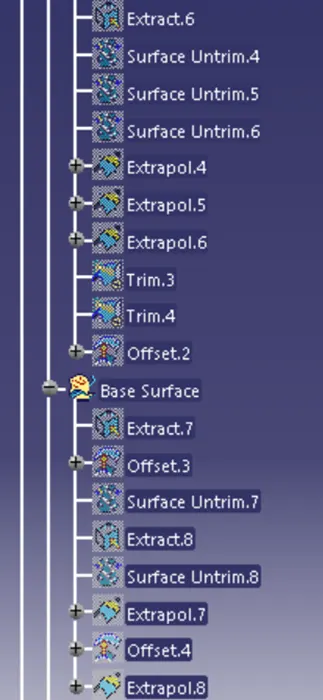
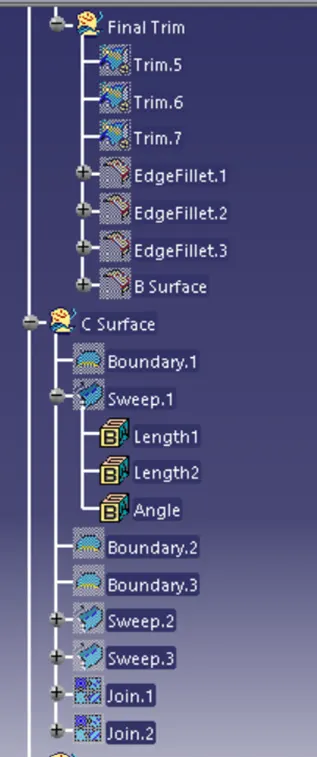
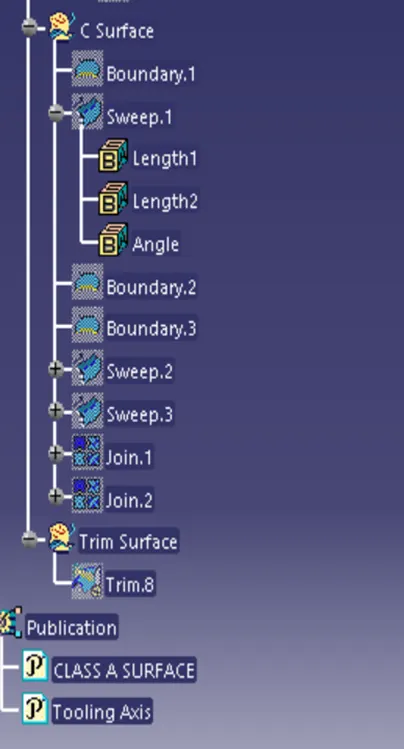
Tree Structure:
Details tree structure:
Draft analysis Final Component: