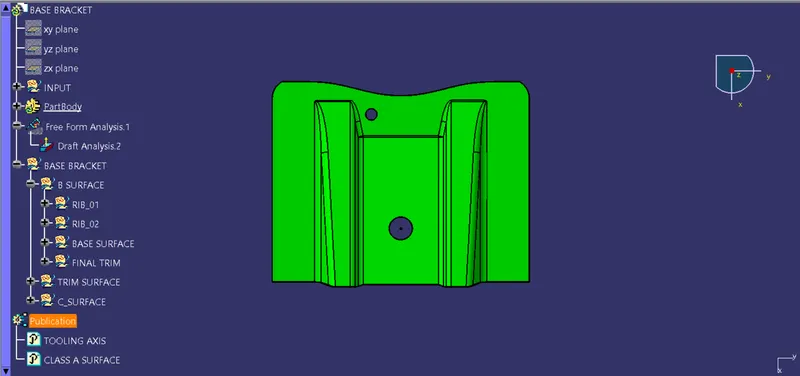
Week 8 - Challenge 2 - Base Bracket Design
Objective-
Create the Base Bracket Plastic component through the given Class-A surface. To begin with, the tooling axis for the given Class-A Surface should be created meeting the requirements of the draft angle and at the end perform the Draft analysis on the model.
Detailed Report-
Terms Used-
Class 'A' Surface- Class A surface can be physically touchable because it is the outside surface of an automobile and it gives aesthetic look to the product. these Class A surfaces are obtained by reverse engineering by using clay modeling. For this type of work, plastic product designers are assigned to work on it.
Class 'B' Surface- Class B surface are created by taking offset from the given class A surface. On this type of surface, we can do all engineering features like ribs, mountings, screw bosses, dog house, etc.
Class 'C' Surface- Class C surface is used to join Class A and Class B surfaces together.
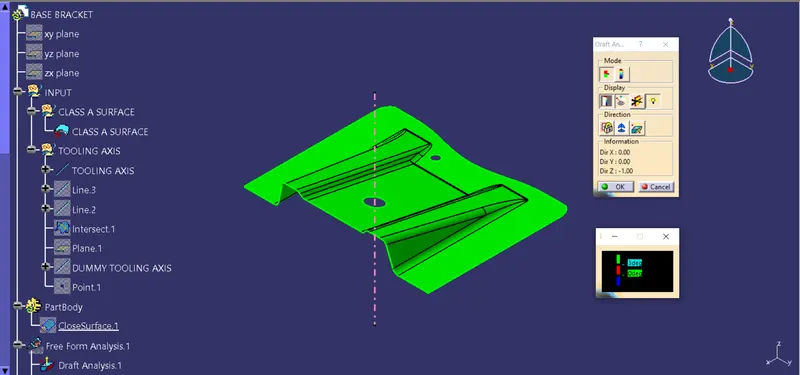
- Draft Analysis- Draft analysis is the tool used to check whether the component is manufacturable within the given draft or not
Work on class A surface-
1) Check for the most suitable tooling axis direction.
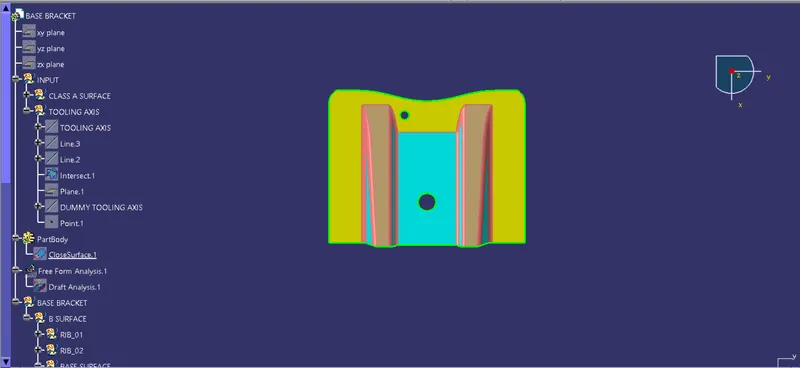
2) Create a dummy tooling axis in Z direction-
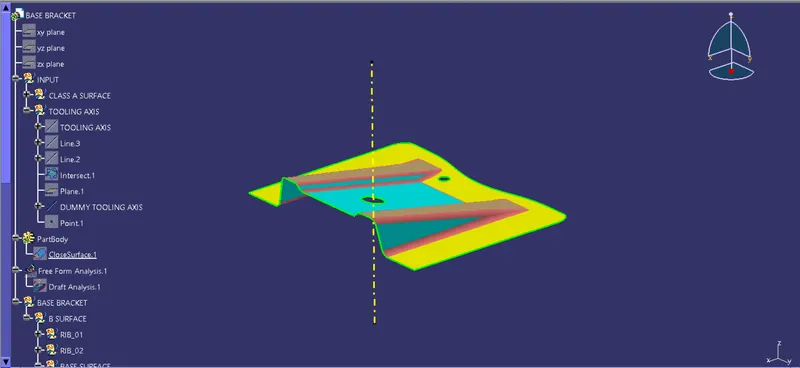
3) Create an intersecting curve to YZ plane on Class A surface-
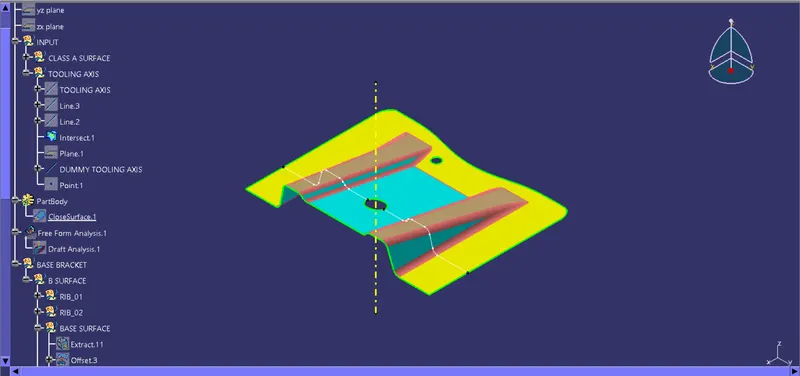
4) To check if this profile crating problem or not, create a line on the curve.
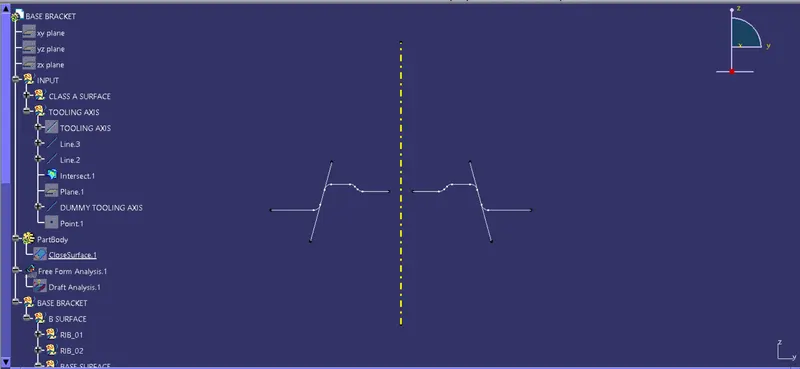
5) Make a tooling axis by bisecting two lines and publish the class A surface and tooling axis.
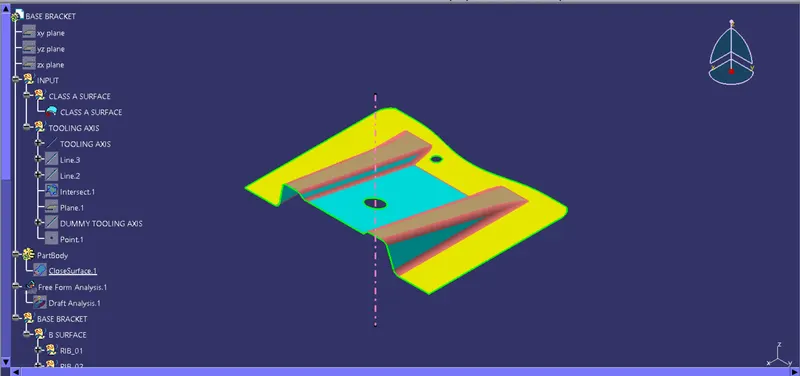
6) Draft Analysis checking-
Steps for class B Surface creation-
1) Extract surface of Rib without fillet, and then Un-trim it-
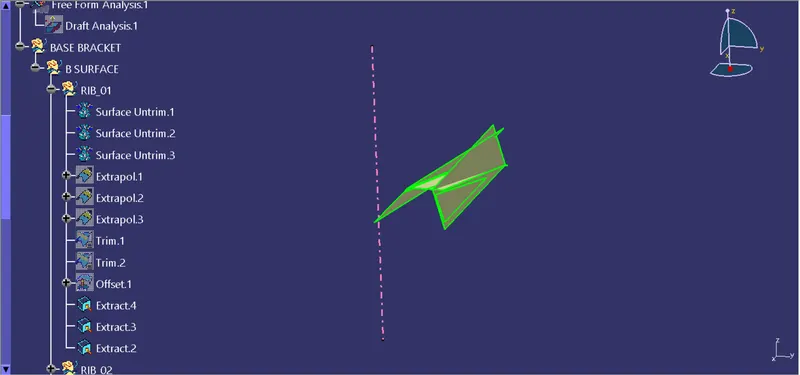
2) Extend the untrimmed surfaces.
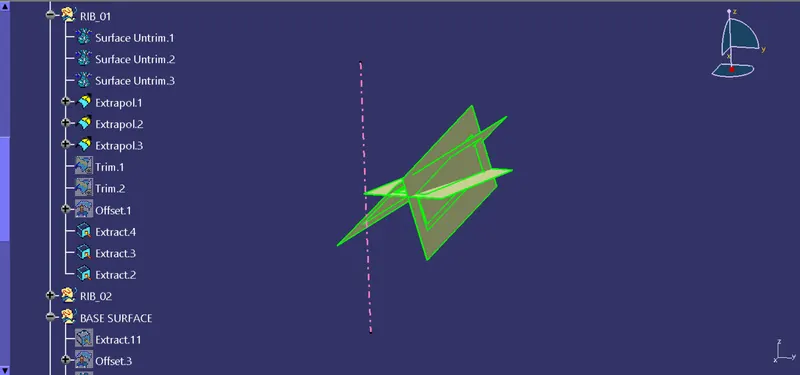
3) As per requirement, trim the surfaces-
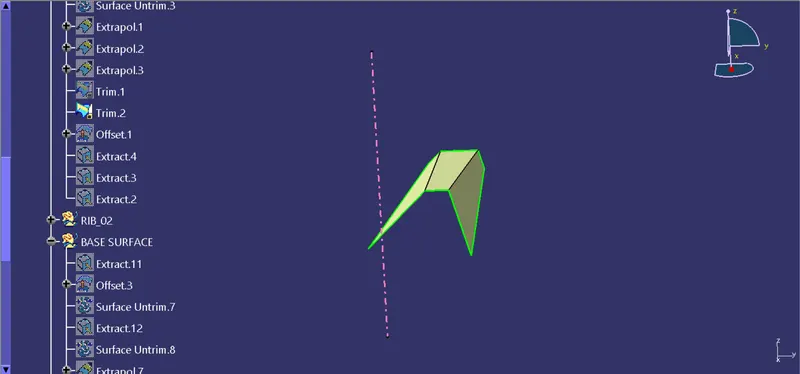
4) Offset the trimmed surface by 2.5 mm.
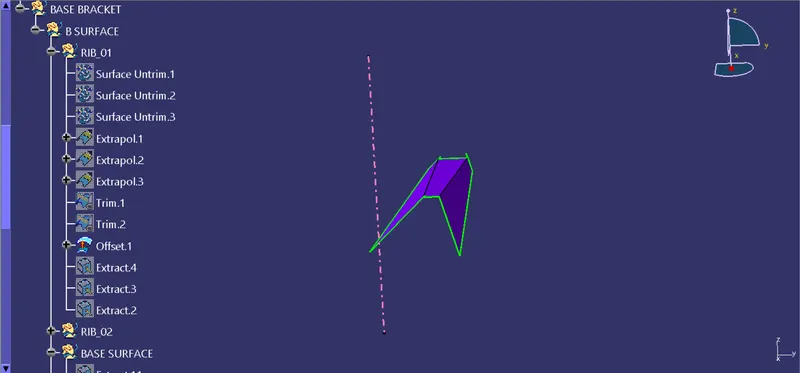
5) For creating second rid and remaining surface apply the same procedure-
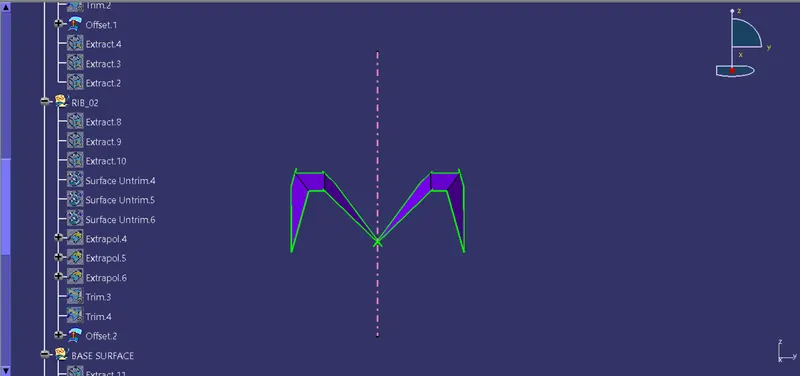
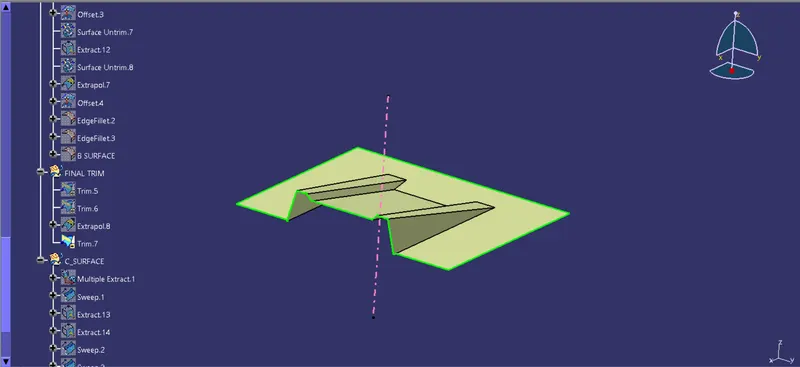
6) Give the fillet by adding 2.5mm offset value-
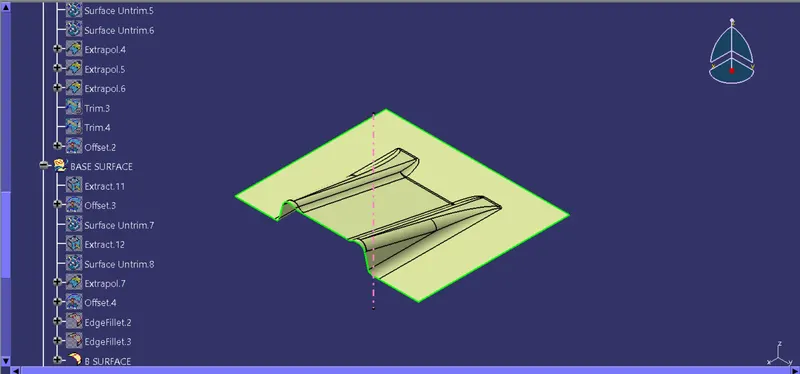
Steps for class C Surface creation-
1) Create boundary of whole class A surface and then sweep it along the tooling axis with a draft angle of 3 degrees.
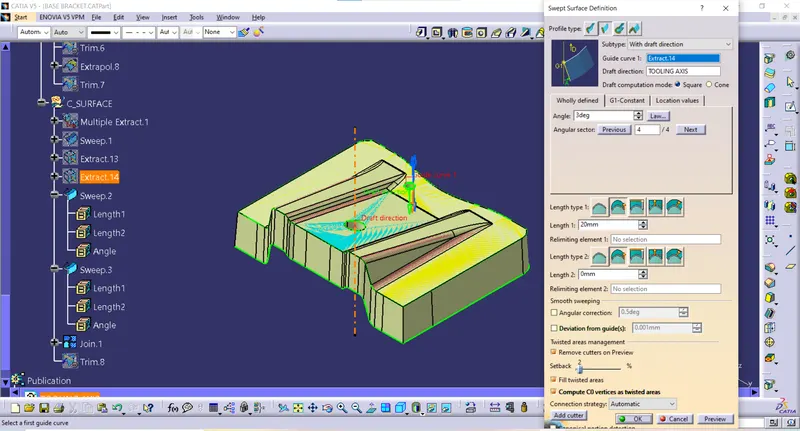
2) Join the class A surface with Sweep-
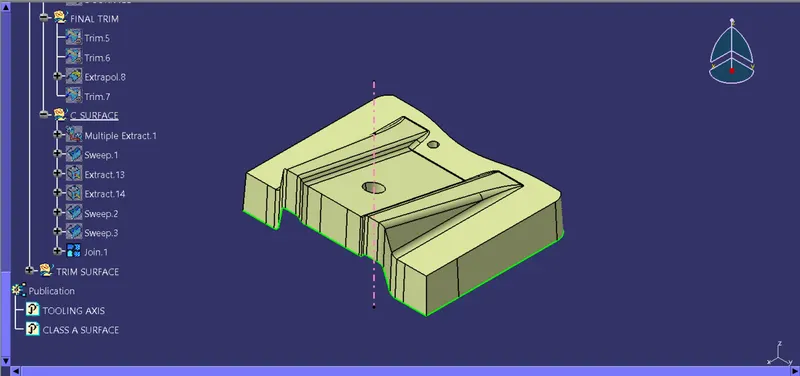
Making Of Plastic Componant-
1) Trim the Class B surface with Joined surface-
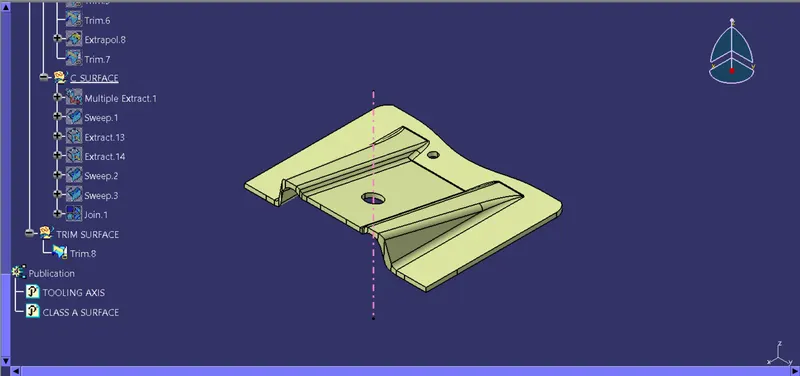
2) Make it Closed Surface by going into Part Design-
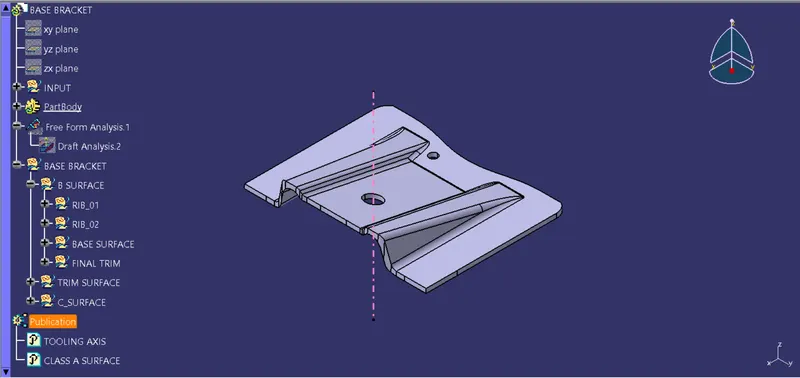
Draft Analysis-
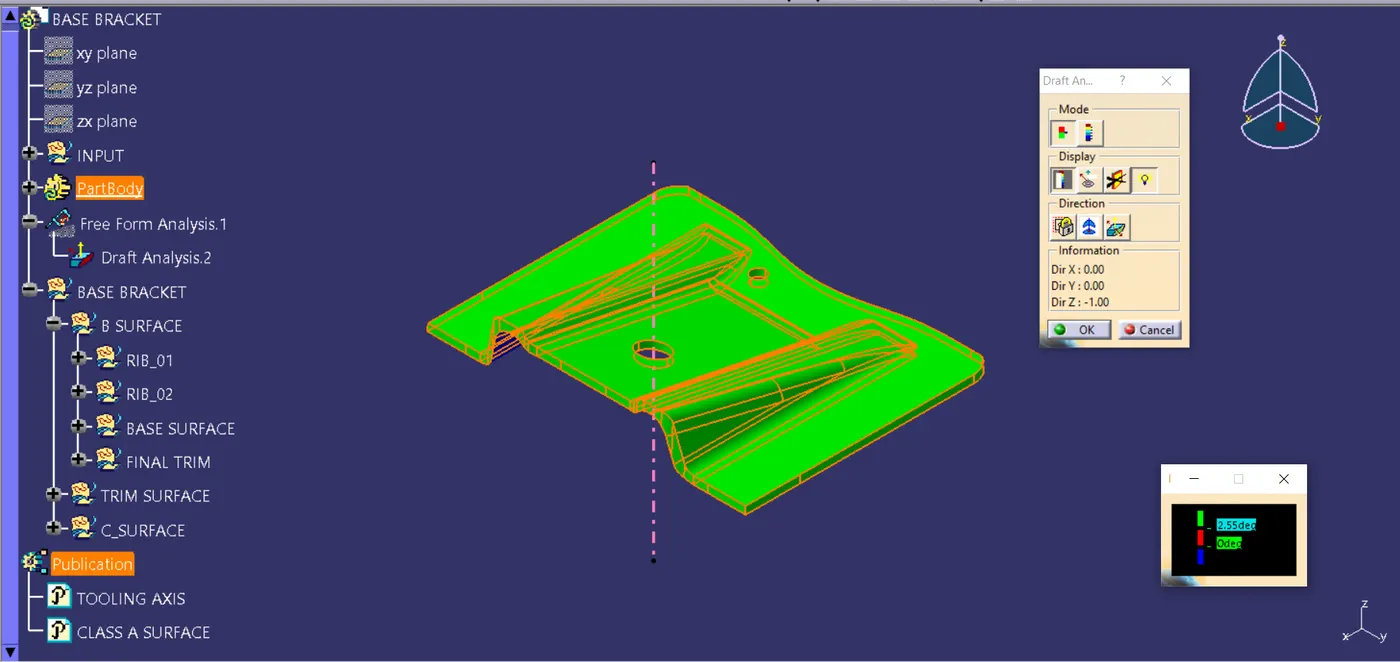
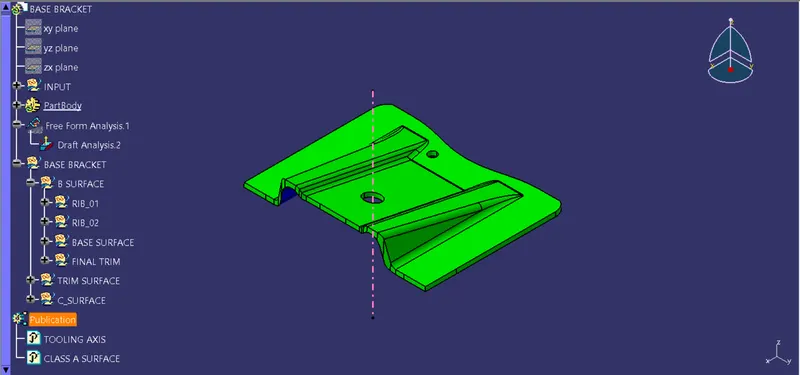
- Differant views of part are as follows-
1) Isometric View-
2) Front View-
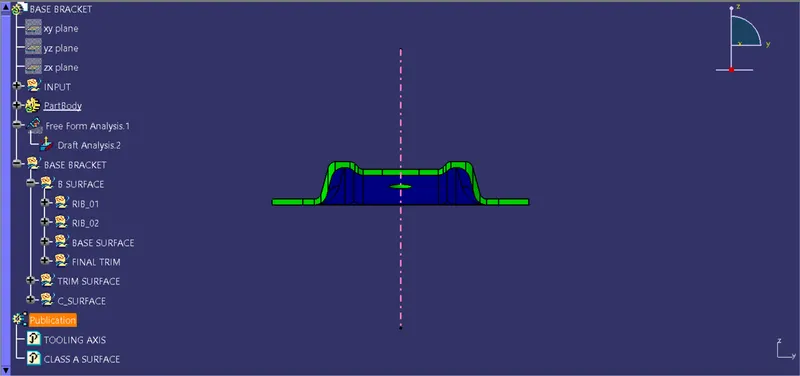
3) Side View-
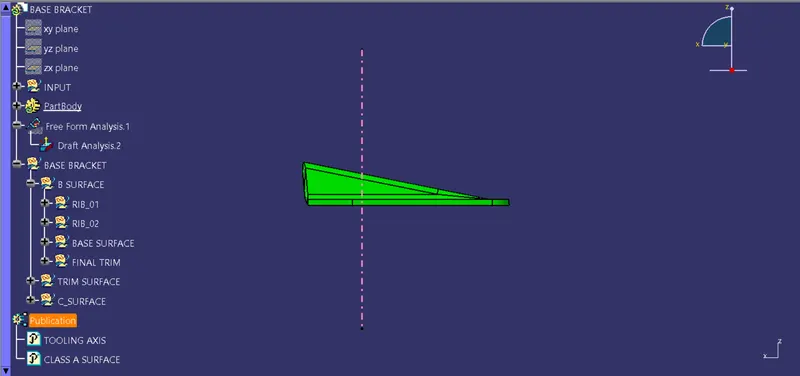
4) Top View-