Week 8 - Challenge 1 - Draft Analysis on a Fan Cover
DRAFT ANALYSIS ON A FAN COVER
OBJECTIVE: -The main objective of this project is to perform draft analysis to check if the part has the given draft on it all faces and also determine the tooling axis.
DRAFT ANALYSIS: - Draft analysis is based on the color range identifying zones on the analyzes element where the deviation of the draft direction at any point of the corresponding specified values. Draft is required on all parts of mold movement in order to allow parts to release or eject from the property.
Draft is the angle in which the part is tapered to allow it to release. At the part cools it tends to want to shrink to the core side of the mold. The draft is allowing the part to release or eject without creating any friction between the surface of component and core and cavity plates.
Minimum draft angle is required 3degree (draft angle is 0.5 is given ideally to the features inside the plastic part) Draft angle vary 5-1 degree but 3-degree draft angle widely accepted. But for automotive sheet metal part the draft angle 7degree or more. Minimum possible draft angle is given for ribs screw holes, stiffener due to critical nature.
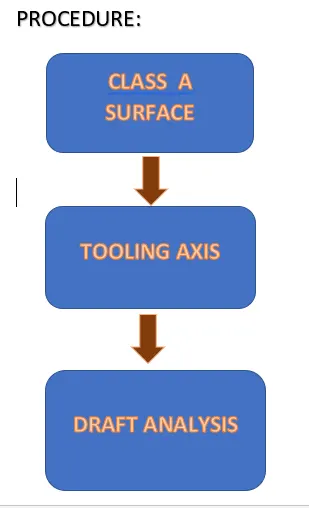
1.CLASS A SURFACE: In automotive design class A surface in any set of freedom surface with high efficiency. Class A surface design using computer aided industrial application. Industrial designer develops their class A surface.
DESIGN CHECK ON CLASS A SURFACE: First of all, we have to check continuity of given class A surface to ensure class a surface is proper joint or no discontinuity present. This can be done using join or boundary options. Below images show the surface is continuous boundary there is no discontinuity.
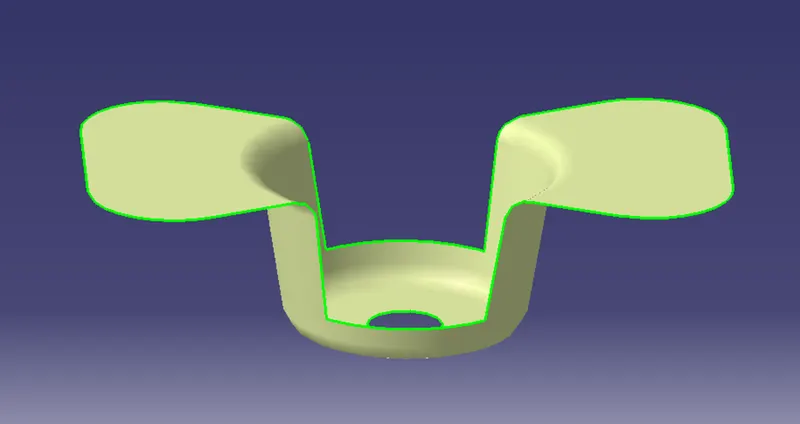
Extracting the boundary to given class A surface to show continuity visually.
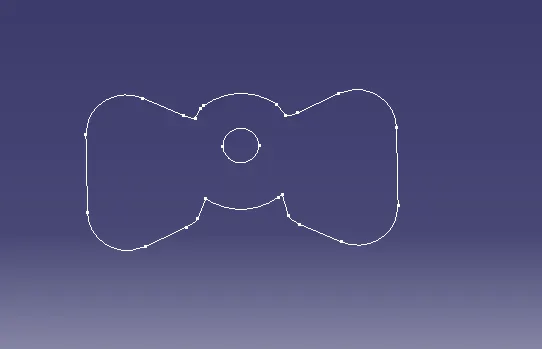
- TOOLING AXIS: Next step is decided tooling axis direction. Tooling Axis is a direction in which mold, core and cavity.
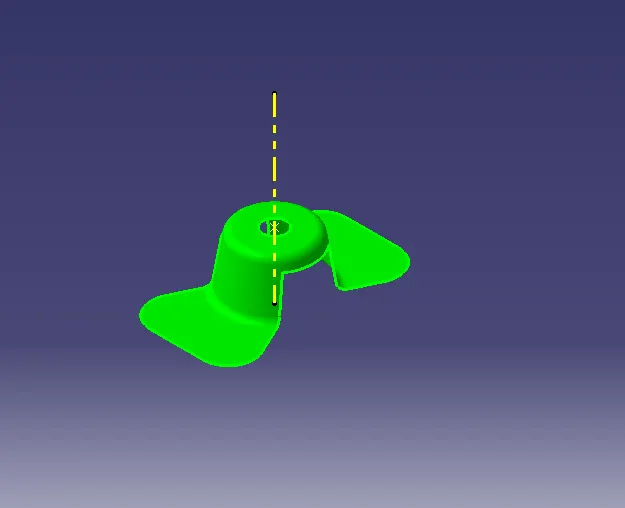
Here we are looking at the isometric view of the surface and can clearly see a hole on the top surface.
From X direction it will be difficult for tooling the hole. Similarly, from Y direction the hole cannot be seen thus it will be difficult to tool it. But from Z direction we clearly show the hole .so we choose this direction for tooling axis. this is called DUMMY AXIS.
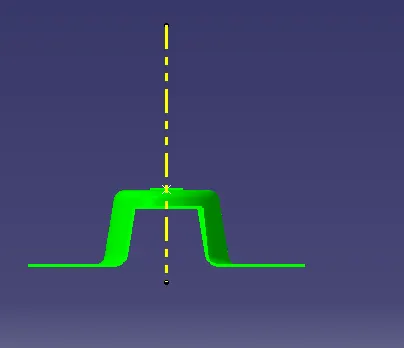
Now we will use bisecting line method to make the real tooling axis.
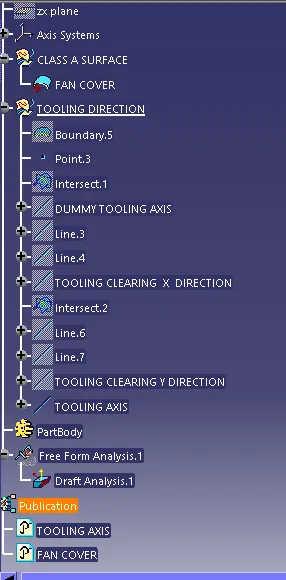
- Make an axis system and intersect the ZX plane with the class A surface. we will get the line now we have to see which surface will create problems or will be difficult to be tooled and make a line along that surface using point to point option. Here we can see in the picture that we have made two lines now we will bisect the lines and chose proper direction here vertical direction. This will be our tooling axis for X direction.
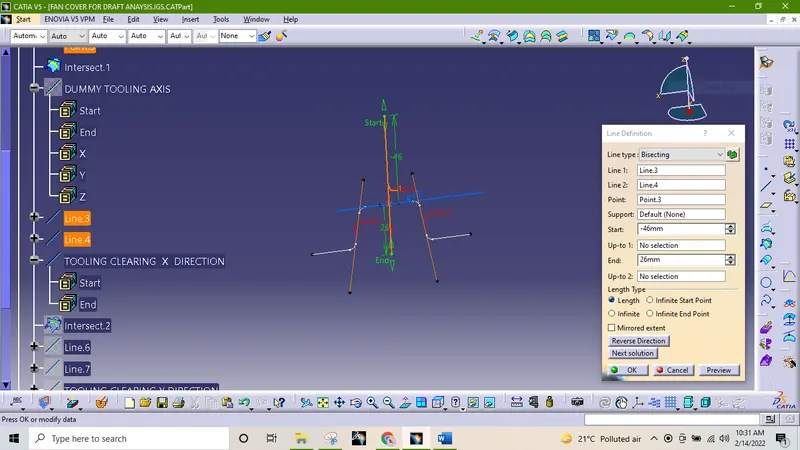
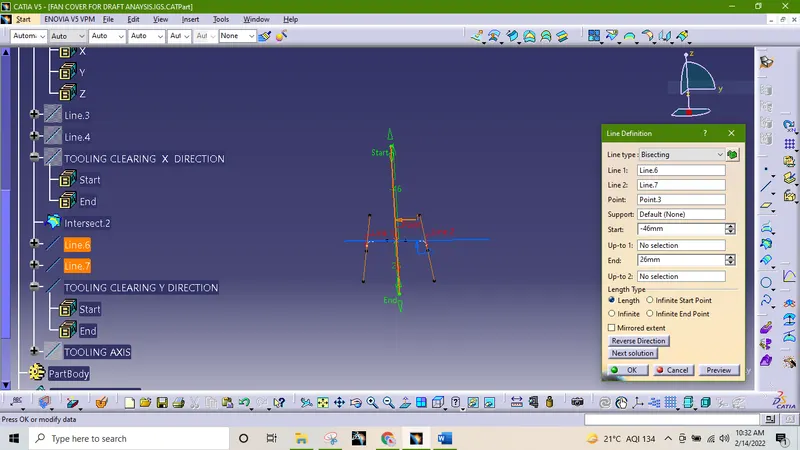
- Similarly, we intersect YZ plane of the axis system with the class A surface and we repeat the same procedure again.
- Now we have two axis one is X axis and another is Y we will bisect these two axes to get our final tooling axis.
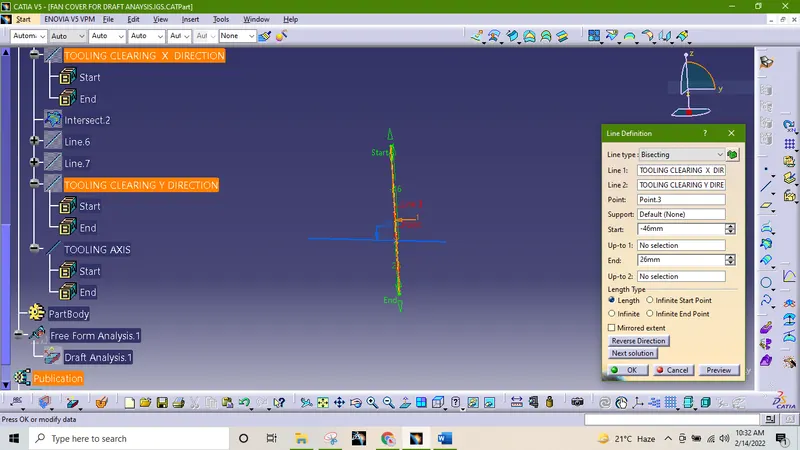
After that publish the tooling axis and class A surface for clearly visual able.
DRAFT ANALYSIS:
- Go to insert < analysis< feature draft analysis.
- Near to isometric tool customize view parameter in the shading click enable the material box.
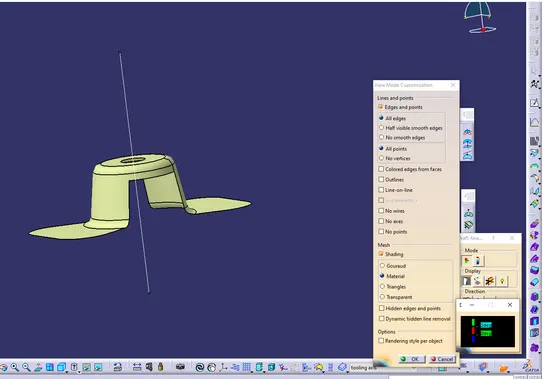
3.Click on the compass icon and align it with the tooling axis and lock it.
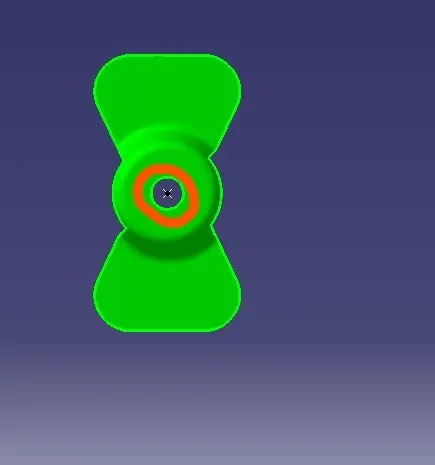
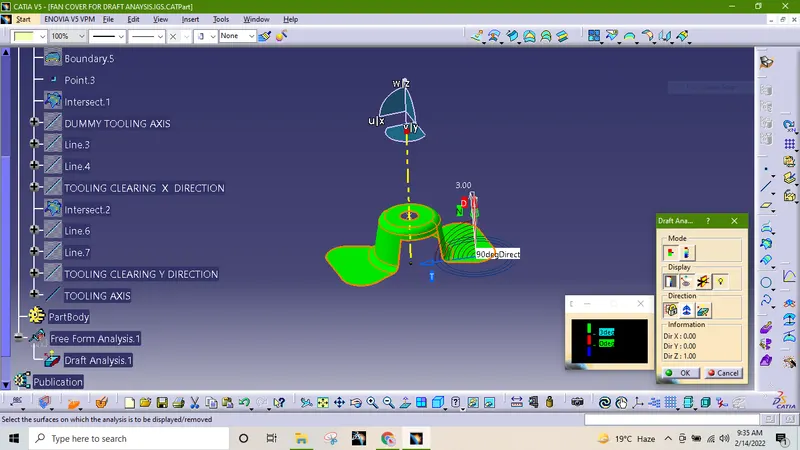
More than 3 degree is green Z is red and negative is blue. Minimum draft value is 3 now measure individually.
3 degree analysis
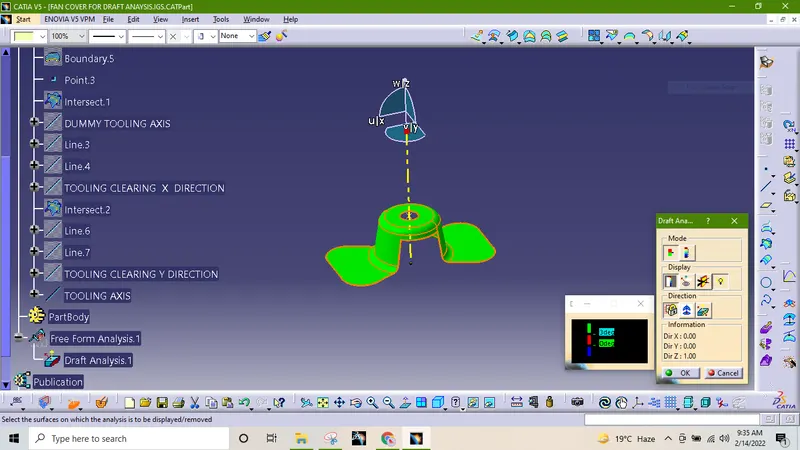
Analysis under the running point
Full analysis
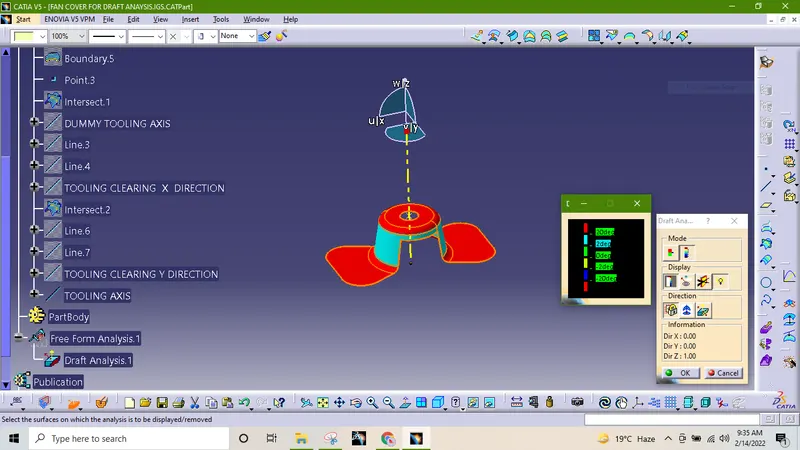
design view
isometric view
front view
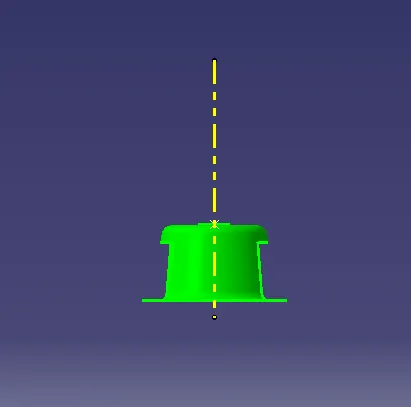
right side view
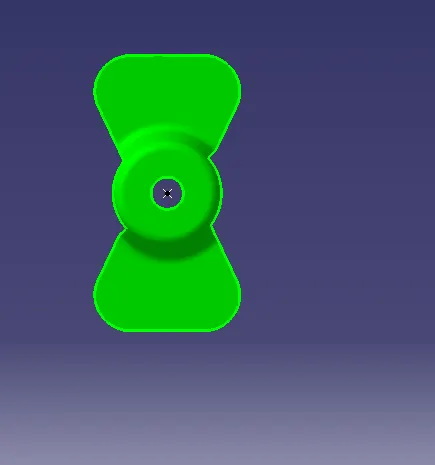
top view
Tree
CONCLUSION: At the end of this project, we learn how to perform draft analysis of component. we have a clear idea about draft analysis.
Green color indicated the draft angles are all having permissible values and the draft analysis status is fully passed.