Week 8 - Challenge 1 - Draft Analysis on a Fan Cover
Draft Analysis on a Fan Cover
Importatant Terms in Draft analysis are as follows:
Draft:
Draft is an angular tapering given at the design stage to every Plastic Component that has to be manufactured. It is given in the direction of the Mold Movement. The Draft allows the parts to release easily from the mold without creating friction between the surface of component and the core and cavity plates.
When a Plastic component cools down inside the mold, the natural tendency of it is to shrink and attach to the core or cavity half. The movement of mold opening causes friction on the walls of the component as well as the core/cavity blocks. This reduces the life of the mold as well as the component itself. The component may also have rough surface finish as well as weak structure due to this. This problem can be solved by giving draft to the component.
Most applications require minimum draft angles of around 0.5º to 1º , however 3º draft angles are widely accepted for cost saving purpose. 7º Draft angles are given to textured surfaces like Instrument Panels. Minimum possible draft angles are given to screw bosses, ribs and stiffeners due to their critical nature.
Tooling Axis:
Tooling Axis is the direction in which the Mold opens and closes. Part Drafts are given along this axis.
Draft Analysis:
Draft Analysis is a tool in CATIA which identifies the zones which deviates from the specified values of angles along a defined draft direction using colour codes. It highlights the regions of draft using colours. Draft analysis is the first step performed after receiving the Class A of the component.
Class- A Surface:
In automotive design, a class A surface is any of a set of freeform surfaces of high efficiency and quality. It is the visible aesthetic surface of any automotive component.
Procedure:
Step1: Check Class A surface design file:
After receiving the Class-A of the fan cover check for the connectivity of the all surfaces on it. Use Join operation, boundary operation and disassemble. The check is over if any discontinuities do not arise. Delete the operations after the check.
Step2: Determine Tooling Axis:
- Create a Dummy Tooling axis along the best possible direction as per the Class A as shown in Figure 1. In this case we have chosen Z axis as dummy as it doesn’t interfere with any slots or holes.
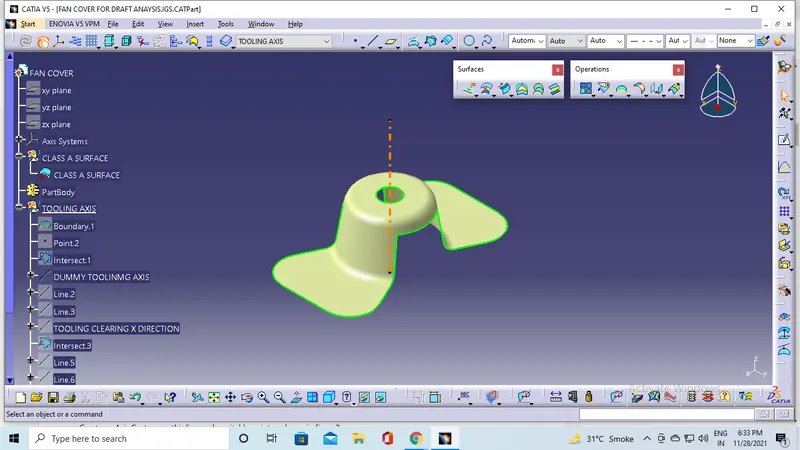
Figure1: Dummy tooling axis on Class A of Fan Cover.
- Create an Axis System on this line and a suitable point as shown in figure2.
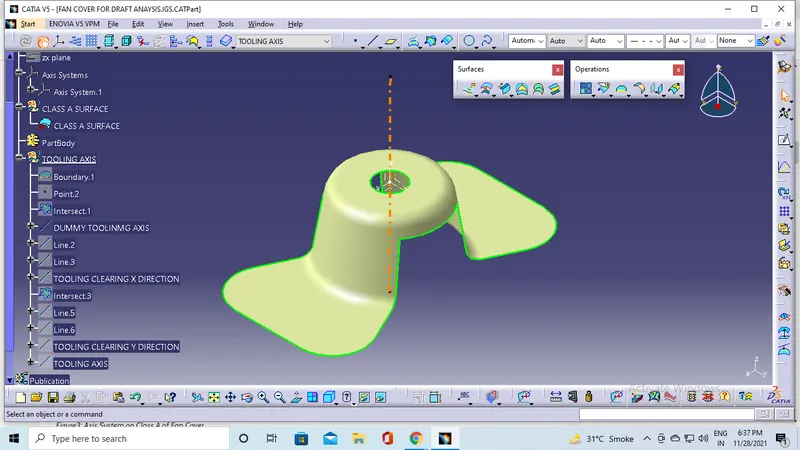
Figure2: Axis System on Class A of Fan Cover.
- Create an Intersect between the two planes and the Class A surface i.e., the XZ and YZ plane intersection with the fan cover as shown in Figure 3 and Figure 4.
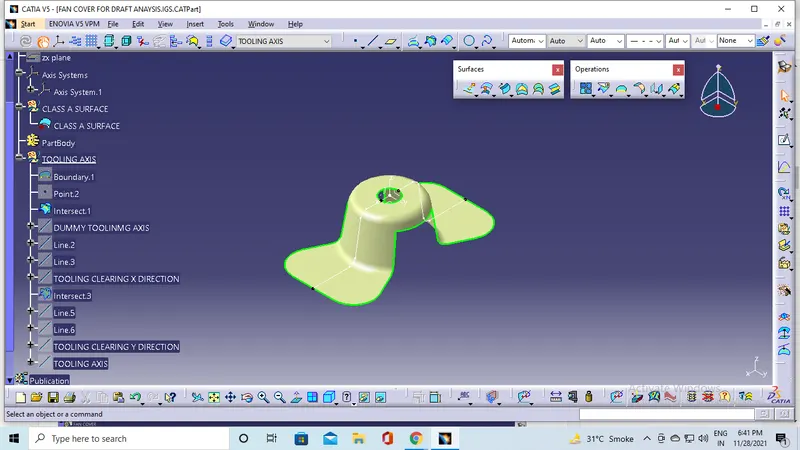
Figure3: Intersection of XZ plane with Class A of Fan Cover.
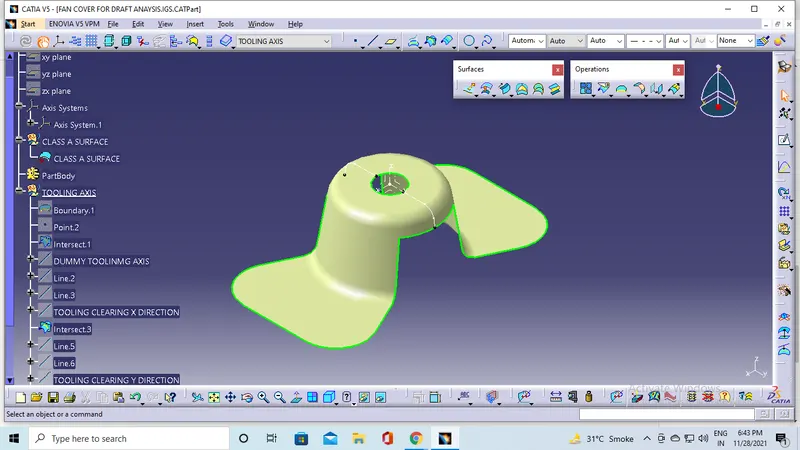
Figure4: Intersection of YZ plane with Class A of Fan Cover.
- Create extended Lines for the faces which may create problems in terms of Draft angles. In this case the lines are created for each intersect as shown in Figure 5 and Figure 6.
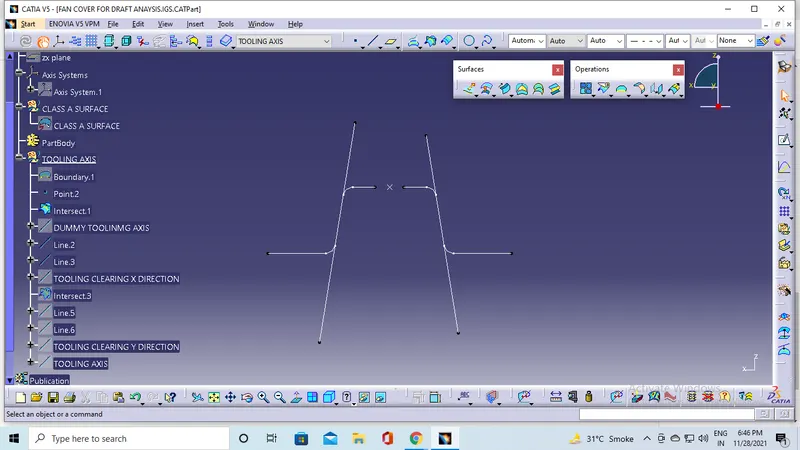
Figure5: Extended Lines for faces on XZ plane.
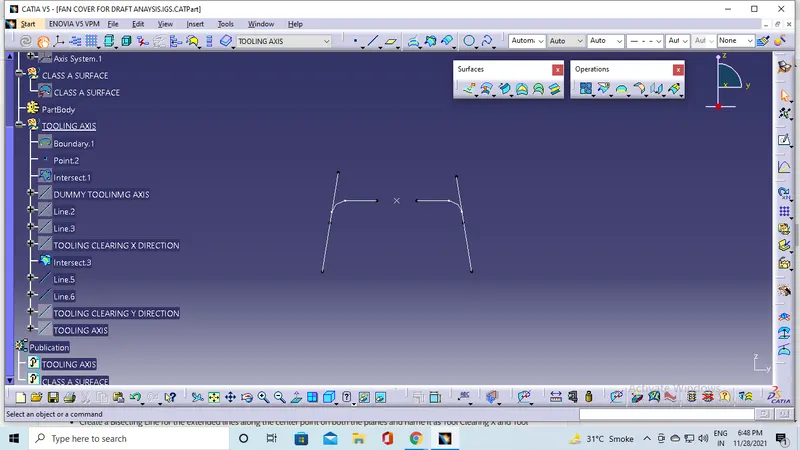
Figure6: Extended Lines for faces on YZ plane.
- Create a Bisecting Line for the extended lines along the center point on both the planes and name it as Tool Clearing X and Tool Clearing Y as shown in Figure 7 and Figure 8.
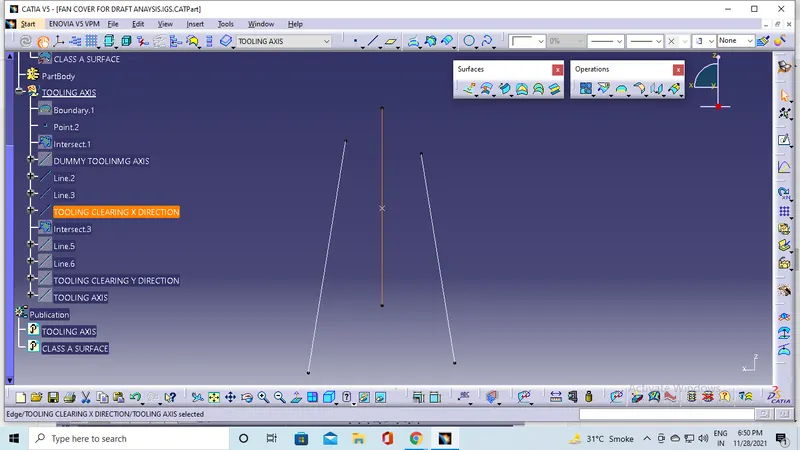
Figure7: Tool Clearing for X.
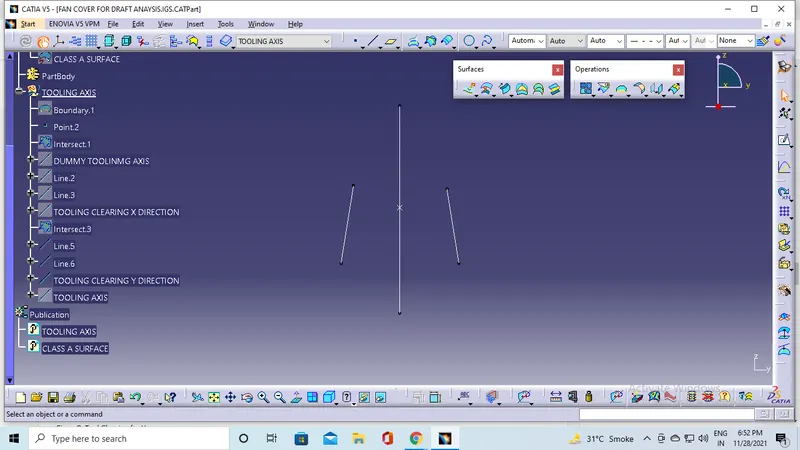
Figure8: Tool Clearing for Y.
- Create a Bisecting Lines between Tool Clearing for X and Tool Clearing for Y along the center point. This is the main Tooling Axis required. Name it as Tooling Axis and publish it using Insert---Publication.
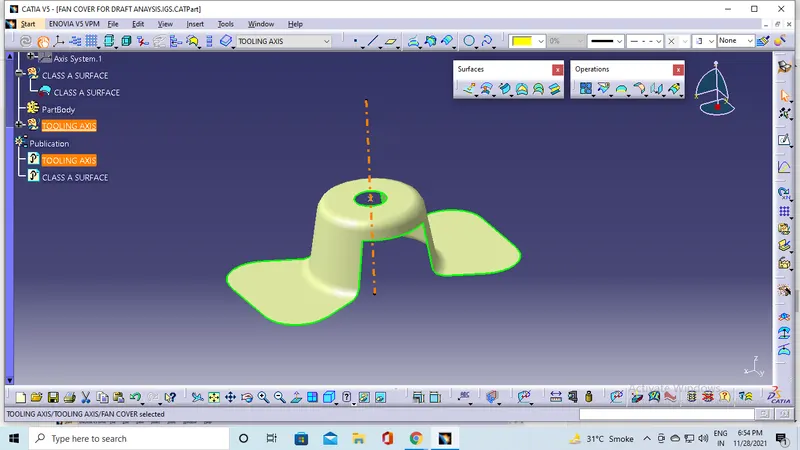
Figure9: Tooling Axis and its Publication.
Step3: Draft Analysis
- Change View Mode Customization to Material mode as shown in Figure10.
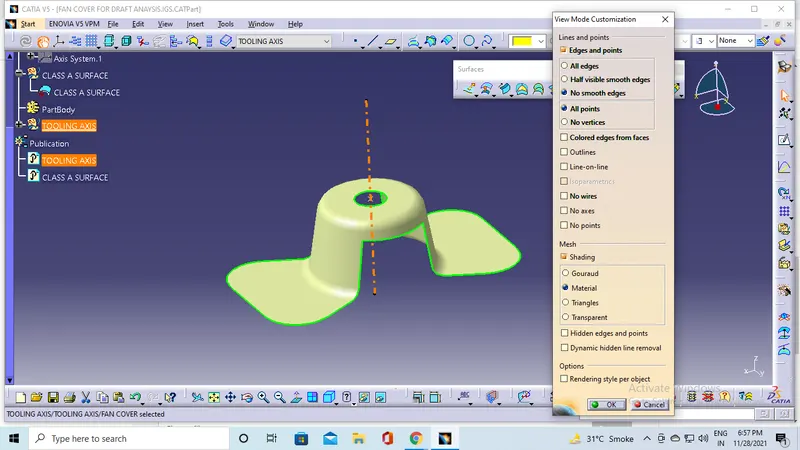
Figure10: Material Mode.
- Go to INSERT --- ANALYSIS --- FEATURE DRAFT ANALYSIS and move the compass to the Tooling Axis. Change the range to 3º. Apply the settings as Shown in Figure 11.
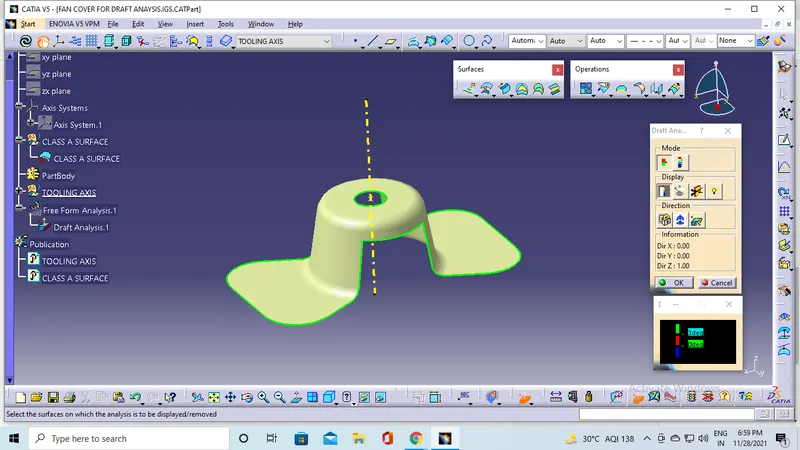
Figure11: Draft Analysis on Fan Cover.
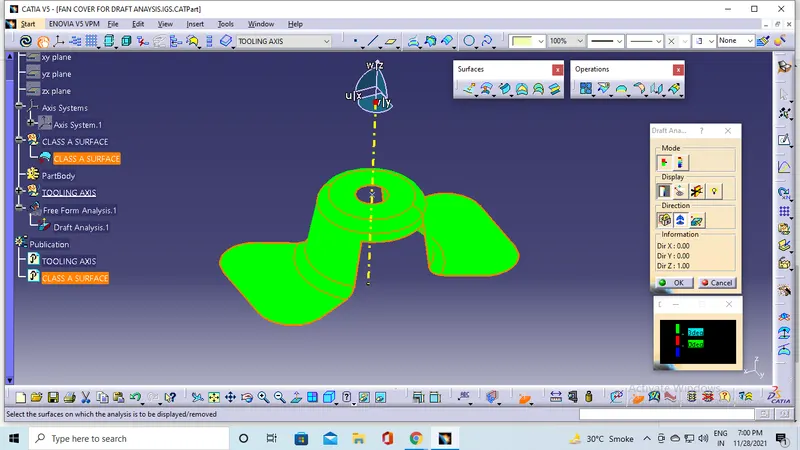
Figure12: Screenshot of Draft Analysis of Fan Cover.
Conclusion:
Green Colour indicated the draft angles are all having permissible values and the draft analysis status for the Fan cover is Passed.