Week 8 - Challenge 1 - Base Bracket Design
BASE BRACKET DESIGN
AIM
This Report aim is to perform draft analysis for the given surface by defining a tooling direction appropriate to the shape of the surface and also to create the class-B,class-C surfaces and final closed body.
THEORY
Class A surface:
This is the styling surface which provides the aesthetic features of a component. A designer starts the design of component from a class A surface.
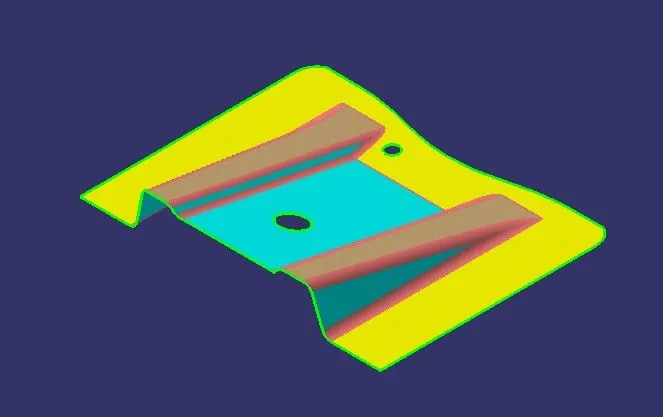
Given class A surface
Class B surface:
Class B surface is obtained by offsetting the class A surface by the component thickness value. This B surface contains all the engineering features of the component. So it is also called as Engineering Surface.
Class C surface:
Class C surface is created along the tooling direction of the component and it connects the class A and class B surfaces.
Tooling Axis:
Tooling axis is the direction in which the part is released from the mould.
Draft Analysis:
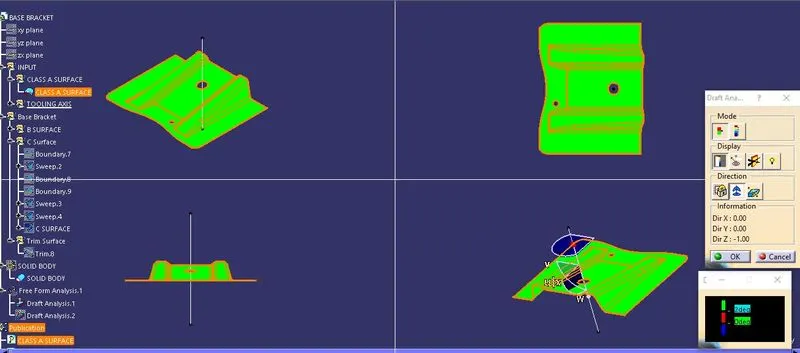
Draft analysis is an operation that is performed to know the draft angles of the surfaces concerning the tooling direction. The minimum feasible draft angle for this design is taken as 3 degrees. Generally for plastic components, a minimum draft angle that can be achieved is 0.5 degrees.
Importance of Draft analysis:
Draft analysis is useful in finding out the design errors concerning the draft angle in the early stage of the design. This reduces the lead time. A good draft analysis features an optimal tooling direction which can improve the cost of production and this also helps the manufacturing team in understanding the design of the component.
PROCEDURE
1. Check for discontinuity:
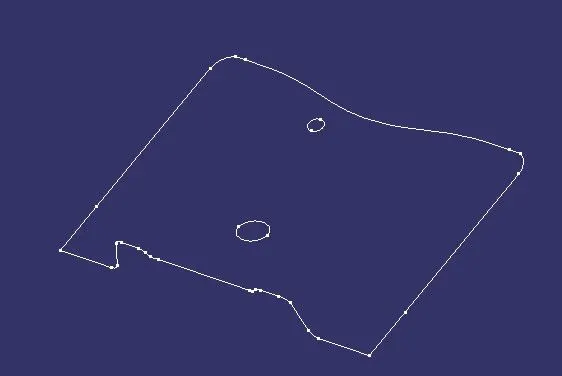
The first step any design engineer must ensure is the continuity of the surface received. In CATIA this can be verified by two operations: JOIN, BOUNDARY. In some cases, this can also be approved visually. Appropriate steps are to be taken if the surface has any discontinuities.
2. Creating a tooling axis:
- A tooling axis should be created such that, the surfaces of the part must clear the tooling axis and the elements of the component can be created in that direction.
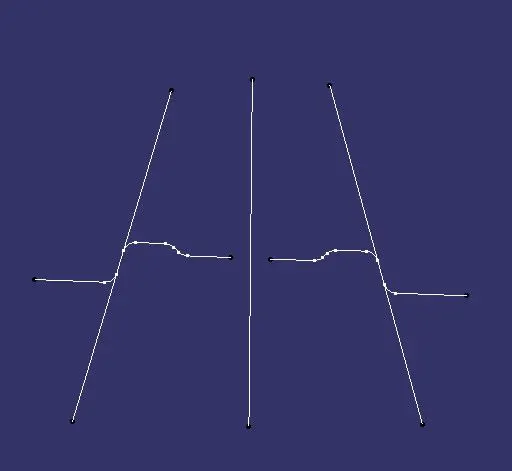
- we define a dummy tooling direction based on the flat surfaces and the holes the surface contains. And the areas which may create some issues when this dummy tooling direction is taken as the main tooling direction and the sketches of these areas should be obtained and concerning those sketches, the main tooling direction has to be obtained.
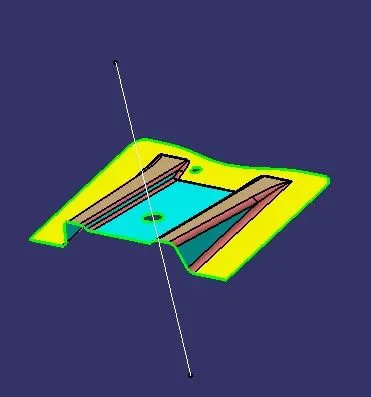
- For creating the tooling axis, we first intersect the component with the YZ plane only since a few elements of the component cannot be manufactured in the XZ plane.
- From the intersected surface we draw two lines from the boundary of the surfaces that we find close to not fulfilling the tooling axis.
- We then bisect these lines and get the tooling axis for the bracket.
3.Creation of Class B surface:
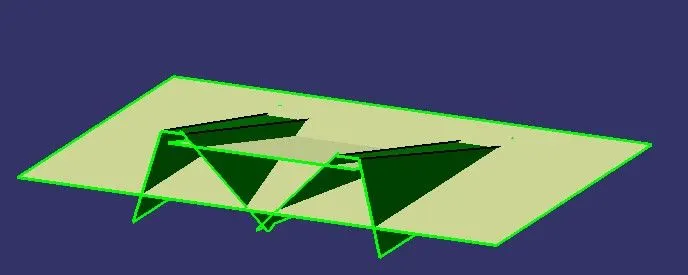
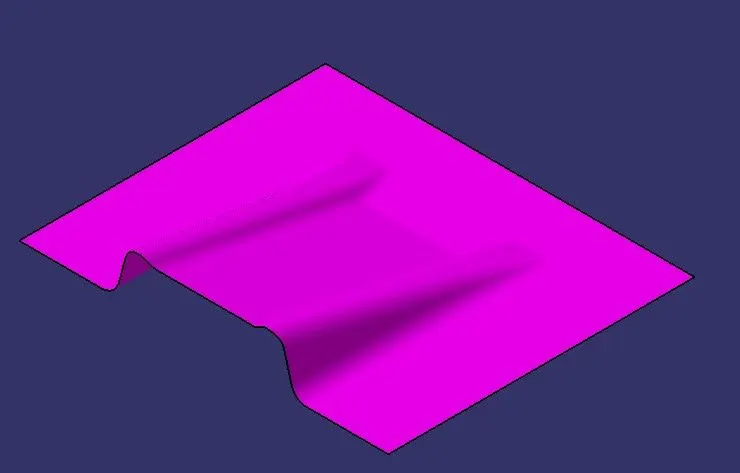
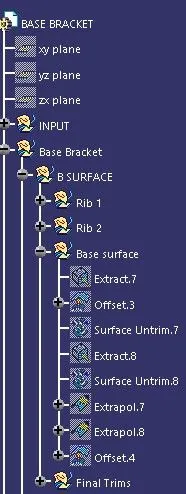
- We extract each face of the bracket except the fillets.
- The extracted surfaces are offset by the thickness of the bracket i.e. 2.5mm.
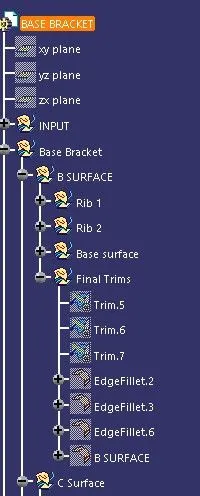
- The offset surfaces are then untrimed and extrapolated by 10mm and then trimmed with the other surfaces to form the shape of the bracket.
- Finally the fillets are applied to the edges and the final B surface of the bracket is created.
4.Creation of Class C surface:
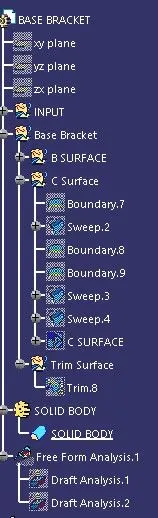
- The boundary of the bracket and its elements such as hole are extracted.
- The extracted boundaries are swept with draft direction which is the Tooling axis and with a draft angle of 3°.
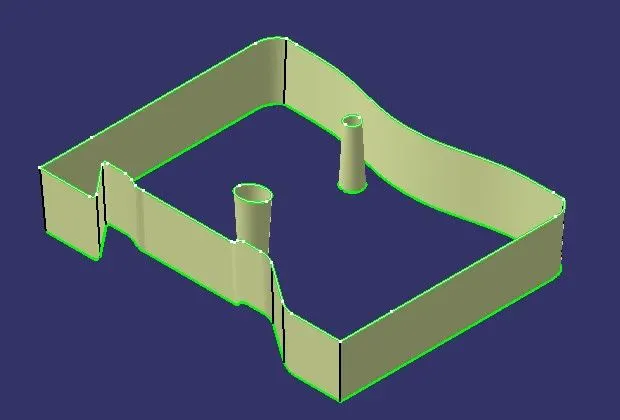
These swept surfaces are then joined with the class A surface.
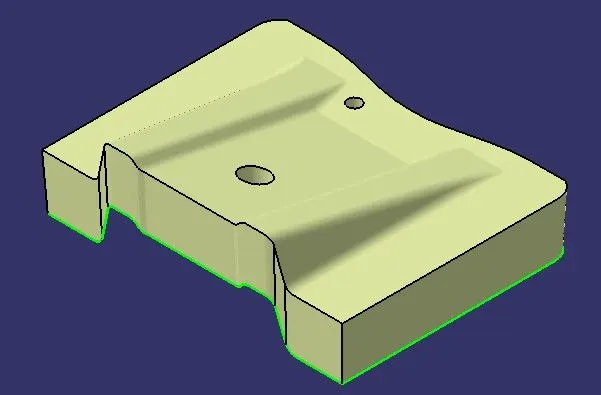
The joined surface is then trimmed with the class B surface to create the surface body of the Bracket.
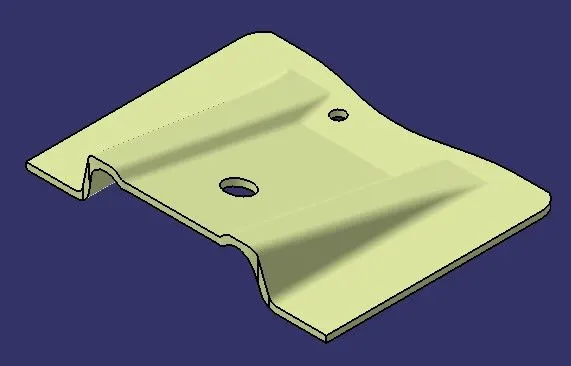
This surface body is then turned into a closed surface to make the final body of the Bracket.
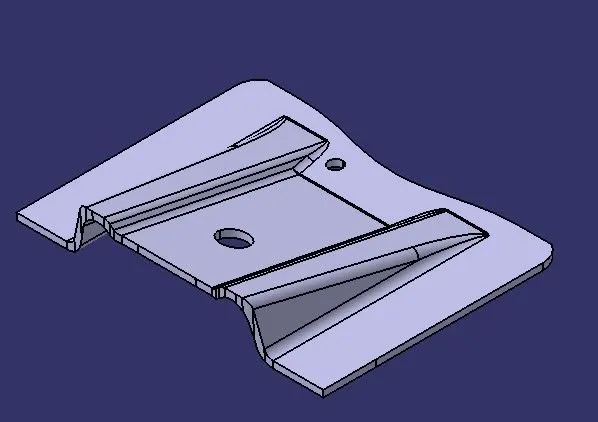
Detailed Tree structure
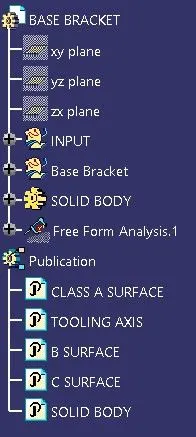
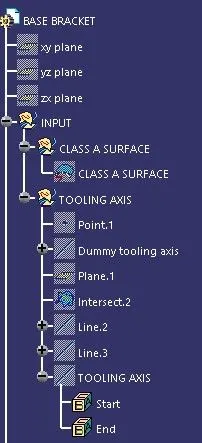
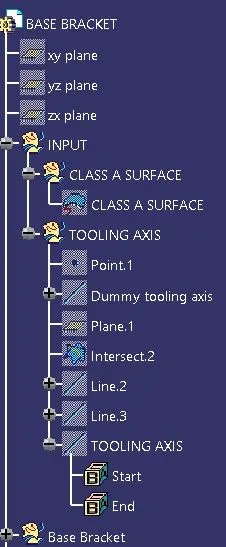
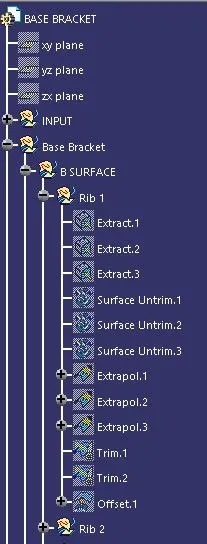
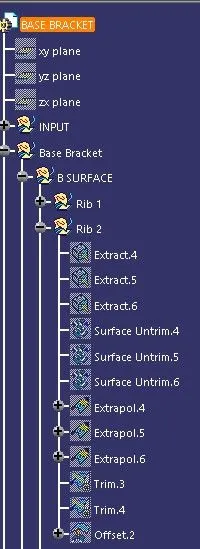
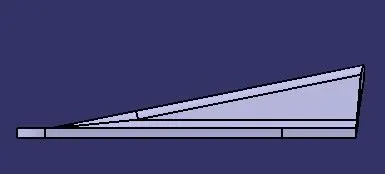
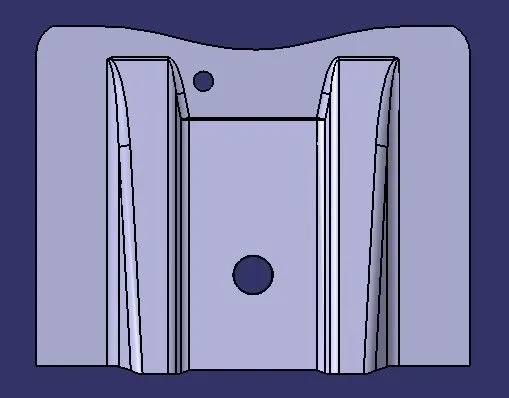
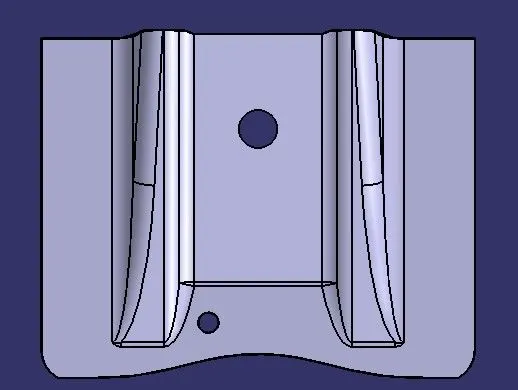
Different views of Final Closed Body
Isometric view
Front view
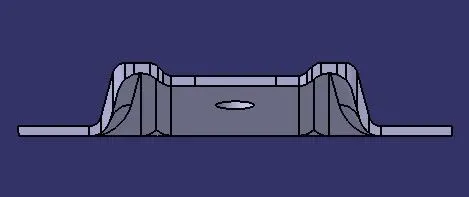
Side view
Top and bottom views
CONCLUSION:
Finally the Base bracket is designed with the help of Class A surface by construcing Class B and C surafces. and the draft analysis resluts show that the component can be manufacturable with the help of Injection Molding processes.