Week 8-3D Tetra Meshing Challenge
MODEL 1:
OBJECTIVE:
To create a tetramesh for the given housing component by 2D to 3D conversion method.
CAD MODEL:
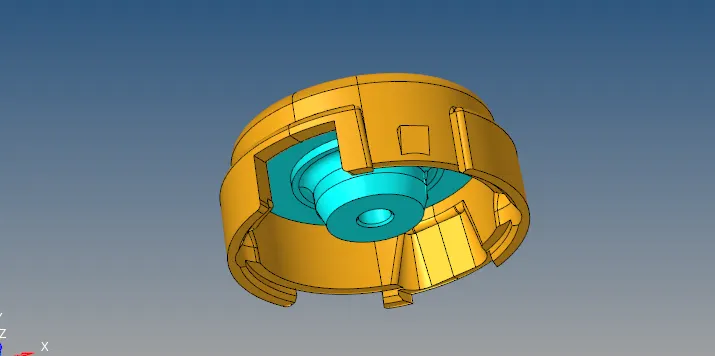
PROCEDURE:
- This model consists of 2 components. So, tetrameshing of the components are done separately.
- First, the solids are deleted by delete command.
- Now the first component is selected for meshing.
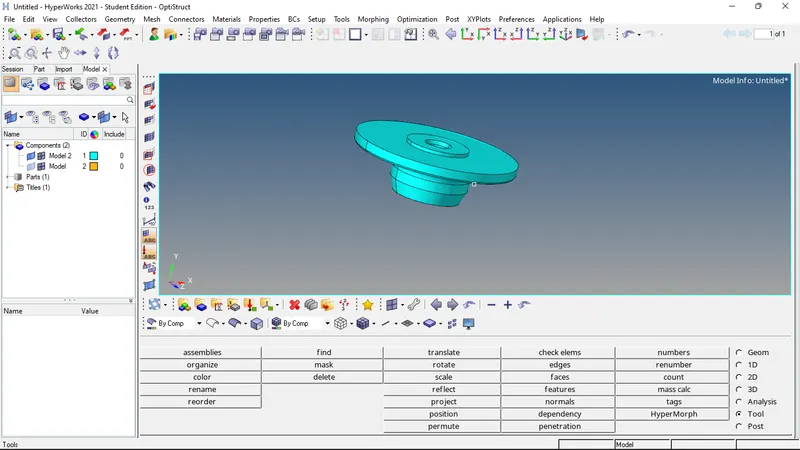
- For 2D to 3D conversion method, first 2D meshing (only trias) is done on the component.
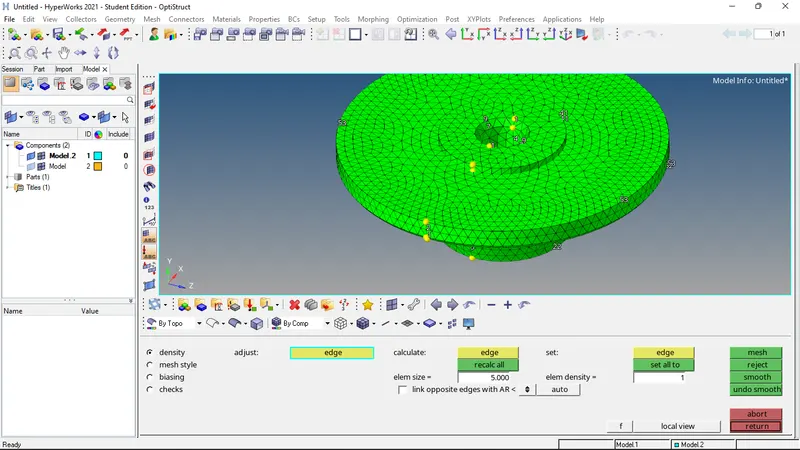
- Now the elements are checked for quality criterias. i.e min and max size of elements.
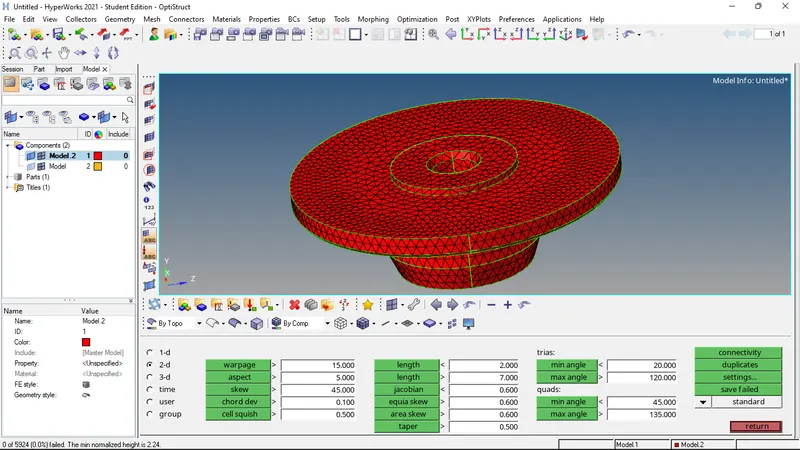
- Now tetra meshing is done by selecting the created tria elements.
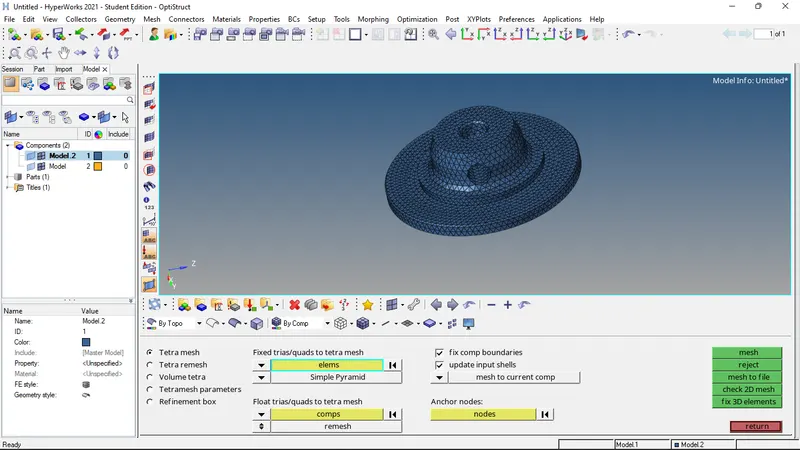
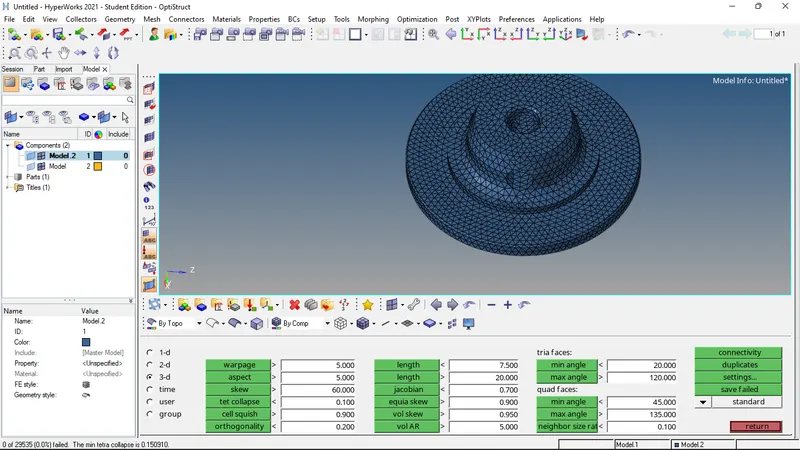
- Now the tetramesh elements are checked for tetcollapse.
- As the tetcollapse failure is 0%, we have successfully completed the meshing.
- Now we have to perform the same operations for the second component.
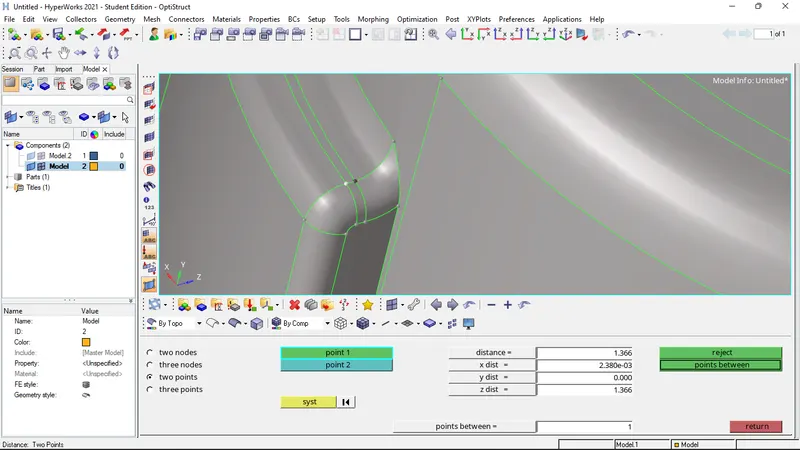
- For the second component, geometry cleanup is done before meshing.
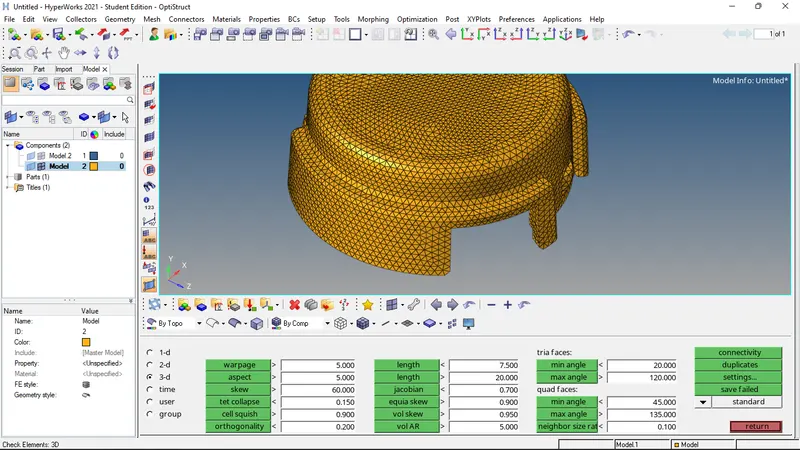
- Now tria elements are created and then converted into 3D tetra elements as mentioned above.
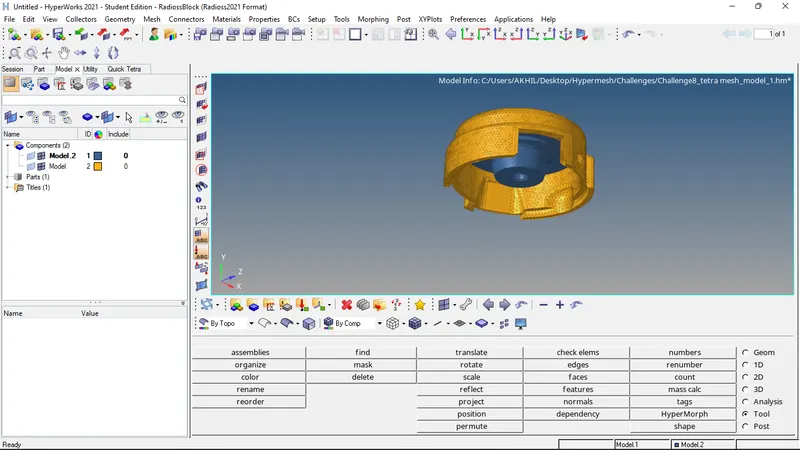
FINAL MODEL:
RESULT:
The given model is successfully meshed by the 2D to 3D conversion method and according to the given quality criteria.
MODEL 2:
OBJECTIVE:
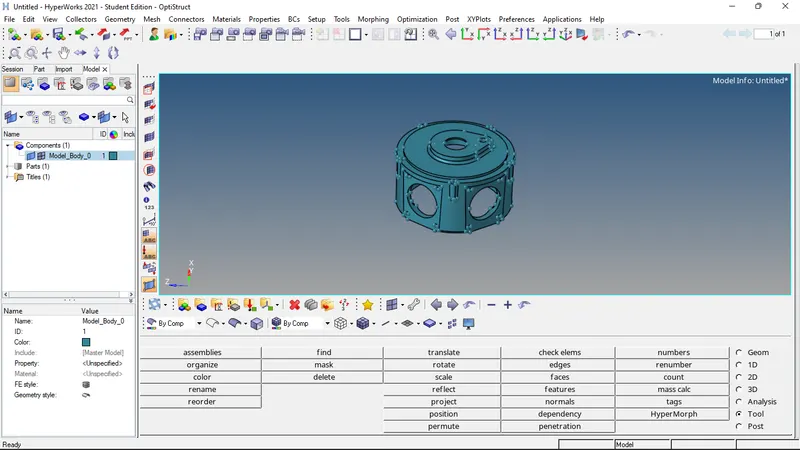
To create a tetramesh for the given housing component by quick tetra mesh or volume tetra mesh method.
CAD MODEL:
PROCEDURE:
- We have chosen quick tetra mesh option for this meshing
- Quick tetra mesh panel is opened and the given parameters are entered.
- Then the meshing of the component is done.
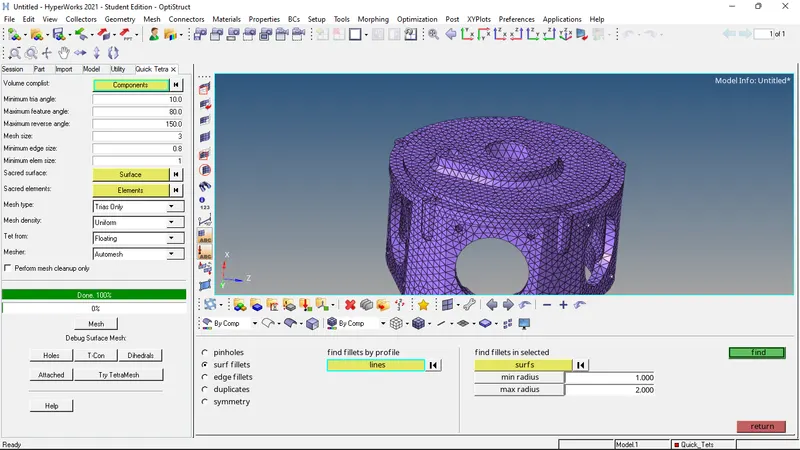
- Now the elements are checked for quality criterias. i.e tetcollapse.
- The failed elements are selected and remeshed through tetra remesh option.
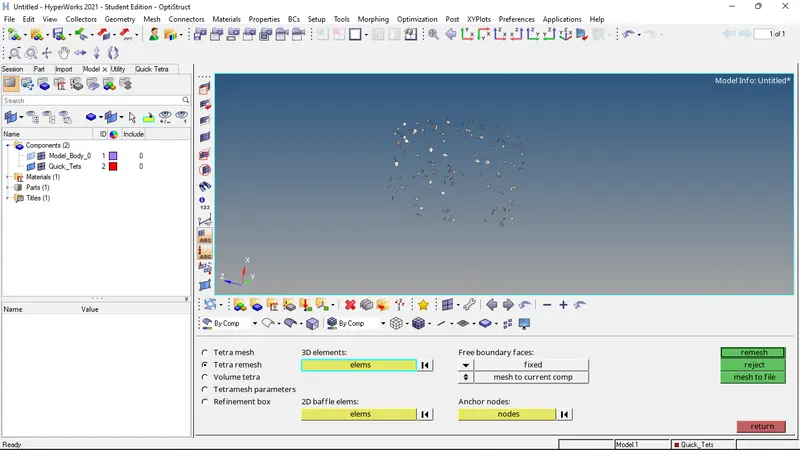
- Now the tetramesh elements are again checked for tetcollapse.
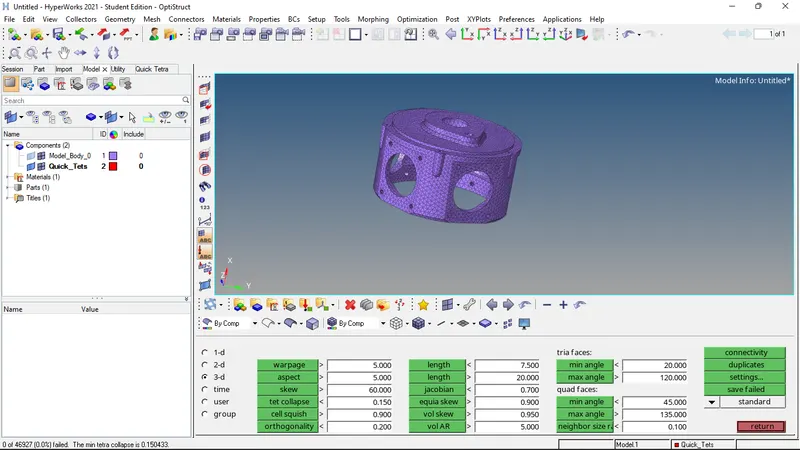
- As the tetcollapse failure is 0%, we have successfully completed the meshing.
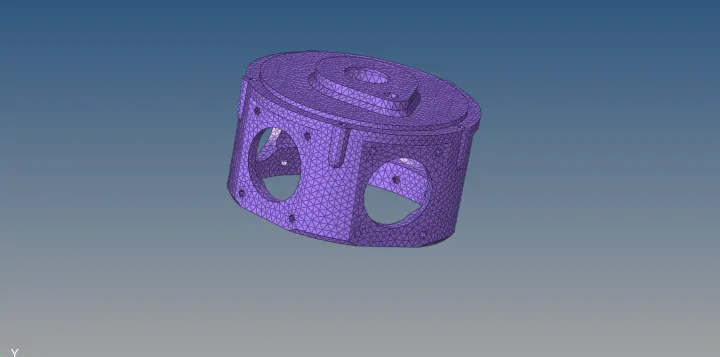
FINAL MODEL:
RESULT:
The given model is successfully meshed by quick tetra mesh method and according to the given quality criteria.
MODEL 3:
OBJECTIVE:
To create a tetramesh for the given housing component by quick tetra mesh or volume tetra mesh method.
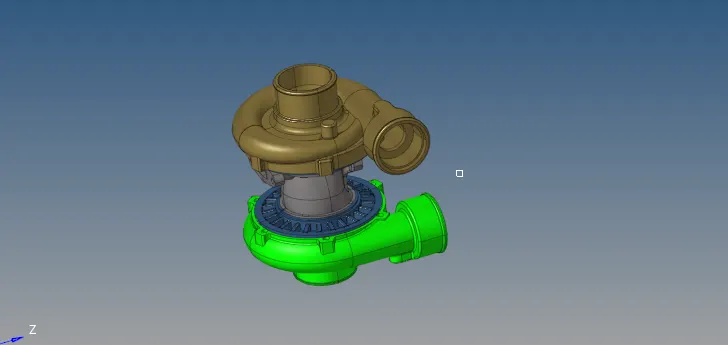
CAD MODEL:
PROCEDURE:
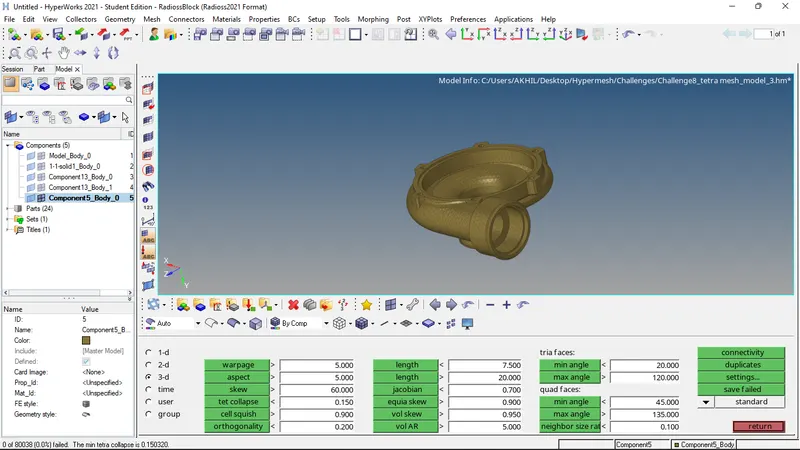
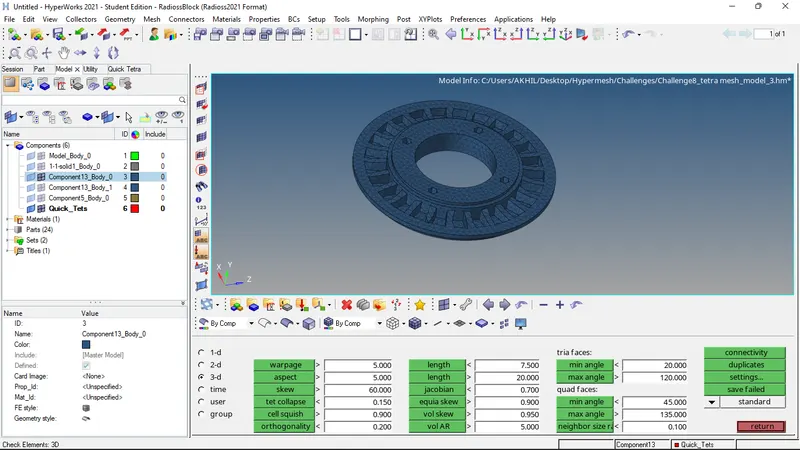
- This model has 5 components. so meshing of the individual components is done individually.
- First we wwill be doing volume tetra meshing of the first component
- We have chosen volume tetra mesh option for this meshing
- Then the meshing of the first component is done.
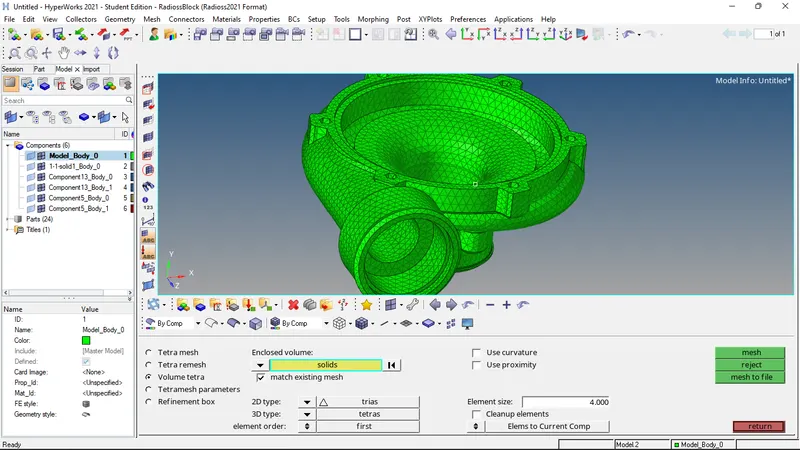
- Now the elements are checked for quality criterias. i.e tetcollapse.
- The failed elements are selected and remeshed through tetra remesh option.
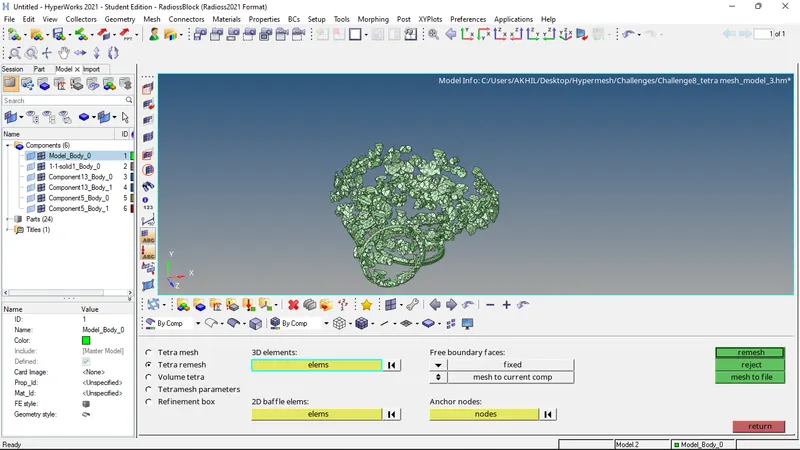
- Now the tetramesh elements are again checked for tetcollapse.
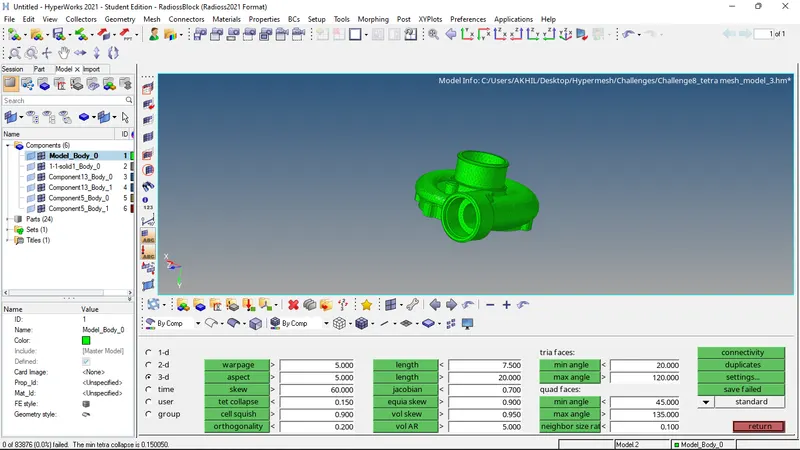
- As the tetcollapse failure is 0%, we have successfully completed the meshing of the first component.
- Next we will be doing volume tetra meshing using the surface of the first component
- We have chosen volume tetra mesh using surface option for this meshing because the component has some interference in the model.
- The interference of the model is corrected and the volume tetra meshing is done.
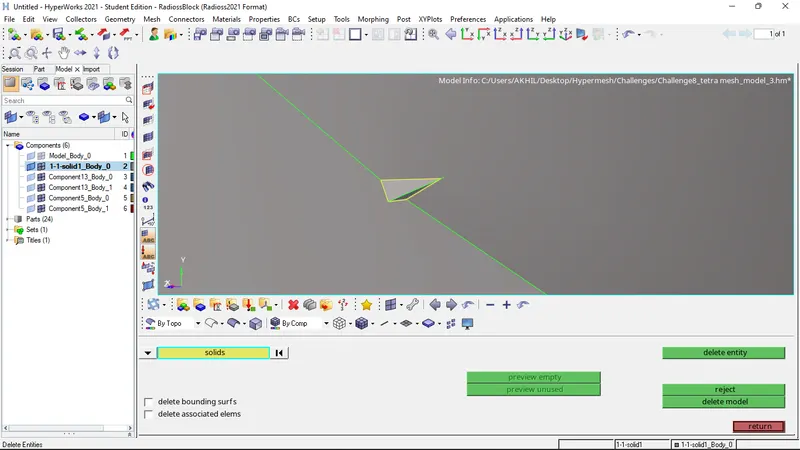
- Now the elements are checked for quality criterias. i.e tetcollapse.
- The failed elements are selected and remeshed through tetra remesh option.
- Now the tetramesh elements are again checked for tetcollapse.
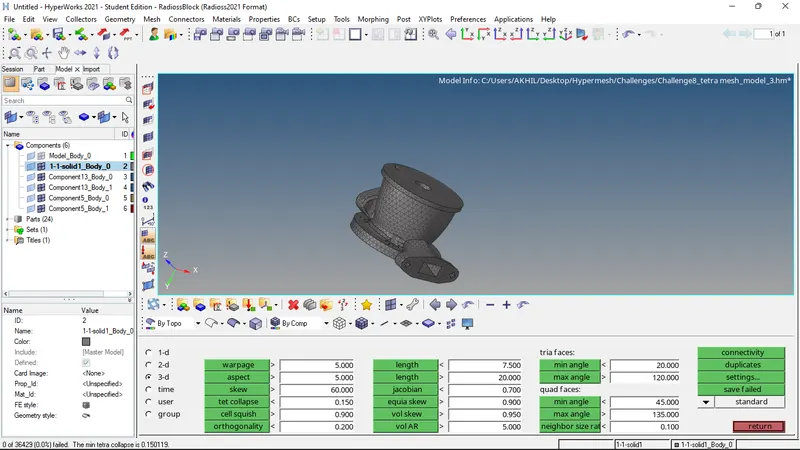
- As the tetcollapse failure is 0%, we have successfully completed the meshing of the second component.
- The same procedure is repeated for the other 3 components.
FINAL MODEL:
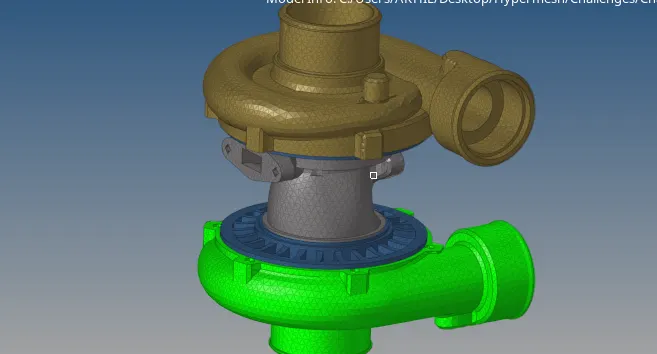
RESULT:
The given model is successfully meshed by quick tetra mesh and volume tetramesh method and according to the given quality criteria.