Week 8-3D Tetra Meshing Challenge
CREATING TETRAHEDRAL ELEMENTS USING HYPERMESH
I. Tetramesh for housing and hub assembly:-
- Tetrahedral elements are solid elements which have been extracted from 2-D tria elements. Hypermesh builds 4 and 10 noded tetras. Hypermesh provides two methods of generating a tetrahedral elemental mesh. The volume tetra mesher works directly with surface or solid geometry to automatically generate a tetrahedral mesh. The standard tetra mesher requires a surface mesh of tria or quad elements as input, then provides us with a number of options to control the resulting tetrahedral mesh
OBJECTIVE:
- Use standard tetramesh technique to mesh the components
- Generate 2-D tria elements mesh on the hub and cover
- Check the quality of the tetra elements
PROCEDURE:
- Import the 'housing. stp' file using the import tool option
- Using the geometry menu in the menu bar, use the geometry cleanup tools to ensure a fully enclosed volume. Check the topology and verify if we still have free edges.
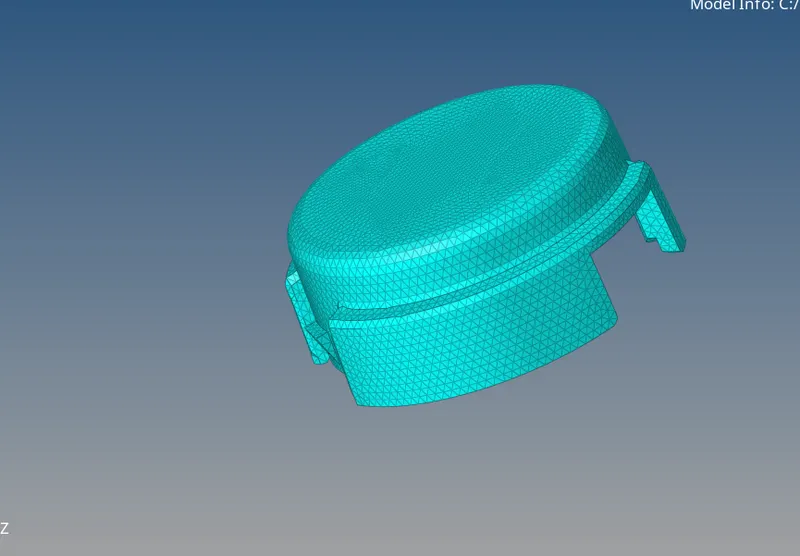
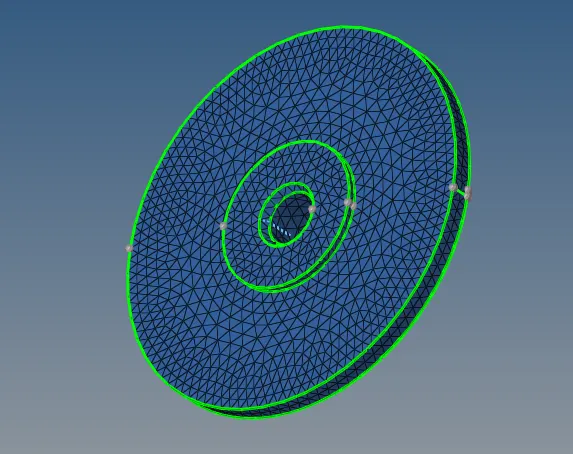
- Click on automesh panel from the 2D elements page. Select the surfaces and put element type as trias. We will set the target element size as 5 units.
- After meshing the surfaces and ensuring that no elements are failing for minimum and maximum element length, we can proceed to convert the 2D tria elements to 3D tria elements.
- Access the Tetramesh panel from 3D page, and then click on tetramesh subpanel.
- Select the elements selector under fixed trias/quads to tetra mesh. Click mesh to generate the tetrahedral elements
- Use check elements panel and go to the 3D subpanel. Identify elements having a tet collapse value smaller than 0.15.
- Remesh the hub's displayed tetra elements to improve their tetra collapse. Under tetramesh parameters check the minimum tetra and maximum tetra element length box. Also, check the fill voids, fill midnodes and smoothing box. Set the tet collapse value as 0.15
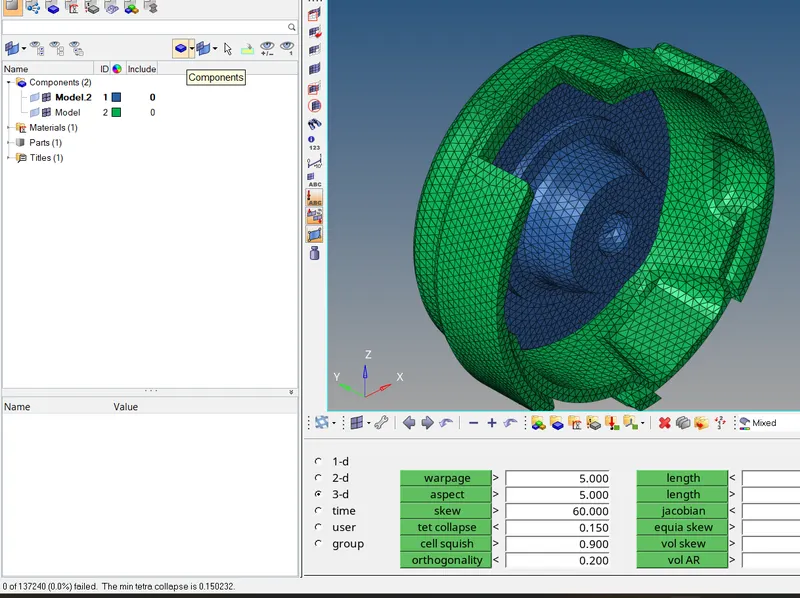
- Another method to improve the tet collapse is by using distance option. The elements that failed the tetra collapse is by using distance option. The elements that failed the tetra collapse check is saved in the user mark by clicking on save failed, and can be retrieved in mask panel using extended selection menu
- We can increase the distance to improve the tet collapse value
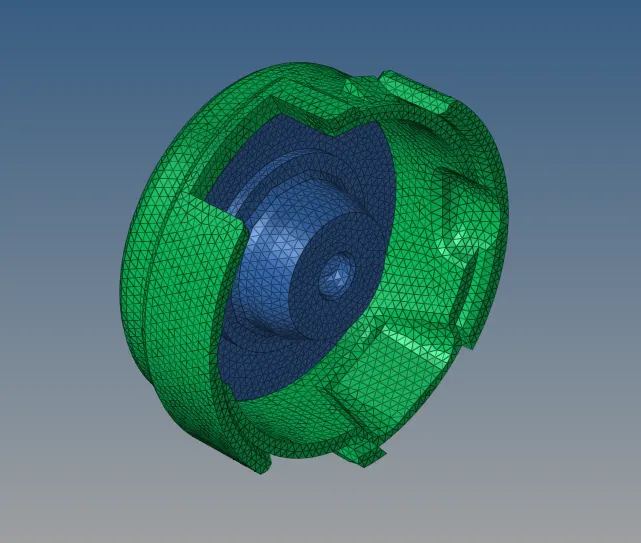

CONCLUSION:
- Performed tetrahedral mesh generation by converting the 2D elements into 3D.
- Achieved a better mesh by clearing the 3D mesh quality errors.
LEARNING OUTCOME:
- Various techniques for creating the tetrahedral mesh.
- Understanding the 3D mesh quality error and clearing that.
II. Creating tetramesh for Crank Housing:-
OBJECTIVE
- Use the quick tetra mesh to mesh the geometry.
- Review the quality of the tetra mesh to validate its integrity.
PROCEDURE:
- Import the 'Crankhousing.hm' file using the import tool option.
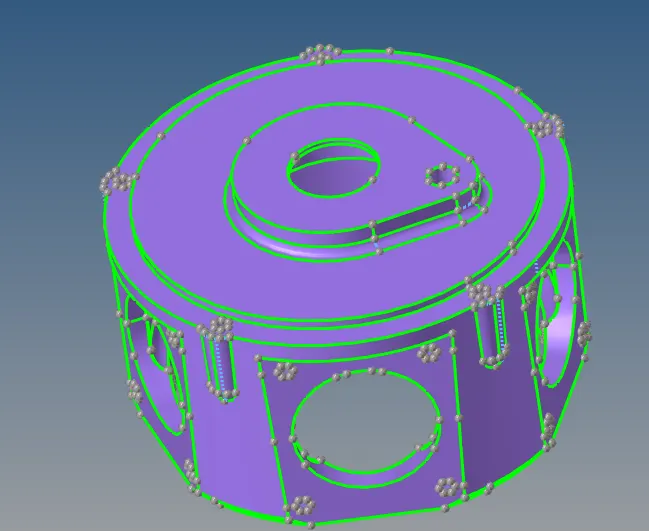
- Observe the topology of the geometry by using the visulaisation option. Make sure that there are no free edges.
- We can access the quick tetra menu under View>Browsers>Hypermesh>Utility. Go to geometry/mesh and select quick tetramesh under mesh tools
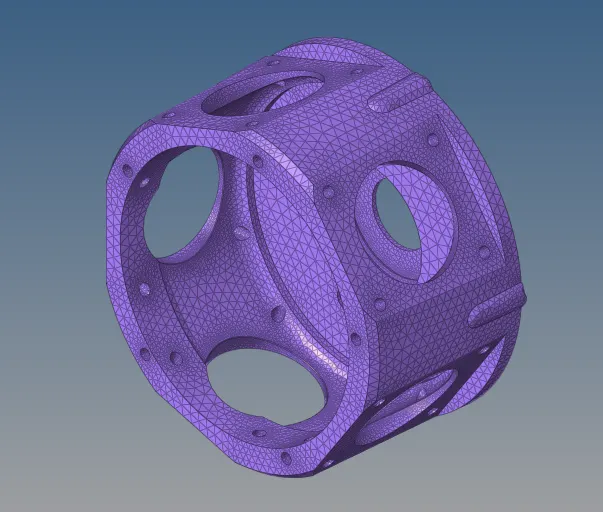
- Select the component and put trias only as mesh type. Fill mesh size as 3 units. Click the mesh button to mesh the component.
- Use check elements panel and go to the 3D subpanel. Identify elements having a tet collapse value smaller than 0.15.
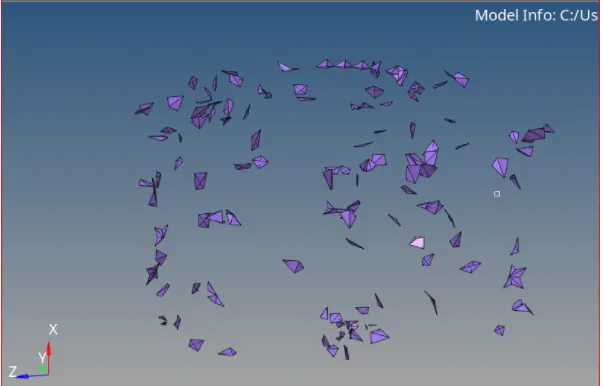
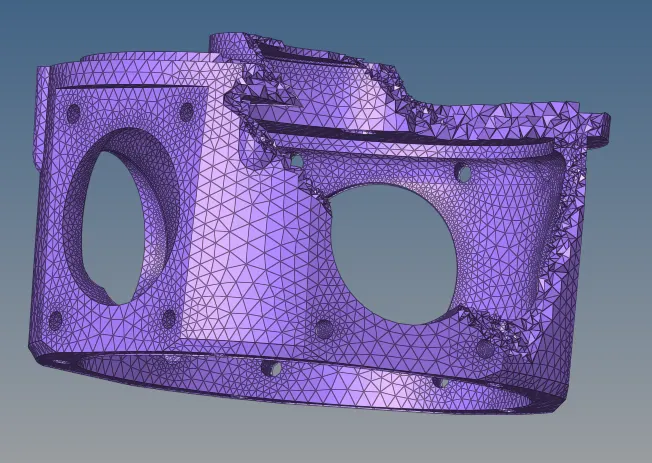

- Remesh the crank housing displayed tetra elements to improve their tetra collapse. Under tetramesh parameters check the minimum tetra and maximum tetra element length box. Also, check the fill voids, fill midnodes and smoothing box. Set the tet collapse value as 0.15
- Another method to improve the tet collpase is by using distance option. The element that failed the tetra collapse check is saved in the user mark by clicking on save failed, and can be retrieved in mask panel using the extended section menu.
- We can increase the distance to improve the tet collapse value.
CONCLUSION:
- 3D mesh generated using the quick tetra method.
- Performed 3D quality check and removed all the elements failing for tet collapse.
LEARNING OUTCOME:
- Understanding about quick tetra meshing method.
- Clearing up the tetrahedral quality errors.
III. Creating tetramesh for assembly components:-
OBJECTIVE
- Mesh the components using quick and volume tetra meshing technique.
- Perform elements quality check on each of the components.
PROCEDURE:
1. Import Geometry:
- Go to File >> Import >> Model/Geometry
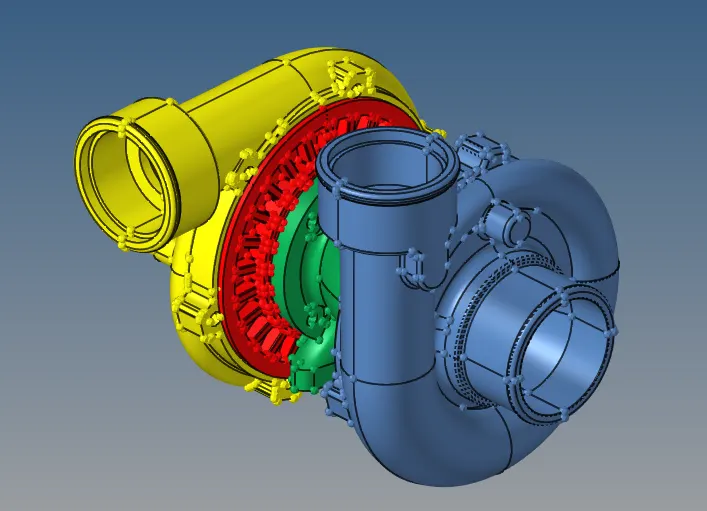
2. Volume tetra mesh:
- Go to 3D >> tetra mesh >> Volume mesh

- Tick curvature and proximity options for better feature capturing of mesh
- Select the required solids or surfaces of each component individually
3. Solving Tet Collapses (Using Fix 3D elements option):
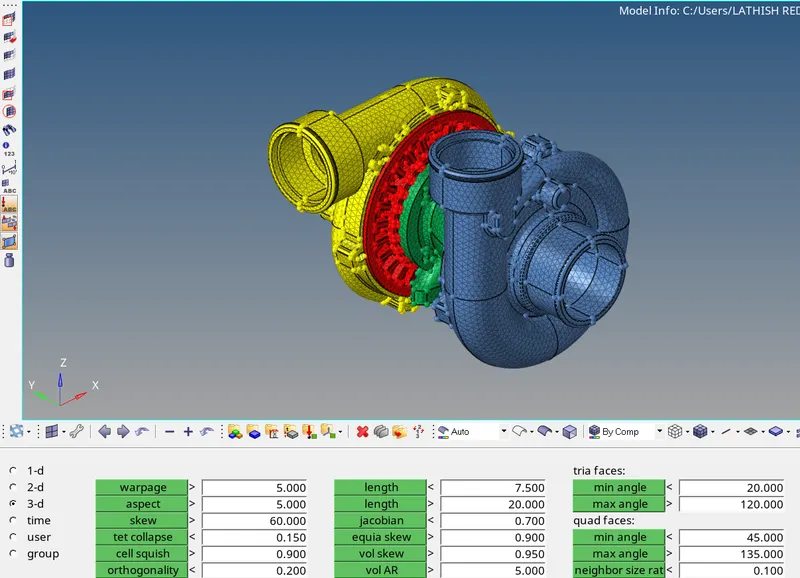
- 3D mesh is generated and there are 1803 elements failing for Tet collapse
- Now go to tetra mesh >> fix 3D elements
- Select all the elements and give Tetra collapse value and number of iterations and click Fix
- The majority of the elements are solved automatically
- The remaining elements can be remeshed or solved manually until all the tet collapses are solved.
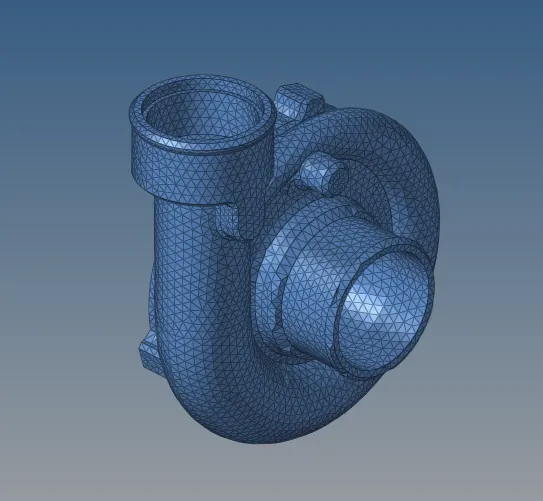
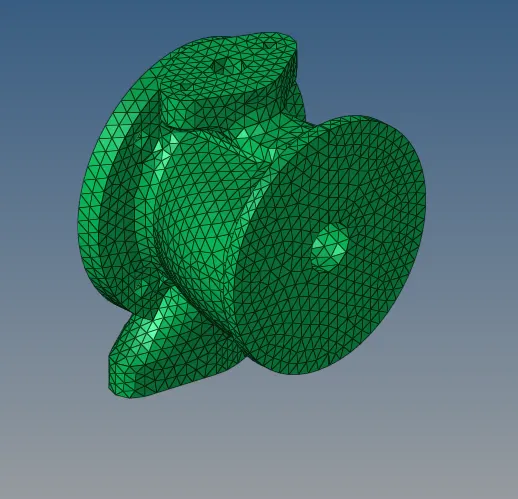
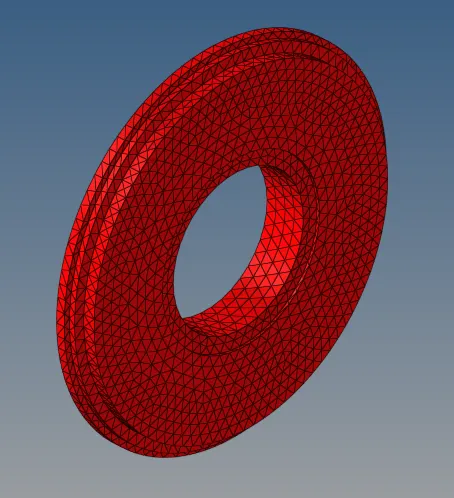
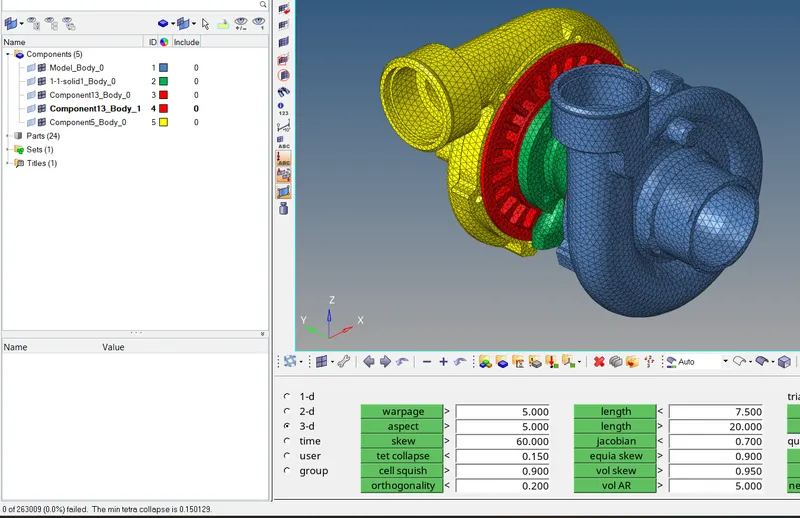
Learning Outcomes:
- Understood different ways of generating volume mesh
- Used different methods to solve Tet collapse
Conclusion:
- After completion, Volume mesh is successfully generated for all the 3 MODEL'S and there are no quality issues or Tet collapses found