Week 7 State of charge estimation
STATE OF CHARGE ESTIMATION
OBJECTIVE:-
By using the given lithium ion battery management project matlab model
simulate the 3 test cases from harness dashboard and write a detailed report on the results and explain the coulomb for SOC estimation implemented by BMS.
BMS PROJECT MODEL:-
save it and extract the folder
open matlab and make current folder as the folder having BMS project
open the battery system.prj it will open the BMS project
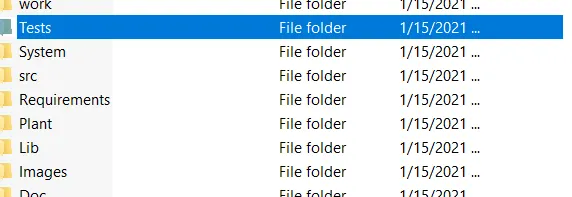
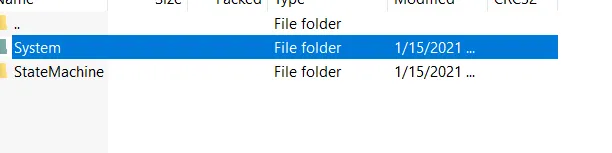
select test>system>BMS closed loop harness dashbord
it will open the simulink model of BMS closed loop dashboard.

BMS CLOSED LOOP HARNESS DASHBOARD:-
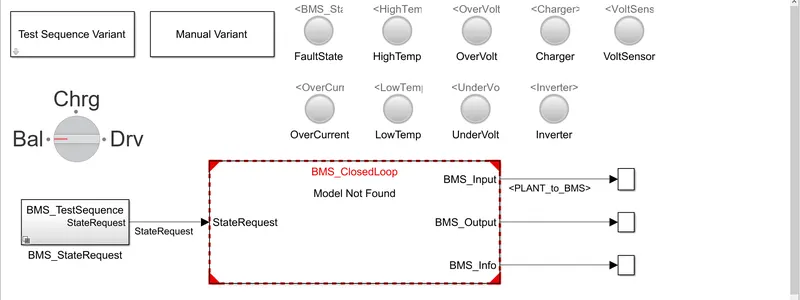
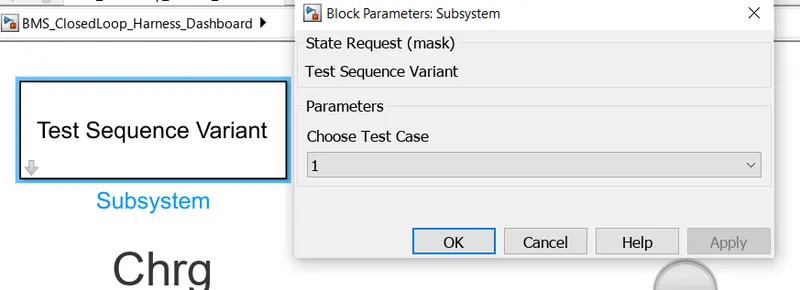
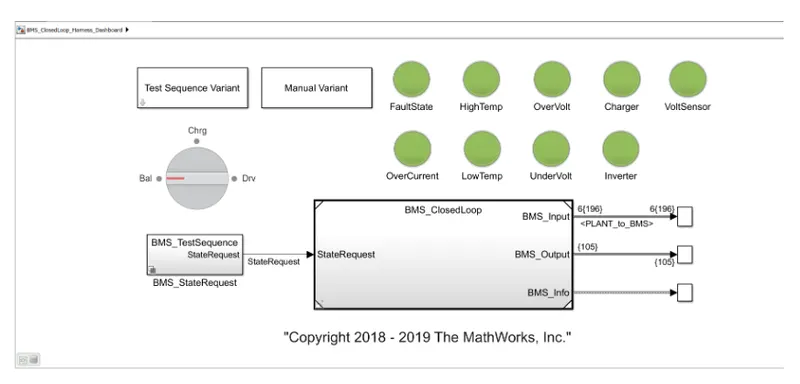
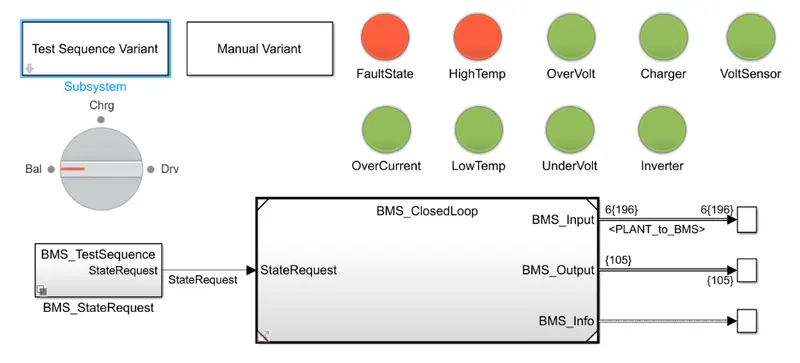
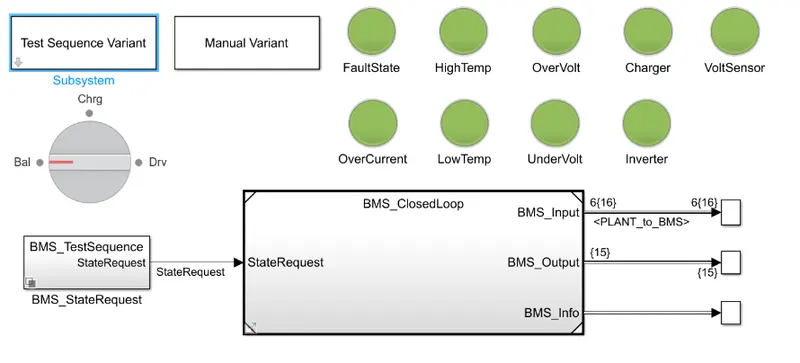
It contains subsystem1-test sequence variant which contains the 3 test sequences,the test sequences needed can be selected in this subsystem.
subsystem 2-it is manual variant,if this block is active,we have to select the test sequence manually by using rotary switch which have three conditions battery.charging and driving.
BMS state request is the subsystem which is the request input to the BMS closed loop which gives wich give test sequence is selected whether it is automatic test sequence or manual selected sequence.
it contains indicator light lamps of fault state,high temp,overvoltage,charger,volatge sensor,overcurrent,low temp,under voltage,inverter stage of battery.
green light is the good condition of battery,red light indicates the bad or fault conditionin the battery system.
BMS CLOSED LOOP:-
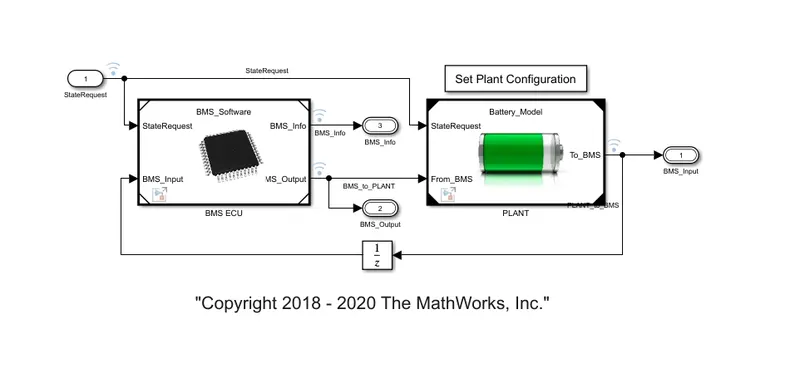
The closed loop consist of two subsystems BMSECU and plant
battery plant has two configuaration of 1 module and 16 modules of battery which can be selected by set plant configuration block.
BMS ECU:-
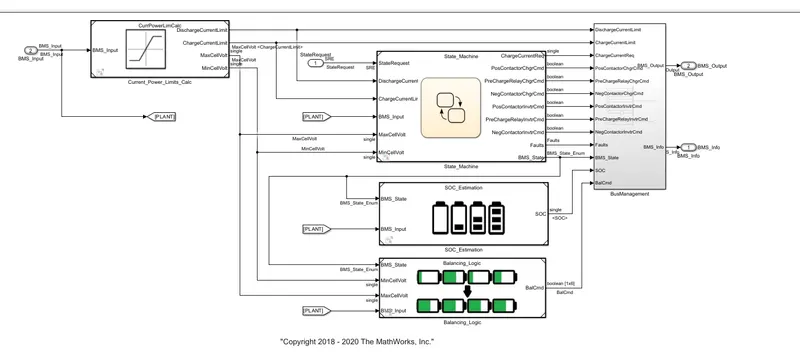
BMS ECU is the software like unit which controls,protects,balance, and manage the battery,
it consists of subsystem.
current power limits calculation:-this block controls and calculate the charge current limit,discharge current limit.min voltageof cell and max volatge of cell.
state machine:-This is state machine which gets the input from the state request,based on the state request state machine goes thruogh the logic of charging,discharging,balancing by open the contractors of the battery,inverter and monitor the faults state and give the BMS output.
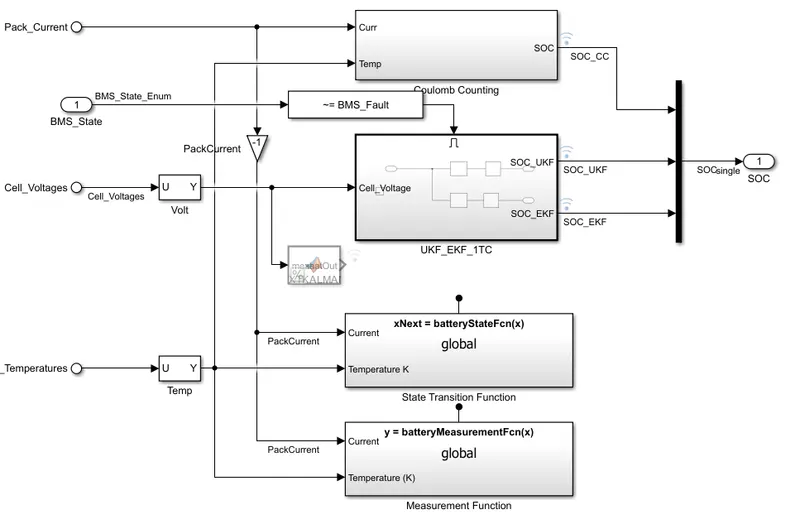
SOC estimation:-SOC is accurately estimated by coulomb counting and using the kalman filters,
Balancing logic:-this is the subsystem which consist of state machine which will balance the cell according to the BMS state,it will activate balancing or deactivate the balancing according to the BMS state requirements.
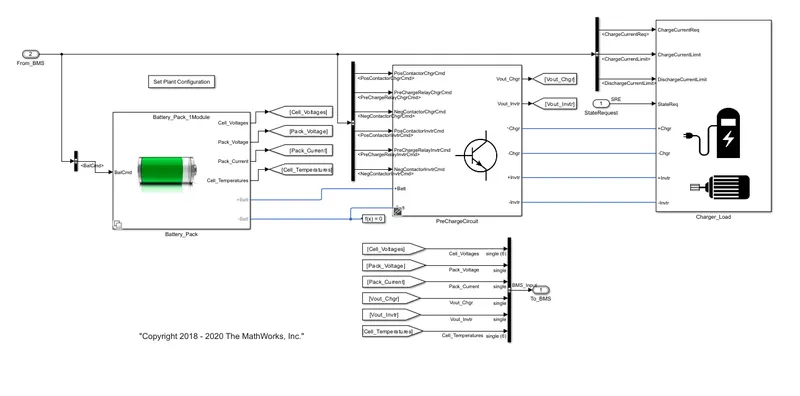
Battery pack:-consists of the cell with some configurations of voltage and capacity.
Precharge circuit:-It is used limit the inrush current to slowly charge the downstream capacitance.
Charger and load:-charger subsystem is with controlled current source which charges the battery according to the BMS state and drive load subsystem consist of load requirements of the cycle which drwas the current and discharge the battery according to the load.
after the complition of successful the opens up.the scope consists of the measurements of cell volatges,cell temperatures,SOC,pavk current,BMS State,balancing command.
Task-1:-
1-Simulate the 3test cases from harness dashboard and write a detailed report on the results.
test case-1
procedure:-
Select the test sequence variant as 1 and inside the BMS state request subsystem the least sequence 1 is selected.
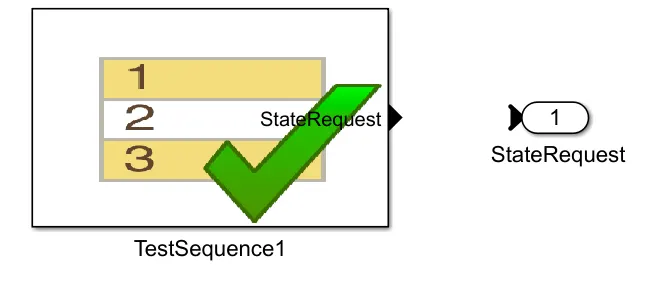
there are three stages of driving condition,namely
- drivinig
- charging
- standby
when the simulation begins,initially the vehicle is in driving state and the SOC will decrease for this time period.after a time a period of 3000 secs the next step is balancing mode and the vehicles is in standby condition.after,another 1000 secs. the vehicle is in charging phase and the battery's SOC increases almost to 100%.the next phase is in the postcharging phase in which the vehicle again goes for the standby mode.

double click on the test sequence it will open the sequence editor as shown below:
- driving state for the first 3000 secs.
- then after driving state balancing of cell occurs for the next 1000 secs duration
- after the balancing charging and balamcing occur for next 5000 secs
- post charge balancing is occuring after 9000 secs till 20000 secs simulation end time.
results for test case 1:
test sequence 1
dashboard results:-
the lamp indication were green for all the states which means the model is in good condition and no fault is occured.
scope of test sequence 1:-
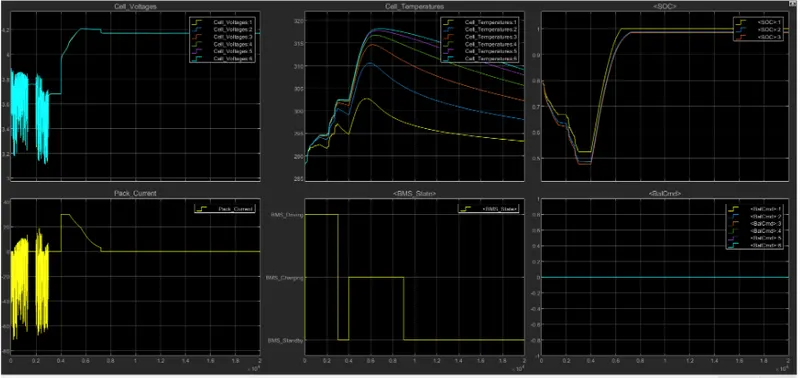
- the input cycle can be seen in the BMS_state plot in which the vehicle initially undergoes driving,then charging till SOC=90% and then later in standby state.
- during charging the battery pack voltage is increased upto 4.2v
- the cell temperatures increases during the driving and charging cycle and starts falling off in standby mode.
- the SOC drops to less than 50%after the driving cycle and then later put into charging until SOC reaches 100%.
now,the second test case.for this we have to go to test case variant subsystem and select test case2 from there and click on "ok".then we have to run the system for the given simulation time.the result shows that there is a faoult condition in the vehicle.the dashboard on the model model depicts the same with a red colour indication.
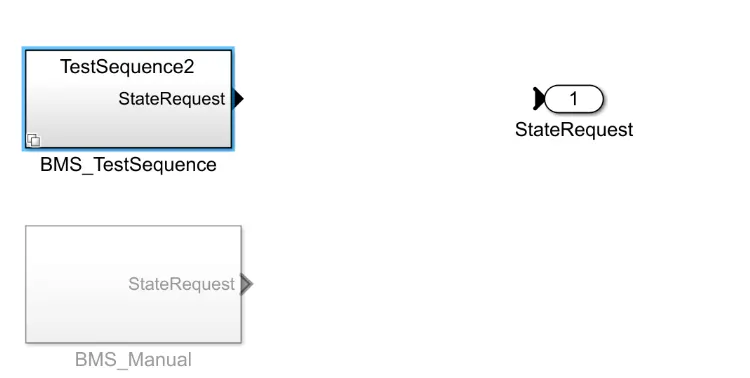
if we click on the "BMS_state request"the following system opens up.now we have to select "BMS_testsequence".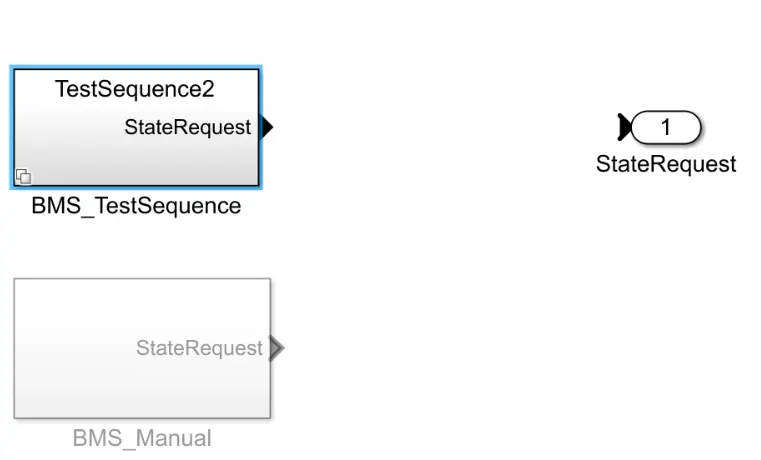
selecting the second test sequence we can click the conditions for this particular condition.
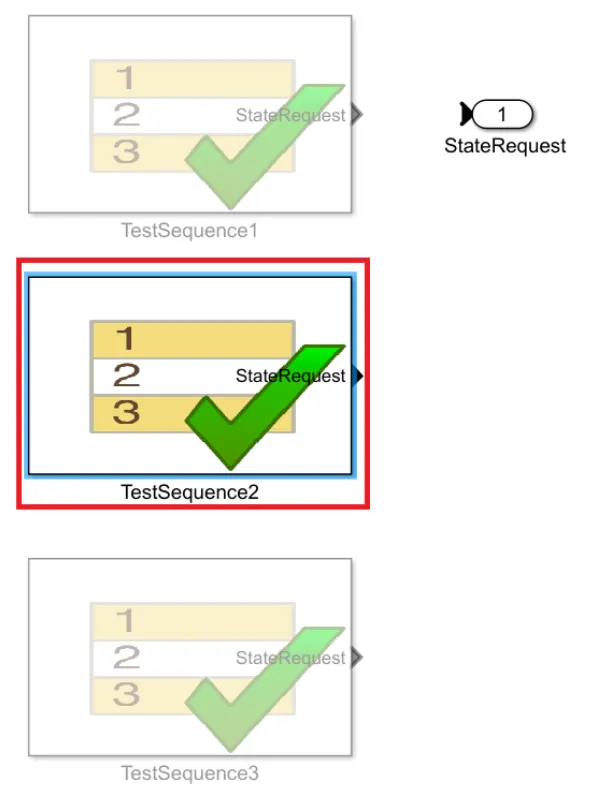
this test case has two phases for the battery pack, i.e driving,and charging phases.
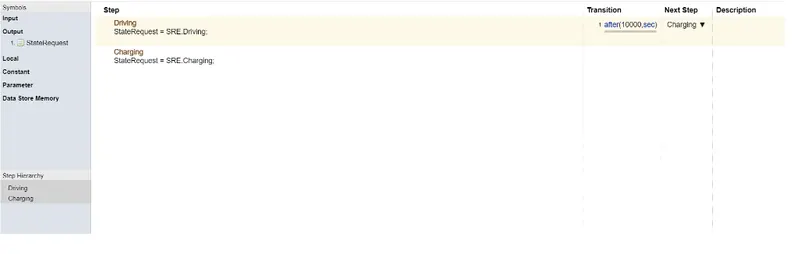
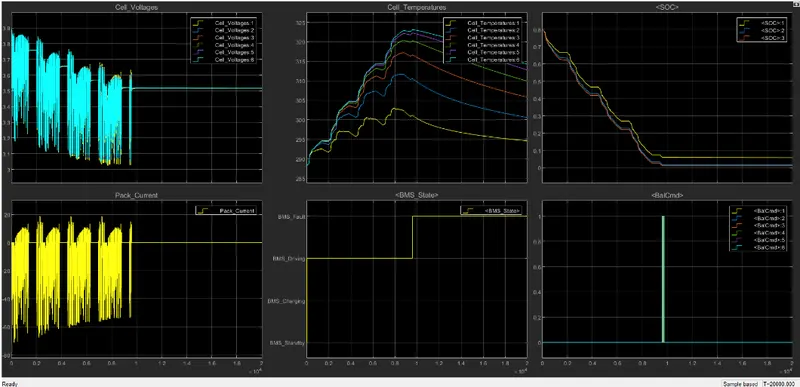
the scopes shows the various parameters for the BMS model under second test case.after 10000sec when the driving cycle is over,the fault condition occurs and so the SOC does not increase even for the charging phase.
the last test is for the third last test sequence.for this we have to go to test case variant subsystem and select test case 3 from there and click on ok.
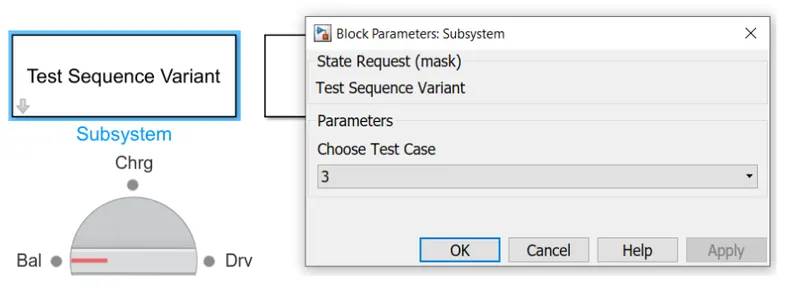
after applying the selected test case.we have to run the simulation. the dashboard shows there are no errors and faults.
if we click on the "BMS_staterequest" the following system opens up.now we have to select "BMS_testsequence "
selecting the third test sequence we can check the conditions for this particular condition.
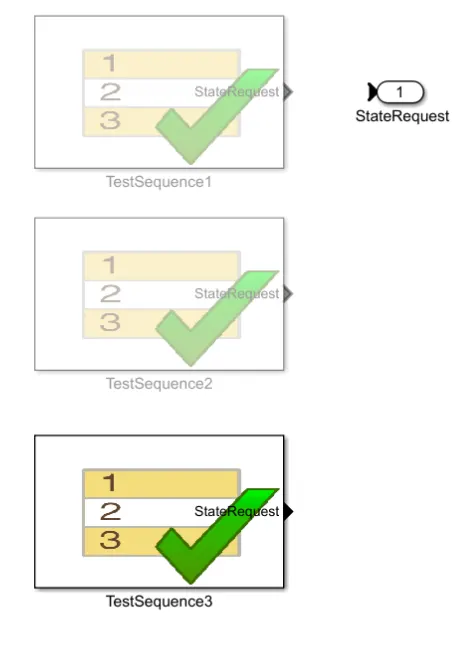
there is a only single phase here for third case test.i.e charging phase.

the scope shows the result for third test case.hewre the SOC increases from 80% to 100%and then remains on standby mode.
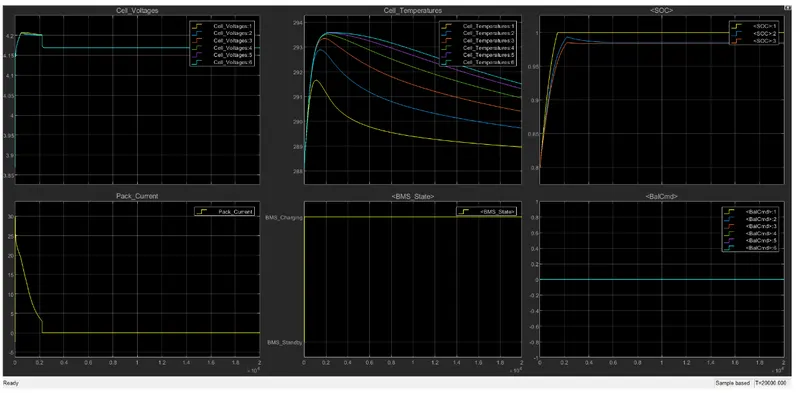
follwing these steps the BMS modelcan be implemented to check the faultsand errors using three different casesfrom the harness dashboard.
Question no 2-what is coulomb counting?refer the above model and explain how to BMS implements coulomb counting for SOC estimation?
Answer-coulomb counting is a technique used to track the state of charge of a battery pack.it works by integrating the active flowing current(measured in amps) over time to derive the totsl sum of energy entering or leaving the battery pack.this produces a capacitythat is typically measured in Ah.
coulomb counting method:-the coulomb method is also known as the battery current integration method.in this method,a discharging/charging current I(t) is measured and integrated over a time to calculate the amount of energy remaining inside the battery.in this method,SOC is taken at the previuos time step SOC(t-1) and the amount of energy removed/added at the current time step is subtracted/added from the SOC of the previuos time step SOC(t-1) to obtain the amount of energy present in the battery at the instant..
the SOC estimation in the coulomb counting methodis done using the below equation,
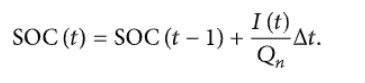
SOC(t - 1)=SOC at previous step
t=current time step
t-1=previous time step
Q=charge capacity of the battery
this method is accurate and reliablethat the voltage translational translational method but does not take into account the dicharge rate,temperature,hysteresis,age of the battery etc.,
coulomb counting block in BMS:
soc estimation block:
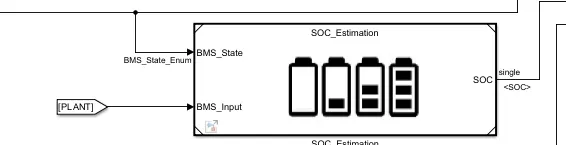
here soc is estimated by
1)coulomb counting method
2)unscented kalman filter
3)extended laman filter