Week 7 - Minor Project
Flow Analysis over an airfoil at subsonic and supersonic regime
Aim: To setup the domain for analysis of flow over an airfoil at subsonic and supersonic regime.
Objective: Airfoil will be analysed at 3 different angles of attack and the lift and drag coefficient will be compared in all cases
1. Create domain for flow analysis
2. Setup simulation for subsonic and supersonic regimes at
5, 10, 15 angle of attack.
Theory:
Airfoil structures provide lift in airplanes, space launch vehicles, and jets, among other things. Airfoils must be analyzed not only for the lift but also for drag force, which consumes a considerable portion of the fuel energy.
Procedure:
Creating domain for NACA 0012 airfoil.
Create the notepad file.
Paste the cordinated of NACA0012 airfoil with x, y, z codinates.
Import the file in geometry, create the lines attaching the points.
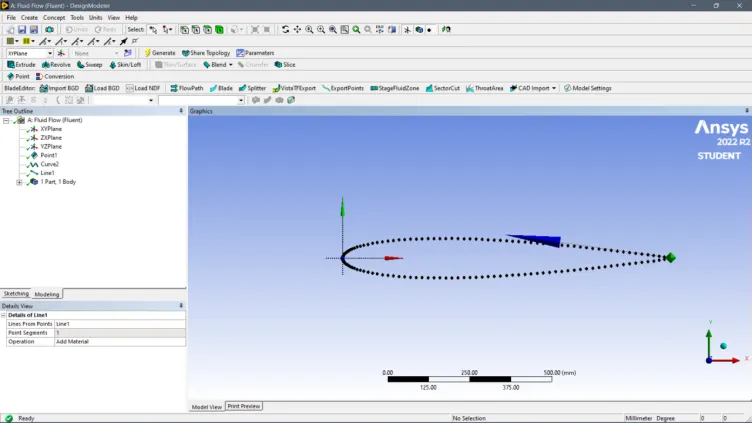
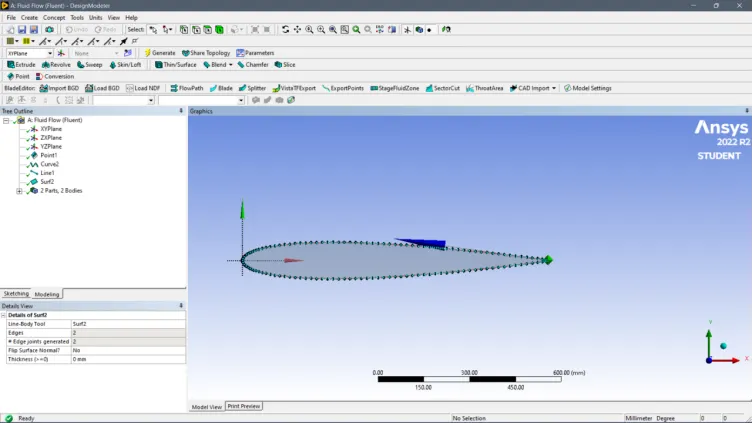
Create the domain and delete the inner part.
Create the line for Face split.
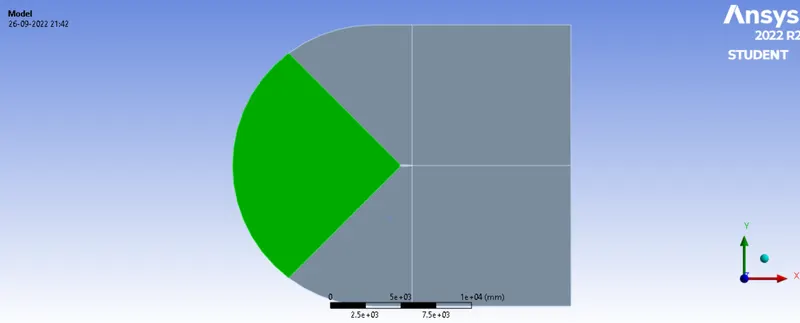
Face split is used as to get structured mesh.
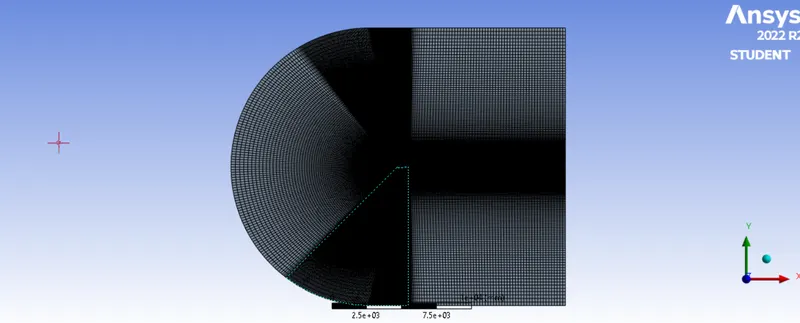
Meshing:
Use face meshing with 100 mm mesh size.
Edge sizing : 200 divisions.
Bias factor : 200
Setup:
Solver:
Pressure-based.
Viscous: k-omega SST model
Material : Air
Coupled solver.
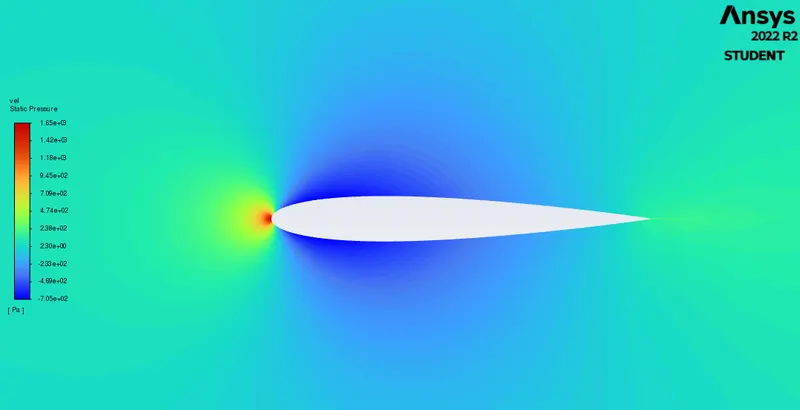
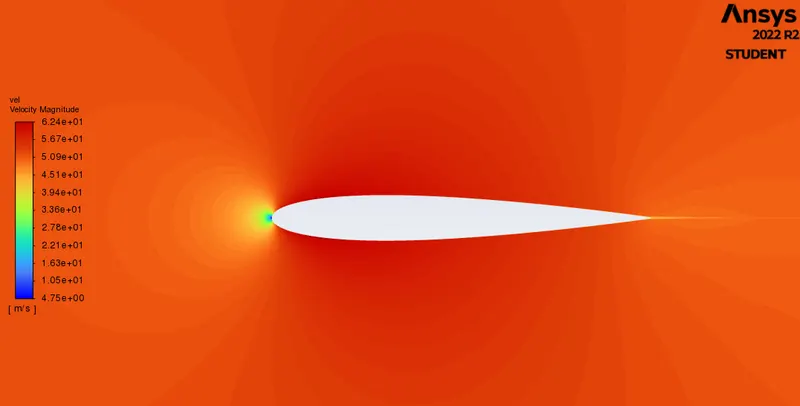
Angle of attack - 0 degree.
Inlet velocity = 52.15 along x axis.
Pressure conotur:
Velocity contour:
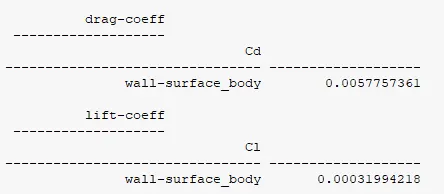
Cd and Cl
Subsonic regime:
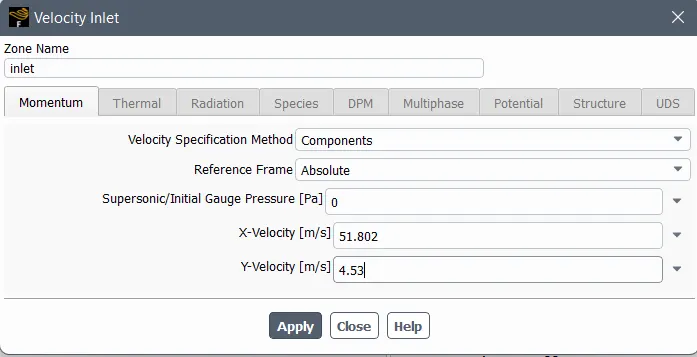
Angle of attack - 5
Inlet velocity :
Pressure contour:
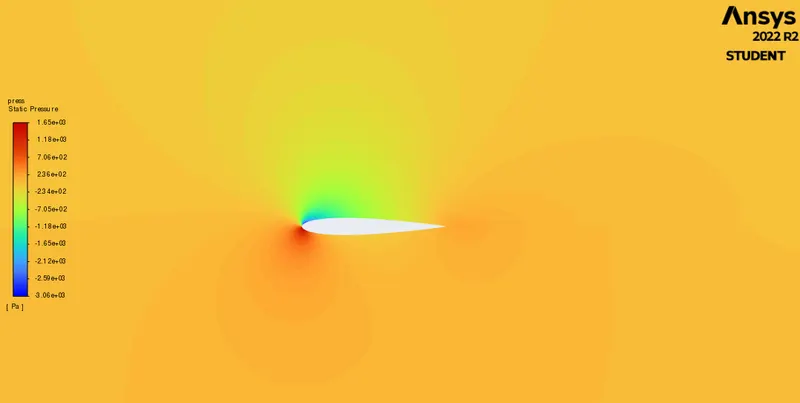
Velocity contour:
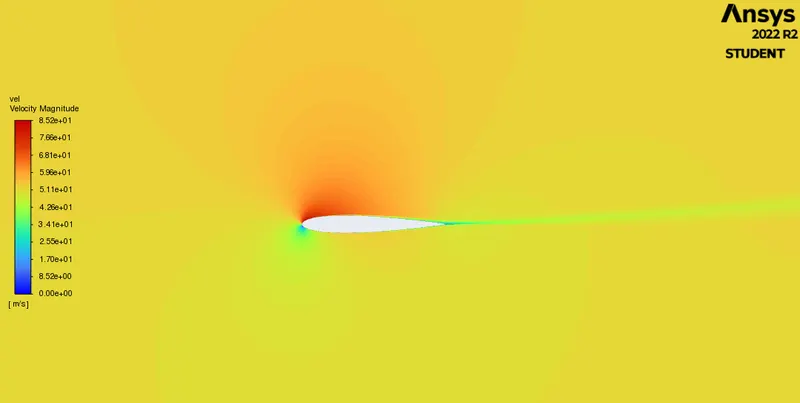
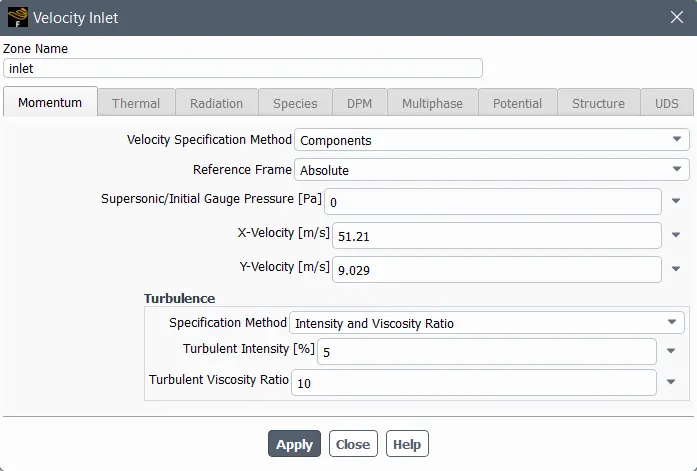
Angle of attack - 10
Inlet:
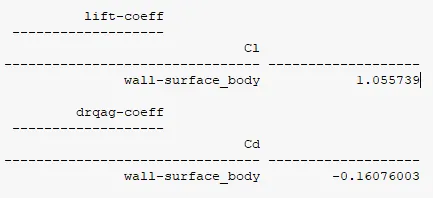
Drag and lift co-effecient:
Pressure contour:
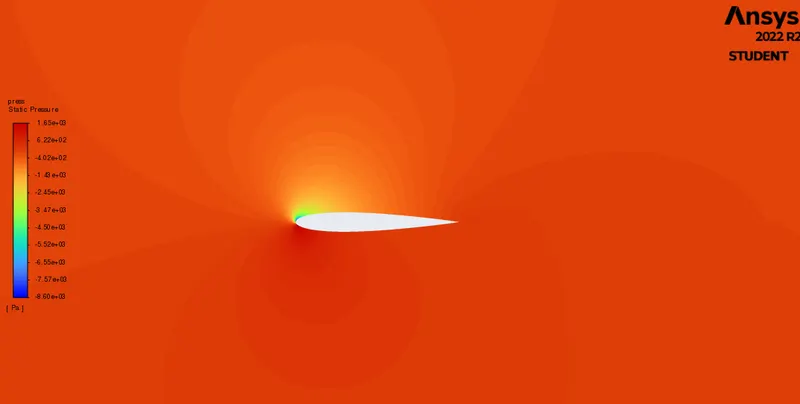
Velocity contour:
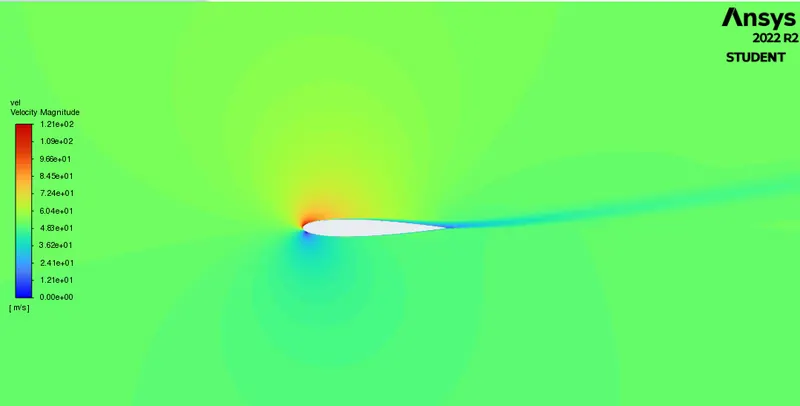
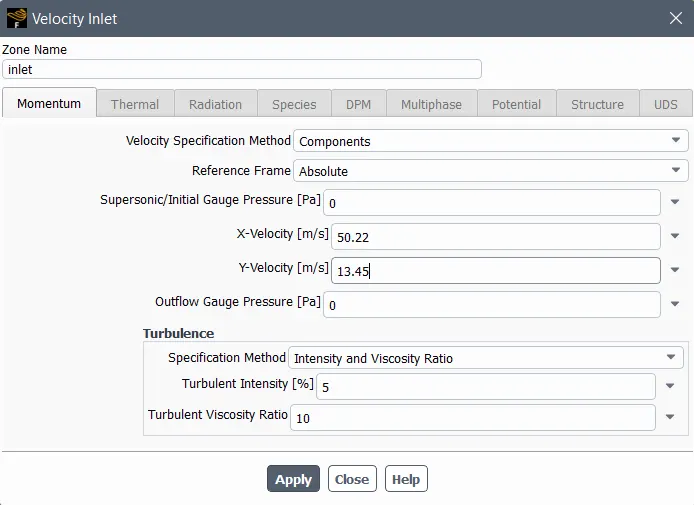
Angle of attack - 15
Inlet:
Pressure contour:
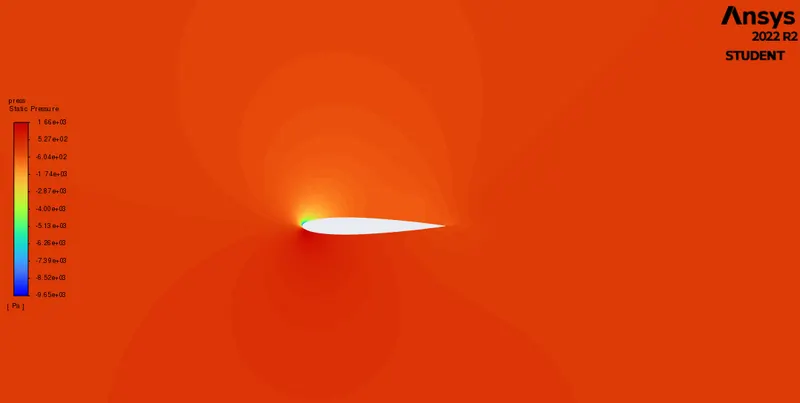
Velocity contour:
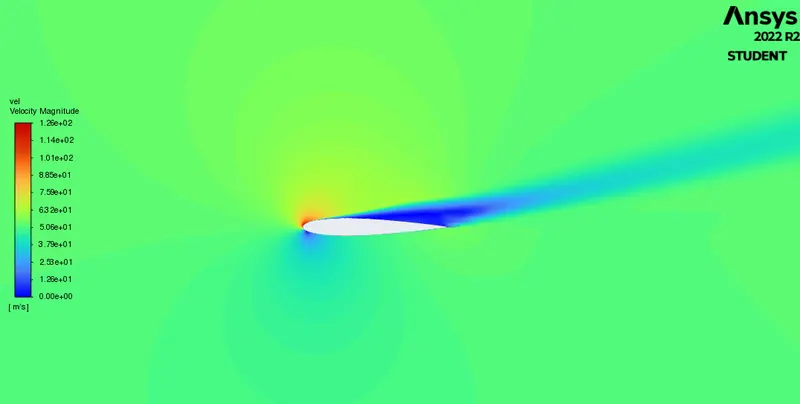
Compressible flow:
Angle of attack - 5
Velocity contour:
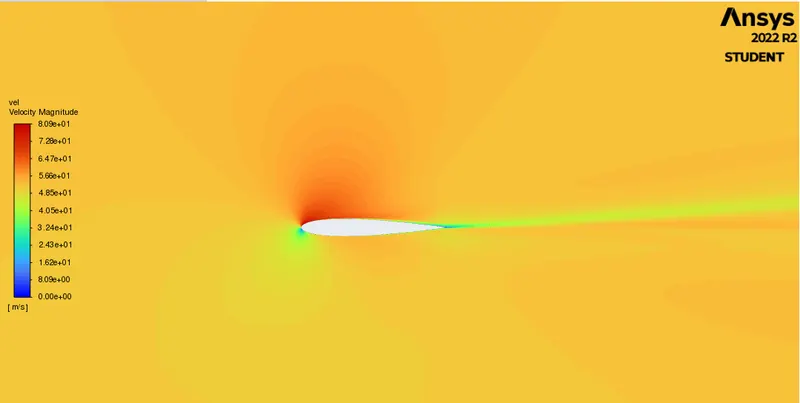
Pressure contour: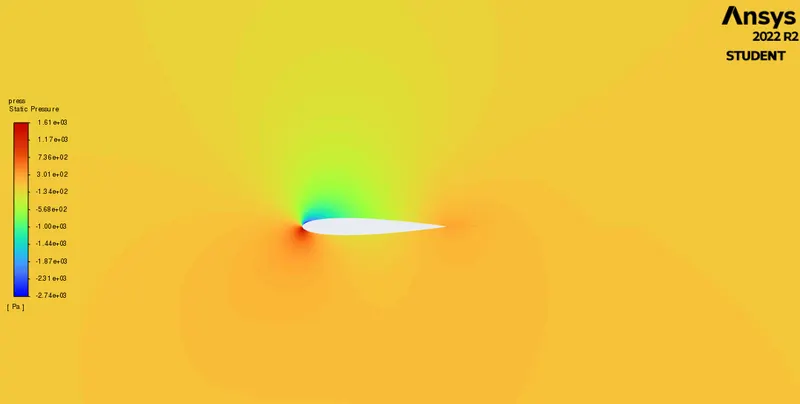
Angle of attack -10
Pressure contour:
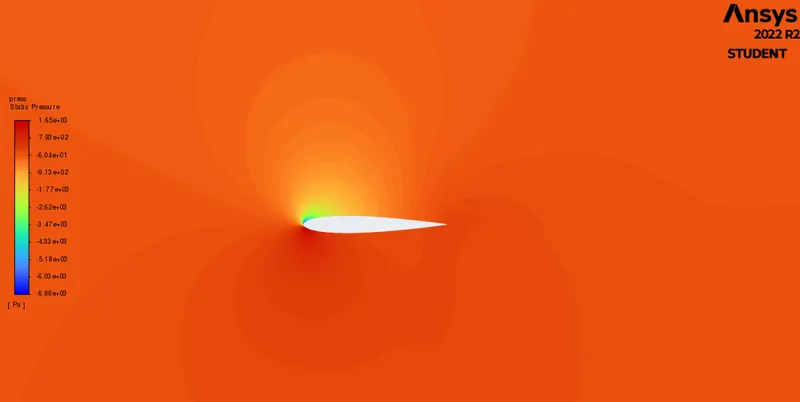
Velocity contour:
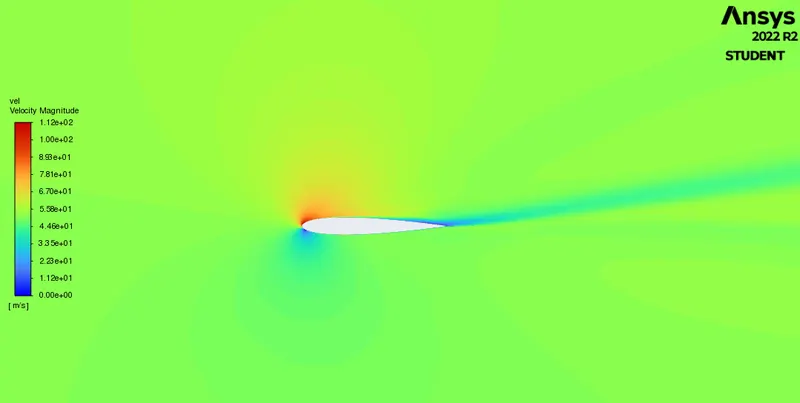
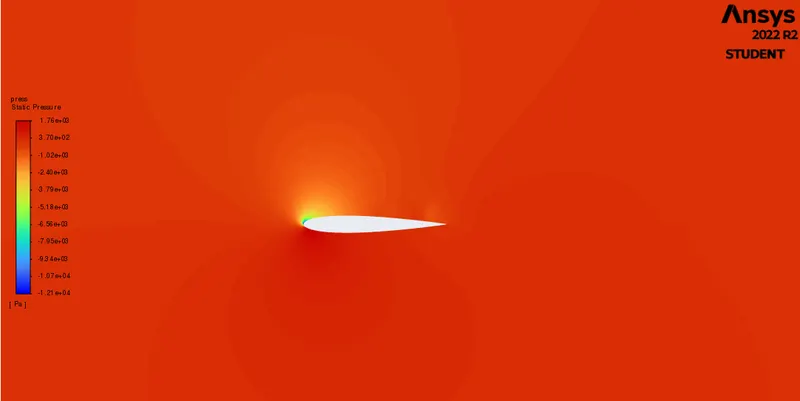
Angle of attack - 15
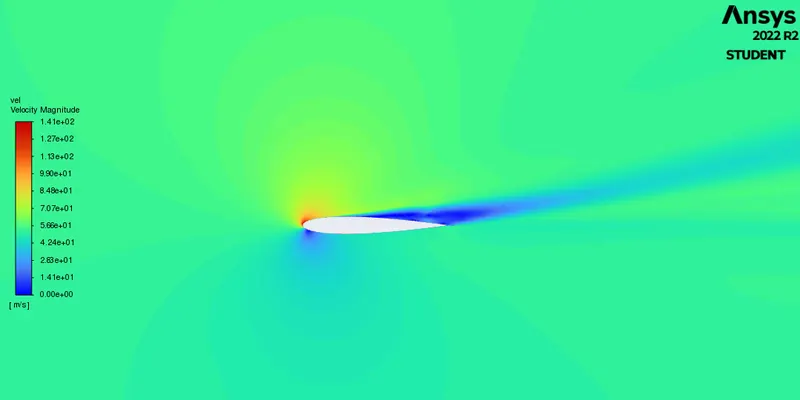
Pressure conotur:
Velocity conotur:
Subsonic regime:
| AOA | Cl | Cd |
| 5 | 0.55279106 | -0.032880549 |
| 10 |
1.055739 |
-0.16076003 |
| 15 |
0.97782326 |
-0.16386467 |
Supersonic regime:
| AOA | Cl | Cd |
| 5 | 0.46687974 | -0.033353993 |
| 10 |
0.89301493 |
-0.13721836 |
| 15 | 1.2754719 | -0.26931924 |
Conclusion:
Velocity and pressure profiles are obtained for both conditions.
Co-effecient of drag and lift are compared for both regimes at different angle of attack.
The magnitude of the coefficient lift and drag increases with an increase in the angle of attack.