Week 7-Long Piston With Cam
Aim : To perform a transient analysis on a piston and cam mechanism model.
Software: Ansys 2021 R1
Summary
Objective
Procedure for setup
Results
Comparison
Conclusion
Objective:
To perform a transient analysis on a piston and cam mechanism model considering frictionless contact, frictional contact (0.1 & 0.2 as friction coefficient) respectively.
To find out the stress Equivalent Stress, Directional Deformation and Equivalent Elastic Strain and compare the result
Introduction:
This project is about performing a transient analysis on a piston and cam mechanism model. This piston and cam mechanism consists of the rotation of a cam having a path which will be followed by the cam follower. The cam follower is connected to the barrel resulting in its translational motion. In other words, the rotational motion of the cam is converted into a linear motion of the barrel.
Procedure for setup
Open ANSYS>>Drag and drop transient structural model in the project schematic window.
Go to the engineering data to choose the materials (in our case we are working with the default materiel (structural steel)
Go to the model tab
Rename the different as required
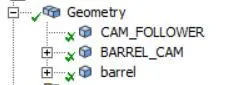
Go to connection >> contacts
Make with them frictionless or frictional contacts (friction coefficient=0.1 or 0.2) as required in the cases
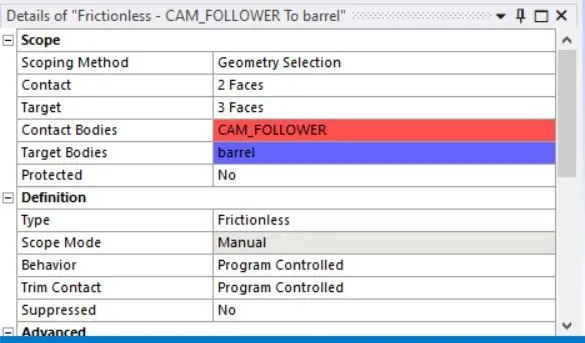
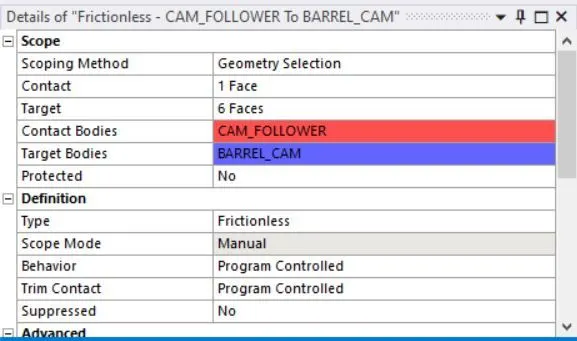
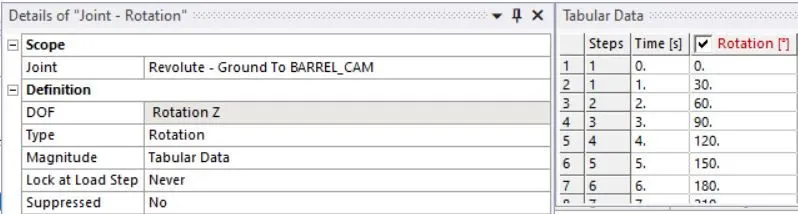
Set the following joints:
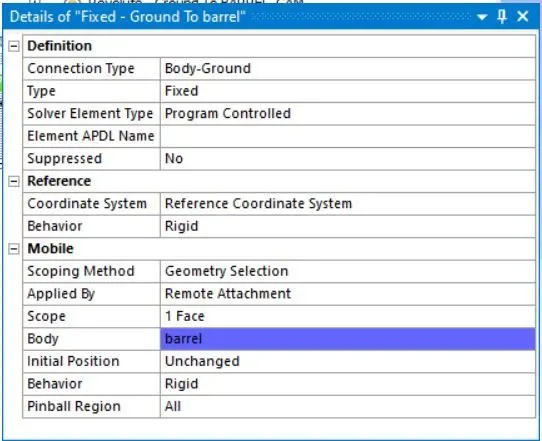
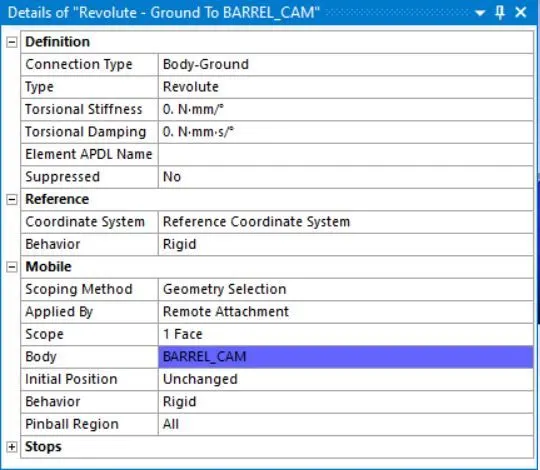
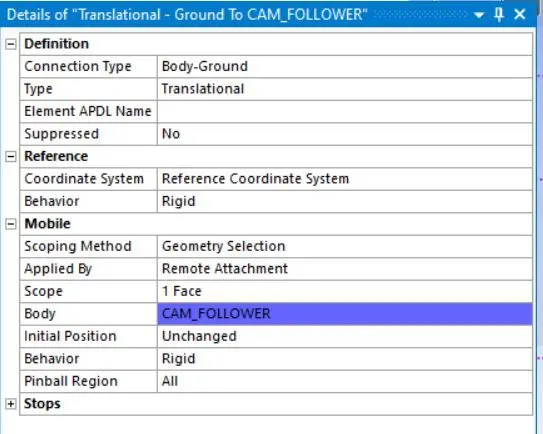
Go to tab for the meshing:
For the meshing choose the values as follows:
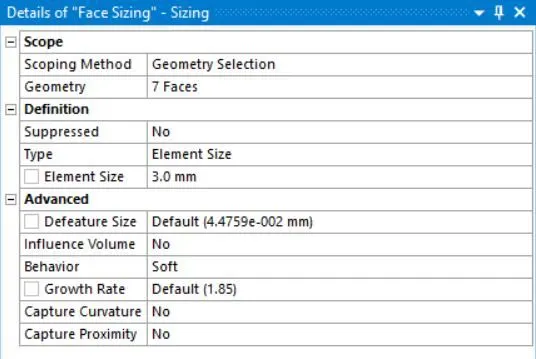
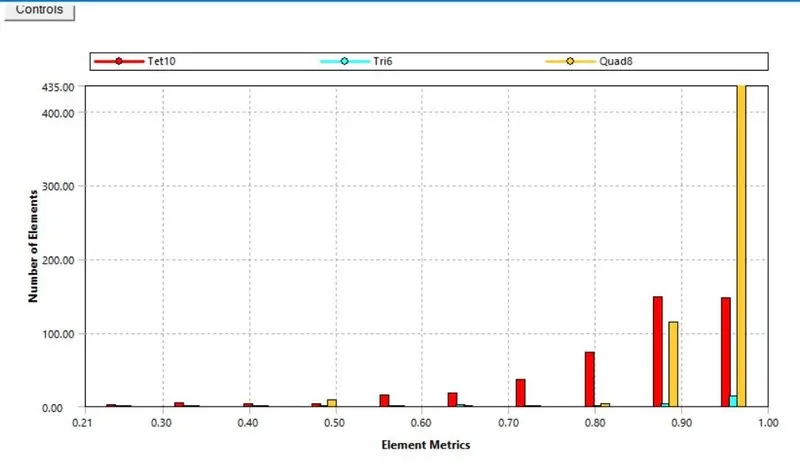
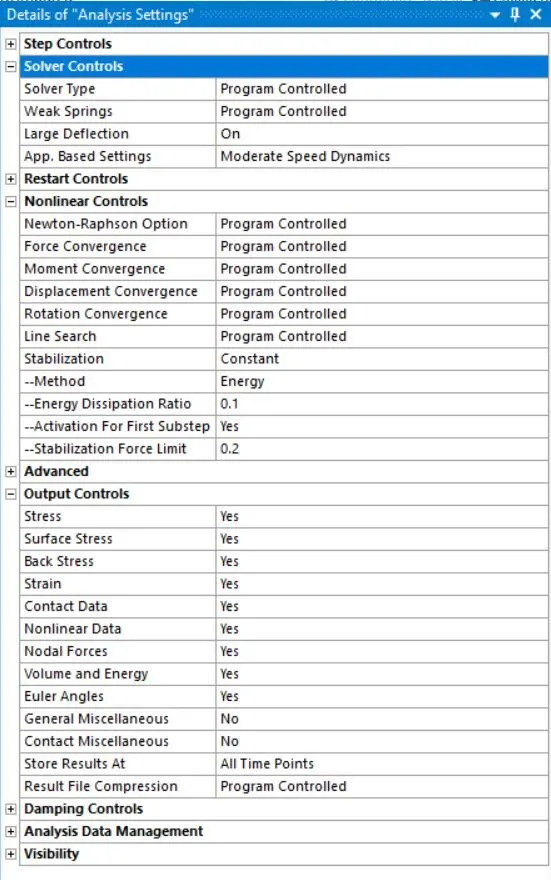
The following analysis settings are defined for the simulation.
Go to solution tab and insert equivalent stress, directional deformation, equivalent elastic strain.
Results
Case 1
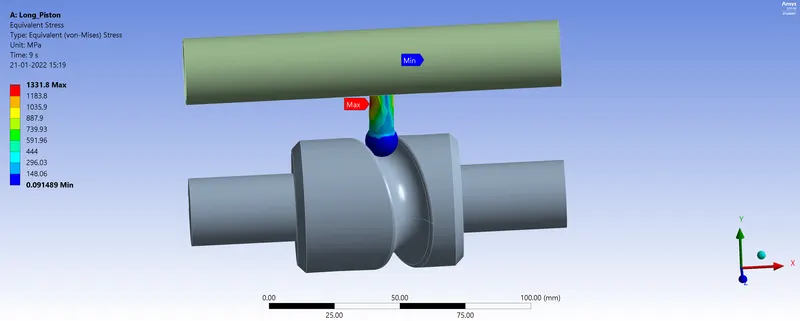
Equivalent Stress
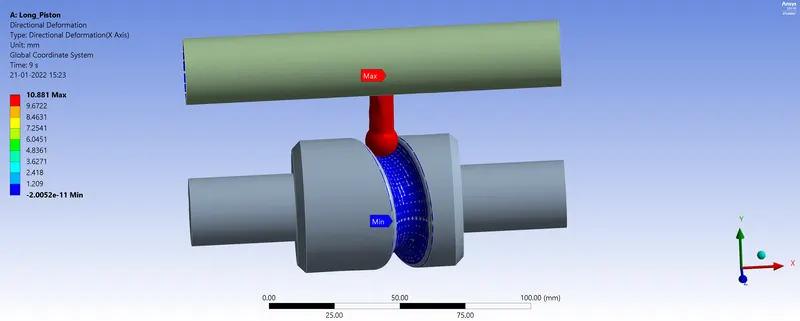
Directional Deformation
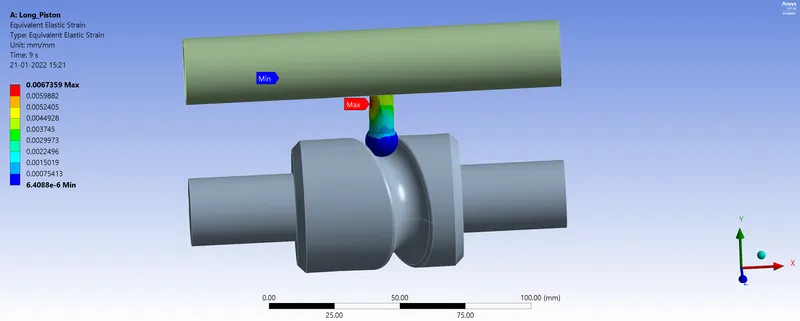
Equivalent Elastic Strain
Case 2
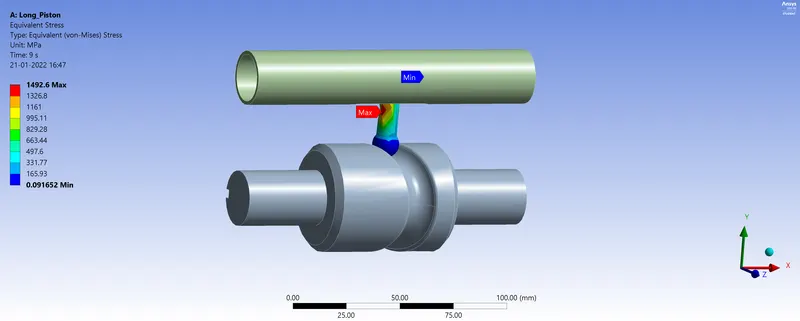
Equivalent Stress
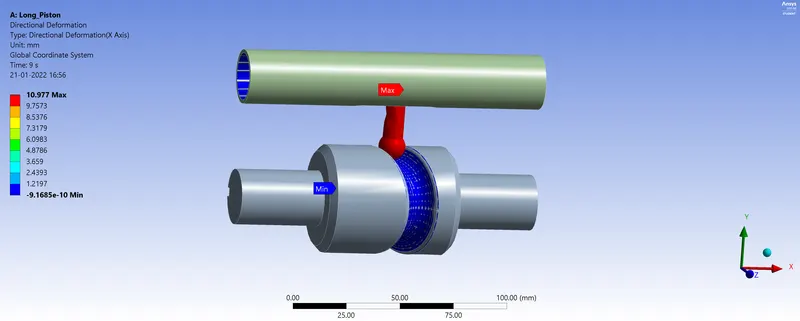
Directional Deformation
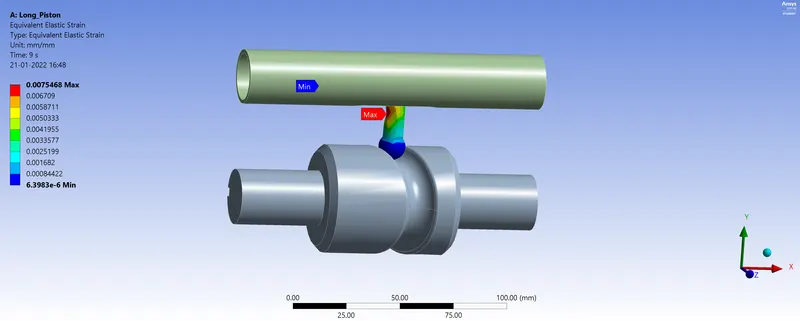
Equivalent Elastic Strain
Case 3
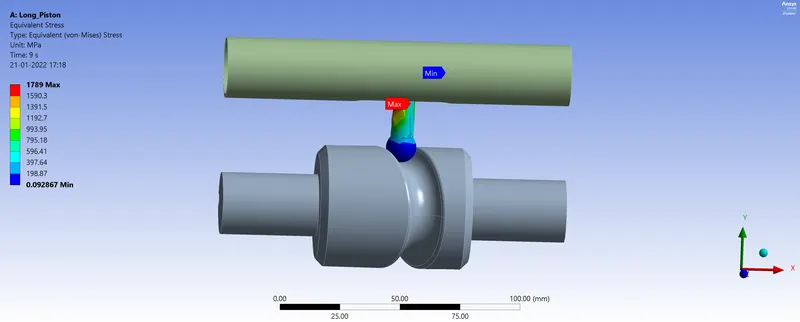
Equivalent Stress
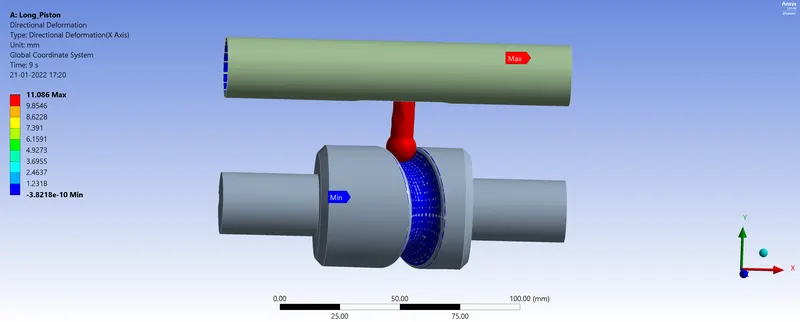
Directional Deformation
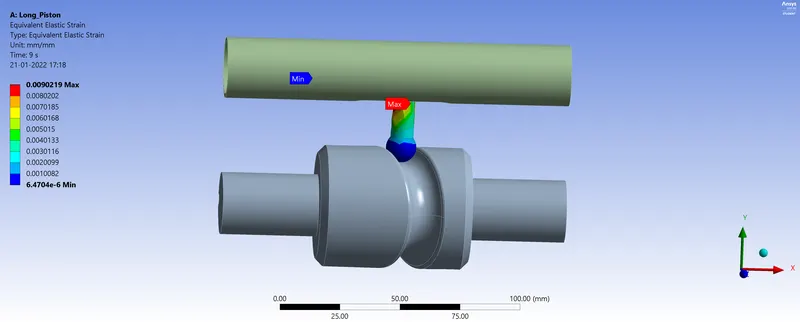
Equivalent Elastic Strain
Comparision Chart
|
Case |
Maximum Equivalent Stress (MPa) |
Total Deformation (mm) |
Equivalent Elastic Strain (mm/mm)_ |
|
Case 1 |
1331.8 |
10.881 |
0.0067359 |
|
Case 2 |
1492.6 |
10.977 |
0.0075468 |
|
Case 3 |
1789 |
11.086 |
0.0090219 |
Conclusion
Through this simulation, we notice that the equivalent stress, the directional deformation and the equivalent strain are higher in the case of frictional contact as compared to that of frictionless contact case. By increasing the friction coefficient from 0.1 ton 0.2, all these properties are increasing as well. We can justify this results variation by the fact that in the presence of frictional contact, the force required for the motion is high hence the stress, the strain and the deformation will be greater.