Week 7-Long Piston With Cam
Aim :
- Perform a transient analysis on a piston and cam mechanism model.
- Run the analysis with Frictionless contact, Frictional with 0.1 and 0.2 as the frictional contact for a total of 3 cases.
- Find out the Equivalent Stress, Directional Deformation and Equivalent Elastic Strain and compare them for all the three cases.
- Give an inference as to why the results vary between cases.
Solution:
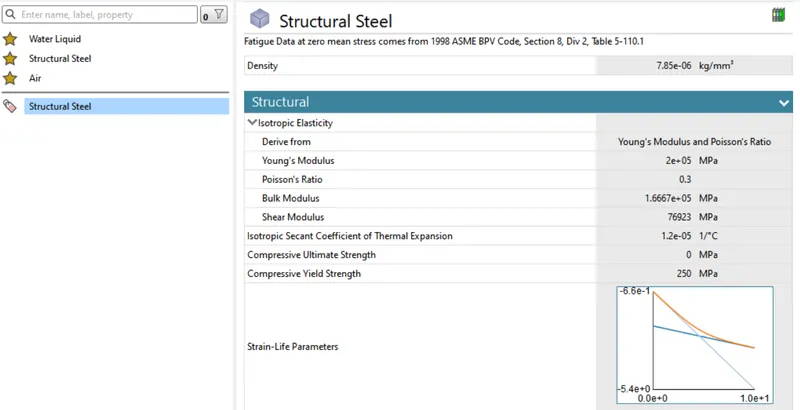
- Input the engineering material with required properties.
- Assign the Cam and Cylinder as rigid bodies. As only stress on follower rod is required to be analyzed.
- Import the model into ansys workbench and open with space claim and check for any abnormalities.
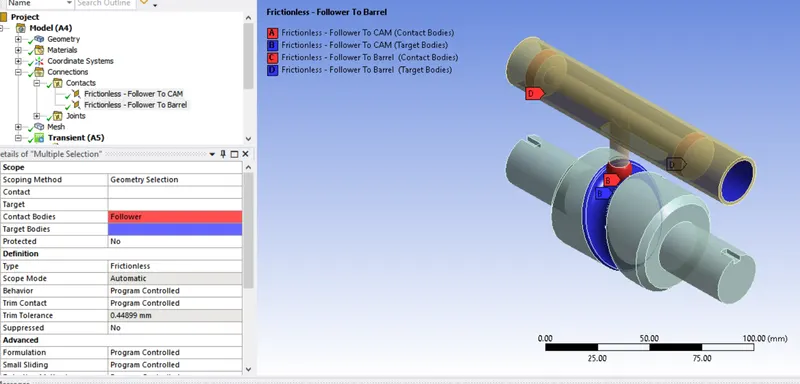
- Assign required contacts where in case 1 there will be frictionless contact between mating components, in case 2 Frictional contact of 0.1 and in case 3 frictional contact on 0.2.
- Assign fixed joint between ground and barrel, Revolute joint between ground and cam (Make sure the coordinate system is assigned properly with Z-axis towards global Z-axis) and assign joint translation to piston rod.
- Assign the mesh to whole model. With sizing prefence on follower and cam guide path having element size as 3mm.
- The mesh will not be formed on rigid bodies as they will act as single point of mass.
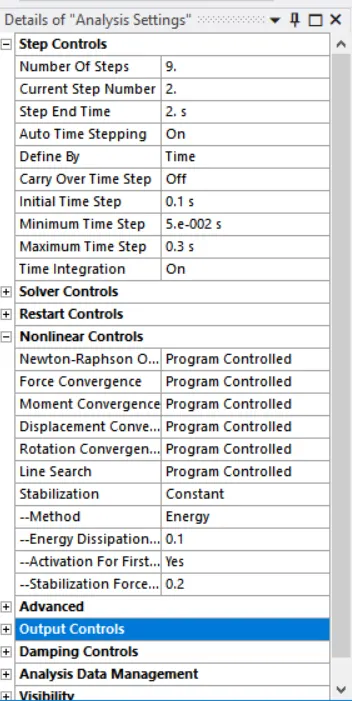
- Do analysis settings as shown below:
- Run the Solver. It will take time for convergence and result is obtained as belows.
Results :
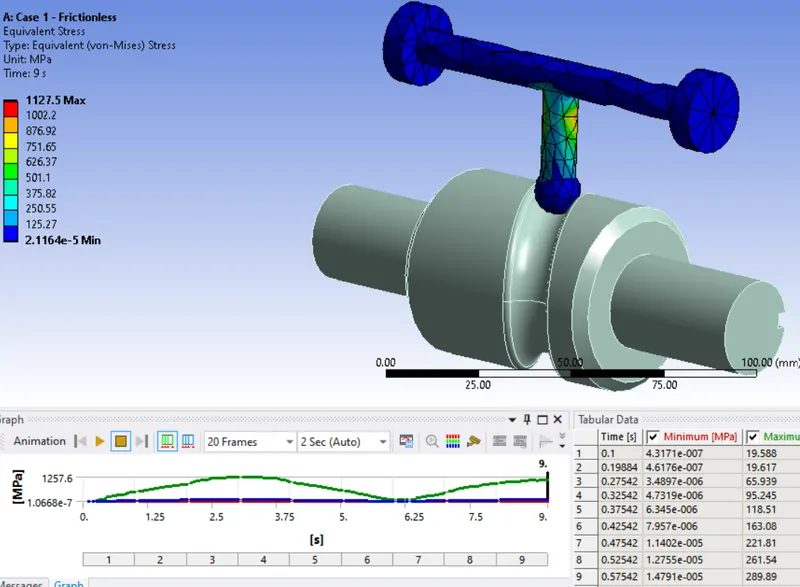
Case 1 - Frictionless surfaces
Equivalent Stress :
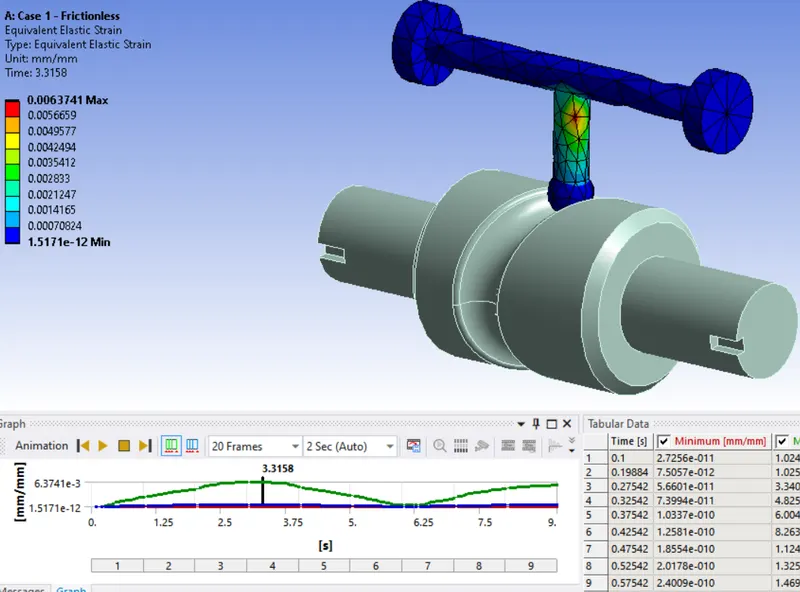
Equivalent Strain :
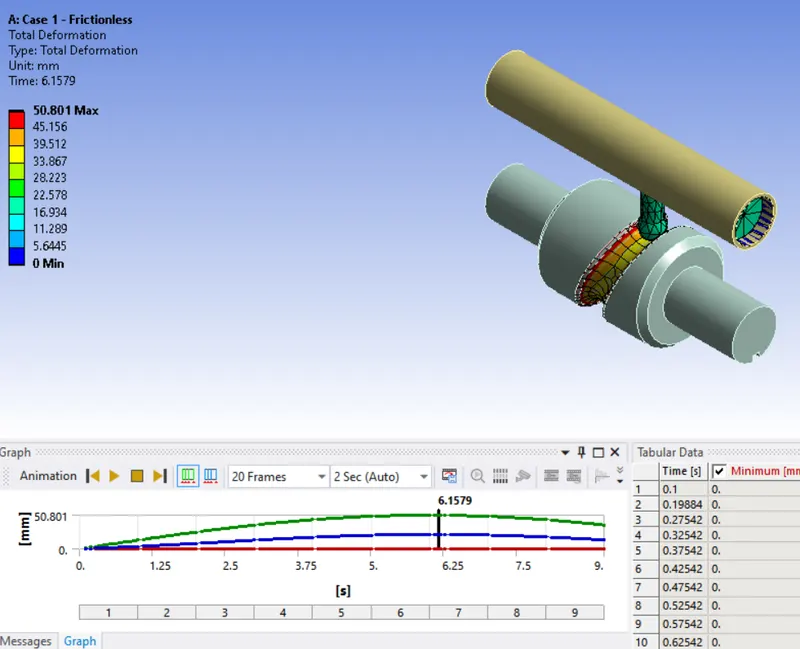
Directional Deformation :
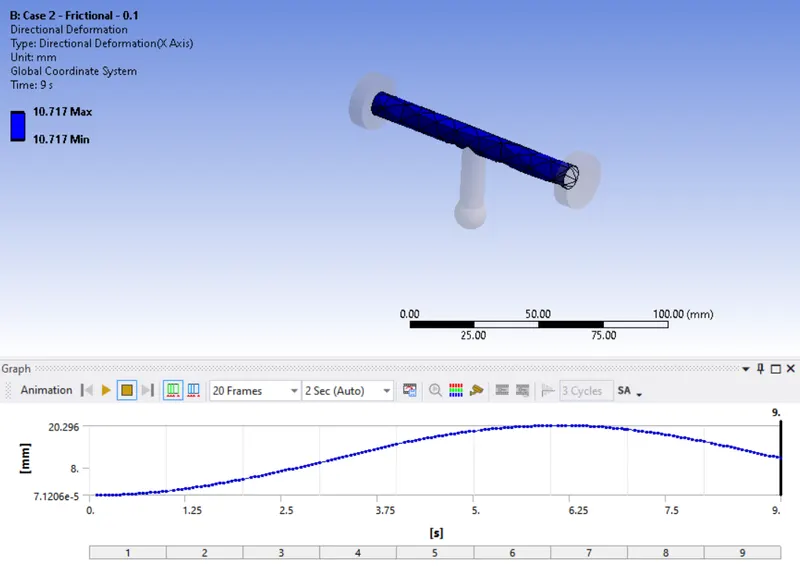
Case 2 - Frictional coefficient between surfaces = 0.1.
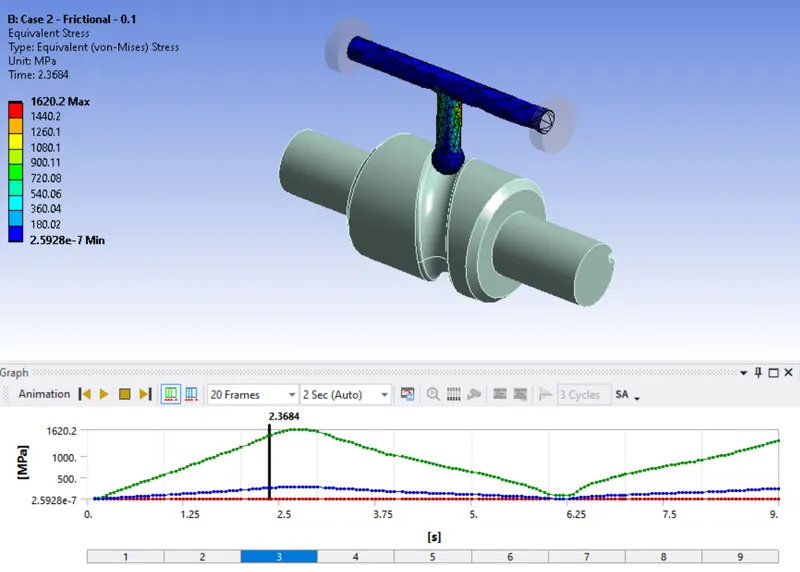
Equivalent Stress :
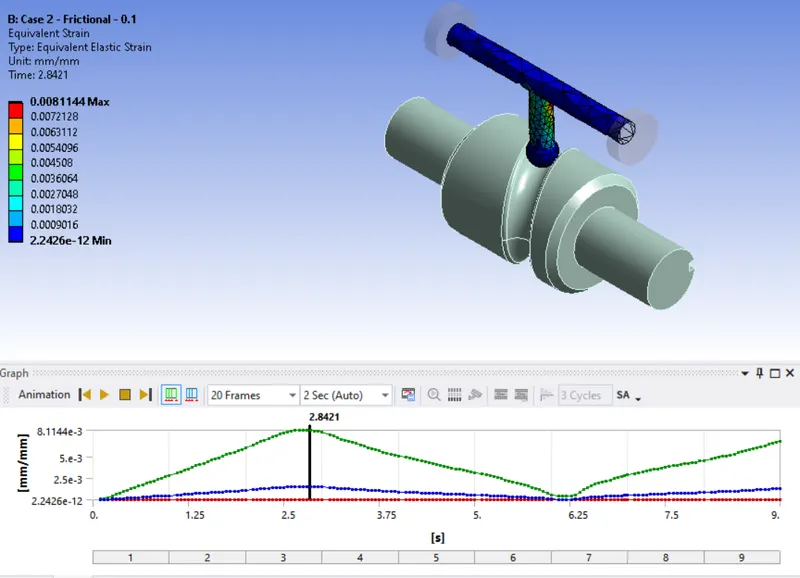
Equivalent Strain :
Directional Deformation :
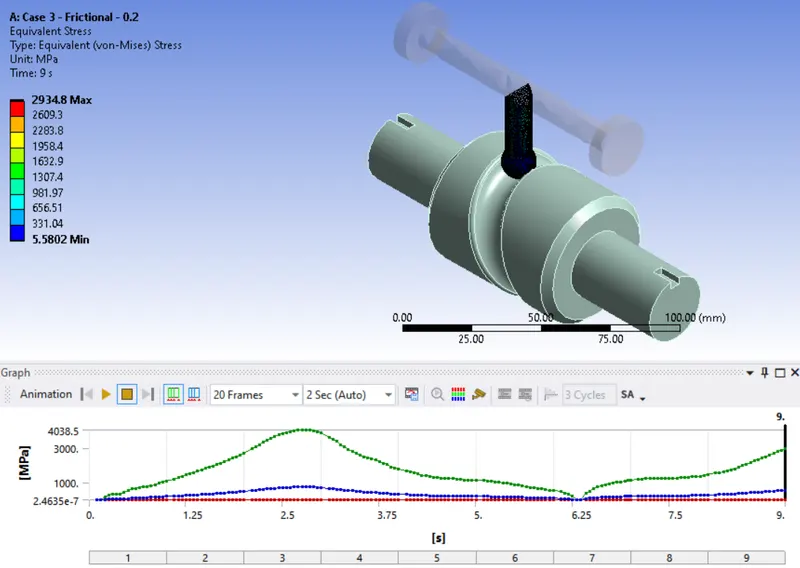
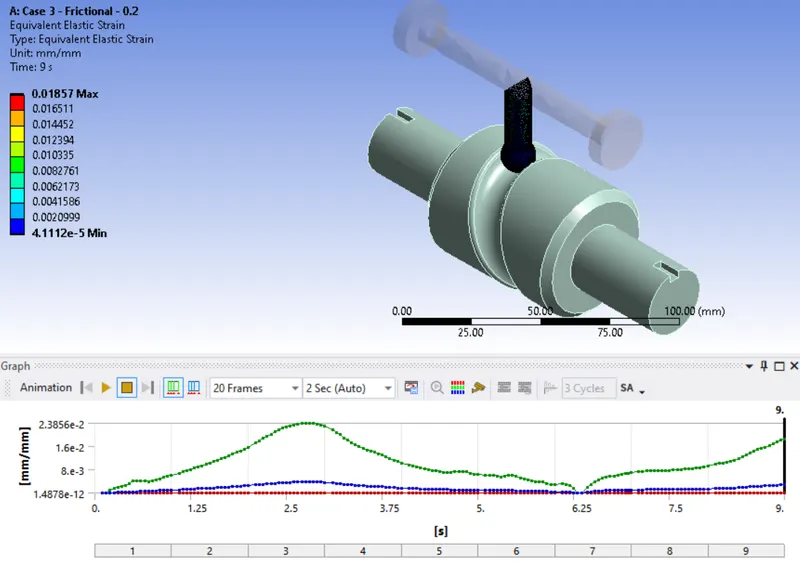
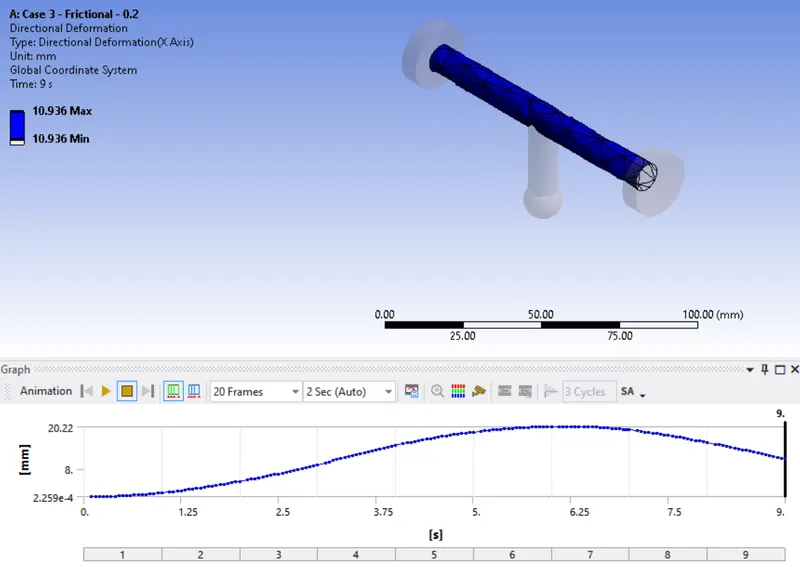
Case 3 - Frictional coefficient between surfaces = 0.2.
Equivalent Stress :
Equivalent Strain :
Directional Deformation :
| PARAMETER | CASE 1 - FRICTIONLESS | CASE 2 - FRICTION = 0.1 | CASE 3 - FRICTION = 0.2 |
| DIRECTIONAL DEFORMATION |
Max = 50 mm Min = 0 mm |
Max = 10 mm Min = 0 mm |
Max = 10.9 mm Min = 0 mm |
| EQUIVALENT STRESS |
Max = 1127.5 MPa Min = 2.1 e-5 MPa |
Max = 1620.2 MPa Min = 2.5 e-7 MPa |
Max = 2934.8 MPa
Min = 5.58 MPa |
| EQUIVALENT STRAIN |
Max = 6.3 e-3 Min = 1.5 e-12 |
Max = 8.1 e-3 Min = 2.2 e-12 |
Max = 1.8 e-2
Min = 4.2 e-5 |
Conclusion :
- Stress developed on follower is maximum when coefficient of friction is 0.2 and least when mating surfaces are frictionless.
- Strain in the follower body is maximum in case 3 where coefficient of friction is 0.2.
- The values of Stress and Strain is different in all cases as with increase of Friction between surfaces the stress concentration in body increases and due to which strain appears consequently in the body.