Week 7-Long Piston With Cam
Objective of challenge: 1. To perform the transient analysis on a piston and cam mechanism model and run the analysis with Frictionless contact, Frictional with 0.1 and 0.2 as the frictional contact for a total of 3 cases. Find out the results of Equivalent Stress, Directional Deformation and Equivalent Elastic Strain and compare them for all the three cases.
Simulation setup configuration as follows:
1. Model as follows
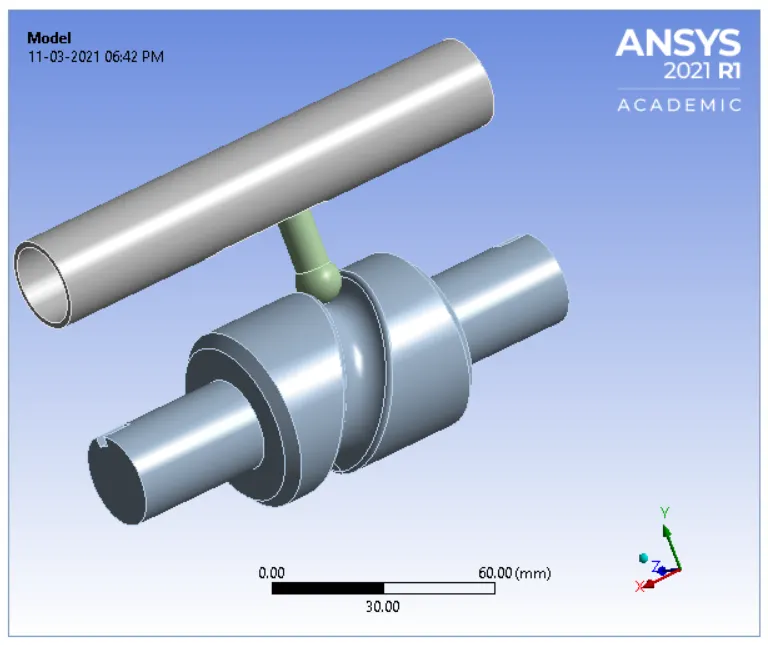
2. Part names are specified as

3. Material applied for 3 parts are

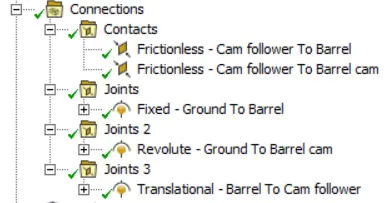
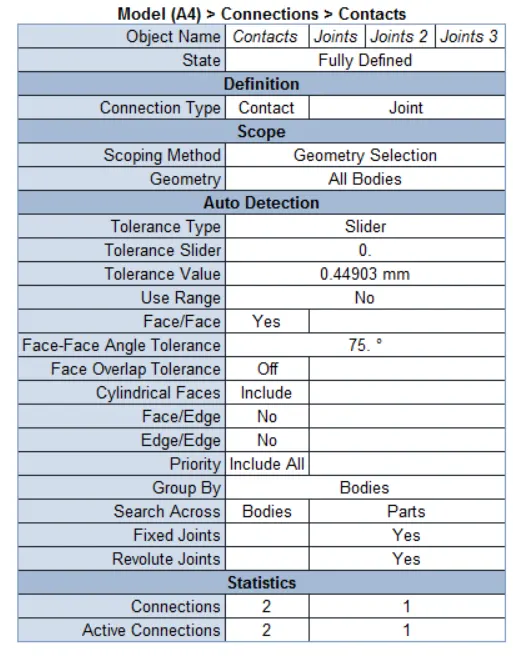
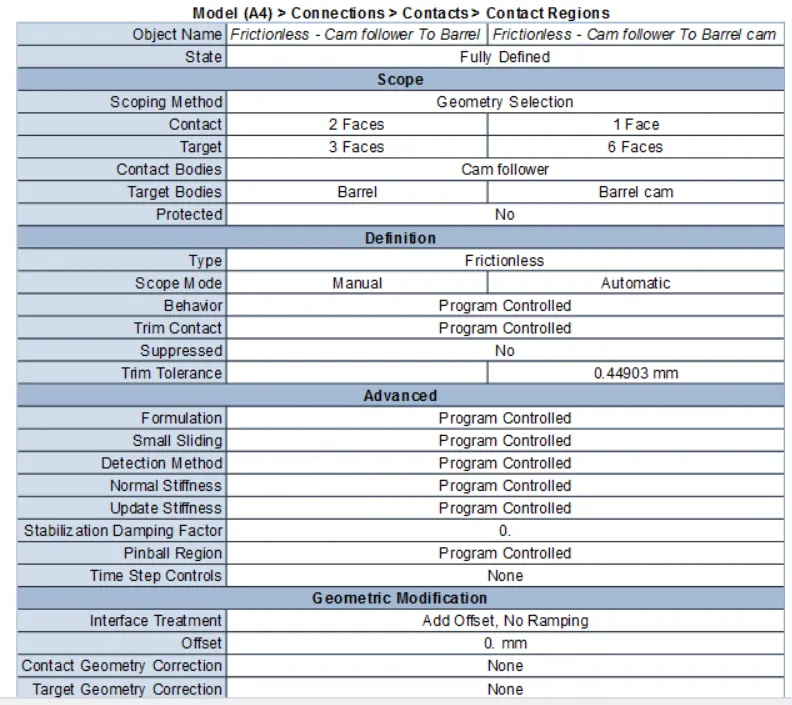
4. Connections configured for case 1 is Frictionless contact, case 2 is Frictional contact 0.1 and case 3 is Frictional contact 0.2 and remaining joints all are same for 3 cases
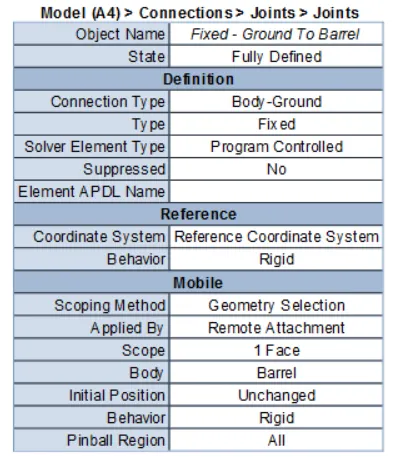
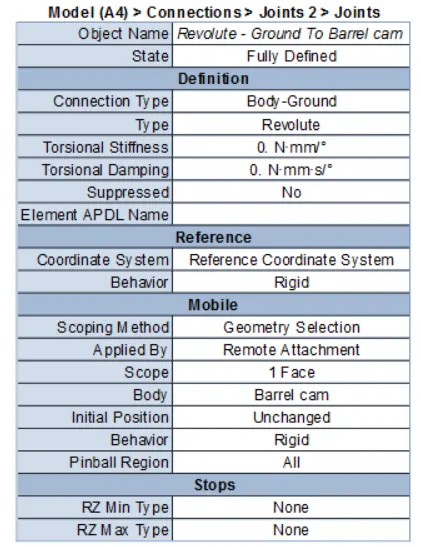
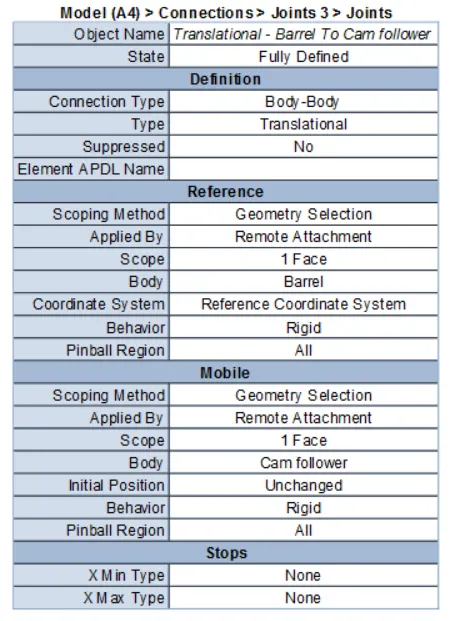
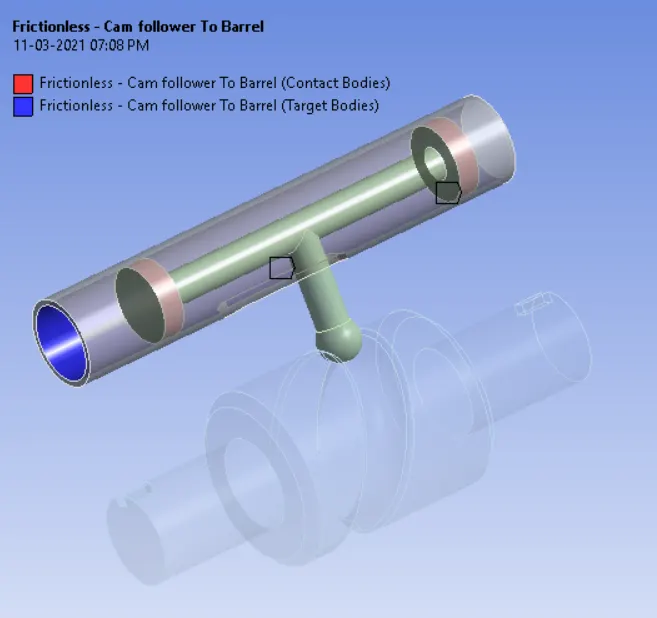
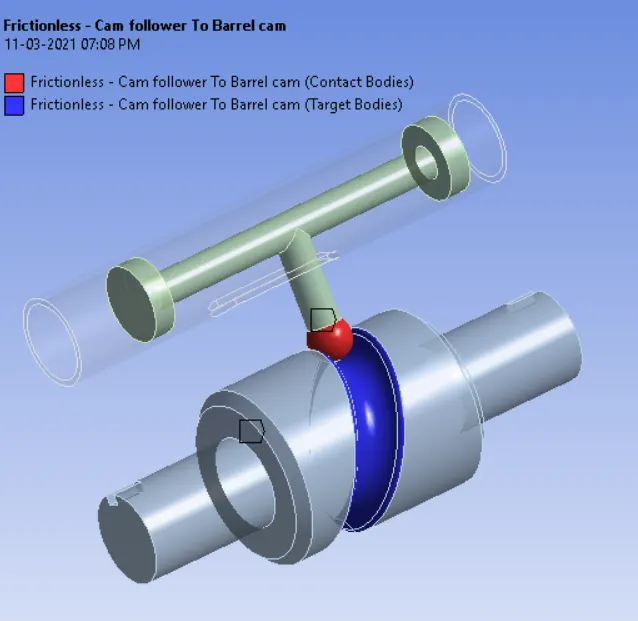
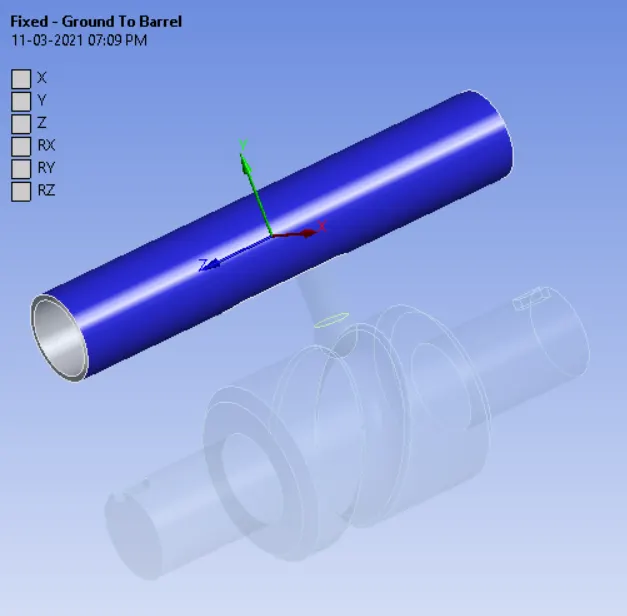
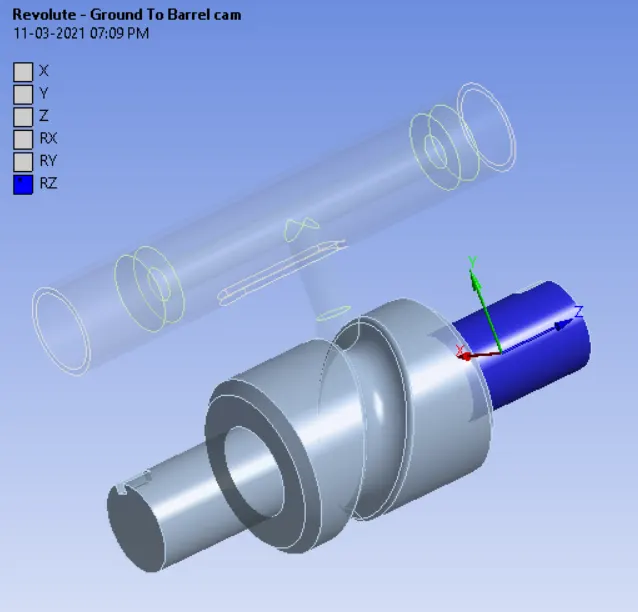
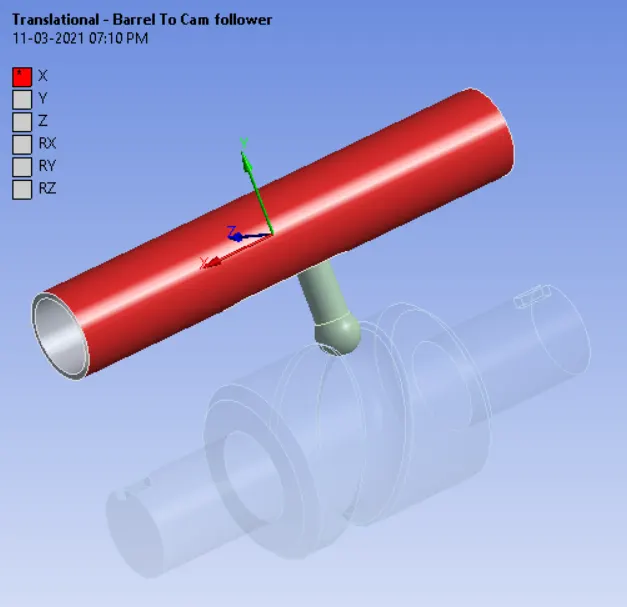
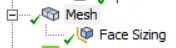
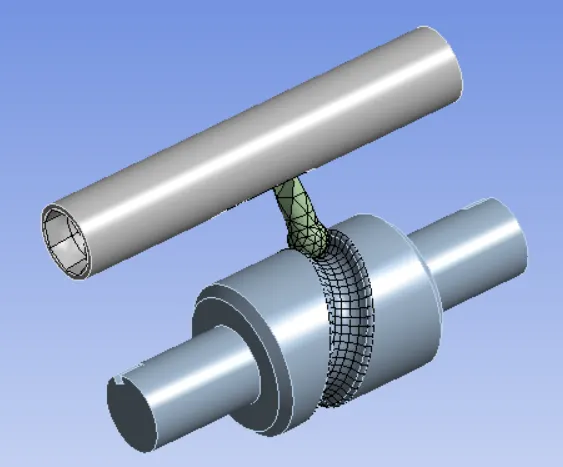
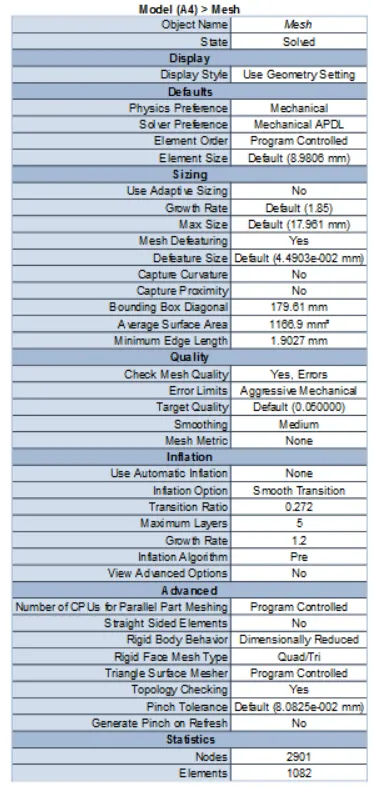
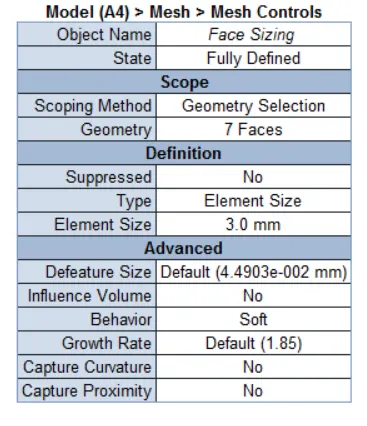
5. Mesh size is configured as
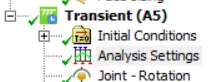
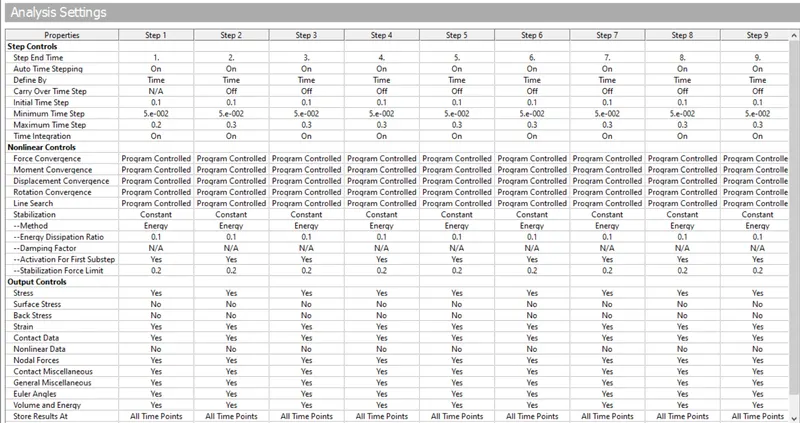
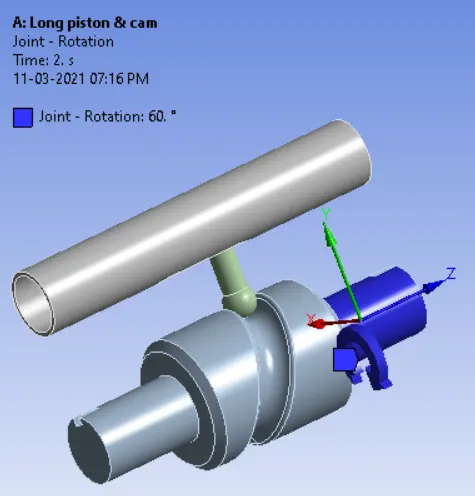
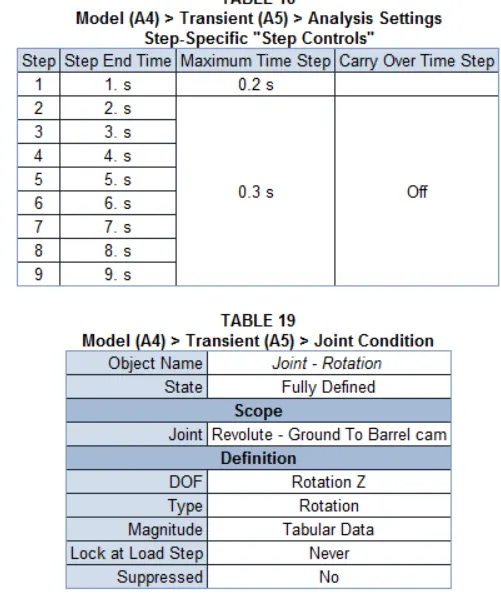
6. Analysis settings configured as shown in below image.
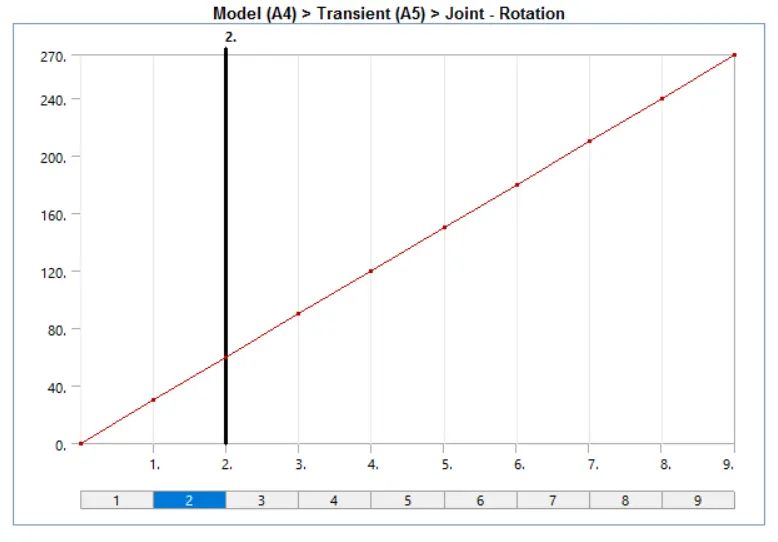
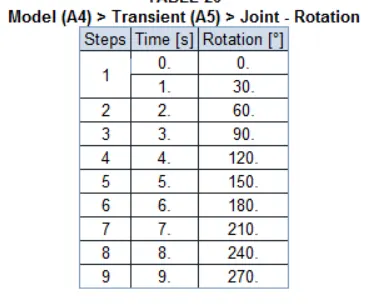
Transient simulation results are as follows:
| Description | Case studies | ||
| Results | Frictionless contact | Frictional with 0.1 | Frictional with 0.2 |
| Equivalent Stress | Max 1756.6 Mpa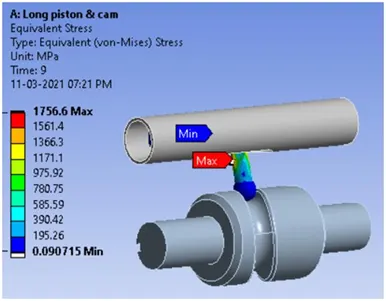 |
Max 2159.5 Mpa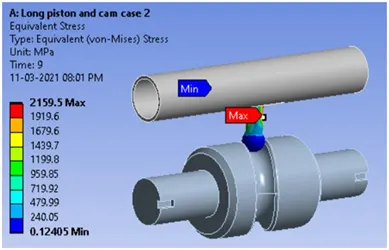 |
Max 2402.2 Mpa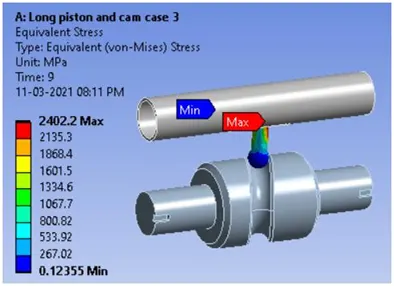 |
| Directional Deformation | Max 11.096 mm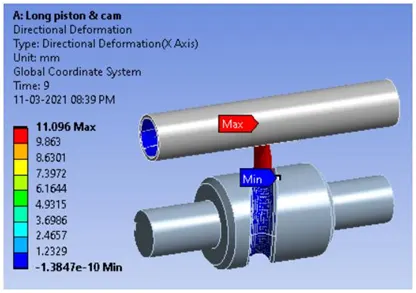 |
Max 11.446 mm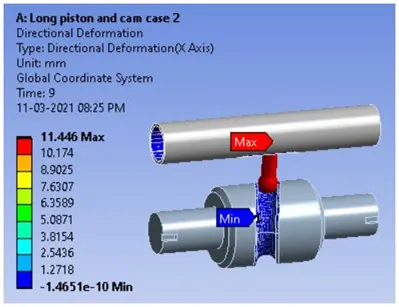 |
Max 11.513 mm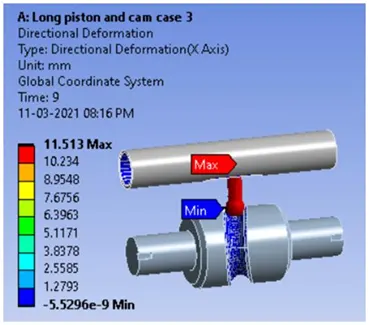 |
| Equivalent Elastic Strain | Max 0.0088296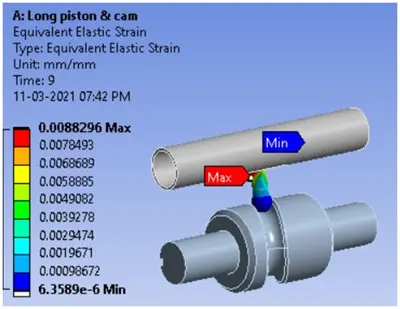 |
Max 0.011032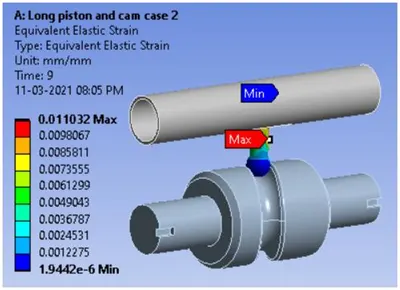 |
Max 0.01205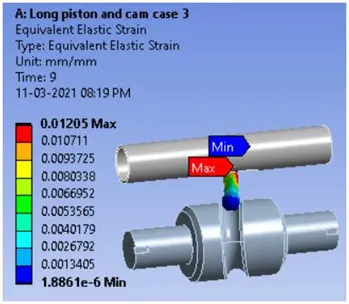 |
| Conclusion | 1. The coefficient of friction, µ, is a measure of the amount of friction existing between two surfaces. A low value of coefficient of friction indicates that the force required for sliding to occur is less than the force required when the coefficient of friction is high. So equivalent stress is increased gradually when increase in friction coefficient. 2. Found minor difference in directional deformation and equivalent Elastic Strain for all 3 cases. |
||