Week 7-Long Piston With Cam
Aim : perform Transient structural analysis on long piston with cylinder in 3 cases , case 1 frictionless contact, case 2- frictional contact with frictional co efficient as 0.1 and case 3 froctional contact with frictional co efficient as 0.2.
Procesure :
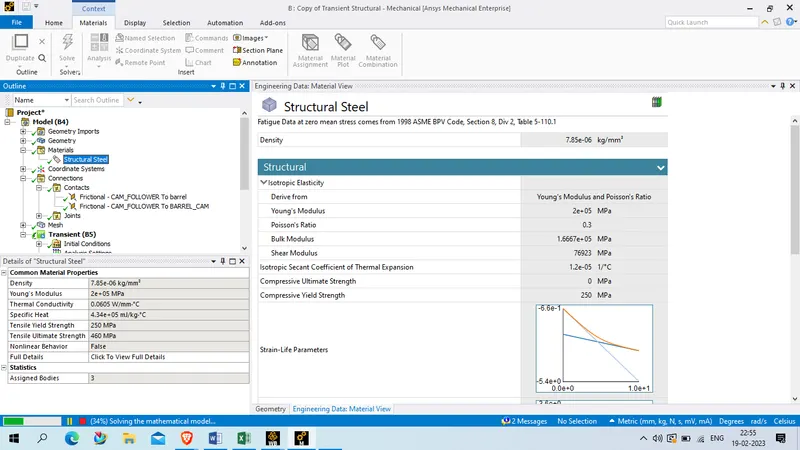
Open Transinet structure module in ANSYS workbench and open engineering data , select the structural steel and close engineering data tab.
the mechanical property of structural steel is given as below
Density : 7.85e-06 kg/mm³
Isotropic Secant Coefficient of Thermal Expansion : 1.2e-05 1/°C
Young's Modulus: 2e+05 MPa
Poisson's Ratio: 0.3
Bulk Modulus: 1.6667e+05 MPa
Shear Modulus: 76923 MPa
Tensile Yield strength : 250 MPa
Compressive Yield strength : 250 MPa
Tensile Ultimate strength : 460 MPa
Isotropic Thermal Conductivity : 0.0605 W/mm·°C
Specific Heat Constant Pressure: 4.34e+05 mJ/kg·°C
Isotropic Resistivity: 0.00017 ohm-mm
Isotropic Relative Permeability: 10000
Now open geometry in spaceclaim and review the geometry , as we found all good so we close the spaceclaim and enter in mechanical module
in mechanical module we expand geometry tab and rename the component for our convenient and assign all component structural steel
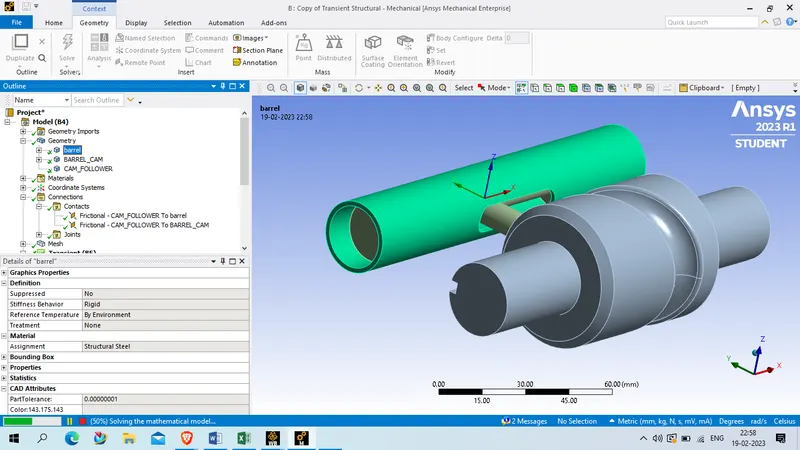
Make barrel and barrel_cam a rigid body
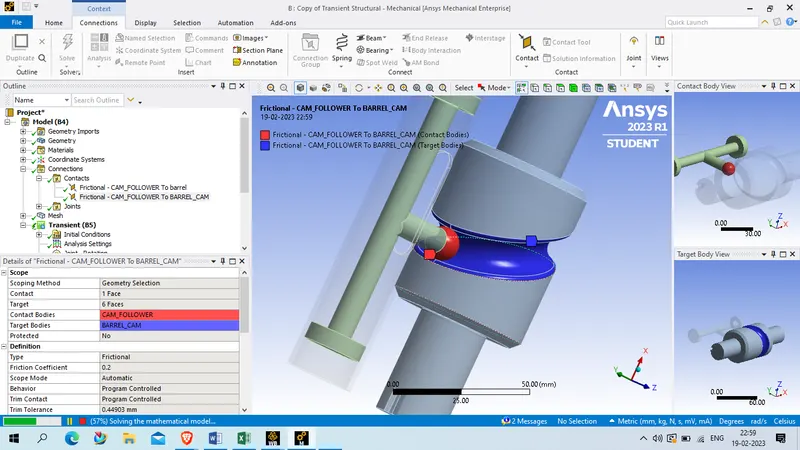
for contact we make 2 contact 1 with cam follower with barrel
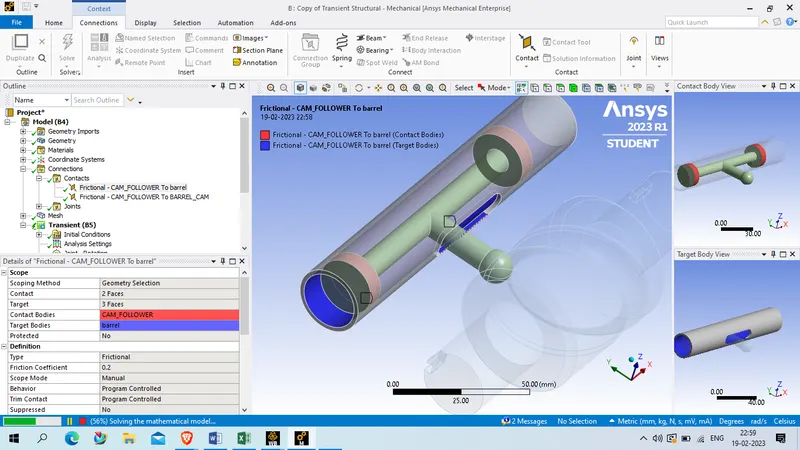
and 2nd contact between cam follower and barrel Cam
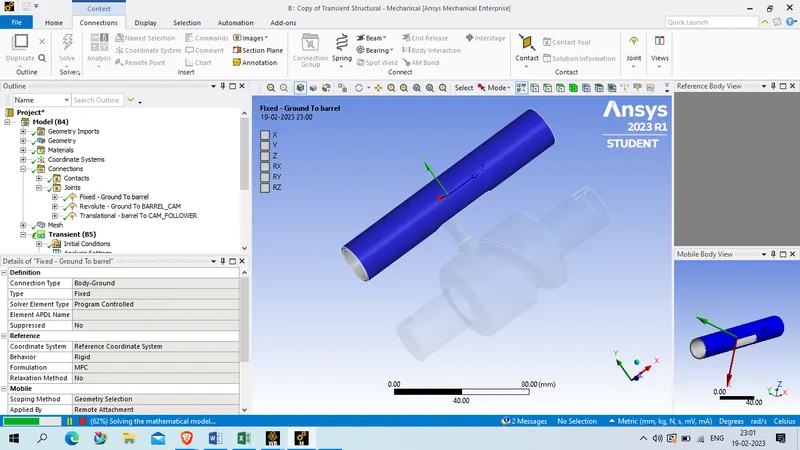
now we deploy a fix support to the barrel
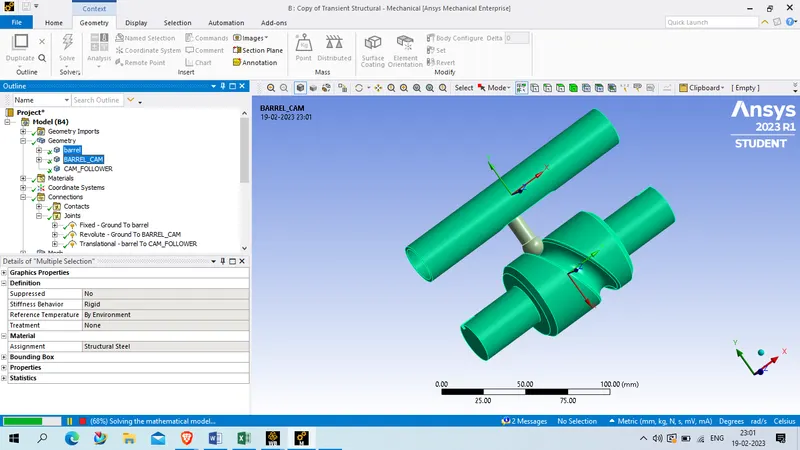
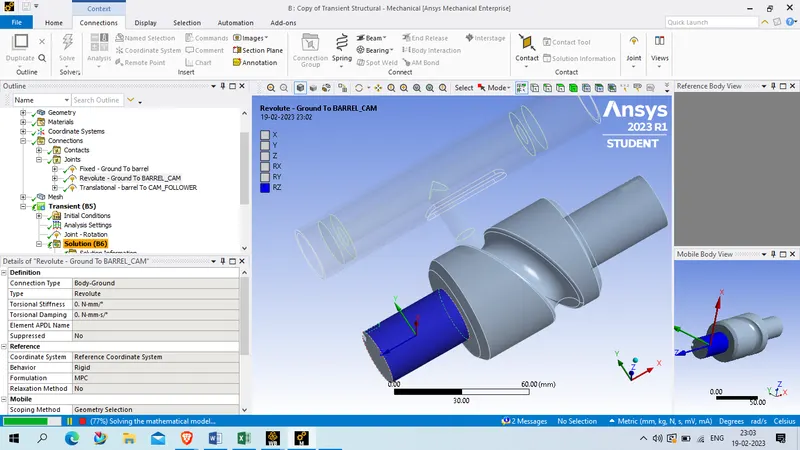
a revolute joint deployed, between ground to barrel_cam
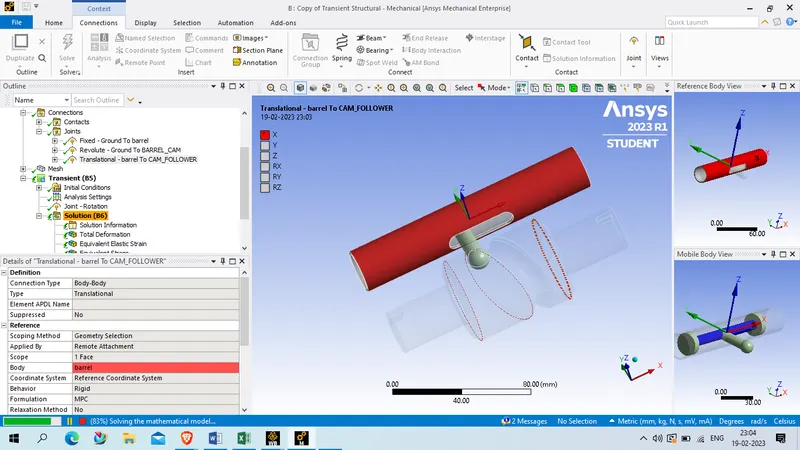
A translation joint deployed in which mobile will be cam bofy and reference will be barrel body as shown in below fig.
for mesh , we will mesh of element size as 3mm at contact face rest will be default, used adaptive sizing as no
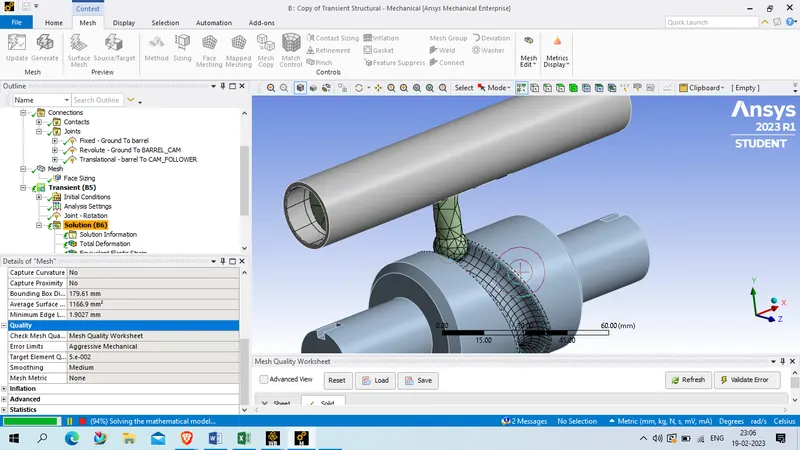
The statics of the element are as shown below
number of Node : 2898
number of element: 1082
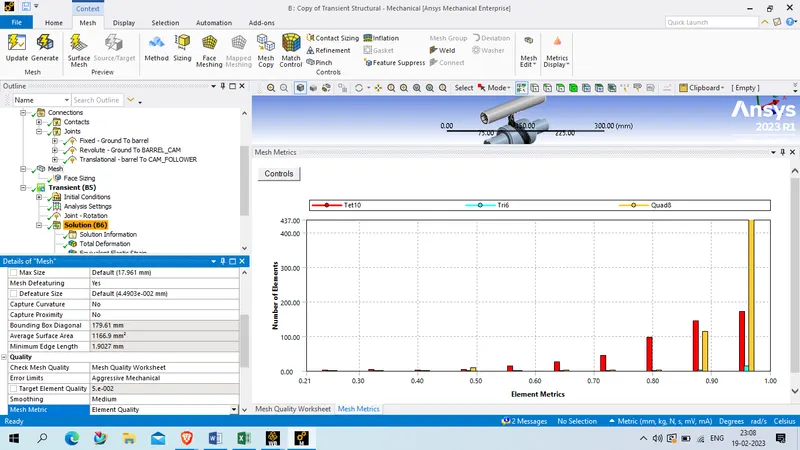
the element quality of the mesh is good as most of the element have higher value
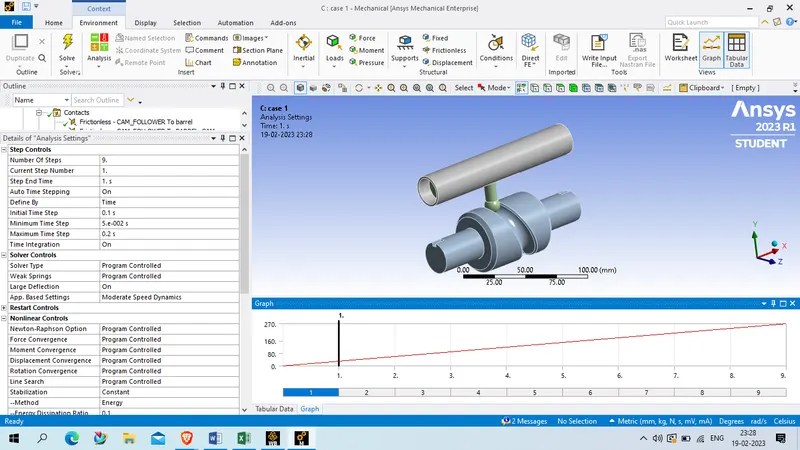
for analysis setting we use below setup
number of step : 9
for 1st step
Initial time step: 0.1
Minimum time step: 0.05
Maximum time step: 0.03
solver type :program controll
weak spring : Program controll
Large deflection : On
Non Linear controll
stabilization : constant
energy dissipation ration: 0.1
activation for first substep: yes
output controll
put contact miscellaneous as NO rest parameter yes
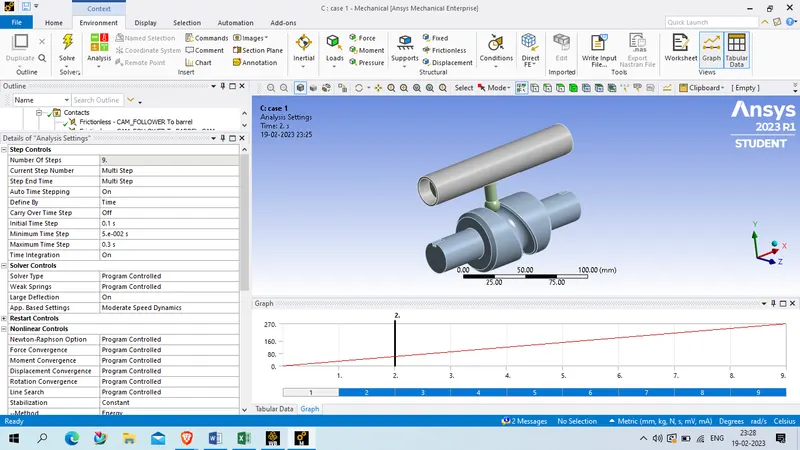
for 2nd to 9th step
initial time step: 0.1 s
minimum time step: 0.05 s
maximum tim step: 0.3 s
solver type: program controll
weak spring : program controll
large deflection : on
Non Linear controll
stabilization : constant
energy dissipation ration: 0.1
activation for first substep: yes
output controll
put contact miscellaneous as NO rest parameter yes
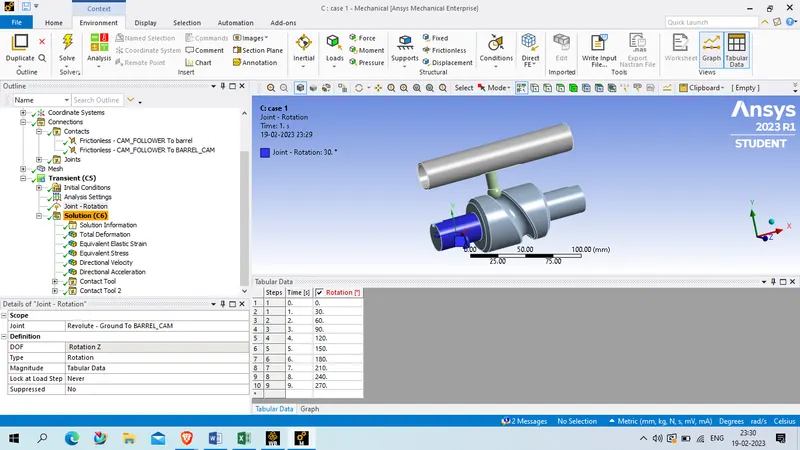
now we deploy a revolute joint ground to barrel_cam
Type: rotaion
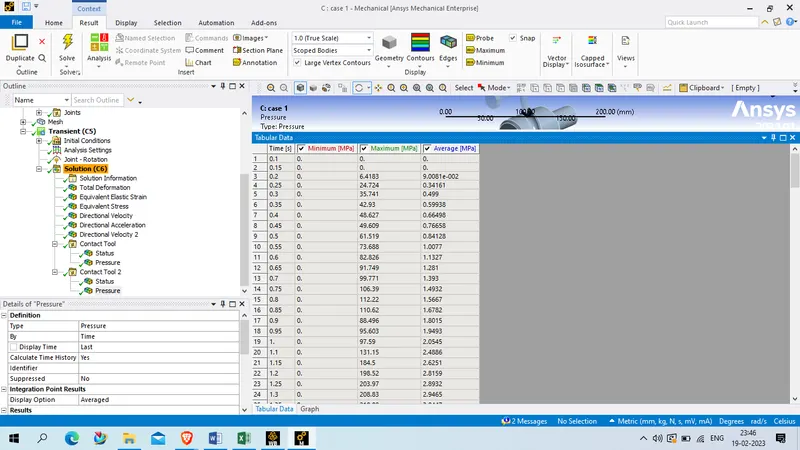
Magnitude : tubular data
details of tubular data is given in fig.
NOw list down the required output from simulation and run
Picture :
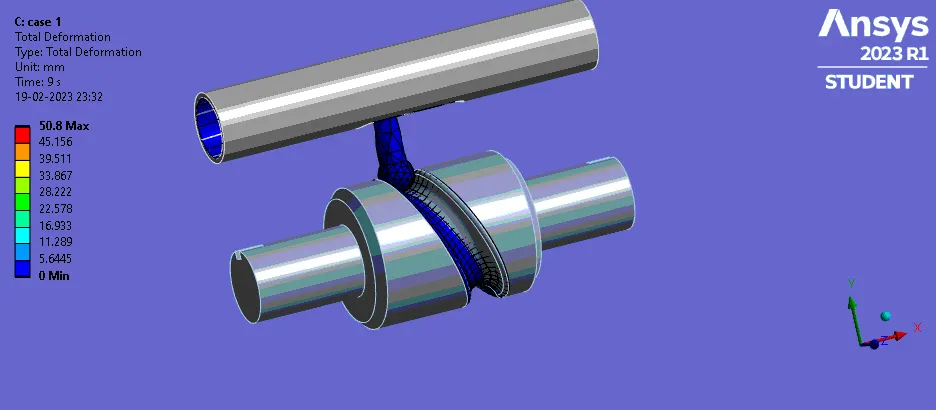
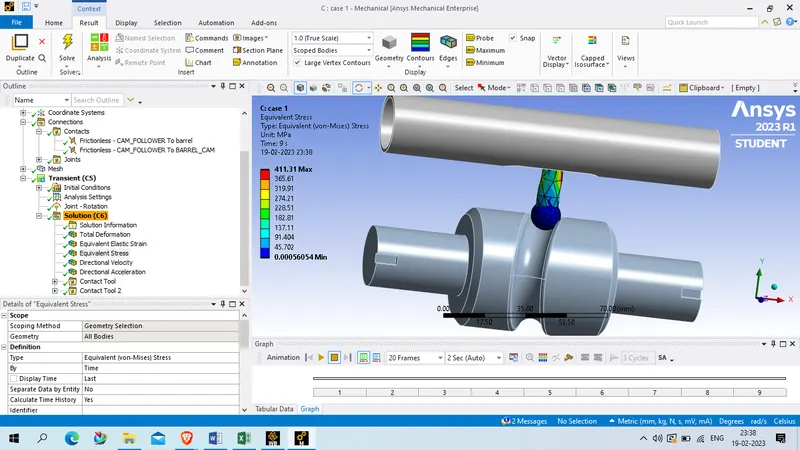
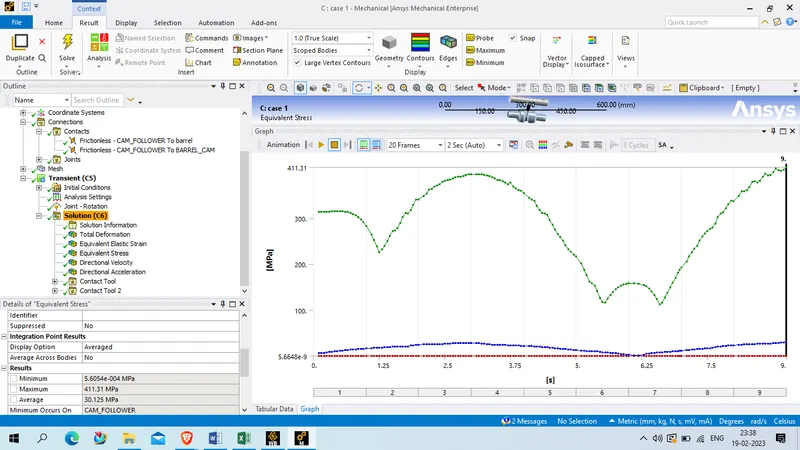
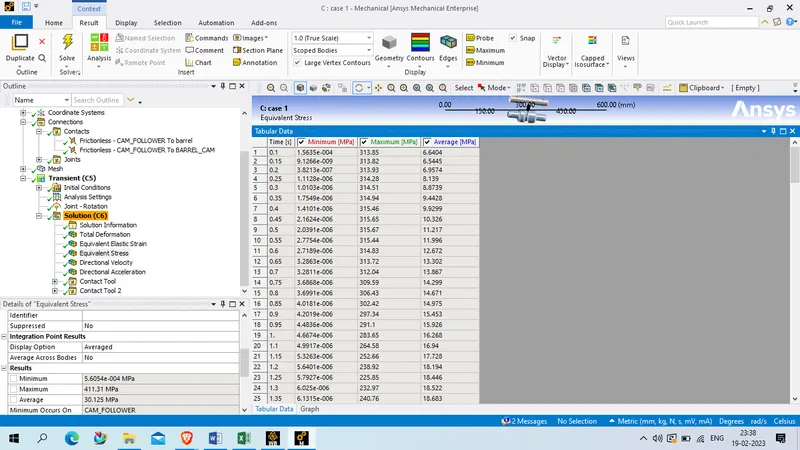
Case 1:
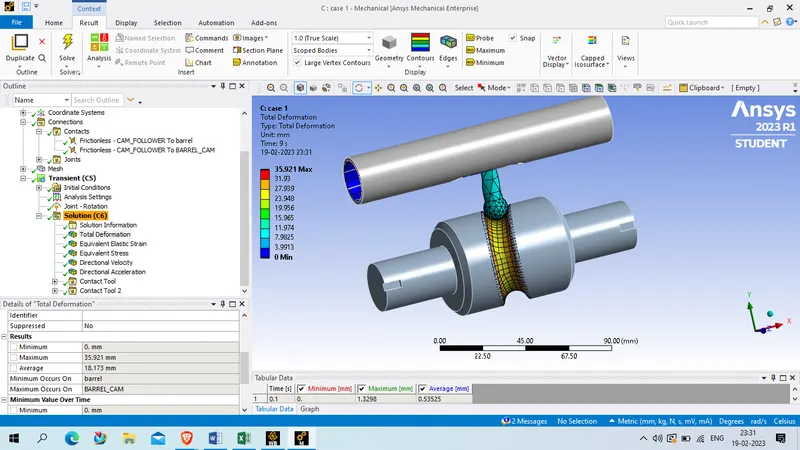
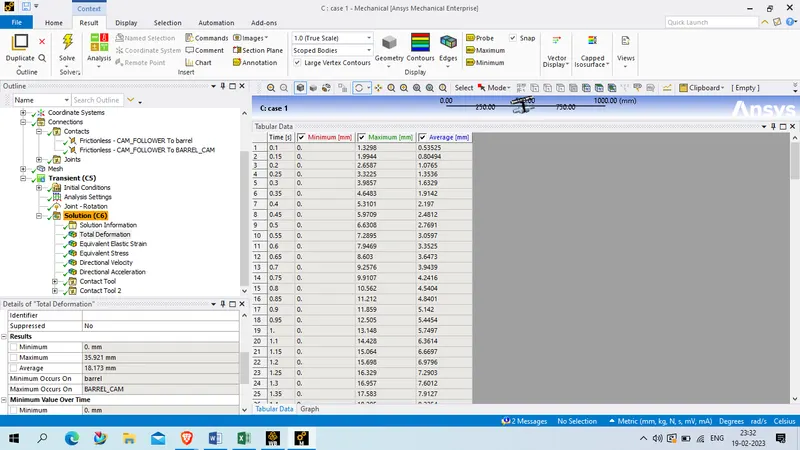
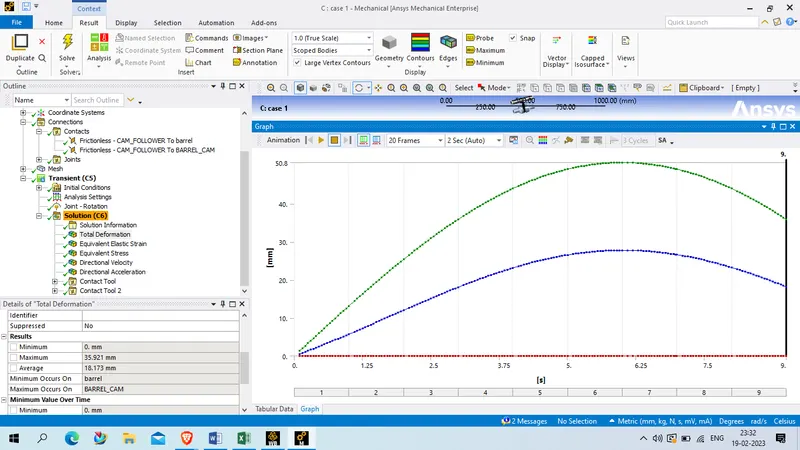
Total deformation
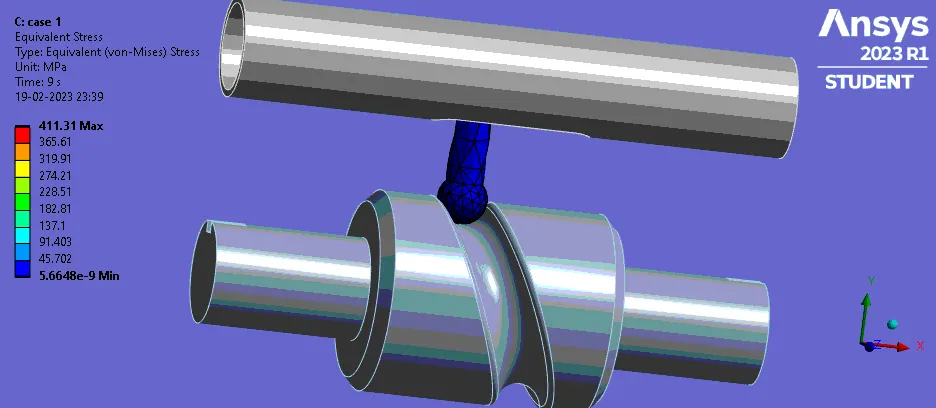
Equivalent stress
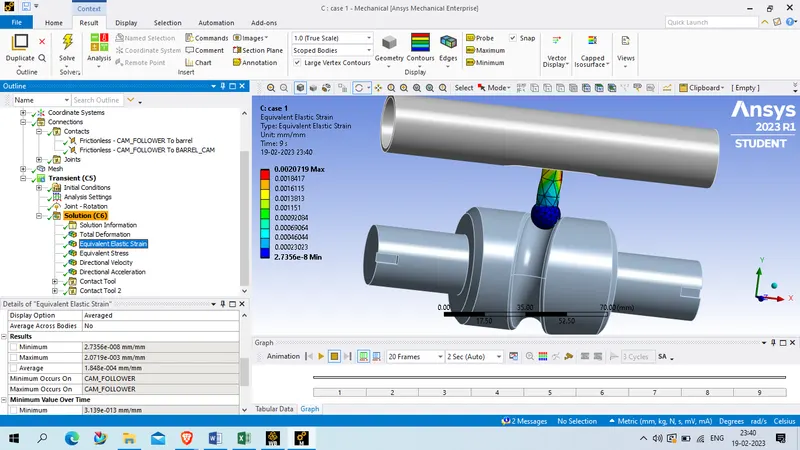
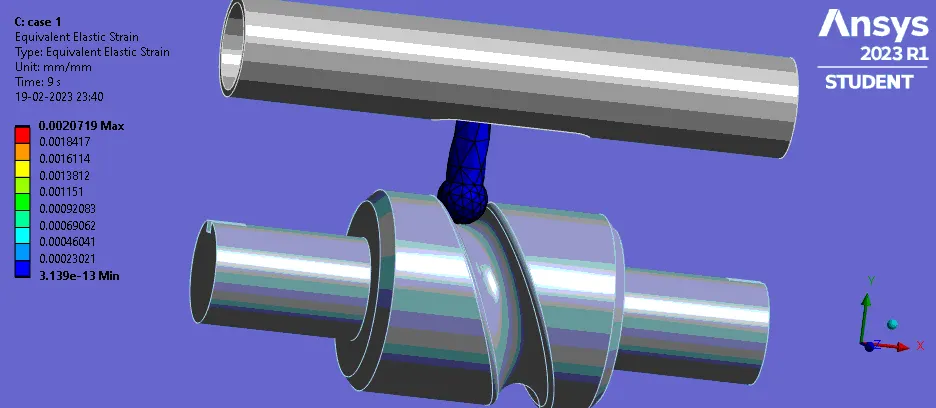
Equivalent elastic strain
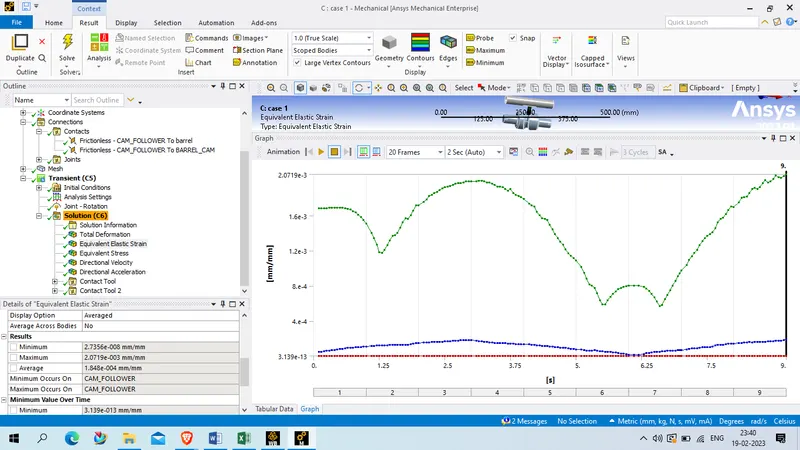
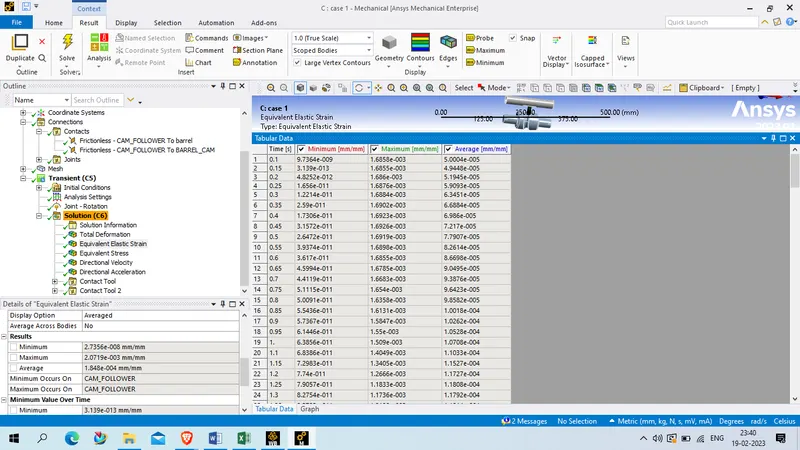
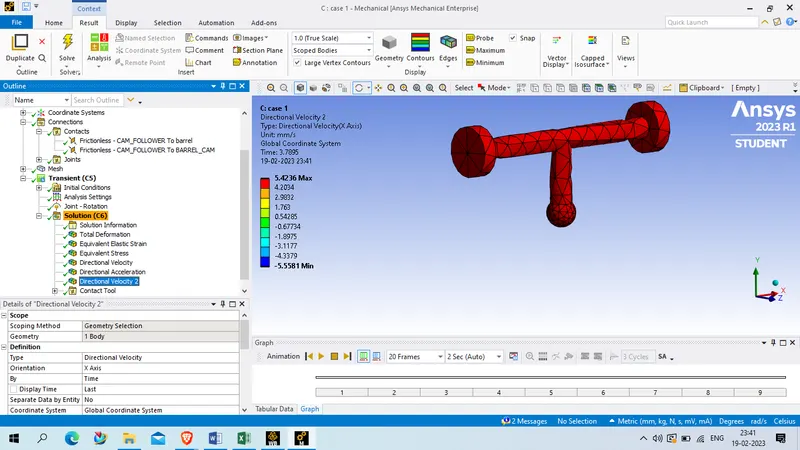
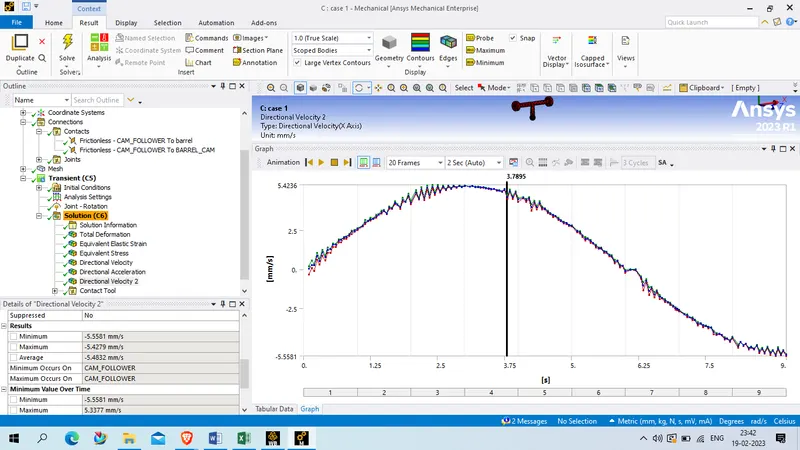
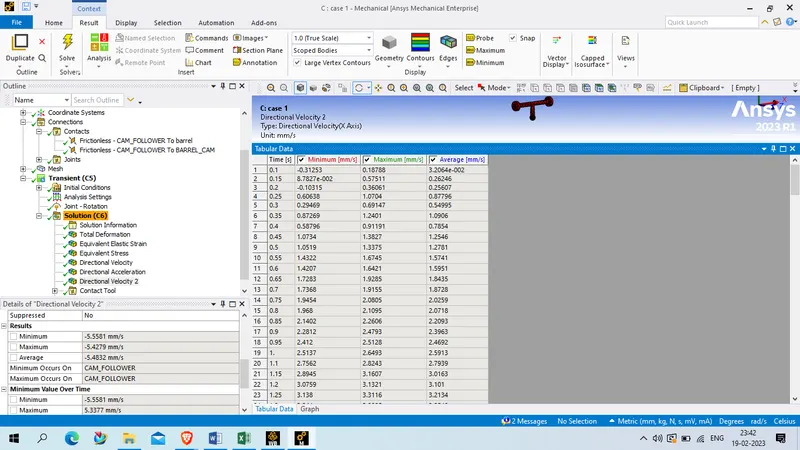
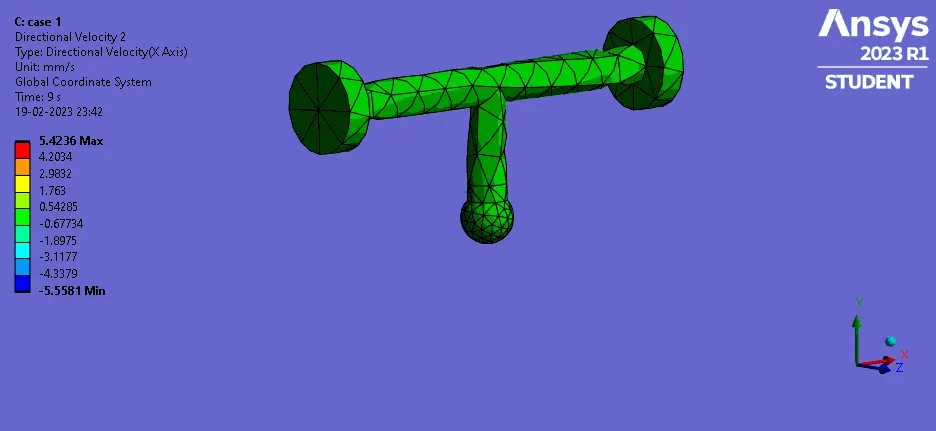
DIrectional velocity on cam_follower
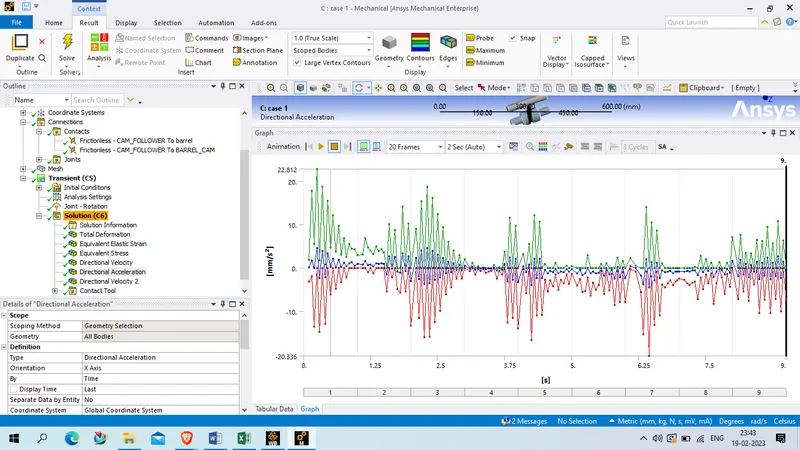
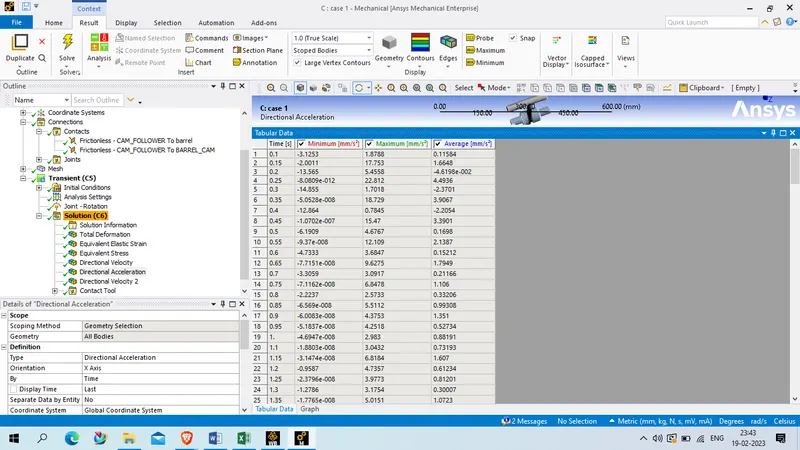
DIrectional acceleration 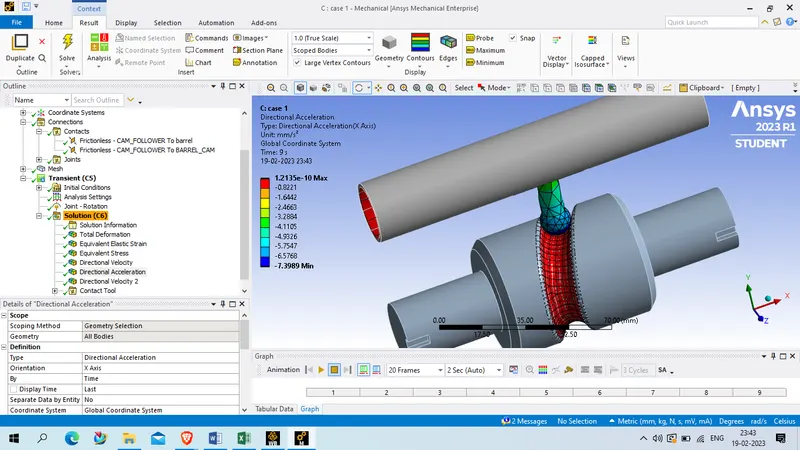
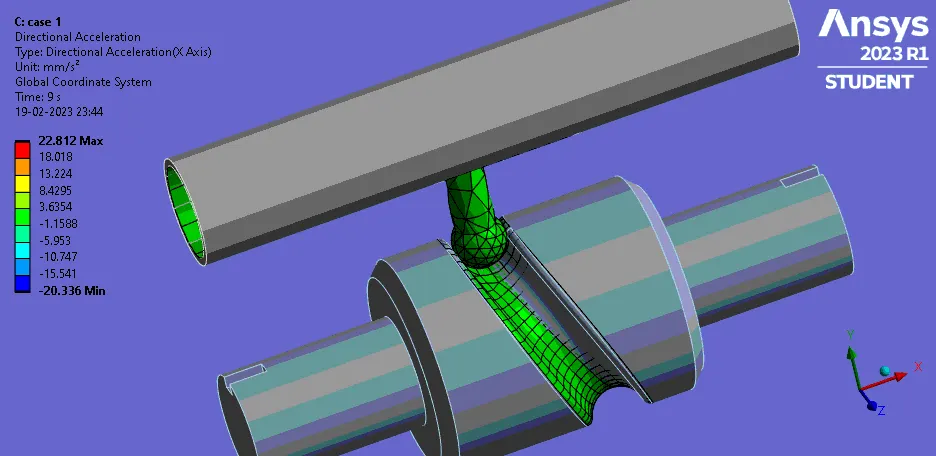
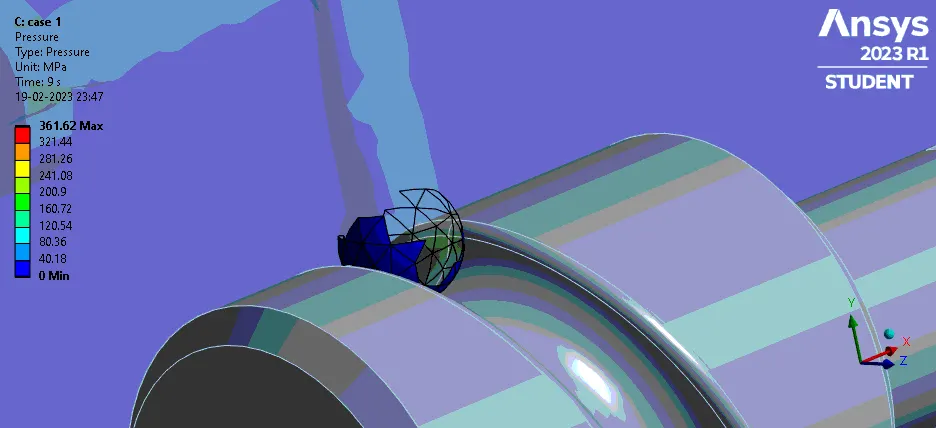
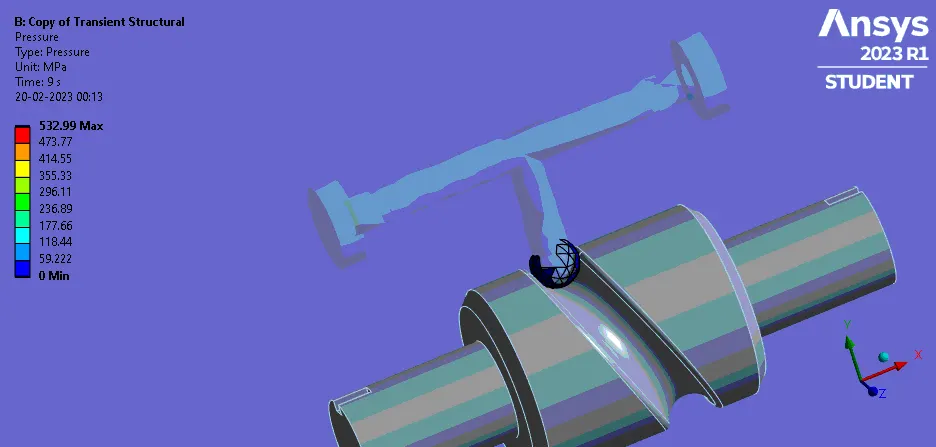
contact pressure : Cam_follower and barrel
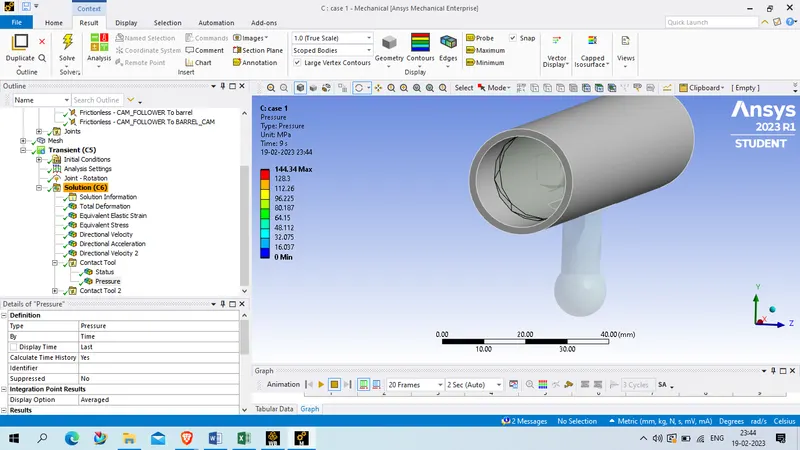
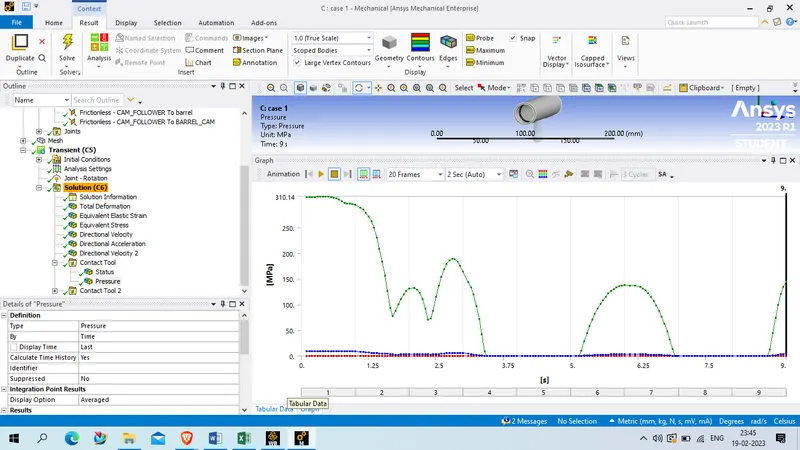
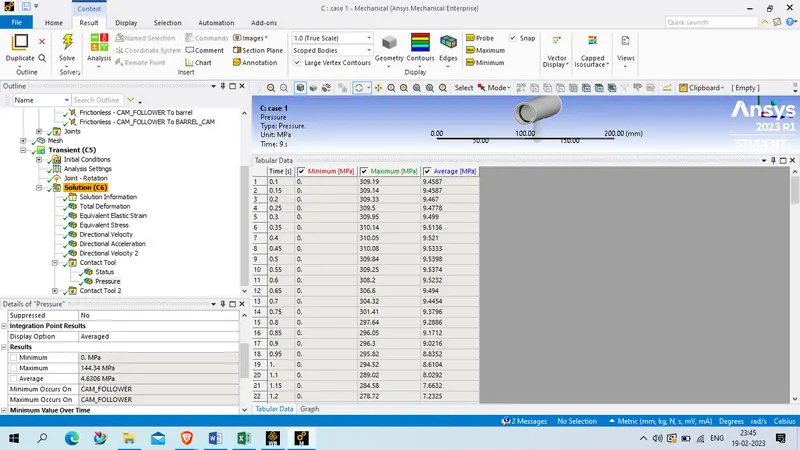
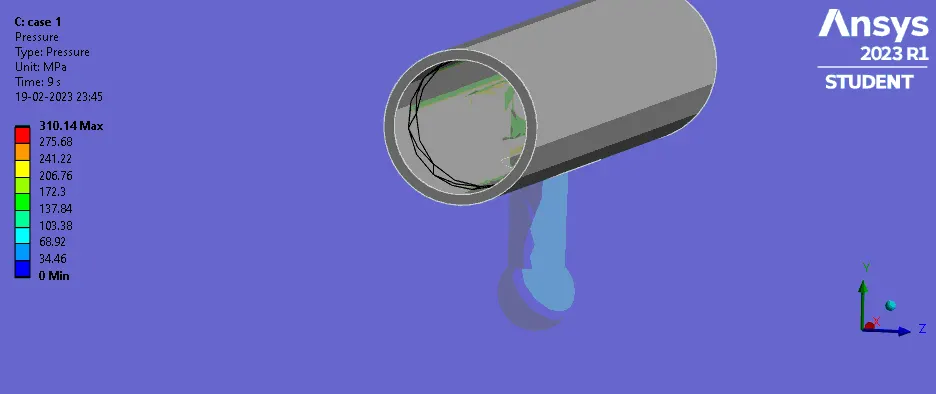
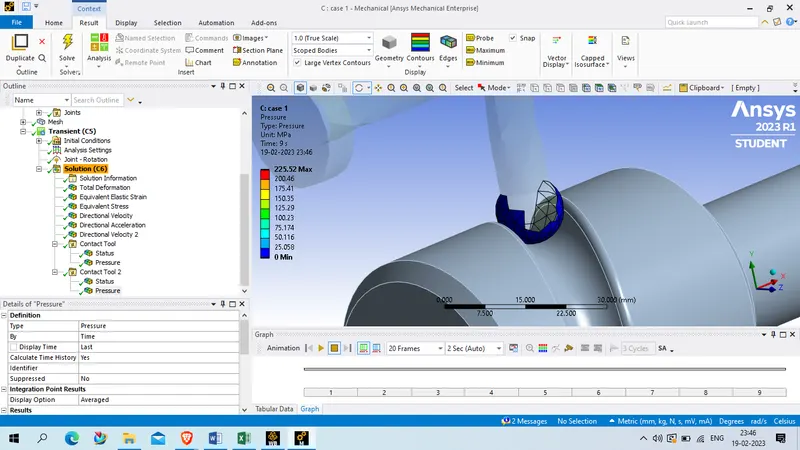
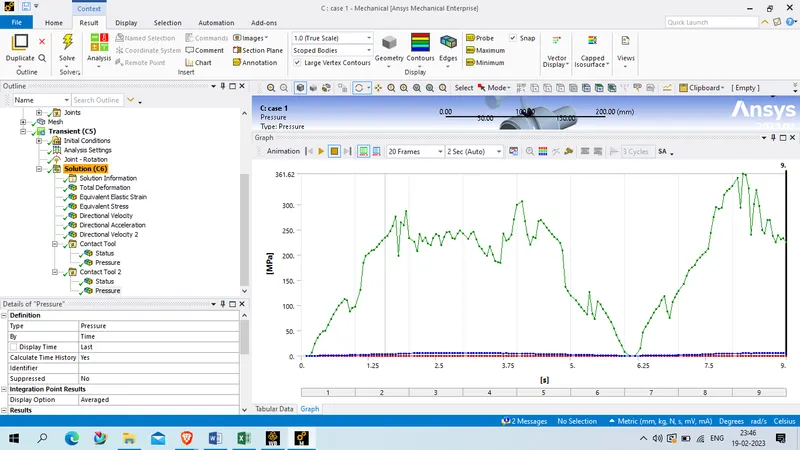
COntact pressure : CAM_FOLLOWER and Barrel CAM
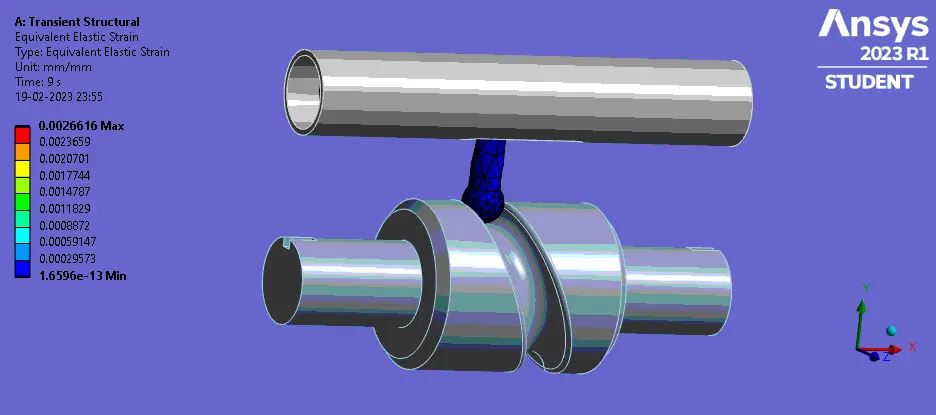
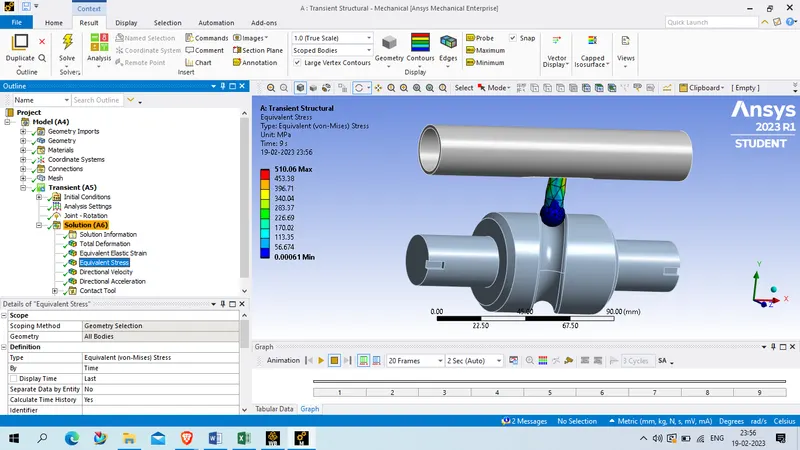
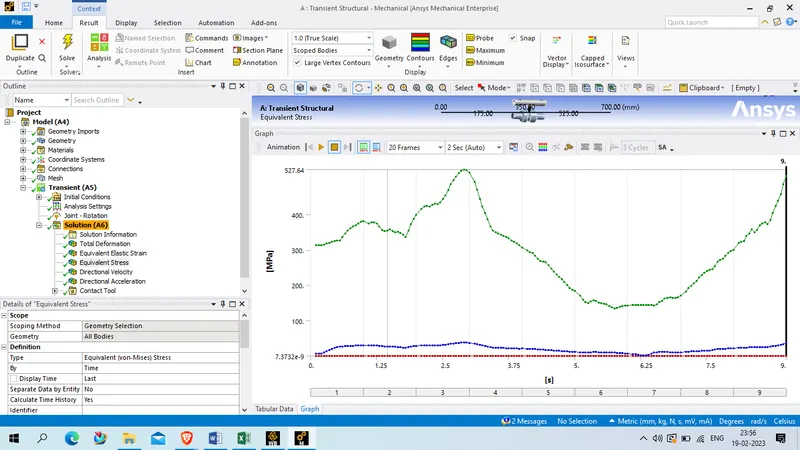
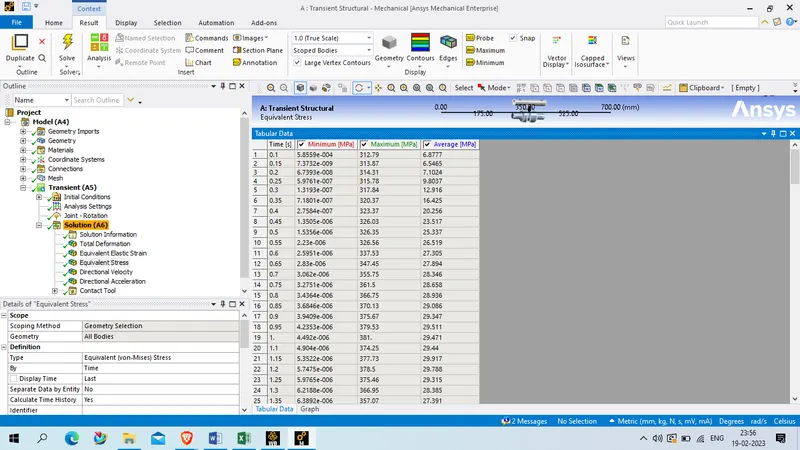
Picture Case 2
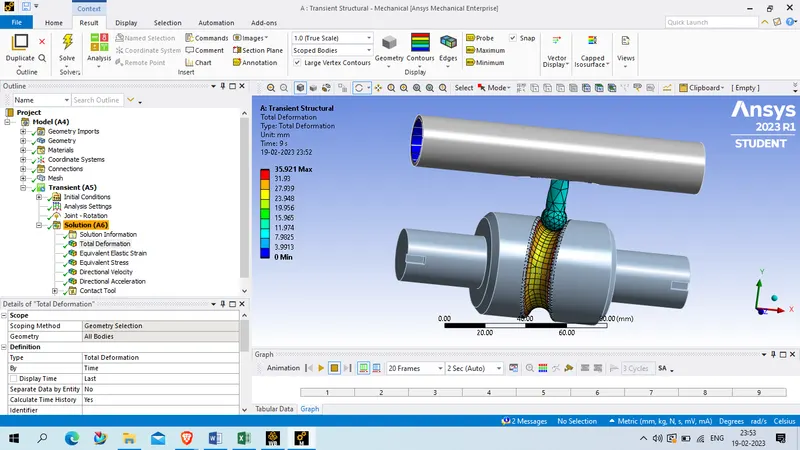
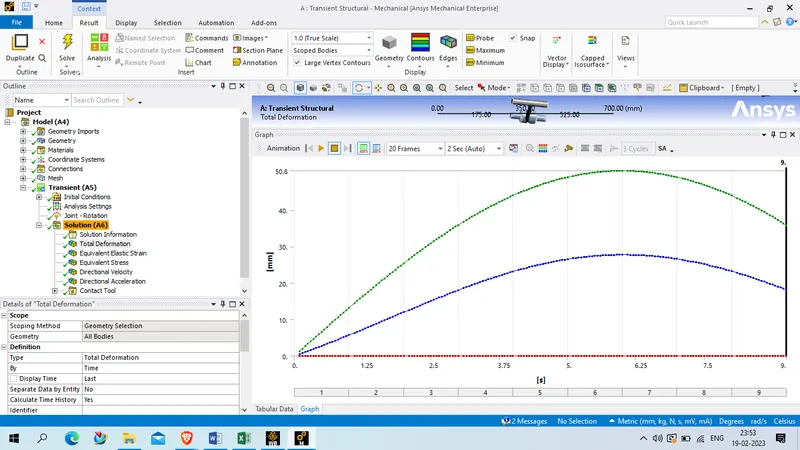
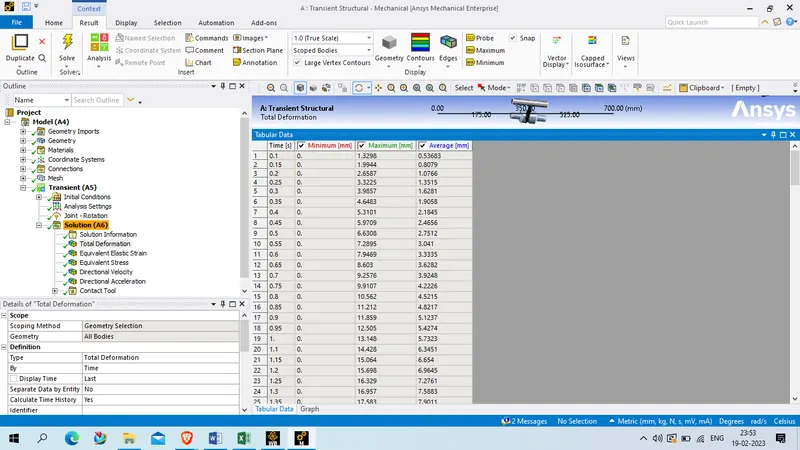
total deforamtion
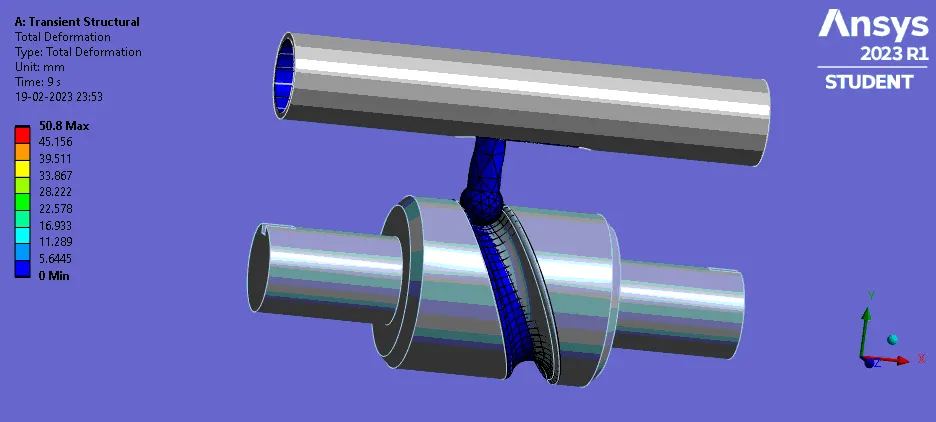
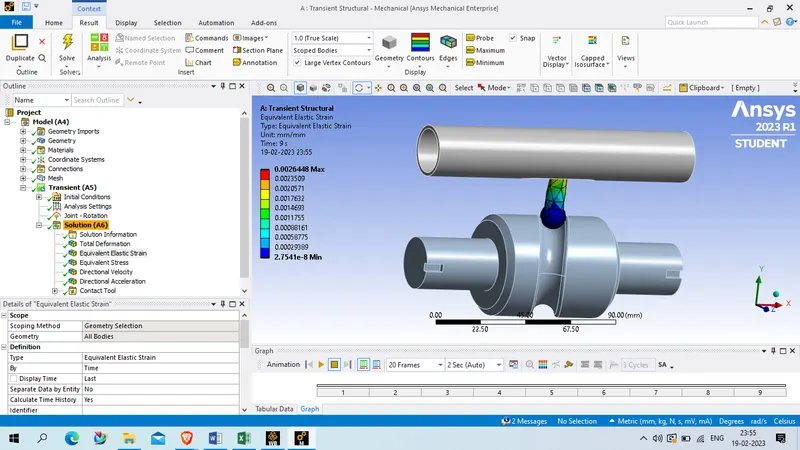
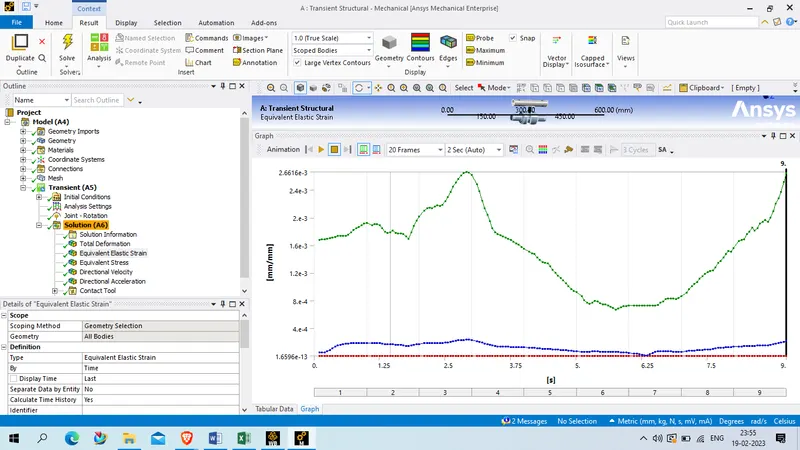
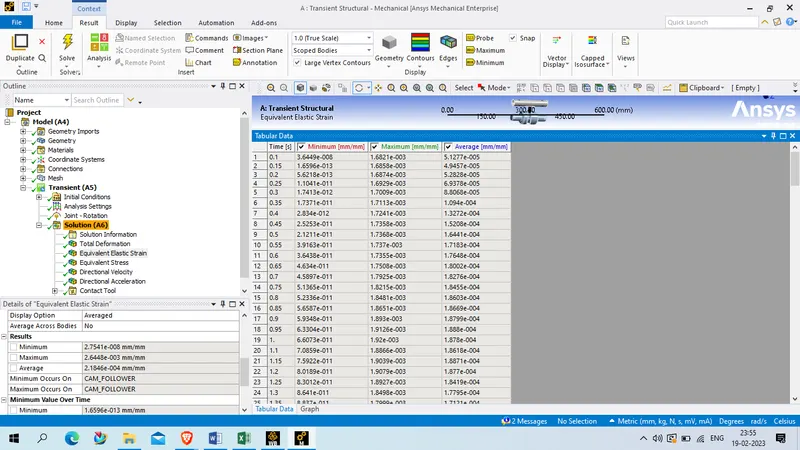
Equivalent elastic strain
Equivalent stress
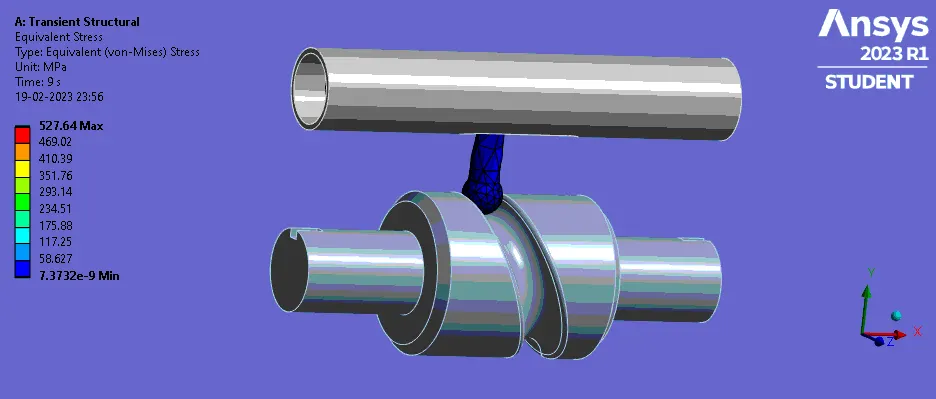
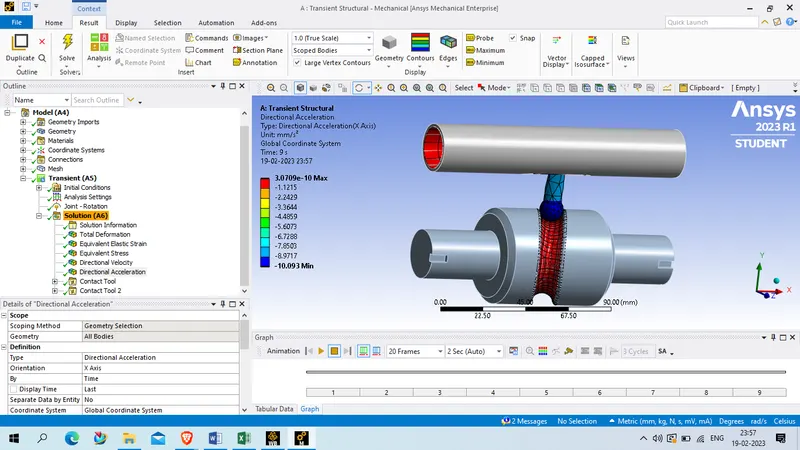
Directional acceleration
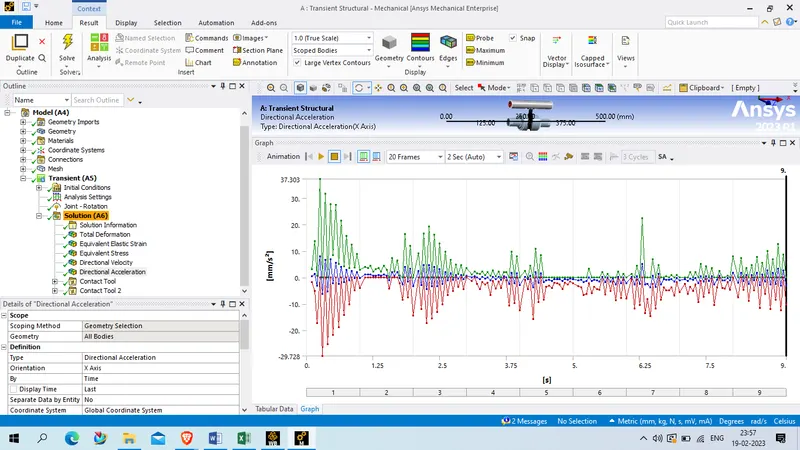
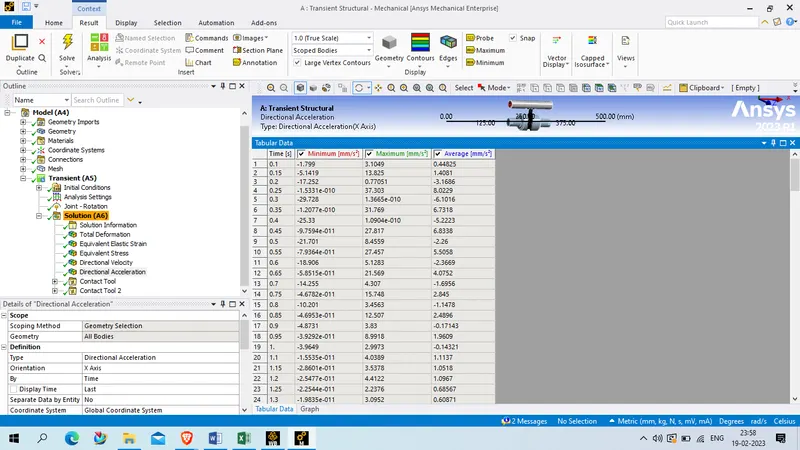
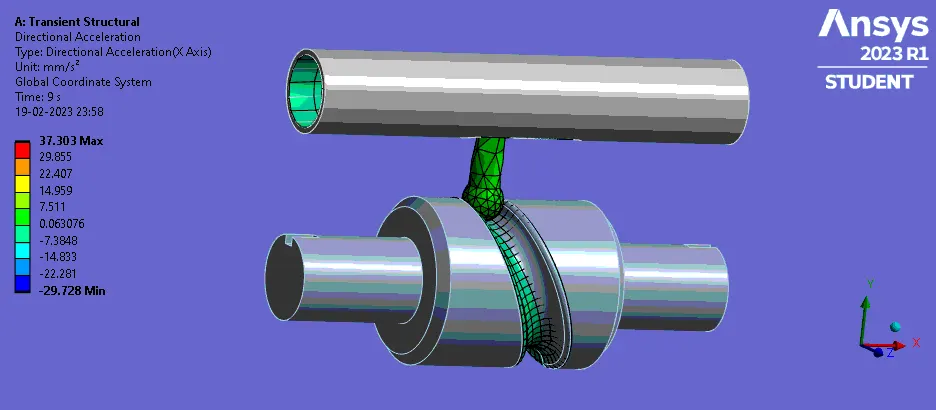
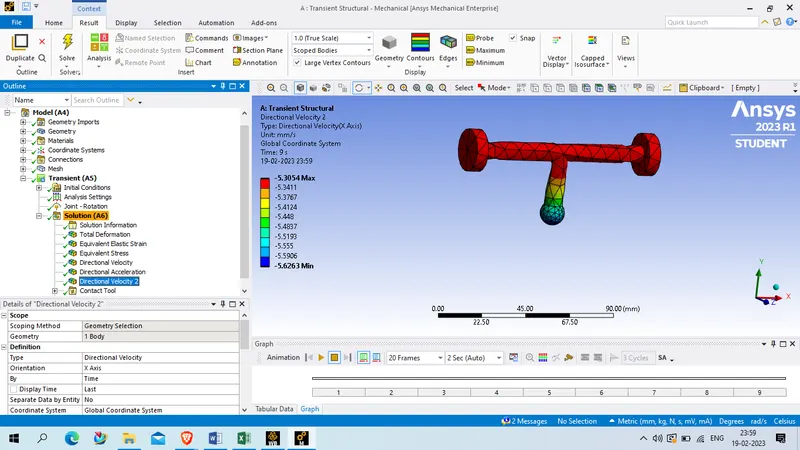
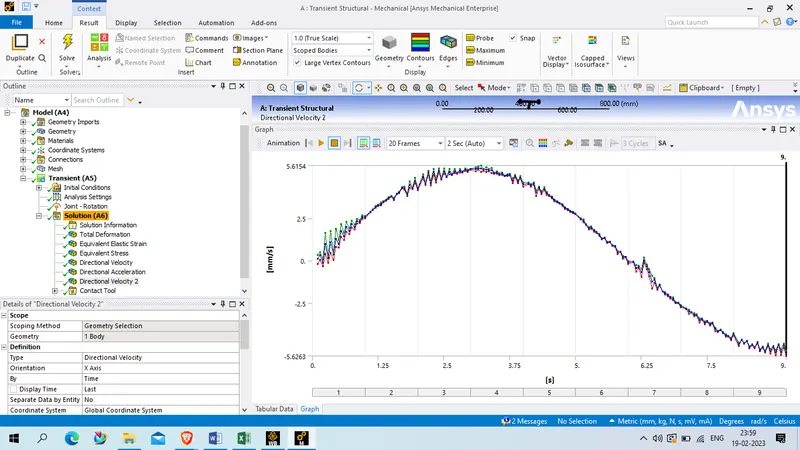
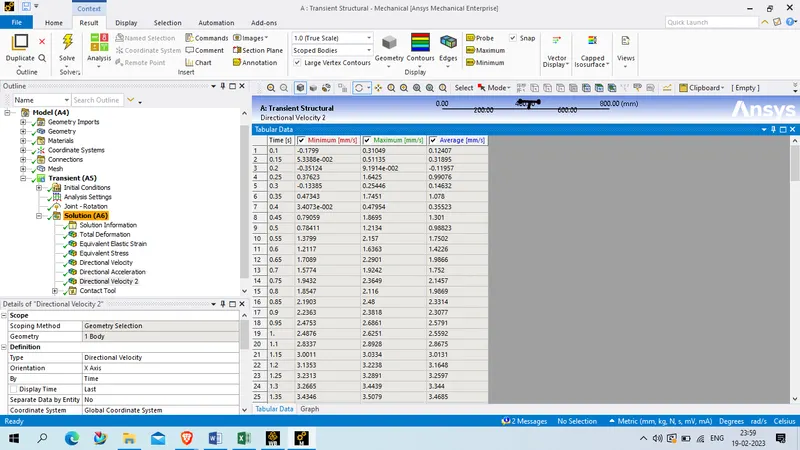
Directional velocity
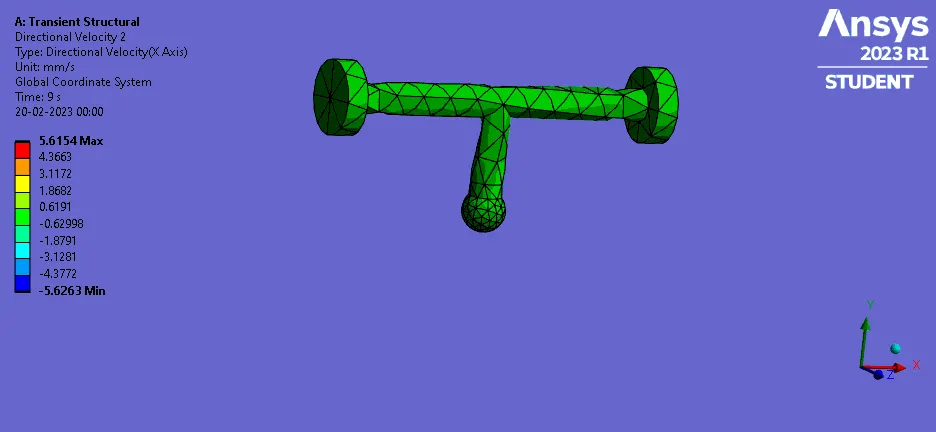
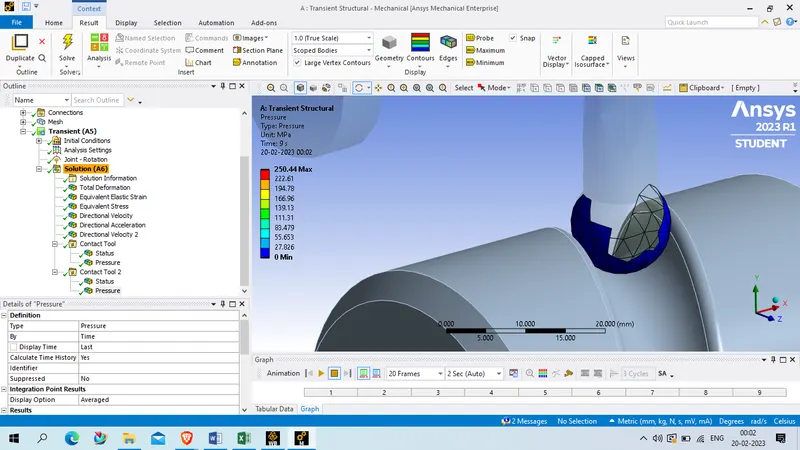
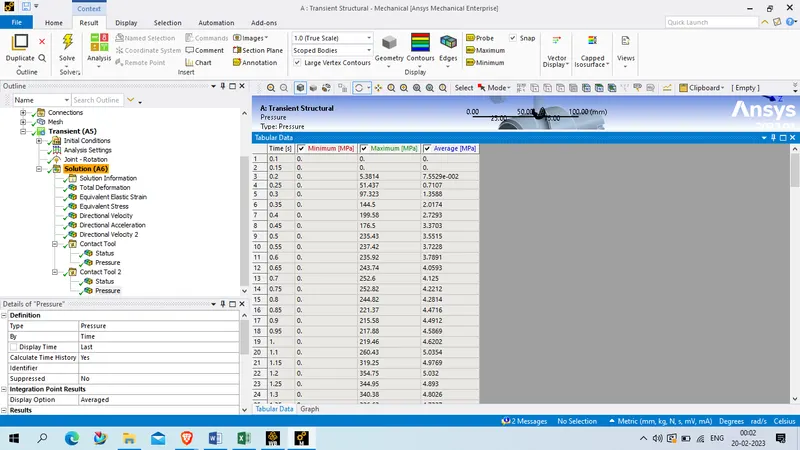
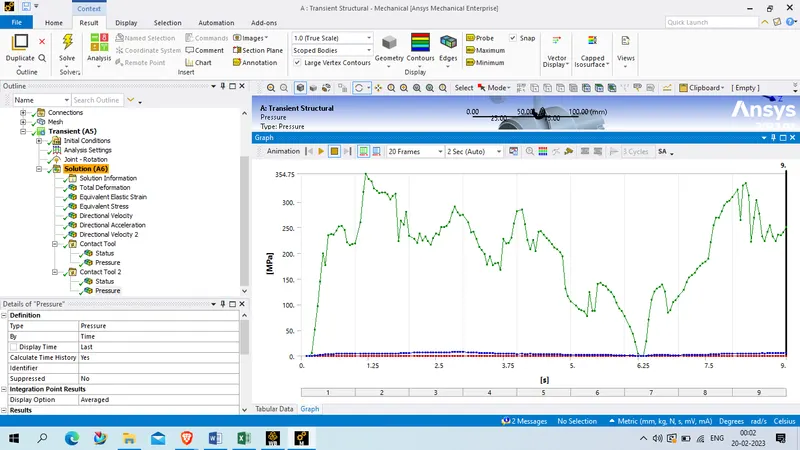
COntact pressure : cam_follower and barrel
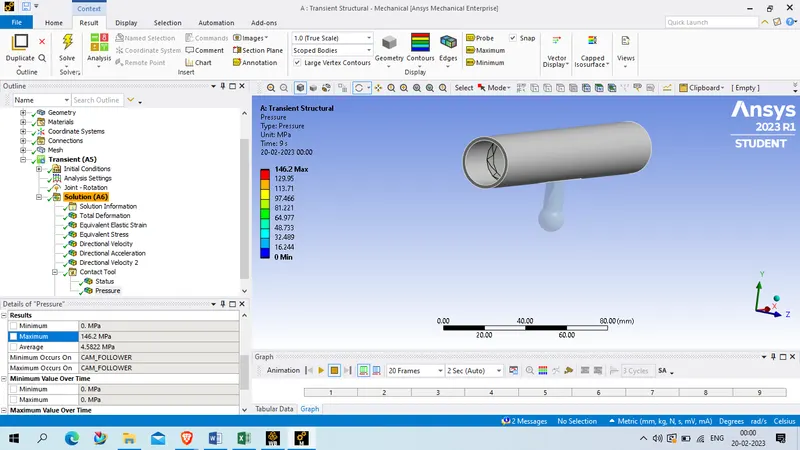
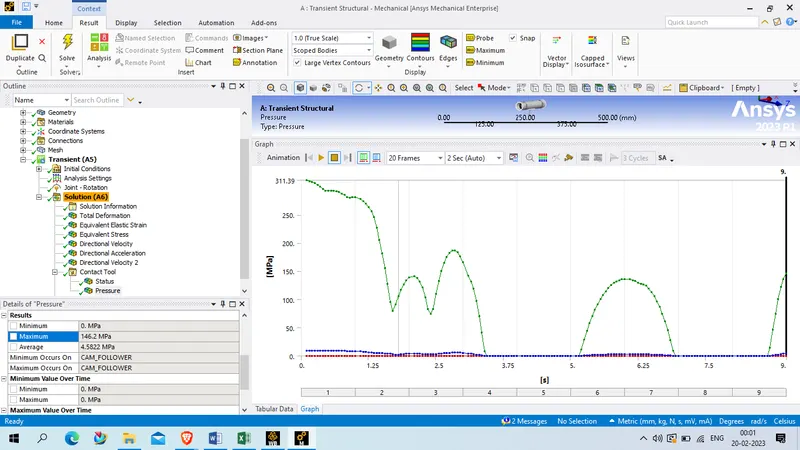
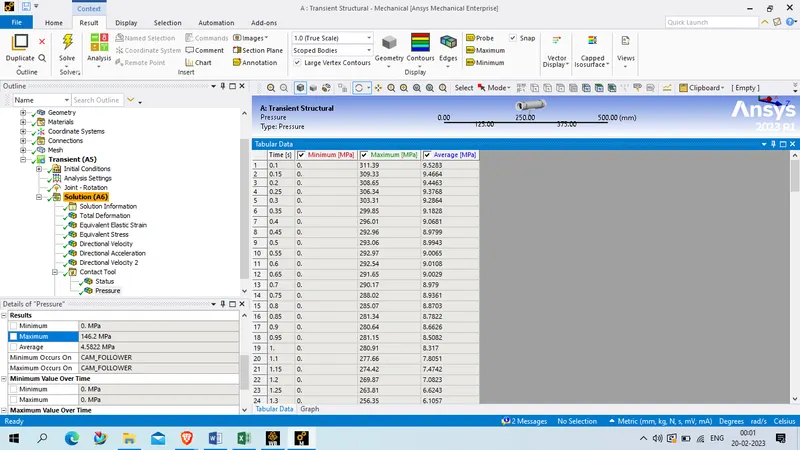
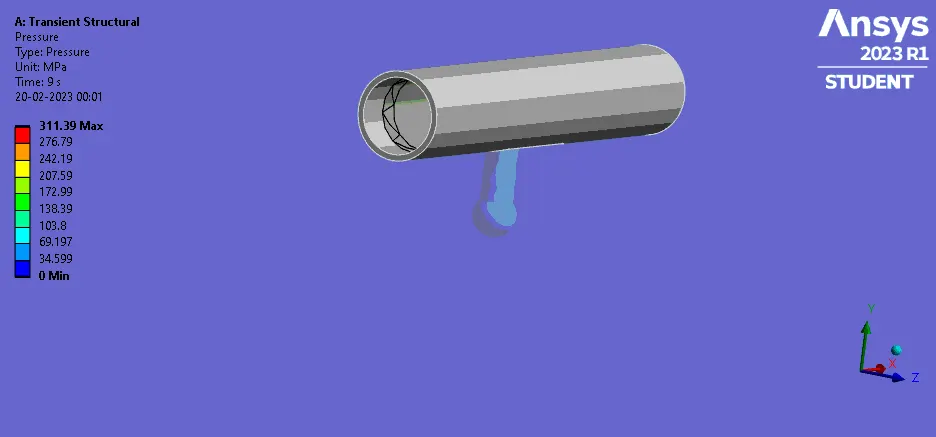
Contact pressure : Cam_follower & Barrel _cam
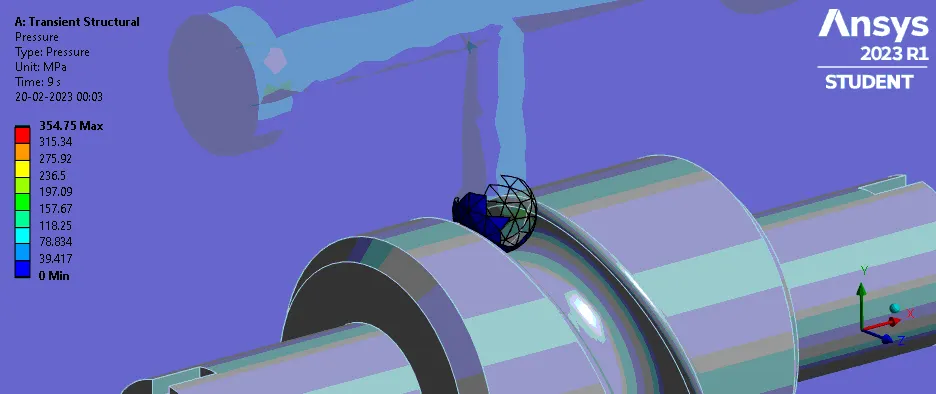
Case 3:
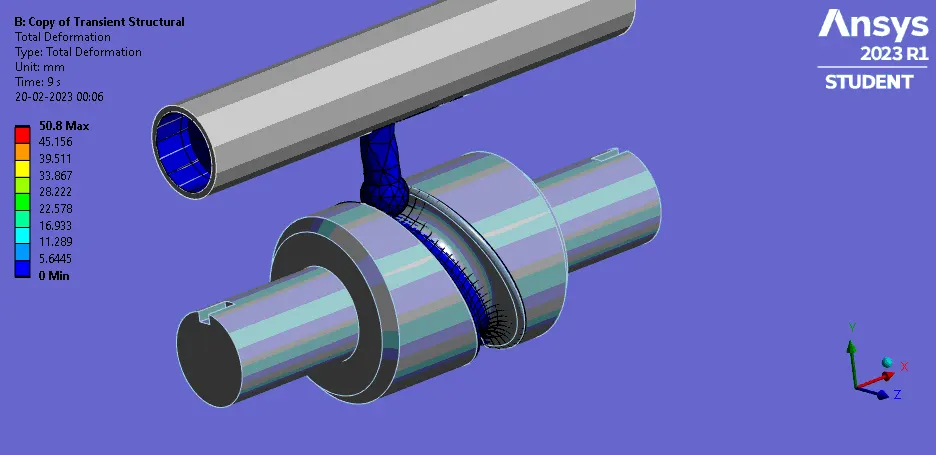
Total defomation :
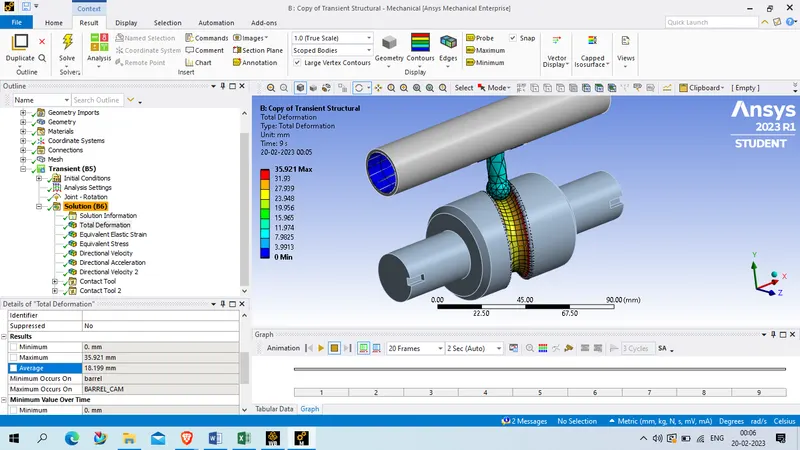
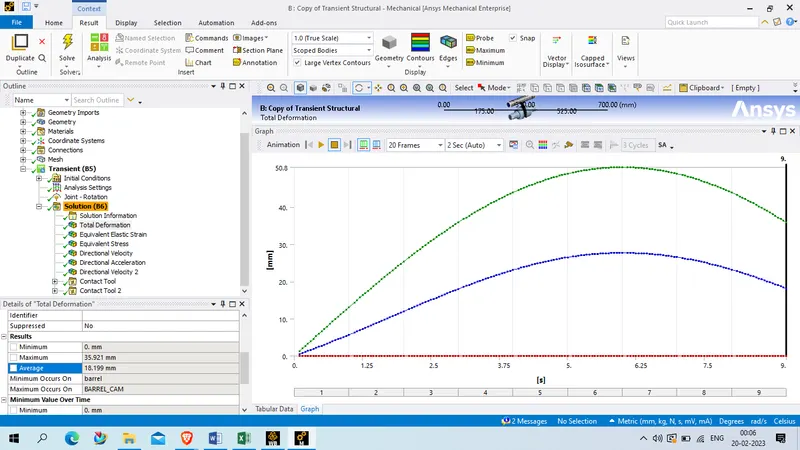
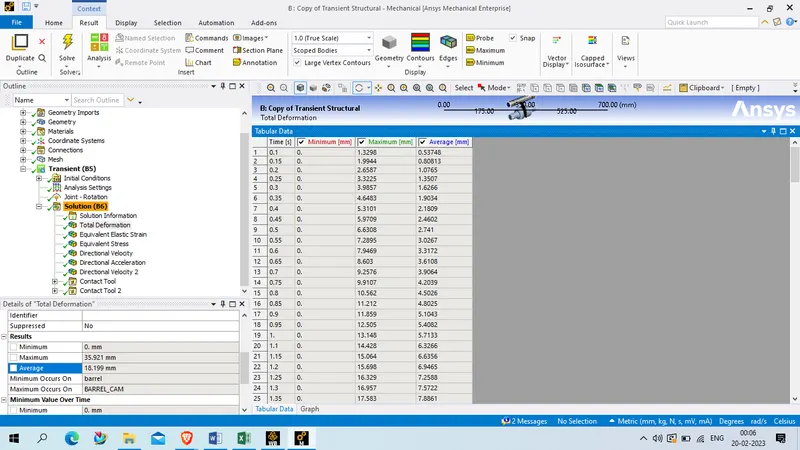
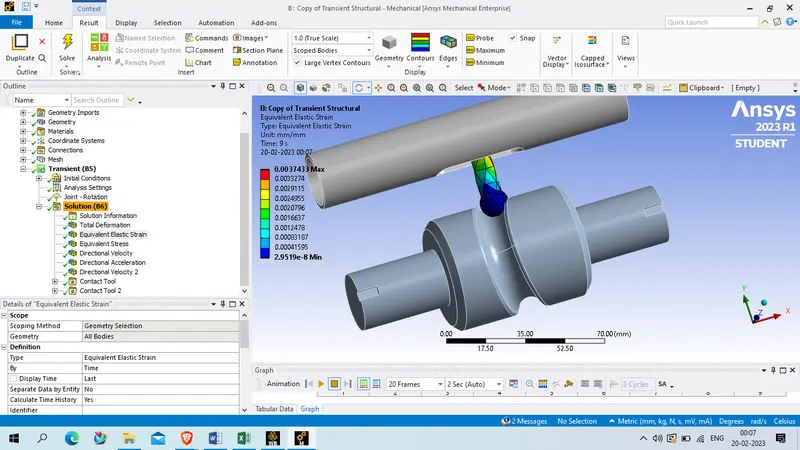
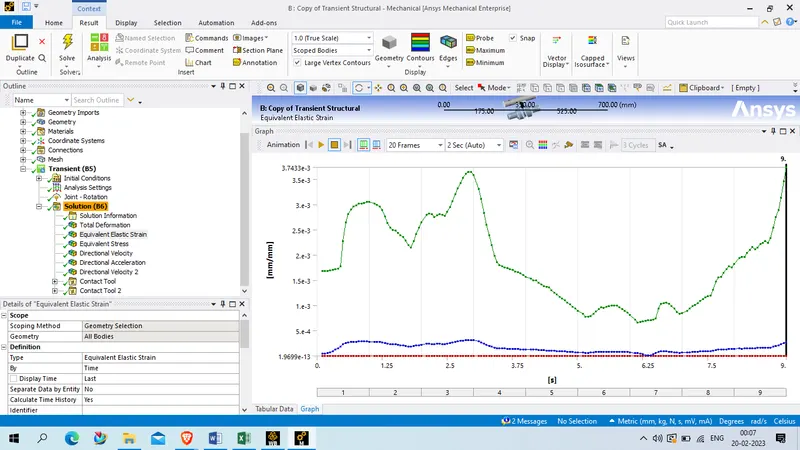
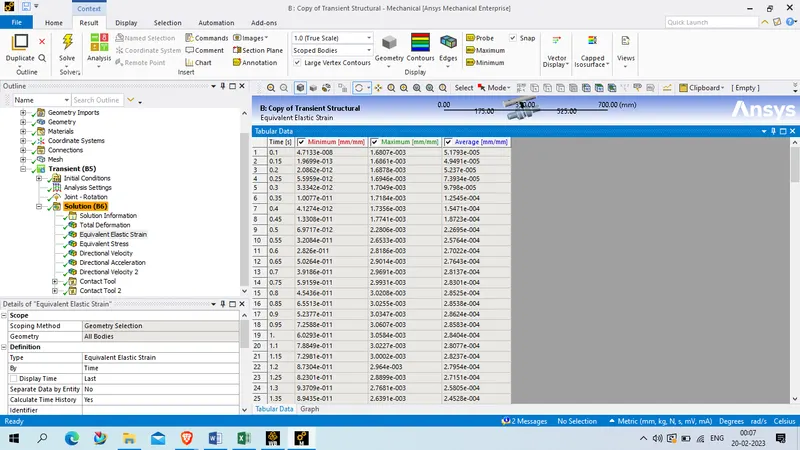
Equivalent elastic strain :
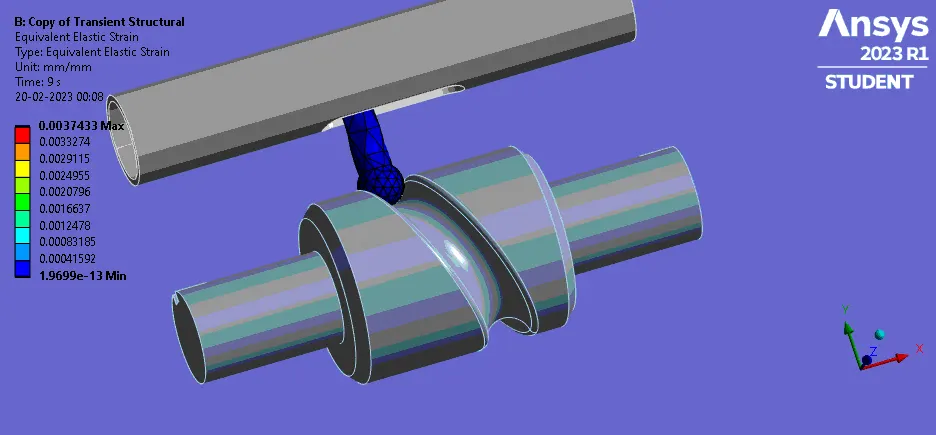
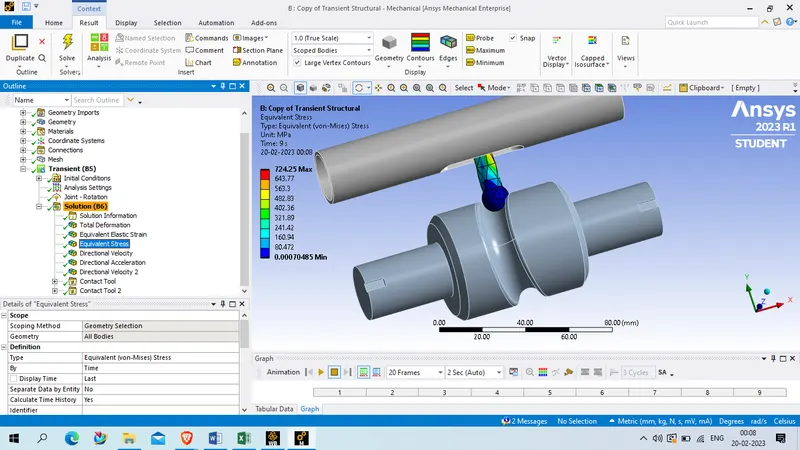
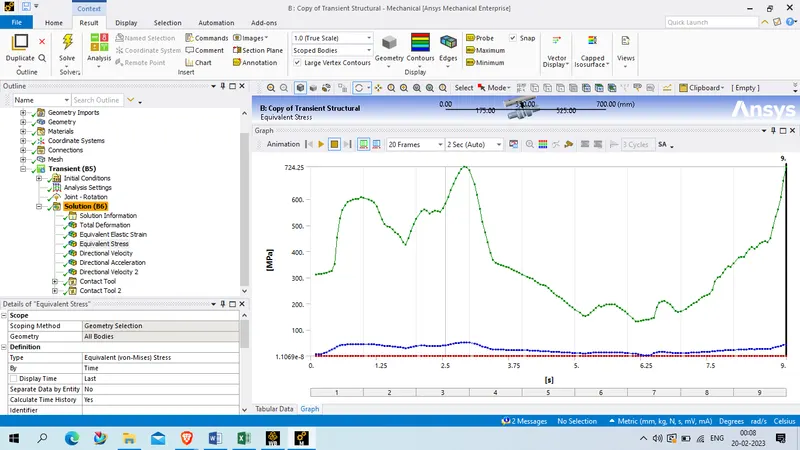
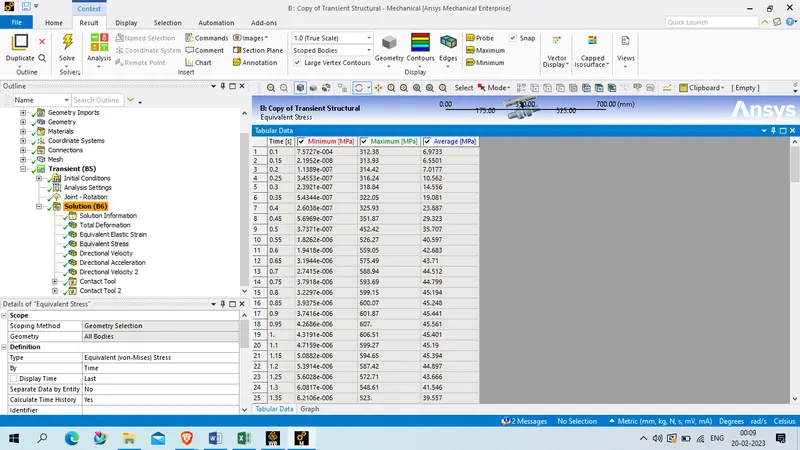
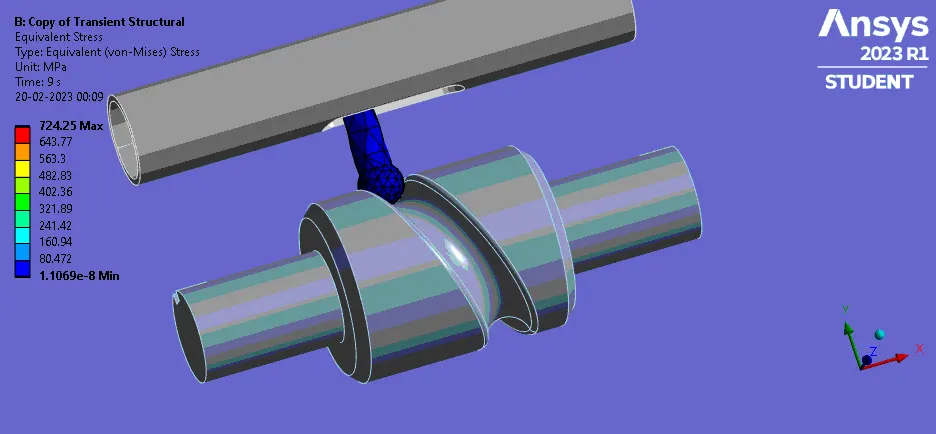
Equivalent stress
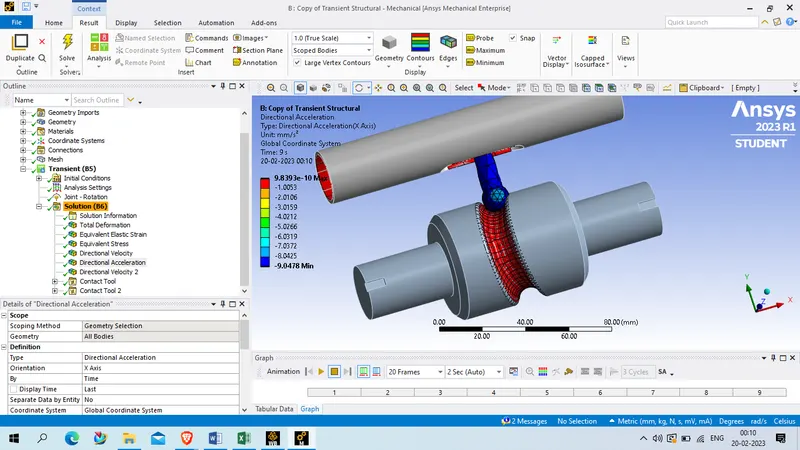
Directional acceleration
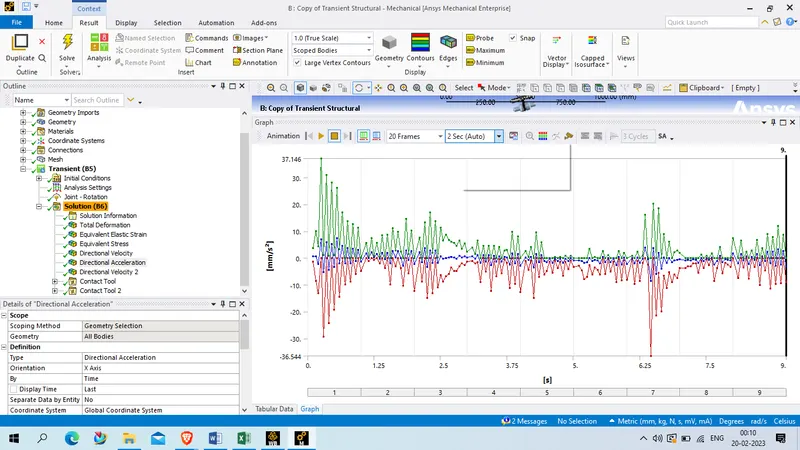
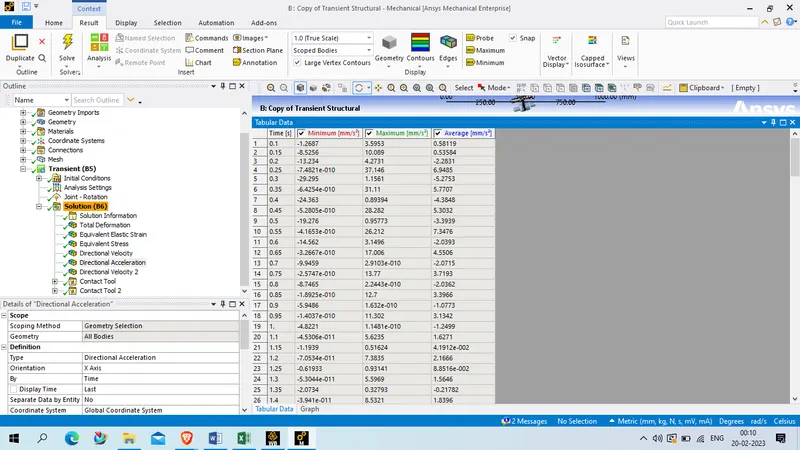
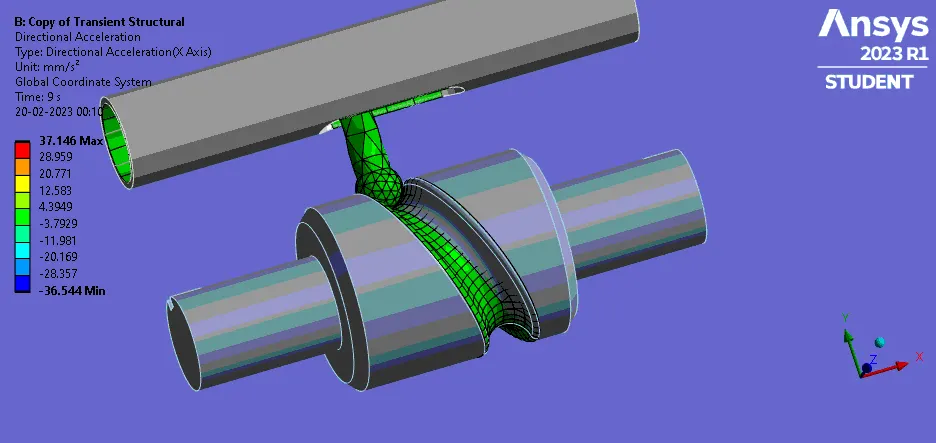
Directional velocity
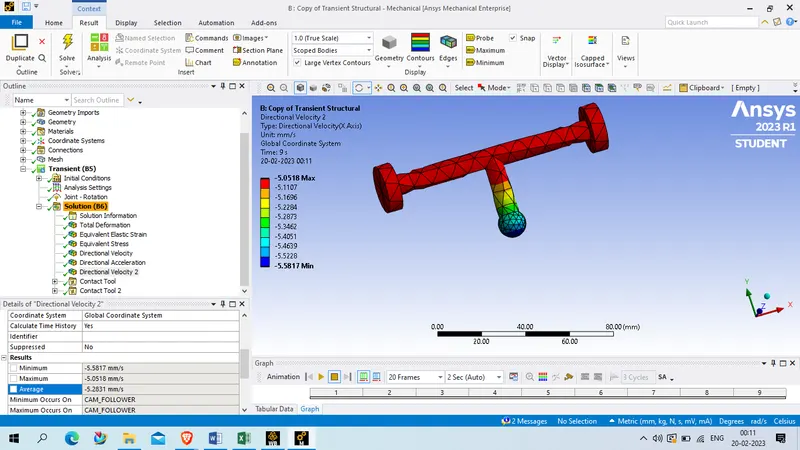
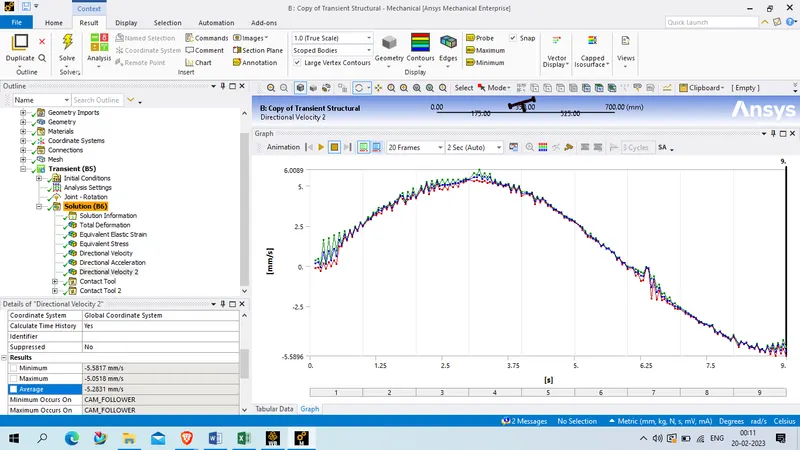
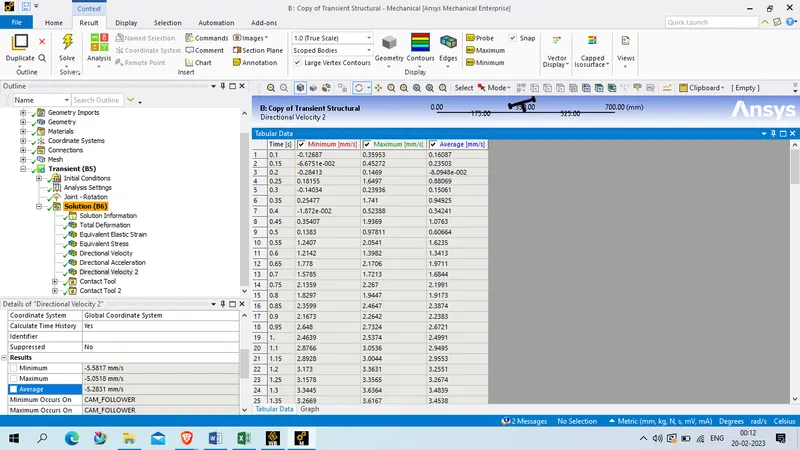
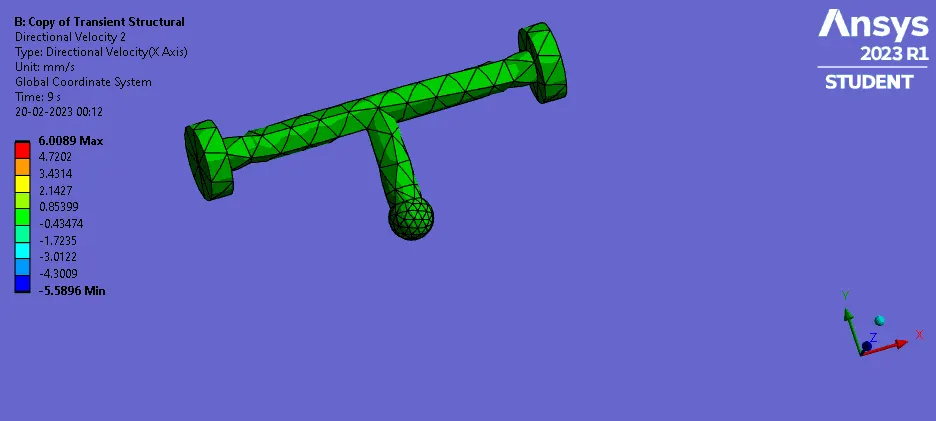
contact pressure: Between cam follower and barrel
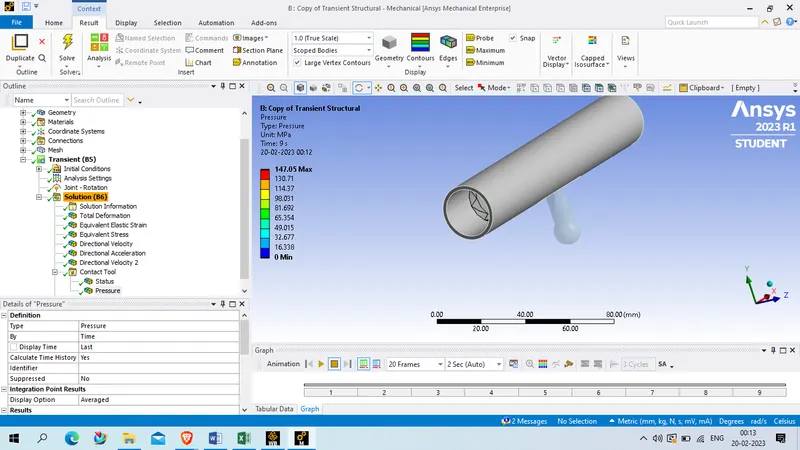
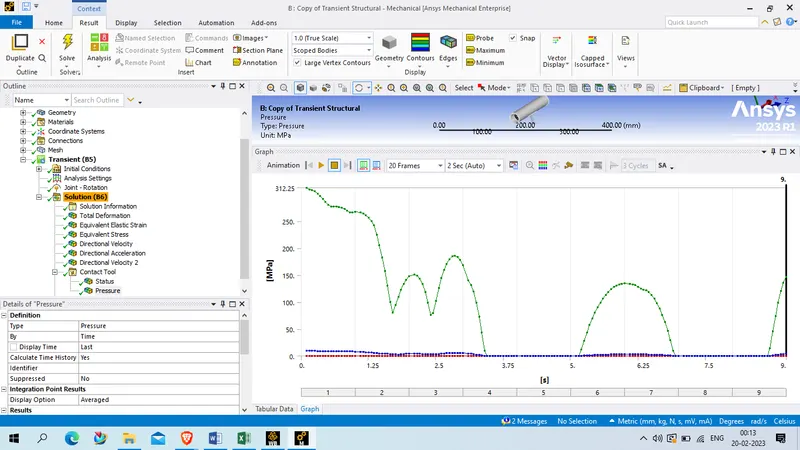
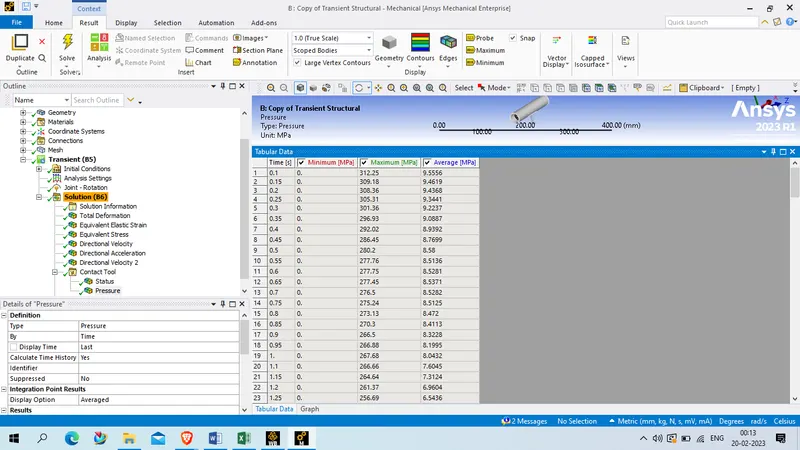
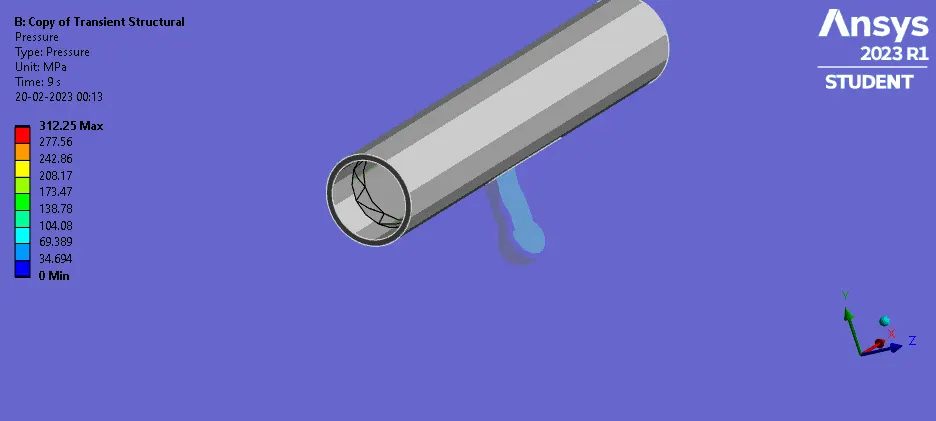
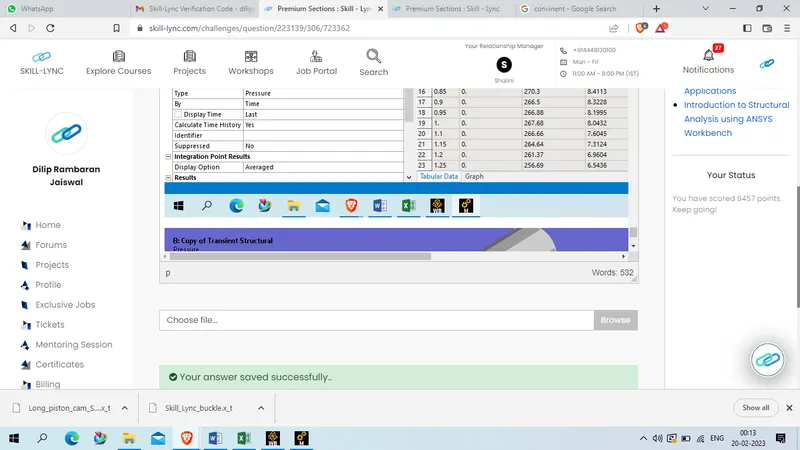
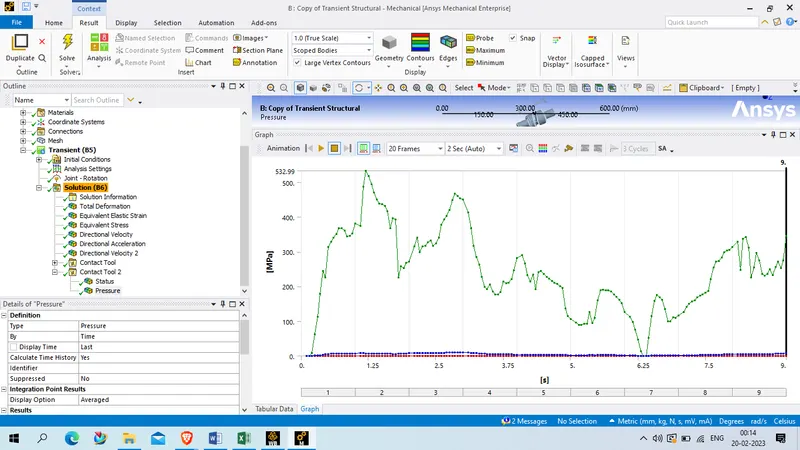
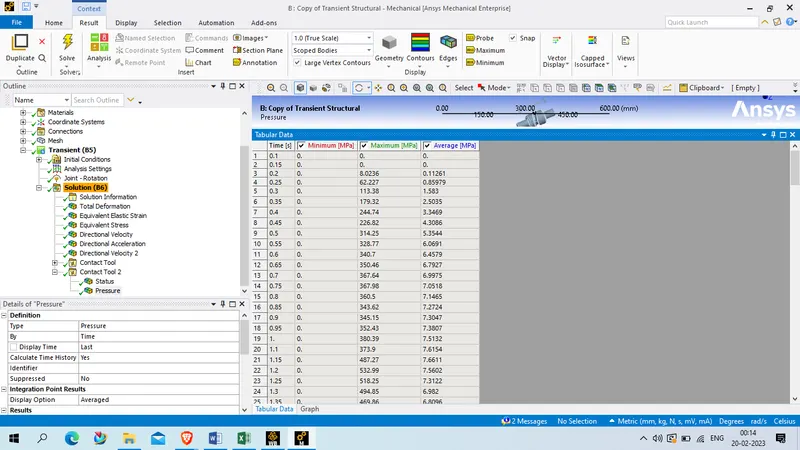
Contact pressure : between cam follower and barrel cam
Result:
The COmparison for all three case for total deformation , equivalent stress , equivalent elastic strain , contact pressure , acceleration & velocity are compared below
| Item | Time(s) | Case 1 | Case 2 | Case 3 |
| Total deformation | 9 | 35.921 mm | 35.921 mm | 35.921 mm |
| Equivalent stress | 9 | 411.31 MPa | 510.06 MPa | 724.25 MPa |
| Equivalent elastic strain | 9 | 2.0719e-003 mm/mm | 2.6448e-003 mm/mm | 3.7433e-003 mm/mm |
| Direction acceleration in x axis | 9 | 1.2135e-010 mm/s² | 3.0709e-010 mm/s² | 9.8393e-010 mm/s² |
| Direction velocity in axis | 9 | -5.4279 mm/s | -5.3054 mm/s | -5.0518 mm/s |
| Contact pressure ( cam follower & barrel) | 9 | 144.34 MPa | 146.2 MPa | 147.05 MPa |
| Contact pressure ( cam follower & barrel cam | 9 | 225.52 MPa | 250.44 MPa | 346.28 MPa |
Conclusion :
From the above table we can see that as the frictional co-efficient increases the equivalent stress, strain increases. As there is friction the energy required also increases hence the stress and strain also increases. Total deformation remains constant for all three cases.
More force is required to over come the friction and force is directly proportional to stress thus the stress increases.
Stress is directly proportional to strain and thus strain increases.