Week 7-Long Piston With Cam
Objective: To run transient structural analysis on a piston-cam mechanism and find out the equivalent stress, strain, and deformation for each case.
Pre-processing steps: we have imported the cad model in geometry cell and open the model in space claim to ensure there is no problem in the model.
Next, in the mechanical model cell, we rename the part according to our convenience and set contact between the parts.
First, we need to delete all contacts set by default. Then, set one contact between the barrel and cam follower, another contact for follower and cam.
for case1 frictionless type on contact is set between them.
for case 2 frictional contact of coefficient 0.1
for case 3 frictional contact of coefficient 0.2
for interface treatment set \"adjust to touch \".
joints were given to set motion.
Meshing:
Insert face sizing of 2 mm is given to follower path.
Statistics
Nodes: 5136
Element: 2039
Analysis setting:
9 steps were taken in \"steps control\".
Auto time stepping ON and define by time, initial time step is 0.15 and maximum time step 5e-0.2 s make time integration On and Large Deflection ON.
Equivalent Stress
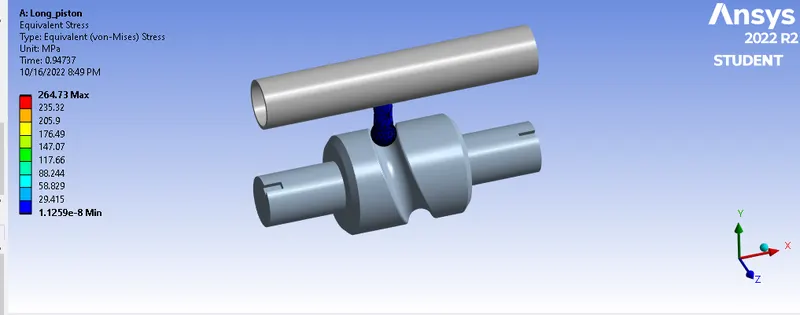 case 1
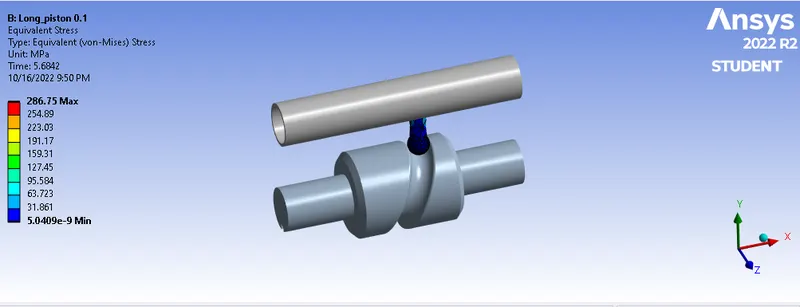 case 2
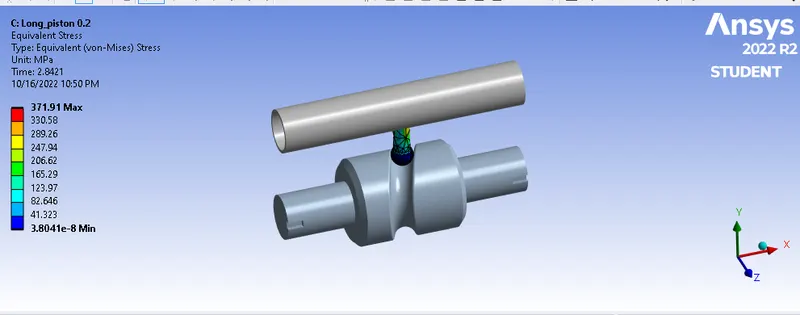 case 3
EQUIVALENT STRAIN
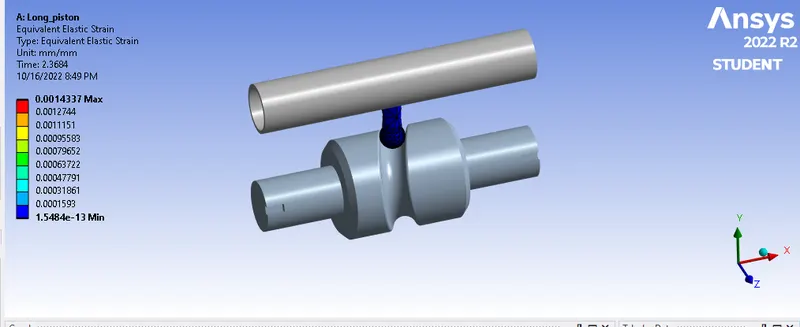 case 1
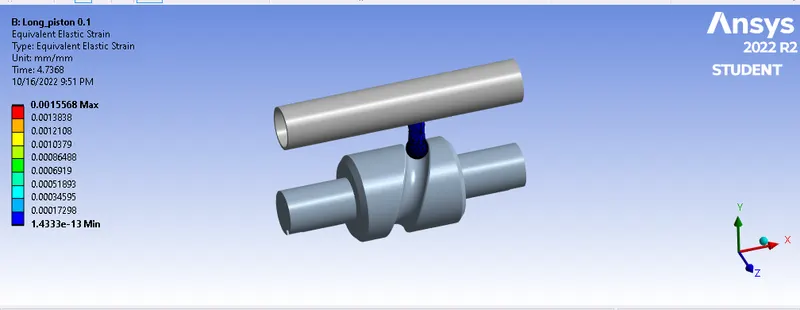 case 2
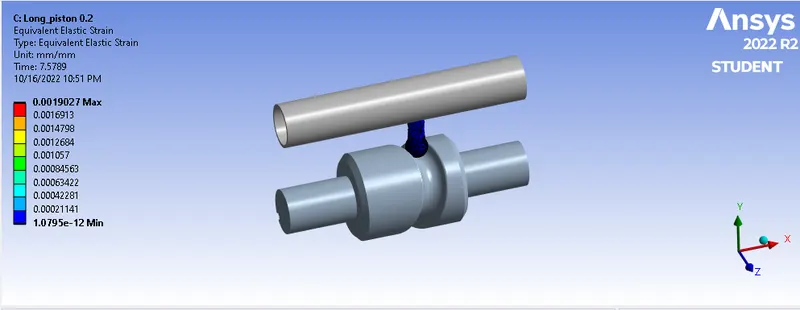 case 3
TOTAL DIFORMATION
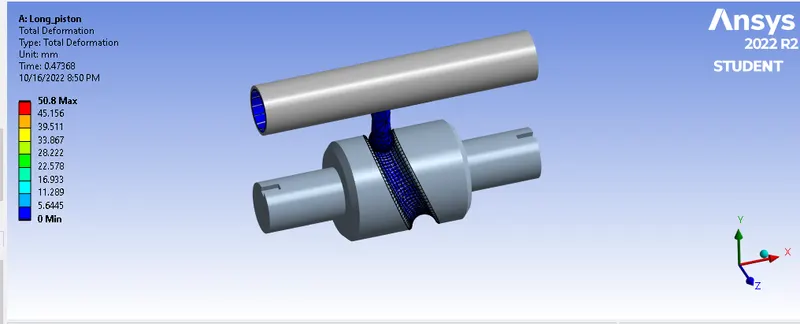 case 1
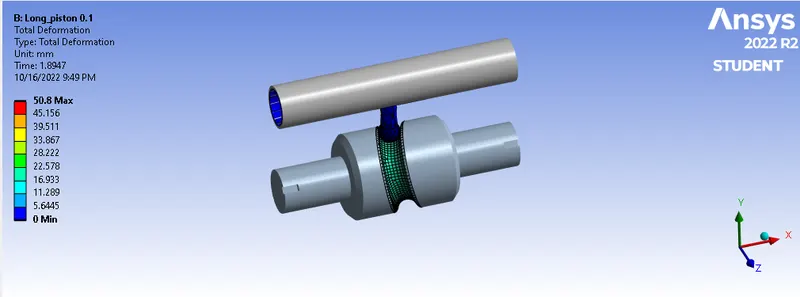 case 2
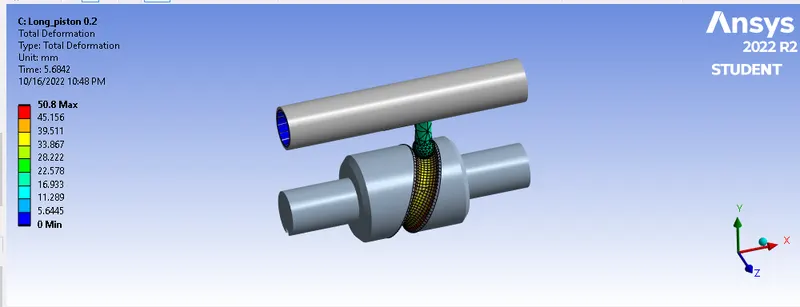 case 3
PRESSURE
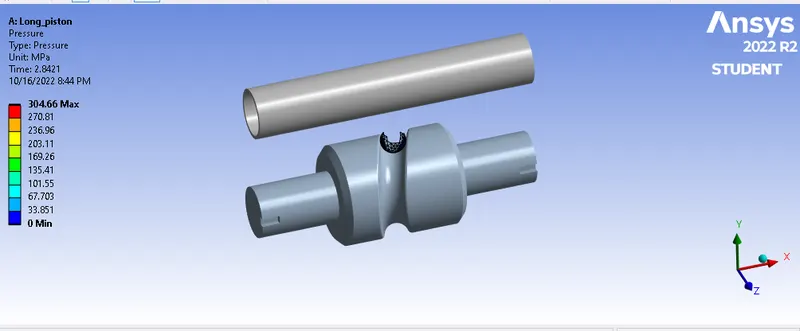 case 1
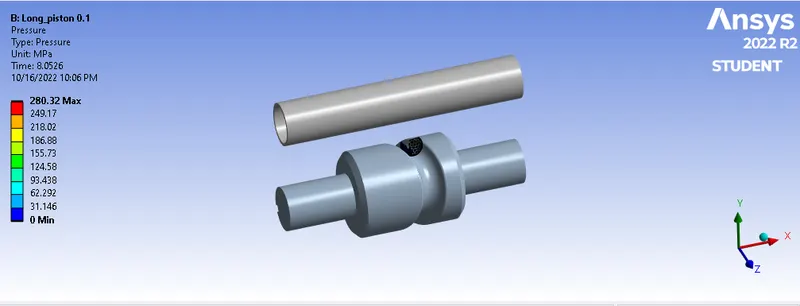 case 2
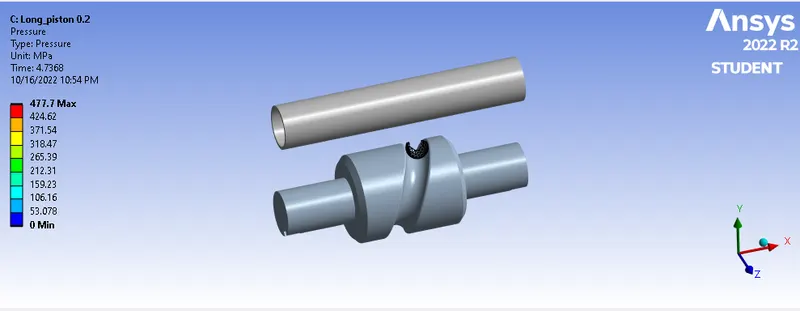 case 3
DERECTIIONAL VELOCITY
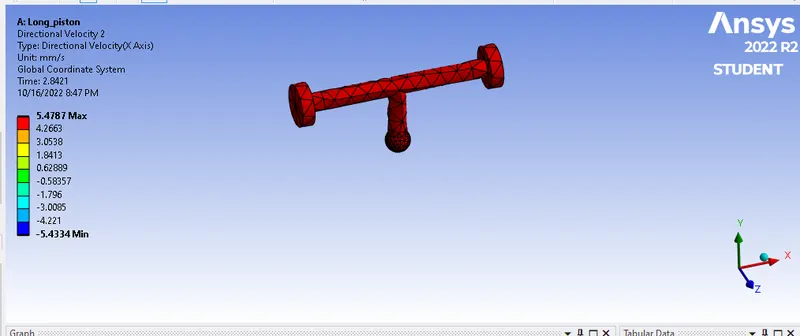 case 1
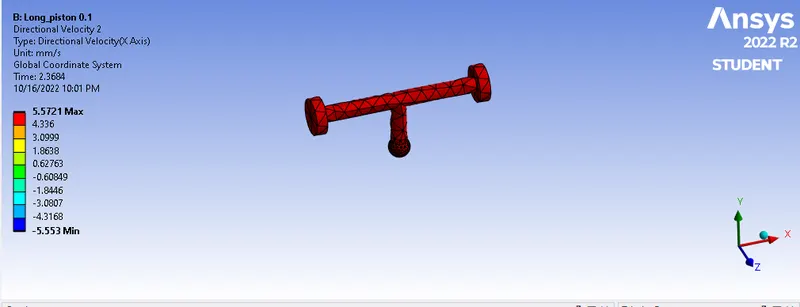 case 2
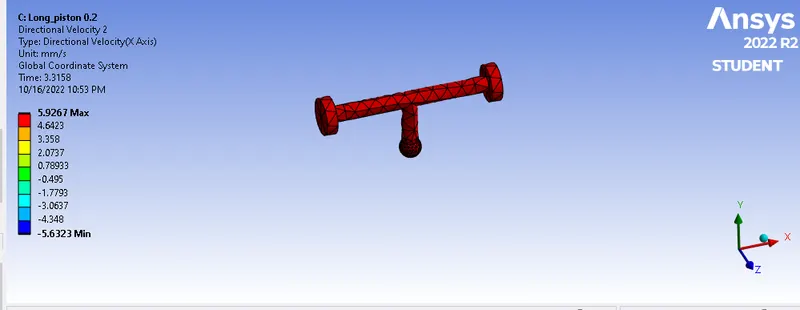 case 3
DIRECTIONAL ACCELERATION
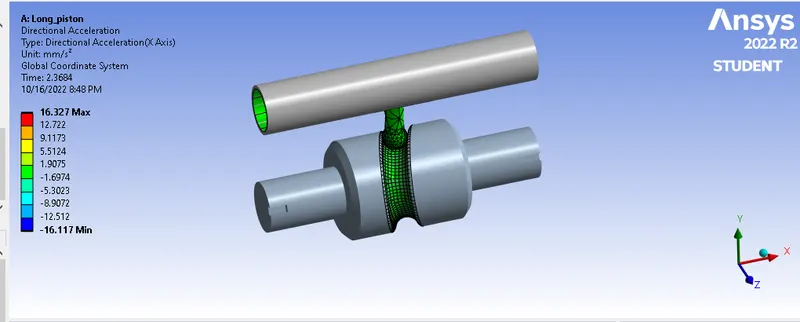 case 1
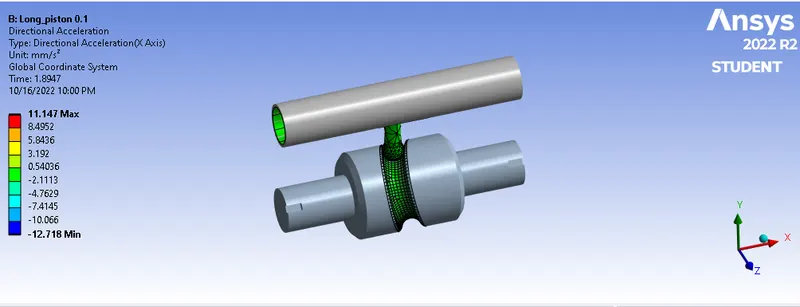 case 2
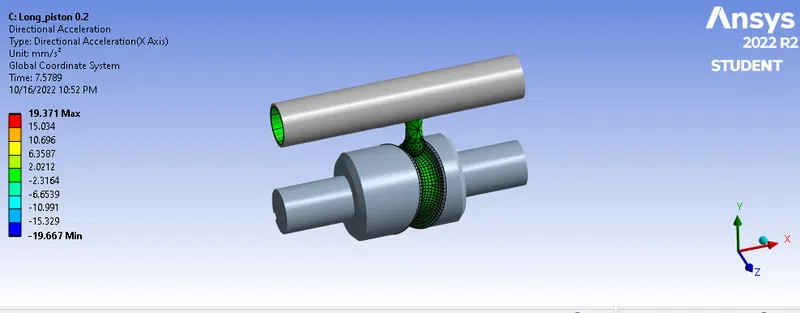 case 3
CONCLUSION
Comparison for the all three case of frictionless, friction with 0.1 and 0.2, all the results as per given table.
|
Frictionless |
COF 0.1 |
COF 0.2 |
|
|
EQUIVALENT max STRAIN min |
0.0014337 1.5484e-13 |
0.0015568 1.4333e-13 |
0.0019027 1.0795e-12 |
|
TOTAL max DIFORMATION min |
50.8 0 |
50.8 0 |
50.8 0 |
|
EQUIVALENT STRESS max min |
264.73 1.1259E-8 |
286.75 5.0409E-9 |
371.91 3.8041E-8 |
|
PRESSURE max min |
304.66 0 |
280.32 0 |
477.7 0 |
|
DERECTIIONAL max VELOCITY min |
5.4787 -5.4334 |
5.5721 -5.553 |
5.9267 -5.6323 |
|
DIRECTIONAL max ACCELERATION Min |
16.327 -16.117 |
11.147 -12.718 |
19.371 -19.667 |
From the Average Deformation graph we find that the deformation doesn\'t seem to change much in each case. But at the peak of the graph there is slight difference in value. Peak is highest for frictionless case and lowest for friction 0.2 case.
From the stress graphs, we can see that stress is maximum when the coefficient of friction is 0.2 and least for frictionless contact.From here a basic infer can be made that due increase in friction, more work has to be done to overcome this increasing friction.Thus, giving rise to stress in contact areas.
From the strain-time graphs, we can see that strain is maximum when the coefficient of friction is 0.2 and lowest for frictionless contact.
Directional velocity also increase of case3 for coefficient of friction 0.2 and less for frictional and frictionless as compered to case 3.