Week 3 Sheet metal Bending challenge
AIM :
To perform static structural analysis on sheet metal bending using three different materials and find out and compare the results like Equivalent stress, Equivalent Strain,Directional deformation in Y-axis on the different materials with each other.
Model :
Material Selection and their Properties :
i) Aluminium Alloy NL 1199
ii) Copper Alloy NL
iii) Magnesium Alloy NL
Procedure :
- Drag and drop static structure on workspace. In engineering data select the specified materials. Modify any material if required. In this case it is Aluminium alloy NL to Aluminium alloy NL 1199.
- Open Design modeller and import the geometry. Close the design modeller.
- Open Mechanical Solver,Apply manual contact on the Sheet, punch and Die.
- Mesh the model approriately. Mesh the sheet and contact surfaces finer and also mesh the sheet with tetrahedrons for accurate results.
- In analysis settings, apply displacements as boundary conditions to all three components.
for Punch - All free and displacement in negative Y-axis as -0.5,-1.5,-3,-6,-9,-12,-13.5,-12,-10,-8
For Sheet - Only for Z displacement as 0 .
For Die - All free and displacement in Negative Y-axis for last two time steps as -1.5 and -3
- Now for results, apply equivalent stress,equivalent strain,directional deformation and stress on the sheet.
- After applying Click on Solve.
Mesh :
Element size for -
Sheet - 1 mm
Die and Punch - 4 mm
Contact Surfaces - 1 mm
No. of elements -
No. of Nodes -
Results : CASE I -
1) Total Deformation.
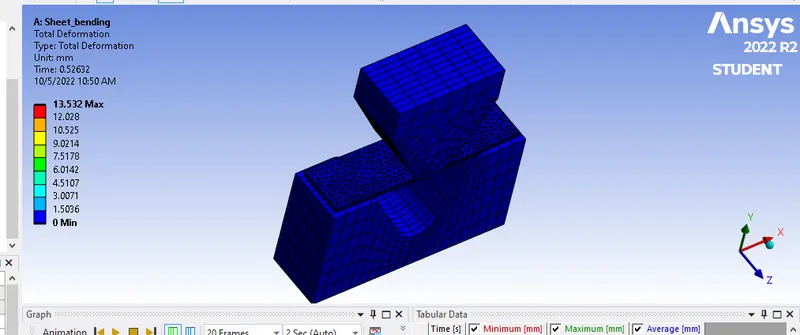
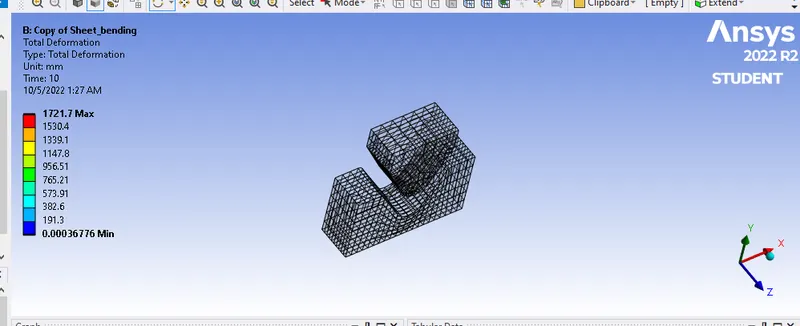
aluminium alloy copper alloy
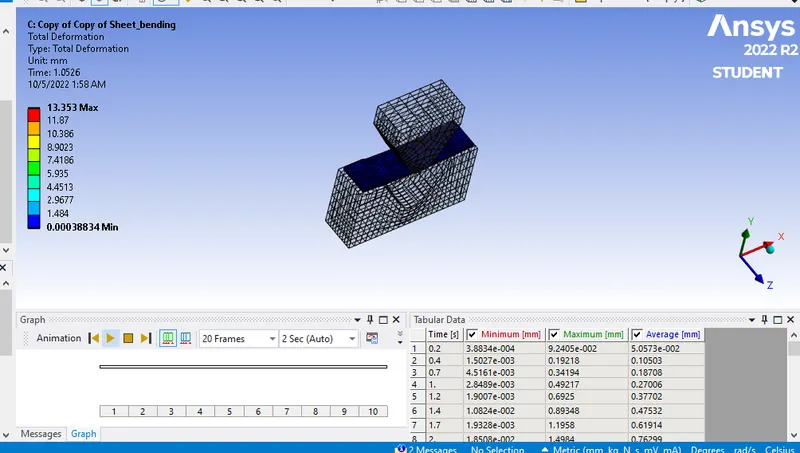
Magnesium alloy
Equivalent Stress
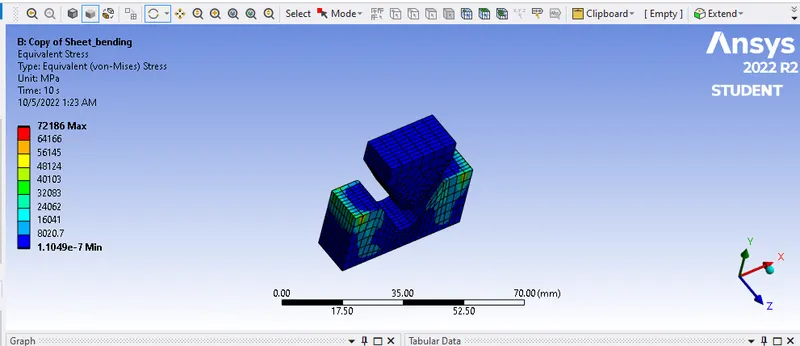
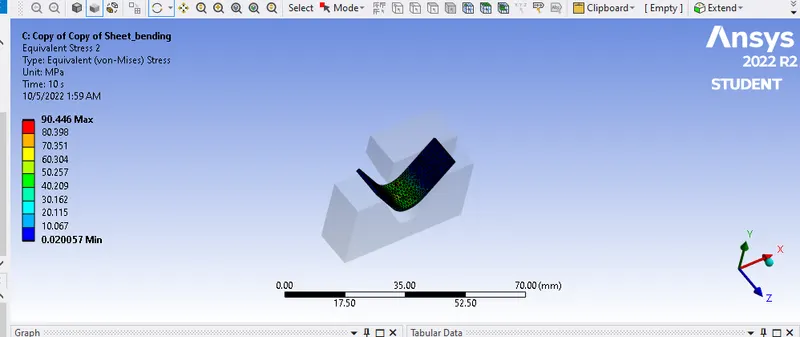
alluminium alloy magnesium alloy
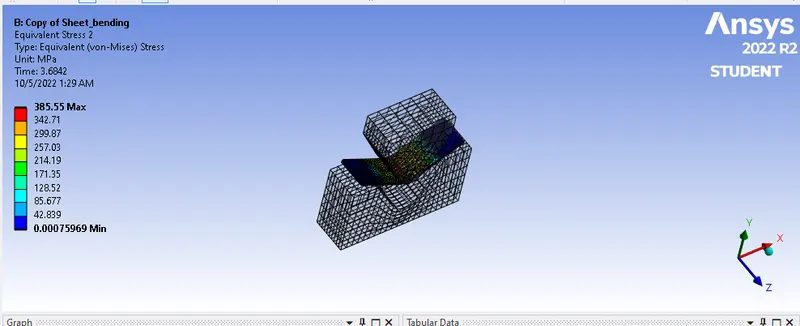
copper alloy
Equivalent strain.
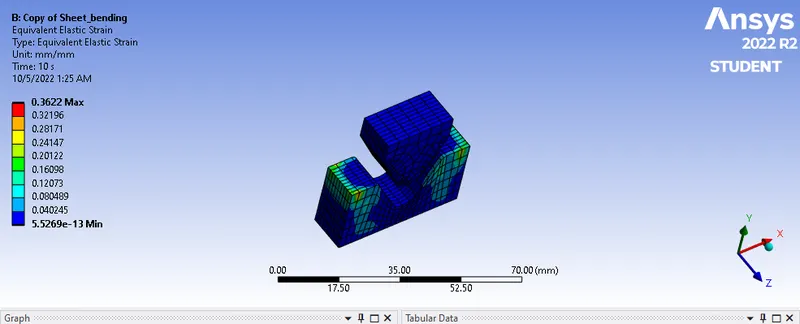
Alluminium alloy copper alloy
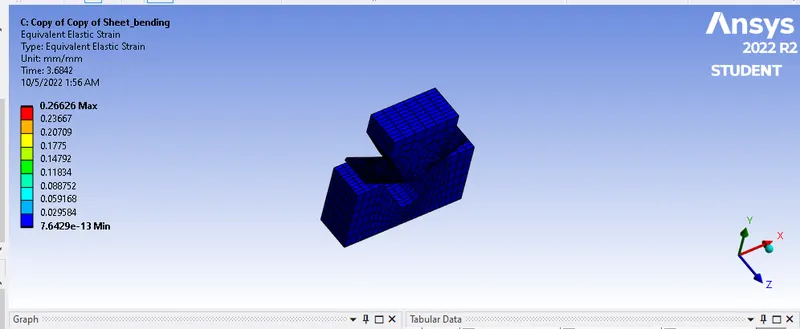
magnesium alloy
Conclusion -
| Element Size(mm) | Total Equivalent Stress(MPa) | Total Equivalent Strain | Equivalent Stress on Sheet alone(MPa) |
Directional Deformation(Y-axis) |
| Alluminium alloy | ||||
| Copper Alloy | ||||
| Magnesium alloy |
From the above table ,We can see that Equivalent Stress is maximum in the Aluminium alloy and minimum in Magnesium alloy.
As of stress in the sheet, Copper alloy has maximum stress in the sheet and Aluminium alloy has minimum.
Directional deformation in Y - axis is maximum in Magnesium alloy and minimum in Copper alloy.
lastly Equivalent strain is maximum in aluminium alloy and minimum in Magnesium alloy.
CASE II -
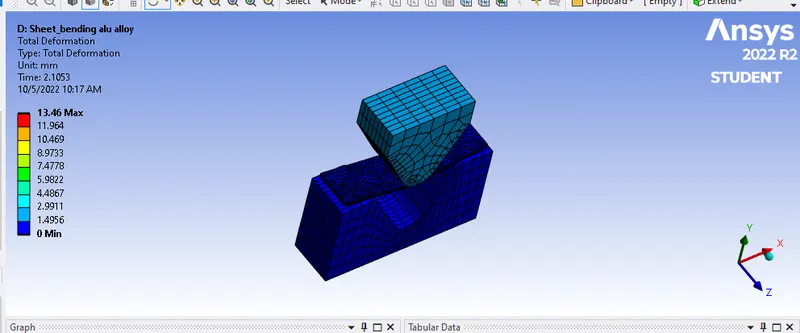
Total diformation
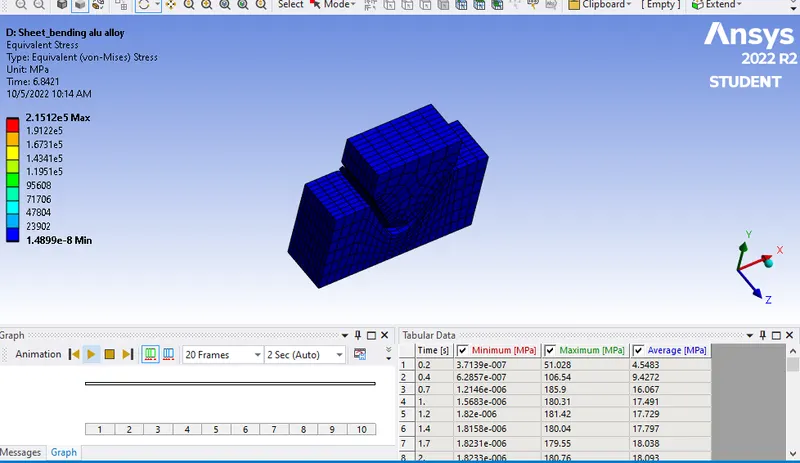
equivalent stress
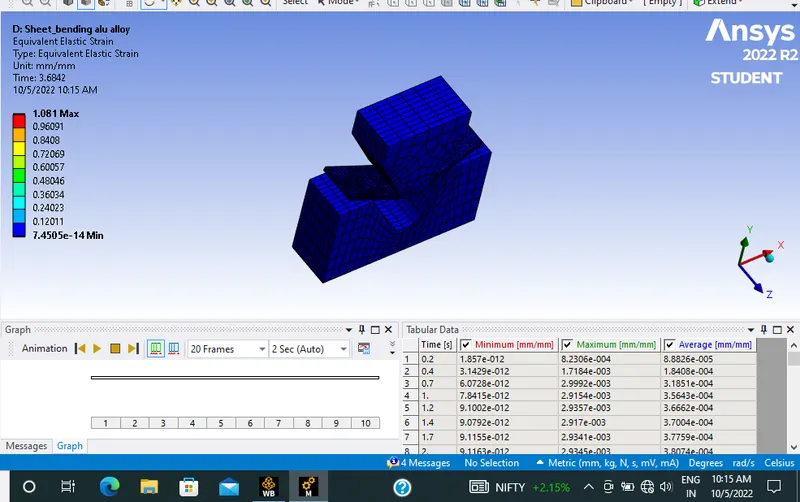
equivalent strain
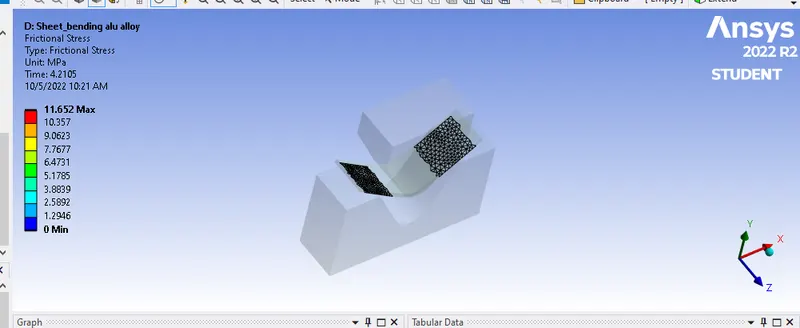
force reaction
by using frictional coeficient 0.19
Equivalent stress
Equivalent strain
Total deformation
Conclusion -
Aluminium alloy 1199 with frcictional coeficient 0.1% and 0.19 %.
| Friction Coefficient | Equivalent Stress(MPa) | Equivalent Strain | Equivalent Stress on Sheet alone(MPa) | Directional Deformation(Y-axis) |
| 0.1 | ||||
| 0.19 |
As the frictional Coefficient increases, Equivalent stress and Equivallent Strain decreases and Directional deformation increases as we can see it in the above table.
CASE III :
Aluminium alloy 1199 with Sheet of mesh size 0.75 mm
a) Mesh -
Element size for -
Sheet - 0.75 mm
Die and Punch - 4 mm
Contact Surfaces - 1 mm
No. of elements -
No. of Nodes -
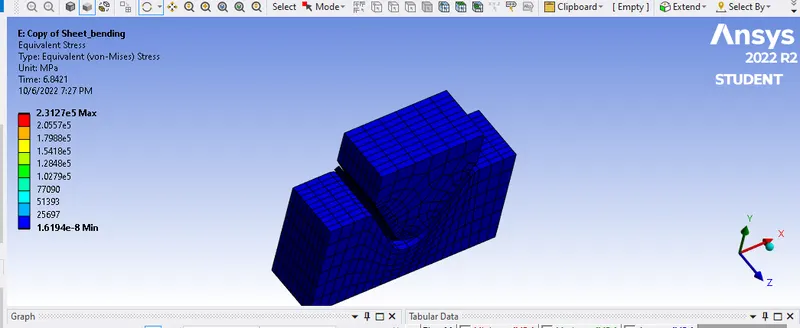
equivalent stress
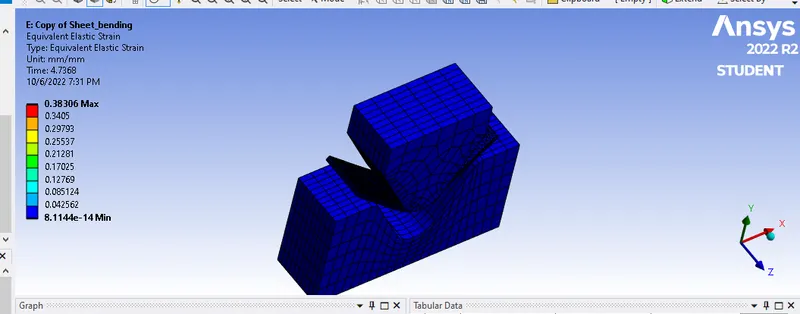
Equivalent strain
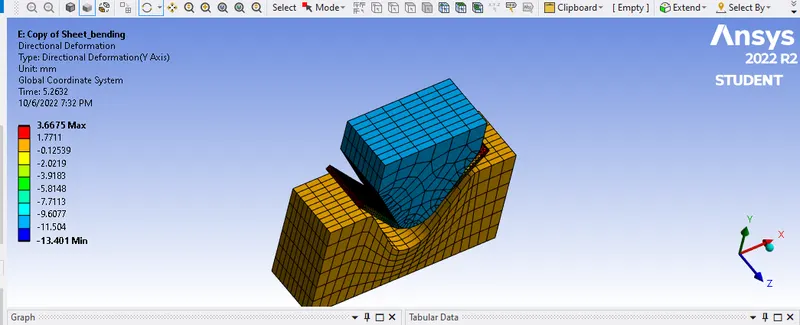
Directional difiormation
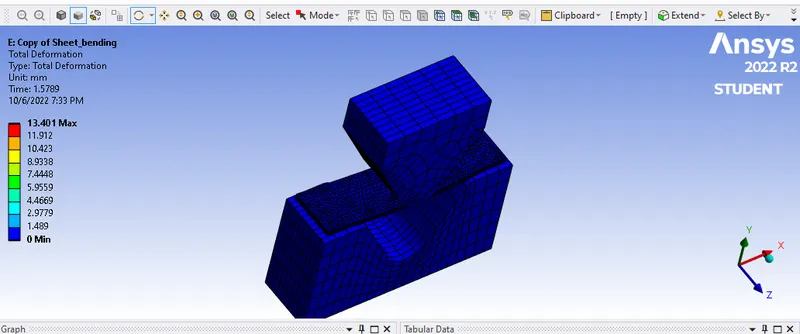
Total Diformation
Conclusion - Following table shows the comparison between mesh size of 1 mm and 0.75 mm.
| Element Size(mm) | Total Equivalent Stress(MPa) | Total Equivalent Strain | Equivalent Stress on Sheet alone(MPa) | Directional Deformation(Y-axis) |
| 1 | ||||
| 0.75 |
As the mesh gets finer, the results will become more accurate. From the above table, we can see that as the mesh gets finer the results are increased meaning that the results gets more accurate.