Week-7 Challenge: DC Motor Control
Aim:
1. A. Explain a MATLAB demo model named ‘Speed control of a DC motor using BJT H-bridge’.
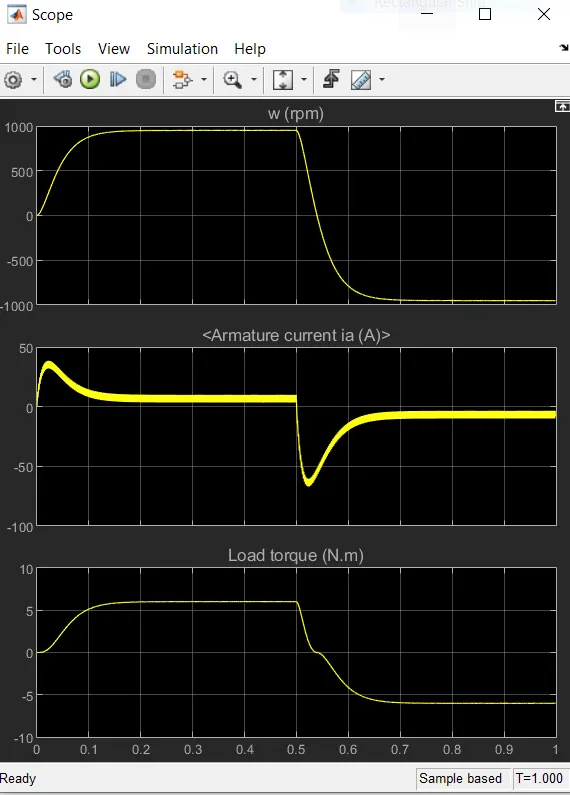
B. Comment on the armature current shoot-up from the scope results.
C. Refer to the help section of ‘The Four-Quadrant Chopper DC Drive (DC7) block’. Compare it with the H-bridge model.
2. Develop a 2-quadrant chopper using simulink & explain the working of the same with the relevant results.
3. Explain in a brief about operation of BLDC motor.
1(a):
The circuit here is h bridge motor circuit.h bridge is very effective method for driving motors and lot of applications are used by this method.
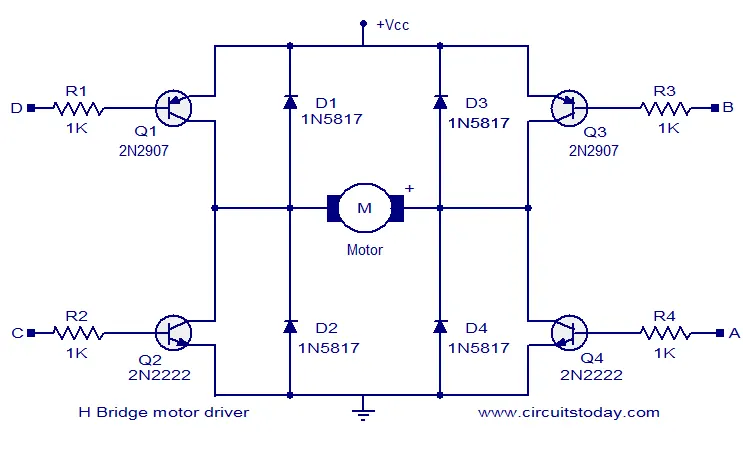
in the fig if q1 and q4 are pressed simuntensously the current will flow from +ve q1-D1-D4-Q4,so motor will run in close-wise direction,if q2and q3 are pressed the current will flow from from q2-d2-d3-q3,so motor will run in anti clock wise direction
four circuits shouldn't be pressed simultaneously if pressed it will get short circuited.
this circuit replaces switches with npn transistors,diodes are given for the current to get free wheel as the dc motor is rle load.
in NPN transistor if current is given in +ve it will turn on if current is passed through o it will off,here if current is passed through q1 and q4 it will run is clockwise,if passed through q3 and q2 it will run in reverse.
1(b):
output:
open matlab and in the help documentation type bjt-h it will open and open the model in simulink
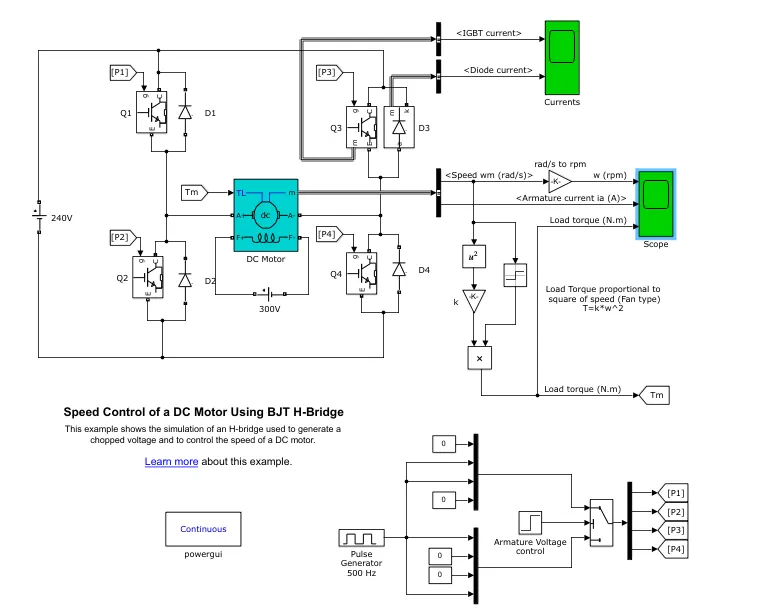
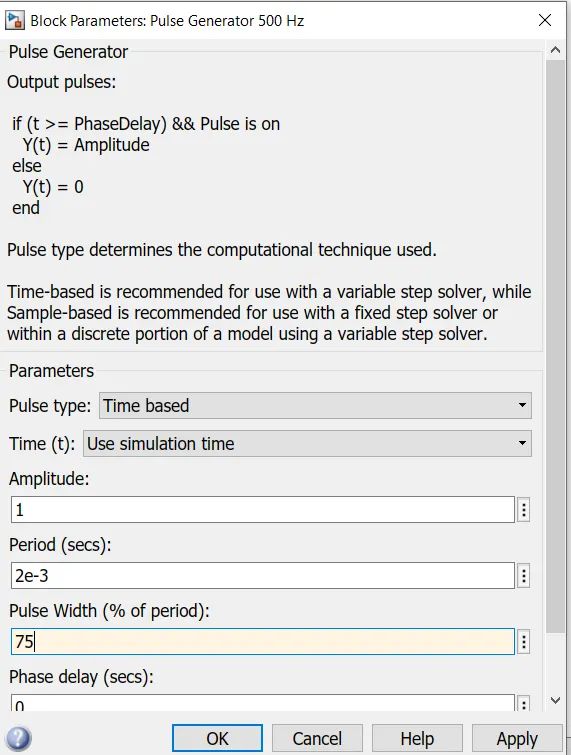
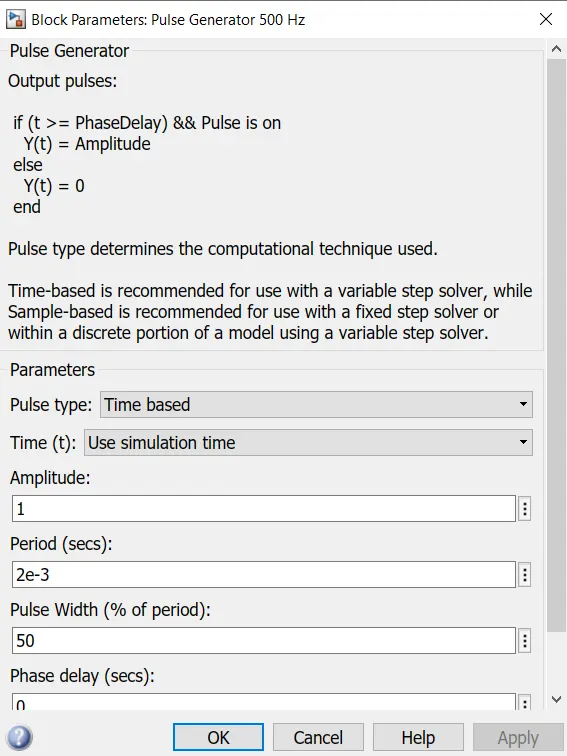
in this click on the pulse generator and change the pulse to 75%
plots:
change the pulse to 50%
plots:
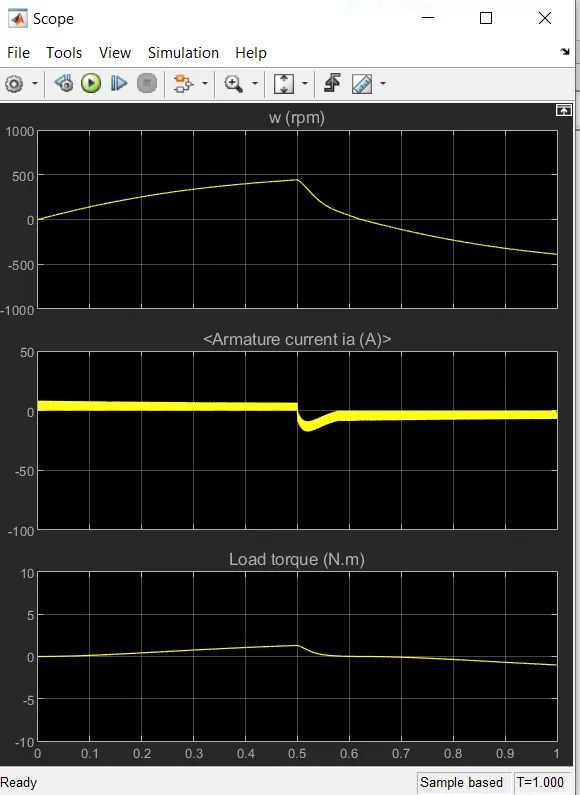
as the pulse width decreases current also decreases.
1(c):
The 200 HP DC motor is separately excited with a constant 150 V DC field voltage source. The armature voltage is provided by an IGBT converter controlled by two PI regulators. The converter is fed by a 515 V DC bus obtained by rectification of a 380 V AC 50 Hz voltage source. In order to limit the DC bus voltage during dynamic braking mode, a braking chopper has been added between the diode rectifier and the DC7 block.
The first regulator is a speed regulator, followed by a current regulator. The speed regulator outputs the armature current reference used by the current controller in order to obtain the electromagnetic torque needed to reach the desired speed. The speed reference change rate follows acceleration and deceleration ramps in order to avoid sudden reference changes that could cause armature over-current and destabilize the system. The current regulator controls the armature current by computing the appropriate duty ratios of the 5 kHz pulses of the four IGBT devices . For proper system behaviour, the instantaneous pulse values of IGBT devices 1 and 4 are opposite to those of IGBT devices 2 and 3. This generates the average armature voltage needed to obtain the desired armature current. In order to limit the amplitude of the current oscillations, a smoothing inductance is placed in series with the armature circuit.
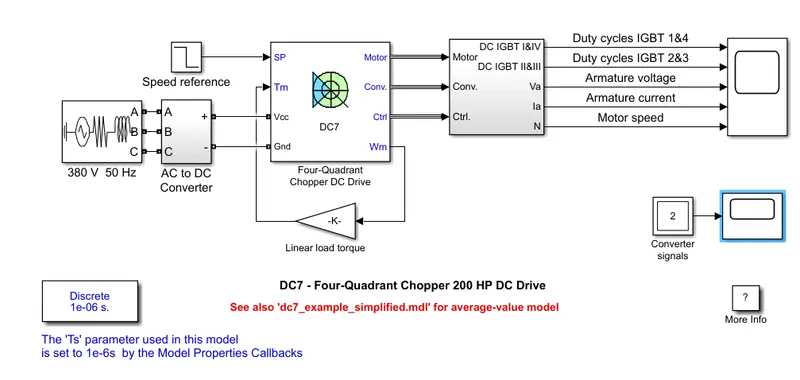
differences between dc7 and bjt-h bridge:
h_bridge
it is not used for controlling other devices.
simulation time is less.
motor polarity is changed with the diodes.
efficiency is very low.
dc7:
it is used to control the motor and as well as used for regenerative braking of motor.
simulation is high than h-bridge.
efficiency is high.
(2)answer:
The Two-Quadrant Chopper DC Drive DC6 block represents a two-quadrant, DC-supplied, chopperor DC-DC PWM converter drive for DC motors. This drive features closed-loop speed control with two-quadrant operation. The speed control loop outputs the reference armature current of the machine. Using a PI current controller, the chopper duty cycle corresponding to the commanded armature current is derived. This duty cycle is then compared with a sawtooth carrier signal to obtain the required PWM signals for the chopper.
The main advantages of this drive, compared with other DC drives, are its implementation simplicity and that it can operate in two quadrants forward motoring and reverse regeneration. In addition, due to the use of high switching frequency DC-DC converters, a lower armature current ripple compared with thyristor-based DC drivesis obtained. However, for all two-quadrant DC drives, reversible and regenerative operations reverse motoring and forward regeneration, which are required in most DC drives, cannot be obtained.
The Two-Quadrant Chopper DC Drive block uses these blocks from the Electric Drives,Fundamental Drive Blocks library: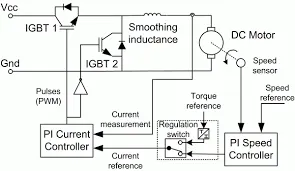
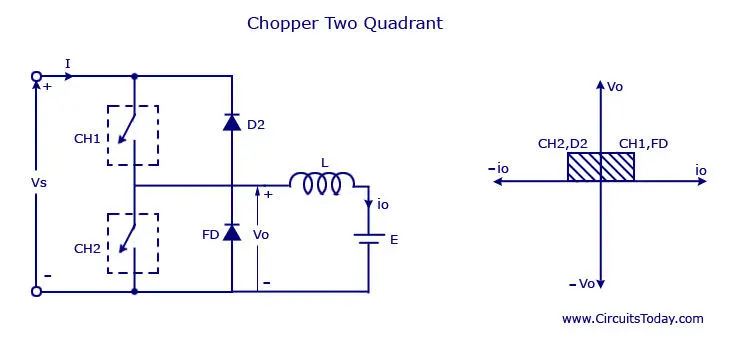
in this type of chopper the average voltage will always be positive but the average load current might be positive or negative.the two switches ch1 and ch2 should not be switched at a once they may lead to short circuit.
(3)answer:
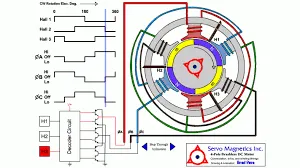
With a BLDC motor, it is the permanent magnet that rotation is achieved by changing the direction of the magnetic fields generated by the surrounding stationary coils. To control the rotation, you adjust the magnitude and direction of the current into these coils.
advantages:
brushless motors offer several advantages over brushed DC motors, including high torque to weight ratio,increased efficiency producing more torque per watt, reduced noise, longer lifetime by eliminating brush and commutator erosion.
used in:Because of all these advantages, brushless DC motors are often used in modern devices where low noise and low heat are required, especially in devices that run continuously. This may used in washing machine,ac
types:single phase,two phase,three phase.