Week 7- Base Unit Design Challenges 2
Design of base unit
Objective:
- The objective is to design the base unit for the given car panel and all the other BIW fixtures from previous challenge
- The car panel should be constrained by the 3-2-1 principle
What is a base unit:
- The base unit is the part which holds up all the other fixture and parts.
- It also consists of trunking channel, valve box, etc.
- The base plate is 25-40mm thick
- Base plate should cover all the units within its outer periphery
- A base plate is designed W.R.T. the BCS (Body card System) coordinates
- Base plates should have datum holes
- Number of datum hole is dependent on the size of the base plate
- Datum hole should be drilled with nominal value of the coordinate
- Datum hole should be drilled 100mm away from the other units
Parts of the base plate:
Pedestal:
- The pedestal is the part which connects the base plate with the ground plate
- It is a standard part
- It can be a welded plate integrated with base plate
- pedestal can be different height and different size
- Depending on the size of the base plate the pedestal varies in load distribution.
- The pedestals are of different types and different inclination.
Trunking channel: It accommodates all the pneumatic hoses and the electrical wires.
Valve box: It accommodates all the valves for the pneumatic system.
Floor panel: It is grounded to the floor. Also called as foundation plate.
Design of base unit:
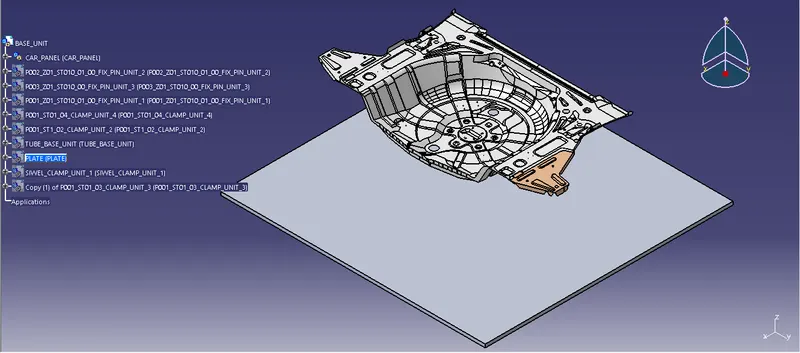
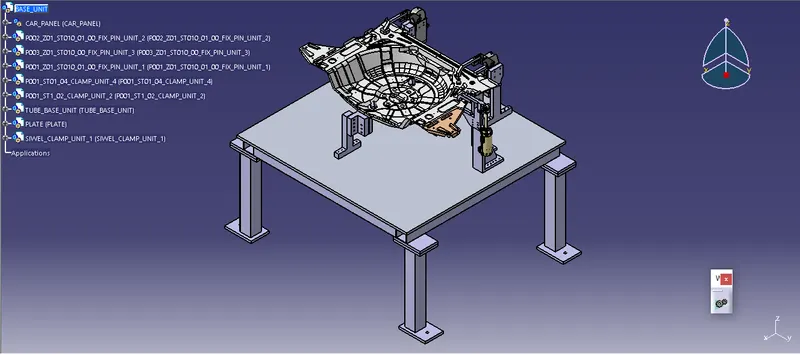
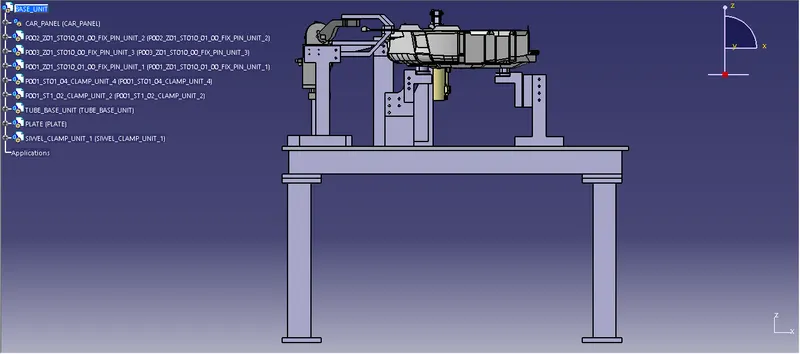
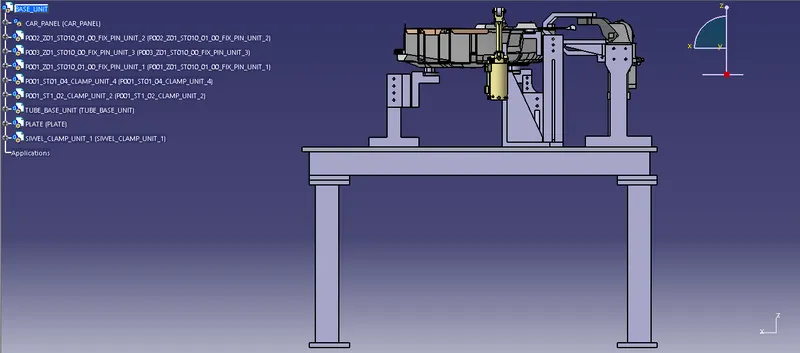
- The car panel is provided
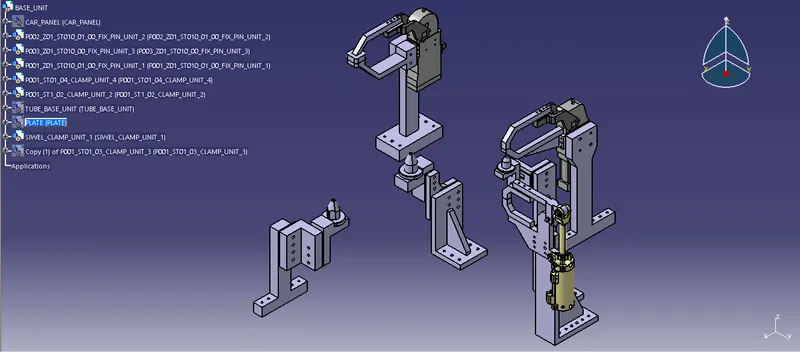
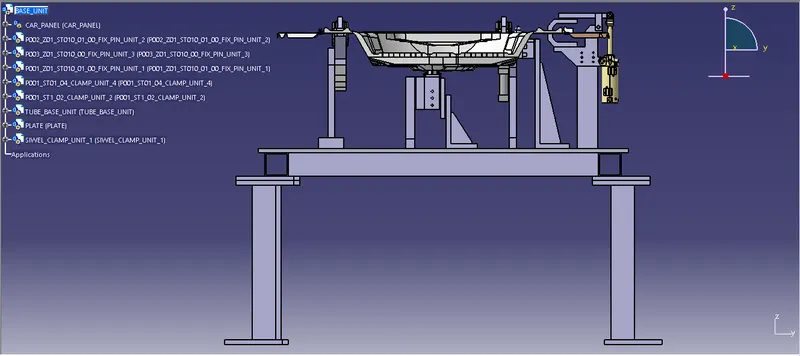
- The Previously designed unit are placed on the car panel
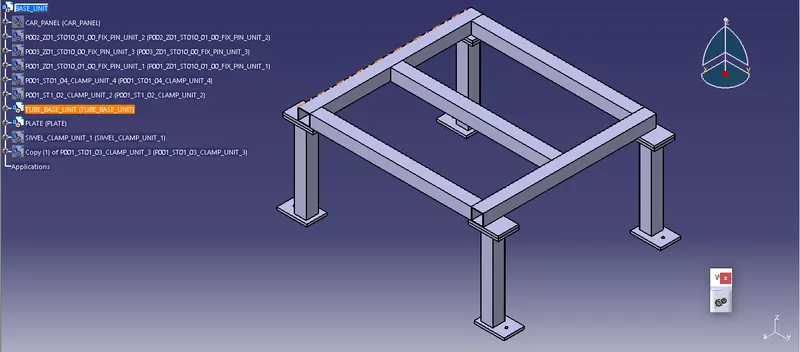
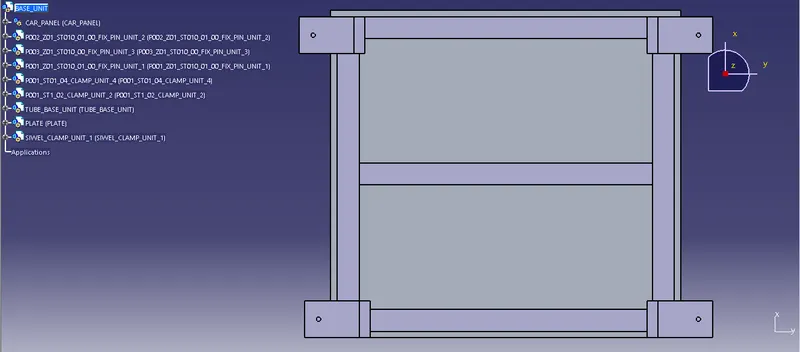
- The tubes are made to support the base of the panel
- The tubes are also made to suppot the base of the panel.
- Plates are added to the legs to suppot the base unit
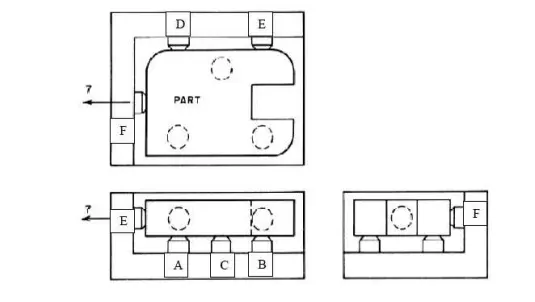
3-2-1 Principle:
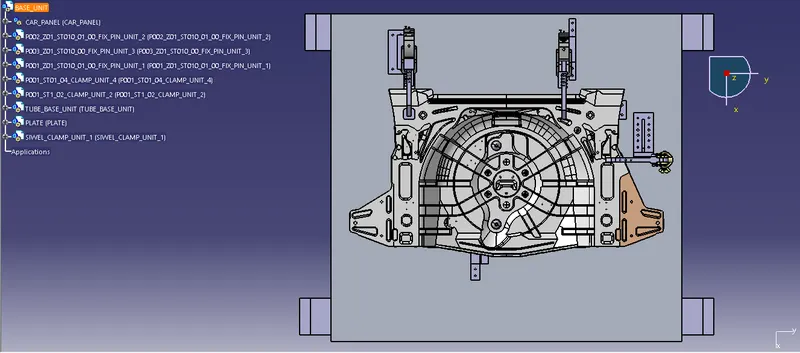
The 3-2-1 principle is used to constraint the car panel :
- This principle is used to constraint the part.
- The base of the part is first constraint at three points. This constraints the part movement in -X, X and rotation on the Y and Z axis
- Then the consicative side of the part is constraint at two points. This constraint the parts movement in Y,-Y direction and the rotation on X axis.
- Then the consicative side is constraint at one point. This contraint the part movement on -Z, Z.
Given car panel:
Support Frame:
Dimension:
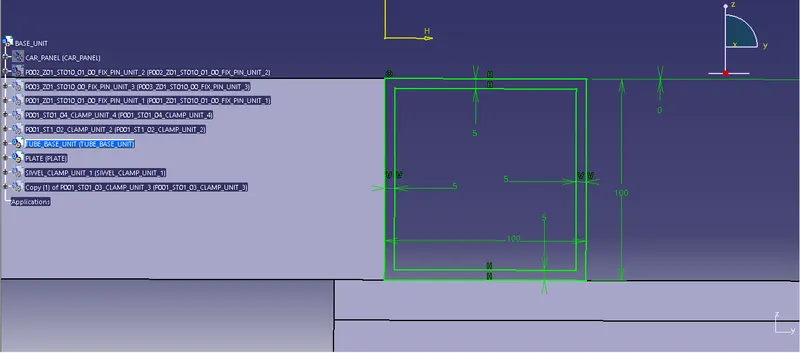
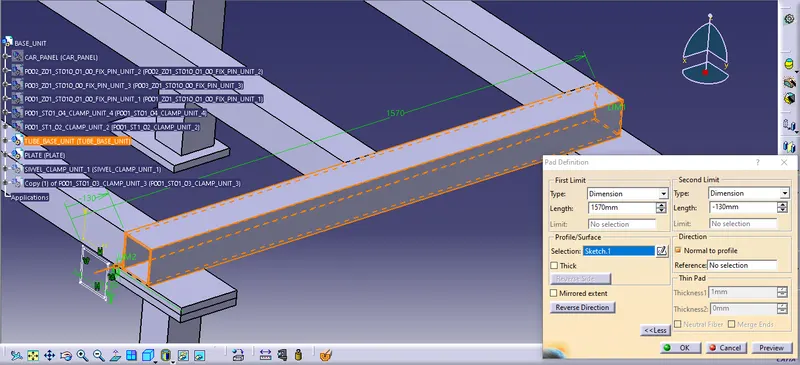
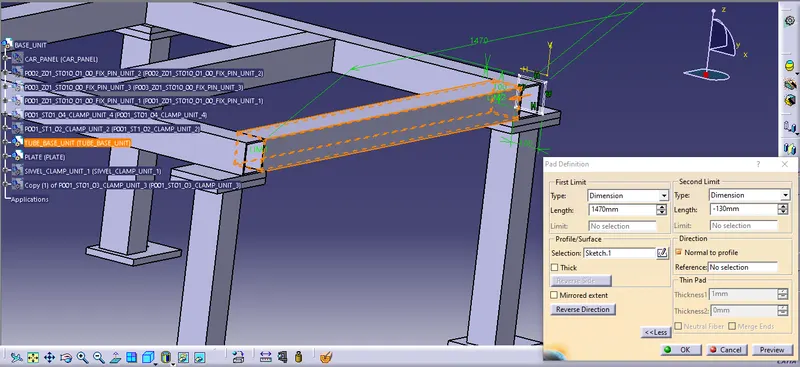
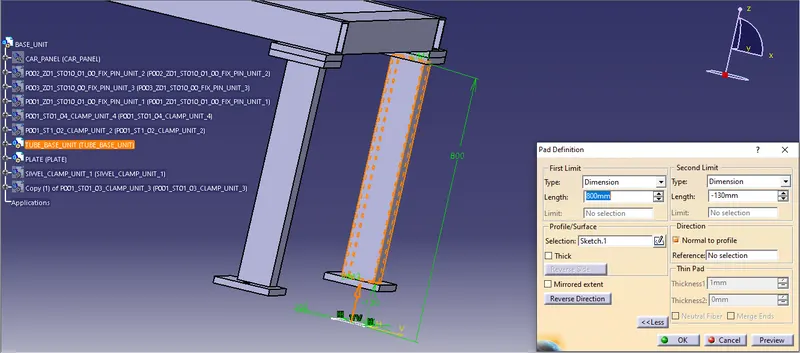
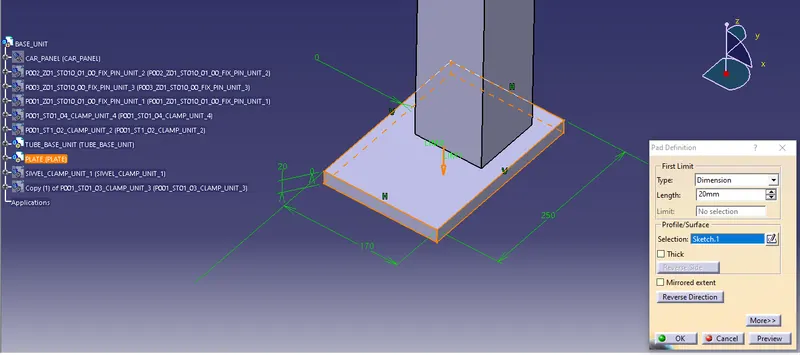
Plate:
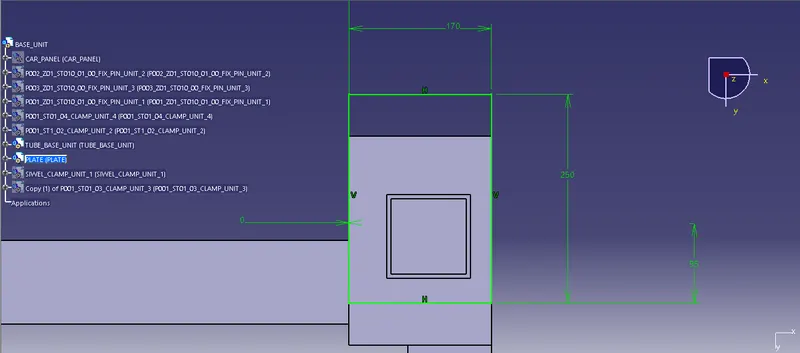
The plates are made so that the base unit can be fixed the workshop floor. The plate also provides the support for the tubes to be attached.
Dimensions:
Units used to constraint the part:
1. Pin Unit:
The pin unit is used to constraint the part from below at three points.
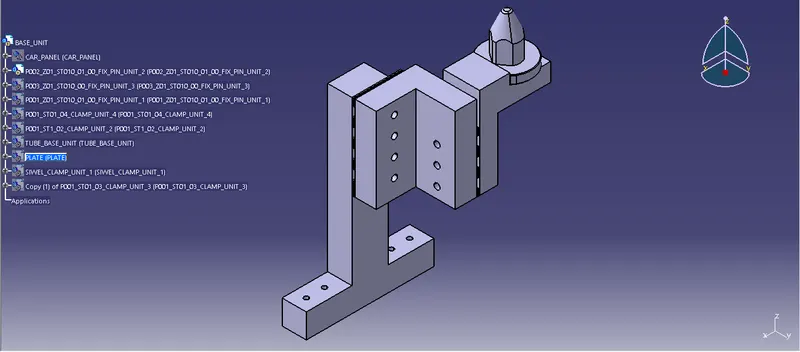
Three pins are used to constraint the panel from below. This locks the parts in x-directions and its rotation on the on the z and y axis.
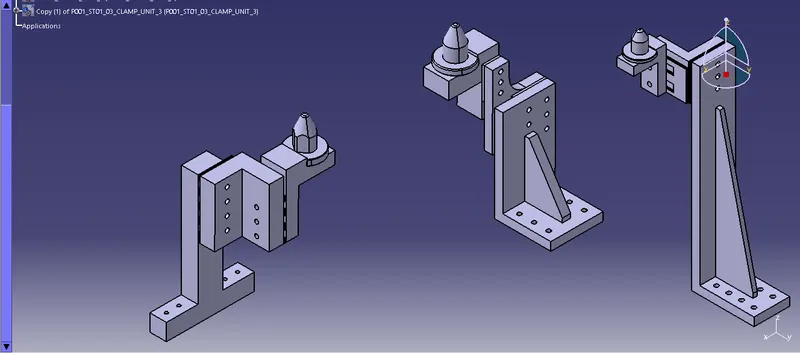
Clamp unit:
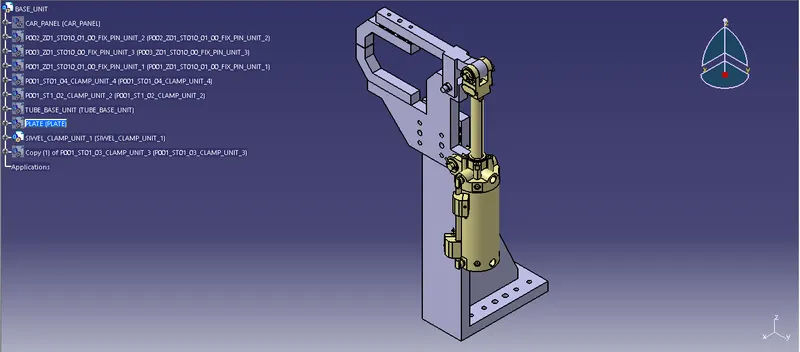
This unit is used to constraint the part on one side at two points. This constraints the part in Y-direction and its rotation on the X-direction.
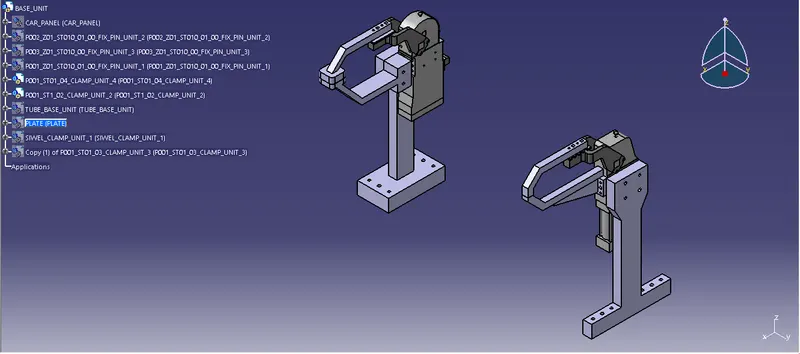
Siwel clamp unit:
This unit consists of a retractable cylinder which clamps and un-clamps the car panel.
The unit constraints the part on the other side at one point. The completely constraints the part and locks its movements
Conclusion:
The base unit was designed and different units were placed. The car panel was constraint using the 3-2-1 principle