Week 6 Session 13
new trends in the battery system field.
Cloud Based BMS
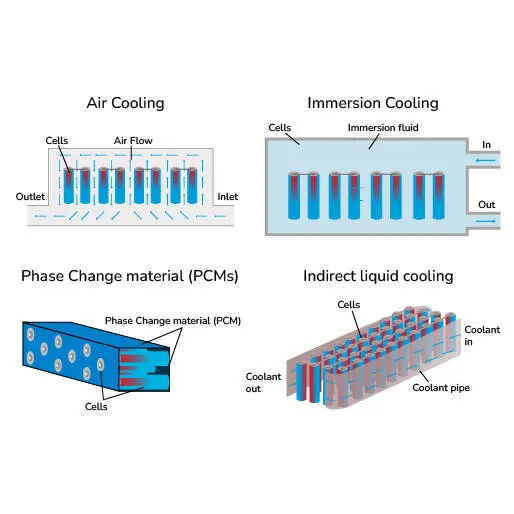
Charging or discharging a battery pack generates heat. This heat has to be dissipated from the system. Failure to reduce the temperature of the battery can lead to adverse consequences like the battery exploding.
The most common method of cooling is air cooling. Where fresh air is allowed to move through the component reducing its temperature. This is because air has a low heat capacity and is a good conductor of heat.
Liquid or water cooling is the preferred method of cooling currently used in EVs. In this process, water/glycol solution is forced through a heat pipe that is in contact with the battery. The heat pipe is connected to a radiator which exchanges the heat with the atmosphere through convection.
A fine balance exists between heat that is absorbed and dissipated from the liquid. Battery explosions usually occur when the liquid solution reaches a saturation point.
Immersion cooling is a method in which the entire battery pack is immersed in a heat transfer fluid. The battery pack is connected through a heat pipe to a radiator where heat transfer occurs. Direct contact with the battery pack allows for better cooling solutions. Immersion cooling solution reduces temperature by an additional 9.3% in comparison to liquid cooling.
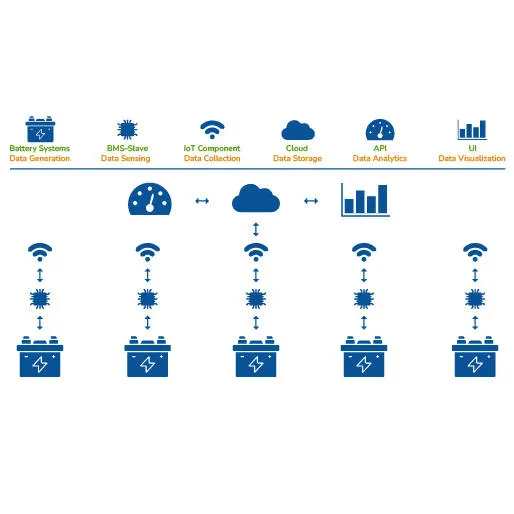
The BMS monitors the Soh (State of Health), SoC (State of Charge), voltage, current, and temperature of the battery. It plays a vital role during the charging and discharging phase of the battery by maintaining a stable temperature. During cases where the temperature of the battery increases, the BMS regulates the heat by controlling the flow of coolants in the system.
But, the BMS only has one to four sensors connected to the battery at any given time. Reducing the data points that can be collected from the battery. When the battery is stressed from more than one anomaly, this can serve as a vulnerability leading to system collapse.
Cloud-based technologies have started to permeate most aspects of everyday life through IoTs. Leveraging the computing power of cloud-based technologies allows for an exponential increase in the processing capabilities of battery management systems. Cloud-based BMS will be able to draw inferences from BMS data obtained from other vehicles in the network. Using a high-fidelity mathematical model of the battery pack, cloud-based BMS will be able to figure out places where the battery temperatures are higher than normal.