Week 6 - Creating connection for Rear door
REPORT ON CREATING CONNECTIONS FOR REAR DOOR
AIM : The objective of this challenge is to create proper connections in right areas by assigning different parts to different PIDs using ANSA software and NASTRAN deck.
INTRODUCTION:
The connections which are to be given for vehicle components as well as other areas having a great advantage while performing simulation. the load distribution and the rigid components, connections are to be appropriately depicted in the simulation if connections given are proper.
Various criterias like noise durability, safety, vibration etc are to be analyzed and the information regarding these criterias are essential for the progress of each component manufacturing. Among them an important criteria is NVH (Noise, Vibration, Harshness ). NVH analysis is done in NASTRAN deck in ANSA software. ANSA provides deck mode for various NVH analysis software like Nastran. It’s used in setting up model for advanced analysis like:
- Modal analysis
- Static stiffness analysis
- Dynamic Stiffness analysis.
- Frequency response analysis.
The input deck can be easily accessed to edit the model loading condition.
Specific model checks are available for NVH like Nastran model checks.
These tools make it very easy to set up an NVH model.
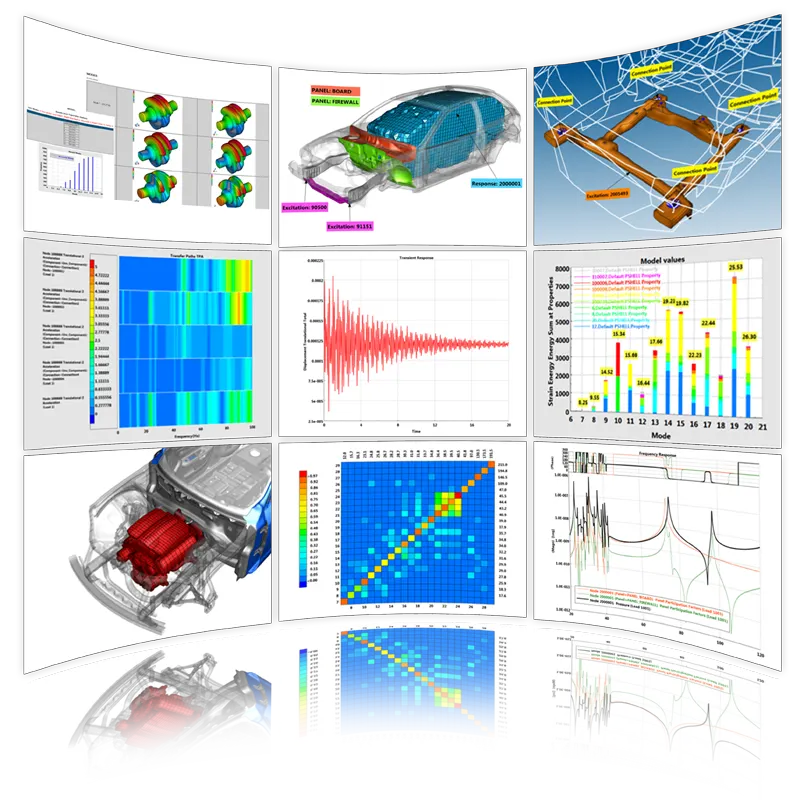
In NASTRAN, the connections are mainly made. Connections plays an important role in each mechanism and component.
DESCRIPTION:
There are various types of connections which are used in components. Here the component is rear door. The different type of connection for rear door are bolt and nut connections, concentrated mass connections, spot weld connection, seam weld connections, bush connetions etc.
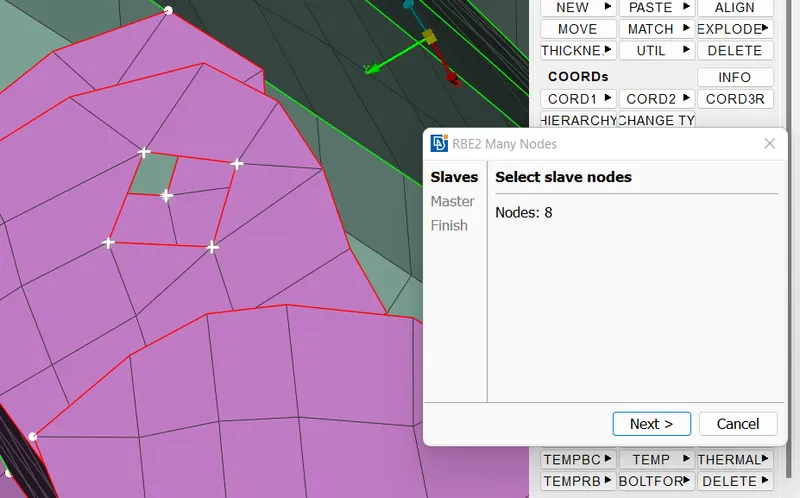
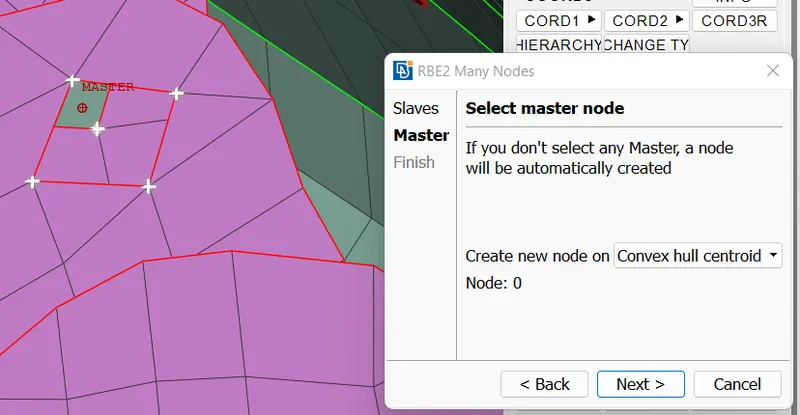
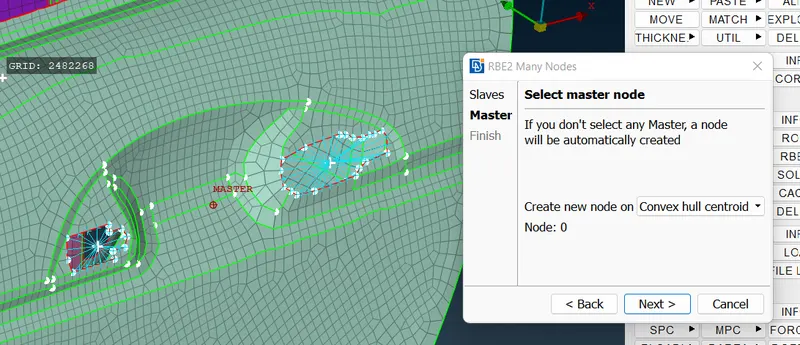
RBE2 : This connection defines a rigid body elements form 2. Rigid link to transfer motion from the Independent node to the dependant nodes. In RBE2, we are selecting the slave nodes and thus automatically defines the master node in the COG.
RBE3 : It defines the interpolation constraint element.
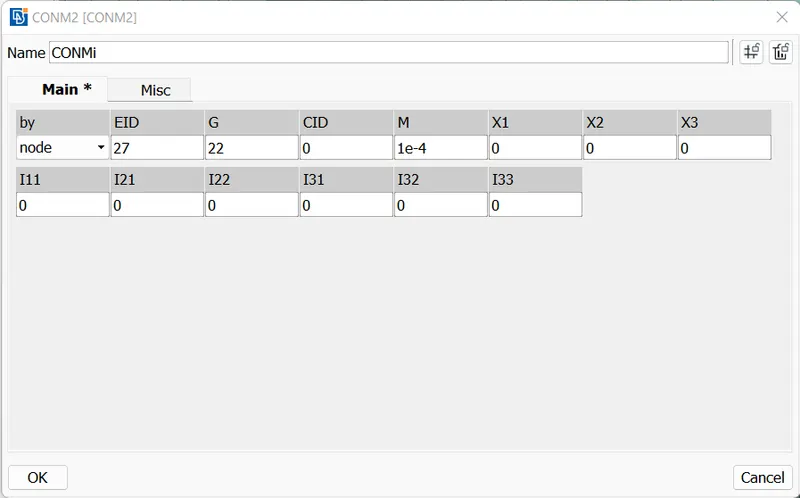
CONMi : This defines the concentrated mass element connection.
CBUSH : This defines a generalized spring damper or element / connection.
PROCEDURE:
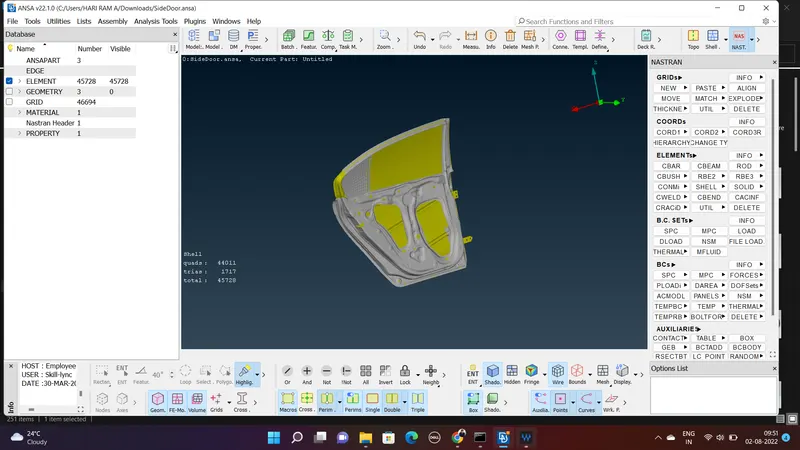
1. The rear door file is imported to ANSA workspace.
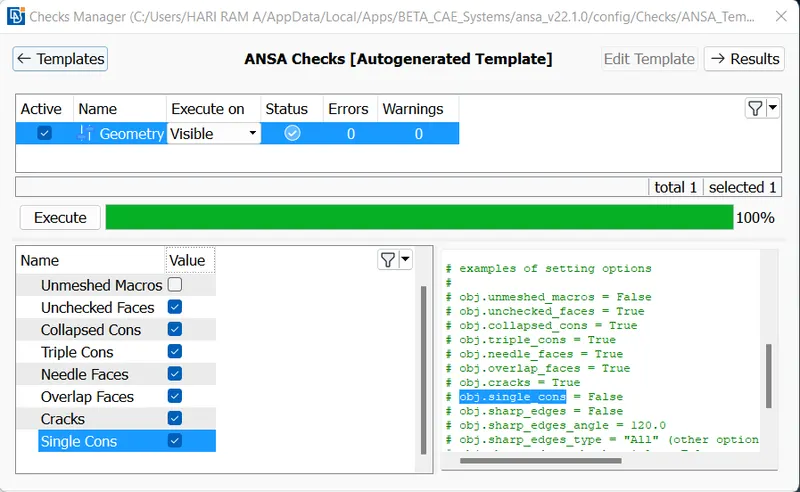
2. Do a orient and check geometry. The errors are fixedand make the status visible.
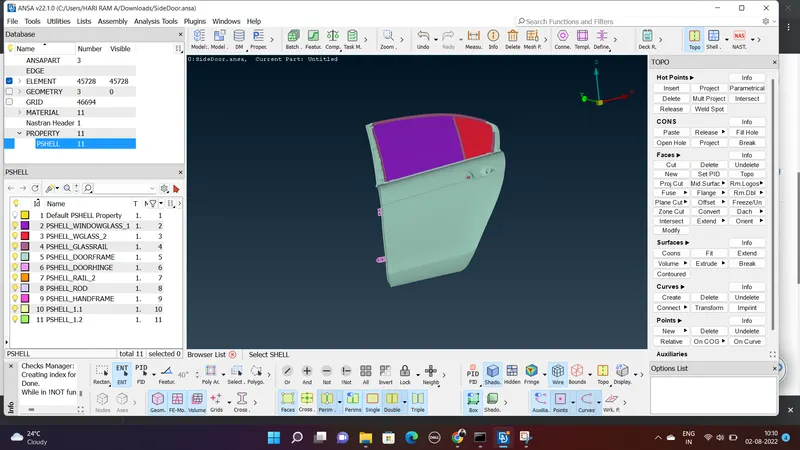
3. The meshed model is to be assigned to different PIDs inorder to have fine working for creating connections.
4. The connections are to be created at proper locations.
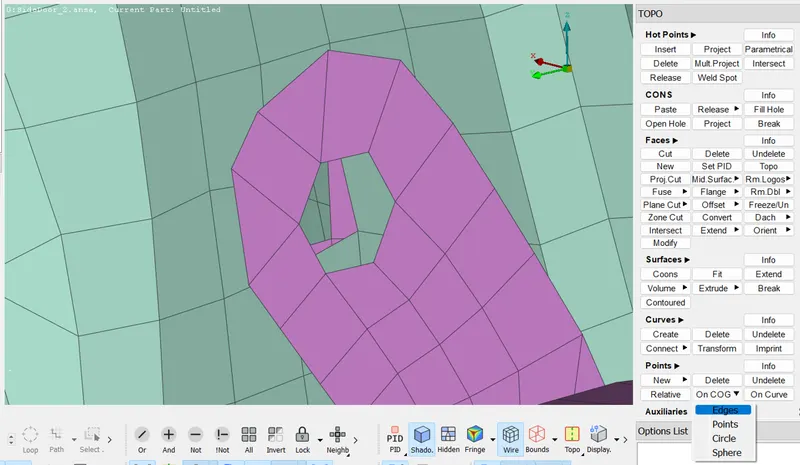
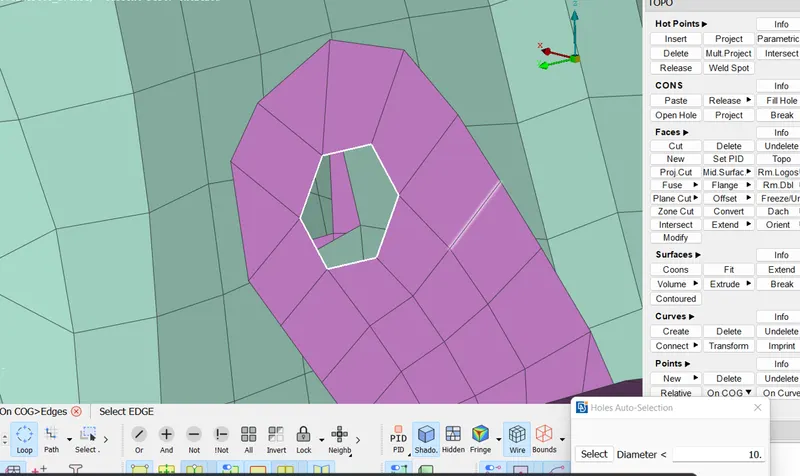
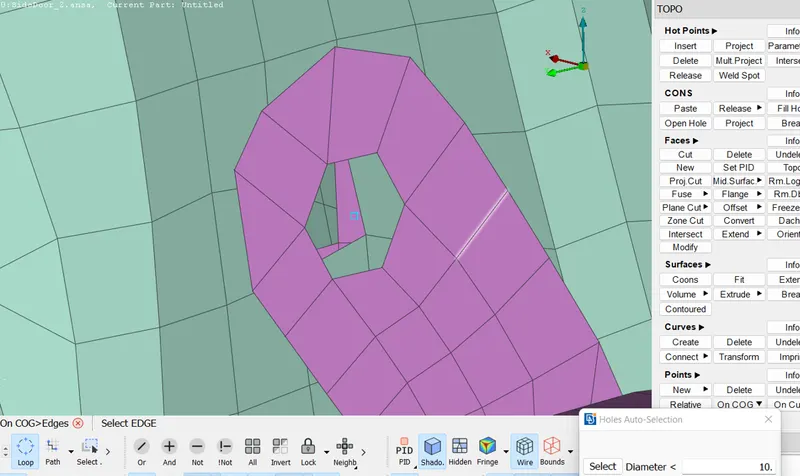
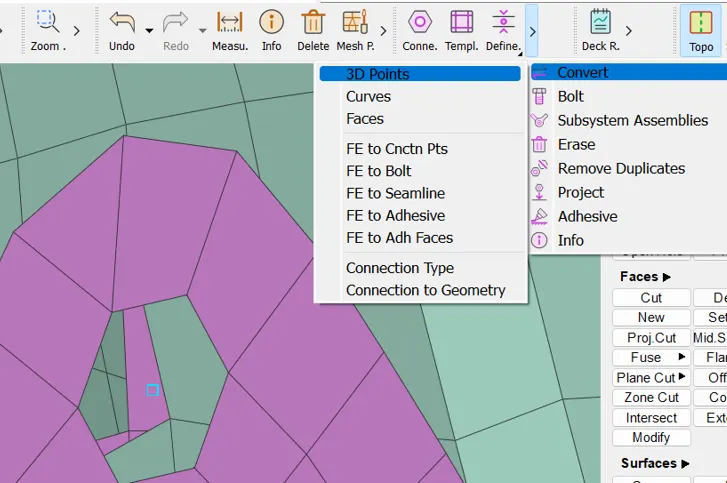
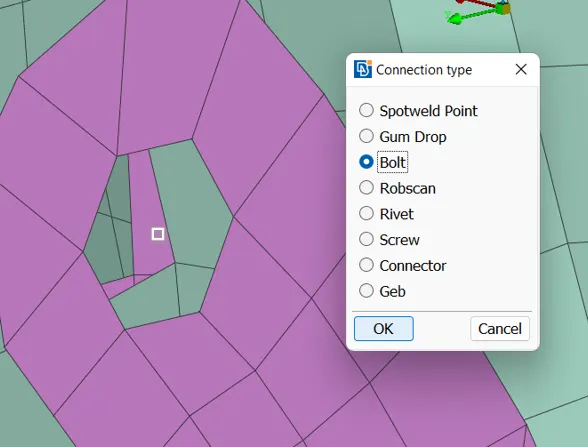
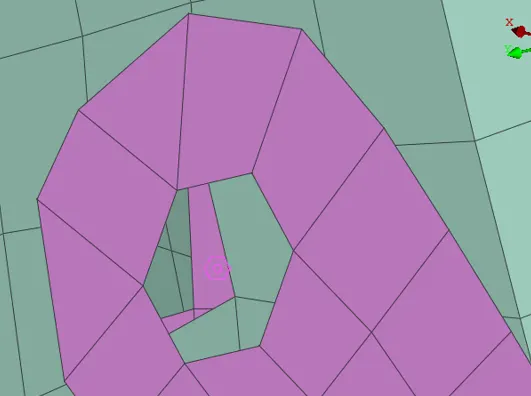
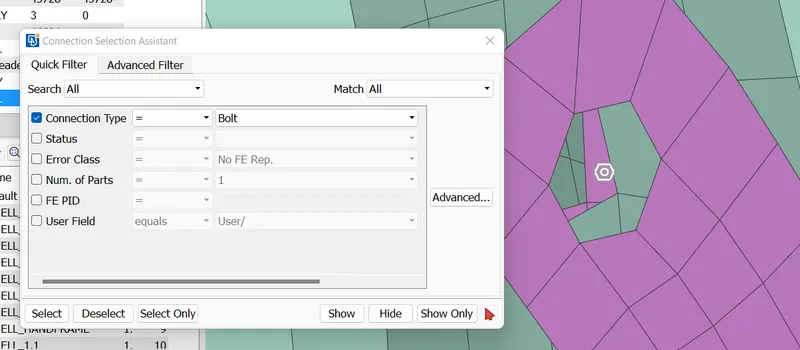
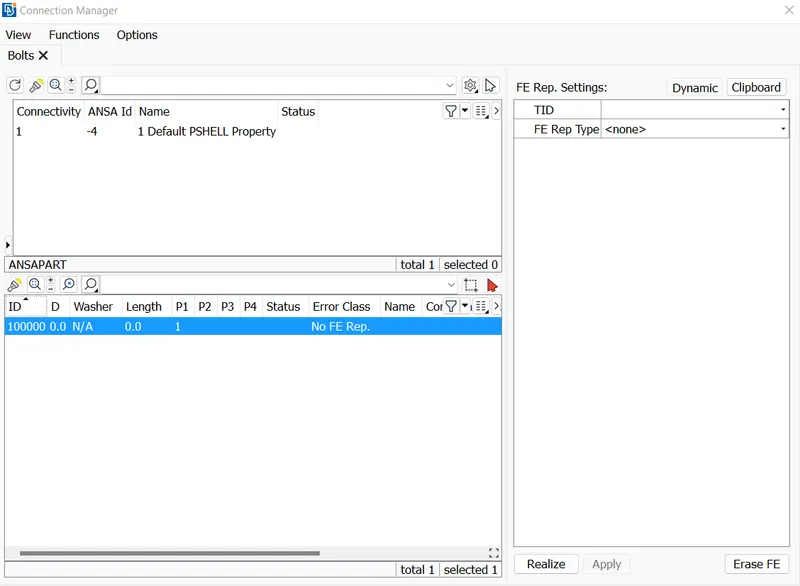
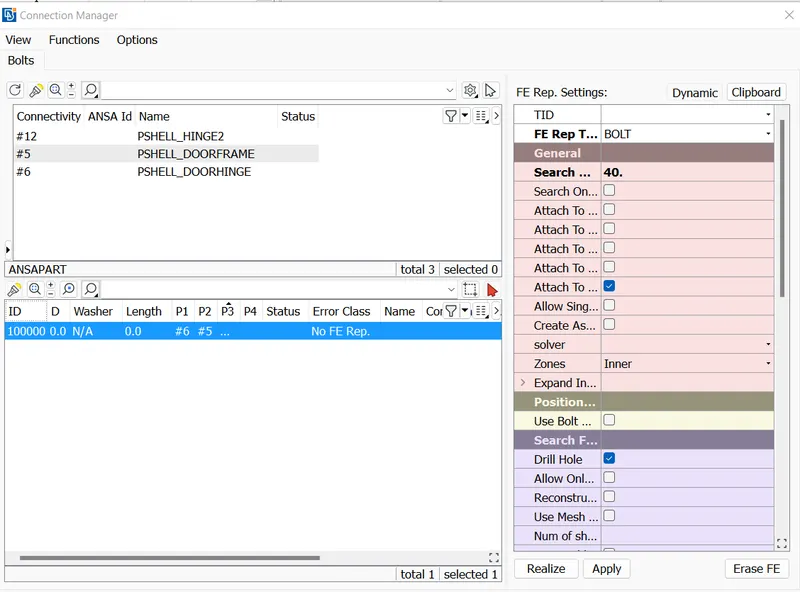
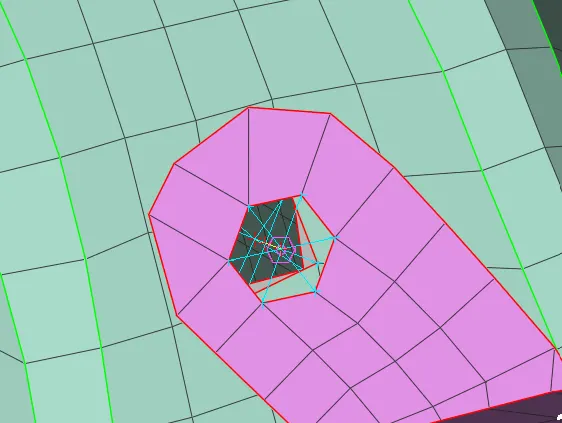
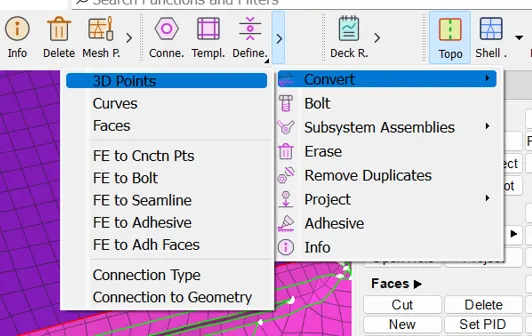
- Bolt connection is to be given using connection manager. Defining a COG point. Topo module > Points > On COG. Later defining that COG point into 3D point. Convert into Bolt point and in connection manager, create a bolt connection by selecting the parts to be connected and giving the search distance.
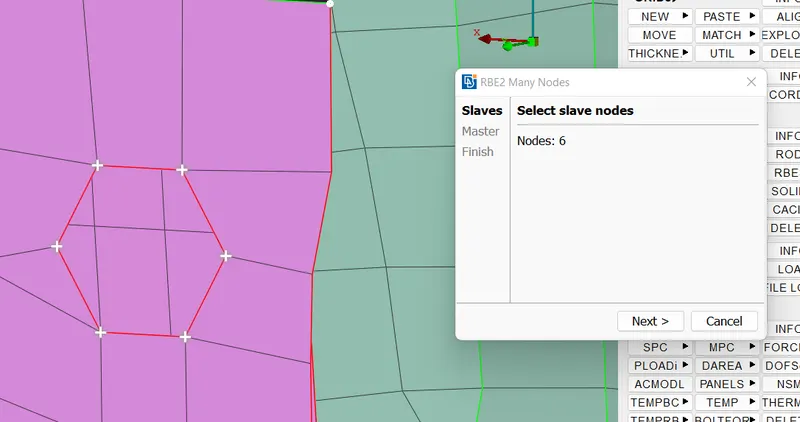
- RBE2 Cluster connection. NASTRAN deck > Elemets > RBE2 > many nodes.
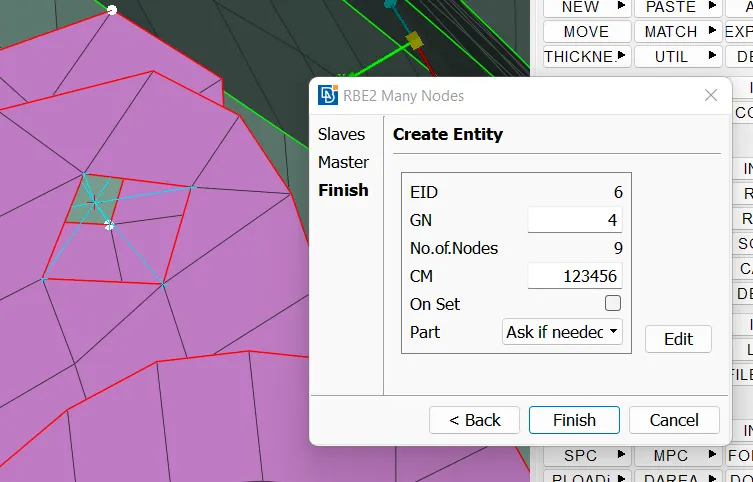
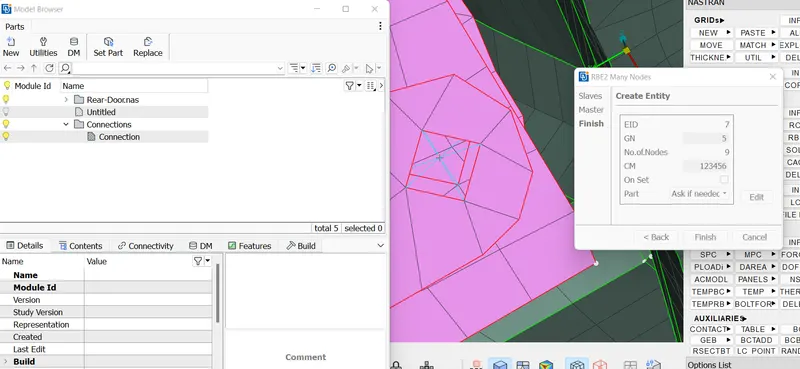
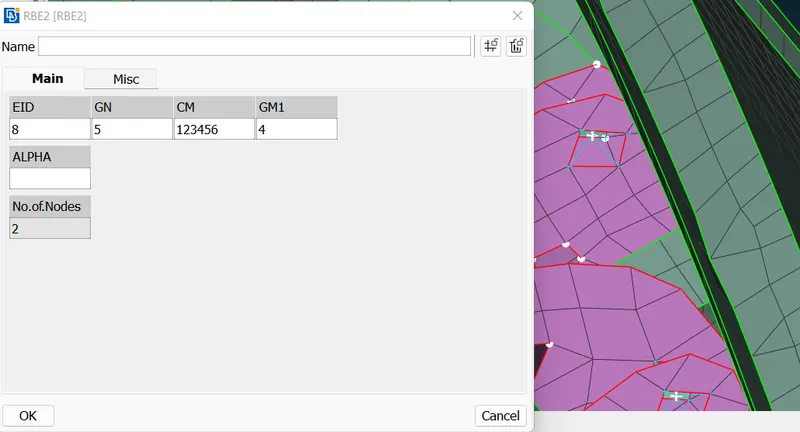
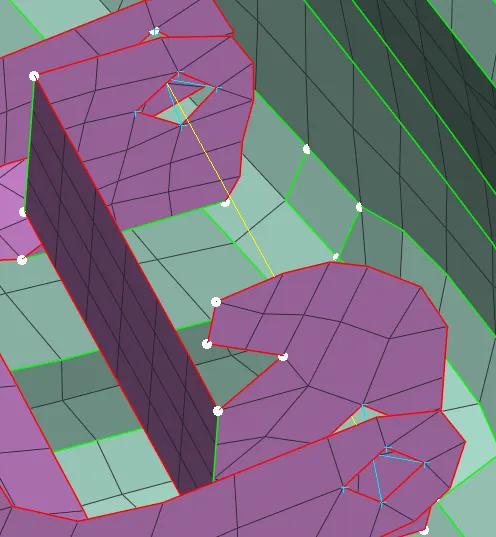
- RBE2 two node connection
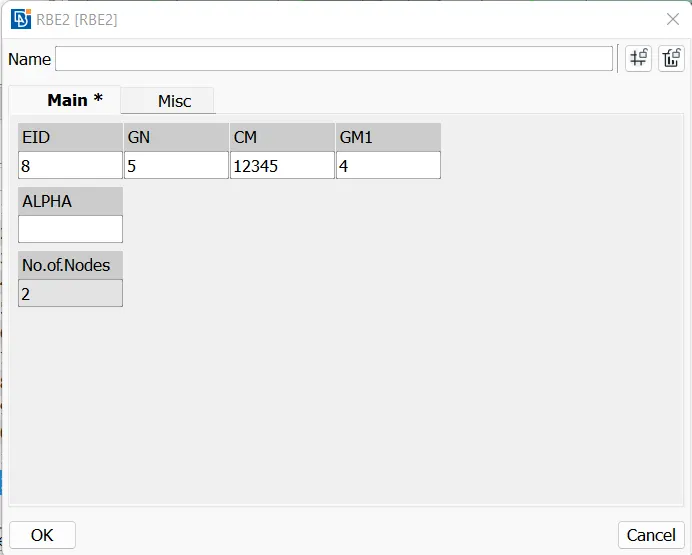
- RBE2 Many node connection
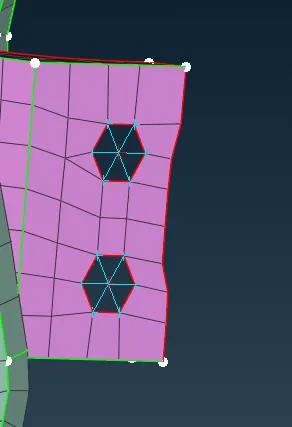
- RBE2 Cluster and CONMi connection
Foor the door handle, concentrated mass should be given after making RBE2 cluster. Generally the mass of handle will be 100 grams. The mass should be given to the master node between two RBE2 cluster in terms of tonnes. So 100 grams should be converted, which is 1e-4 tonnes.
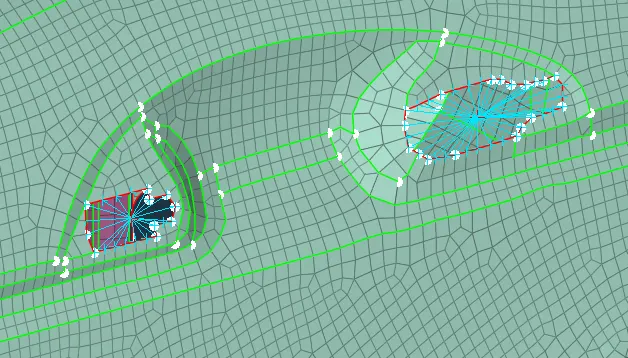
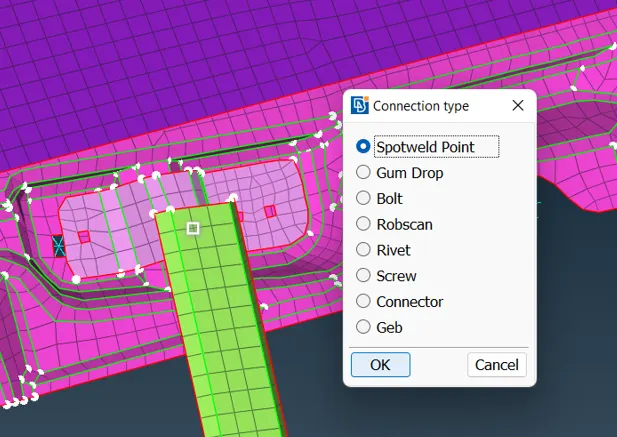
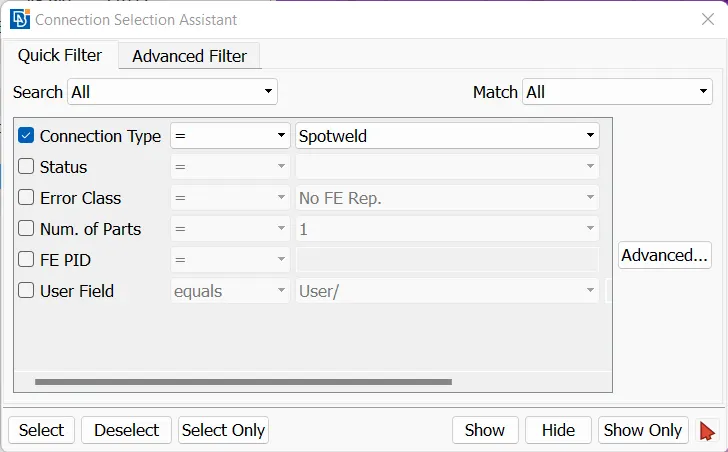
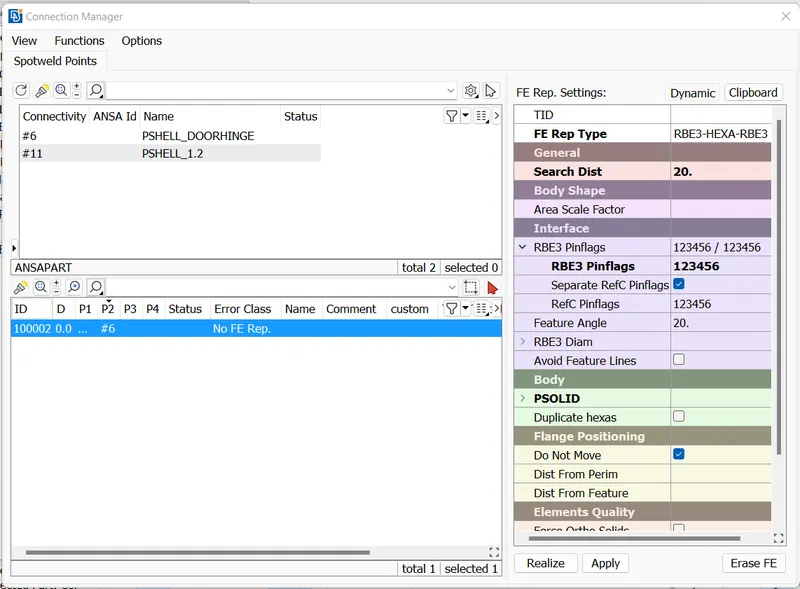
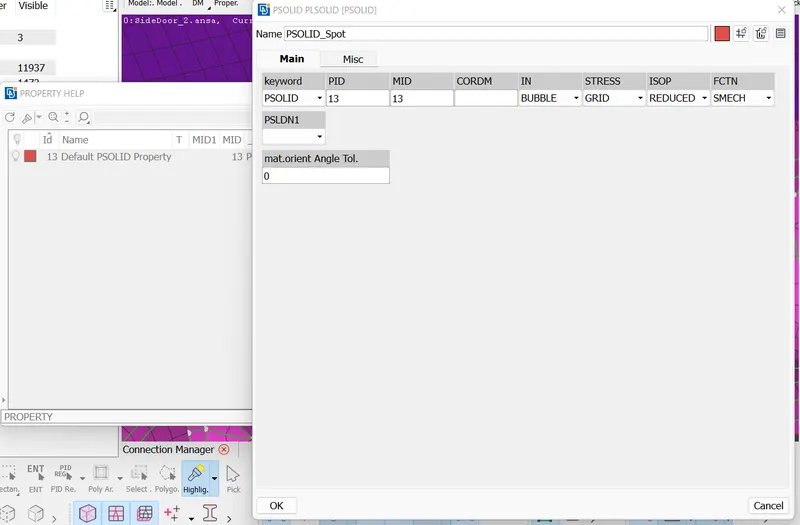
- RBE3-HEXA-RBE3 Spotweld connection
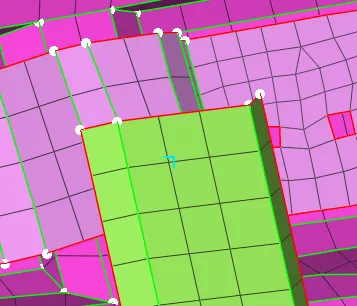
Spotweld connection is created by assigning a COG point where the spotweld has to be provided. Later, the COG point is converted to spotweld point. In the connection manager give the parts in P1 and P2 space and give the connections as RB3-HEXA-RBE3. Along with it give the search distance and also create a PSOLID for the spot and assign it to the tab where property is to be selected in the connection manager interface. Giving apply and realize will be resulting in the spotweld connection in the spot.
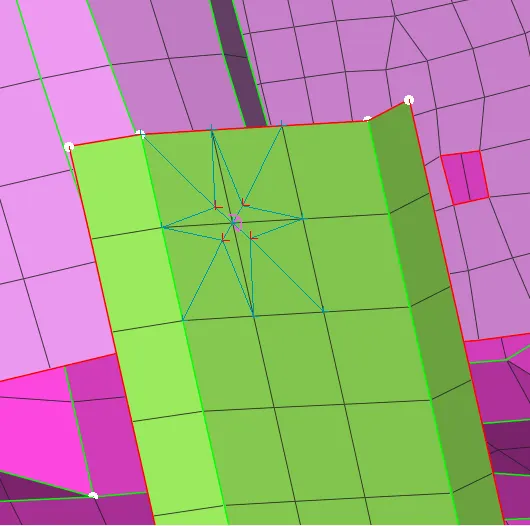
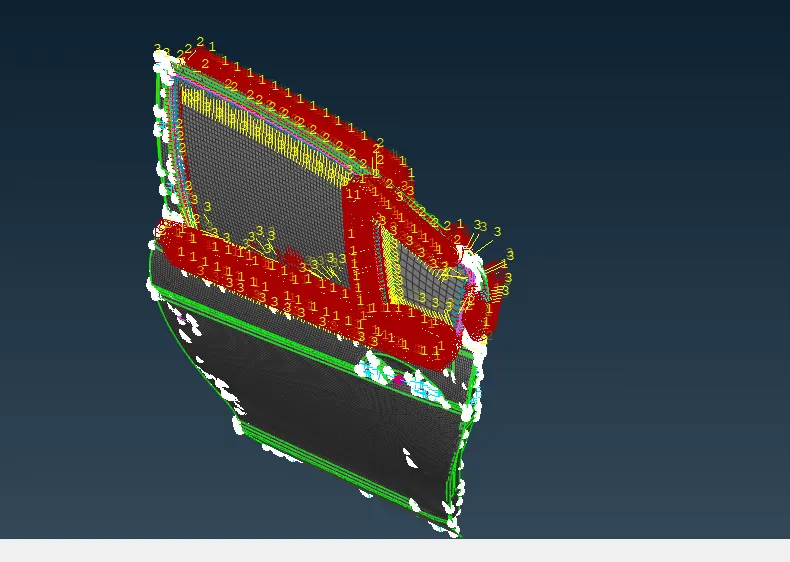
- CBUSH Connection
They are used in window line bushing areas where glass and frame has to be connected.
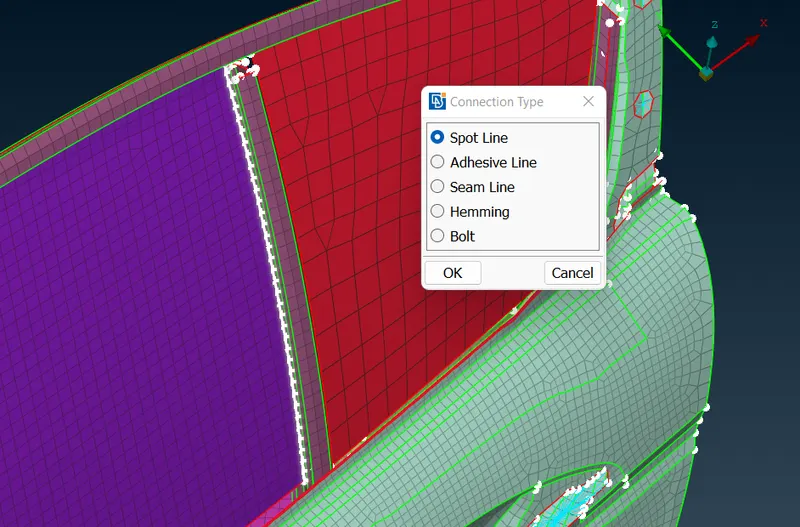
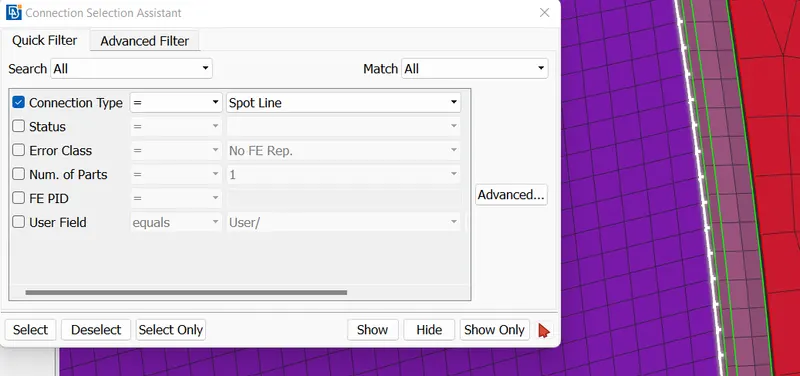
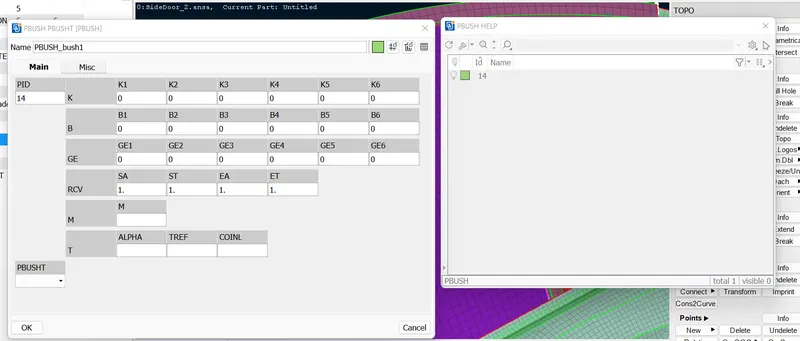
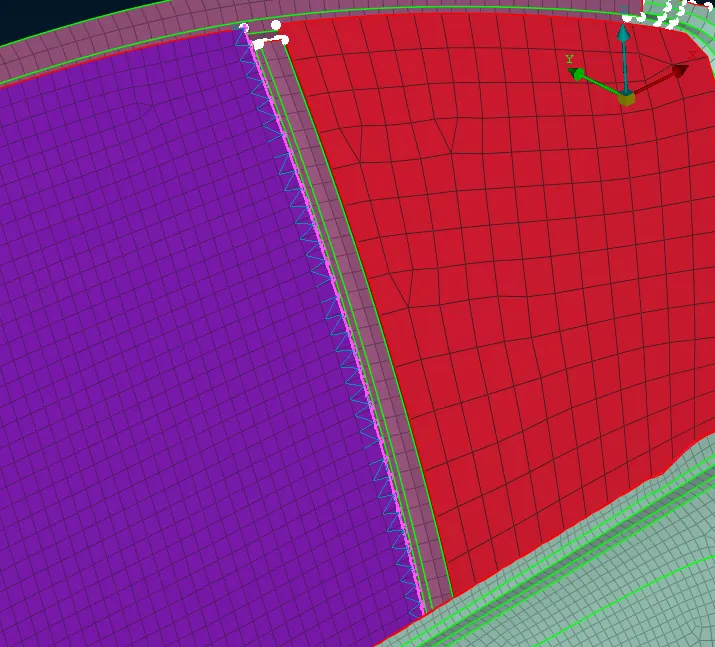
The complete bush connection is shown below.
LEARNING OUTCOMES:
The connection challenge provides the information on how to well connect the parts to each other . The outcomes are
- Learned on Normal RBE2 many node and two node connection.
- learned to provide the concentrated mass on the master node of door handle.
- Learned about the spotweld RBE3-HEXA-RBE3 connection.
- Provides details on the seamline and spotline connection.
- Learned on CBUSH Connection.
- Had done RBE2 cluster connection and bolt connection .
CONCLUSION:
The side door is connected properly with different types of connection elements using NASTRAN deck.