Week 6 - CHT Analysis on a Graphics card
AIM:
Perform a steady-state conjugate heat transfer analysis on a model of a graphics card. You can use appropriate materials of your choice for the simulation. Make sure to properly define the correct solid and fluid zones. Refer the video for further clarification and the model is provided below the video.
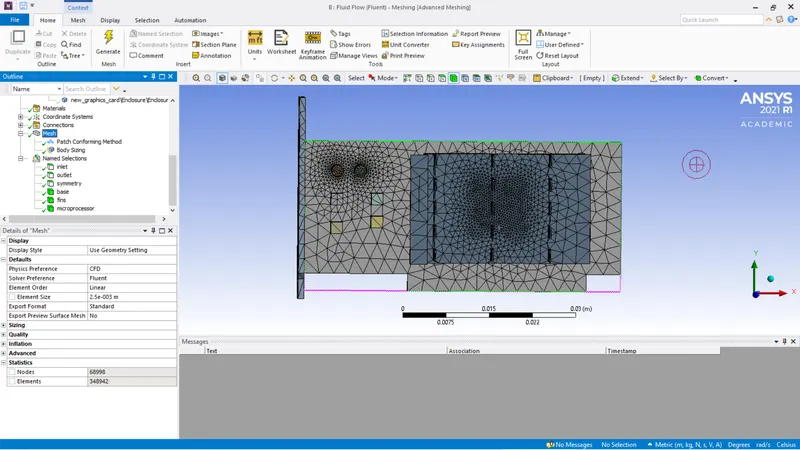
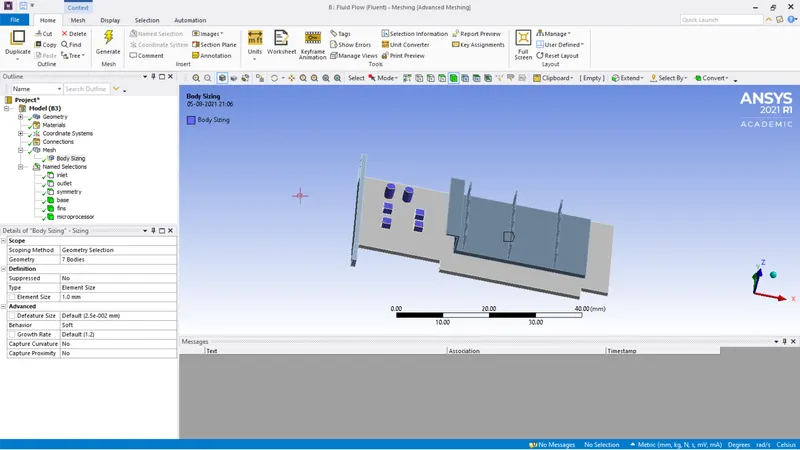
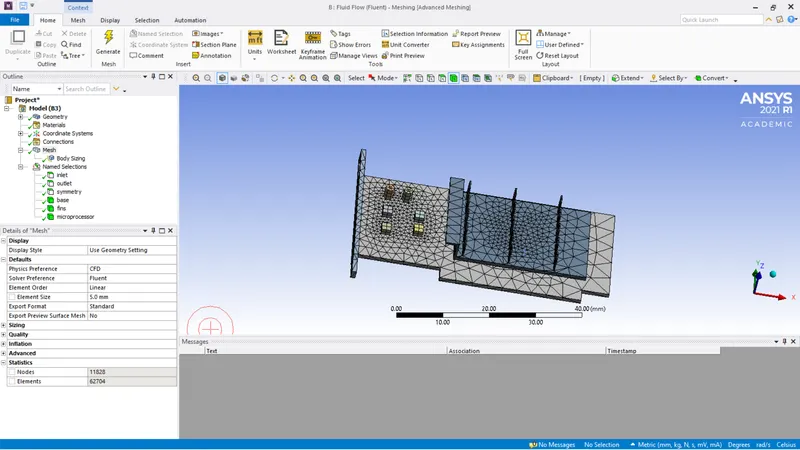
Run the simulation for best possible mesh with combination of coarse and refined mesh in different regions. Explain the reason for choosing the particular mesh settings.
Objectives:
- Run the simulation by varying the velocity from 1m/sec to 5m/sec for at least 3 velocities and discuss the results.
- Find out the maximum temperature and heat transfer coefficient attained by the processor.
- Prove that the simulation has achieved convergence with appropriate images and plots.
- Identify potential hotspots on the model.
CONJUGATED HEAT TRANSFER:
The Conjugate Heat Transfer (CHT) analysis type allows for the simulation of heat transfer between solid and fluid domains by exchanging thermal energy at the interfaces between them. Typical applications of this analysis type exist as, but are not limited to, the simulation of heat exchangers, cooling of electronic equipment, and general-purpose cooling and heating systems.The Conjugate Heat Transfer (CHT) analysis type allows for the simulation of heat transfer between solid and fluid domains by exchanging thermal energy at the interfaces between them. which is more stable and provides faster convergence as the energy equation is strongly coupled between the solid and fluid regions.
GEOMENTRY:
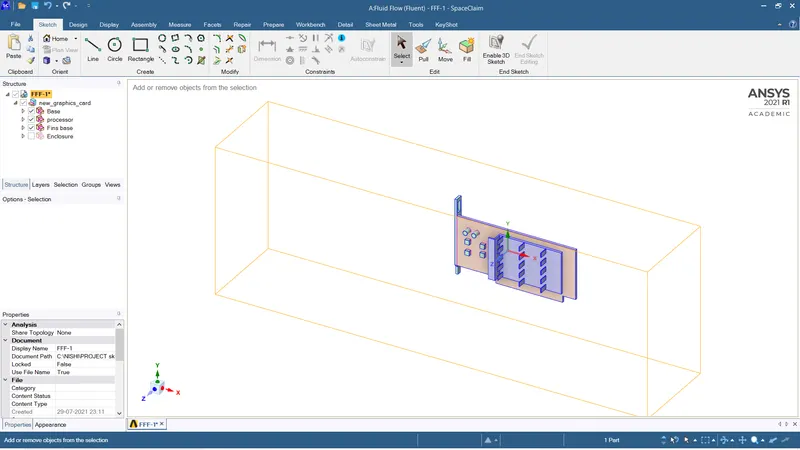
The geomentry is imported and then share topology is activated.This is done by selecting the whole enclosure and share option.
MESHING:
SOLVING:
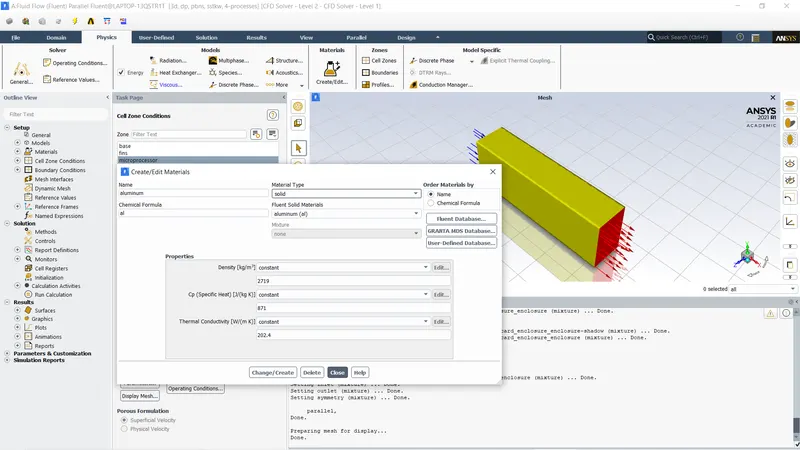
MATERIAL SELECTION:
FLUID: AIR
SOLID: ALUMINIUM
BOUNDARY CONDITION:
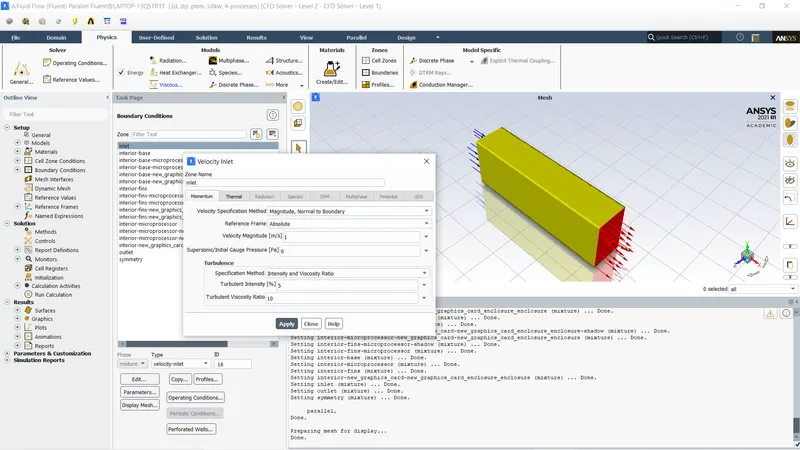
FOR VELOCITY OF 1m/s
VOLUMETRIC HEAT TRANSFER:
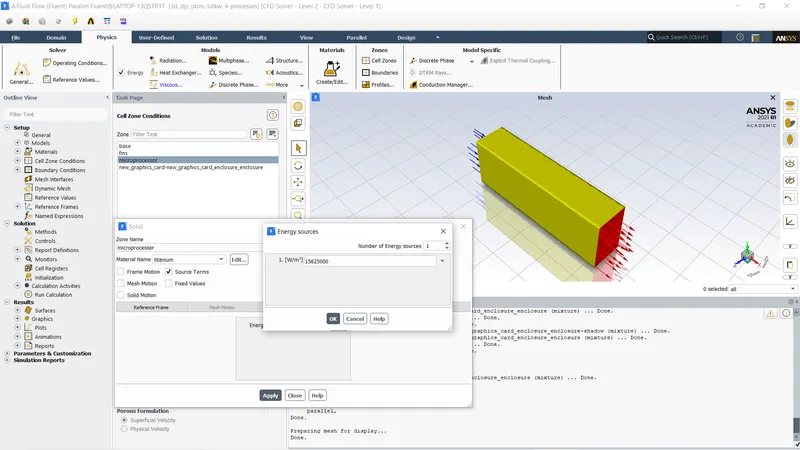
formula is calculated by [Heat disputed (1W) / volume(m3)]
SOLUTION:
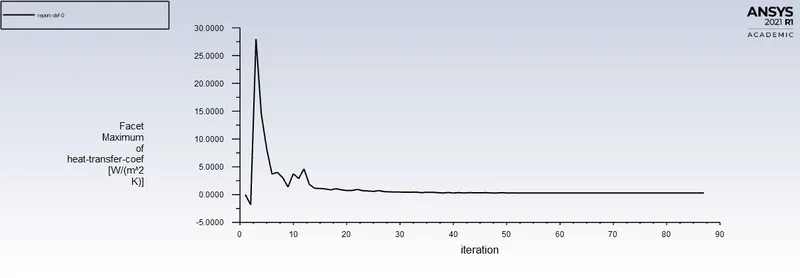
FACET VALUES
FINE MESH:
COUARSE MESH:
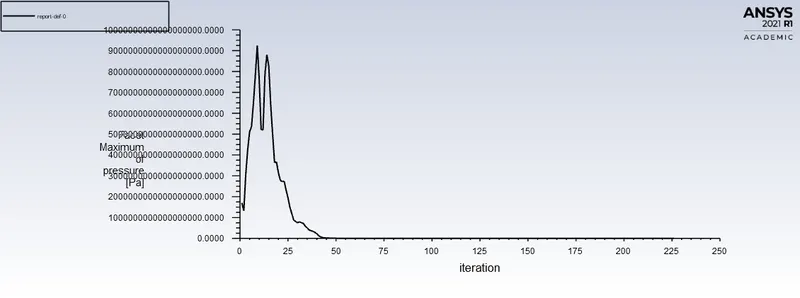
FINE MESH WITH VELOCITY 2m/s:
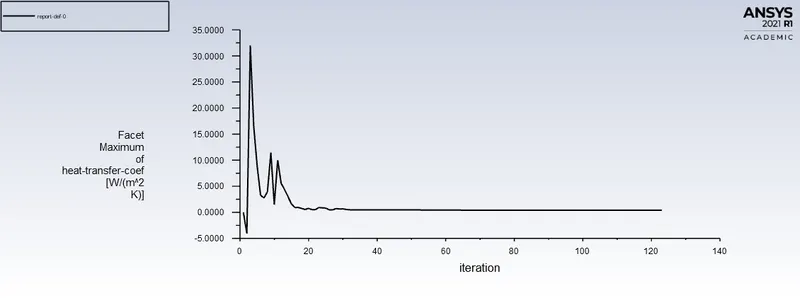
FINE MESH WITH VELOCITY 5m/s:
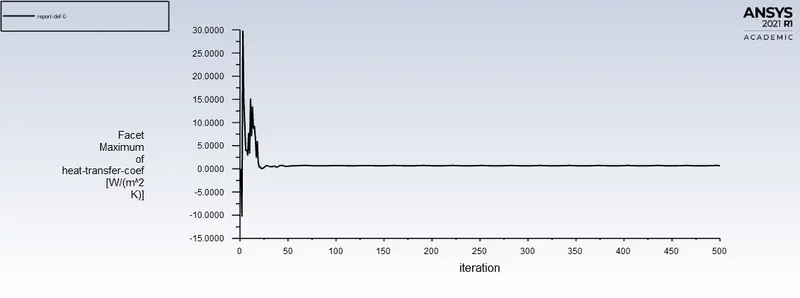
TEMPERATURE DISTRIBUTION:
FINE MESH:
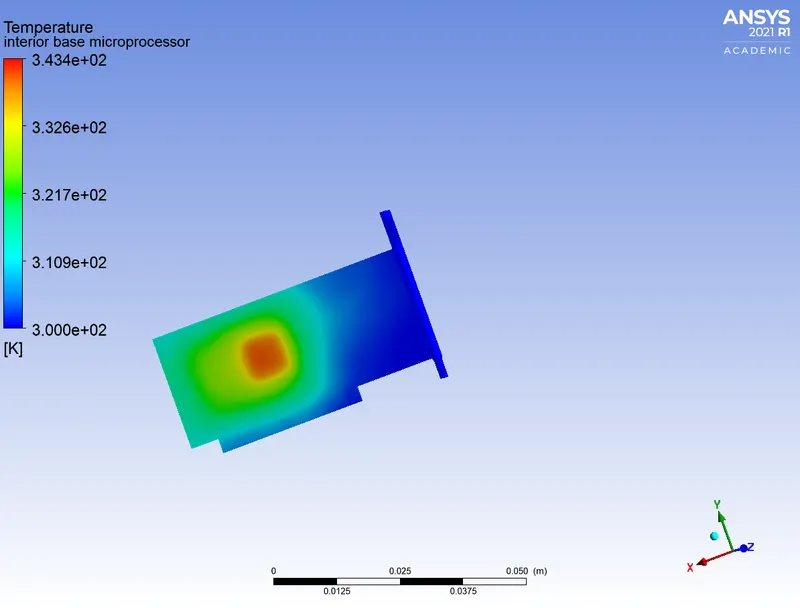
COUARSE MESH:
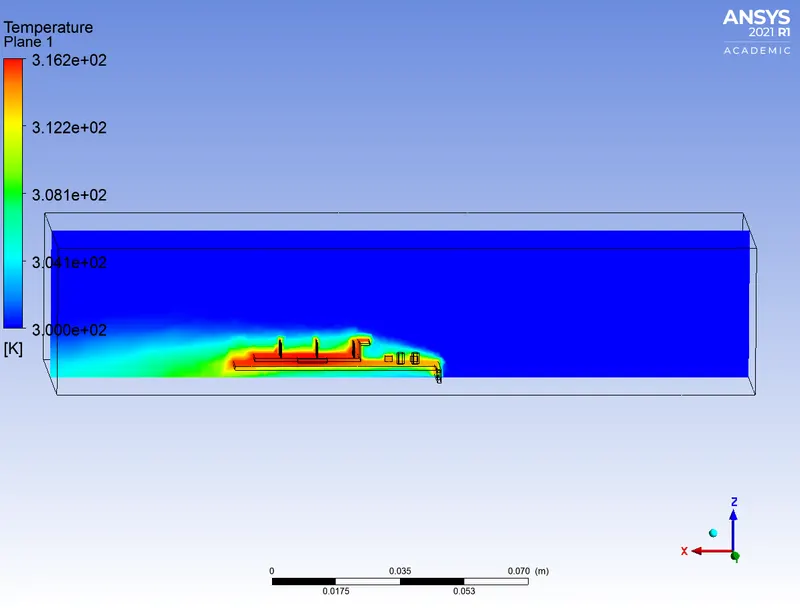
FINE MESH WITH VELOCITY 5m/s:
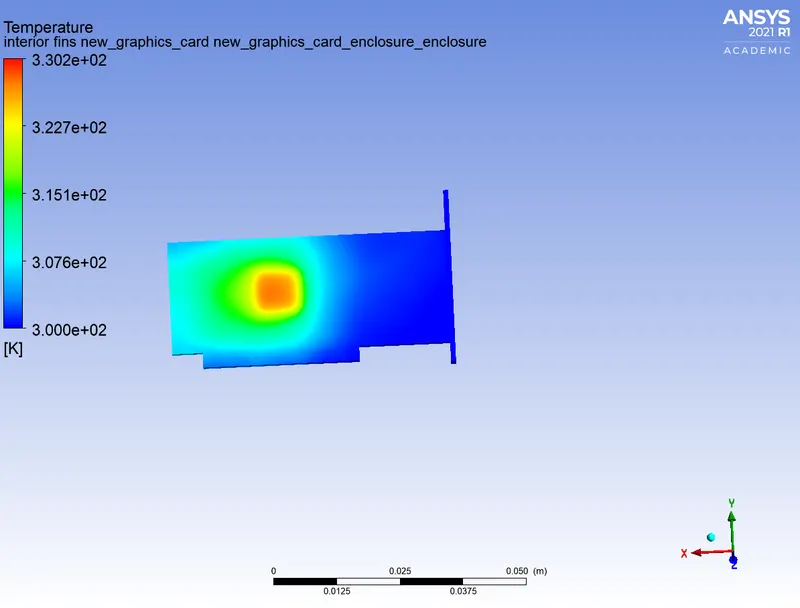
FINE MESH WITH VELOCITY 2m/s:
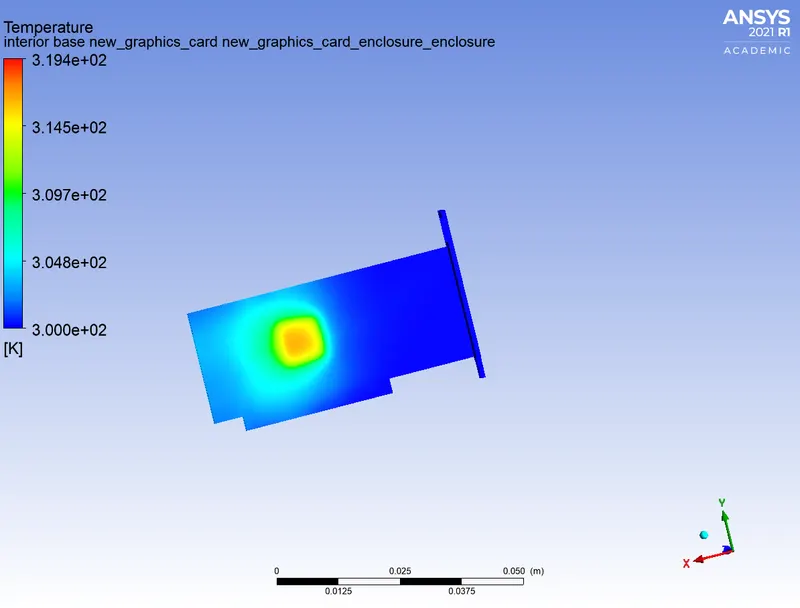
SCALE RESIDUALS:
FINE MESH:
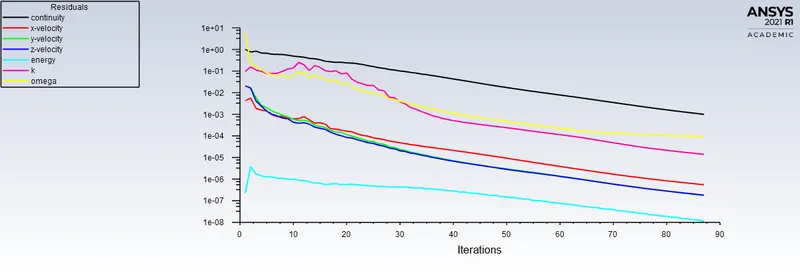
COUARSE MESH:
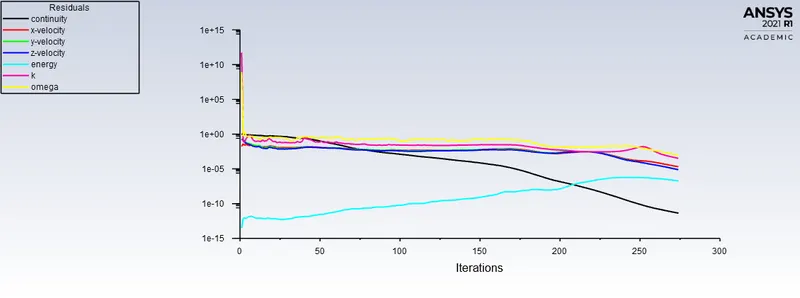
FINE MESH WITH VELOCITY 5m/s:
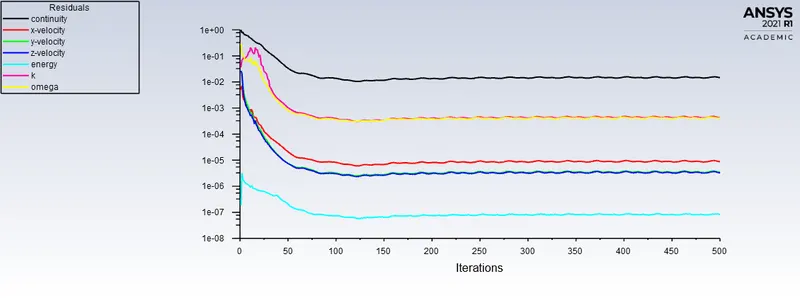
FINE MESH WITH VELOCITY 2m/s:
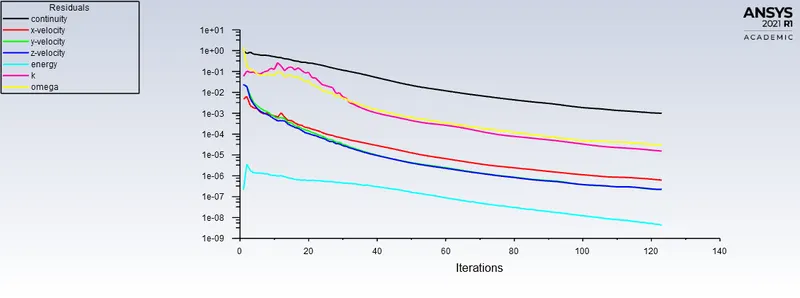
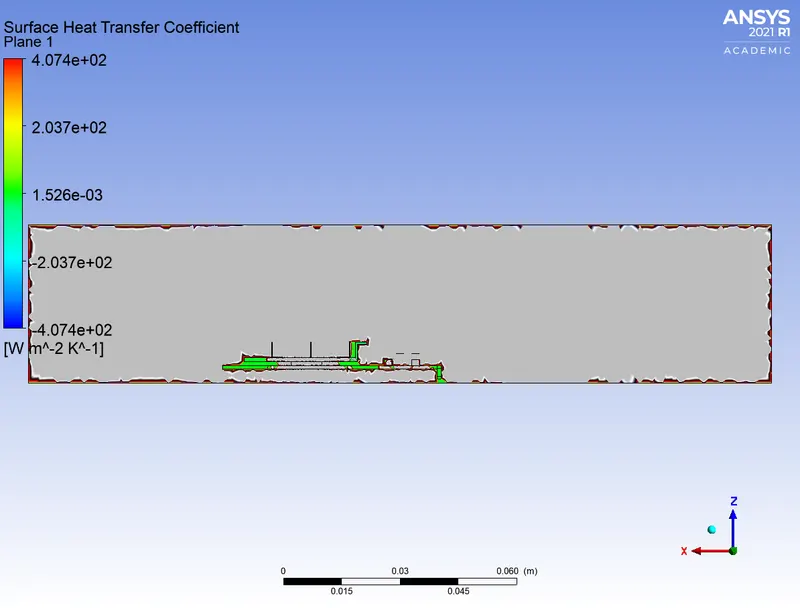
SURFACE HEAT TRANSFER CO.EFFICIENT:
FINE MESH:
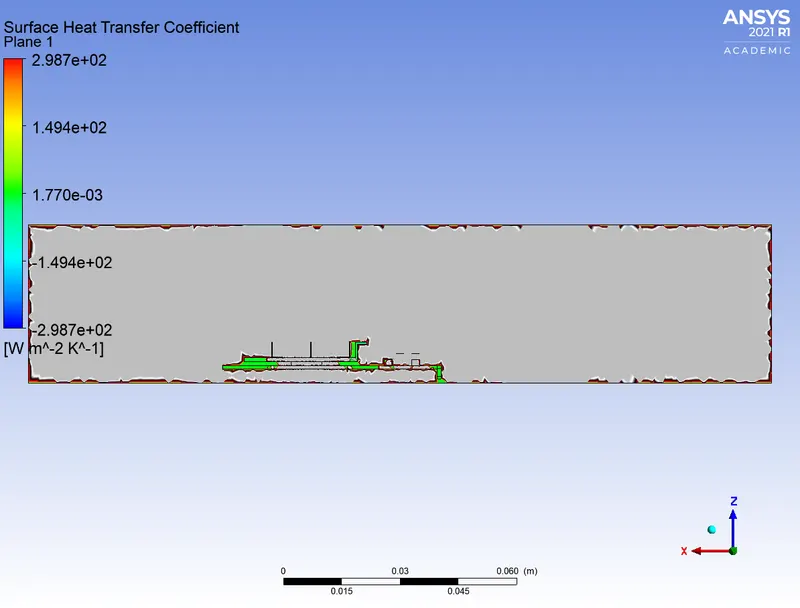
COUARSE MESH:
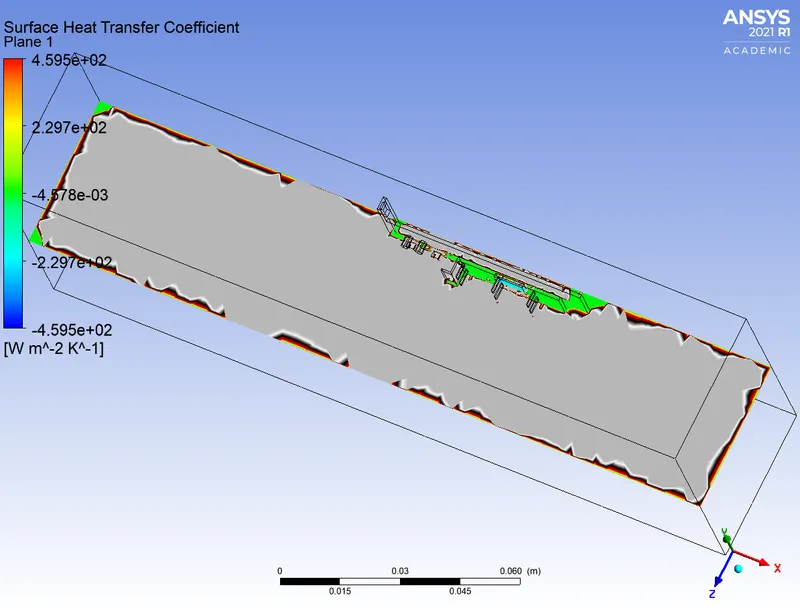
FINE MESH WITH VELOCITY 5m/s:
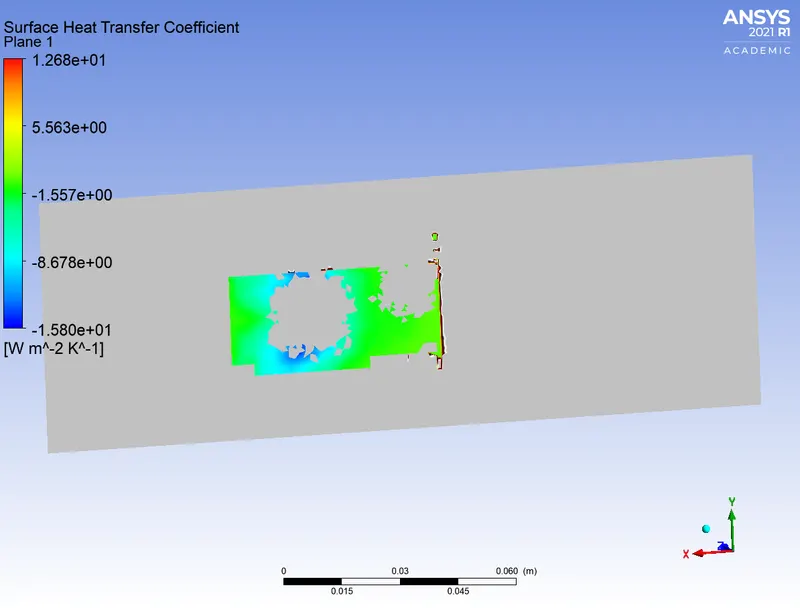
FINE MESH WITH VELOCITY 2m/s:
RESULT:
- The maximum temperature attained by the processor is 343K.
- The maximum Heat transfer co.efficient is 459 w/m2K.
- Both the maximum are obtained in the base line mesh.
- The potential hotspot in the graphics card was the micro-processor has it consume more power and produces heat.
INFERENCES:
https://www.sciencedirect.com/science/article/abs/pii/S0017931099001519
https://asmedigitalcollection.asme.org/GT/proceedings-abstract/GT2003/361/299003