Week 6 - CHT Analysis on a Graphics card
Objective:
- Run the simulation by varying the velocity from 1m/sec to 5m/sec for at least 3 velocities and discuss the results.
- Find out the maximum temperature and heat transfer coefficient attained by the processor.
- Prove that the simulation has achieved convergence with appropriate images and plots.
- Identify potential hotspots on the model.
Theory:
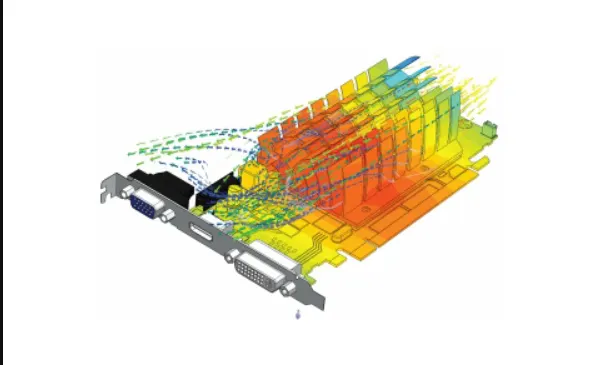
Heat is generated by all semiconductors while operating.Most microprocessors to date have been able to dissipate the heat directly to the ambient air without heat sinks or fans. With faster processors that dissipate more heat than the slower processors, it is no longer possible to ignore thermal management. The objective is to ensure the generated heat is dissipated into the ambient air while a safe operating temperature is maintained. There are several methods for keeping the processor cool. All of these methods include a combination of heat sink and airflow. In general, the trade-off is heat sink versus airflow. A smaller and less costly heat sink requires more airflow. Analogously, larger heat sinks require less airflow to maintain a safe case temperature. Conjugate Heat Transfer (CHT) allows to accurately predict the potential heat spots and heat generated while operating the device . Optimal study of the heat flow within a graphics card helps to get a clear idea about the extent and method of cooling required so as to ensure the optimal functioning of the device.
Procedure :
Geometry
The model was imported and opened using Spaceclaim module in ansys fluent .Enclosure was de-selected and share tool from workbench option was used to share topology of all the components .
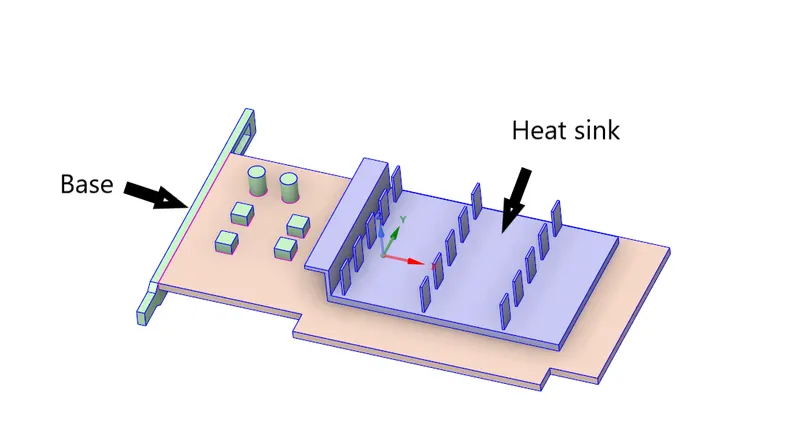
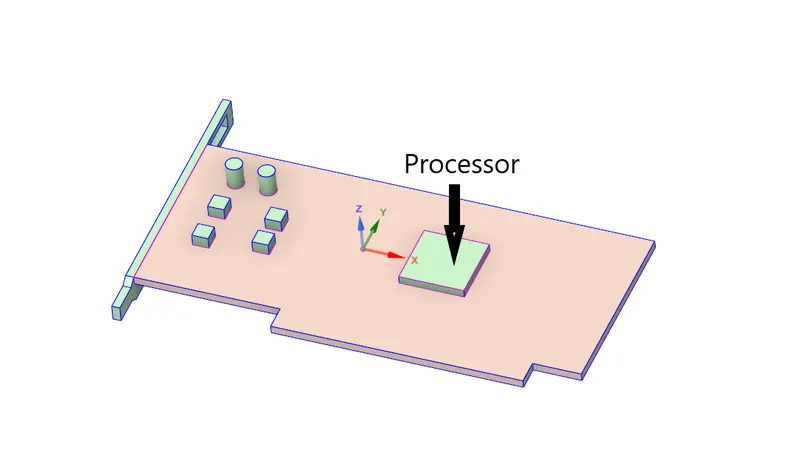
The geometry module was closed and mesh module was opened .
Mesh
Named selection was given to each component, same as above and enclosure .
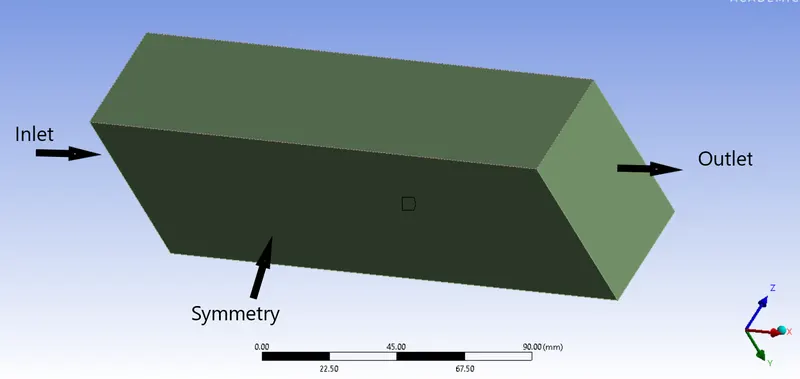
The intital mesh size was set to 2.5mm . Body sizing was used to create a mesh of .5mm for fins for all cases .
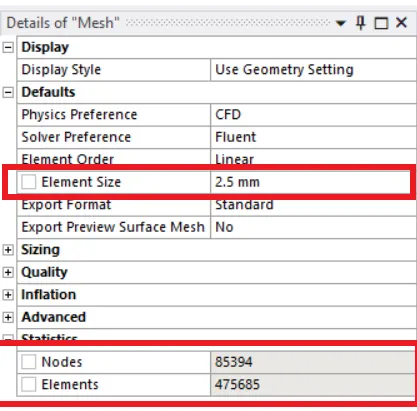
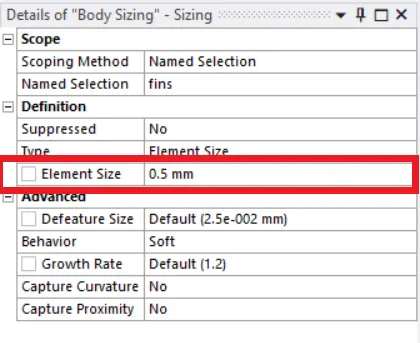
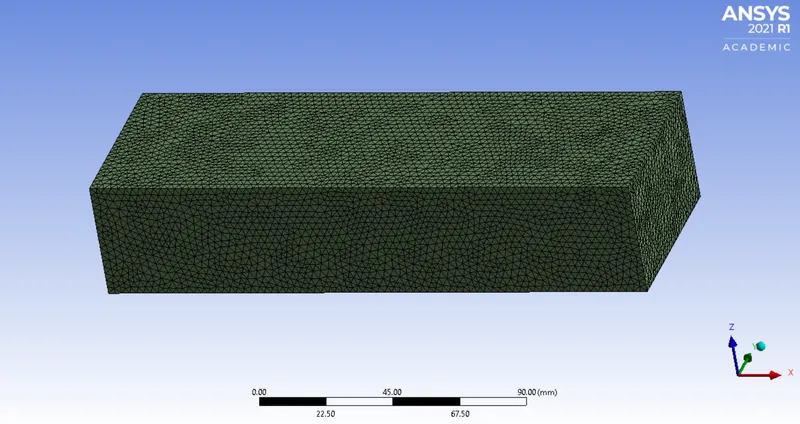
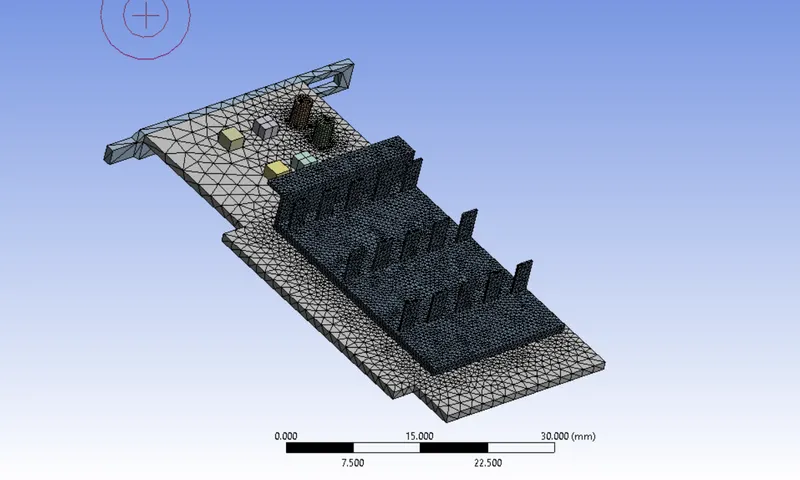
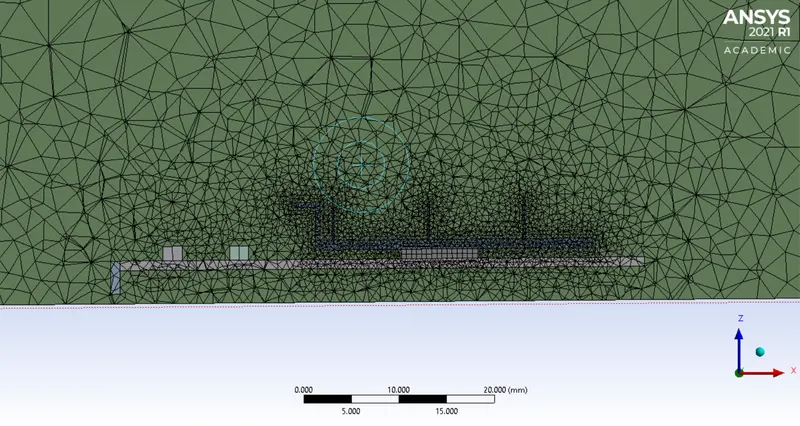
The mesh was checked for connectivity . The mesh module was closed .
SETUP
The set up module was opened . The simulation was run on pressure based, absolute and steady state .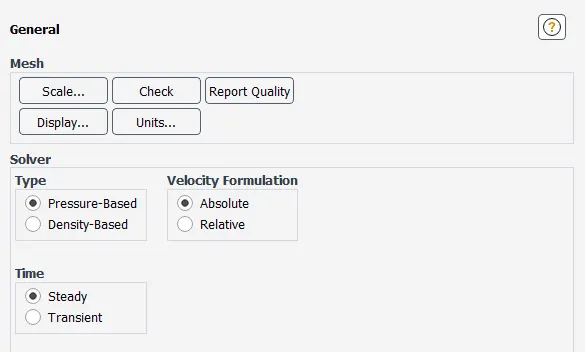
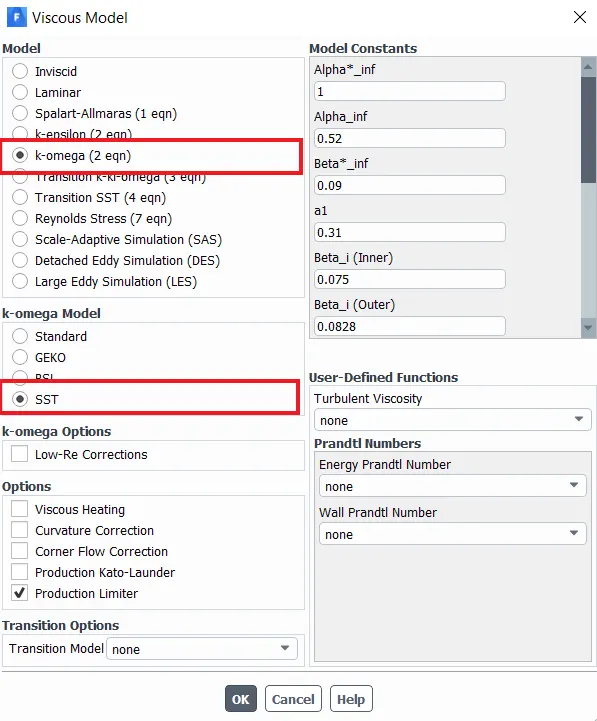
The energy equation was turned on and viscous model was k-omega SST .
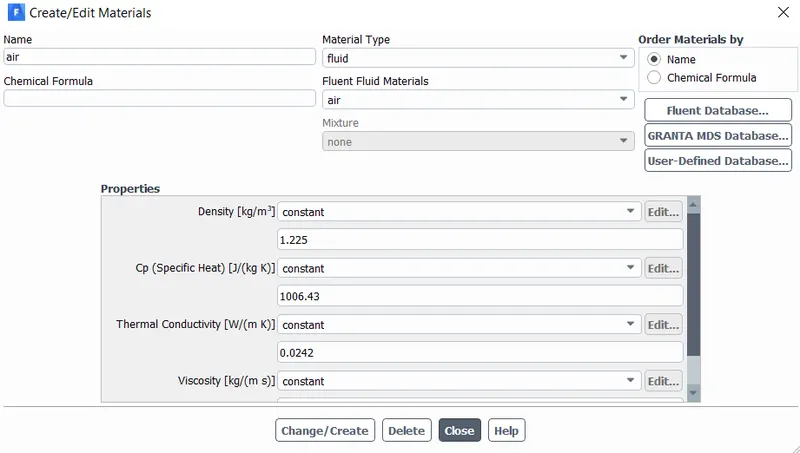
For the material section, 3 new material had to be created . For the enclosure, air was used.
Component Material
Base FR4
Fins Aluminium alloy
Processor Silicon
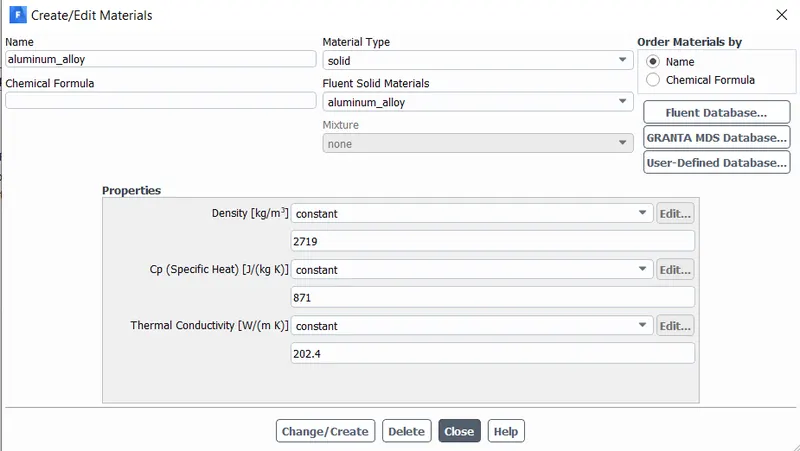
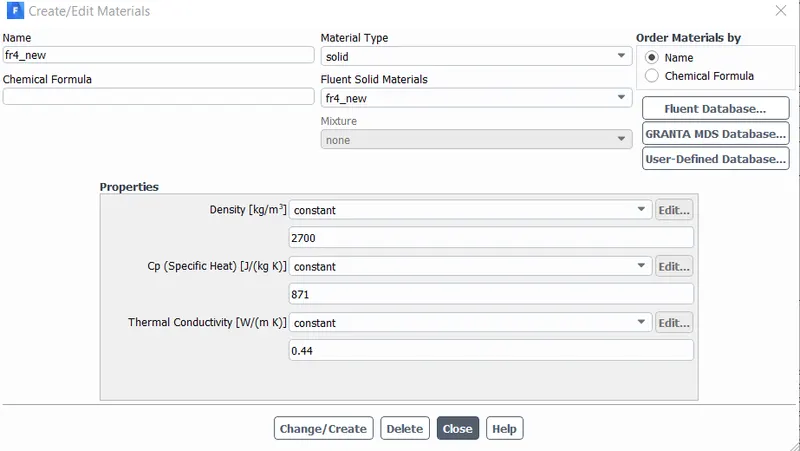
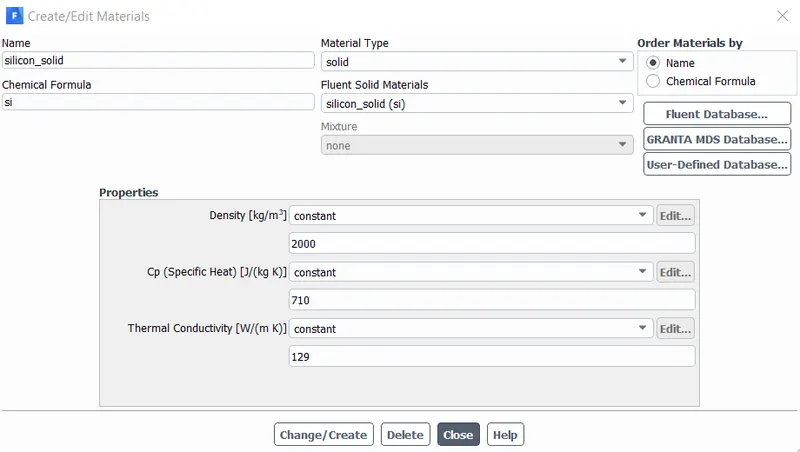
Cell zone was segregated between solid and fluid .
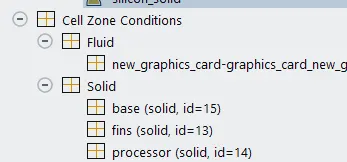
Materials were assigned to each cell zone respectively . Source term value was given for processor as it is the heat generating component .
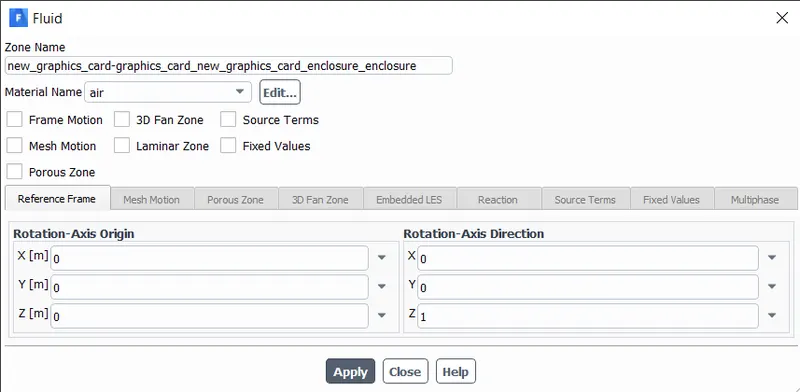
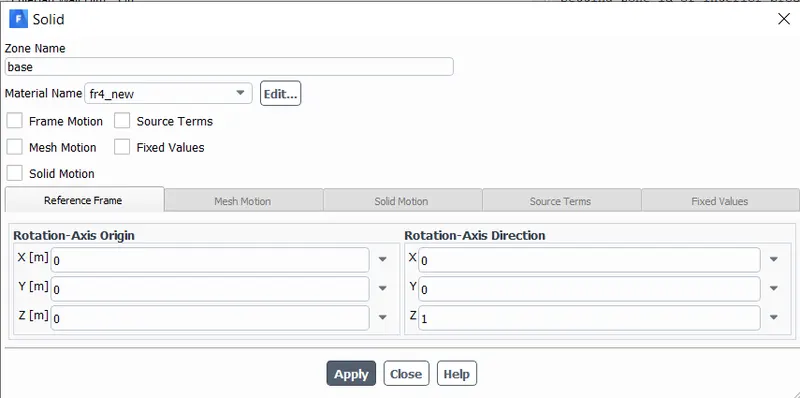
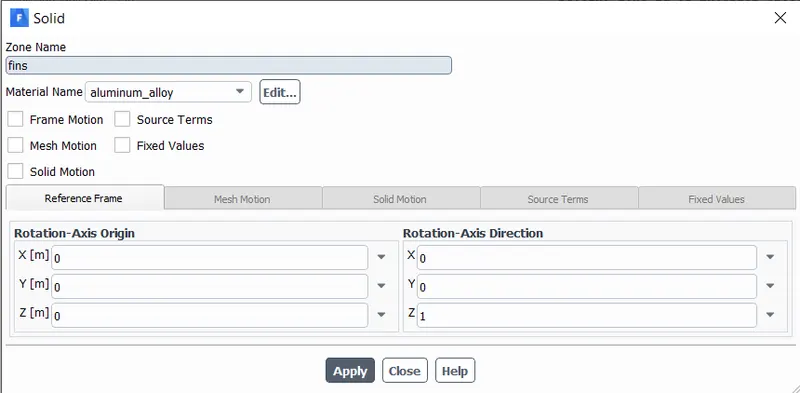
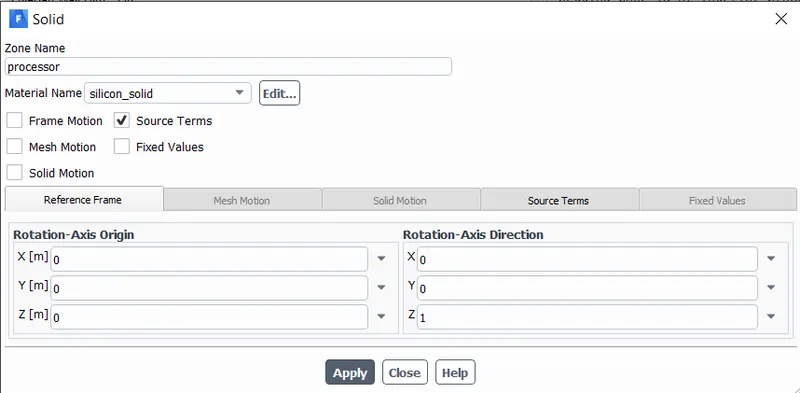
Source term value = 3/(64x10^-9)=46875000 W/m^3.
Boundary Conditions was entered as inlet velocity =1m/s
initial temperature as 300K .
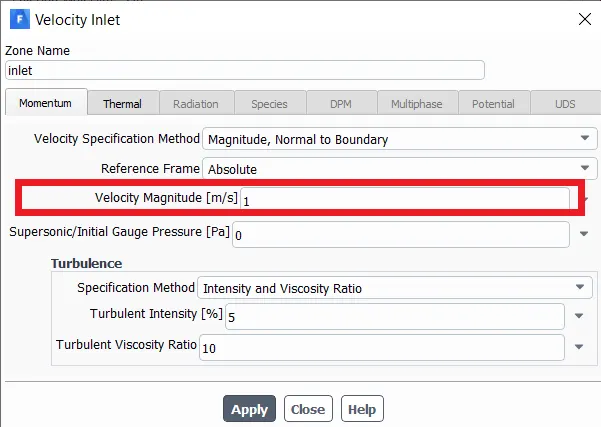
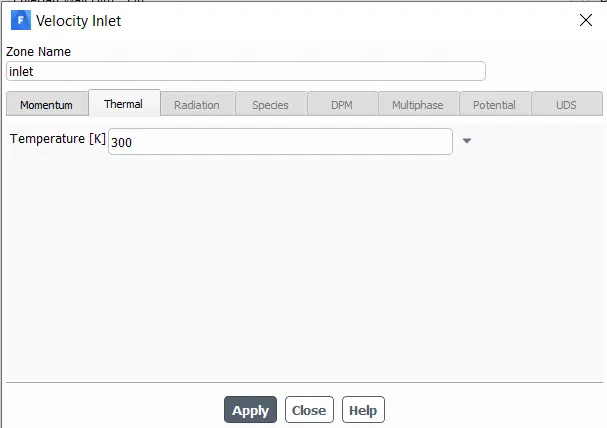
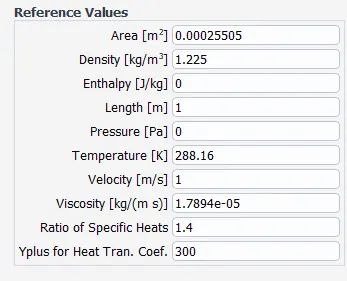
Reference values were entered .
Requests were made for Area Weighted average and Standard deviation of temperature at processor and fins .
The simulation was run for 500 iterations .
Output
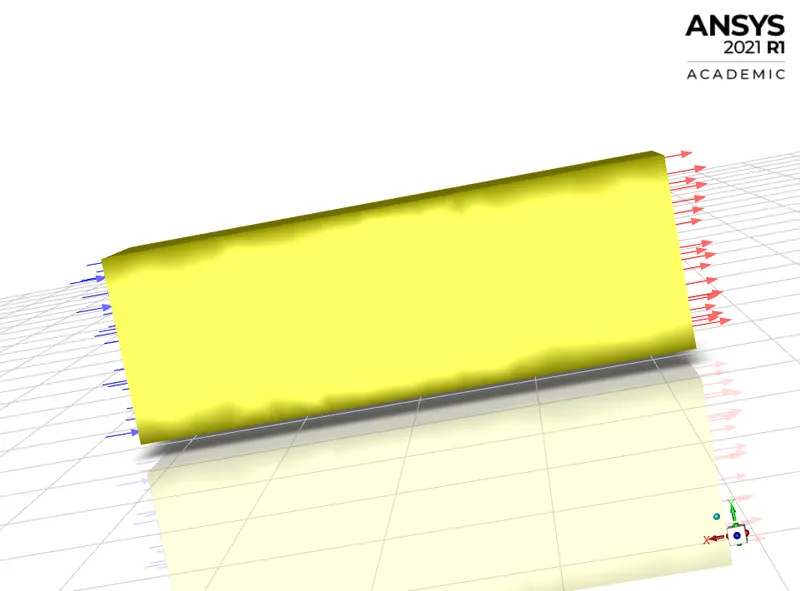
Case 1 :
Element size : 2.5 mm
Total elements : 475685
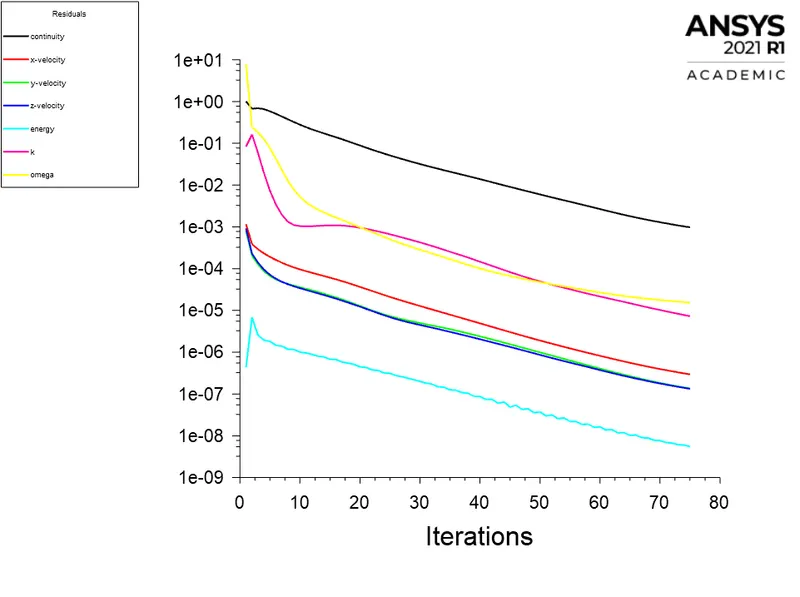
Scaled Residuals
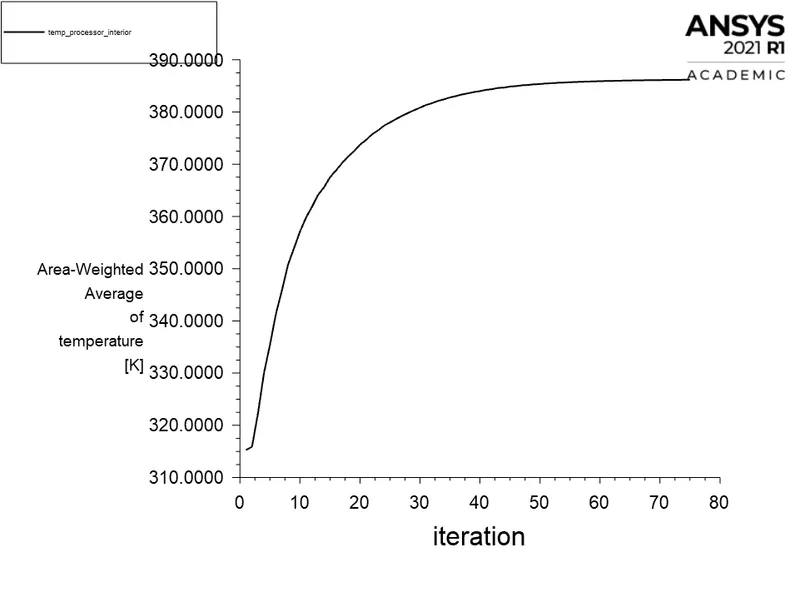
Area Weighted Average of Temperature
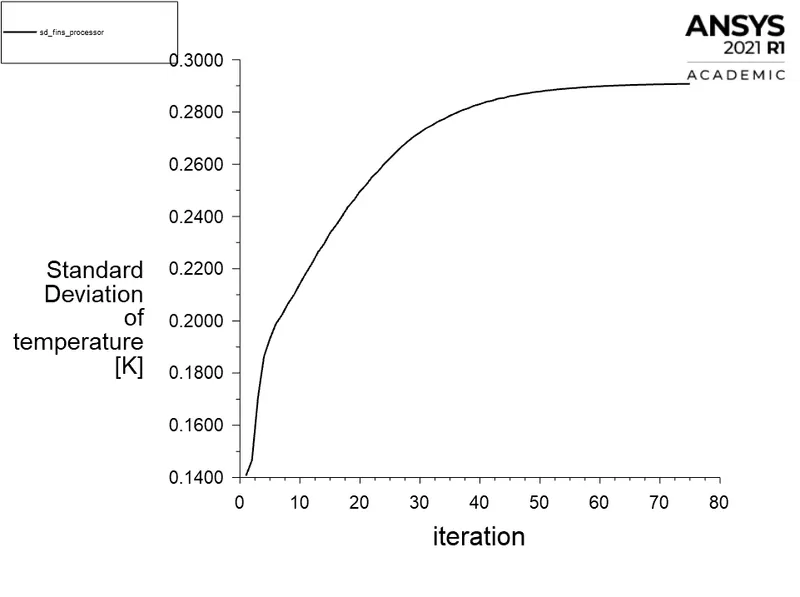
Standard deviation of temperature
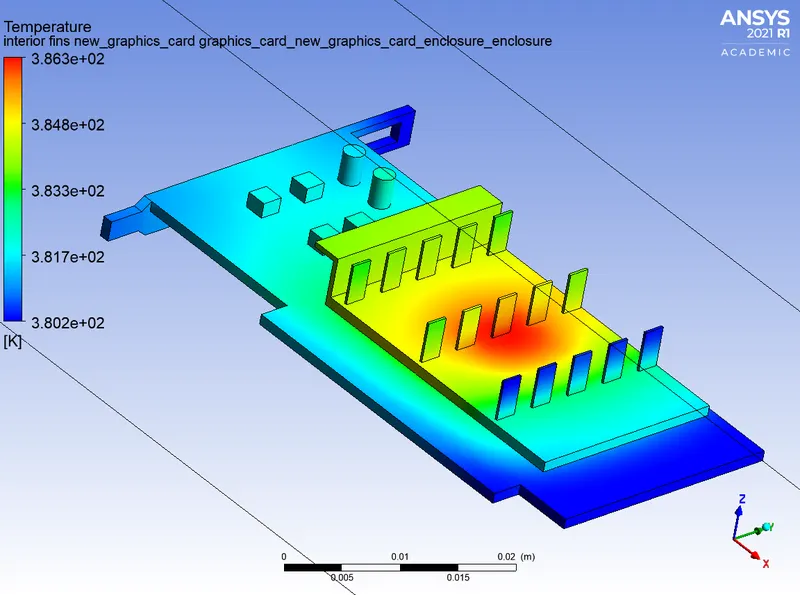
Temperature Contour of entire graphics card
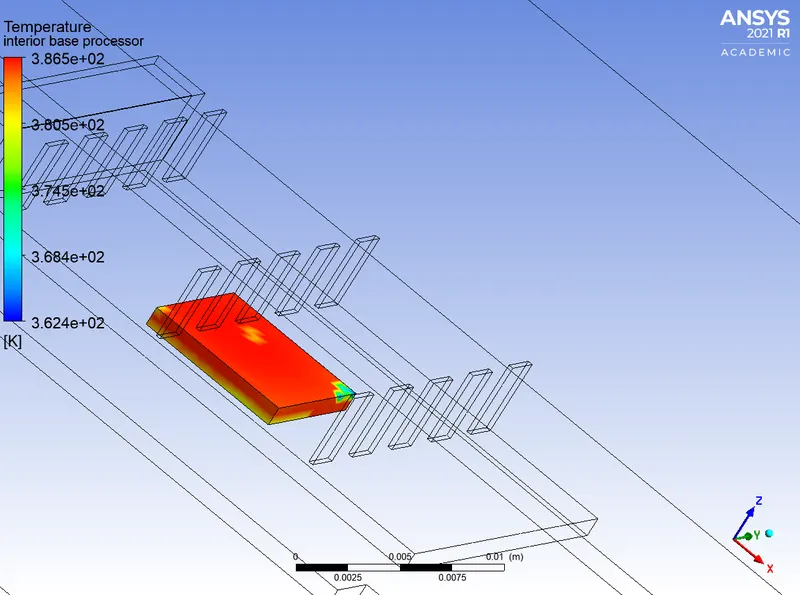
Temperature Contour of processor
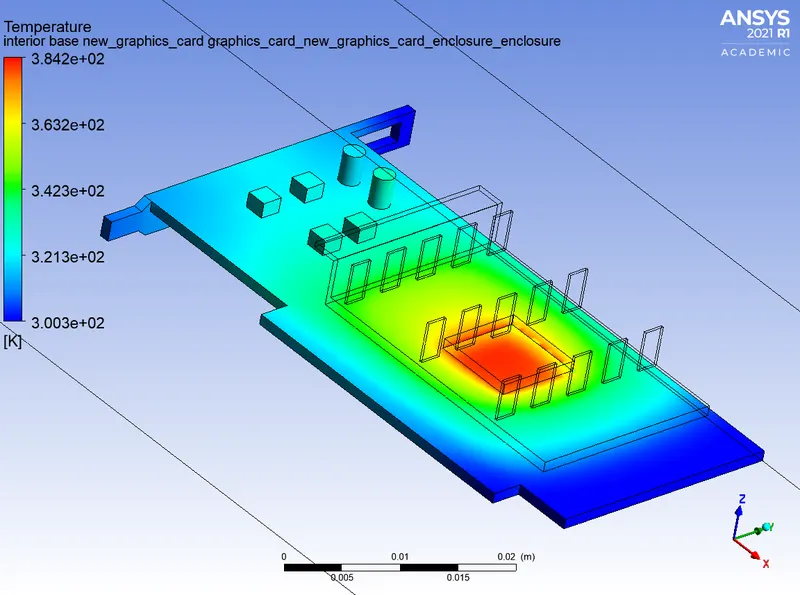
Temperature Contour of base
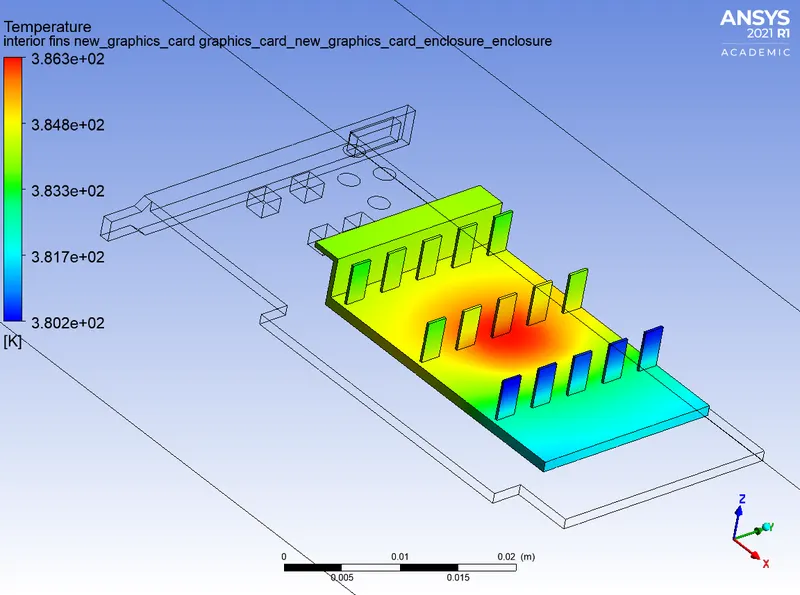
Temperature Contour of fins
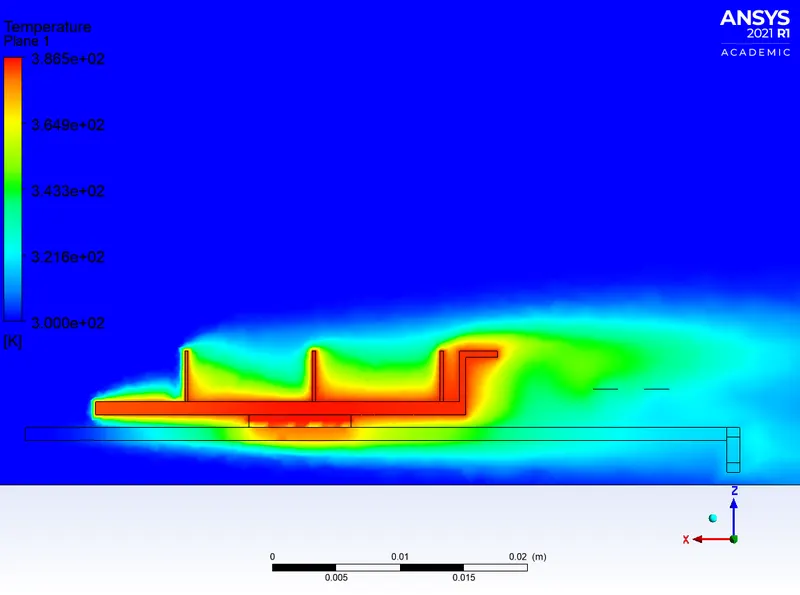
Temperature plane
Case 2
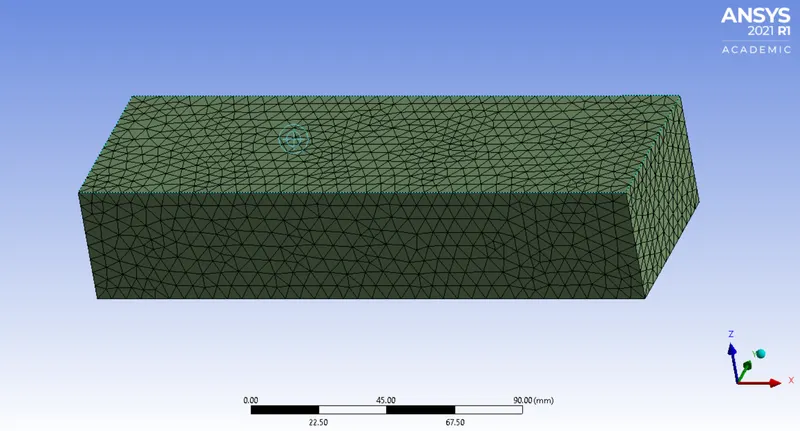
Element size : 5mm
Element count : 381016
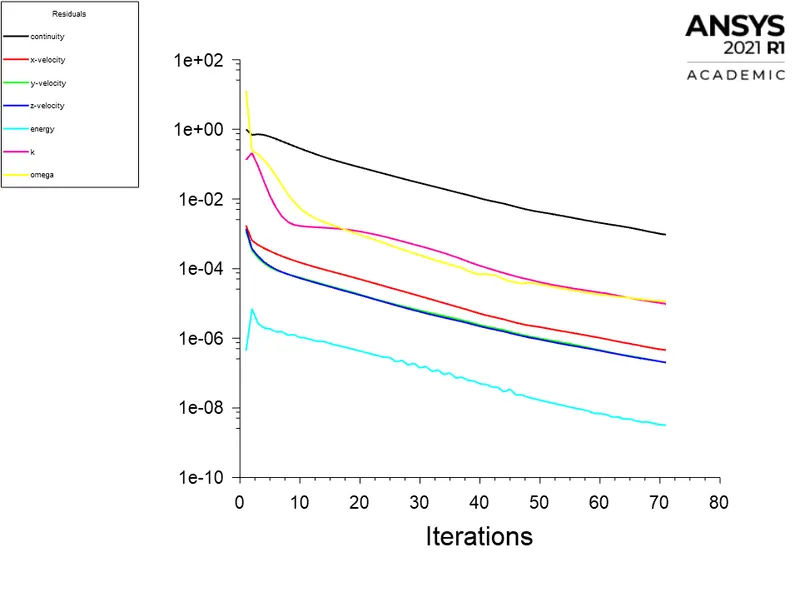
Scaled Residuals
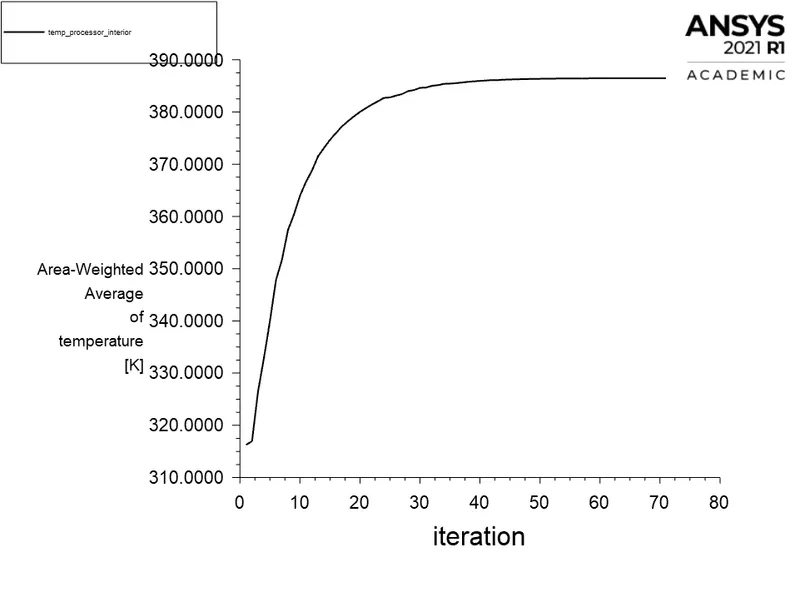
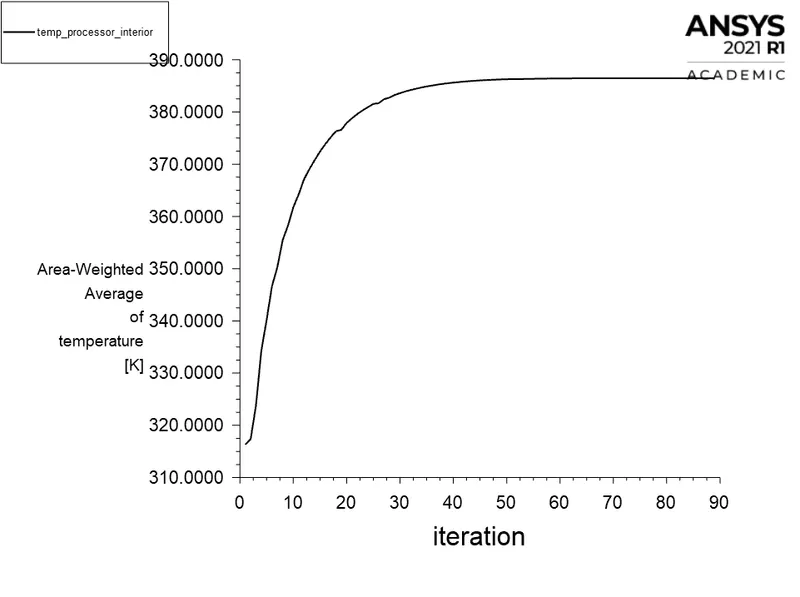
Area Wighted Average of Temperature
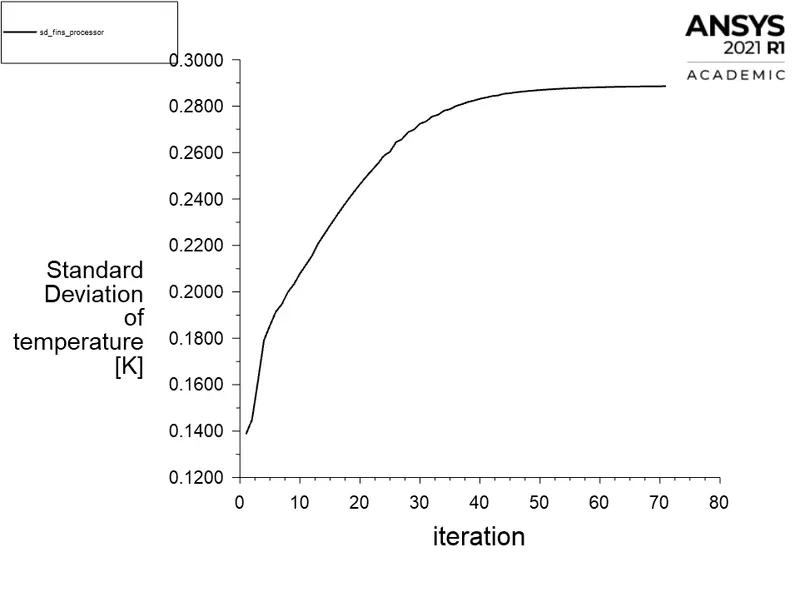
Standard Devaition of temperature
Temperature Contour of graphics card
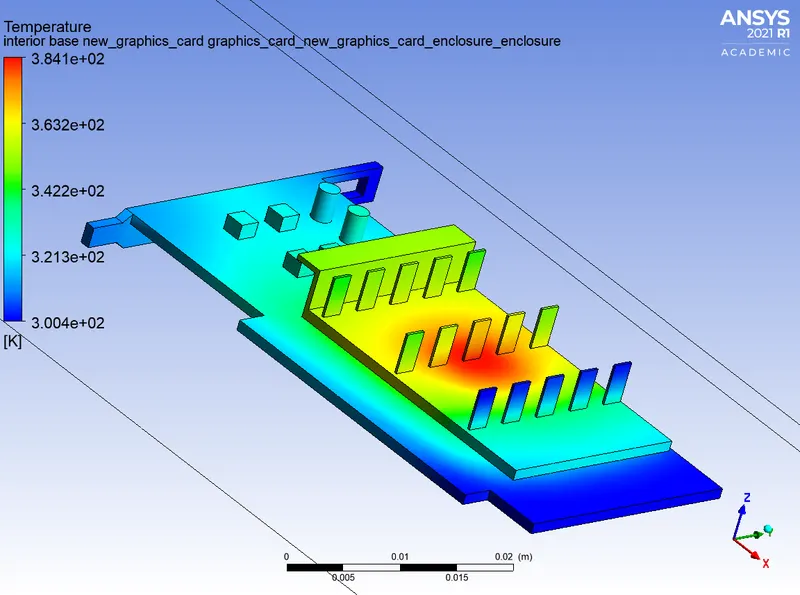
Temperature Contour of base
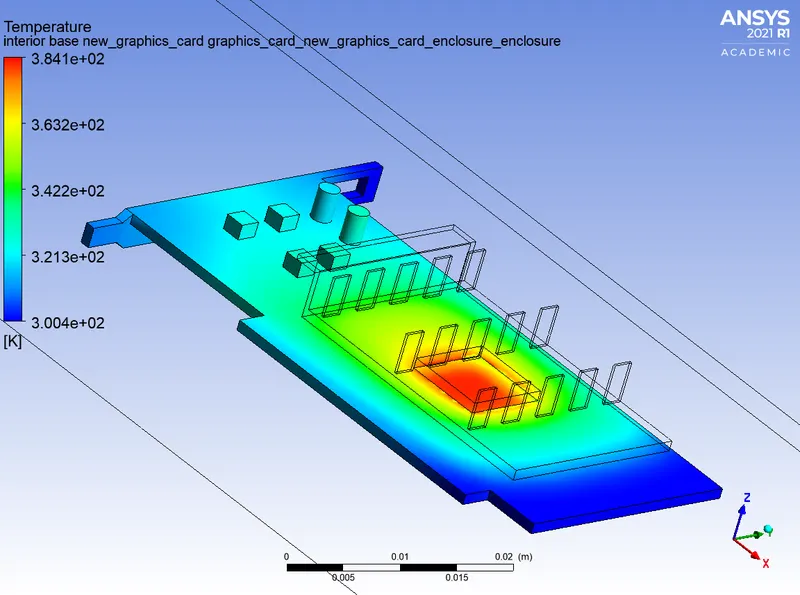
Temperature Contour of processor
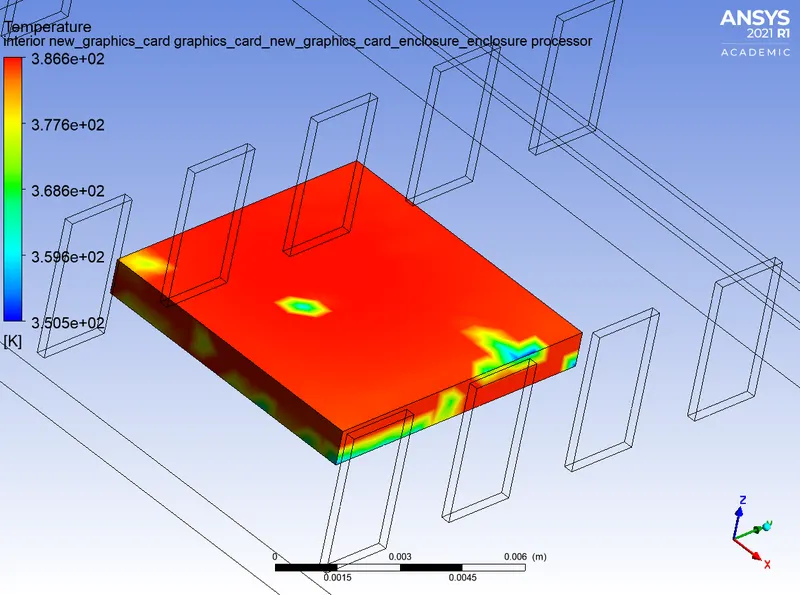
Temperature Contour of fins
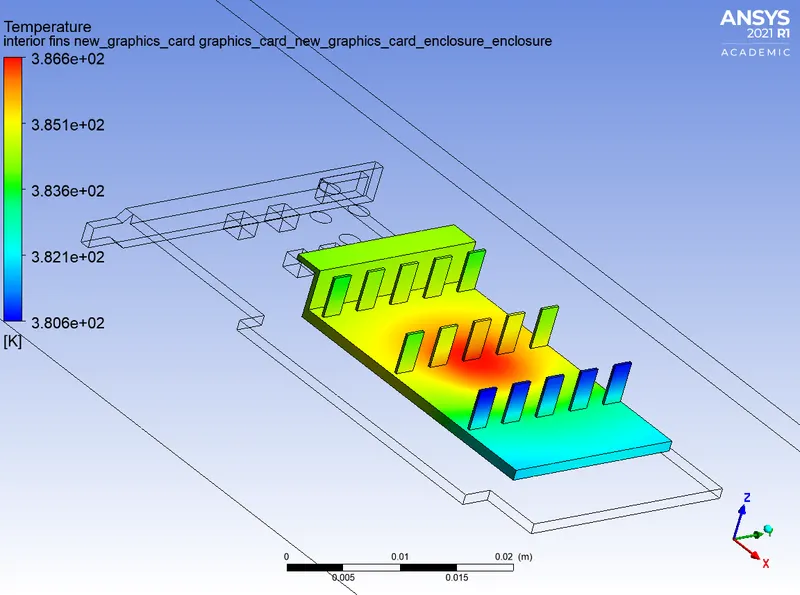
Temperature plane
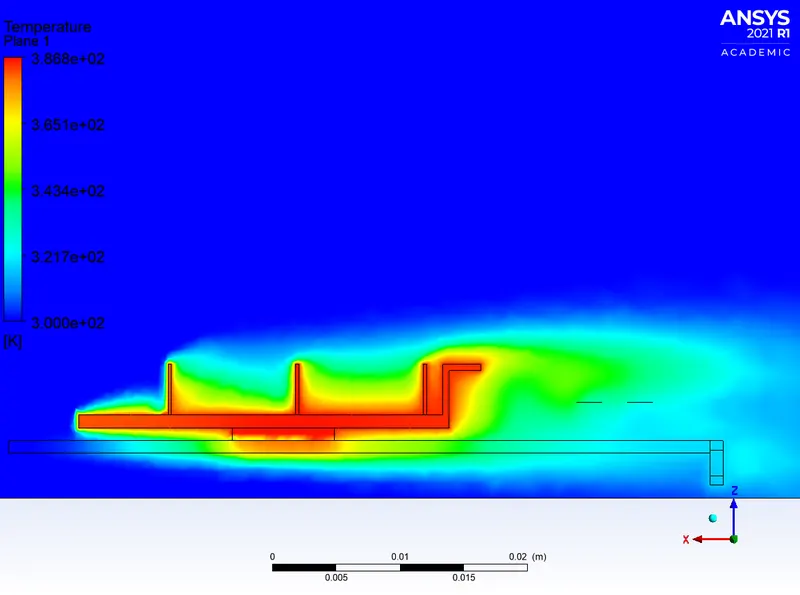
Case 3
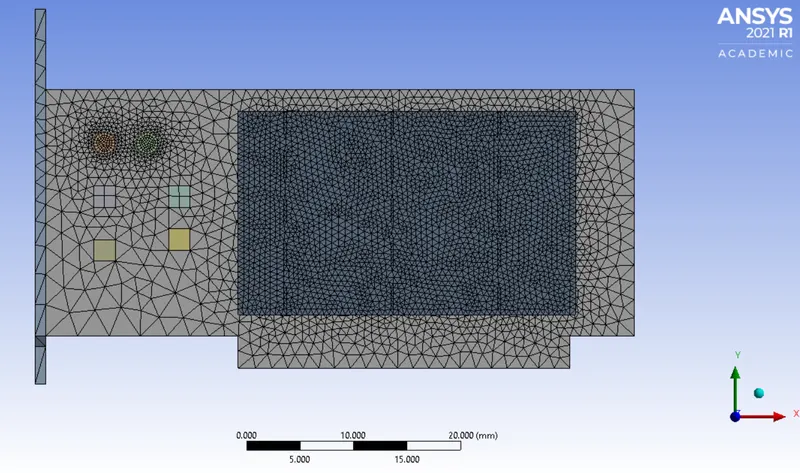
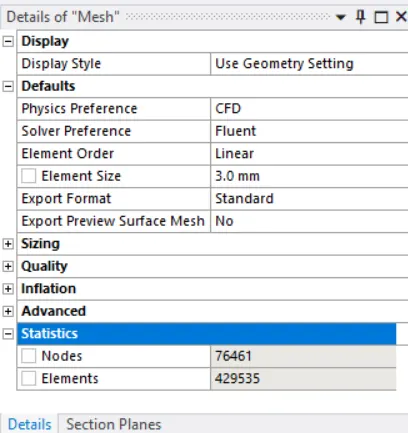
Element size : 3mm
Element count : 429535
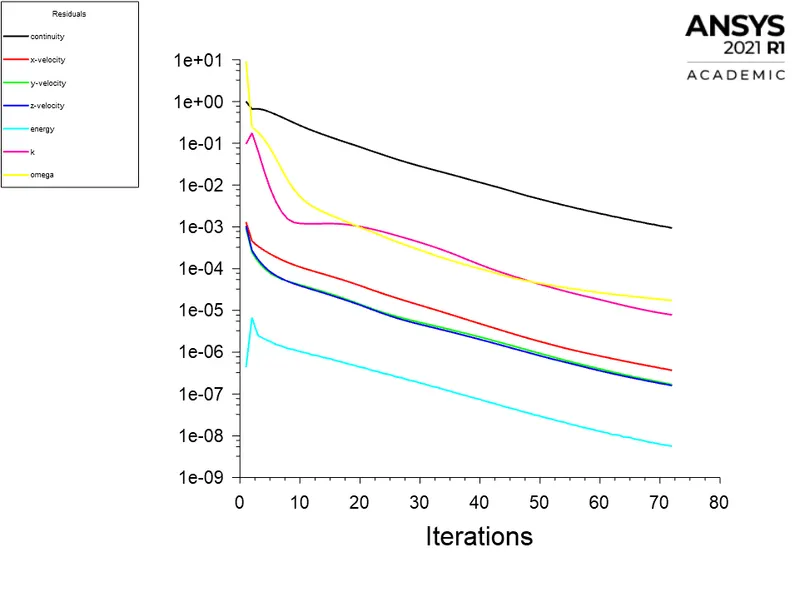
Scaled Residuals
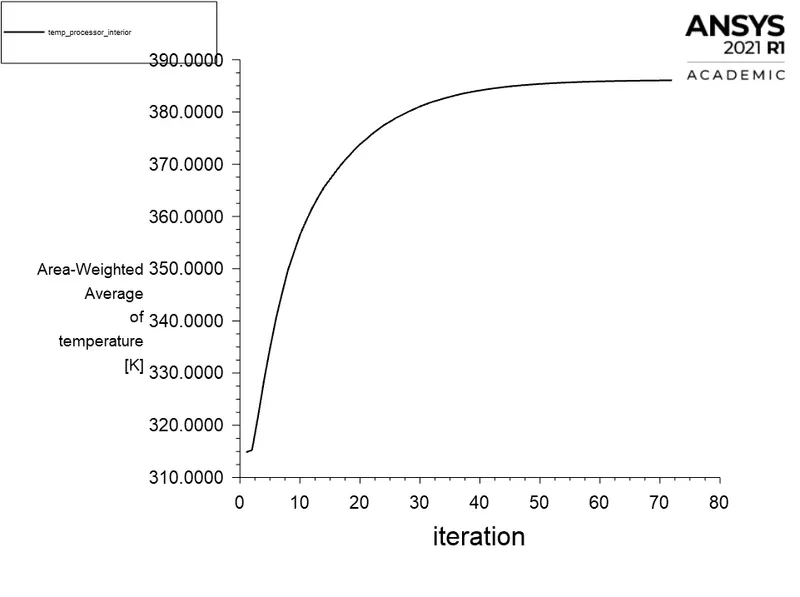
Area Weighted Average of temperature
Standard deviation of temperature
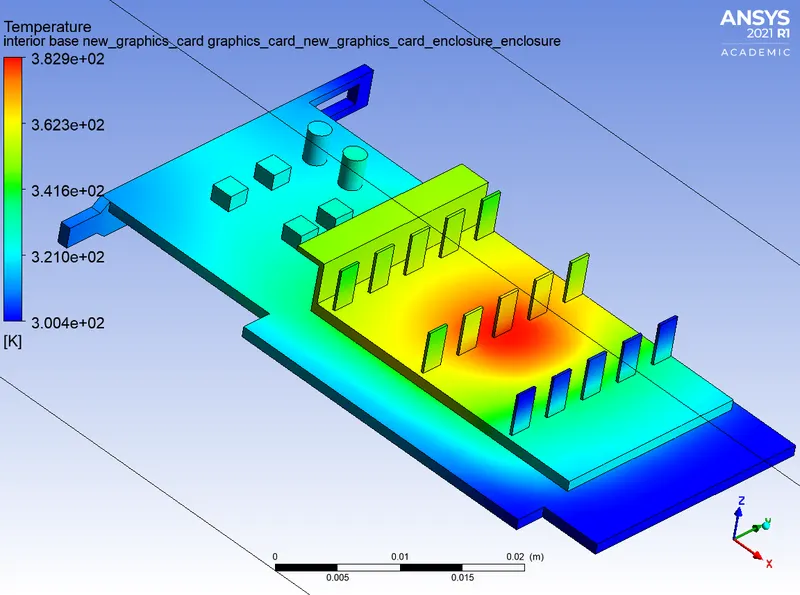
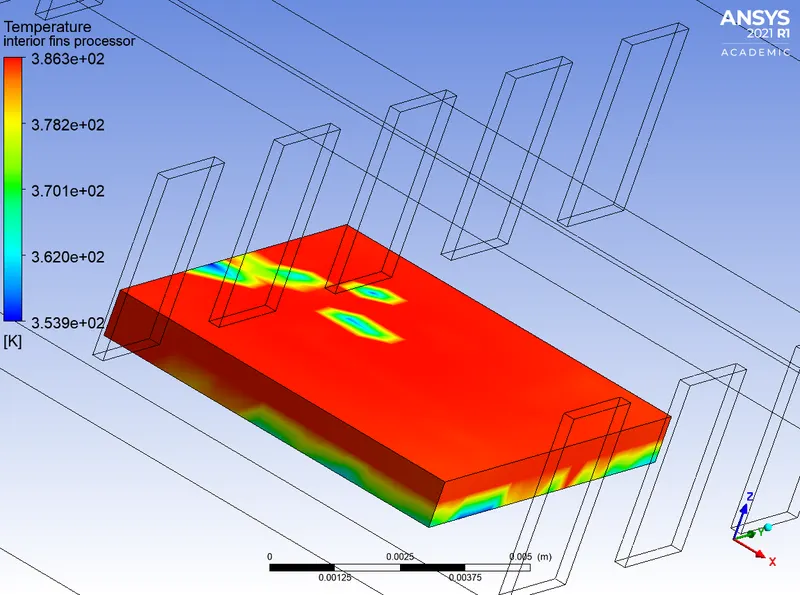
Temperature Contour of graphics card
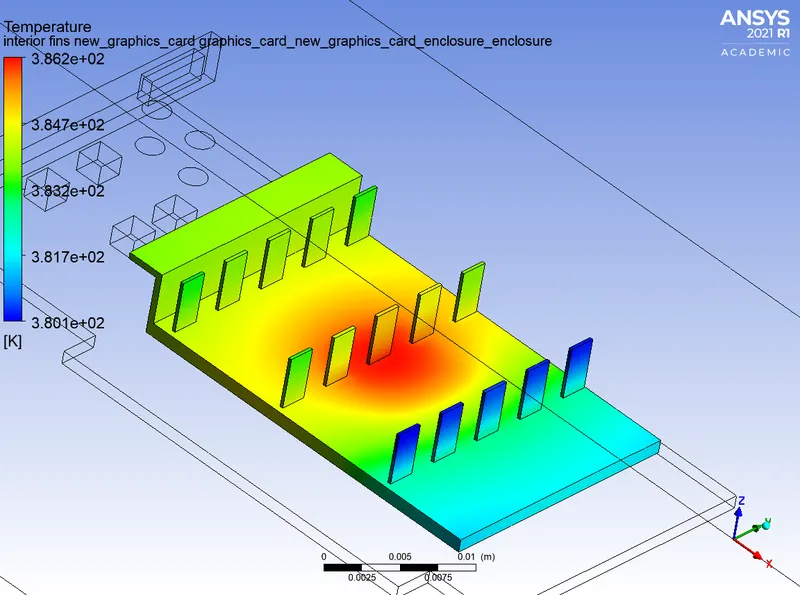
Temperature Contour of base
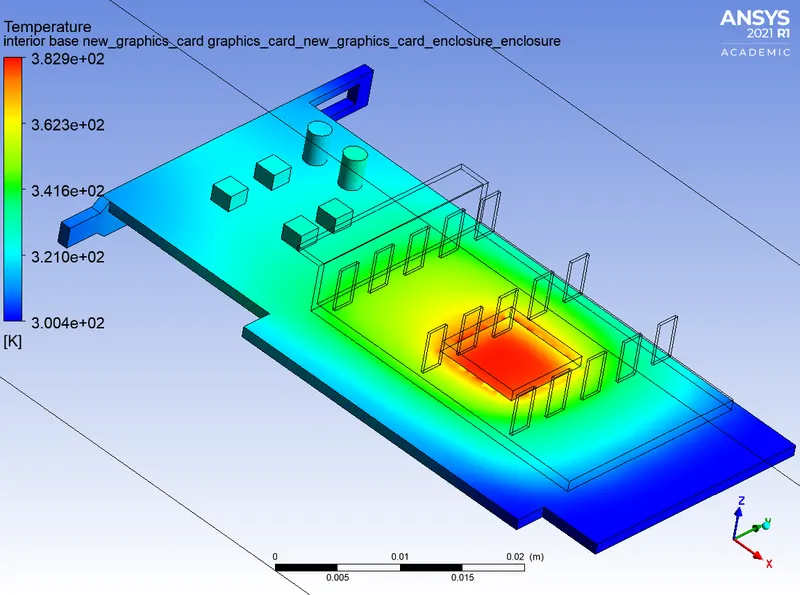
Temperature Contour of processor
Temperature Contour of fins
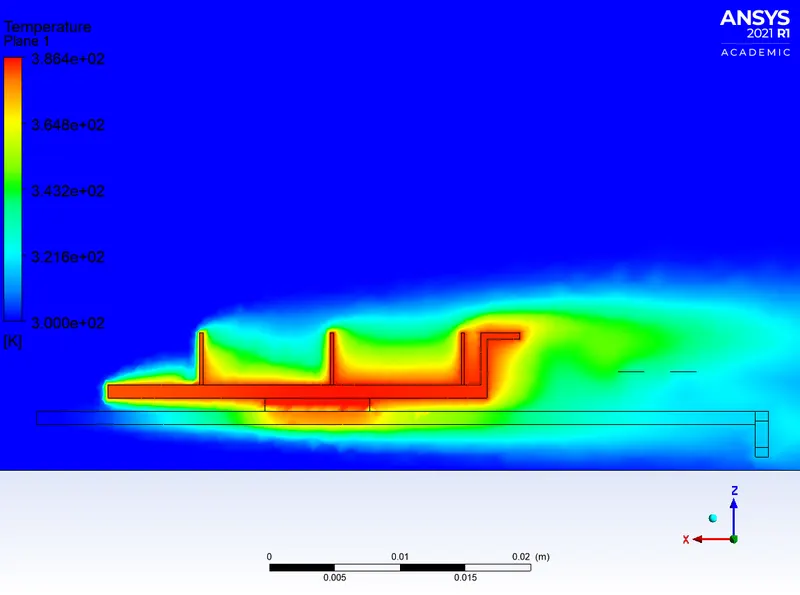
Temperature plane
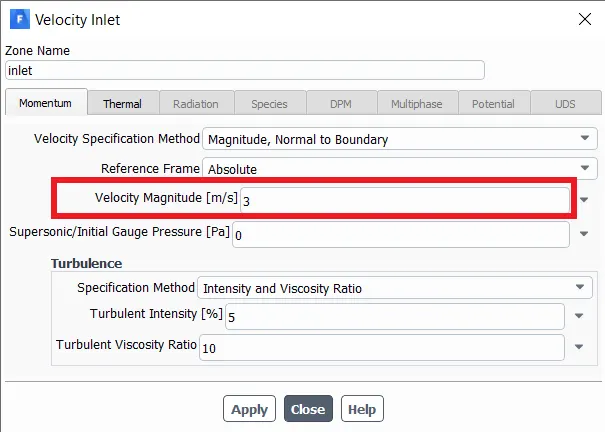
Case 4
Element size and count same as that of case 2
inlet velocity 3m/s .
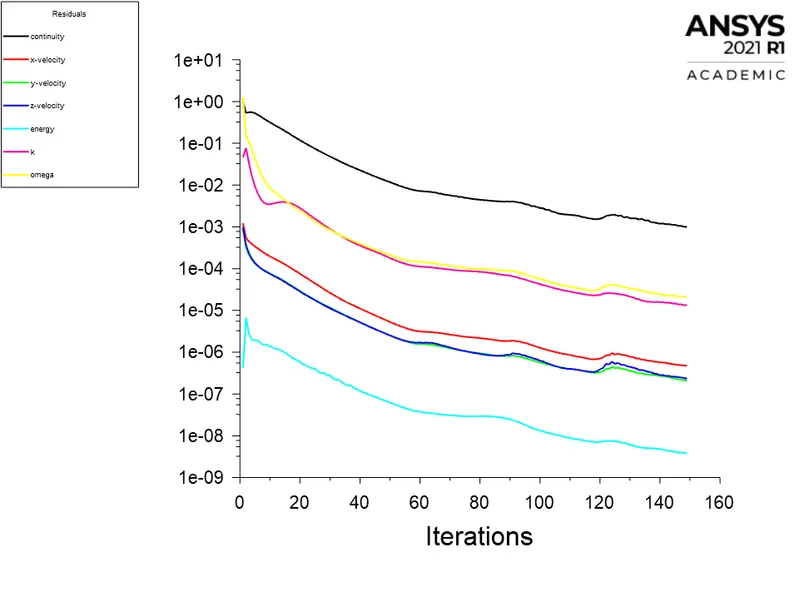
Scaled Residuals
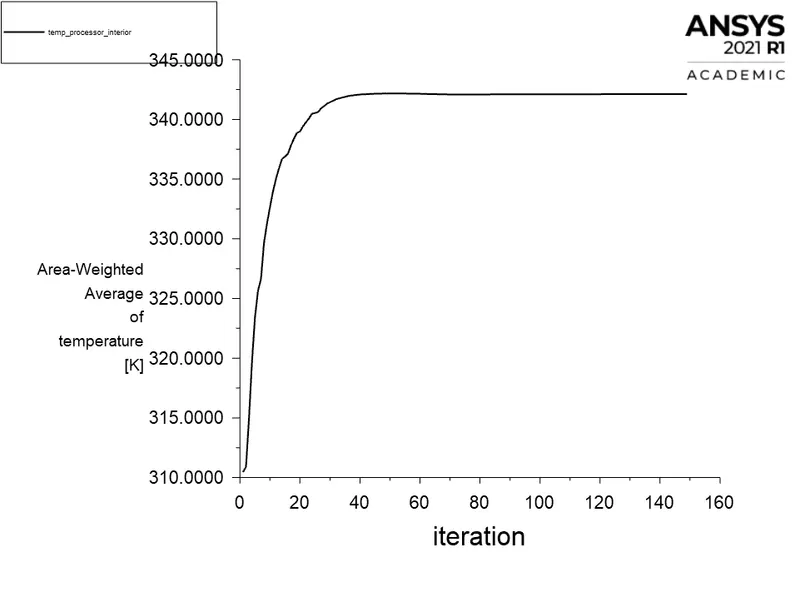
Area Weighted average of temperature
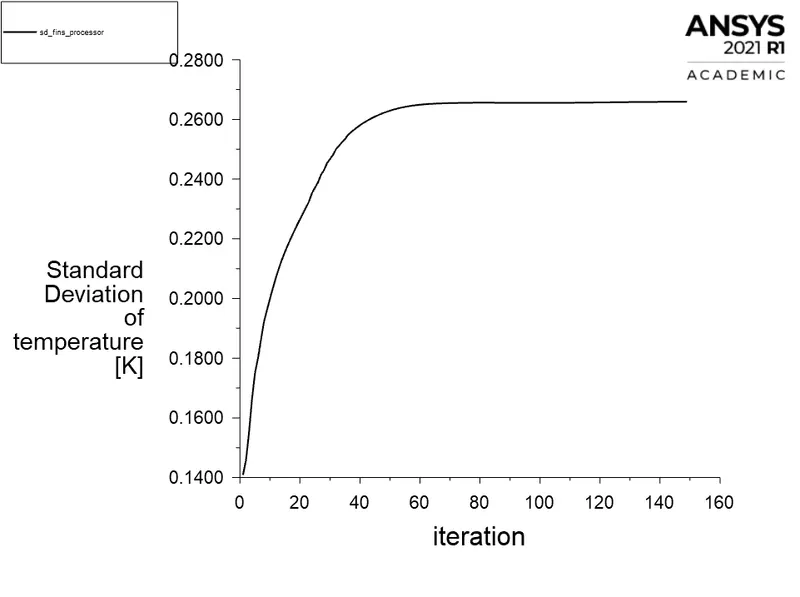
Standard Deviation of temperature
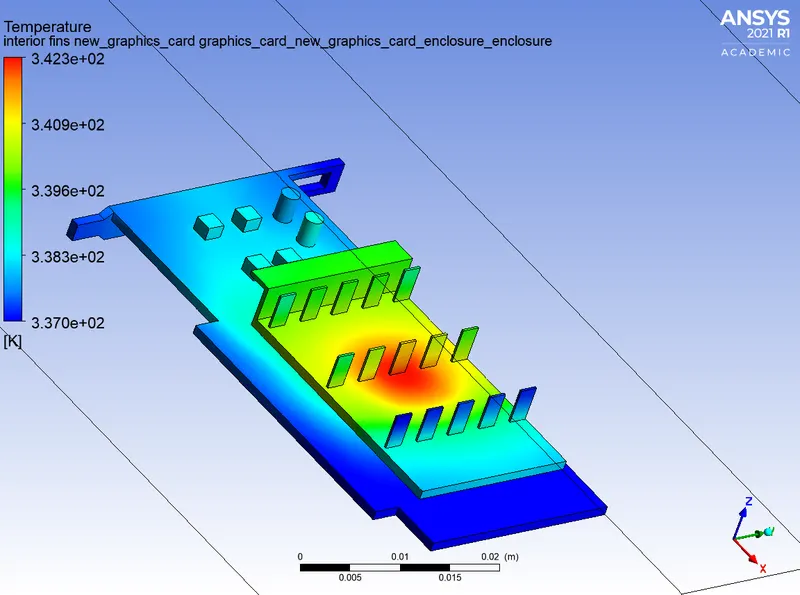
Temperature Contour of graphics card
Temperature Contour of base
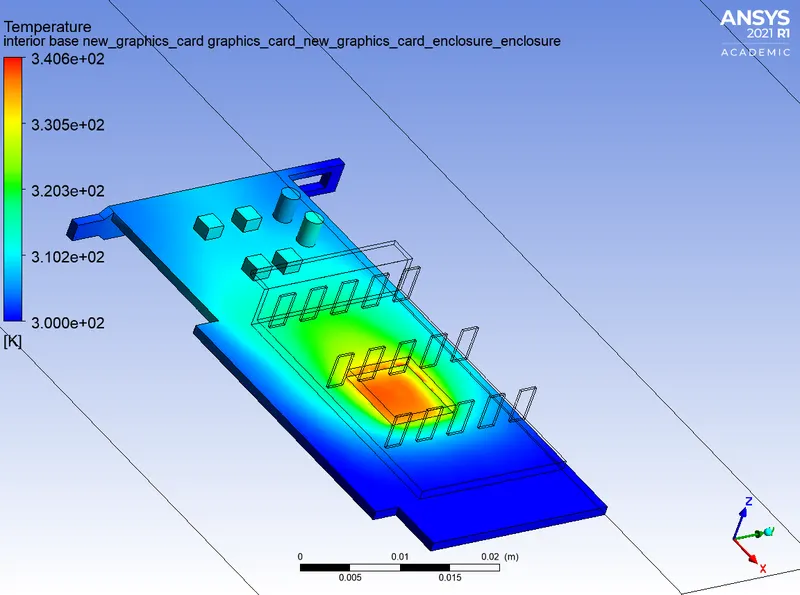
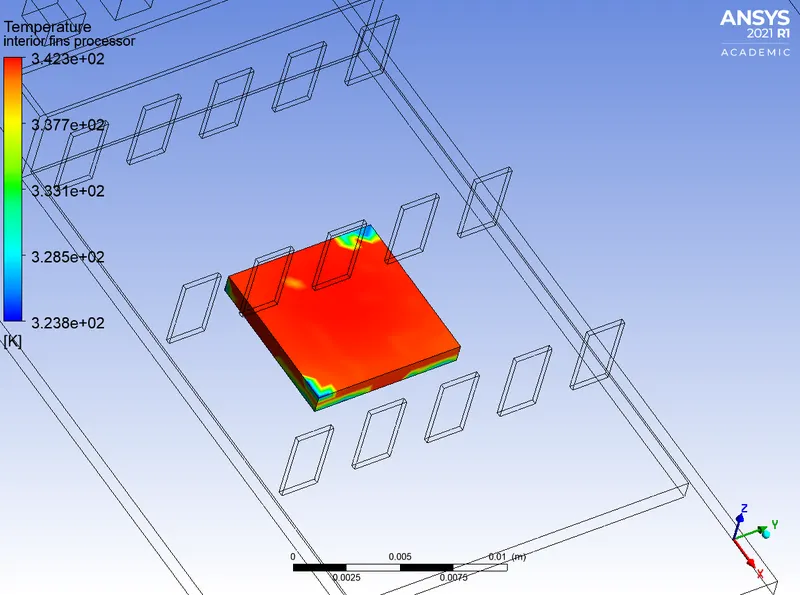
Temperature Contour of processor
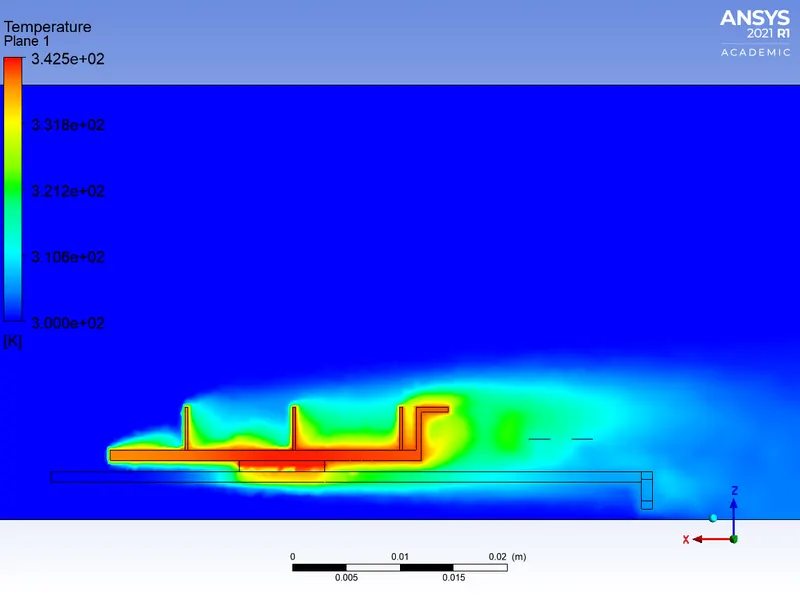
Temperature Plane
Case 5
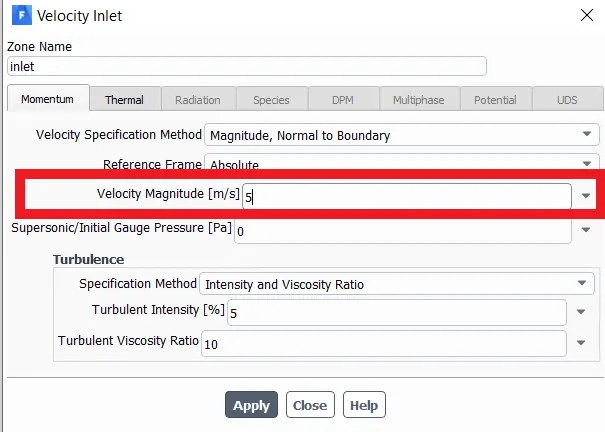
Element size and count same as that of case 2 .
Inlet velocity 5m/s
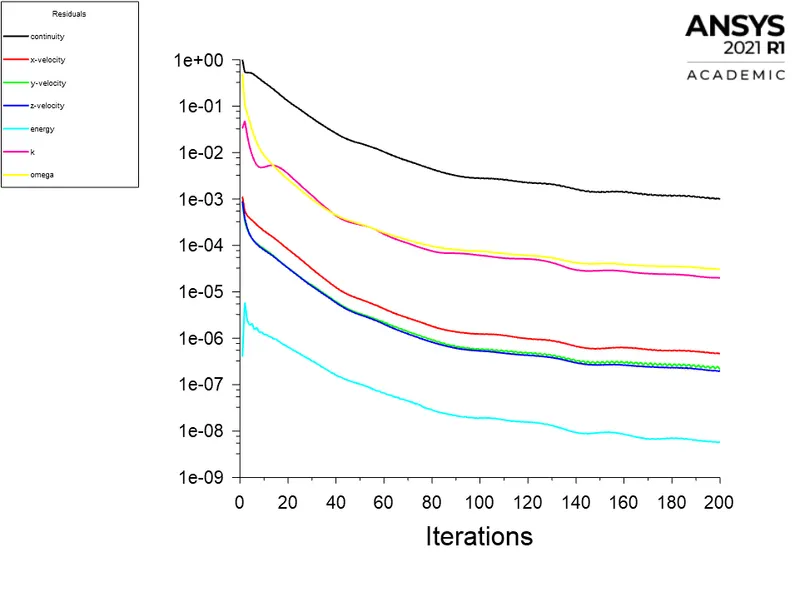
Scaled Residuals
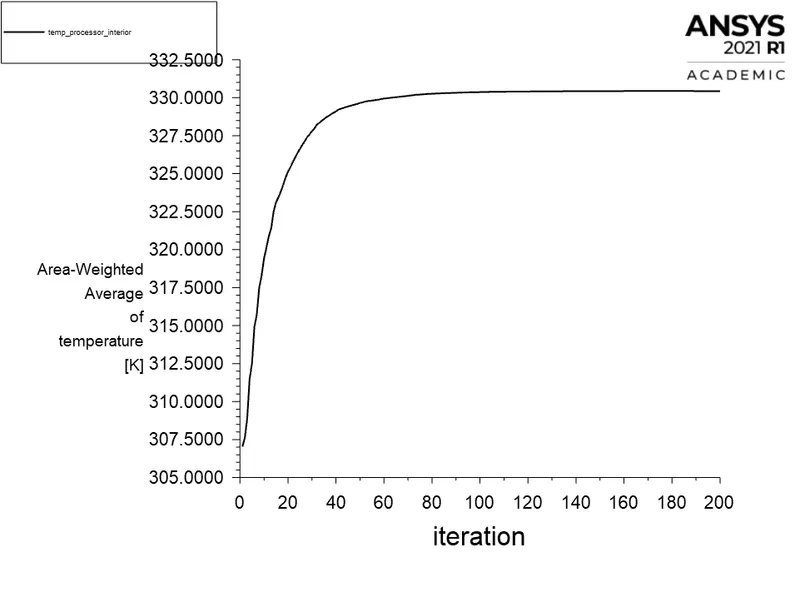
Area Weighted Average of temperature
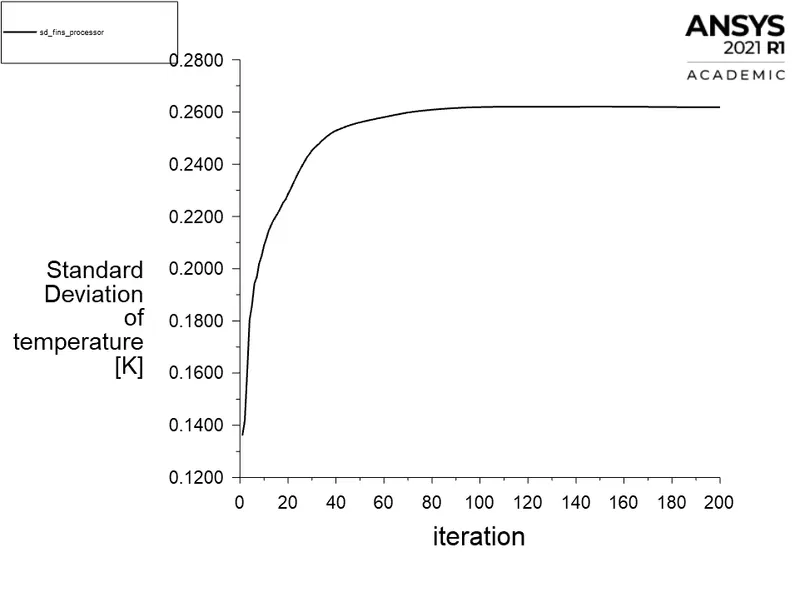
Standard deviation of temperature
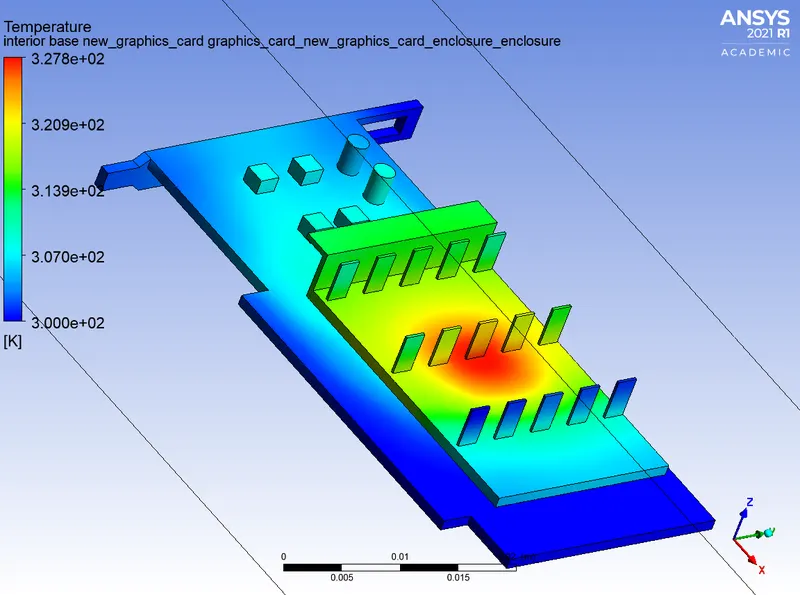
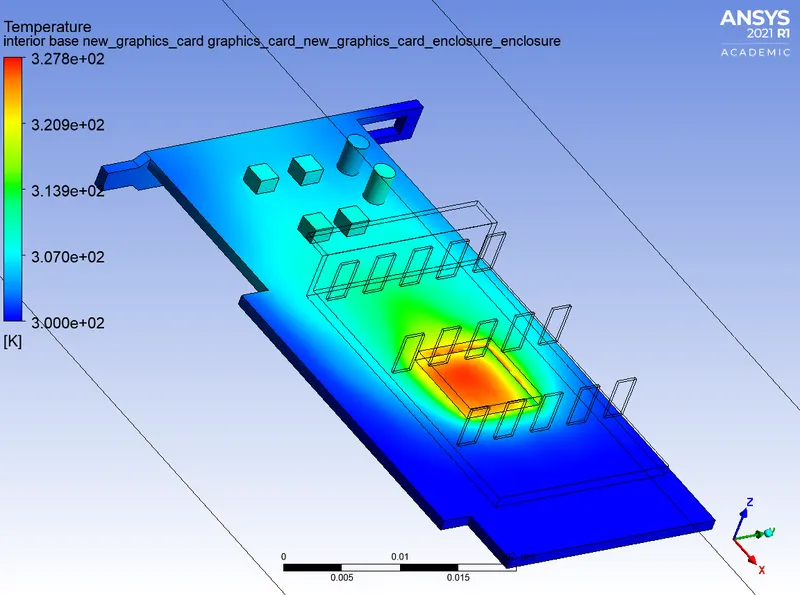
Temperature contour of graphics card
Temperature contour of base
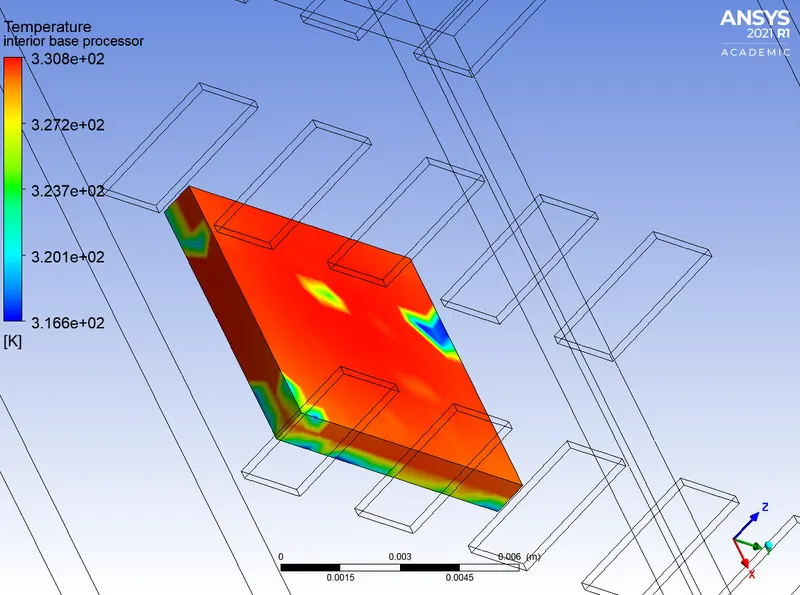
Temperature contour of processor
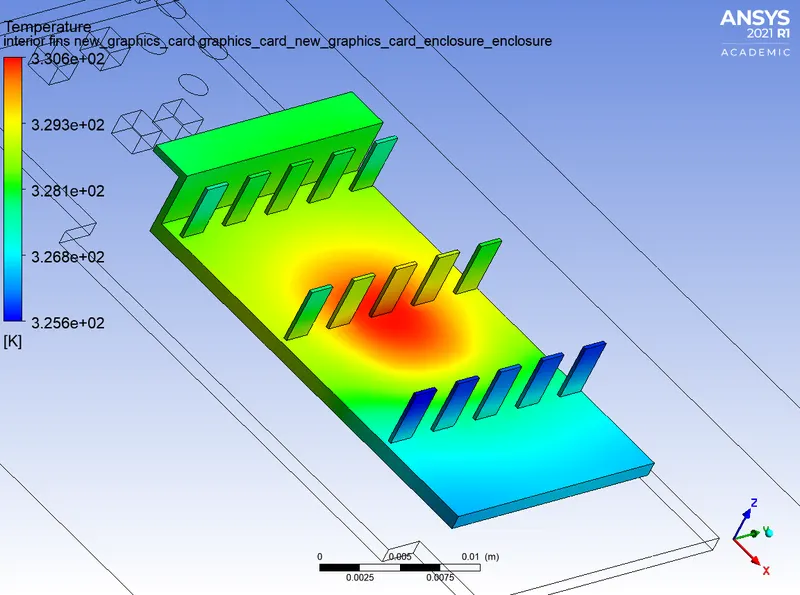
Temperature contour of fins
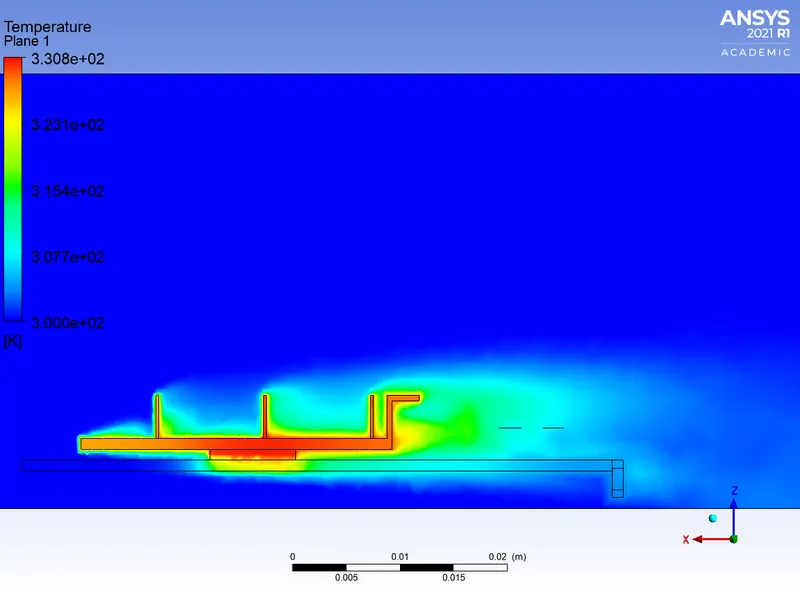
Temperature plane
Equation for calculating Heat Transfer Coefiicient
`Q = hAtriangleT`
Where Q = the heat generated = 3W
h = heat transfer co-efficient
A = Area of convective heat transfer = 4x(8mmx1mm)=32mm = 32x10^-6 m^2 .
`triangleT` = Difference in temperature of solid and surrounding area = `T_(max) - T_(ref)`
`T_(ref) = 300K`
| SL no | CASE | Element Length | Inlet Velocity | Maximum Temperature in K |
Heat Transfer Coefiicient in W/m^2K |
|
1 |
Case 2 | 5mm | 1 m/s | 386.45 | 1084.44 |
| 2 | Case 4 | 5mm | 3 m/s | 342.12 | 2225.78 |
| 3 | Case 5 | 5mm | 5 m/s | 330.43 | 3080.84 |
| 4 | Case 1 | 2.5mm | 1m/s | 386.12 | 1088.59 |
| 5 | Case 3 | 3mm | 1m/s | 386.04 | 1089.61 |
Inference :
1) We can observe that , as inlet velocity increases, heat transfer co-efficient increases and processor temperature decreases as more heat is carried away by the flow of air .
2) Maximum processor temperature was attained for the most refined mesh configuration .The value was 386.45 K . However the change is mesh size does not bring about significant change in temperature , hence we can conclude mesh independence.
3) We can conclude that the solution has converged from plots above . In all the cases a steady solution(temperature) is obtained.
4) The potential hot spot is the processor as it is the heat generating component. We can observe from the temperature planes that the fins are getting heated up as well which is a good indication of heat sink working .