Week 6 - CHT Analysis on a Graphics card
Aim: To perform a steady state conjugate heat transfer analysis on a model of Graphics Card.
Introduction:
The term conjugate heat transfer (CHT) describes the process which involves variation of temperature within solids and fluids, due to thermal interaction between the solids and fluids, the exchange of thermal energy between the two physical bodies is called study of heat transfer, the rate of transferred heat is directly proportional to the temperature difference between the bodies.
Conjugate heat transfer corresponds with the combination of heat transfer in solid and heat transfer in fluids, in solids, conduction often dominates whereas in fluids, convection usually dominates. efficiently combining heat transfer in fluids and solids is key to designing effective coolers, heaters or heat exchanger. forced convection is the most common way to achieve high heat transfer rate. in some applications the performances are further improved by combining convection with phase change.
Heat transfer in solids and heat transfer in fluids are combined in the majority of applications. this is because fluids flow around solids or between solid walls and because solids are usually immersed in a fluid.
Graphic card
A graphics card (also called a video card, display card, graphics adapter, VGA card/VGA, video adapter, display adapter, or mistakenly GPU) is an expansion card which generates a feed of output images to a display device, such as a computer monitor. Graphics cards are sometimes called discrete or dedicated graphics cards to emphasize their distinction to integrated graphics. A graphics processing unit that performs the necessary computations is the main component of a graphics card, but the acronym "GPU" is sometimes also used to refer to the graphics card as a whole.Usually, a graphics card comes in the form of a printed circuit board (expansion board) which are to be inserted into an expansion slot.[5] Others may have dedicated enclosures, and they are connected to the computer via a docking station or a cable. These are known as external GPUs (eGPUs). Graphics cards are often preferred over integrated graphics for increased performance.
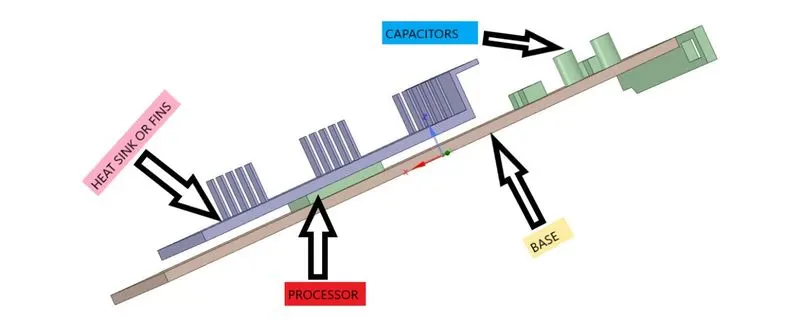
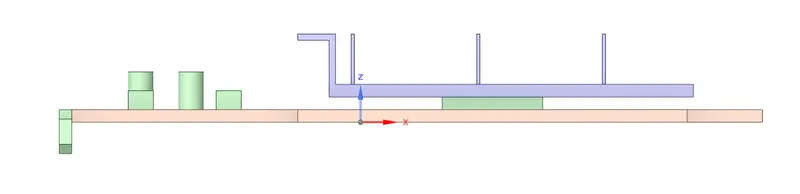
Materials:
In this study conjugate heat transfer analysis is performed, so different materials are assigned to solid and fluid domain, which are given below in table.
|
Components |
Materials |
Density |
Specific heat |
Thermal conductivity |
|
Base / Board |
silicon |
55 |
1210 |
0.027 |
|
Heat sink/fins |
Aluminum |
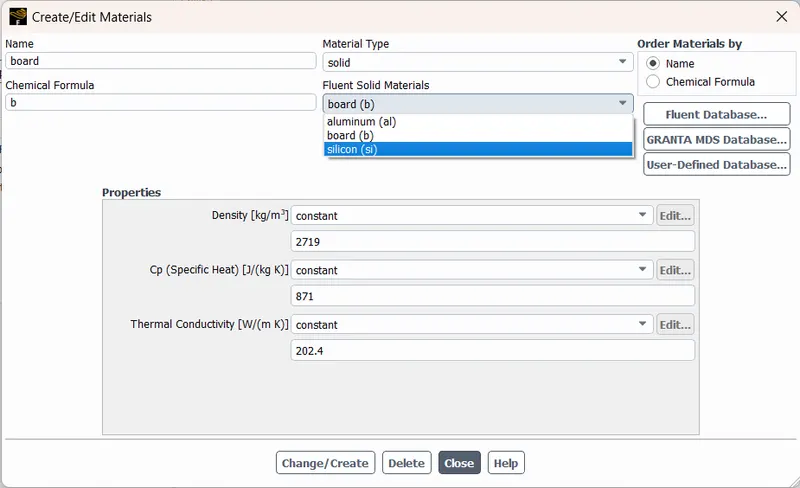
2719 |
871 |
202.4 |
|
Processor |
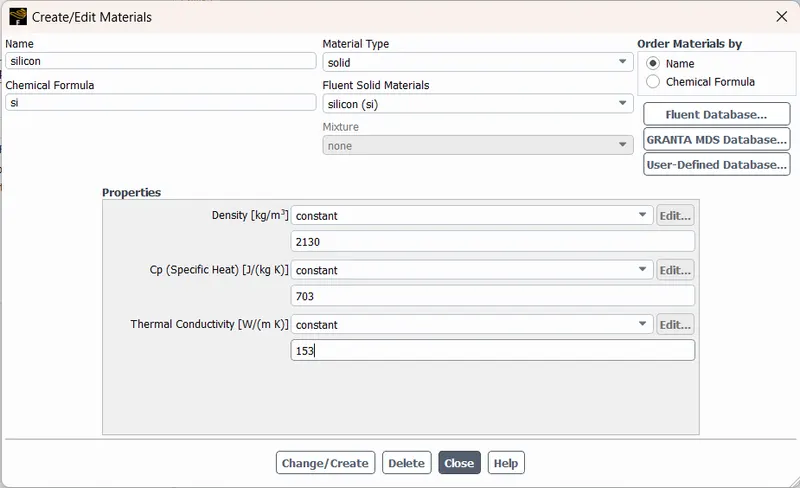
Silicon |
2330 |
703 |
153 |
|
Enclosure(heat transfer fluid) |
Air |
1.225 |
1006.43 |
0.0242 |
Geometry
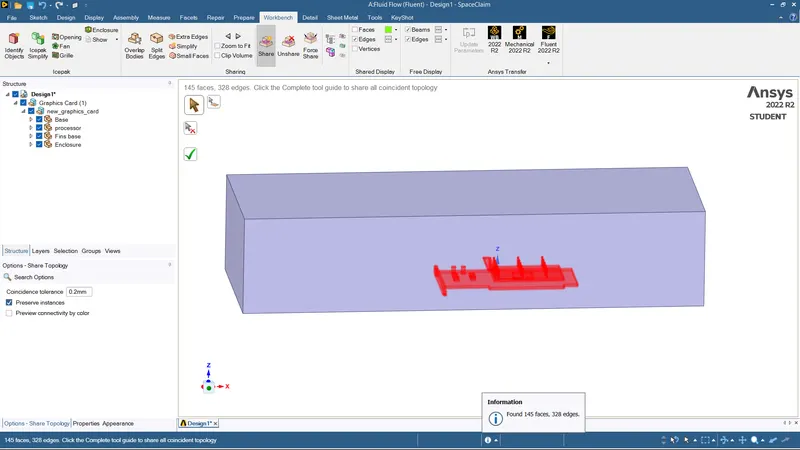
create shared topology, to avoid overlapping of mesh pattern at different regions of domain.
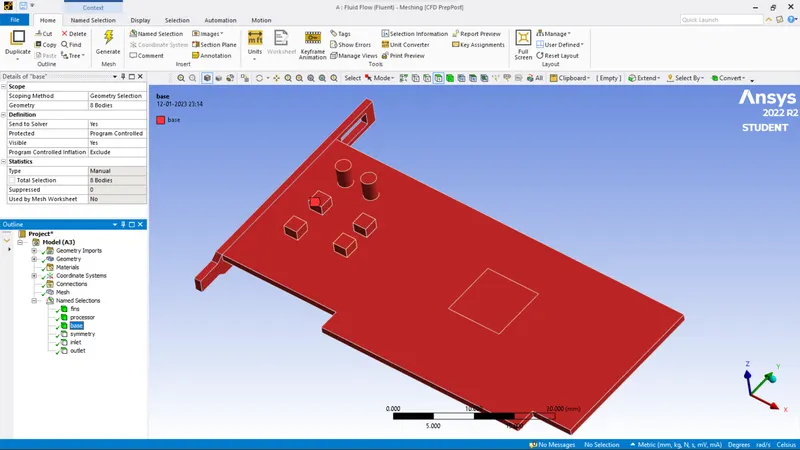
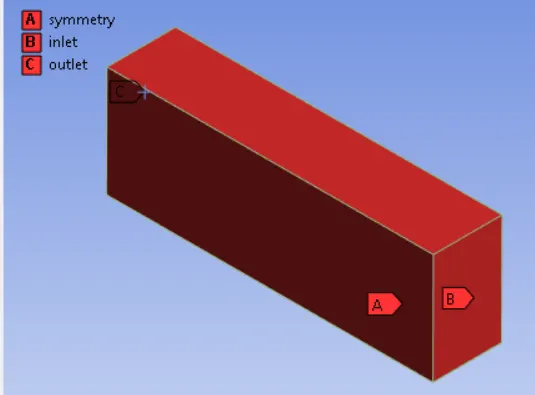
name selection
- Fins
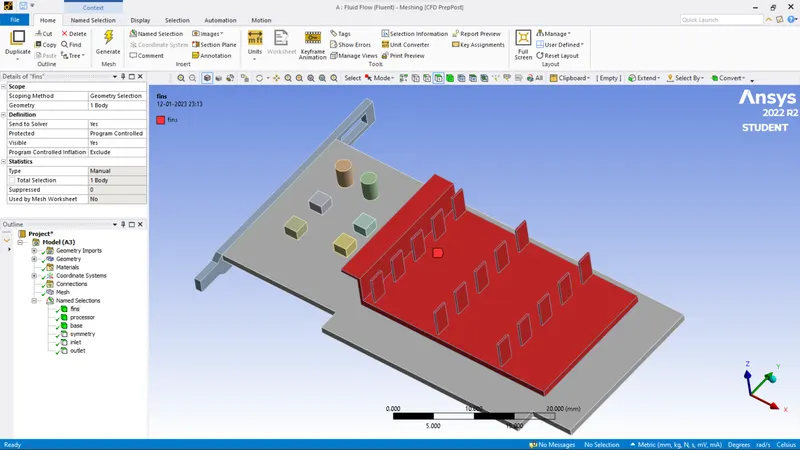
2. Processor
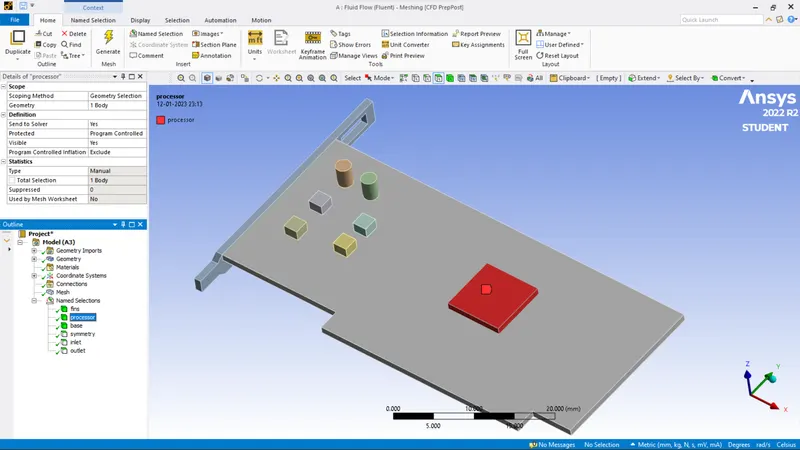
3. Board
Inlet, Outlet, Symmetry.
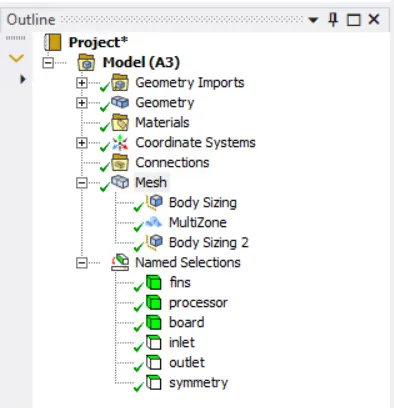
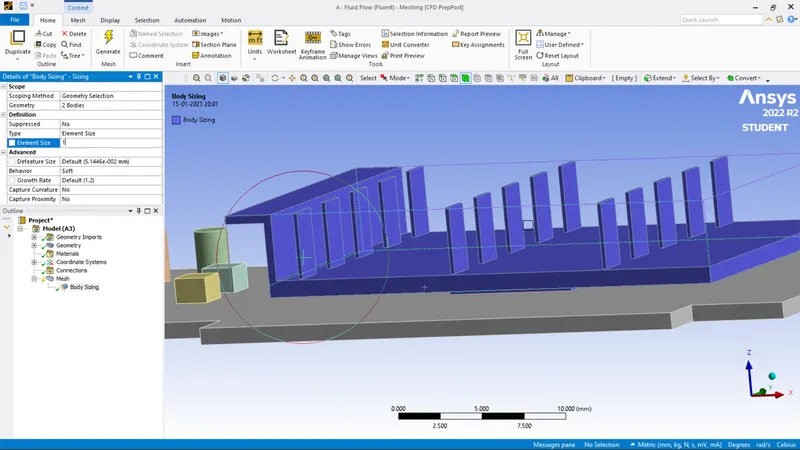
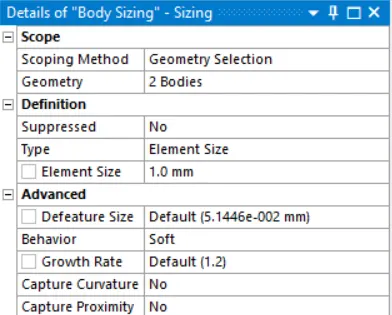
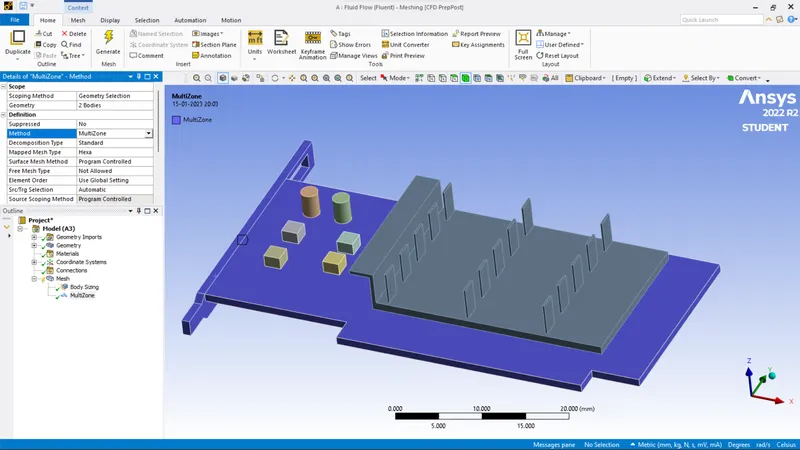
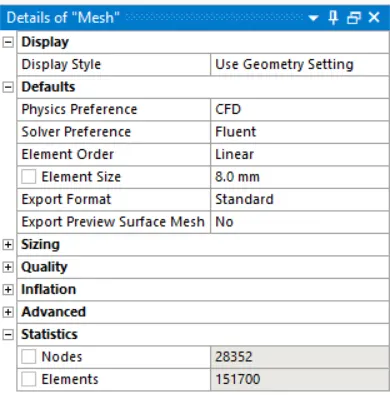
Mesh
Fluent setup -
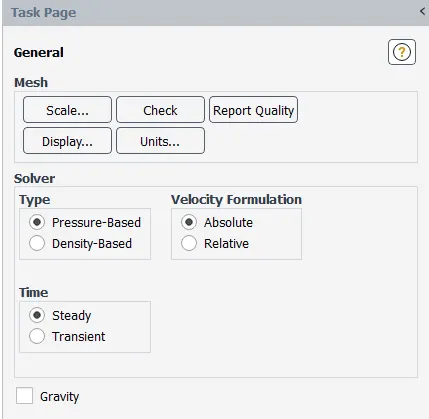
general setup
- solver type: pressure based
- velocity formulation: absolute
- time: steady state
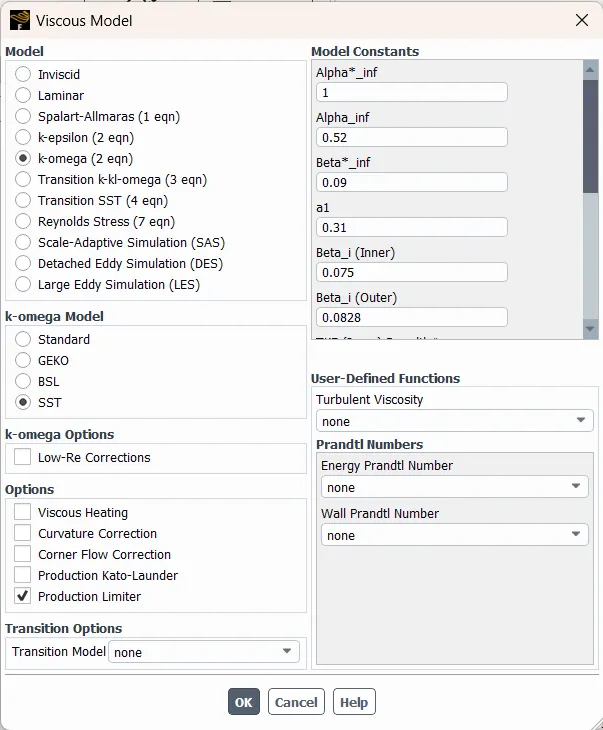
Turbulence model: K-Omega SST
Materials
- copy solid materials from fluent data base.
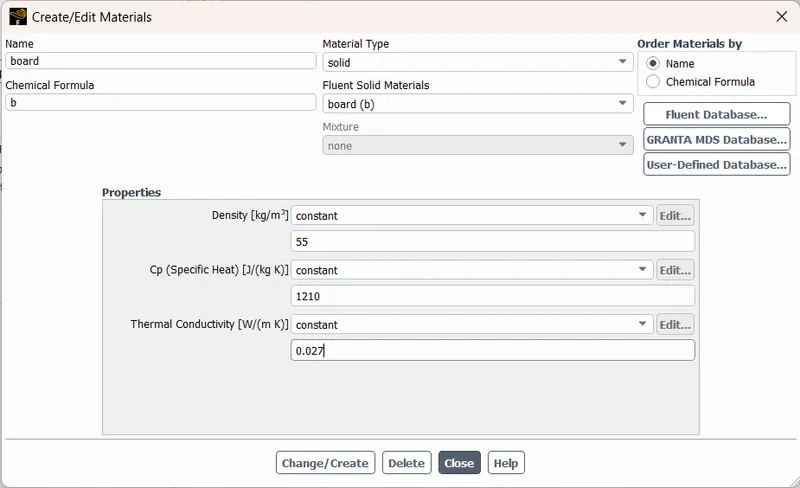
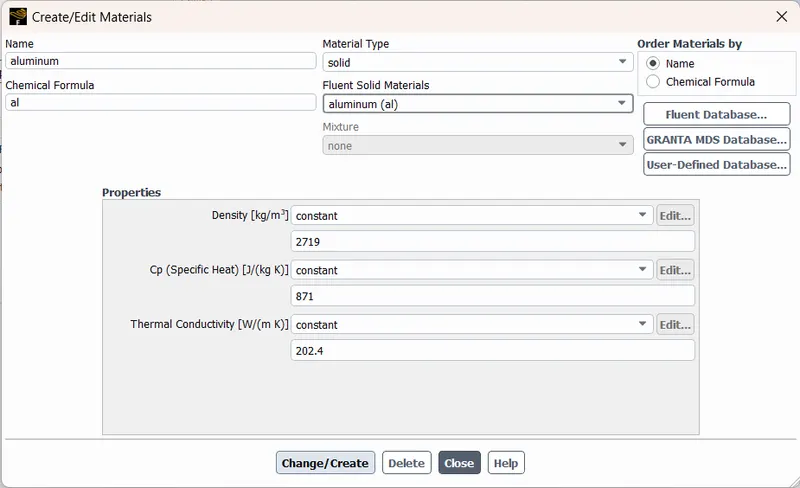
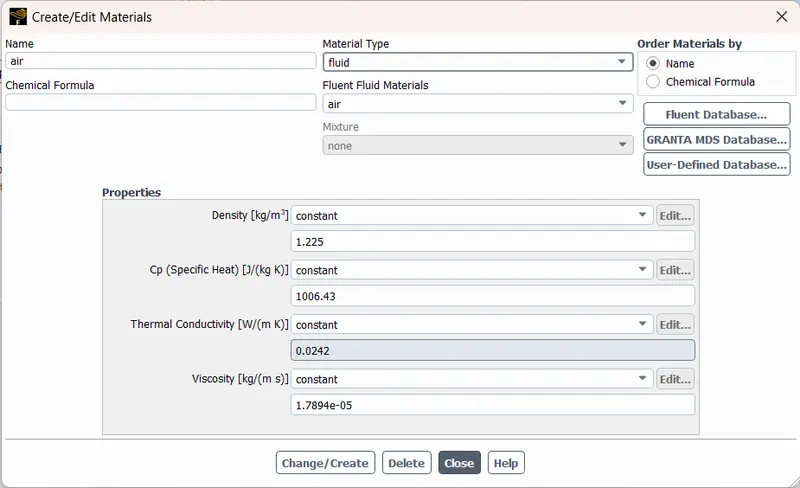
Heat generated rate =Q/Volume
Let us assume Q=1 watt
Volume of the processor = 64mm^3
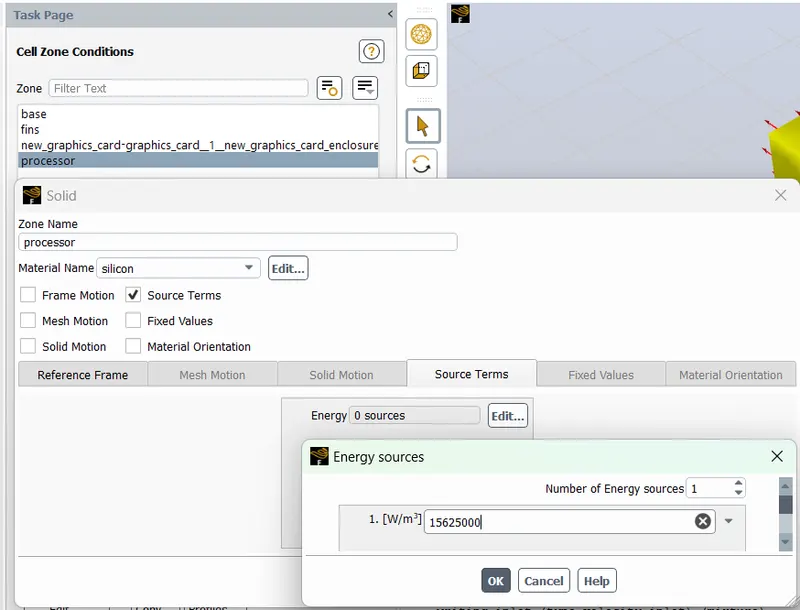
Heat Generated rate = `15625000frac{W}{m^3}`
Enable source term for processor and set value 15625000`W/m^3`
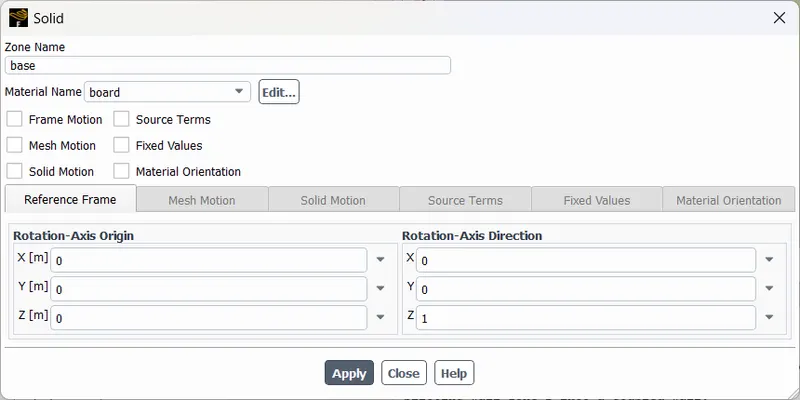
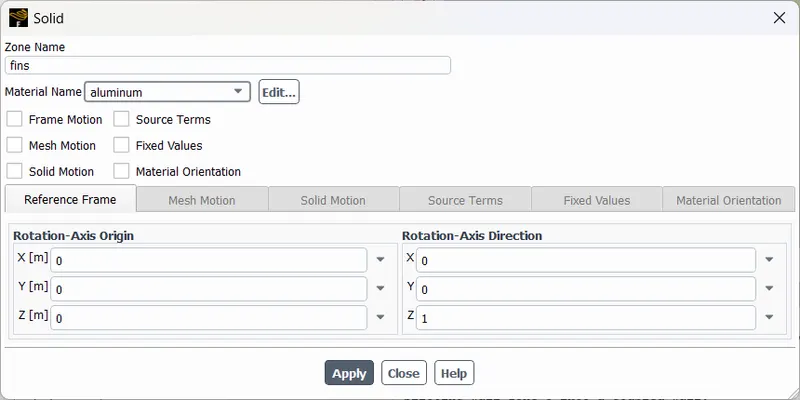
Case-1
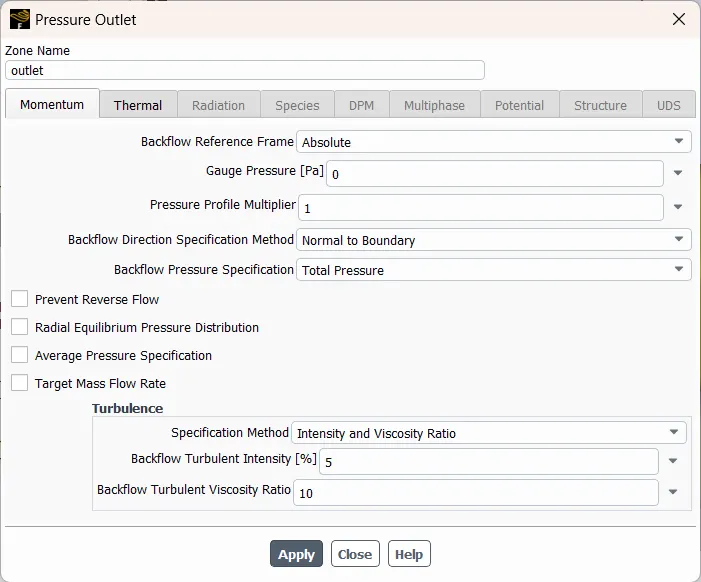
Boundaries
- Inlet
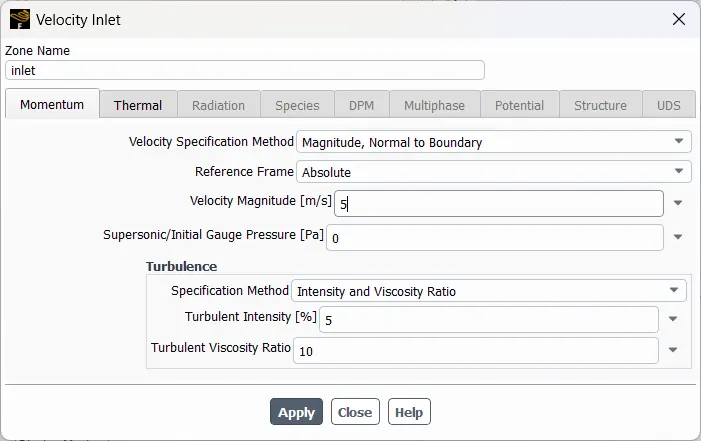
Velocity=1 m/sec
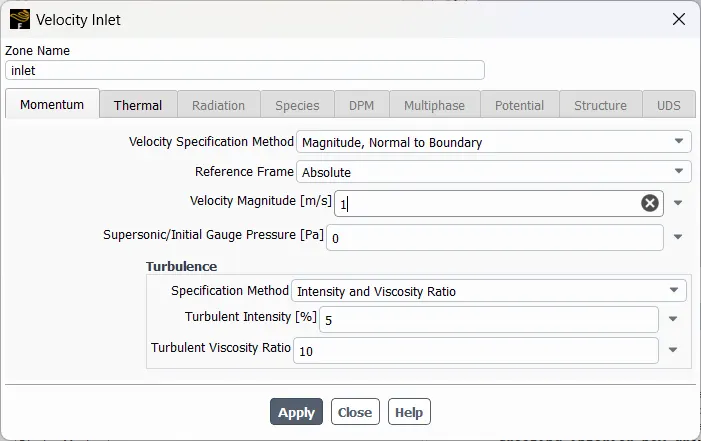
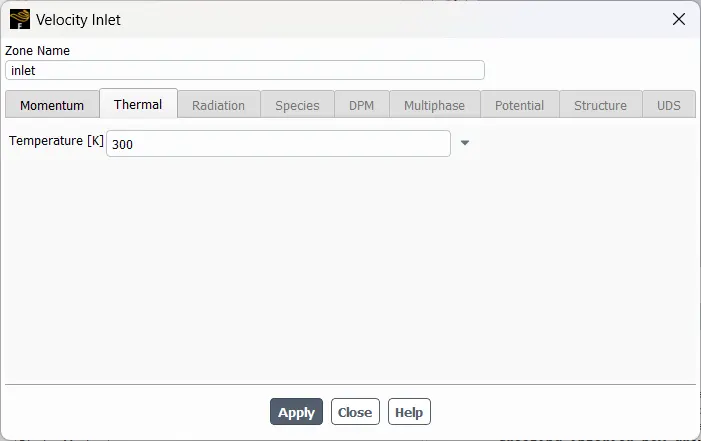
Outlet = default
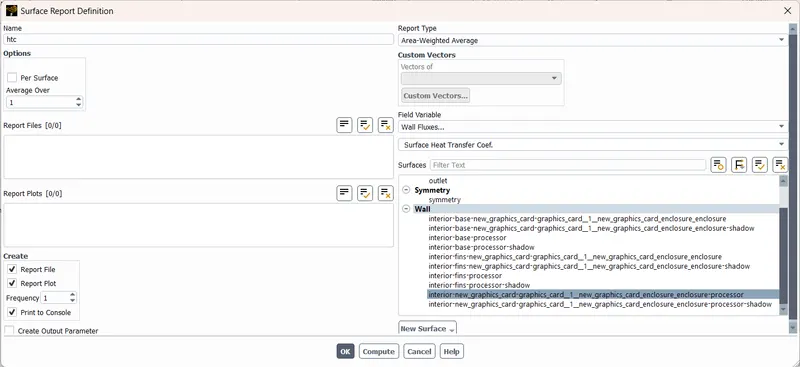
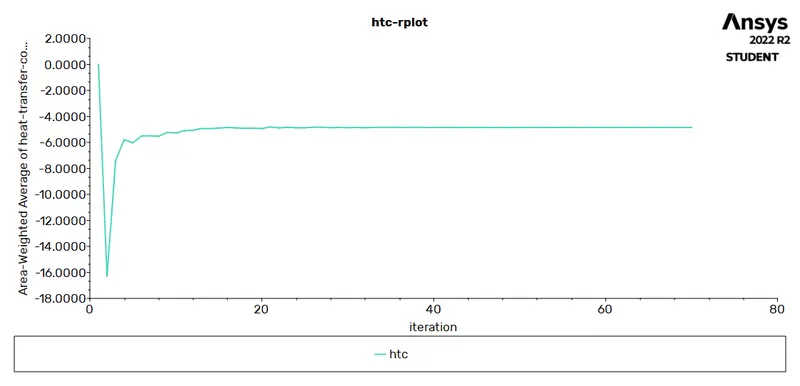
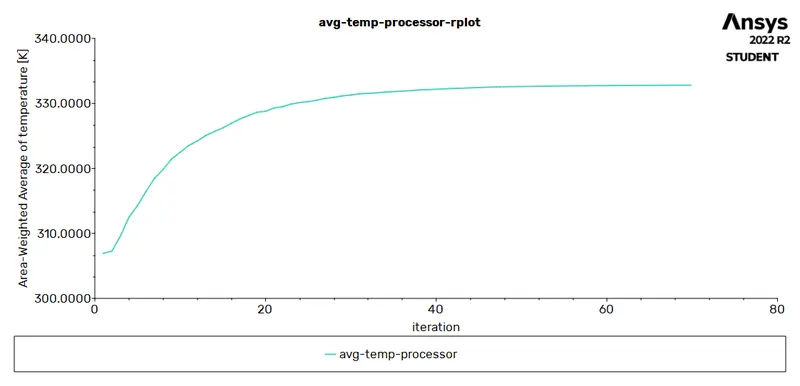
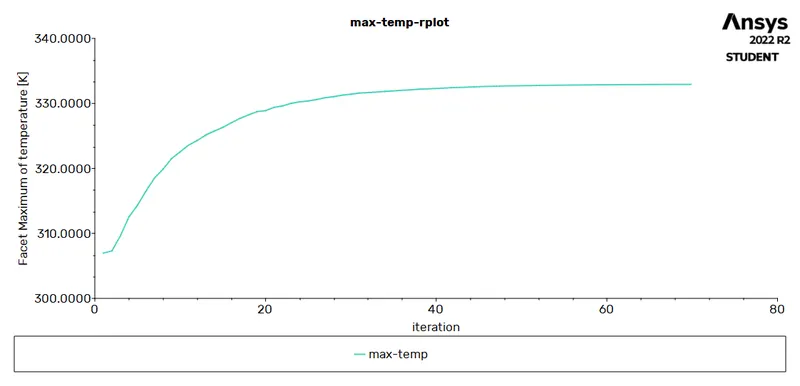
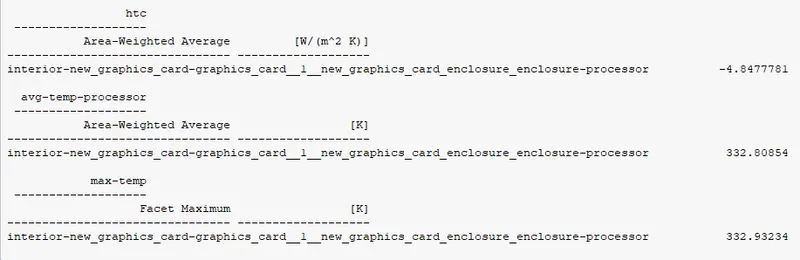
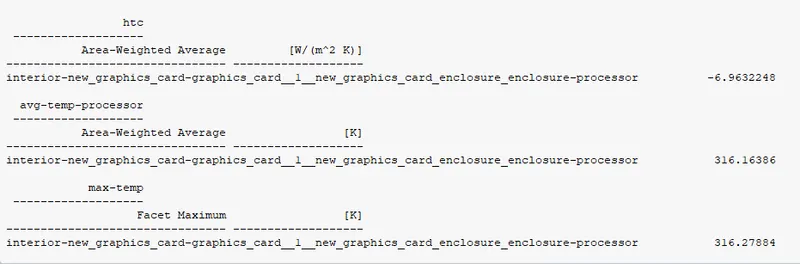
Create surface report definations for heat transfer cofficient , Temperature and Maximum temperature.
- Initialize
- hybrid initialization.
- Run calculation.
RESULTS -
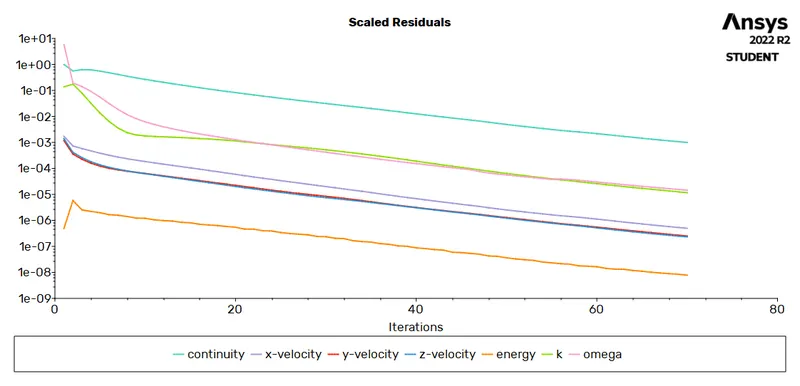
Residual plot
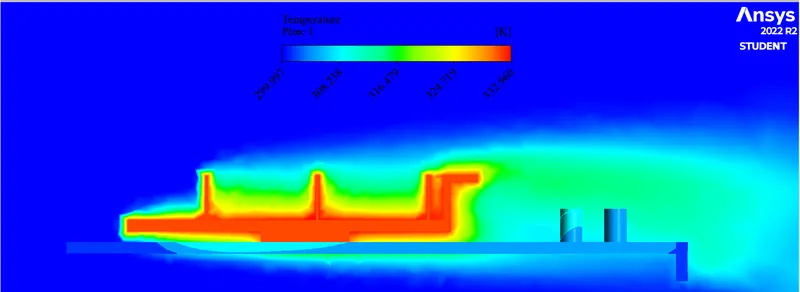
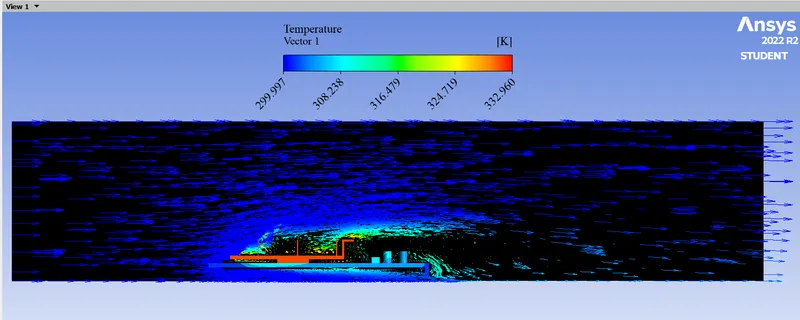
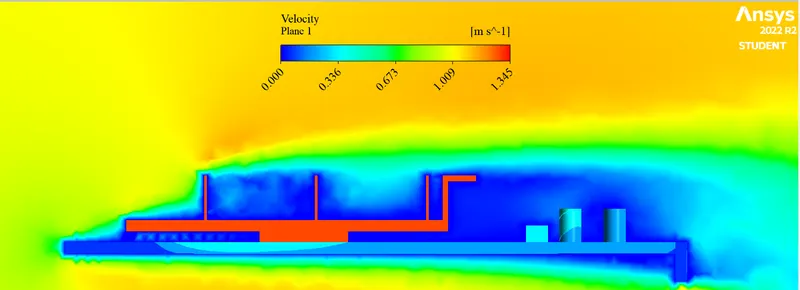
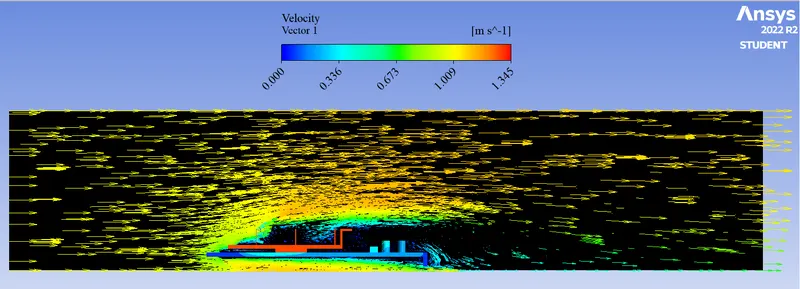
========================================================================
Case 2
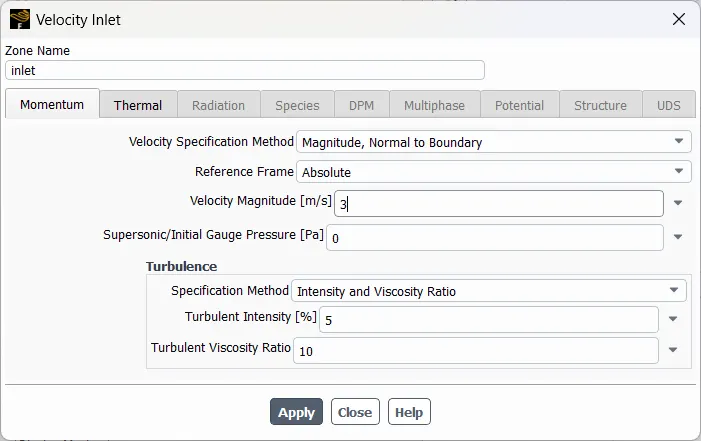
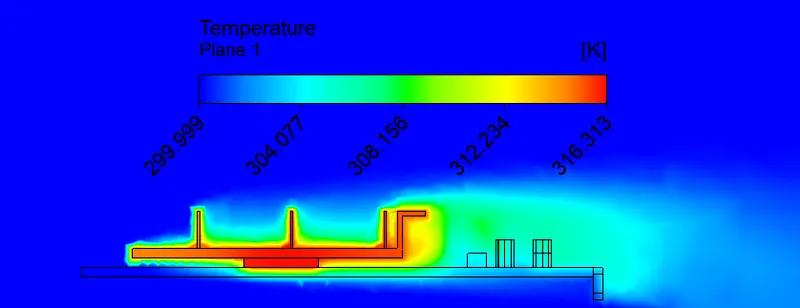
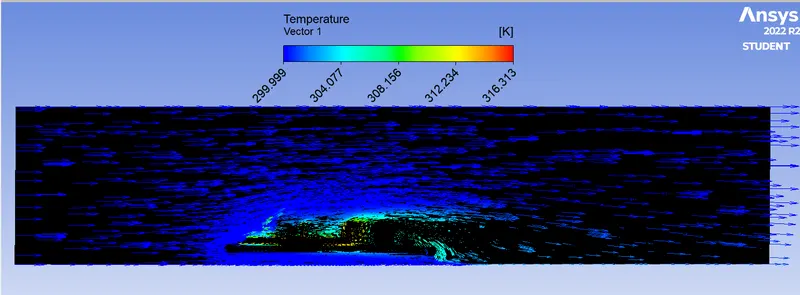
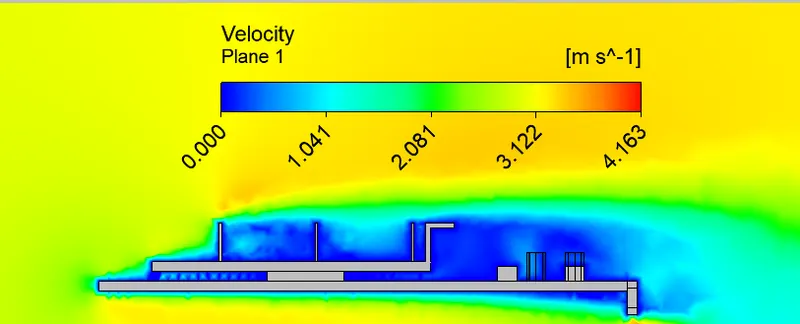
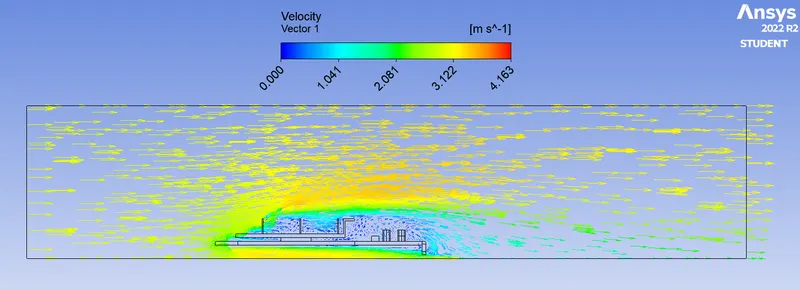
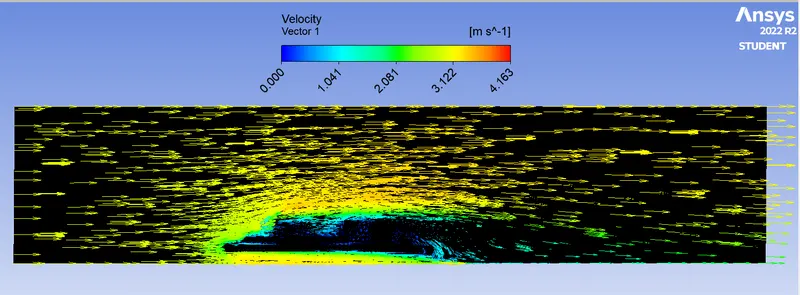
Inlet velocity magnitude = 3m/s
=======================================================================
Case 3
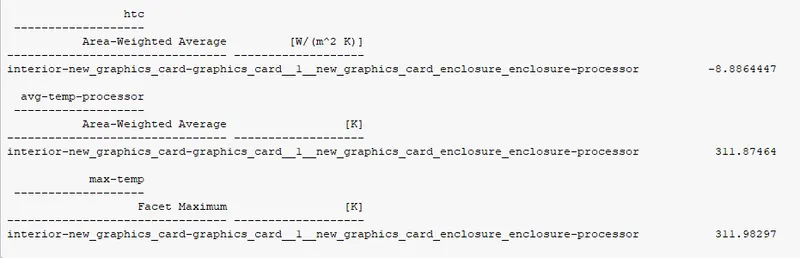
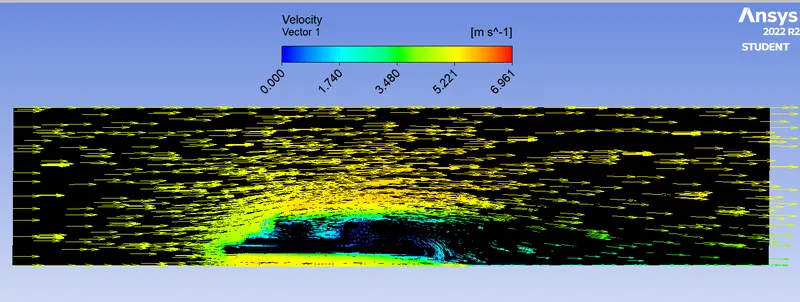
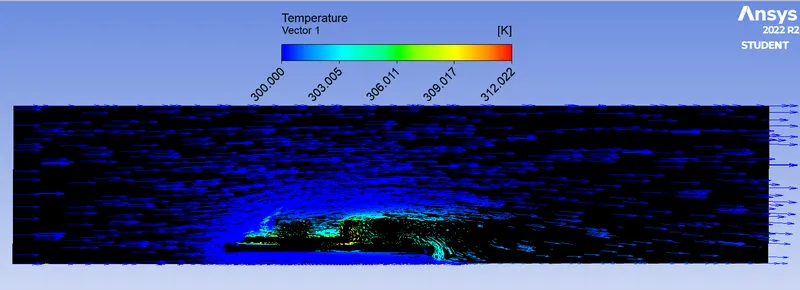
Inlet velocity magnitude = 5m/s
===========================================================================
Conclusion -
|
Inlet velocity (m/s) |
Heat Transfer Coefficient |
Avg-Temperature of processor(k) |
Maximum Temperature |
|
1 |
4.8477781 |
332.80854 |
332.93234 |
|
3 |
6.9632248 |
316.16386 |
316.27884 |
|
5 |
8.8864447 |
311.87464 |
311.98297 |
- The thermal performance is seen to get improved increasing velocity of air and refining the mesh more.
- The maximum temperature of the processor is seen to decrease with the increase in velocity of air.
- The convergence criteria are satisfactorily achieved for baseline and refined mesh setup.
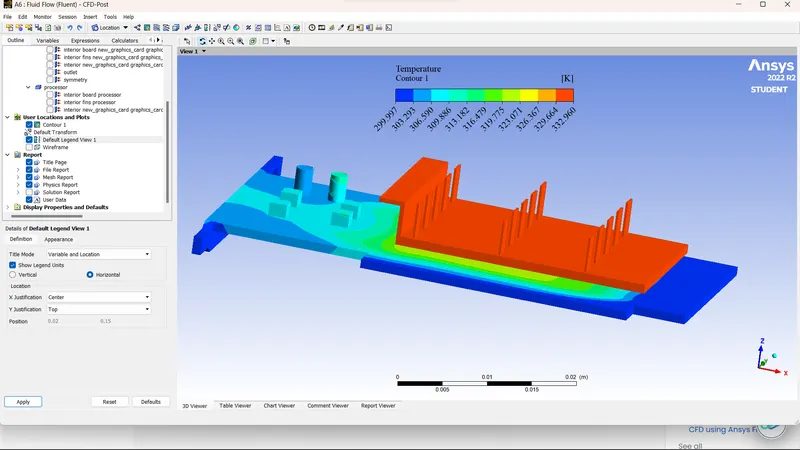
- The hot spot zones are clearly mentioned, which shows the area prone to thermal damage.