Week 6 - CHT Analysis on a Graphics card
Aim: Perform a steady-state conjugate heat transfer analysis on a model of a graphics card. You can use appropriate materials of your choice for the simulation. Make sure to properly define the correct solid and fluid zones. Refer the video for further clarification and the model is provided below the video.
Run the simulation for best possible mesh with combination of coarse and refined mesh in different regions. Explain the reason for choosing the particular mesh settings.
Your Objectives:
- Run the simulation by varying the velocity from 1m/sec to 5m/sec for at least 3 velocities and discuss the results.
- Find out the maximum temperature and heat transfer coefficient attained by the processor.
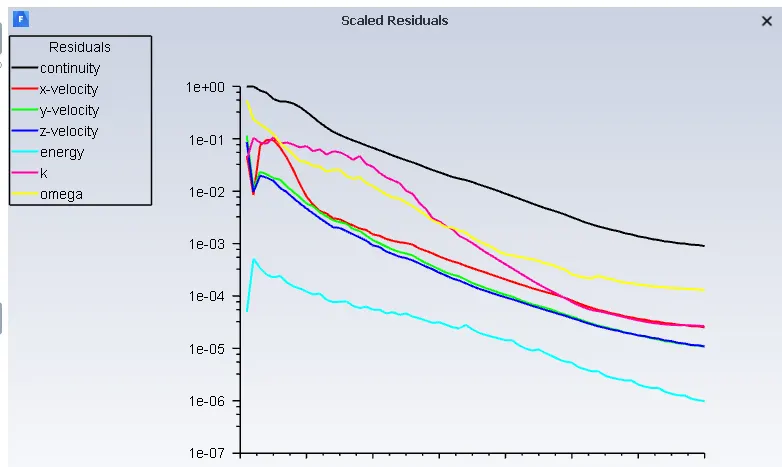
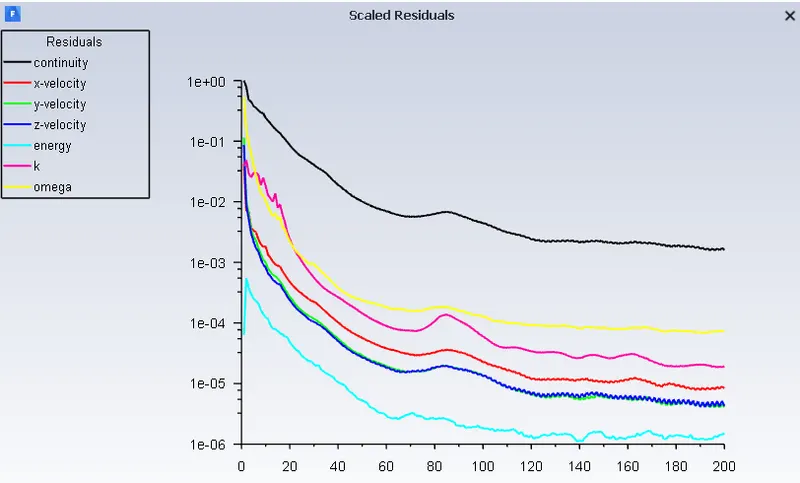
- Prove that the simulation has achieved convergence with appropriate images and plots.
- Identify potential hotspots on the model.
1. What is Conjugate Heat Transfer Analysis?
The contemporary conjugate ,convective heat transfer model was developed after computers came into wide use in order to substitute the empirical relation of proportionality of heat flux to temperature difference with heat transfer coefficient which was the only tool in theoretical heat convection since the times of Newton. This model, based on a strictly mathematically stated problem, describes the heat transfer between a body and a fluid flowing over or inside it as a result of the interaction of two objects. The physical processes and solutions of the governing equations are considered separately for each object in two subdomains. Matching conditions for these solutions at the interface provide the distributions of temperature and heat flux along the body–flow interface, eliminating the need for a heat transfer coefficient. Moreover, it may be calculated using these data.
Conjugate problem formulation
The conjugate convective heat transfer problem is governed by the set of equations consisting in conformity with physical pattern of two separate systems for body and fluid domains which incorporate the following equations:
Body domain
Unsteady or steady (Laplace or Poission) two-or three-dimensional conduction equations or simplified one-dimensional equations for thin bodies
Fluid domain
- For laminar flow: Navier-stokes and energy equations or simplified equations: boundary layer for large and creeping flow for small Reynold numbers, respectively.
- For turbulent flow: Reynolds average Navier–Stokes and energy equations or boundary layer equations for large Reynolds numbers
Initial, boundary and conjugate conditions
- Conditions specifying the spatial distribution of variables for dynamic and thermal equations at initial time
- No-slip condition on the body and other usual conditions for dynamic equations
- Conditions of the first or the second kind specifying temperature or heat flux distribution on the domain boundaries
- Conjugate conditions on the body/fluid interface providing continuity of the thermal fields by specifying the equalities of temperatures and heat fluxes of a body and a flow at the vicinity of interface: T(+) = T(-), q(+) = q(-)
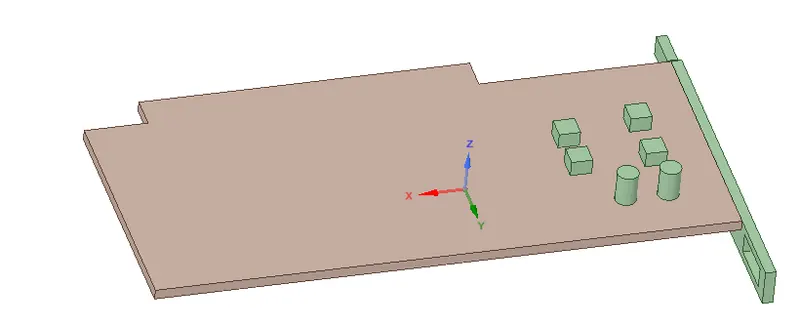
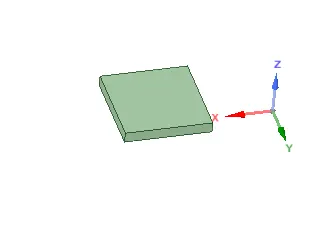
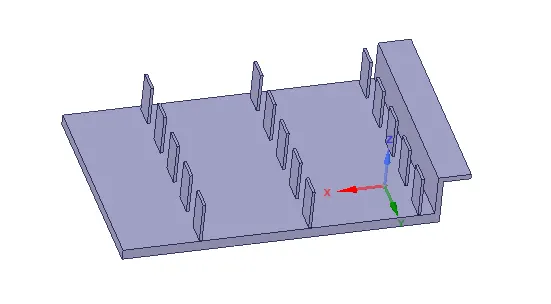
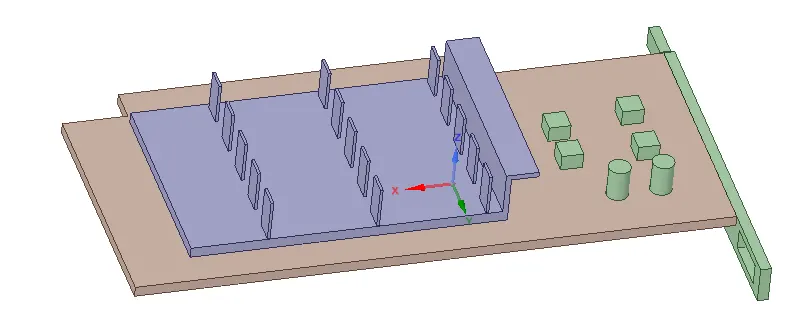
Geomety:
After importing the model enable shareprep option.
Geometry is same for all three cases.

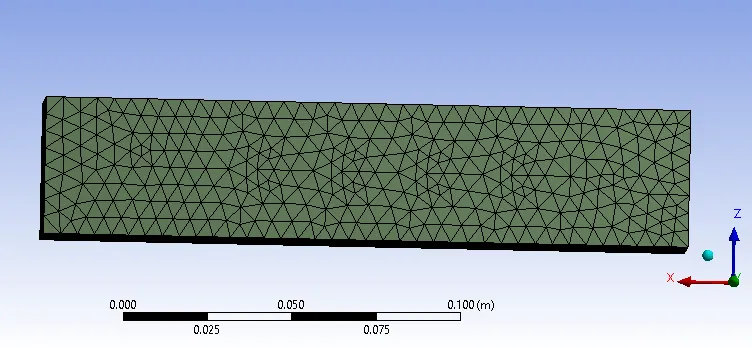
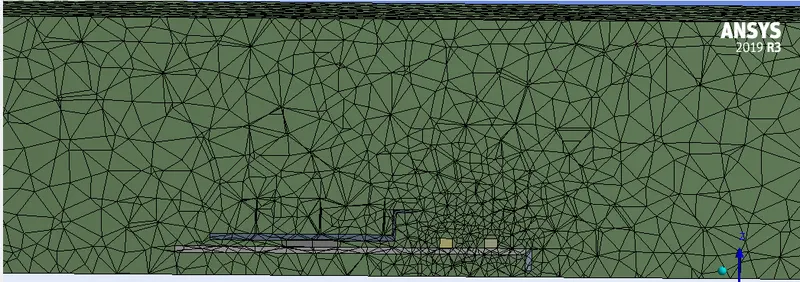
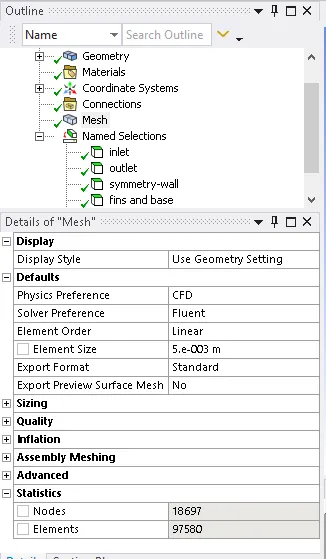
Meshing:
Case1
5mm mesh
velocity = 1m/s
processor = 55 W
Materials
Base - abs-plastic
Fins - aluminium
processor - gold
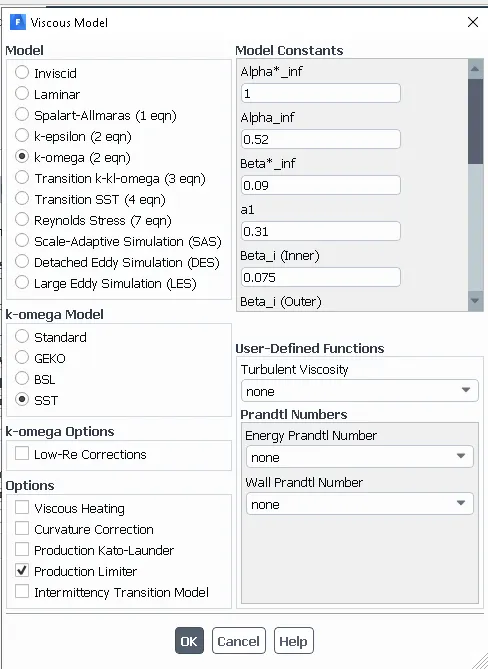
Setup and Solution:
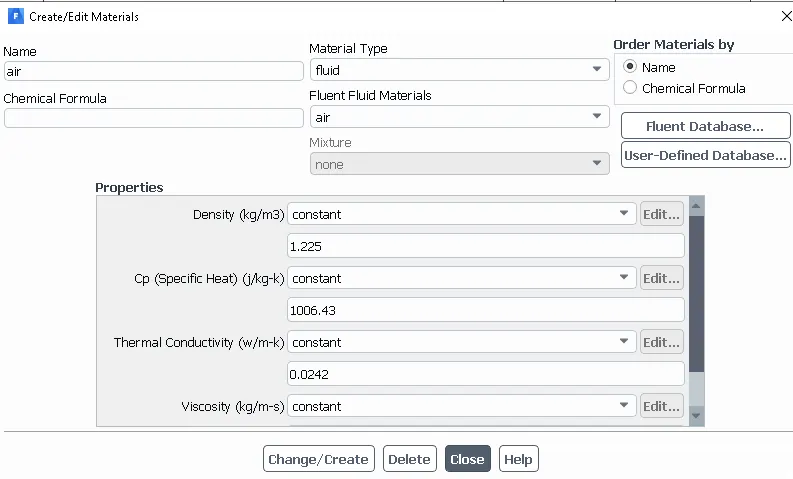
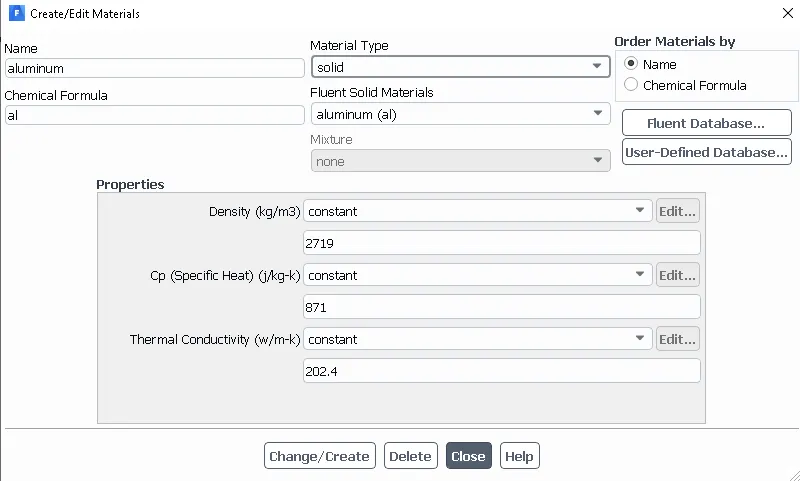
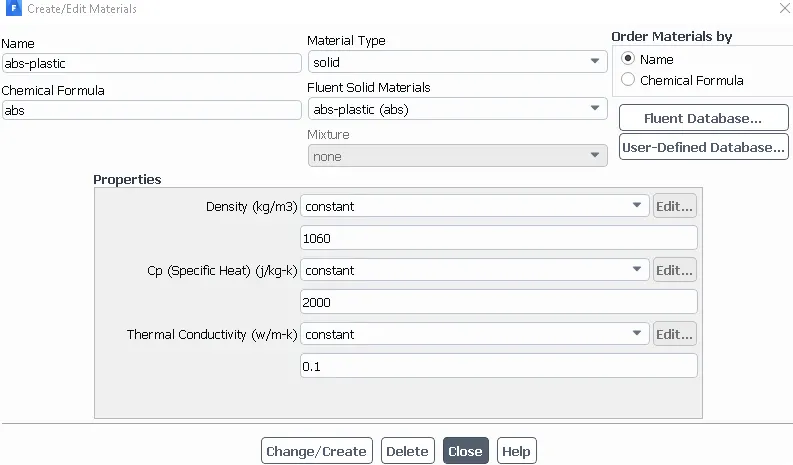
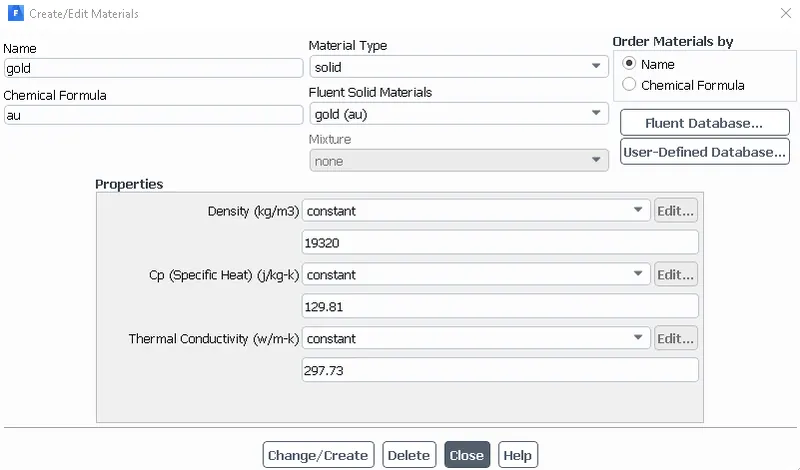
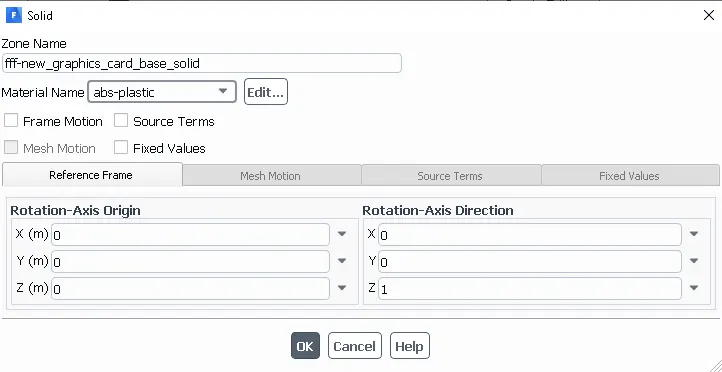
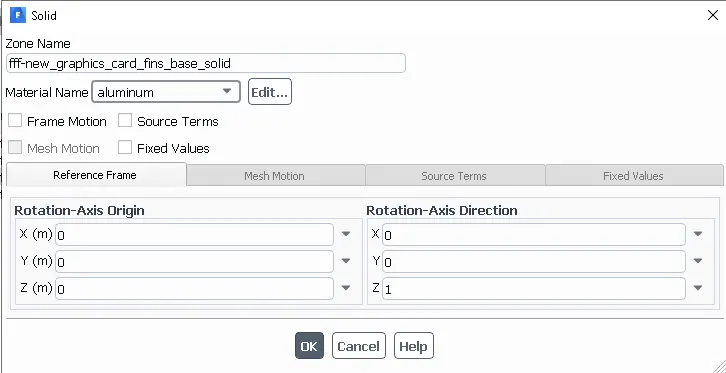
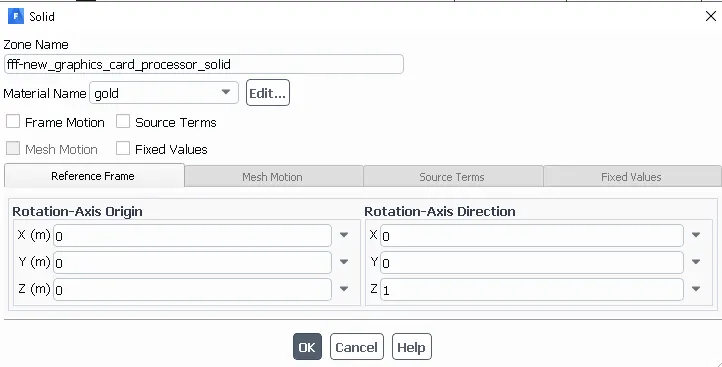

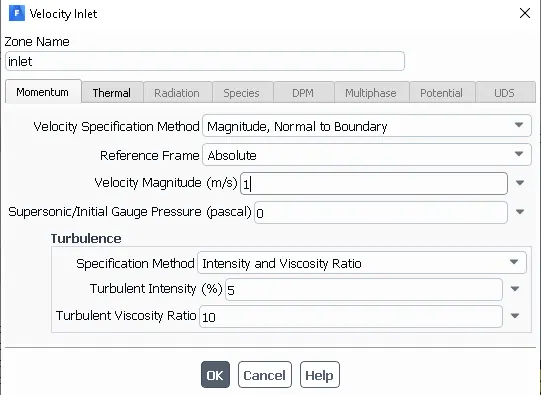
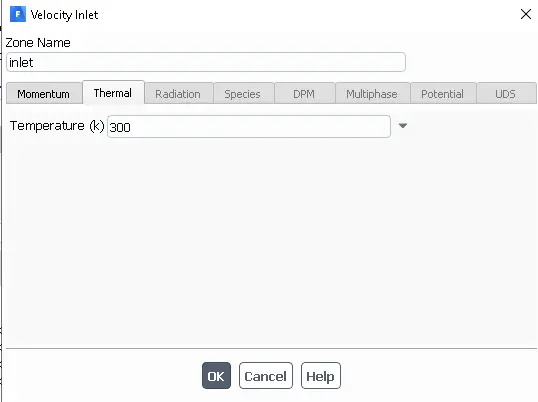
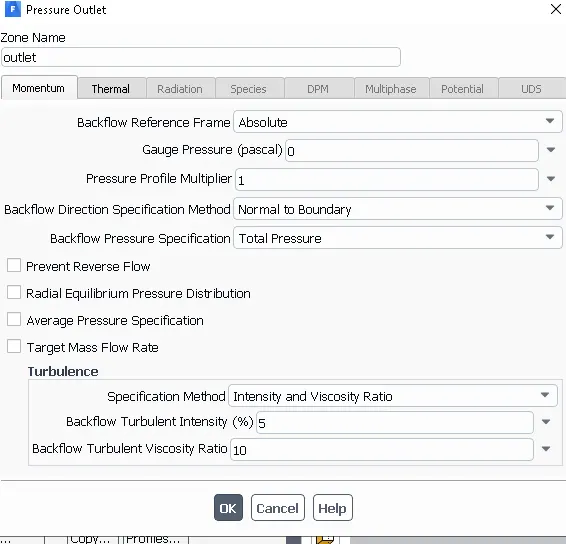
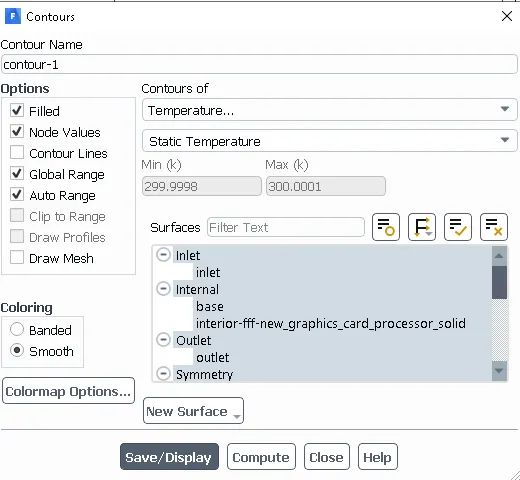
Residual Plot:
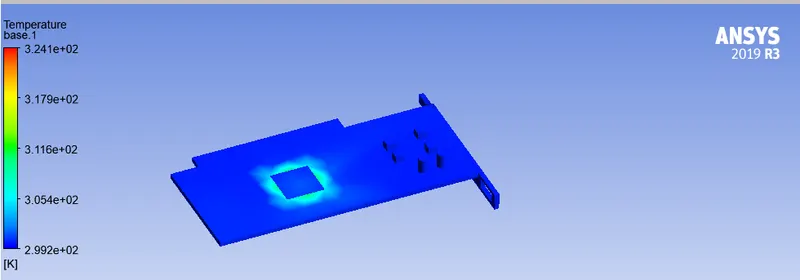
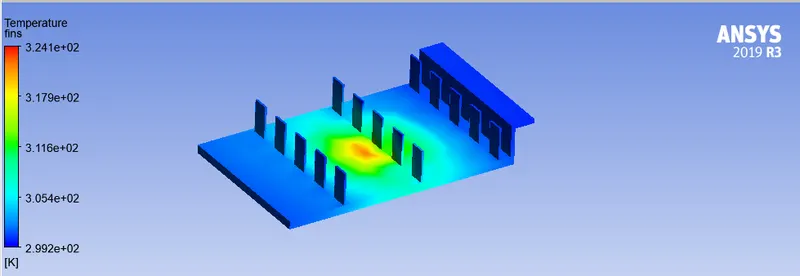
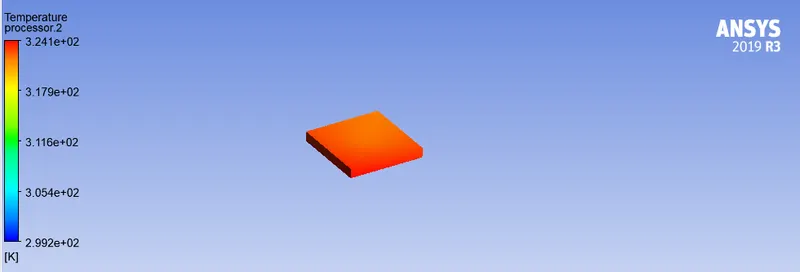
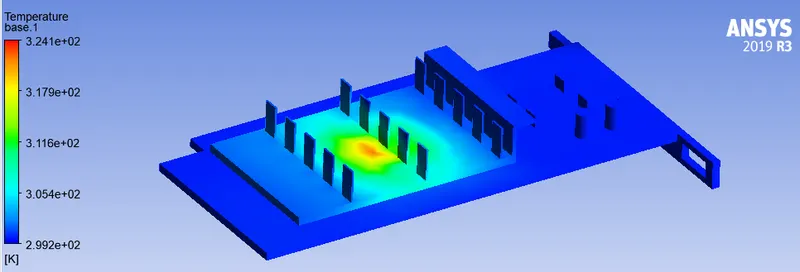
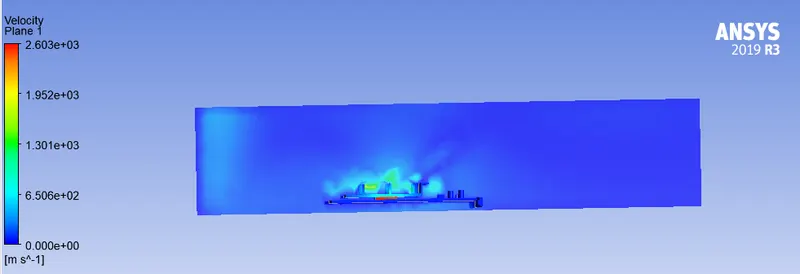
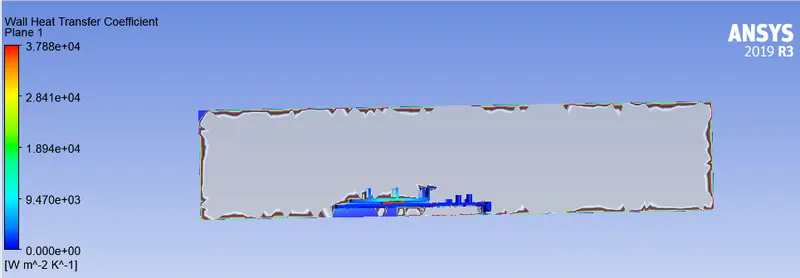
Maximum temperature = 324 Kelvin
Meshing:
Case2
3mm mesh
velocity = 3m/s
processor = 70 W
Materials
Base - abs-plastic
Fins - aluminium
processor - gold
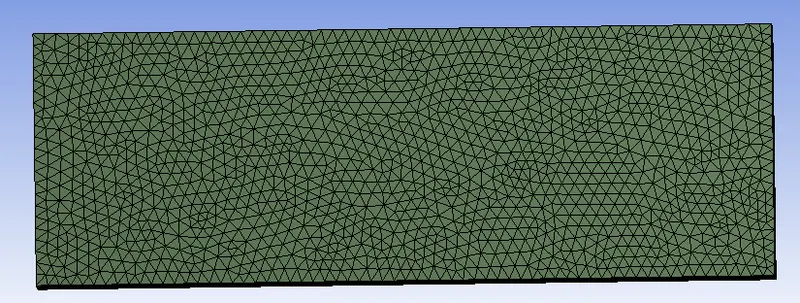
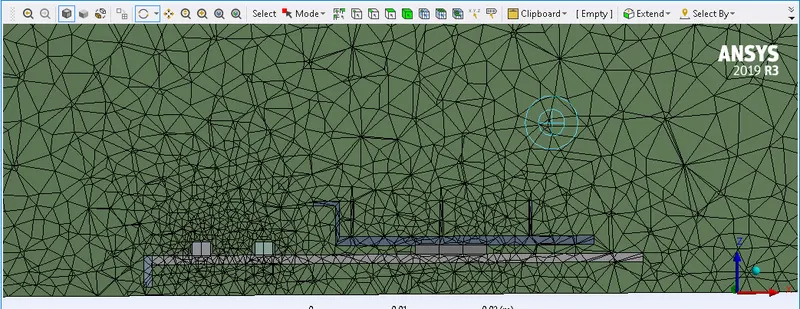
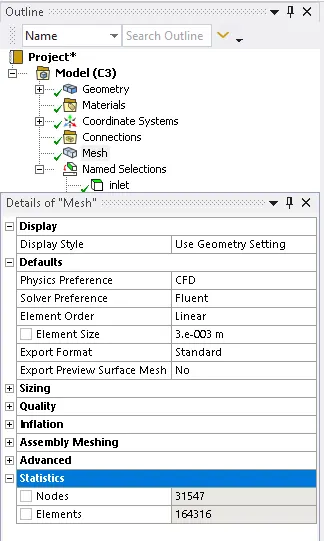
Setup and Solution:

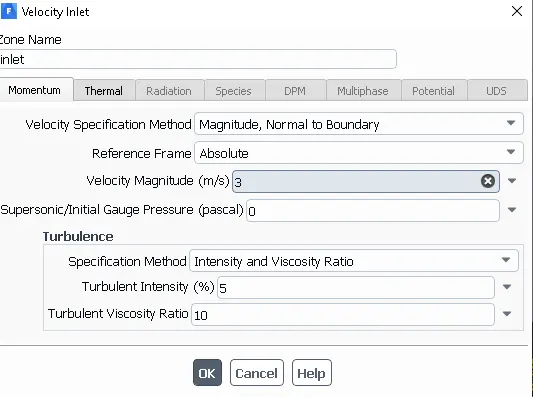
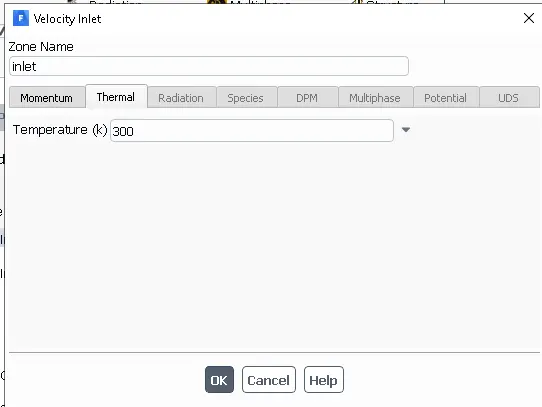
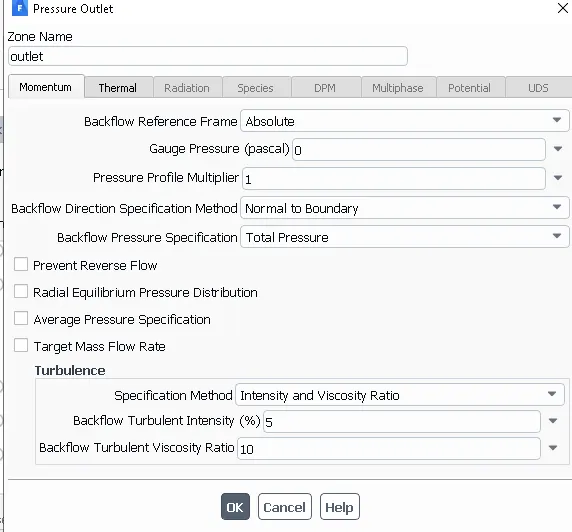
Residual Plot:
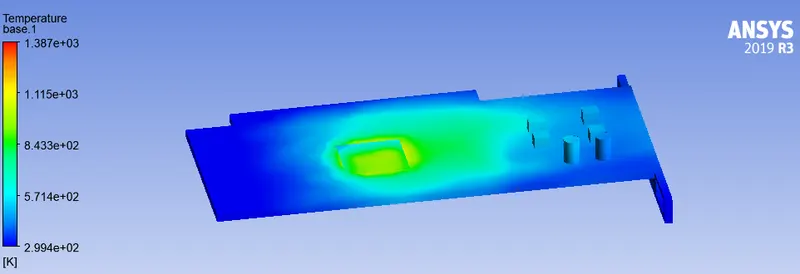
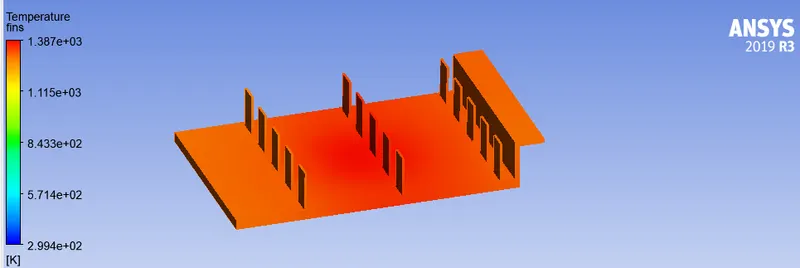
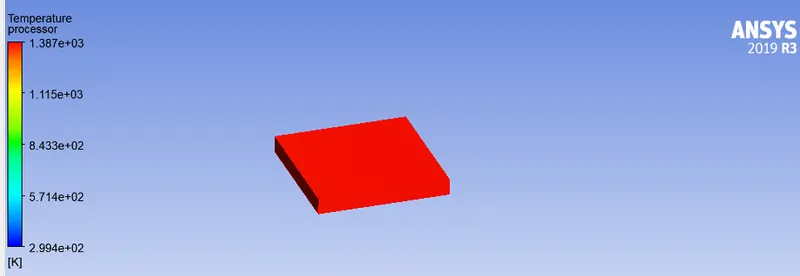
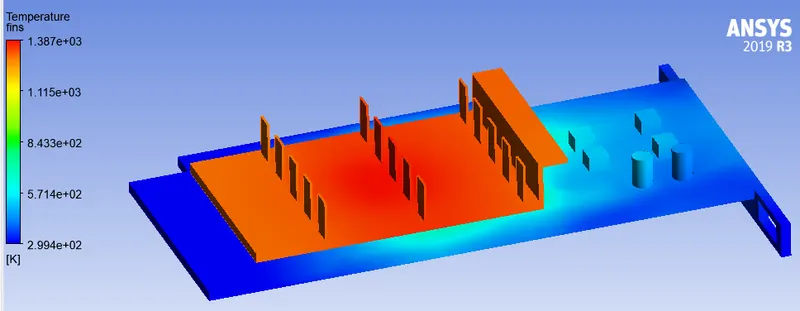
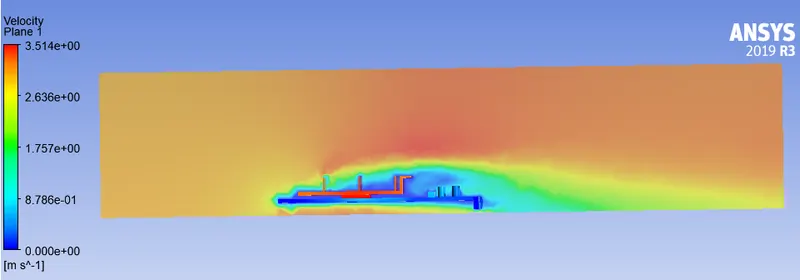
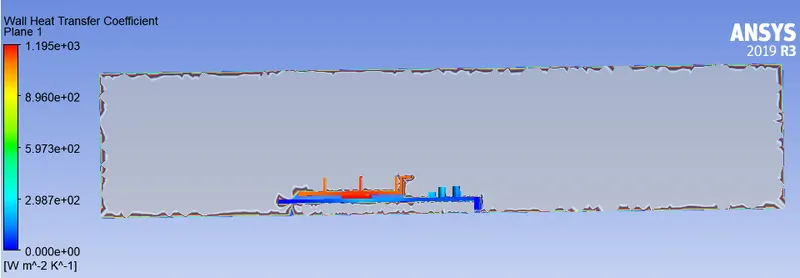
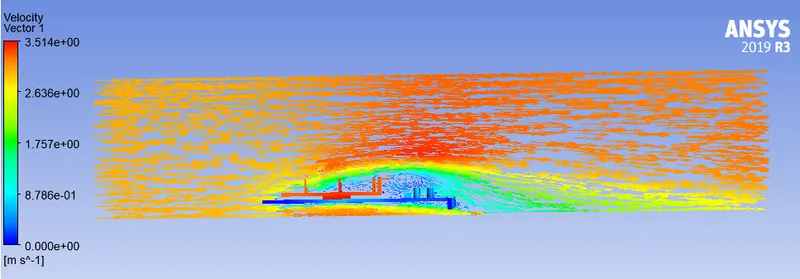
Maximum Temperature = 1387 Kelvin
Meshing:
Case3
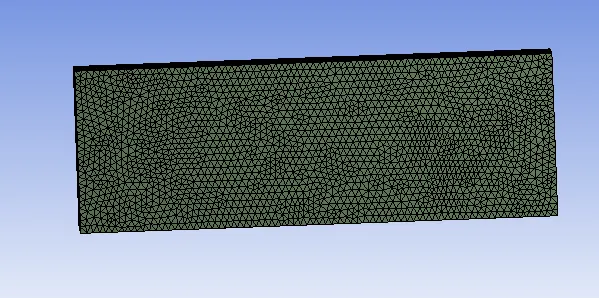
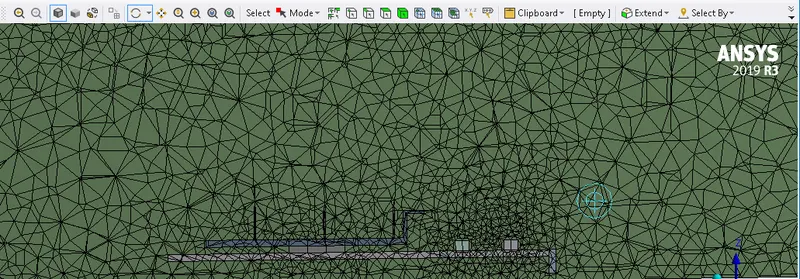
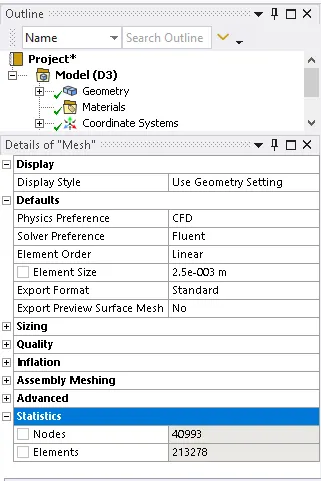
2.5mm mesh
velocity = 5m/s
processor = 85 W
Materials
Base - abs-plastic
Fins - aluminium
processor - gold
Setup and Solution:

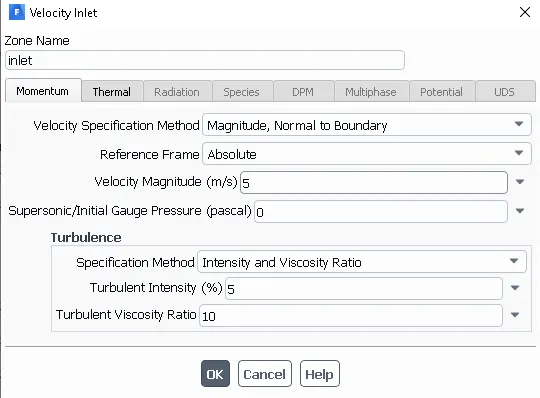
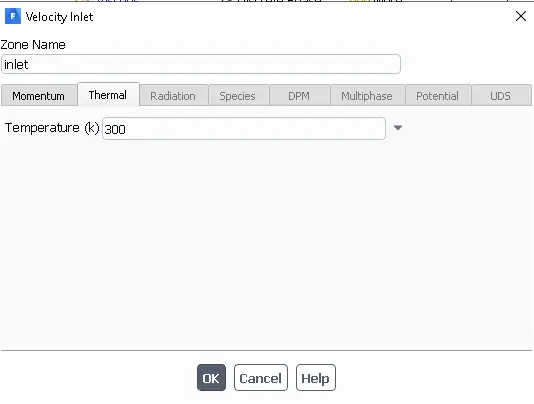
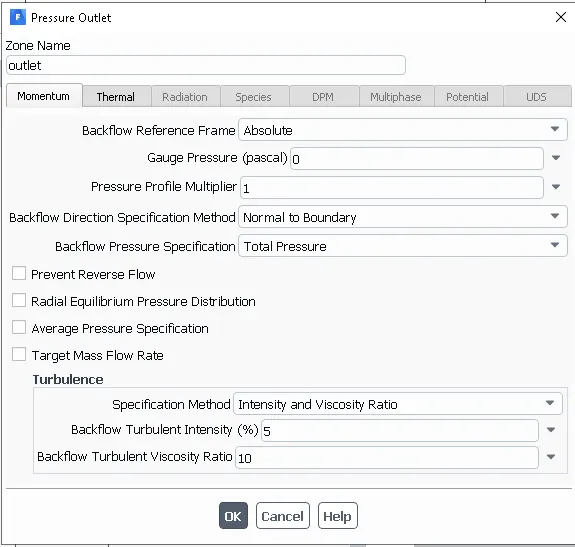
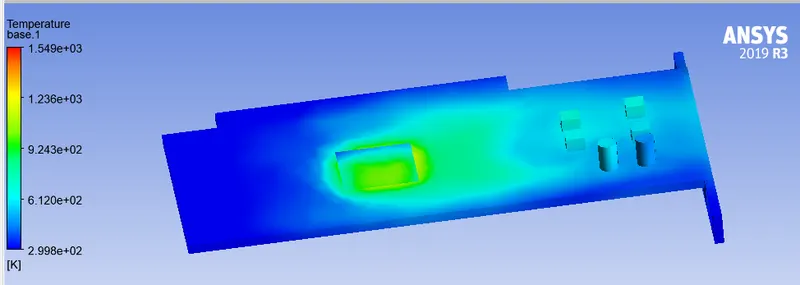
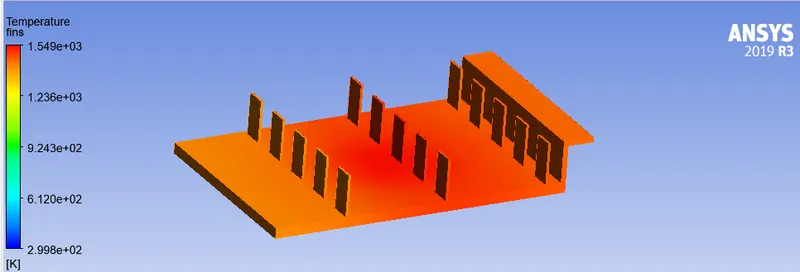
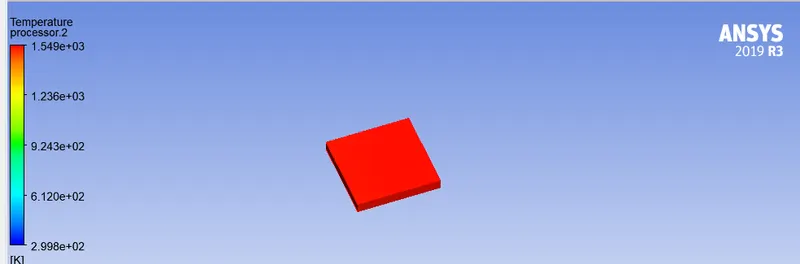
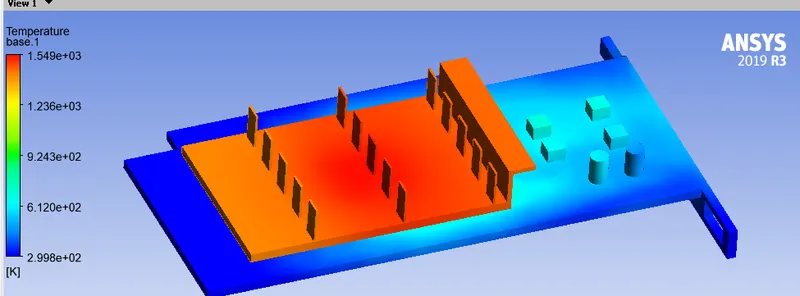
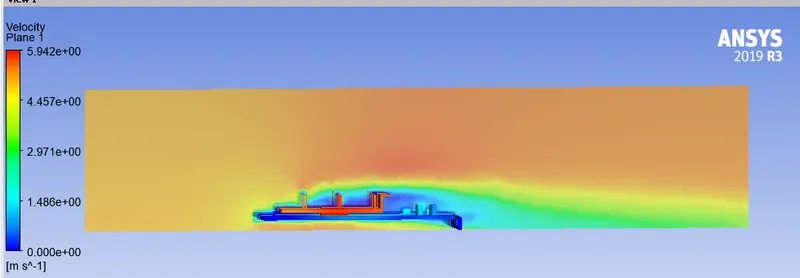
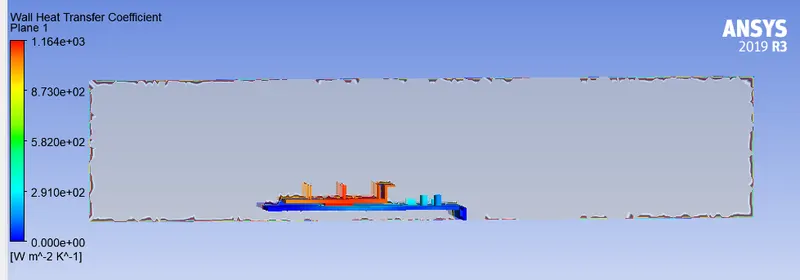
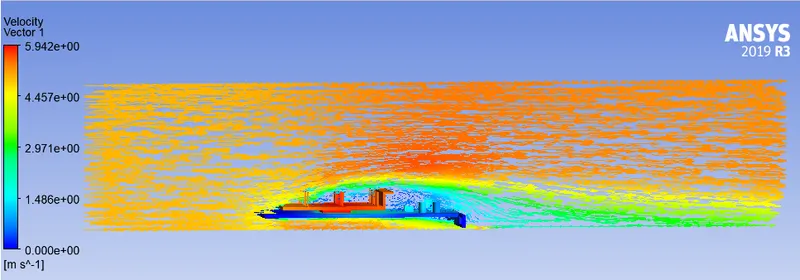
Maximum Temperature = 1549 Kelvin
Conclusion:
1. We successfully perform the CHT analysis of Graphic Card.
2. We successfully plot the temperaure plot,velocity plot,wall heat transfer coefficient plot respectively.
3. The net temperature of components of graphics cards decreases with an increase in inlet velocity. Hence it can be inferred that a higher inlet velocity results in better cooling and lower the average temperature thus keeping the components safe from damage.
References:
https://en.wikipedia.org/wiki/Conjugate_convective_heat_transfer