Week-6 Challenge: EV Drivetrain
Task-1:
In a decade before, almost vehicles are conventional (IC and SI engines). Now the technology developed and updated towards environment friendly and pollution free Electric vehicle technology. In these, the converters play an important role to replace the working of hydraulics, pneumatic systems with electric system and power electronics. These converters are part of power electronic circuits.
POWER CONVERTER : It defines, Input source of a converter is converted in to Another source at output. ( with change in form or level) of voltage or frequency.
Form means AC to DC or DC to AC
Level Means DC to DC (low level to high level) or AC to AC (low level to high level).
Power converters circuits employed in EV and HEV are:
1.AC to DC converter.
2.DC to AC converter.
3.DC to DC converter.
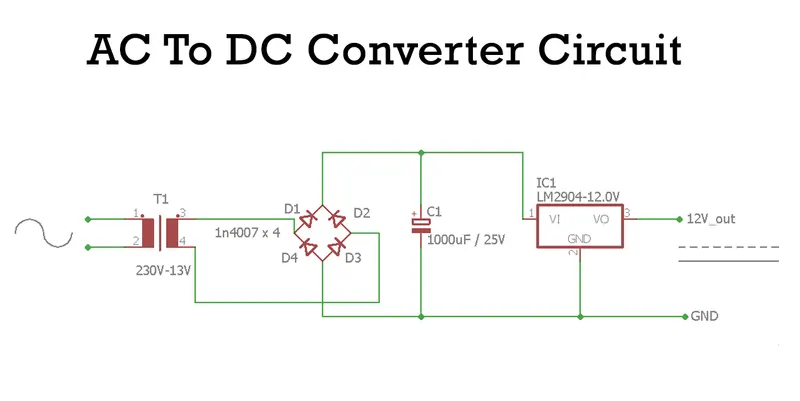
- AC to DC converter: this converter is called rectifier. In these converters, input source to converter is in the form of Alternating current (AC) and get output in the form of direct current (DC). These types of converters are used to charge the battery from external source (AC). when an Available charge source is AC. Then AC source is converted to DC and feed to Battery charging.
The block diagram of the rectifier is shown in below:
A simple block diagram shows that input is AC voltage and output is DC voltage.
Circuit diagram:
- DC to AC converter: This converter is called inverter. In these converters, input source to converter is in the form of direct current (DC) and get output in the form of Alternating current (AC). the output AC power is feed to EV motor. Here the converter plays an important role to control the speed of an EV motor by adjusting the frequency of output AC power. By control the motor speed can control the vehicle speed. Which is important and necessary.
The block diagram of the inverter is shown below:
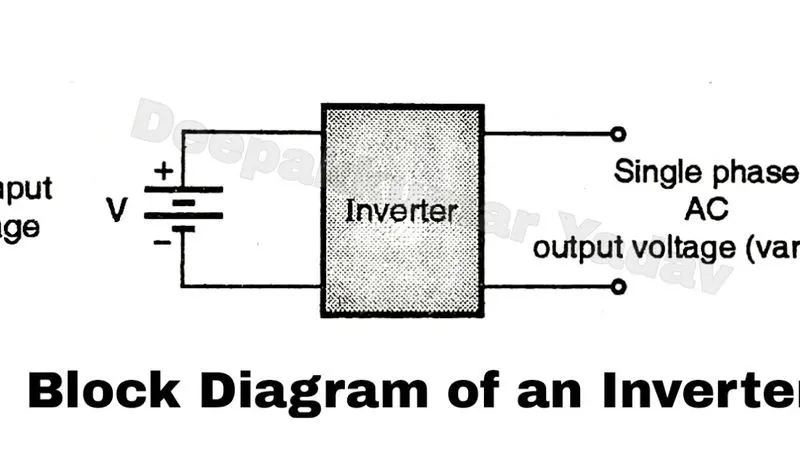
A simple block diagram shows that input is DC voltage and output is AC voltage. with inverter.
Circuit diagram:
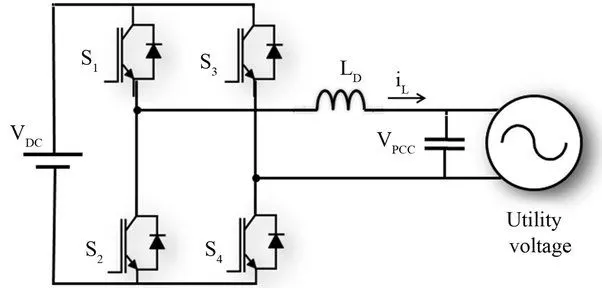
In above circuit diagram, IGBT’s are used for switching control. And it is four quadrant operation (full wave converter).
By using inverters, motor will attain high efficiency and performance.
- DC to DC converter: these converter is also called Chopper. these converters, the input source is converted in to another level in same form. The chopper are classified in to unidirectional and bi-directional.
Unidirectional: Here input is battery voltage, which is high voltage can’t feed to sensors, controls, utility etc. so the high voltage is chopper to low voltage and used for auxiliaries.
Bi-directional: Here voltage is feed to DC traction motor in one direction and When motor goes to regenerative braking, voltage is feed to reverse direction to battery. While this operation voltage from low to high( boost operation).
The converter topologies are classified as:
- Buck converter: buck converter is a step down converter and produces low average output voltage from dc input voltage (Vin > Vout).
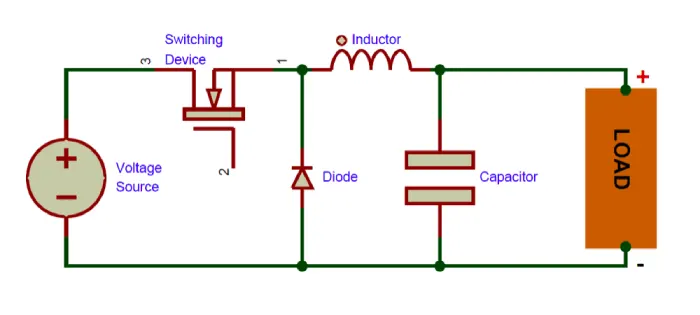
- Boost converter: Boost converters is a step up converters and produces high average output voltage from dc input voltage (Vin < Vout).
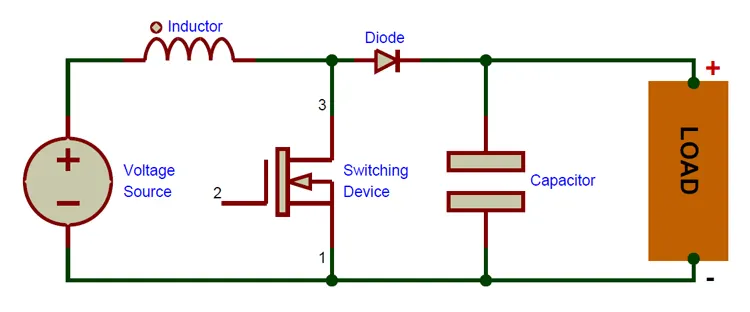
- Buck-Boost converter: The output voltage can be either higher or lower than the input voltage.
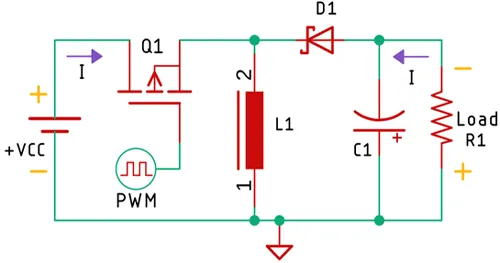
The amount of power flow between the input and output can be controlled by adjusting the duty cycle.
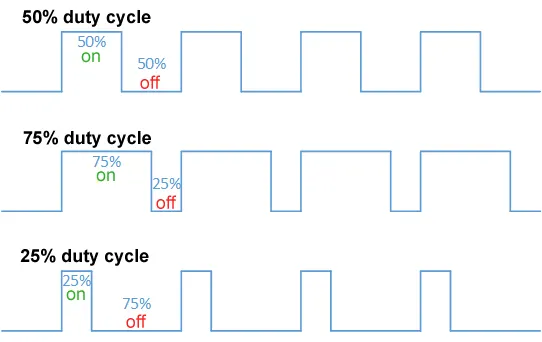
Duty cycle: it is the ratio of On time to the total time. Which is represented in ratio or percentages.
Example:
TASK-2:
Given that voltage V= 72 volts
Duty cycle is 70 %
Armature resistance Ra=0.5 ohms
Armature current Ia= 400 A
Motor constant K_phi = 0.7 v/sec
Switching frequency =400 Hz
Vehicle speed torque characteristics are
Tv= 24.7+(0.0051)*W^2----------------equation 1
We know, that motor speed – torque characteristics are
Tm= V*(K_phi/Ra) –((K_phi)^2/Ra) *W-------------- equation 2
Substitute all given values in equation 2
Tm=50.4*0.7/0.5 – (0.7)^2/0.5*W ( V=V*duty cycle = 72*0.7=50.4)
Tm= 70.56-0.98*W----------------------------equation 3
Consider equation 1 and 3
Tv=Tm
24.7+(0.0051)*W^2 = 70.56-0.98*W
0.0051W^2+0.98W-45.86=0 -----------------equation 4
Equation 4 is in the form of Quadratic equation
To solve this quadratic equation , we can find the steady state speed
X1=-b +sqrt (b^2 -4ac)/2a ; X2=-b -sqrt (b^2 -4ac)/2a
a=0.0051; b=0.98;c=-45.86
X1= -0.98+sqrt ((0.98)^2-4*0.0051*(-45.86)/2*0.0051 = -0.98+1.3739/0.0102 = 38.91
X2= -0.98-sqrt ((0.98)^2-4*0.0051*(-45.86)/2*0.0051 = -0.98-13739/0.0102 =-231.06
EV Steady state speed at duty cycle of 70% is 38.9 rad/sec.
TASK-3:
Given data:
voltage V=50.4 volts
Armature resistance Ra=0.5 ohms
Motor constant K_phi = 0.7 v/sec
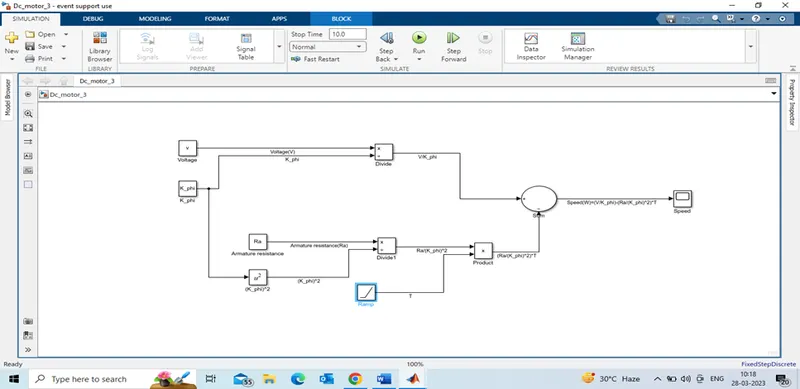
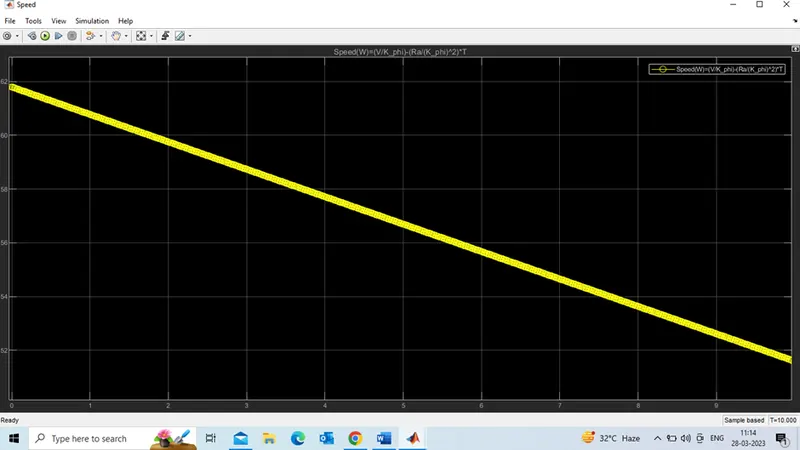
Mathematical model of a DC motor is W= V/K_phi - Ra/(K_phi)^2 *T
simulink model:
Output:
Conclusion:
From the output, DC motor Speed-torque Characteristics is shown. here it is observed that speed is directly proportional to torque. at zero torque it shows Maximum speed.which is No load speed and observed that decreases in speed with increases in torque.
Task-4:
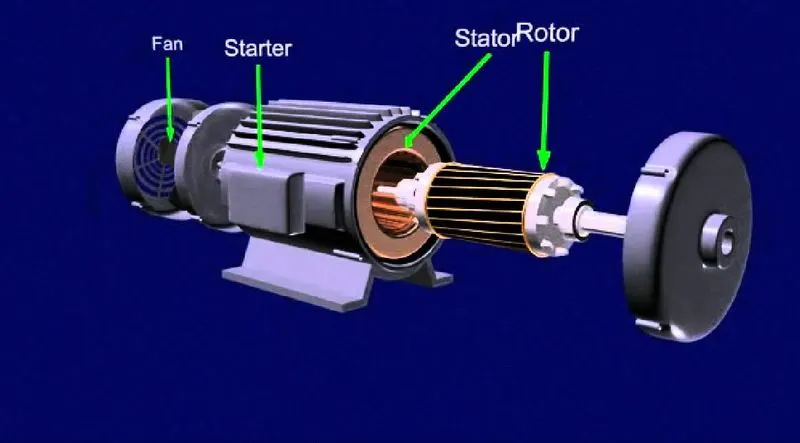
induction motor:
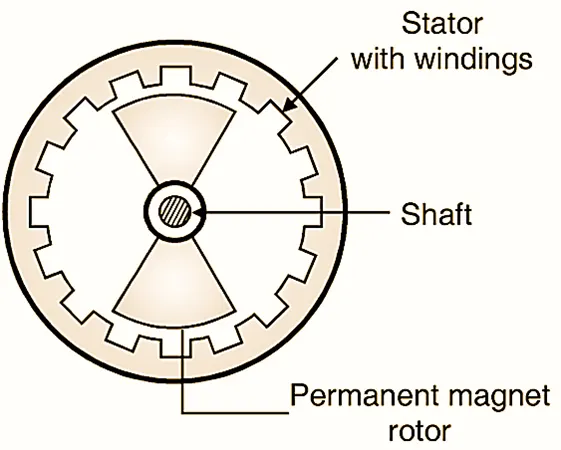
DC Brushless motor:
Induction motor versus DC brushless motor:
|
S.NO |
DC BRUSHLESS MOTOR |
INDUCTION MOTOR |
|
1 |
Ernst Werner von Siemens invented this motor |
Nikola tesla invented this motor. |
|
2 |
Rotor include with two or more permanent magnets |
Rotor has no permanent magnets; it includes Stacked steel laminations with buried peripheral conductors. |
|
3 |
Rotor generates a DC magnetic field |
Stator winding produces the rotating magnetic field |
|
4 |
Stator core is made up of thin, stacked lamination |
Stator core is made up of silicon steel. |
|
5 |
Stator core interacts with current flowing through it and produce the torque |
Rotor conductors interact with the current induced in it and produces the torque |
|
6 |
The convention of electrical to mechanical energy is optimally efficient |
The convention of electrical to mechanical energy is high efficient compared to dc motor |
|
7 |
It is necessary that the magnitude and polarity of stator current be continuously varied for rotor rotation. |
It is necessary that the magnitude and polarity of stator current be continuously varied for rotor rotation. |
|
8 |
The device that provides current control is called an inverter at input power |
No need of inverter due to directly AC power is feed to motor |
|
9 |
Dc motor have zero starting torque. due to which is not compatible for utility power |
Induction motor is compatible for utility power. Due to it has minimum starting torque. |
|
10 |
Constant torque can be achieved. |
Constant speed can be achieved. |
|
11 |
Rotor heat is less |
Rotor required cooling |
|
12 |
Dc motor operates at unity power factor |
Induction motor operates at 0.85 pf |
|
13 |
Magnetic field produced by Permanent magnets are adjustable to produce Maximum torque (Sum of losses are minimized). It is not a easy. |
It has no magnets, and magnetic field can be adjustable by varying voltage and frequency. |
|
14 |
Peak point energy efficiency is high |
Peak point energy efficiency is low compared to DC motor, average efficiency is high. |
|
15 |
Cost is high (permanent magnets) |
Low cost (no permanent magnets) |
|
16 |
DC motors are easily controlled and easy to understand it’s control and characteristics. |
AC motor are difficult to control. And controls are complex and difficult to understand. |
|
17 |
It requires an absolute position sensor (Hall effect sensor) |
It required only speed sensor |
|
18 |
These motors are suitable for low to medium range performance drives |
It is suitable for high performance drives. |
According to Authors perspective, DC brushless motor will likely continue to dominate in the hybrid and coming plug-in hybrid markets. Where as Induction motors are likely maintain dominate in high performance pure electric vehicles.
When hybrid market owns more electrically , then both drives may work side by side . if both drives comes in operation the engine drives may be disappear. These both the motors shown there importance in electric vehicle market.