Week-6 Challenge: EV Drivetrain
QUESTION 1:
AIM: Which types of power converter circuits are employed in electric and hybrid electric vehicle?
NEED OF POWER CONVERTER CIRCUITS:
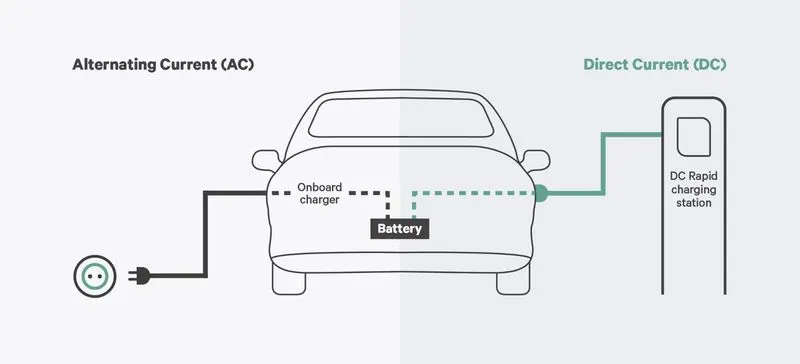
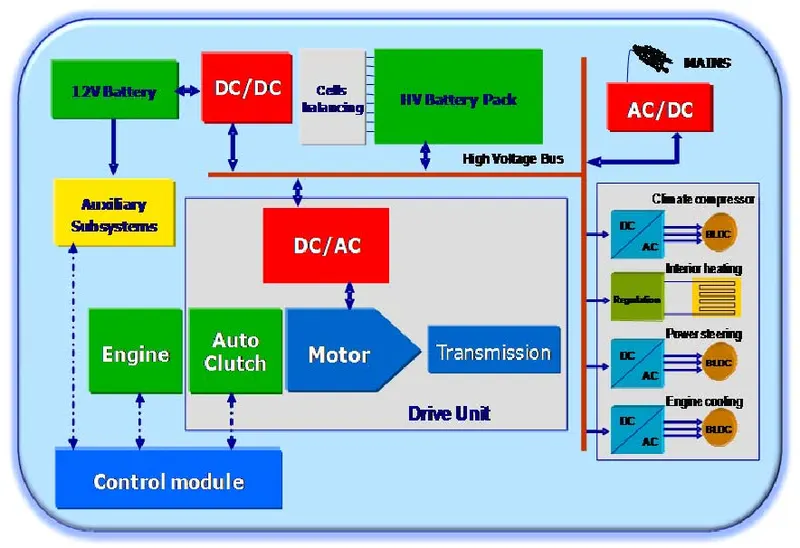
Power electronic converters makes the major impact on the electric and hybrid electric vehicle because in electric vehicles we are giving the input power as a AC but the battery of vehicle required DC power so we need to convert AC to DC.For that purpose we required AC to DC converters nothing but a rectifier.In propulsion mode we have to transfer the power from battery to motor drives that is DC to DC in that purpose we need DC to DC converters nothing but choppers.For taking these statements we can say that power converter circuits are the major operating systems.
TYPES OF POWER CONVERTER CIRCUITS:
In electric and hybrid electric vehicle we are using 3 types of power converters they are
1)AC to DC converters
2)DC to DC converters
3)DC to AC converters
1)AC TO DC CONVERTERS:(RECTIFIER)
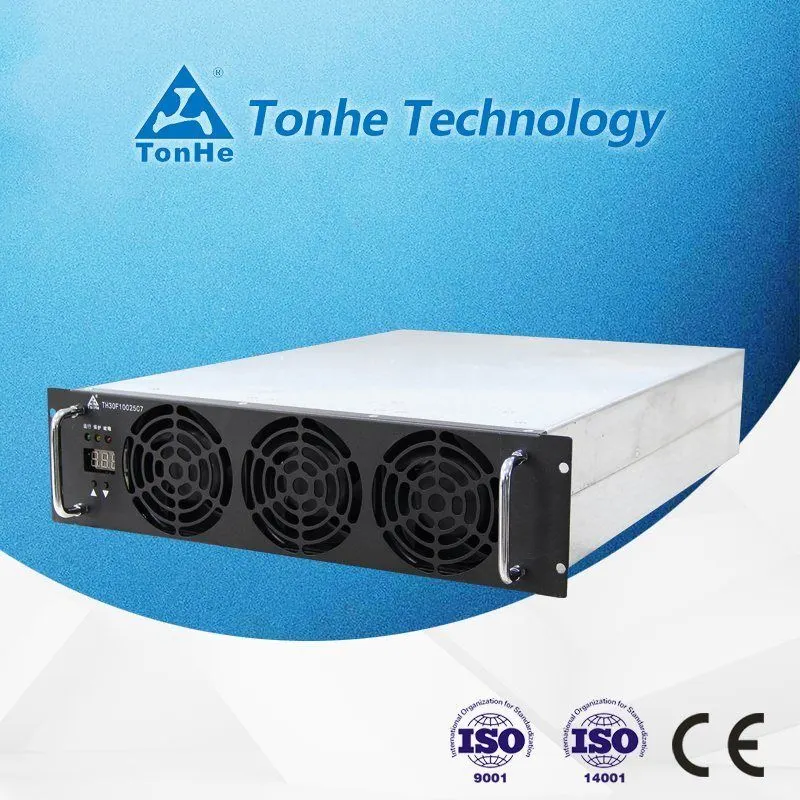
These AC to DC converters are used for plug in mode of the electric&hybrid electric vehicle for charging the battery.because our input supply is the AC power and the battery of the vehicle required DC power so we have to convert the power. for that purpose we need to use these converters.
PRACTICAL MODEL OF AC TO DC CONVERTER:
2)DC TO DC CONVERTERS:(CHOPPER)
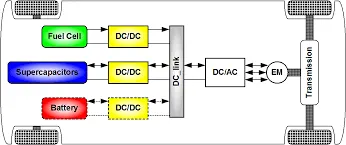
During the propulsion mode of the electric&hybrid electric vehicle we are using these converters.The battery is a DC power source and the required power of the motor also DC so we have to convert the power for DC to DC.In that situation we need DC to DC converters nothing but choppers.
HYBRID EV:
ELECTRIC VEHICLE:
3)DC TO AC CONVERTERS:(INVERTER)
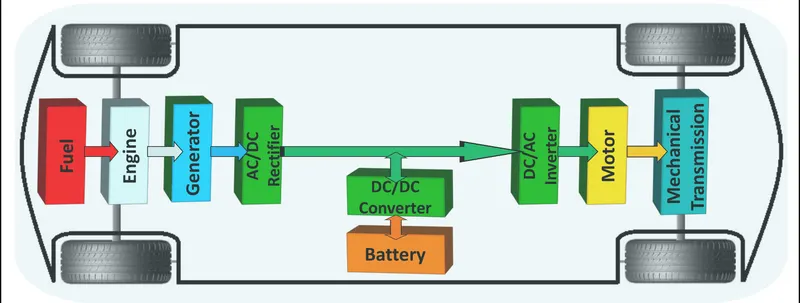
The DC/AC converter is required to convert the dc power to a suitable ac power for the electrical machine. The power output from battery pack (DC current) is converted using inverter to be used in electric motor (AC current).
QUESTION 2:
AIM:An Electric Vehicle's powertrain with 72V battery pack in shown in the diagram below. The duty ratio for acceleration operation is 'd1' and for the braking operation the duty ratio is 'd2'.
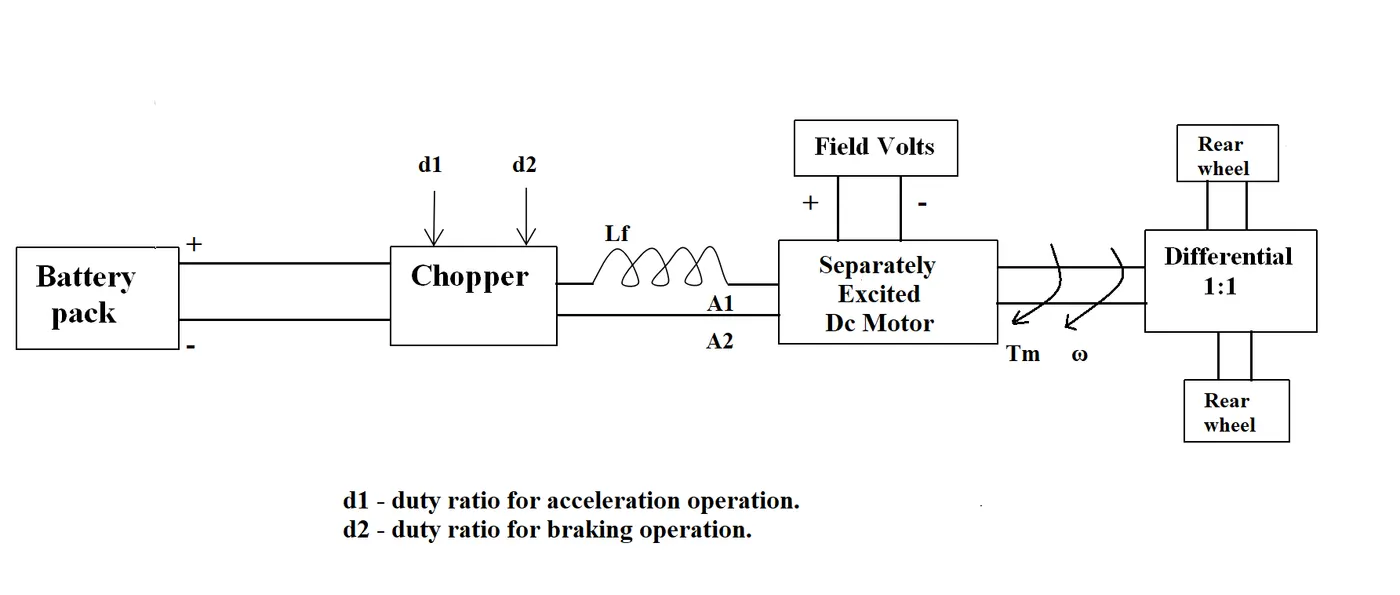
The other parameters of the electric vehicle is given below,
Motor and Controller Parameters:
Rated Armature voltage= 72 V
Rated armature current= 400 A
Ra= 0.5Ω, KΦ= 0.7 Volt second
Chopper Switching frequency= 400 Hz
The vehicle speed-torque characteristics are given by the below equation

What is EV steady state speed if duty cycle is 70%?
Given: -
rated voltage (V) = 72V
Rated armature current = 400 A
Armature Resistance (Ra) = 0.5Ω
Motor constant (KΦ) = 0.7
Chopper Switching frequency= 400 Hz
Duty Cycle = 70%
Solution: -
Vehicle Output Voltage (Vv) is given by: -
Vv = Battery Voltage (V) * Duty Cycle
Vv = 72 * 0.70
Vehicle voltage = 50.4V
w=steady state speed of vehicle(rps)
vehicle torque(Tv)=(Vv-KΦ)*KΦ/Ra
=(50.4-w*0.7)/0.5
=70.56-0.9w
Tv=24.7+(0.0015)w^2, equating both equations,
70.56-0.98w=24.7=(0.0051)w^2
(0.oo51)w^2+0..98w-45.86=0
by solving tyhe two equations we get the values of
w1=38.91
w2=-231.071
here W2 is negitive so we have to take the W1 as the steady state speed of the vehicle is 38.91 rps.
QUESTION 3:
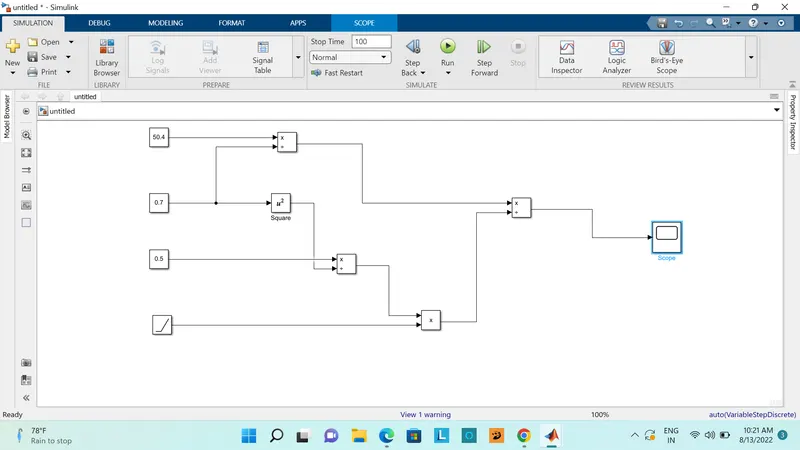
AIM: Develop a mathematical model of a DC Motor for the below equation using Simulink.
BLOCKS USED IN SIMULINK:
constant block,ramp block,square block,divide block,product block,scope
SIMULINK MODEL:
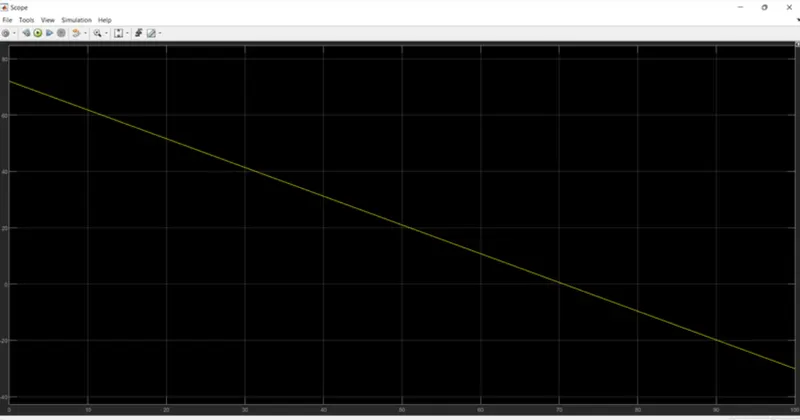
OUTPUT:
QUESTION 4:
AIM:
Refer to the blog on below topic:
Induction Versus DC brushless motors by Wally Rippel, Tesla
Explain in brief about author’s perspective.
BLDC MOTOR:
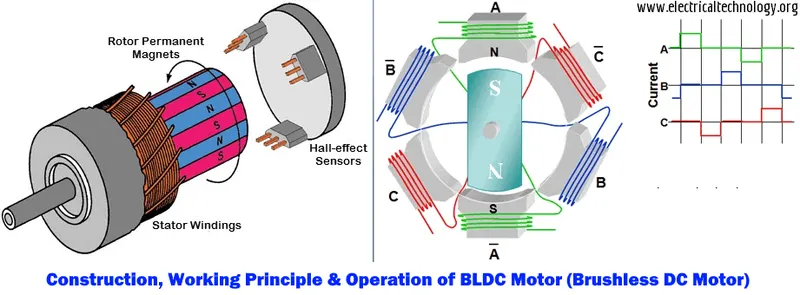
A brushless DC electric motor (BLDC motor or BL motor), also known as an electronically commutated motor (ECM or EC motor) or synchronous DC motor, is a synchronous motor using a direct current (DC) electric power supply.
BLDC motor works on the principle similar to that of a Brushed DC motor. The Lorentz force law which states that whenever a current carrying conductor placed in a magnetic field it experiences a force. As a consequence of reaction force, the magnet will experience an equal and opposite force.
AC INDUCTION MOTOR:
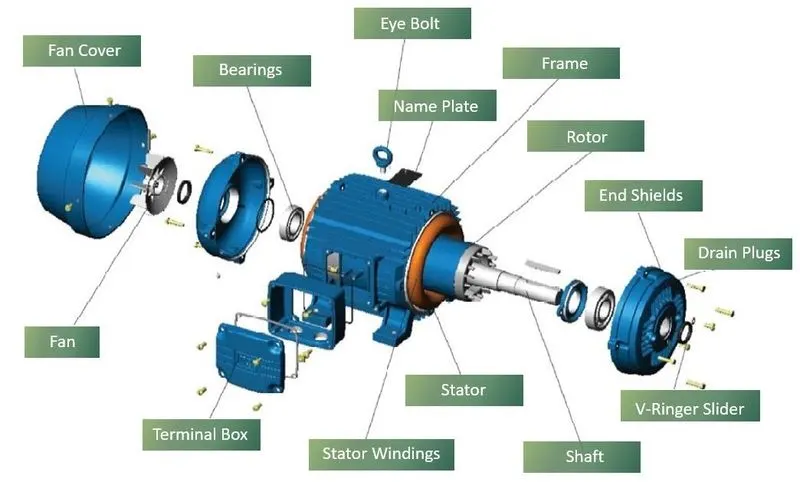
An induction motor or asynchronous motor is an AC electric motor in which the electric current in the rotor needed to produce torque is obtained by electromagnetic induction from the magnetic field of the stator winding. An induction motor can therefore be made without electrical connections to the rotor. General uses for AC motors include pumps, water heaters, lawn and garden equipment, ovens, and off-road motorized equipment.
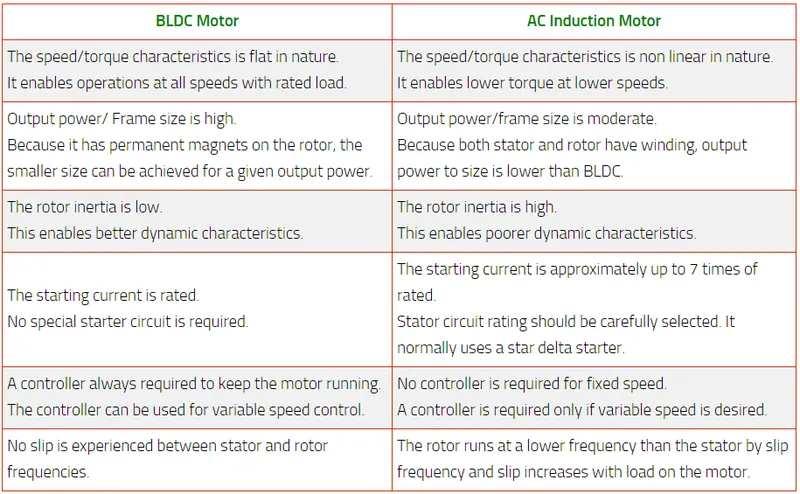
DIFFERANCE BETWEEN BLDC AND AC INDUCTION MOTOR:
CONCLUSION:
we have successfully complete the given tasks
1)We are successfully find the what types of converters used in electric&hybrid ev
2)we have calculate the value of w1 that is w1=38.91 at steady state
3)we are construct the simulink for given task and successfully get the output
4)we are explain the what is BLDC and ACI motors and also explain its differances